Pearl Harbor Visit by Japan PM Abe to Bury Hatchet or History?

In a reciprocal gesture to US President Barack Obama’s visit to Hiroshima Peace Memorial Park on May 27, cementing the leftover feelings of animosity, if any, Japan Prime Minister Shinzo Abe has announced that he would visit Pearl Harbor NOT on December 7 but 20 days later.

Pearl harbor was a US Naval base in Hawaii that Japan attacked on December 7 (in US Time zone), 1941 killing thousands of sailors in an “unannounced” attack that forced the US to plunge into World War Two.

Prime Minister Shinzo Abe’s visit would be the first ever by a sitting Japanese leader “to pay tribute” to military personnel who died in the war. The visit also coincides with his final summit with outgoing US President Obama.

The stunning declaration came just two days ahead of the 75th anniversary of the attack that propelled the U.S. into World War II.

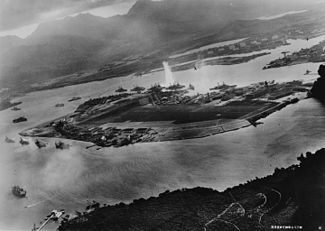
Photograph of Battleship Row taken from a Japanese plane at the beginning of the attack. The explosion in the center is a torpedo strike on USS West Virginia. Two attacking Japanese planes can be seen: one over USS Neosho and one over the Naval Yard.

“We must never repeat the tragedy of the war,” he said. “I would like to send this commitment. At the same time, I would like to send a message of reconciliation between Japan and the US.”

However, Abe is not expected to express remorse or an expllicit apology for the Pearl Harbor attack. As Obama did not include any apology for the dropping of the atomic bomb on Hiroshima and Nagasaki in August 1945, so will Abe refrain from an apology to what America long argued as treacherous attack unannounced.

The irony goes back to the first week of December in 1941 when Japanese ambassador who was entrusted with the task of war declaration to be handed over to Washington failed to do so on time and the attacks preceded the declaration. US blamed Japan for unilateral attack without proper Declaration of War, an allegation that many Japan historians dislike to be reiterated.

When Japan attacked Pearl Harbor, unprepared American soldiers became the worst victims of an aerial attack on Dec. 7, 1941 — a date that President Franklin D. Roosevelt said would “live in infamy.” More than 2,400 US servicemen were killed in the attacks.

Hopefully the visit by Abe should end the stamp of illegal attack of Pearl Harbor from Japan’s history pages and bury the hatchet of World War Two though neither side may apologize for their wartime attacks.

Prime Minister of Qatar Calls on President

Sheikh Abdullah bin Nasser bin Khalifa Al Thani, Prime Minister of Qatar called on President Pranab Mukherjee at Rashtrapati Bhavan on Saturday after an eventful visit that witnessed strengthening of ties between the two nations.

Welcoming the Qatar Prime Minister to India, the President said that the third high-level visit in two years highlights the importance that both countries attach to strengthening their bilateral relations. India accords very high importance to relations with countries in the Gulf, which is its extended neighbourhood. India sees Qatar as a key interlocutor in the Gulf and Arab world.

The President said, “India’s relations with Qatar are deep-rooted in history and have been nurtured by active contacts amongst our two peoples through trade and commerce ties over centuries. The two countries have a common goal of intensifying co-operation. We should identify opportunities to make trade more broad-based and balanced. Indian companies are willing to be partners in infrastructure development being undertaken by Qatar in preparation for the FIFA 2022 World Cup and Qatar’s development plans under ‘Vision 2030’ for Qatar.”

The Qatar Prime Minister too reciprocated the President’s sentiments and said that he had good discussions with the Indian Prime Minister. Qatar sees India as a strategic partner and is keen to expand relations.

India Pitches for Cashless, Digital Payments Campaign

As the demonetisation laid bare the difficulties of rural India not matching the urban centres in banking and payment technology, the Indian government has decided to pitch for a campaign provide information, education and communication, holding camps for transiting to the digital mode of payment.

Among the series of measures undertaken include incentives to the district administration which will give a boost to cashless digital payment systems across the districts, talukas and panchayats.

NITI Aayog has prepared a blueprint of incentives for the campaign for the district authorities and administration which include include incentives for digital payments for day-to-day financial transactions like buying or selling of goods and services, transferring money etc.

NITI Aayog will provide logistic support for outreach activities at these three levels in the form of the seed money of Rs.5 lakh per district administration to enhance the seeding of Mobile and Aadhar numbers to the bank account, issue of Rupay cards wherever necessary, issue of PIN, downloading of app and finally achieving two successful transactions.

The top ten best performing districts will be awarded the Digital Payment Champions of India award.

The first 50 Panchayats which go cashless will be awarded Digital Payment Award of Honour

The five digital payment systems are –

1.Unified Payment Interface, UPI

2.USSD (*99#banking)

3.Adhar Enabled Systems

4.Wallets &

5.Rupay/Debit/Credit/Prepaid Cards

The Hindi/English version of the brochure is made available on the website- www.niti.gov.in/conetent/digital-payments and NITI Aayog has put up the entire sets of creative material – presentations/posters and FM radio spots/ films on its website – www.niti.gov.in/conetent/digital-payments.

In addition, Common Service Networks are being mobilized in going cashless and the Ministry of Electronics and Information Technology has announced cash incentive of Rs.100 for every merchant enabled to transact digitally. Two resource persons have been provided in each district collectorate to co-ordinate the CSE in each district.

NITI Aayog has also solicited the feedback on the challenges being faced by them, the solutions thereof and the manner in which they can be supported.

‘Bahubali 2’ Telugu Rights Sold for Rs. 26 Cr to Zee Network

The satellite rights of “Baahubali: The Conclusion” (Telugu version) starring Prabhas and Rana Daggubati has been sold to Zee Network for a whopping Rs.26 crore, said publicists for the film.

“satellite rights have been acquired by Zee Network for a whopping price of Rs 26C, which would surpass the record of “Baahubali,” said #Mahesh, publicist for the film.

Ever since the shocking leak of 8-minute climax war scene leak of director S S Rajamouli’s “Baahubali: The Conclusion” (Bahubali 2), the post-production has gone into utmost secrecy in Hyderabad and 60 other digital studios all over the country.

The curiosity value is so high that if any leak over the country-wide question of “Why Kattappa killed Baahubali?” is still keeping the momentum on the public pulse. “The producers and director SS Rajamouli are huddled together about the next move. All post-production has been halted until a method to prevent further damage is found,” said a source to Deccan Chronicle.

Bahubali publicist Mahesh S Koneru has denied that there is any delay in post-production work over the leak but conceded that security has become more strict over the post-production process. He said, “Access has become more strict and more security measures are in place.”

It is unlikely that the storyline will be leaked as it was written by SS Rajamouli’s father KV Vijayendra Prasad and kept secret throughout the shooting period of the film.

Otherwise, S.S. Rajamouli is content that the film has come off well. In a latest twitter message he said it was 25 years after that the VR technology is being used. “After 25 years in film industry venturing into VR for the first time. First shooting day of SWORD OF BAAHUBALI,” he said.

Heart of Asia Conference Tomorrow: What’s the Focus?

Indian Prime Minister Narendra Modi will meet Afghanistan President Ashraf Ghani and other 12 represntatives from Asian countries at the much coveted Heart of Asia Conference being held in Amritsar tomorrow to highlight terrorism, trade and cooperation takes place.

Finance Minister Arun Jaitley will address the conference as External Affairs Minister Sushma Swaraj is ill. Foreign Secretary S. Jaishankar and other representatives will meet on the sidelines of the inaugural conference symbolic to bring in stakeholders of Asia for more trade. The 14-member conference is likely to bring forth a loose alliance of like-minded actors to take the regional cooperation to the next level.

Pakistan is being represented by Foreign Affairs Adviser Sartaj Aziz while other ministers from Iran, Russia and China will make it broader in terms of trade-centric talks and India may raise the issue of terrorism since the venue near the border owing to infiltrations is visibly to offset Islamabad’s mindset.

India is likely to announce military aid to Afghanistan including 7 helicopters and receive assurance from Russia on supplying spares and conducting repairs on other aircraft in Afghanistan.

India is keen to focus on the Chabahar port in Iran for trade to Afghanistan, the overall agenda will centre around developing trade routes to Afghanistan, as China and Pakistan are focusing on the development of the Gwadar Port.

Iran’s Foreign Minister Javed Zarif is expected to make a presentation on the benefits of Chabahar to Afghanistan, while India will try to rope in others to develop the port project.

“We are already working with the governments of Afghanistan and Iran to do an event in Chabahar itself, sometime in the near future which involves not merely the governments and experts but also brings together industry and also showcases Chabahar for other countries which can benefit from the enhanced connectivity through Chabahar,” MEA official Gopal Baglay said.

Recently, Russia, Turkmenistan and Qatar have indicated an interest in the port, while Iran, that refers to Gwadar and Chabahar as “sister ports,” is keen to use the port for trade and gas supplies. China has already inaugurated its Yiwu-Mazar e Sharief rail line, under the One Belt One Road (OBOR) plan through Afghanistan to the CPEC route to Gwadar.

The Heart of Asia conference is the 7th in the series after the Istanbul Process was established in 2011 to provide a platform to discuss regional issues, particularly encouraging security, political, and economic cooperation among Afghanistan and its neighbors. The United States and over 20 other nations and organizations are “supporting nations” in the dialogue.

Past Ministerial Conferences of Heart of Asia Dialogue:
1st: 2 November 2011,
Istanbul, Turkey
2nd: 14 June 2012,
Kabul, Afghanistan
3rd: 26 April 2013,
Almaty, Kazakhstan
4th: 31 October 2014,
Beijing, China
5th: 9 December 2015,
Islamabad, Pakistan
6th: 26 April 2016,
New Delhi, India
7th: 4th December 2016,
Amritsar, India

MEMBER Countries:
Afghanistan
Azerbaijan
China
India
Iran
Kazakhstan
Kyrgyzstan
Pakistan
Russia
Saudi Arabia
Tajikistan
Turkey
Turkmenistan
United Arab Emirates

SUPPORTING COUNTRIES

Australia
Canada
Denmark
Egypt
European Union
France
Finland
Germany
Iraq
Italy
Japan
Norway
Poland
Spain
Sweden
United Kingdom
United States

Climate Change: Rise in Temperature Bothers WMO Chief

In a new report analyzing the global climate between 2011-2015, the World Meteorological Organization – the United Nations system’s weather agency – found an increasingly visible human footprint on extreme weather and climate events with dangerous and costly impacts.

This “hot and wild” weather meant that global ocean temperatures rose at unprecedented levels, Arctic sea ice coverage and mountain glaciers declined and surface melting of the Greenland ice sheet continued at above-average levels.

The extreme weather also meant that people around the world suffered from high-impact climate events such as severe droughts in Africa, devastating floods in South-East Asia, terrible heatwaves in India and Pakistan, and catastrophic hurricanes and typhoons in the United States and the Philippines.

Against this backdrop, and within the context of the ongoing 22nd Conference of the Parties (COP22) to the UN Framework Convention on Climate Change (UNFCCC), in Marrakech, Morocco (07-18 November 2016), the United Nations News Centre spoke with Petteri Taalas, Secretary-General of World Meteorological Organization (WMO), on the state of the Earth’s weather and what it means to the people who inhabit the planet.

UN News Centre: The global climate report 2011-2015 confirms that the average global temperature in 2015 has already reached the 1 degree Celsius mark. What does this 1 degree Celsius really mean to people on the ground, say for an office worker in South-East Asia or a farmer in South Africa? 

Petteri Taalas: One degree does not sound like a big number if you compare the temperate over a couple of days but globally [over a long period of time] it means that we have seen an increase in the amount of disasters related to the weather. It means that we have observed more heat waves, for example, in Kuwait, the temperature hit 54 degrees Celsius limit last summer and there have been devastating heat waves in many continents.

We have also seen changes in the pattern of rainfall, which means that some areas are now seeing flooding – when it rains, it rains much more — and that led to problems for human beings and also for economies. And then in some parts of the world we have seen more droughts, caused by the heat waves, and leading to forest fires and difficulties in agriculture. For example, at the moment, the southern part of Africa is suffering because of a drought that was partly caused by El Nino last year but also by a drying trend behind it. In tropical zones we have observed more intense tropical storms and they have been devastating for countries like Vanuatu. We also observed the first hurricane hitting Cabo Verde on the African coast.

So this one degree change means that the amount of disasters related to weather and hydrology have been increasing and if it goes beyond that one degree limit – which seems to be the case according to this year’s observations – we can expect to see more of these kind of disasters. And it will have a negative impact on the economies of the countries, and it will also impact the lives and wellbeing of all humans.

UN News Centre: What has caused this dramatic change in temperatures?

Petteri Taalas: The main reason behind it is that we are using much more fossil fuel: coal, gas, and oil. We have changed the composition of the atmosphere. Therefore, we have seen a very dramatic increase of the carbon dioxide (CO2) concentration in the atmosphere. And we have also seen an increase in the amount of methane (CH4) in the atmosphere and an increase of the nitrous oxide (N2O). And all these are contributing to this warming that we have seen.

UN News Centre: Earlier WMO had said that this 1 degree rise – already halfway to the 2 degree threshold ­– and that the national climate change plans adopted so far may not be enough to prevent even a 3 degree rise. Do you think this is something that could have been foreseen before the Paris agreement?

Petteri Taalas: In our field we have known about this problem for 30 years. So about 30 years ago, we established the Intergovernmental Panel on Climate Change (IPCC), and then years later we established the United Nations Framework Convention on Climate Change (UNFCCC) to start mitigating climate change. So this problem has been around for a long time, but the good news is that governments now understand the need to mitigate climate change, and that’s why they adopted the Paris Agreement on climate change last year, and it has very recently entered into force. This gives us a good basis for moving forward, and to mitigate the effects of climate change. And the key issue is whether we are acting quickly enough to avoid a 1.5 or 2 degree warming or are we going to go beyond that. So far the pledges behind the Paris Agreement indicate about a 3 degree warming level, which would mean that we might have a larger amount of disasters related to the weather. So it would be a smart thing for the governments to start reducing the emissions, and that would also be good for the coming generations.

There is optimism in the fight against climate change, but the best time to act is now, according to Petteri Taalas, Secretary-General of the World Meteorological Organization (WMO). The head of the UN weather agency was speaking to UN News Centre, shortly after releasing a report on global greenhouse gases and climate change, which categorised 2011 to 2015 as the hottest five-year period on record. Mr. Taalas also noted that the world is now better equipped with technologies to mitigate the levels of greenhouse gas emissions and their impact on the global climate.

UN News Centre: In this context, what other messages would you like to give to the leaders attending the COP22 in Morocco?

Petteri Taalas: I would like to thank them for ratifying the Paris Agreement, which gives us hope. And we also now have better technological means for mitigation. And those means are also cheaper than they used to be. For example, solar and wind energy sources are cheaper than they used to be ten years ago. And we also have possibilities to convert our transport systems to use more electric cars. In the case of diet, we can go to more vegetarian diet; which could also reduce emissions.

So we have all the means available, and now it’s time to act and prevent these negative impacts of climate change, and it’s important that we start acting very soon, because if we wait, the problem will become more severe. I am very optimistic that we have all the means to be successful, but we should start changing our behavior very soon.

UN News Centre: What is something that society, as a whole, can do to mitigate these impacts?

Petteri Taalas: All normal consumers now have big powers – they can decide what kind of sources of energy they use in their houses, what kind of means of transport they use, and what kind of diet they are eating. For example, a vegetarian diet is better for climate than a meat-based diet. Consumers have big power here and if they decide to go to these low emission solutions, they are the ones who have power to do that. And also the policy-makers are watching very closely what the opinion of the ordinary people is, and I believe that they are able to change the consumption behaviour in the coming years.

10 Years of Ban ki Moon as UN Chief: Receives France Civilian Award

As United Nations Secretary-General Ban Ki-moon demits office, it is time to recollect his accomplishments with some historic achievements uch as adoption of the historic Paris Agreement on climate change in December 2015 and setting the 2030 Agenda for Sustainable Development.

Speaking to the press in Paris, Mr. Ban thanked France for its support for the UN in combating violent extremism and expressed his condolences to the victims and their families of such violence. He also noted France’s support to the UN in its work in the Central African Republic, Mali and the Middle East, particularly Syria.

He further noted that while France draws down its military operation – Operation Sangaris – in the Central African Republic, it was welcoming that France’s continued to take interest in the situation in the African country and called for an open and genuine dialogue to resolve the tensions there.

Mr. Ban also welcomed the commitment of France to the situation in the Middle East and in particular to hold an international conference on the issue.

The UN chief further emphasized that the international community’s support in Lebanon is equally important, particularly given the upcoming parliamentary elections.

Concluding his remarks, Mr. Ban expressed confidence that the Government and people of France would continue to support his successor, António Guterres, who assumes office at the start of next year, and the UN in its mission in building a better world for all.

On Friday, Secretary-General Ban was presented the insignia of the Grand Officier de la Légion d’honneur(the Grand Officer of the Legion of Honour) by the President François Hollande of France.

Receiving the honour, Mr. Ban said that it was the UN that was being honoured and expressed his gratitude on behalf of the Organization.

Created by Napoleon Bonaparte in 1802, the Légion d’honneur (Legion of Honour) is the highest French award. For two centuries, it has been presented, in the name of the French Head of State, to acknowledge the contribution of an individual in all fields.

Demonetisation: Supreme Court Warns Govt to End Cash Crisis

The Supreme Court on Friday warned the government to find ways to end the cash crisis as people standing in long queues for hours every day may turn violent anytime leading to anarchy.

Brushing aside the government contention, the court made it clear that “It is a serious issue.” Since it affects the entire population, it said, “You cannot deny there is a serious problem. There could be riots.”

The bench consisting of Chief Justice TS Thakur and Justice AR Dave retorted to attorney general Mukul Rohatgi’s plea seeking directive to lower courts to stop hearing cases related to demonetisation. Once the high courts take up legal suits, millions of suits will move the courts seeking intervention to redeem their money.

The bench took exception to limit the daily cash exchange limit to Rs 2,000, after promising to increase it to Rs.4500 creating suspicions in the minds of people about the government’s ability to exchange their money in time.

“The government just did not have the capacity to print new currency notes. They should have taken this into account and taken steps to avoid putting people into untold harassment,” said petitioners.

“Daily labourers are not getting paid, tea garden workers are not getting their salaries, people in rural areas have to walk long distances to reach banks and ATMs only to be told that these have run out of cash. It is a serious situation. Transporters are suffering. Trucks are standing idle without cash. India is a cash-based economy and the government has hurt it badly by freezing cash circulation,” senior advocate Kapil Sibal said in the Supreme Court on Friday on behalf of the petitioners who have questioned the legality of demonetisation.

The next hearing will be on November 25.

Shops, Hotels to Remain Open 24/7 Soon: Minister Venkaiah Naidu

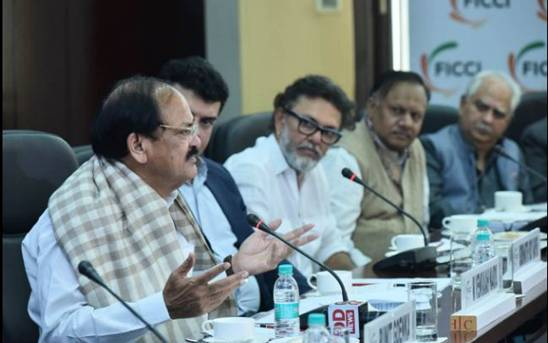
Union Minister for Information & Broadcasting M. Venkaiah Naidu said the Union Cabinet has approved the Model Shops and Establishment Act, facilitating round-the-clock working hours aimed at generating employment prospects by allowing cinema halls, restaurants, shops, banks and other such workplaces to remain open 24/7.

Speaking to the representatives of the Media and Entertainment (M&E) sector, he said all their concerns would be resolved by the Government in a time bound manner. Considering the growth prospects of the Indian M&E industry for the economy, he assured that the concerns of the industry regarding new tax rates in the GST structure would be conveyed to the Finance Minister.

Addressing the CEOs Round Table Meeting organized by FICCI, the minister said a comprehensive review of the Cinematograph Act, 1952 including Copyright and IPR Protection issues, was under consideration in the light of the reports submitted by Mukul Mudgal and Shyam Benegal. It was imperative to believe in “responsible creativity” where in the censor rules and regulations could be weaved into social norms which affected the social fabric of the nation.

On the issue of Improving Screen Density in India, the Minister said that the reach of cinema was limited to a small segment and thus provided an immense opportunity for the film industry to tap the regional markets and cater to the needs of consumers by developing content in local and regional languages.

He assured that the issue has been taken up with the Multiplex Association of India to formulate Model Rules for building and operating cinema halls which once received would be shared and discussed with all the State Governments in the coming State Information Minister’s Conference scheduled in December. The State Governments would be requested to look into the matter and ease out the process in order to increase screen density throughout the country.

On the issue of grant of permissions to TV Channels, the Minister said that the Ministry had taken the initiative to streamline the processes and procedures in the broadcasting sector. He also mentioned about the E-Auction of the Second Batch of Private FM Radio Phase III Channels commenced a week ago. 266 FM Channels in 92 cities comprising 227 channels in 69 fresh cities and 39 unsold channels from 23 cities of batch I of Ph-III had been put on auction in the second batch.

The Minister said plans are afoot to set up a National Centre of Excellence for Media, to provide training to the industry professionals. The Ministry was also in the process to setup a Film Promotion Fund to support movies, including Bollywood and Regional films, for participation in foreign film festivals.

The audio-visual co-production agreements signed by the Government would help film industry to explore more resources and share best practices. He mentioned that the Cabinet has recently given approval to the agreement between India and Republic of Korea.

UK Relaxes Visa for Businessmen, Modi Pitches for Students Too

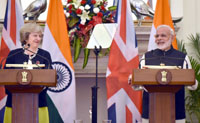
Post-Brexit, United Kingdom is opening up to Indian businessmen announcing for the first time a very easy process visa under its "Registered Traveller Scheme" but she chose to remain silent on Indian Prime Minister Narendra Modi’s request to provide "greater mobility" for students and researchers.

Speaking at the India-UK Tech Summit organised by CII, Theresa May, who was instrumental in tightening the visa regime earlier, said: "Indian nationals who frequently come to the UK and to fuel growth in both our countries, the entry process will become significantly easier." It means the businesses will have to fill fewer forms now to enter the EU-EEA (European Economic Area) passport regime and swifter passage through British airports.

"In short, more opportunities for Britain and India and a clear message that Britain is very much open for business… It is crucial that those who do need to travel between our countries for business can do so, that is the reason why when I was Home Secretary, I made visa process for Indians much easier," May said.

She pointed out that India now has best visa services and the same-day visa delivery system. She said that the UK government is listening to the pleas made by Indian businessmen. "Listening to the fact that there are many people from India who are to bring their skill, ideas, businesses to Britain for the good of your economy and ours," she added.

Indian Prime Minister Narendra Modi, in his address at the India-UK Tech Summit 2016, recalled his visit to the UK last November when it ws decided to commemorate 2016 the ‘India-UK Year of Education, Research and Innovation’ and asked for more visas to Indian students and scholars.

"Even though the quantum of bilateral trade has remained at the same level for the past five years our investments in both directions have been robust. India is the 3rd largest investor in UK, and UK is the largest G20 investor in India. Both countries support large numbers of jobs in each other’s economies," he noted.

As India will soon have over a billion phone connections, an urban tele-density of around 154%, 350 million internet users, nearly 1 lakh Internet-Connected villages, the growth story offers an excellent success story, he said.

Vitamin B12 Deficiency Sensor Developed to Detect Dementia, Alzheimer Disease in Minutes

In old-age, the frequent occurrence of B12 deficiency could lead to dementia and even Alzheimer’s disease as the body metabolism fails to absorb the vitamin from the diet, requiring an early medical intervention.

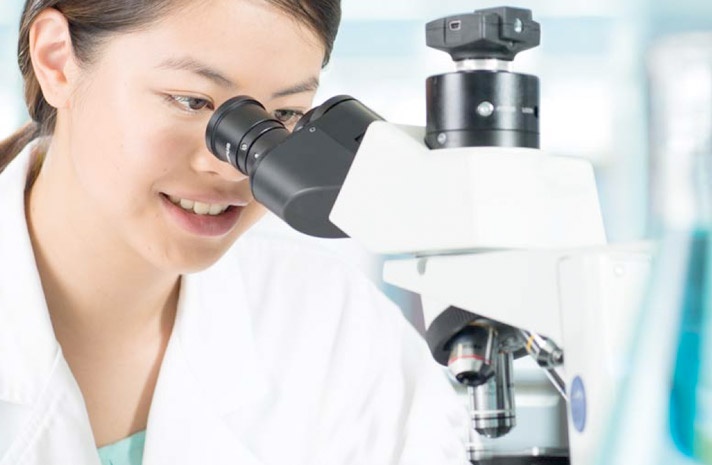
To help detect B12 deficieny early, Australia’s University of Adelaide researchers have developed a first of its kind optical sensor using a technique called Raman spectroscopy that can detect vitamin B12 in diluted human blood – a first step towards a low-cost, portable, broadscale vitamin B12 deficiency test.

The sensor, still at proof-of-concept stage, has wide-reaching potential applications. It enables doctors in tracking vitamin B12 levels in high-risk patients and provide an early intervention – to top up immediately vitamin B12 levels when low. Current tests are lengthy and costly too.

Scientists in the ARC Centre of Excellence for Nanoscale BioPhotonics (CNBP), the Institute for Photonics and Advanced Sensing, and the Schools of Physical Sciences and Medicine, in their presentation today at an international biophotonics conference in Adelaide – the inaugural SPIE BioPhotonics Australasia conference — revealed the new sensor.

“Vitamin B12 deficiency has been shown to be a potential modifiable risk factor for dementia and Alzheimer’s disease and is associated with cognitive decline,” says Dr Georgios Tsiminis, Research Fellow at the University of Adelaide.

“Our sensor is an early first step towards a point-of-care solution for measuring and tracking B12 in healthy ageing adults. This would allow doctors to monitor B12 levels and intervene.”

"Currently our device could not aid in diagnosing vitamin B12 deficiency in a general practice setting… We believe this is a very promising first step towards achieving this goal," she said.

The optical sensor measures B12 in human blood in less than a minute and requires minimum preparation. This is the first demonstration of vitamin B12 being measured in human blood serum without the need for a full lab tests.

The sensor uses an optical measuring technique called Raman spectroscopy which produces a unique optical fingerprint of a target molecule, in this case vitamin B12.


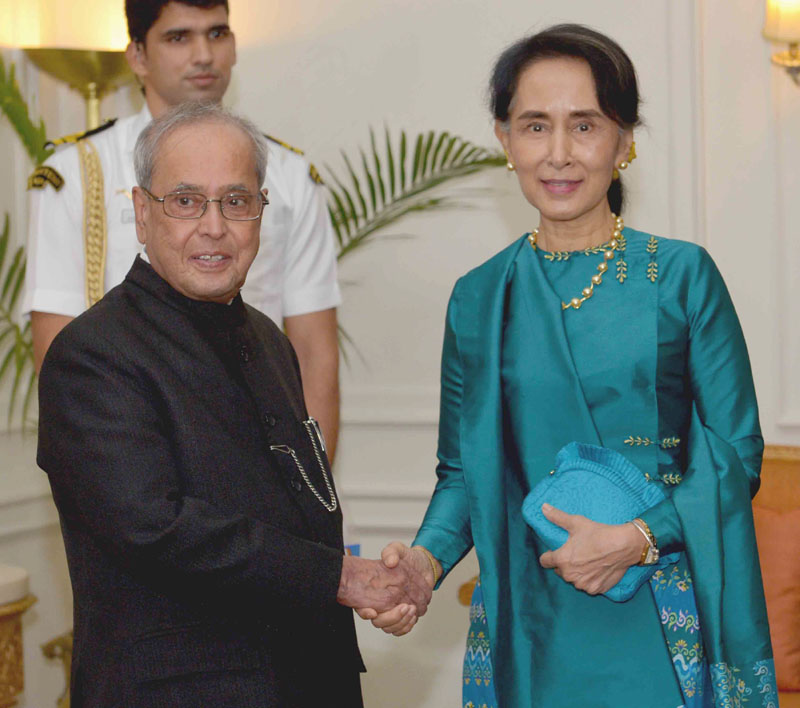
Suu Kyi Calls on President Mukherjee

The State Counsellor of Myanmar, Ms. Aung San Suu Kyi calling on President Pranab Mukherjee, at Rashtrapati Bhavan, in New Delhi on Tuesday, October 18, 2016

Myanmar leader Aung San Suu Kyi, the State Counsellor of the Republic of Myanmar called on President Pranab Mukherjee at Rashtrapati Bhavan on Tuesday, (October 18, 2016).

Welcoming Aung San Suu Kyi on her first State Visit to India, the President said that India and Myanmar are close neighbours and have a good long standing relationship with each other. During the visit of the President of Myanmar in August this year, fruitful discussions were held and four important agreements were signed between the two countries.

The President congratulated Aung San Suu Kyi on her landmark victory in the General Elections held in November, 2015. The President said that India appreciates the spirit with which the people of Myanmar have responded in the General Elections and the manner in which the whole process of elections has been steered. He said that he was happy that the process of democratization was being strengthened in Myanmar.

India will extend all help to Myanmar in this phase of transition in order to set up democratic institutions for ensuring stability in the country. He wished Myanmar all success in establishing a strong democracy. He stated that Myanmar’s transition to full democracy will take time to achieve and India stands by Myanmar in this process.

The President said that India will soon commence work on restoring two old temples and inscriptions of King Mindon and Bay Gyi Daw in Bodh Gaya as requested by the Government of Myanmar. He said that this task will be undertaken by the Archeological Survey of India with financial support from Government of India.

Daw Aung San Suu Kyi reciprocated the President’s sentiments and said that India and Myanmar have much in common. She stated that change does not happen easily and Myanmar has to go about the process of transition in a cautious manner. Myanmar seeks the cooperation and support of India as its people look forward to progress and change for the betterment of their lives.

RV College of Engineering to Conduct Uranium-Related Research in Karnataka

Board of Research in Nuclear Science has granted Rs.25 lakh to Bangalore=based RV College of Engineering for conducting research on spatial distribution of uranium and its impact on water in five districts of Karnataka.

The grant for three years enables Bangalore’s No.1 engineering college to undertake the project entitled “Spatial distribution of Uranium and associated water quality parameters in Bangalore, Bangalore Rural, Ramanagara, Chikkaballapura and Kolar district in Karnataka” spanning over three years.

The project will be undertaken by Dr. M. Rajalakshmi, Dr. Sham Aan and Dr. R. Suresh of the Department of Chemical Engineering, R. V. College of Engineering. The funding agency, Board of Research in Nuclear Sciences (BRNS), is part of the country’s Department of Atomic Energy.

Cabinet Approves MoU between India, EU on Water

The Union Cabinet under PM Narendra Modi has given its approval for the signing of MoU between India and European Union in the field of water resources.

The MoU envisages strengthening the technological, scientific and management capabilities of India and the European Union in the field of water management on the basis of equality, reciprocity and mutual benefit. It provides technical exchange on water issues, including on integrated water resource management plans within river basins and through study visits.

The MoU aims to identify key environmental issues and approaches to sustainable development where exchange of experiences and cooperation could be mutually beneficial to strengthen and further develop cooperation between India and the European Union in the field of water management.

The pact envisions a more sustainable management of water resources in India with an objective of tackling the challenges posed by water management in the context of growing population, competing water demands and a changing climate. A Joint Working Group shall be formed to monitor the activities to be carried out in fulfillment of the MoU.

The Ministry of Water Resources, River Development and Ganga Rejuvenation has been envisaging bilateral cooperation with other countries in water resources development and management through sharing of policy and technical expertise, conducting of training courses, workshops, scientific and technical symposia, exchange of experts and study tours.

Keeping in view the success of the European Union in distribution of water resources, water pricing, water use efficiency by encouraging the changes in agricultural practices necessary to protect water resources and quality, such as switching to less water-demanding crops, etc., it has been decided to have an agreement with Israel to benefit from their experience and expertise.

The EU States have adopted water pricing policies to provide adequate incentives for users to use water resources efficiently thereby contributing to environmental objectives.

Cabinet Okays MoU with African Asian Rural Development Organization

The Union Cabinet chaired by Prime Minister Narendra Modi has given its approval to the signing of a Memorandum of Understanding (MoU) between India and the African Asian Rural Development Organization (AARDO) for capacity building programmes in the field of rural development.

The MoU for the triennium 2015 – 2017 is being signed under which capacity building programmes for AARDO member countries will be organized every year during the triennium at various Institutions of Excellence in India such as National Institute of Rural Development & Panchayati Raj (NIRD & PR), institutions governed by the Indian Council of Agricultural Research (ICAR), Indian Institute of Management (IIM) and others. The duration of each training programme shall be of two to three weeks. The Post Graduate Diploma in Rural Development Management Course at NIRD & PR under this scheme is for one year.

The AARDO, which has its headquarters in New Delhi, is an autonomous, inter-Governmental organization established in 1962 with the objective of promoting cooperation among the countries of the African – Asian Region in the direction of eradicating thirst, hunger, illiteracy, disease and poverty in the region.

India is one of the Founder Members of the Organization and is the largest contributor in terms of membership contribution of US$ 141,100 apart from contributing by way of providing 70 fully paid training scholarships for Human Resource Development Programme under the Indian Technical & Economic Cooperation Programme (ITEC) to the Organization.

India has also provided a building for housing the AARDO Secretariat in Delhi and considerable financial assistance is given to AARDO for maintenance of the building. AARDO currently has 31 countries of the African – Asian Region under its fold.

Since the year 2009, India is continuing to provide an Additional Contribution of US$ 600,000 to AARDO for each triennium 2009-2011 to expand its scale and scope of the Capacity Building Programmes of AARDO for the benefit of Member Countries.

Promote Indian Entrepreneurs Abroad in Global Industries: Minister

Piyush Goyal, Union Minister of State (IC) for Power, Coal, New & Renewable Energy and Mines, said that Indian entrepreneurship needs to be promoted in global electrical industry.

While speaking at Light India Exhibition 2016, Goyal said, “We welcome technology from all around the world but at the end of the day, we would like to strengthen our Indian hands. I am happy to have imports come in, if we are at level playing field. But if we find that other countries are dumping goods into India, certainly that is not welcome in the country.”

Appreciating new and innovative concepts like solar street lights at the exhibition, Goyal stated, “I can actually imagine putting up not less than 10 or 15 million solar street lights, particularly in rural areas.”

Goyal also emphasized on the fact that modalities like cost, battery life, newer technology, process monitoring etc are yet to be work out. Referring to the disruptive economy, the Minister asked Industry to reorient their price structure. He urged the industry to participate in LED street programme aggressively.

Talking about Bureau of Indian Standards, the minister said that the standards need to be better monitored in the imported electrical products.

ONGC Videsh to Acquire 11% Stake in JSC Vankorneft

India’s Cabinet Committee on Economic Affairs, chaired by Prime Minister Narendra Modi, has given its approval to an cquisition by ONGC Videsh Limited (OVL) for 11% stake in JSC Vankorneft from M/s Rosneft Oil Company (Rosneft), the National Oil Company (NOC) of Russian Federation (Russia). Rosneft operates Vankor fields, with Vankorneft, its wholly owned subsidiary.

OVL will be paying an amount of US$ 930 million for acquiring 11% stake in Vankorneft.

The acquisition of stake in Vankorneft will provide 3.2 Million Metric Ton of Oil Equivalent (MMTOE) to OVL by 2017. It will also provide an opportunity to Indian public sector Oil and Gas companies to acquire new technologies from Rosneft. The acquisition is in line the ONGC’s stated objective of adding high quality international assets to India’s Exploration and Production (E&P) portfolio and thereby augmenting India’s energy security.

Recently, an Indian Consortium comprising of Oil India Limited (OIL), Indian Oil Corporation Limited (IOCL) and Bharat PetroResources Limited (BPRL) acquired 23.9% stake in Vankorneft at a cost of US $ 2020.35 million which will give them 6.56 MMTOE. Earlier in May 2016, ONGC Videsh Ltd (OVL) completed the formalities on acquisition of 15% stake in Vankorneft at a cost of US $ 1.284 billion which gave OVL 4.11 MMTOE.

Nobel for Chemistry Goes to Molecular Machine Developers

This year’s Nobel Prize for Chemistry was awarded by the Royal Swedish Academy of Sciences to developers of molecular machines which will "most likely be used in the development of things such as new materials, sensors and energy storage systems".

The developers who have been recognised for their research are Jean-Pierre Sauvage, Sir J. Fraser Stoddart and Bernard L. Feringa for developing the molecular machine.

The announcement from the Royal Swedish Academy of Sciences said,"The development of computing demonstrates how the miniaturisation of technology can lead to a revolution. The 2016 Nobel laureates in Chemistry have miniaturised machines and taken chemistry to a new dimension."

"They have developed molecules with controllable movements, which can perform a task when energy is added… Molecular machines will most likely be used in the development of things such as new materials, sensors and energy storage systems," it added.

IMF Sees Subdued Growth, Warns of Stagnation, Rise in Protectionism

With global growth subpar at 3.1% in 2016, with slight increase to 3.4% next year, persistent stagnation in advanced economies could further fuel anti-trade sentiment with calls for protectionism in developed economies, said IMF in its latest outllok that may send warning bells to India and China.

Global economic growth will remain subdued this year following a slowdown in the United States and Britain’s vote to leave the European Union, the IMF said in its October 2016 World Economic Outlook.

Growth in emerging Asia, and especially India, continues to be resilient, it said. India’s gross domestic product is projected to expand 7.6% this year and next, the fastest pace among the world’s major economies. The IMF urged India to continue reform of its tax system and eliminate subsidies to provide more resources for investments in infrastructure, education, and health care.

On global economy, IMF chief economist Maurice Obstfeld said: “We have slightly marked down 2016 growth prospects for advanced economies while marking up those in the rest of the world."

The 2016 report highlighted the precarious nature of the recovery in 8 years after the global financial crisis. It raised the specter that persistent stagnation, particularly in advanced economies, could further fuel populist calls for restrictions on trade and immigration. Obstfeld said such restrictions would hamper productivity, growth, and innovation.

"It is vitally important to defend the prospects for increasing trade integration," Obstfeld, said. “Turning back the clock on trade can only deepen and prolong the world economy’s current doldrums.”

To support growth in the near term, the central banks in advanced economies should maintain easy monetary policies, spend more on education, technology, and infrastructure, counteract waning potential growth through structural reforms and reduce barriers to market entry, IMF said.

The world economy will expand 3.1% this year, the IMF said, unchanged from its July projection. Next year, growth will increase slightly to 3.4% on the back of recoveries in major emerging market nations, including Russia and Brazil.

Advanced economies will expand just 1.6 %in 2016, less than last year’s 2.1 %pace and down from the July forecast of 1.8 percent.

The IMF marked down its forecast for the United States this year to 1.6 percent, from 2.2% in July, following a disappointing first half caused by weak business investment and diminishing pace of stockpiles of goods. U.S. growth is likely to pick up to 2.2% next year as the drag from lower energy prices and dollar strength fades.

Further increases in the Federal Reserve’s policy rate “should be gradual and tied to clear signs that wages and prices are firming durably,” the IMF said.

Uncertainty following the “Brexit’’ referendum in June will take a toll on the confidence of investors. U.K. growth is predicted to slow to 1.8 % this year and to 1.1%in 2017, down from 2.2% last year.

The euro area will expand 1.7%this year and 1.5% next year, compared with 2% growth in 2015.

“The European Central Bank should maintain its current appropriately accommodative stance,” the IMF said. “Additional easing through expanded asset purchases may be needed if inflation fails to pick up.”

Growth in Japan, the world’s number 3 economy, is expected to remain subdued at 0.5% this year and 0.6% in 2017. In the near term, government spending and easy monetary policy will support growth; in the medium term, Japan’s economy will be hampered by a shrinking population.

In emerging market and developing economies, growth will accelerate for the first time in six years, to 4.2 percent, slightly higher than the July forecast of 4.1 percent. Next year, emerging economies are expected to grow 4.6 percent.

In China, policymakers will continue to shift the economy away from its reliance on investment and industry toward consumption and services, a policy that is expected to slow growth in the short term while building the foundations for a more sustainable long-term expansion. Still, China’s government should take steps to rein in credit that is “increasing at a dangerous pace’’ and cut off support to unviable state-owned enterprises, “accepting the associated slower GDP growth,” the IMF said.

China’s economy, the world’s second largest, is forecast to expand 6.6 %this year and 6.2% in 2017, down from growth of 6.9 % last year.

“External financial conditions and the outlook for emerging market and developing economies will continue to be shaped to a significant extent by market perceptions of China’s prospects for successfully restructuring and rebalancing its economy,’’ the IMF said.

Sub-Saharan Africa’s largest economies continue to struggle with lower commodity revenues, weighing on growth in the region. Nigeria’s economy is forecast to shrink 1.7 %in 2016, and South Africa’s will barely expand. By contrast, several of the region’s non-commodity exporters, including Côte d’Ivoire, Ethiopia, Kenya, and Senegal, are expected to continue to grow at a robust pace of more than 5 %this year.

Economic activity slowed in Latin America, as several countries are mired in recession, with recovery expected to take hold in 2017. Venezuela’s output is forecast to plunge 10 %this year and shrink another 4.5 %in 2017. Brazil will see a contraction of 3.3 %this year, but is expected to grow at 0.5 %in 2017, on the assumption of declining political and policy uncertainty and the waning effects of past economic shocks.

Countries in the Middle East are still confronting challenging conditions from subdued oil prices, as well as civil conflict and terrorism.