Nobel Prize Physics Goes to 3 US Scientists

The Nobel Prize in physics for 2016 has been awarded by the Royal Swedish Academy of Sciences on Tuesday with one half to David J. Thouless of University of Washington, Seattle, US and the other half to F. Duncan M. Haldane of Princeton University, US and J. Michael Kosterlitz of Brown University, Providence, US for theoretical discoveries of topological phase transitions and topological phases of matter.

F. Duncan M. Haldane. Photo: Princeton University, Comms. Office, D. Applewhite

It said, “This year’s Laureates opened the door on an unknown world where matter can assume strange states. They have used advanced mathematical methods to study unusual phases, or states, of matter, such as superconductors, superfluids or thin magnetic films.”

After their pioneering work, the hunt is now on for new and exotic phases of matter and many people are hopeful of future applications in both materials science and electronics, it said in a statement.

The three Laureates’ use of topological concepts in physics was decisive for their discoveries. Topology is a branch of mathematics that describes properties that only change step-wise. Using topology as a tool, they were able to astound the experts. In the early 1970s, Michael Kosterlitz and David Thouless overturned the then current theory that superconductivity or suprafluidity could not occur in thin layers. They demonstrated that superconductivity could occur at low temperatures and also explained the mechanism, phase transition, that makes superconductivity disappear at higher temperatures.

In the 1980s, Thouless was able to explain a previous experiment with very thin electrically conducting layers in which conductance was precisely measured as integer steps. He showed that these integers were topological in their nature. At around the same time, Duncan Haldane discovered how topological concepts can be used to understand the properties of chains of small magnets found in some materials.

We now know of many topological phases, not only in thin layers and threads, but also in ordinary three-dimensional materials. Over the last decade, this area has boosted frontline research in condensed matter physics, not least because of the hope that topological materials could be used in new generations of electronics and superconductors, or in future quantum computers.

Rio Olympics 2016: Opening Tomorrow with Swim Events

Australia and USA teams with their biggest names in swimming have arrived in Rio as the competition for swimming events kicks off on Thursday, ahead of the official opening on Friday.

The two big teams have been sizing each other up before the serious action kicks off, starting with men’s 400m individual medley heats.

"I briefly saw them this morning, they were warming up as I was swimming and by the time I was hopping out they were hopping in," said Australia’s double gold medalist Emily Seebohm.

Team-mate Cameron McEvoy, Australia’s big hope of a first 100 freestyle men’s gold since 1968, said both sides are familiar with each other. "A lot of us are really, really good friends with the Americans," he said. "It was exciting to see them coming. They are a powerhouse team and you can definitely feel their presence in the pool.”

But for Japan’s Yuka Sato, a triathlete, this is her first Olympic games and owes much to some inspiration from her mother. “My mother heard about the sport of triathlon and that’s what got me interested in it, from the age of nine” she says. “Luckily enough, I won the gold medal in my first appearance at the junior national championships. I had good friends in my triathlon club who were a little older than me, and enjoyed training hard in an effort to catch those more senior kids up. My strength naturally improved and I built from there.”

Sato finished third in April’s Asian Triathlon Championships but has been less satisfied with other recent results; now, it is all about peaking at the right time in August. Here, she has a fair idea of who her biggest rival will be in Rio. Flora Duffy, the Bermudan triathlete who has won two World Championships.

“She is a strong swimmer; her style is to come out of the swim along and with a big lead, keeping the advantage throughout the remainder of the race until the finish,” Sato says. “Therefore, how close I can be to Duffy after finishing the swim will be key for me in Rio.”

At 24 years of age, Sato says, “I’m hoping to reach my peak in 2020 for the Tokyo Olympic Games."
[ TAGS RIO 2016 , IOC NEWS , YOGA , TRIATHLON, sato, swimming events, USA< australia, thursday events]

BREXIT Fall Out: PM Cameron to Quit in October

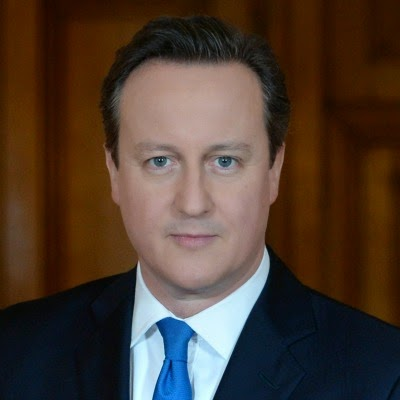
Now that the UK has done what was expected in the last one decade, exiting from the European Union, Britain’s Prime Minister David Cameron has decided to quit from the office in October as the referendum went against his wish to continue in the Union.

In India, the government’s reaction is on expected lines that the economy has enough "firepower" to deal with the situation, and that the Reserve Bank of India (RBI) has been "working" on possible eventualities and the Economic Affairs Secretary Shaktikanta Das was upbeat on fundamentals. But let us face it — grim future ahead and perhaps another prolonged period of uncertainty and recession.

The BSE Sensex lost 1,050 points and investors have lost Rs.4 lakh crore in one day. The rupee touched the 68-mark, down by nealry one rupee in one day, indicating its weakness in a globally turbulent economy. "You know the pound sterling have been depreciating so all currencies have been depreciating," defended Das. With $360 billion in foreign exchange reserves with RBI, he said India’s position "is very sound and solid."

While the knee-jerk reaction is likely to cool in a coule of weeks, for Britain the changes will not be overwhelming as it had always played an outsider role within the European Union. Unlike other members, it had kept its currency, the pound sterling in tact and never joined the Schengen zone of passport-free travel in Europe. Its contribution to EU budget is also relatively less than others.

The pound sterling may see downward movement for sometime and so is India’s rupee but for the reality of entirely breaking away from the European Union may take about two years, if the current David cameroon’s government gives its consent and goes ahead with the referendum’s outcome to exit from EU. So, these two years will be sufficient for India to move closer to the UK both in terms of trade treaty and negotiate more opportunites.

While the immigration was a major cause of worry for Indians in Britain, they can breathe easy now with the exit plan putting a cap on 100,000 immigrants per annum taking concrete shape as no more EU immigrants can enter Britain so easily now. With the immigrants stopped from elsewhere, India may leverage the opportunity for a more favourable immigration policy with the UK.

Finally, the oil prices will fall following Brexit and it will squarely put in more reserves in RBI kitty. "So when oil prices decline, Indian economy benefits," said another Indian Finance Ministry official.

UK PM David Cameron to Resign in October.

Godless Virus May Have Affected 4 Lakh Android Phones in India: Trend Micro

The new mobile malware "Godless" has affected nearly 4 lakh devices in India and about a million devices worldwide, said a report from cyber-security firm Trend Micro.

In the report titled "Mobile App Reputation Service", it said the "Godless" malicious software, found in all app stores including Google Play, hides inside an app and operates on the root of the operating system (OS), opening up the admin access to outside devices. "It contains various exploits to ensure it can root a device and it can even install spyware," said the report. It has been designed to exploit the Android devices in endless ways and those devices running on Android 5.1 (Lollipop) or earlier versions are vulnerable.

Once the "Godless" malware finishes its rooting, it cannot be uninstalled easily. "When downloading apps, users should always review the developer. Unknown developers with very little or no background information may be the source of these malicious apps.Users should also have secure mobile security that can mitigate mobile malware," said Nilesh Jain, Country Manager for India, Trend Micro.

According to Strategy Analytics, Google-owned Android dominated the global smartphone market since 2014 with 1 billion units shipped worldwide. It accounts for 81 percent of all smartphones shipped in 2014, followed by Apple with 15 percent market share and Microsoft with 3 percent at third.

“Many users choose Android over other OS-based devices because first, the devices can be relatively cheap; second, it’s known for fast and efficient data storage and third, it’s available across different form factors, brands, and price points," says Paul Oliveria, researcher of Trend Micro. Android is also popular among mobile developers and manufacturers for its capacity to house innovative app development without licensing fees, and sporting a simple and powerful Software Development Kit (SDK).

Here are some tips to keep Android Phones Safe and Secure:

Lock the screen – Enabling a screen unlock code will prevent a device thief from accessing your mobile data.

Protect your data – Android virtually comes with pre-installed security measures that can be easily accessed and enabled from the security submenu. The Android security screen also includes an option to encrypt the device. Enabling this option will help protect sensitive information stored in the device.

Strengthen passwords and app permissions – Google does a fine job at synching their updates with Android devices. However, some manufacturers take a little more time to update. Remember to check the features that you allow the app to access, and don’t forget to use strong and unique passwords. If you re-use your passwords, hackers can effortlessly guess the passwords on your other accounts.

Install a security app – It’s always a good idea to make use of security apps. An app that offers anti-theft features like remote wipe-out, tracking, and locking, as well as malware scanning and detection can help mitigate potential threats. For example, Trend Micro Mobile Security is a security app for Android phone and Android tablet, which blocks malicious apps from Google Play before they are installed; guards against identity theft and viruses; blocks dangerous and fraudulent websites; protects your privacy on Facebook; protects kids online; and even extends battery life and optimizes device performance and memory.

Connect to secure networks – Whenever you go online using a network you don’t know, such as public Wi-Fi, you should be more careful because unsecured Wi-Fi networks can be used to stage man-in-the-middle attacks where data can be intercepted by a third party. Avoid online banking, financials, and purchasing over public networks. If you use Wi-Fi at home, please make sure you use a password to secure your router.

Avoid rooting your device – Before rooting your Android device, consider the pros and cons first. While it allows you more control over your device, it could also allow unsigned apps, including malicious ones, access to your data. This also makes it difficult to patch and update your OS and apps, which could leave your device vulnerable.

Download from official app stores – Downloading from third-party sites or app stores is one of the easiest ways for any mobile device to get infected with malware. Limiting your apps to those from official or trusted app stores (like the Google Play app store) can lower the risks.

Mozart’s Music Reduces Hypertension (BP), Says Study

A study from the University Bochum in Germany showed in its recent comparative research of the classical music of Wolfgang Amadeus Mozart and Johann Strauss II vis-a-vis Abba of the 1980s that the hepertension comes down when you listen to Mozart or Strauss but not ABBA.

They corraborated how Mozart’s music can reduce blood lipid concentration, blood pressure and heart rate, some of the benefits observed in people. “It’s been known for centuries that music has an effect on human beings,” said authors in a study published in the German journal Deutsches Ärzteblatt International. “In antiquity, music was used to improve performance in athletes during the Olympic Games.”

The researchers have divided 120 person in two groups and recorded their cortisol concentration, blood pressure and heart rate before listening to the music, after listening to the music. One group was given to listen to Mozart or J. Strauss Jr. and ABBA.

The other 60 people in the second group were not asked to listen to any music but to read silently. Those who listened to the music of Mozart and Strauss showed a considerable decrease in their blood pressure and heart rate. Those who listened to ABBA had more or same blood pressure at the end.

In another comparison of those who spent reading in silence and those who listened to Mozart or Strauss, the gap is relatively visible as those who read book recorded slightly lower BP but hose in the other music group recorded a higher decrease in their BP, said the researchers. In all, clasical music leads to a lower blood cortisol level, said researchers.

In terms of women listeners to the music, the decrease in their blood pressure is relatively less than men who listened to the same music. Music provides greater health benefits than silence, asserted researchers in their conclusion.

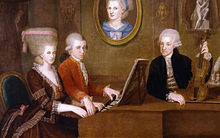
The Mozart family c. 1780. The portrait on the wall is of Mozart’s mother. (Wikipedia)

Foreign University Collaboration to be Cheaper Now: HRD Ministry

HRD Ministry has announced new UGC conditions which will apply to any Indian institutue seeking foreign academic collaboration and award of joint degrees.

Indian Universities and Colleges need to approach the University Grants Commission (UGC) for starting twinning and collaborative arrangement with quality Foreign Educational Institutions (FEIs) in undergraduate and postgraduate programmes leading to the award of a degree.

The degree will be awarded by the Indian Educational Institutions (IEIs) alone; joint degrees are not permitted though the name of the collaborating FEI can be indicated on the degree, the logo and primacy should be of the Indian institution, said the ministry. Credits from collaborating FEI when jointly signed by the IEI shall form part of the transcript and FEI may also sign the transcript/credit issued by the IEI.

The step has been taken by the UGC in order to promote foreign collaborations with a view to increasing synergy between Indian and foreign academic institutions, to offer students additional choices, improve curriculum and the delivery of knowledge and educational content, said the ministry.

The UGC’s earlier regulations issued in 2012 will be amended now. For students seeking to study abroad, new measures mean lower cost to achieve that as the new provision will offer academic mobility through acquiring of credits and study at reputed institution abroad, said the statement. The dedicated UGC portal to receive applications and convey approvals will be launched shortly by the UGC.

However, the new norms will not be applicable to technical institutions, for which AICTE will leverage and bring out similar methodology and facilitative regulations. Universities/institutions that are recognized by UGC and FEIs intending to collaborate will be benefitted from this measure now.

The Regulations stipulate that only IEIs with ‘A’ grade or threshold accreditation should have experience of 6 years or at least 2 batches passed out and similarly ‘A’ grade or threshold level accreditation if the IEIs in their own country will be eligible for collaboration. A bench mark for quality has therefore been set for the collaborations. To maintain academic credibility and seriousness, a minimum duration of collaboration has been specified under one semester for postgraduate degree and 2 semesters for undergraduate degree.

"The UGC will examine complaints relating to academic collaborations being run in violation of these regulations and if prima-facie evidence of fraud is found, it will inform Central and State authorities for appropriate action under the framework of the law, including penal action, said the ministry that regulates and controls UGC.

Ordinance Issued to Defer NEET This Year

In a deja vu, the Union government on Friday issued an ordinance postponing the implementation of NEET (National Eligibility cum Entrance Test) for medical and dental courses in institutions under state governments. The NEET will apply in these institutions from next year, 2017 onwards, said the statement.

It means the NEET 2016 will be applicable only to those who are applying for admission to Central government and private management institutions under the management quota. It may be noted that Karnataka and other state governments had asked the Centre to defer the NEET for this year in view of reforming their own system of entrance exam.

As NEET was laready tken by 6.5 lakh students on May 1 and another 8 lakhs are taking it on July 24, there was considerable confusion among the students over the fate of their first exam. Most of them have decidd forego the results in the first and prepare for the second one next month.

The confusion triggered after the Supreme Court said all students should take only one common entrance test, the NEET, for entry to medical colleges, owing to several complaints about corruption in states and in private medical colleges which hold their own exams.

Karnataka PUC Results to be Declared Tomorrow

Despite re-holding Chemistry exam and facing allegations of rampant corruption in its examination system, Karnataka Secondary Education Examination Board (KSEEB) will declare the resultss of the Pre-University Course (PUC) tomorrow, May 18, 2016.

Nearly 6 lakh students took the exam for Karnataka 2nd PUC and chemistry was postponed twice over leakage of newspaper and a big scam involving a huge network of coaching centres and top PUC schools has come into limelight when the police probed the leakage.

The results can be checked on the official website of KSEEB —

kseeb.kar.nic.in

and

karresults.nic.in.

Stuents are advised to keep their PUC 2nd year exam registration number ready before checking the results online as massive rush is expected and it may get hung or crash under pressure.

Delay in CBSE Class 10 and 12 Results Affect Students

Students who wanted to apply for POLYCET 2016 are up in arms over the undue delay in CBSE Exam Results this year, despite no complaints of paper leakage or mass copying.

Generally, CBSE announces results by May first week and this time they have been pushed to last week of May, affecting the students who want to seek admission into polytechnic schools, where the last date for all formalities is May 30.

Sources in the Central Board of Secondary Education (CBSE) hinted that the results of Class 12 examinations will be announced next Monday, May 23 while Class 10 results will follow two days later.

Meanwhile, Telangana State POLYCET (Polytechnic Common Entrance Test) was conducted by the State Board of Technical Education and Training, Telangana on April 21 and the registration process for qualified students will begin from May 23 and finish by May 31 as below:

PolyCET schedule:

Document Verification: May 20 to May 28
Online Upload from May 23 to 30
Option to Change Course: Till May 31
Seat Allotment: Till June 1.

The PolyCET officials said the certificate verification process for CBSE students will be held barring the marks sheet and all the students have been informed on their mobiles.

Rajinikanth’s ‘Kabali’ Teaser Crosses 18 Million Views

The much-awaited teaser of superstar Rajinikanth starrer "Kabali" that was launched on Sunday, May 1 has crossed 18 million views as of May 17, making it one of the record-breaking Youtube trends in film industry. In fact, within minutes of hitting YouTube, the video clip went viral on all social media platforms.

The one-minute-seven-second teaser emerged as one of the fastest viewed teasers and within an hour of its release, crossed 1 million views on YouTube, making it the highest so far for a South Indian film. The teaser has bagged more than 6 million views within 24 hours of its release.

According to Whacked Out Media, who are optimizing the promotional material on YouTube, “#KabaliTeaser” trended on microblogging site Twitter on the release day and bagged a place on the worldwide trend list with around 60,000 users tweeting about it at once which reached out to more than 6.6 million people.

After the makers unveiled a new poster of Rajinikanth ahead of the release of teaser, the upcoming film was also one among the top trends on Facebook.

Rajinikanth is back with a bang and took the internet by storm with his new look. Sporting a smart beard and delivering powerful dialogues Rajinikanth plays Kabali, a gangster. The look of the star will remind fans of the good old Rajinikanth days.

The film is produced by Kalaipuli S. Thanu under the banner V Creations, with an ensemble cast of Radhika Apte, Attakathi Dinesh, Kalaiarasan, Dhansika, John Vijay and Kishore, the film managed to grab the attention of audience with the teaser. Written and directed by Pa. Ranjith, the film”s release is slated for later this year.

Check out the official teaser of Kabali at (https://youtu.be/9mdJV5-eias)

Depression in Parents Leads to ‘Anti-Social’ Kids: Study

Researchers have hit upon another angle of depression — that parents who undergo depression can lead to offsprings who are prone to breaking rules and law and indulge in substance usage.

Eva Telzer from the University Of Illinois at Urbana-Champaign said, “There are a lot of changes happening in the teenage years, especially when we are thinking about risk-taking behaviours.”

Lead author Yang Qu said even those who are not clinically depressed and seeking out help warns such parents that their teenager may be probably picking up the negative emotions parents are experiencing and is undergoing rebellious mood swings.

“This is the first evidence to show that parental depression influences children’s behaviour through the change in the adolescent’s brain,” he said.

The team analyzed 23 adolescents aged 15 to 17, with cognitive testing and brain imaging for 18-month period. They collected data from the parents on their own depressive symptoms and also those who were not currently being treated for clinical depression.

They collected information on the adolescents’ rule-breaking behaviours, such as sneaking out without parental permission, substance abuse and partying and their findings revealed that adolescents whose parents had greater depressive symptoms increased their risk-taking behaviour.

The study was published in the journal Social Cognitive and Affective Neuroscience.

JNU Bus Incident: Navnirman Sena Man Held for Mysterious DTC Bus Bag

Delhi Police on Thursday night arrested Amit Jani, the Uttar Pradesh Navnirman Sena chief, who had threatened to kill Jawaharlal Nehru University Students’ Union (JNUSU) president Kanhaiya Kumar and another student Umar Khalid by leaving behind a bag full of weapons and a letter to kill the student leader.

The bag full of weapons and a letter threatening Kanhaiya and Khalid was discovered in a Delhi Transport Corporation bus at the JNU campus and the police found the signature in the letter belonged to Amit Jani.

However, the self-styled UP Navnirman Sena chief reportedly told the police that the country-made pistol found on the bus was meant to be used to kill AIMIM leader Asaduddin Owaisi. Jani has been openly issuing statements declaring his intent to kill several leaders of political parties and student leaders.

India’s Environment Activists Launch #NoMore50 Campaign

The launch of the #NoMore50 campaign calling for stronger and higher penalties for animal cruelty kicked off on Thursday, May 12 with several parliamentarians and celebrities joining hands for the campaign.

The campaign includes a series of videos from Indian celebrities, including Usha Uthup, Sudesh Bhosle, Anup Jalota, Tara Sharma, Arman Mallik and others, urging the Ministry of Environment to increase punishment for animal cruelty in the Prevention of Cruelty to Animals Act, 1960. #NoMore50 is a campaign from Humane Society International/India and People for Animals.

View the videos here

The penalty in the PCA Act for killing, mutilating and maiming an animal has never been revised. Animal abusers have taken advantage of this feeble law and have continued to inflict unsurmountable amount of cruelty on animals. Currently, the maximum penalty even for the most heinous form of animal abuse is a petty Rs 50.

Poonam Mahajan, MP from North Mumbai, has introduced a private members bill seeking an increase in the penalties for animal cruelty through an amendment of the PCA Act. Leaders from different political parties like Shashi Tharoor, Baijayant ‘Jay’ Panda, Satyapal Singh, Varun Gandhi, Meenakshi Lekhi and several others already support the campaign.

Harish Iyer, director of strategic partnerships for HSI/India, said, “It gives us immense strength to see that people from all walks of life are making a strong statement against animal abuse in the country. The penalties in the PCA Act, in its current framework, serve no purpose to protect and benefit animals. We hope that with this massive support we are able to move the government to introduce the much needed amendment in the PCA Act.”

India vs China: Diplomatic Tit for Tat on Display?

India has never been so upset with China as it is now over the issue of Beijing blocking Pakistan-based Islamist leader Maulana Masood Azhar designated a terrorist by the United Nations (UN). Azhar’s Jaish-e-Mohammed militant group is blamed for the 2 January attack on the Pathankot airbase in Punjab.

The diplomatic quid pro quo soon rolled out in the form of irking China where it makes more sense. India has issued visas to four Chinese Uyghur nationals, including one termed as terrorist by China in the past. They are given visa to visit India and meet the exiled Tibetan spiritual leader, the Dalai Lama, next week.

In fact, the provocation began last year with the Chinese plan to build a $46 billion China-Pakistan Economic Corridor, including roads, railways and pipelines, in Kashgar, Chinese Xinjiang province and running through Pakistan-occupied Kashmir till Karachi.

Revealing the visa-issuance, Dolkun Isa, whom China branded a "Terrorist" and chairman of the executive committee of the World Uyghur Congress (WUC), which is fighting for freedom on the lines of Tibet. Now Isa said that the delegation was travelling to India for a conference which was to be addressed by the Dalai Lama.

India and China had fought the 1962 war over border problems but the main trigger was allowing Dalai Lama in 1959 following a failed uprising in Tibet. Many analysts say the India-China war of 1962 was sparked by Chinese anger towards India following the grant of asylum to the Tibetan spiritual leader.

China has snubbed India at the UN using its veto over Azhar case. When India raised its voice, Beijing said India and Pakistan should resolve the issue bilaterally before asking China to intervene or not to intervene in the issue. Now that India has granted visa to Uyghur separatists in China, any protest from Beijing will be summarily rejected saying it’s an internal issue to be settled between Uyghurs and the Chinese government. Tit for Tat?

Now Buy Jewellery on Interest-Free EMI

Purchasing jewellery for a big occasion could mean pouring out one’s hard-earned savings but to make it notionally less burdensome, Candere.com, an online jewellery retailer, has come to the rescue of jewellery lovers.

Candere.com offers easy EMI on diamond jewellery to its consumers without charging any interest, or additional cost over and above the price of the jewellery. The entire deal is between the jeweller and the buyer, without any involvement of the bank.

So now one can own a piece of bespoke, captivating diamond jewellery and also save money on their purchase. When ordering precious diamond jewellery on Candere.com, the customer can book it with a part payment and then pay the rest with easy EMI (Equated Monthly Instalments) over a period of time, without paying any additional cost in the form of interest.

"We came up with the EMI idea to reach out to these significant concerns regarding jewellery purchase and make diamond jewellery affordable for consumers. Jewellery is not less than an investment, since it is meant for a lifetime," said Rupesh Jain, CEO of Candere, a jewellery start-up headquartered in Mumbai.

There is an understanding between the customer and the merchant to pay the remaining sum over a period of either six months or nine months, as per customers’ convenience and affordability. Since there is no interest involved, there is price protection, which means that a piece of jewellery is booked on a fixed amount – its site-price – and the rest is paid with not a penny more. It makes complete sense when people are worried about buying the best designs within a restrained budget. It allows people to fulfil their dreams and also gift precious jewellery to their loved ones.

Considering a consistent fluctuation in prices of gold and unstable market scenarios, this is a brilliant idea that Candere has come up with, which is working really well. It gives greater flexibility to the customer to buy expensive jewellery and not limit to smaller diamonds and lower price tags. Since the introduction of easy EMI by Candere, more and more people are now buying, wearing and even gifting beautiful diamond jewellery. Diamond is not a far-fetched commodity anymore; it is for one and all.

Defying age old norms about buying jewellery only from high-end stores, more and more buyers are now turning towards online purchase options. Not only that, buying expensive items like gadgets, bridal trousseau, electronics, fine jewellery through digital marketplaces has become as easy as a few clicks. Candere came up with the idea of EMI to address primary concerns of jewellery buyers, such as – hesitation to buy expensive jewellery pieces, due to concern of the cost factor – especially wedding related purchases. Since there are humongous expenses involved during a wedding, many families have to put a restrain over certain areas, which is where wedding jewellery comes under spotlight.

Kanhaiya Kumar Gets Death Threat in DTC Bus for Nagpur Speech?

In less than 24 hours after he said, Nagpur is not Sanghbhoomi alone but of Ambekar’s land too, JNUSU leader Kanhaiya Kumar received an open threat, this time in the form of a pistol with a threatening letter, that was left behind on a DTC bus from ISBT to JNU campus.

Kanhaiya Kumar, the bete noir of RSS, reached the town of RSS headquarters to be received by angry Bajrang Dal and ABVP members who threw slippers, shoes at the Jawaharlal Nehru Students’ Union president, who openly criticised RSS for spreading hatred and communal division in the country.

Later, addressing a public meeting on the occasion of 125th birth anniversary of BR Ambedkar, Kanhaiya Kumar said, he will continue his fight against the move to replace the nation with Narendra Modi, Parliament with the RSS, and the Constitution with Manusmriti. He reminded people that it was RSS’s ideologue Savarkar, not Jinnah, who propounded the two-nation theory that led to the division of the country.

He said, “Nagpur is Deekshaboomi (where Ambedkar and his followers converted to Buddhism), not Sanghbhoomi (RSS headquarters). It belongs to Ambedkar, not Golwalkar; just as Gujarat belongs to Gandhiji, not Modi.”

When ABVP members and Bajrang dal men hurled shoes, slippers and shouted slogans against Kanhaiya, he retorted saying, "What sort of patriotism is displayed by throwing slippers?"

This is Kanhaiya Kumar’s second visit after Hyderabad and that too to Nagpur, RSS headquarters, which is significant since the student leader is among those who raised the voice of people against the conservative nationalist forces in the country.

While the Delhi Police slapped sedition charges against him, several individuals have been threatening him with death notes and the latest is the pistol found in DTC bus with a death threat to the student leader.

Top 100 Universities of India as per All-India Ranking by Ministry of HRD

India’s Union HRD ministry’s NIRF has released the the country’s ranking of top universities and institutes in categories of univesities, engineering institutes, management institutes, and pharma institutes.

As expected JNU has come on top at third while the science streams had IISc of Bangalore on top of the list. Leaving aside IISc and ICT-Mumbai, JNU tops the general stream of universities in the country, while University of Hyderabad came next to it and surprisingly Tezpur University of Assam took the fifth rank, leaving Delhi University to 6th rank. Here’s the full list of top 100 Universities in India.

Name City State Score Rank
NIRF-UNIV-248 Indian Institute Of Science Banglore Banglore Karnataka 91.81 1
NIRF-UNIV-282 Institute Of Chemical Technology | Mumbai Maharashtra 87.58 2
NIRF-UNIV-319 Jawaharlal Nehru University | New Delhi Delhi 86.45 3
NIRF-UNIV-745 University Of Hyderabad-Hyderabad | Hyderabad Telangana 85.45 4
NIRF-UNIV-708 Tezpur University | Tezpur Assam 84.31 5
NIRF-UNIV-741 University Of Delhi | Delhi Delhi 83.19 6
NIRF-UNIV-66 Banaras Hindu University | Varanasi Uttar Pradesh 81.22 7
NIRF-UNIV-249 Indian Institute Of Space Science And Technology | Thiruvananthapuram Kerala 78.82 8
NIRF-UNIV-86 Birla Institute Of Technology & Science -Pilani | Pilani Rajasthan 76.85 9
NIRF-UNIV-18 Aligarh Muslim University | Aligarh Uttar Pradesh 76.62 10
NIRF-UNIV-780 Visva Bharati | Kolkata West Bengal 76.11 11
NIRF-UNIV-558 Punjab University | Chandigarh Chandigarh 76.02 12
NIRF-UNIV-542 Pondicherry University | Puducherry Pondicherry 74.44 13
NIRF-UNIV-76 Bharathiar University | Coimbatore Tamil Nadu 74.31 14
NIRF-UNIV-519 North Eastern Hill University | Shillong Meghalaya 72.41 15
NIRF-UNIV-360 King Georges Medical University-Lucknow | Lucknow Uttar Pradesh 72.24 16
NIRF-UNIV-231 Homi Bhabha National Institute | Mumbai Maharashtra 72.06 17
NIRF-UNIV-309 Jamia Hamdard-New Delhi | New Delhi Delhi 71.44 18
NIRF-UNIV-29 Amrita Vishwa Vidyapeetham-Coimbatore | Coimbatore Tamil Nadu 71.03 19
NIRF-UNIV-199 Goa University-Goa | Goa Goa 69.90 20
NIRF-UNIV-215 Guru Gobind Singh Indraprastha Vishwavidyalaya | New Delhi Delhi 69.65 21
NIRF-UNIV-194 Gauhati University | Guwahati Assam 68.58 22
NIRF-UNIV-287 International Institute Of Information Technology Hyderabad | Hyderabad Telangana 68.38 23
NIRF-UNIV-216 Guru Jambeshwar University Of Science And Technology | Hissar Haryana 67.46 24
NIRF-UNIV-218 Guru Nanak Dev University | Amritsar Punjab 67.32 25
NIRF-UNIV-624 Shiksha ‘O’ Anusandhan | Bhuabaneswar Odisha 66.81 26
NIRF-UNIV-283 Institute Of Liver And Biliary Sciences | New Delhi Delhi 66.65 27
NIRF-UNIV-626 Shivaji University | Kolhapur Maharashtra 66.53 28
NIRF-UNIV-67 Banasthali Vidyapith | Banasthali Rajasthan 66.37 29
NIRF-UNIV-137 Cochin Unviersity Of Science & Technology | Cochin Kerala 66.35 30
NIRF-UNIV-81 Bidhan Chandra Krishi Vishwavidyalaya | Mohanpur West Bengal 66.33 31
NIRF-UNIV-434 Manipal Academy Of Higher Education-Manipal | Manipal Karnataka 65.74 32
NIRF-UNIV-529 Osmania University | Hyderabad Telangana 65.40 33
NIRF-UNIV-111 Central University Of Rajasthan | Bandar Sindri Rajasthan 64.49 34
NIRF-UNIV-299 Jagadguru Sri Shivarathreeshwara University | Mysore Karnataka 64.28 35
NIRF-UNIV-697 Tamilnadu Veterinary & Animal Sciences University | Chennai Tamil Nadu 64.23 36
NIRF-UNIV-324 Jaypee University Of Information Technology-Solan | Solan Himachal Pradesh 64.21 37
NIRF-UNIV-285 Instituteof Armamrnt Technology | Pune Maharashtra 64.05 38
NIRF-UNIV-172 Dr. Harisingh Gour Vishwavidyalaya-Sagar | Sagar Madhya Pradesh 63.69 39
NIRF-UNIV-692 Tamilnadu Agricultural University | Coimbatore Tamil Nadu 63.66 40
NIRF-UNIV-550 Presidency University | Kolkata West Bengal 63.56 41
NIRF-UNIV-615 Sathyabama Institute Of Science And Technology | Chennai Tamil Nadu 62.46 42
NIRF-UNIV-596 S.R.M Institute Of Science And Technology | Chennai Tamil Nadu 62.29 43
NIRF-UNIV-409 Maharishi Dayanand University | Rohtak Haryana 61.31 44
NIRF-UNIV-338 Kalyani University | Kalyani West Bengal 61.30 45
NIRF-UNIV-554 Pt.Ravishankar Shukla University | Raipur Chhattisgarh 61.09 46
NIRF-UNIV-540 Periyar University | Salem Tamil Nadu 60.99 47
NIRF-UNIV-350 Karunya Institute Of Technology And Sciences-Coimbatore | Coimbatore Tamil Nadu 60.85 48
NIRF-UNIV-15 Alagappa University | Karaikudi Tamil Nadu 60.63 49
NIRF-UNIV-467 National Institute Of Food Technology, Entrepreneurship & Management (Niftem) | Sonepat Haryana 60.44 50
NIRF-UNIV-448 Mizoram University | Aizwal Mizoram 60.31 51
NIRF-UNIV-335 Kalasalingam Academy Of Research And Higher Education | Srivilliputtur Tamil Nadu 60.27 52
NIRF-UNIV-336 Kalinga Institute Of Industrial Technology | Bhubneshwar Odisha 60.09 53
NIRF-UNIV-557 Punjab Technical University | Kapurthala Punjab 60.06 54
NIRF-UNIV-534 Pandit Deendayal Petroleum University | Gandhinagar Gujarat 58.67 55
NIRF-UNIV-276 Indraprastha Institute Of Information Technology-New Delhi | New Delhi Delhi 58.62 56
NIRF-UNIV-33 Annamalai University | Annamalainagar Tamil Nadu 57.58 57
NIRF-UNIV-661 Sri Ramachandra Medical College And Research Institute | Chennai Tamil Nadu 57.36 58
NIRF-UNIV-521 North Maharashtra University | Umavinagar Maharashtra 57.28 59
NIRF-UNIV-101 Central University Of Gujarat | Gandhinagar Gujarat 57.14 60
NIRF-UNIV-644 Sikkim University | Gangtok Sikkim 57.08 61
NIRF-UNIV-732 U.P. Pandit Deen Dayal Upadhyaya Pashu Chikitsa Vigyan Vishwavidhyalaya Evam Go | Mathura Uttar Pradesh 56.84 62
NIRF-UNIV-668 Sri Venkateswara University | Tirupati Andhra Pradesh 55.93 63
NIRF-UNIV-311 Jammu University -Jammu Tawi | Jammu Tawi Jammu and Kashmir 55.70 64
NIRF-UNIV-110 Central University Of Punjab-Bathinda | Bathinda Punjab 55.62 65
NIRF-UNIV-629 Shoolini University Of Biotechnology And Management Sciences-Solan | Solan Himachal Pradesh 55.49 66
NIRF-UNIV-113 Central University Of Tamil Nadu-Tiruvarur | Tiruvarur Tamil Nadu 55.37 67
NIRF-UNIV-740 University Of Allahabad | Allahabad Uttar Pradesh 55.04 68
NIRF-UNIV-317 Jawaharlal Nehru Technological University | Kakinada Andhra Pradesh 54.71 69
NIRF-UNIV-707 Teri School Of Advanced Studies | New Delhi Delhi 54.46 70
NIRF-UNIV-497 National Law University | New Delhi Delhi 54.17 71
NIRF-UNIV-462 Narsee Monjee Institute Of Management Studies -Mumbai | Mumbai Maharashtra 54.04 72
NIRF-UNIV-210 Gujarat University | Ahmedabad Gujarat 54.01 73
NIRF-UNIV-159 Dibrugarh University | Dibrugarh Assam 53.89 74
NIRF-UNIV-516 Noorul Islam Centre For Higher Education -Kanyakumari | Kanyakumari Tamil Nadu 53.42 75
NIRF-UNIV-405 Maharaja Sayajirao University Of Baroda -Vadodara | Vadodara Gujarat 53.14 76
NIRF-UNIV-47 Assam University-Silchar | Silchar Assam 53.13 77
NIRF-UNIV-746 University Of Kota | Kota Rajasthan 52.88 78
NIRF-UNIV-552 Pt. Bhagwat Dayal Sharma University Of Health Sciences | Rohtak Haryana 52.47 79
NIRF-UNIV-636 Shri Mata Vaishno Devi University | Katra Jammu and Kashmir 52.38 80
NIRF-UNIV-242 Indain Institute Of Foreigen Trade-New Delhi | New Delhi Delhi 51.82 81
NIRF-UNIV-721 The Northcap University | Gurgaon Haryana 51.63 82
NIRF-UNIV-310 Jamia Millia Islamia-New Delhi | New Delhi Delhi 51.51 83
NIRF-UNIV-62 Babasaheb Bhimrao Ambedkar University-Lucknow | Lucknow Uttar Pradesh 51.39 84
NIRF-UNIV-382 Lnm Istitute Of Information Technology | Jaipur Rajasthan 50.81 85
NIRF-UNIV-323 Jaypee University Of Engineering & Technology | Raghogarh Madhya Pradesh 50.67 86
NIRF-UNIV-166 Dr. Babasaheb Ambedkar Marathwada University | Aurangabad Maharashtra 50.07 87
NIRF-UNIV-730 Tripura University | Agartala Tripura 49.89 88
NIRF-UNIV-470 National Institute Of Technology Agartala | Agratala Tripura 49.73 89
NIRF-UNIV-389 M.S. Ramaiah University Of Applied Sciences | Bangalore Karnataka 49.67 90
NIRF-UNIV-146 Dayalbagh Educational Institute -Agra | Agra Uttar Pradesh 49.64 91
NIRF-UNIV-792 Yogi Vemana University | Kadapa Andhra Pradesh 49.11 92
NIRF-UNIV-653 Sri Balaji Vidyapeeth Mahatma Gandhi Medical College Campus | Puducherry Pondicherry 48.89 93
NIRF-UNIV-112 Central University Of South Bihar | Patna Bihar 48.89 94
NIRF-UNIV-646 Sir Padmapat Singhania University | Udaipur Rajasthan 48.20 95
NIRF-UNIV-21 Ambedkar University Delhi (Aud) | Delhi Delhi 47.83 96
NIRF-UNIV-573 Rajasthan University Of Veterinary & Animal Sciences | Bikaner Rajasthan 47.65 97
NIRF-UNIV-541 Pes University | Bangalore Karnataka 47.30 98
NIRF-UNIV-265 Indian Law Institute -New Delhi | New Delhi Delhi 47.19 99
NIRF-UNIV-126 Chettinad Academy Of Research And Education (Care) | Chennai Tamil Nadu 47.05 100

Source: National Institutional Ranking Framework (NIRF), Ministry of HRD


Top Universities of India List under NIRF Ranking Released, JNU 3rd, HCU 2nd, BITS,Pilani 9th

Ending fake claims of rankings across the country, India’s Union HRD ministry’s NIRF has released the the country’s ranking of top universities and institutes in categories of univesities, engineering institutes, management institutes, and pharma institutes.

As expected JNU has come on top at third while the science streams had IISc of Bangalore on top of the list. Leaving aside IISc and ICT-Mumbai, JNU tops the general stream of universities in the country, while University of Hyderabad came next to it and surprisingly Tezpur University of Assam took the fifth rank, leaving Delhi University to 6th rank.

Here is the list of top 5 universities/institutes in their respective category:

TOP 5 UNIVERSITIES in INDIA:

1.Indian Institute Of Science Banglore–Banglore—Karnataka

India to Join 100 Other Nations to Ratify Paris Climate Pact on April 22

Reiterating India’s commitment to carbon emission reduction, Union Environment, Forests & Climate Change Minister Prakash Javadekar on Saturday said India, along with 100 other nations would ratify the COP 21 Global Climate Agreement on April 22.

The pact, COP 21, reached at Paris summit in December 2015 would be ratified at a high level signing ceremony to be convened at the UN Headquarters in New York. The agreement sets out a global action plan to put the world on track by limiting global warming below 2 degree Celsius.

Speaking at a Symposium “COP 21 – Building Synergies, Shaping Actions” organized in the University of Mumbai, Javadekar said, “All countries have decided to walk the green path as per their common but differentiated responsibilities… India was always perceived to be a naysayer and negative in its approach and took a corner seat in most of the international conferences. But in Paris, Prime Minister Narendra Modi introduced the concept of climate justice driving home the message of sustainable development.”

The minister said climate change by 1 degree rise in temperature caused by 150 years of uncontrolled carbon emission by the developed world needs to be reversed. He said while 30% of cumulative contribution was that of the United States, 50% by Europe, Canada and other developed world and 10% by China, India was responsible for only 3% carbon emission but still “it wants to be part of the solution.”

Highllighting some pro-active measures to discourage use of fossil fuels in a bid to reduce carbon foot print by levying Rs 400 per tonne green cess on coal, he said: “If the developed world followed India’s example and levied higher taxes on coal, billions of dollars would accrue to pursue clean energy programmes.”

Further the proposed Compensatory Afforestation Funds Bill 2015 would unlock Rs 40,000 crores for the ‘Green India’ initiative and other plans to control vehicular pollution by moving to Bharat VI emission norms, policies on waste management, Swachch Bharat initiative, Ganga rejuvenation among others would contribute to contain climate change, said the minister.

Union Minister of State (IC) for Coal, Power, New & Renewable Energy Piyush Goyal said his portfolios put him in an awkward situation. “I am a polluter as well as a pollution container”, he said. On solutions undertaken to contain climate change, he said India has launched the world’s largest renewable energy programme by scaling up the target for solar energy. “The solar energy mission envisaged 20,000 Mw of solar electricity generation by 2022. But this target has been pushed ahead by the Prime Minister to 1,00,000 Mw (1Gw),” Goyal said. But all renewable energy programmes will be sustainable only if they become economically viable, he noted.

“While one is aware of pollution caused by the thermal power plants, their importance cannot be overlooked. Therefore, our thrust is on adopting clean coal technologies” he added.

Forget Selfie Stick, Here Comes ROAM-e Drone!

ROAM-e selfie Drone

Australian tech firm IoT Group has launched a new “ROAM-e” drone priced A$349 (US $267) that will be hovering over you as are on go and takes your picture in 360 degree format to be streamed live on the Internet and social media.

Replacing the selfie sticks or stretching your hand far to get a better selfie picture, users can now use the small drone built with facial recognition technology and tethered with your smartphone, it can be your constant companion in air for 20 minutes at a stretch and easily rechargeable.

Ian Duffell, executive director of the IoT Group, says it is “a selfie stick on steroids” since the selfie stick’s problem is it’s confined by the length of the stick. Once tethered to your smart phone, you’ll never need additional tethering devices specific to ROAM-e, he said.

“The thought was, let’s get the thing taking the picture flying with you,” he said. The two rotor ‘ROAM-e’ can be programmed using facial recognition technology to follow the user at a distance of up to 25 metres. It can take 360-degree panorama pictures of you and even stream a live video for up to 20 minutes.

The ROAM-e has a 5-megapixel CMOS sensor camera and runs on Quadcore ARM Cortex A7 processor and its rotors can be folded.

“We wanted it to be small enough to fit into a bag or pocket. We modelled it on not being bigger than a 600-millilitre water bottle,” Duffell noted launching the device on Thursday. It has the ability of the drone to drop a pin on a map application, if instructions are given to it to travel to that point and return, he said.