India-New Zealand FTA opens zero-duty market, but can MSMEs convert access into orders?

NEW DELHI, October 20: The India-New Zealand Free Trade Agreement (FTA) came into force on Tuesday, giving Indian exporters zero-duty access across 100% of New Zealand’s tariff lines and removing customs duties of up to 10% on products ranging from textiles and footwear to engineering goods and pharmaceuticals.

The agreement offers Indian manufacturers a new avenue to expand exports, diversify overseas markets and compete with suppliers from countries that already enjoy preferential trade arrangements with New Zealand. However, the commercial gains will depend on whether Indian businesses can secure orders, meet product standards, establish distribution networks and compete on price and delivery.

The agreement was signed on April 27, 2026, and follows negotiations launched on March 16, 2025, that concluded on December 22, 2025. Both countries completed the necessary domestic procedures before the pact entered into force.

Union Commerce and Industry Minister Piyush Goyal said the agreement would create opportunities for Indian exporters, particularly micro, small and medium enterprises (MSMEs), artisans, farmers and women entrepreneurs.

“Ours is a winning partnership, both on and off the field,” Goyal said in a statement issued by the Commerce Ministry on Monday. He added that the agreement’s success would be measured by “the opportunities it creates and the difference it makes to the lives of the people of New Zealand and India.”

Textiles, leather, engineering and pharmaceuticals among beneficiaries

The immediate benefit is the removal of New Zealand’s customs duties on all tariff lines covering Indian exports. The Commerce Ministry has identified textiles and apparel, leather, footwear, gems and jewellery, engineering goods, automobiles and auto components, chemicals, pharmaceuticals, agricultural products and processed foods among the sectors expected to gain.

Indian manufacturers will also receive duty-free access to inputs such as wooden logs, coking coal and metal waste and scrap, which could reduce input costs for businesses using these materials.

Pharmaceutical and medical-device exporters are expected to benefit from streamlined regulatory procedures. New Zealand will accept inspection approvals from recognised regulators, including the US Food and Drug Administration, the European Medicines Agency, the UK Medicines and Healthcare products Regulatory Agency and Health Canada, according to the Commerce Ministry.

The agreement also provides access for Indian service providers across approximately 118 sectors and sub-sectors, with most-favoured-nation commitments covering about 139 sub-sectors. These provisions extend the agreement beyond merchandise trade.

The government highlighted the first-ever export of a JCB machine from India to New Zealand during Monday’s announcement of the agreement’s commencement. Product shipments from sectors including agriculture, gems and jewellery, engineering, sporting goods, footwear and leather were also planned around the launch.

New Zealand Trade and Investment Minister Todd McClay said the agreement would allow Indian goods to enter New Zealand duty-free, placing Indian exporters on a level playing field with suppliers from New Zealand’s other free trade agreement partners.

“The success of this agreement will ultimately be measured by the opportunities it creates and the extent to which our businesses use it,” McClay said.

Trade target raises the stakes for implementation

India and New Zealand have set an aspirational target of doubling bilateral trade in goods and services to NZ$7 billion, equivalent to approximately ₹35,000 crore, by 2030.

India’s goods exports to New Zealand were reported at $566.5 million in 2025-26, while bilateral merchandise trade stood at approximately $1.1 billion during the financial year, according to government figures. The broader trade target includes services and therefore should not be compared directly with merchandise trade alone.

New Zealand has also committed to facilitate $20 billion in investment into India over 15 years. The investment is expected to support agriculture, manufacturing, infrastructure and start-ups.

Department of Commerce Secretary Rajesh Agrawal said the next task was to turn the agreement into measurable economic gains.

“The job is now to translate this opportunity into actual benefits for our people,” Agrawal said, adding that the government was working with industry and trade associations to take the message to districts across the country.

For MSMEs, zero-duty access removes one barrier but does not guarantee export growth. Smaller businesses will still need to identify buyers, meet technical and packaging requirements, manage shipping costs and establish reliable payment and distribution arrangements.

The agreement also contains rules of origin, a bilateral safeguard mechanism and anti-circumvention provisions to ensure that preferential access is available to qualifying goods.

The test over the coming months will be whether the tariff advantage generates additional orders, higher export volumes and new employment rather than merely reducing duties on existing shipments.

India-New Zealand FTA: Indian Students Get No-Cap Entry, Longer Post-Study Work Rights

India’s free trade agreement with New Zealand, which came into force on October 20, 2026, introduces new protections for Indian students seeking overseas education, including a commitment against numerical limits on student admissions, a minimum of 20 hours of work a week during study and expanded post-study employment opportunities.

The agreement establishes a dedicated student mobility and post-study work framework between the two countries. While it does not guarantee admission to a university or automatic approval of a visa, it commits both governments to providing pathways for eligible students who meet institutional and immigration requirements.

New Zealand’s Immigration Minister’s department confirmed on October 20 that the agreement had taken effect, bringing its visa commitments into force. The provisions are particularly relevant to Indian students considering New Zealand for higher education, as they address both the ability to work while studying and the opportunity to gain professional experience after graduation.

No Numerical Caps on Indian Students, Minimum 20-Hour Work Commitment

Under the agreement, neither country can impose numerical limits on students from the other country seeking admission to recognised educational institutions, provided they satisfy the applicable eligibility conditions. Students are also entitled to multiple-entry visas valid for the duration of their studies, subject to immigration requirements.

The FTA commits both countries to allowing eligible students to work for at least 20 hours a week while studying, in line with their respective national policies on student visa work rights.

New Zealand currently permits eligible international students, including Indians, to work up to 25 hours a week during study. Immigration New Zealand has clarified that the FTA’s 20-hour provision is a minimum commitment intended to protect Indian students if the country’s policy settings change in the future. It does not reduce the existing 25-hour allowance.

The distinction matters because the agreement establishes a guaranteed minimum rather than a fixed ceiling on student employment. Students must continue to comply with the conditions attached to their visas.

The framework also does not remove academic admission requirements, tuition fees, financial requirements or other immigration checks. Applicants must secure admission to a recognised institution and meet the relevant eligibility criteria.

The Indian government described the student provisions as a first in New Zealand’s trade agreements. In its April 27 announcement following the signing of the pact, the Press Information Bureau said the agreement would create a dedicated pathway for student mobility and post-study work visas.

Commerce and Industry Minister Piyush Goyal said the agreement placed student mobility, skills, investment and services at the centre of a broader economic partnership.

Post-Study Work Rights Extend Up to Four Years

The FTA sets out post-study employment opportunities for Indian students completing recognised qualifications in New Zealand. Under the agreement, eligible graduates can obtain temporary work opportunities for up to two years after completing a bachelor’s degree, up to three years after a master’s degree and up to four years after a doctoral degree.

An additional provision extends the potential post-study stay for Indian students who graduate with first-class honours in STEM subjects, including information and communications technology, from two years to three years.

These provisions are intended to help graduates gain international work experience and apply their qualifications in professional settings. They may be particularly relevant to students pursuing careers in science, technology, engineering, mathematics and research.

However, the maximum periods are not automatic entitlements for every graduate. Applicants must complete the qualifying programme and satisfy the applicable immigration conditions.

Immigration New Zealand confirmed on October 20 that expanded post-study work rights for Indian graduates with New Zealand PhDs would take effect from November 16, 2026. Eligible Indian doctoral graduates will then be able to obtain post-study work visas of up to four years, compared with the previous maximum of three years.

The later implementation date is important for students planning their graduation and employment timelines. The FTA’s entry into force on October 20 does not mean that every associated immigration change becomes available on the same day.

The agreement also provides for a working-holiday scheme for Indian citizens aged 18 to 30. The programme will be introduced within two years of the FTA taking effect, with up to 1,000 multiple-entry visas available annually for stays of up to 12 months. This is a separate youth-mobility route and should not be confused with student or post-study work visas.

For Indian students, the agreement offers greater certainty over work rights and post-study opportunities, but the practical benefits will depend on eligibility, the qualifications pursued and the ability to secure suitable employment. The pact creates a more structured pathway from education to work experience without guaranteeing jobs, permanent residence or automatic visa approval.

FAQs

1. What benefits does the India-New Zealand FTA offer Indian students?

The agreement provides for student mobility without numerical caps, a minimum commitment of 20 hours of work per week during study and post-study employment pathways for eligible graduates.

2. Can Indian students work while studying in New Zealand?

Yes. Eligible Indian students can work subject to their visa conditions. New Zealand currently allows eligible international students to work up to 25 hours a week during study. The FTA establishes a minimum commitment of 20 hours a week.

3. How long can Indian students stay in New Zealand after graduation?

Eligible Indian graduates can access post-study work opportunities of up to two years after a bachelor’s degree, three years after a master’s degree and four years after a doctoral degree, subject to the applicable qualification and immigration requirements.

4. Will Indian PhD graduates get four-year post-study work visas?

Eligible Indian doctoral graduates will be able to access post-study work visas of up to four years from November 16, 2026, according to Immigration New Zealand. The benefit is subject to the applicable eligibility conditions.

5. Does the FTA guarantee admission to New Zealand universities?

No. The agreement’s student mobility provisions do not guarantee admission. Students must meet university entry requirements, secure admission to an eligible institution and satisfy the relevant visa conditions.

6. How many Indian students can obtain working-holiday visas under the agreement?

The agreement provides for up to 1,000 working-holiday visas annually for eligible Indian citizens aged 18 to 30. The scheme is scheduled to be introduced within two years of the FTA taking effect, with stays of up to 12 months.

7. Does the India-New Zealand FTA guarantee jobs or permanent residency?

No. The agreement creates pathways for student mobility and post-study employment but does not guarantee a job, permanent residency or automatic visa approval.

8. When did the India-New Zealand FTA come into force?

The agreement came into force on October 20, 2026. Some associated immigration changes have separate implementation dates, including the expanded post-study work provision for eligible Indian doctoral graduates from November 16, 2026.

India-New Zealand FTA Takes Effect on Dussehra, Opens Export Opportunities

India’s free trade agreement (FTA) with New Zealand came into force on Tuesday, October 20, coinciding with Vijayadashami, marking a new phase in economic ties between the two countries. The agreement gives 100% of Indian exports duty-free access to the New Zealand market, opening opportunities for exporters across manufacturing, agriculture, textiles and other labour-intensive industries.

Commerce and Industry Minister Piyush Goyal and New Zealand Trade and Investment Minister Todd McClay announced the implementation of the agreement following the completion of the required domestic procedures in both countries. The pact was signed on April 27, 2026, after negotiations that began in March 2025 and concluded in December that year.

The timing of the agreement’s implementation coincides with Dussehra, a festival associated with the victory of good over evil and the beginning of new endeavours.

Goyal said the agreement would strengthen trade, technology and investment ties between the two countries. He expressed confidence that the pact would help overcome barriers to economic cooperation and create greater prosperity for people on both sides.

Textiles, Footwear and Engineering Goods to Benefit

New Zealand has eliminated customs duties on all tariff lines covering Indian exports, removing peak tariffs of up to 10%. The immediate beneficiaries are expected to include exporters of textiles and apparel, leather and footwear, gems and jewellery, engineering goods, automobiles and auto components, chemicals, pharmaceuticals and processed food.

The agreement is expected to improve the competitiveness of Indian businesses by reducing the cost of accessing the New Zealand market. Duty-free access to inputs such as wooden logs, coking coal and metal scrap could also benefit manufacturers and strengthen supply chains, particularly for micro, small and medium enterprises (MSMEs).

The pact also aims to expand opportunities for farmers, artisans, women-led businesses and start-ups. Provisions on trade facilitation and cooperation between the two countries are intended to help smaller enterprises identify overseas buyers and participate in international supply chains.

New Zealand has committed to facilitate $20 billion in investment into India over 15 years. The proposed investment is expected to support sectors including agriculture, manufacturing, infrastructure and start-ups.

Services, Student Mobility and Trade Targets

The agreement extends beyond merchandise trade. Indian service providers are expected to gain market access across around 118 sectors, including information technology, professional services, construction, tourism and audio-visual services. The pact also provides most-favoured-nation commitments across about 139 sub-sectors.

Mobility provisions include a dedicated quota of 5,000 temporary employment entry visas for skilled Indian professionals and 1,000 working-holiday visas annually for young Indians. Eligible students will have access to post-study work opportunities of up to three years for STEM graduates and four years for doctoral scholars.

Indian pharmaceutical and medical-device exporters are also expected to benefit from streamlined regulatory procedures, including the acceptance of inspection approvals from recognised overseas regulators.

The agreement supports the India-New Zealand Strategic Partnership Roadmap to 2030, which sets an aspirational target of doubling bilateral trade in goods and services to NZ$7 billion, equivalent to about ₹35,000 crore, by the end of the decade.

Bilateral merchandise trade stood at around $1.1 billion in the 2025-26 financial year, according to India’s Commerce Ministry.

The implementation of the FTA comes as both countries seek to broaden economic partnerships amid uncertainty in global trade. For Indian exporters, the immediate challenge will be to convert lower tariffs into sustained orders, greater market share and higher production.

While the agreement provides wider access to New Zealand, the scale of the gains will depend on how effectively businesses use the new provisions, meet market requirements and build lasting commercial relationships.

FAQs: India-New Zealand FTA 2026

1. When did the India-New Zealand Free Trade Agreement come into force?

The India-New Zealand Free Trade Agreement (FTA) came into force on October 20, 2026, coinciding with Vijayadashami and Dussehra.

2. What are the main benefits of the India-New Zealand FTA?

The agreement provides duty-free access to the New Zealand market for 100% of Indian merchandise exports. It also expands opportunities for services, investment and professional mobility.

3. Which Indian industries will benefit from the trade agreement?

Textiles, garments, leather, footwear, carpets, ceramics, engineering goods, automobiles and auto components are among the sectors expected to benefit from lower tariffs.

4. Will the FTA benefit Indian farmers and MSMEs?

Yes. The agreement is expected to create export opportunities for farmers, artisans, women entrepreneurs and micro, small and medium enterprises (MSMEs). Actual gains will depend on market demand, competitiveness and compliance with export requirements.

5. How much investment has New Zealand committed to facilitate in India?

New Zealand has committed to facilitate $20 billion in investment into India over 15 years under the agreement. This is an investment facilitation commitment, not a guarantee that the entire amount will be invested.

6. What is the India-New Zealand bilateral trade target for 2030?

India and New Zealand aim to double bilateral trade in goods and services to NZ$7 billion, equivalent to approximately ₹35,000 crore, by 2030.

7. Does the agreement create new opportunities for Indian students and professionals?

Yes. The FTA introduces new visa pathways for eligible skilled Indian professionals, expands post-study work opportunities for certain graduates and provides for a working-holiday scheme. Applicants must meet the applicable immigration requirements.

8. Will all New Zealand products enter India duty-free?

No. Tariff concessions vary by product, and sensitive Indian sectors remain protected. New Zealand exports receive reduced or zero tariffs according to India’s agreed tariff schedule.

PM Shares Article Showcasing Benefits Of India–New Zealand FTA

The Prime Minister, Shri Narendra Modi, has shared an article written by Union Minister, Shri Piyush Goyal.

The article elaborates that the India–New Zealand Free Trade Agreement removes tariffs on Indian exports, boosting labour-intensive sectors and strengthening MSMEs, while ensuring that sectors such as agriculture and dairy remain fully protected. It further highlights that the agreement expands opportunities for students and skilled professionals, along with support for agricultural productivity and investment commitments.

The Prime Minister’s Office posted on X;

“Union Minister Shri @PiyushGoyal elaborates how the India-New Zealand FTA removes tariffs on Indian exports, boosting labour-intensive sectors and strengthening MSMEs, while ensuring that sectors like agriculture and dairy remain fully protected.

The FTA also expands opportunities for students and skilled professionals, alongside support for agricultural productivity and investment commitments.”


Also Read:

PM Modi Lauds Retiring Rajya Sabha Members, Calls Their Experience ‘Nation’s Asset’

India, Georgia to Study Free Trade Agreement Scope

Piyush Goyal to attend Indo-Pacific Economic Forum (IPEF) Ministerial meeting in Los Angeles tomorrow

Union Minister of Commerce and Industry, Consumer Affairs, Food and Public Distribution and Textiles, Shri Piyush Goyal will continue his tour of the US and travel to Los Angeles today to attend the first in-person Ministerial meeting of the Indo-Pacific Economic Forum (IPEF), US-India Strategic Partnership Forum (USISPF) meeting and other significant events.

Earlier in the day, Shri Goyal had a luncheon engagement with ‘Indiaspora’.

Interacting with media later in the day, ahead of the IPEF Ministerial, Shri Piyush Goyal said that discussions at IPEF would focus on opening opportunities for the member nations to work in partnership with each other to ensure that particularly during challenges and difficult times, supply chains remain open and business and people of countries don’t suffer because of chaotic conditions like covid and conflict.

Ministry of Commerce/photo:en.wikipedia.org


Terming IPEF as a new and unique initiative and a partnership between rules-based, like-minded countries which have transparent economic systems, Shri Goyal said that IPEF would work to ensure that the Indo-Pacific Region would remain secure and open for business.

Elaborating further, the Minister said that at the IPEF Ministerial, discussions would focus on facilitating open trade, keeping supply chains open. He said that as trading relations with IPEF nations expand, investments, both from and into India, would also get a leg up. All the countries meeting tomorrow have a lot to offer each other in terms of trade, investments and technology and we will work together on all fronts, he added.

Responding to a query, Shri Goyal said that US and India share a very good and strong business relationship. The US is India’s largest trading partner and many Indian companies do a lot of work for their counterparts in America. There is a lot of investment flowing from US to India, he added.

Observing that US and India are getting closer together, the Minister said that the relations between the two nations were strengthening by the day through two Quads now- one with Japan and Australia and another with Israel and UAE. 2 plus 2 ministerial dialogues between India and USA are robust and vibrant and our engagements in several areas including geopolitical and sensitive areas are expanding. The leaders of both countries, the businesses of both countries and the people of both countries are closer than ever before, he added.

Highlighting some of the milestones India has achieved in international engagement such as USD 675 billion worth of foreign trade despite challenges of conflict, inflation, threat of recession and pandemic and record FDI in the last eight years, the Minister expressed confidence that India is and would remain a preferred trading partner and investment destination to the world, thanks to the huge market, honest government and transparent economic policies, rule of law, vibrant media and judiciary. This will improve the well-being of people of India provide jobs, thrust to economic activity and thus growth, he added.

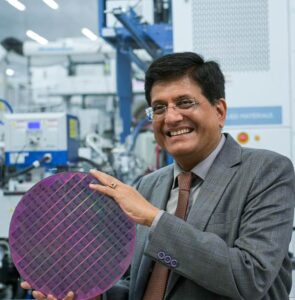
The Minister also engaged with top companies and labs of semiconductor manufacturing and research to explore greater collaboration with Indian companies. He held a meeting with Tim Archer, CEO of Lam Research.

“Building on our pool of young & skilled workforce, discussed how India in collaboration with Lam research, can provide a leading edge in semiconductor innovation”, he tweeted after the meeting.

India to Join 100 Other Nations to Ratify Paris Climate Pact on April 22

Reiterating India’s commitment to carbon emission reduction, Union Environment, Forests & Climate Change Minister Prakash Javadekar on Saturday said India, along with 100 other nations would ratify the COP 21 Global Climate Agreement on April 22.

The pact, COP 21, reached at Paris summit in December 2015 would be ratified at a high level signing ceremony to be convened at the UN Headquarters in New York. The agreement sets out a global action plan to put the world on track by limiting global warming below 2 degree Celsius.

Speaking at a Symposium “COP 21 – Building Synergies, Shaping Actions” organized in the University of Mumbai, Javadekar said, “All countries have decided to walk the green path as per their common but differentiated responsibilities… India was always perceived to be a naysayer and negative in its approach and took a corner seat in most of the international conferences. But in Paris, Prime Minister Narendra Modi introduced the concept of climate justice driving home the message of sustainable development.”

The minister said climate change by 1 degree rise in temperature caused by 150 years of uncontrolled carbon emission by the developed world needs to be reversed. He said while 30% of cumulative contribution was that of the United States, 50% by Europe, Canada and other developed world and 10% by China, India was responsible for only 3% carbon emission but still “it wants to be part of the solution.”

Highllighting some pro-active measures to discourage use of fossil fuels in a bid to reduce carbon foot print by levying Rs 400 per tonne green cess on coal, he said: “If the developed world followed India’s example and levied higher taxes on coal, billions of dollars would accrue to pursue clean energy programmes.”

Further the proposed Compensatory Afforestation Funds Bill 2015 would unlock Rs 40,000 crores for the ‘Green India’ initiative and other plans to control vehicular pollution by moving to Bharat VI emission norms, policies on waste management, Swachch Bharat initiative, Ganga rejuvenation among others would contribute to contain climate change, said the minister.

Union Minister of State (IC) for Coal, Power, New & Renewable Energy Piyush Goyal said his portfolios put him in an awkward situation. “I am a polluter as well as a pollution container”, he said. On solutions undertaken to contain climate change, he said India has launched the world’s largest renewable energy programme by scaling up the target for solar energy. “The solar energy mission envisaged 20,000 Mw of solar electricity generation by 2022. But this target has been pushed ahead by the Prime Minister to 1,00,000 Mw (1Gw),” Goyal said. But all renewable energy programmes will be sustainable only if they become economically viable, he noted.

“While one is aware of pollution caused by the thermal power plants, their importance cannot be overlooked. Therefore, our thrust is on adopting clean coal technologies” he added.