Mala Parvathy Not Alone, Victims of Cyber Fraud Citing CBI or Police Growing Faster

Renowned Malayalam actress Mala Parvathy became the latest victim of an increasingly sophisticated cybercrime scam that has targeted several individuals. The scam involves fraudsters posing as police officers, accusing unsuspecting people of criminal activities in an attempt to extort money, from ordinary housewives to film stars to senior citizens and youngsters.

The recorded call says the recipient that her Aadhaar card or her phone number or PAN Card had been used to send a package containing passports, ATM cards, and a quantity of the drug MDMA to a foreign country. Once you respond, they send you a CBI notice and when called, they pass on the victim to another official.

The fraud has become so contagious that many innocent people are falling quick victims in disarray. “The caller was so convincing that I had no reason to doubt him. He said the situation was serious and could lead to severe legal consequences unless I took action immediately. He even sent me an identity card and connected me to another ‘official,’” actress Parvathy said.

The fraudster urged her to come to Mumbai for further investigation, but when she expressed her inability to travel, they escalated the pressure. “I was in shock when they sent me what looked like a CBI notice.”

Parvathy was lucky enough to immediately contact the Kerala Police. “The officer I spoke to confirmed that the call was likely made from a foreign country, making it difficult to trace,” she said. But how many victims are there who can turn to police immediately?

Steps To Do Against Fraudsters:

Call toll-free number (1930) or visit the website www.cybercrime.gov.in. To be precise, never respond to such calls but alert the cyberpolice in your state or call the number 1930 to make a complaint.

While the Kerala Police are conducting an extensive awareness campaign on social media to educate the public about such scams, “there is a need for a comprehensive financial ecosystem in place, which requires collaboration between the Centre and the Reserve Bank of India,” said Kerala chief minister Pinarayi Vijayan.


Sensex Up 591 Points as Realty and Banking Stocks Lead the Surge

Indian equity markets began the week on a strong note, with key indices closing in the green on Monday, driven by robust buying in realty, banking, and IT stocks. The BSE Sensex surged 591.69 points, or 0.73%, to close at 81,973.05, while the NSE Nifty rose by 163.70 points, or 0.66%, ending at 25,127.95.

Midcap and smallcap indices also gained, with the Nifty Midcap 100 closing at 59,465.45 after a 0.43% rise, and the Nifty Smallcap 100 climbing 0.55% to close at 26,197.90.

Buying activity was strong across multiple sectors, including realty, IT, financial services, private banks, auto, PSU banks, pharma, and FMCG. However, pressure persisted in the media, metal, and oil & gas sectors.

Market breadth was mixed, with 1,952 shares advancing and 1,919 declining on the BSE. About 140 shares remained unchanged by the close.

Among Nifty’s top gainers were Wipro, Tech Mahindra, HDFC Life, L&T, and HDFC Bank. On the losing side, ONGC, Maruti Suzuki, Tata Steel, and Bajaj Finance ended the day in the red.

Foreign Institutional Investors (FIIs) increased their selling on October 11, offloading equities worth Rs 4,162.66 crore, while Domestic Institutional Investors (DIIs) boosted their buying, purchasing equities worth Rs 3,730.87 crore on the same day.

Market Sentiment 

Market experts attributed the positive sentiment to optimism surrounding potential rate cuts by the Reserve Bank of India (RBI), bolstered by strong domestic tax collections. Additionally, investors are keeping a close watch on upcoming earnings reports from major companies, including Infosys, as well as the much-anticipated Hyundai Motor India IPO.

“Globally, attention is focused on third-quarter earnings and the upcoming European Central Bank rate decision, with US stock futures and European shares showing an upward trend,” said Vikram Kasat of Prabhudas Lilladher.

Trade analysts also noted that Nifty appears to have resumed its uptrend toward the 25,500 mark following a brief three-day consolidation period.

Nobel Economics Prize 2024 Goes to Daron Acemoglu, Simon Johnson, and James A. Robinson [Details]

The Royal Swedish Academy of Sciences announced today that Daron Acemoglu, Simon Johnson, and James A. Robinson have been awarded the 2024 Sveriges Riksbank Prize in Economic Sciences in Memory of Alfred Nobel. The prestigious prize recognizes their significant contributions to understanding how institutions are formed and their impact on national prosperity.

This year’s award marks the final Nobel Prize to be announced, concluding the 2024 Nobel Prize season. The economics prize, established in 1968 as a memorial award, acknowledges outstanding contributions to the field of economics.

Three Winners

  • Daron Acemoglu: Born in 1967 in Istanbul, Turkey, Acemoglu earned his Ph.D. from the London School of Economics in 1992. He is currently a professor at the Massachusetts Institute of Technology (MIT) in Cambridge, USA.
  • Simon Johnson: Johnson was born in 1963 in Sheffield, UK, and completed his Ph.D. at MIT in 1989. He is also a professor at MIT.
  • James A. Robinson: Born in 1960, Robinson received his Ph.D. from Yale University in 1993 and is now a professor at the University of Chicago, Illinois, USA.

The award-winning research of Acemoglu, Johnson, and Robinson explores the relationship between institutions and prosperity across nations, shedding light on how the design and governance of institutions can influence economic outcomes.

The economics prize has a rich history, including recognition of influential figures such as Milton Friedman, who won in 1976 for his groundbreaking work in consumption analysis and monetary theory. Friedman was a strong advocate for free markets, and his ideas significantly influenced economic policy in the UK and the US. The Nobel committee continues to reflect on the impact of economics on society and the importance of institutions in shaping the global economic landscape.

With 25 Deals at $1.3 Bln, India Records Historic High in Real Estate in July-Sept 2024

India’s real estate sector achieved an unprecedented milestone in the July-September quarter (Q3), with 25 deals valued at $1.3 billion, according to a report by Grant Thornton Bharat released on Monday. This marks the highest number of deals ever recorded in the sector and the second-highest total value since Q2 2023.

The surge in deal values was primarily driven by activities related to qualified institutional placements (QIPs), as well as private equity funding in both residential and commercial segments, including real estate technology firms.

While Q3 experienced a 71% drop in overall private equity (PE) and mergers and acquisitions (M&A) deal values compared to Q2 2024, deal volume saw a slight increase of 5%. Year-over-year comparisons indicate a 54% rise in deal volumes, although values declined by 41% compared to Q3 2023.

During this quarter, there were three inbound deals in property development and two outbound deals in the student housing and online rental platform sectors. PE activity remained robust, with 12 deals totaling $401 million, maintaining consistent volume with Q2 2024. Notably, the two largest deals accounted for $346 million, reflecting a trend of concentrated value in fewer transactions.

Despite the decline in funding values from Q2 2024, Q3 2024’s deal values surpassed those recorded in both Q1 2024 and Q3 2023. Additionally, one initial public offering (IPO) raised $49 million, in line with previous quarters, while QIPs experienced a remarkable surge with four deals amounting to $940 million—a nearly six-fold increase compared to Q2 2024.

The strong QIP activity underscores a growing confidence in real estate firms’ ability to tap into public markets. The report suggests that renewed PE and M&A activity toward the end of Q3 could signal an uptick in momentum heading into Q4 2024.

Indian Rupee Plunges to Record Low Against U.S. Dollar Amid Global Pressures

The Indian rupee hit a record low against the U.S. dollar on Monday, driven by persistent demand for the dollar and continued outflows from Indian equities. The rupee dropped to an all-time low of 84.0725 against the U.S. dollar, surpassing the previous low of 84.07 recorded last Friday. This downward trend is attributed to foreign banks’ dollar bids and sustained outflows of over $8 billion from local equities in just 10 sessions.

For over two months, the Reserve Bank of India (RBI) tried to keep the rupee stable around the 84 mark. However, the ongoing sell-off by foreign investors and weakness in Asian currencies—exacerbated by disappointment over China’s economic stimulus measures—further pressured the rupee. Asian currencies were down by 0.1% to 0.3%, while the U.S. dollar index hovered near its two-month peak at 103.

Local banks were seen offering dollars, while larger foreign banks dominated the demand. Market analysts predict the rupee to trade between 83.95 and 84.20 in the near term. Amit Pabari, managing director of FX advisory firm CR Forex, pointed out that RBI’s interventions, along with a potential reduction in equity outflows, could provide the rupee some relief and help it recover.

Market Impact and Geopolitical Concerns

Brent crude oil prices—currently at $78 per barrel but up 9% in October—are being closely monitored, as rising tensions in the Middle East could further disrupt global oil supplies and impact the rupee. The Indian stock market also felt the ripple effects, with the BSE Sensex plunging by 564.51 points to 72,835.27 and the NSE Nifty falling 153.35 points to 22,119.15 in early trading. The geopolitical uncertainty triggered broad sell-offs across sectors, affecting investor sentiment.

The situation highlights the importance of sound financial planning and risk management, especially in volatile global markets. Investors are advised to consider profit-booking and exercise caution amid ongoing market corrections.

Last time, in June 2018, the Indian currency hit an all-time closing low of 68.79 against the dollar. However, the current situation presents more serious challenges due to global economic uncertainties, especially regarding oil prices and geopolitical tensions.

After Rs. 1 Lakh Loss Last Week, Indian Markets Brace for Key Inflation Data, Q2 Reports This Week

Notwithstanding last week’s erosion of Rs.1 lakh in market value, Indian stock markets are expected to navigate a crucial week ahead, with domestic and global economic indicators, especially Israeli-centric moves, taking center stage.

Key drivers for market movements include India’s Wholesale Price Index (WPI) inflation and Consumer Price Index (CPI) inflation data for September, as well as updates on bank loan and deposit growth. Alongside these domestic cues, Q2 earnings results from major Indian companies and global developments, particularly from the US, China, and Japan, will heavily influence market sentiment.

The Q2 earnings season has officially begun, and several important reports are expected in the coming week. Analysts suggest these results could trigger sector-specific movements as investors digest the performances of companies across various industries.

In addition to corporate earnings, fluctuations in global crude oil prices, movements in the dollar index, and foreign institutional investor (FII) activity are likely to play a role in shaping the market’s trajectory. Over the past week, FIIs offloaded stocks worth Rs 28,000 crore, though domestic institutional investors (DIIs) stepped in with net purchases of over Rs 31,000 crore, providing some support to the market.

The market experienced consolidation last week after a sharp correction from its recent all-time highs in both the Nifty and Sensex. Although the week started with a decline, the indices recovered from lower levels by the end of the week.

Santosh Meena, Head of Research at Swastika Investmart, said that technically, the Nifty index has found near-term support around the 24,750 level. He added, “To regain momentum, the Nifty must surpass resistance levels at 25,330 and 25,500. If it falls below 24,750, further selling pressure could push the index toward 24,440 and 24,100.”

Palka Arora Chopra, Director at Master Capital Services, pointed out that Bank Nifty is trading within a parallel channel and remains above its weekly 21-day exponential moving average (EMA), signaling a positive trend. “Support is seen at 50,600, with potential downside risk toward 50,000 if breached. On the upside, resistance is at 51,700, and a breakout could push the index to 52,200. The market may trade sideways in the near term, with a buy-on-dips strategy likely to be effective,” she noted.

On the macroeconomic front, the Reserve Bank of India (RBI) held its key interest rates steady last week, shifting its stance to “neutral.” This shift has raised expectations for possible rate cuts as early as December. The central bank maintained its GDP growth forecast for FY25 at 7.2 percent, while keeping the CPI inflation target unchanged at 4.5 percent.

With a mix of corporate earnings and significant economic data on the horizon, investors will be closely monitoring market signals to gauge the near-term outlook.

Seven Companies Lose Over Rs 1 Lakh Crore in Market Cap Last Week

The combined market capitalisation of seven out of the top 10 companies declined by Rs 1,22,107 crore over the past week, with Tata Consultancy Services (TCS) and Reliance Industries Ltd (RIL) leading the losses.

Between October 7 and 11, Tata Group’s TCS saw its market cap drop by Rs 35,638 crore, settling at Rs 15,01,723 crore. RIL’s market cap fell by Rs 21,351 crore, bringing its valuation down to Rs 18,55,366 crore.

FMCG giant ITC also witnessed a significant decline, with its market cap decreasing by Rs 18,761 crore to Rs 6,10,933 crore. Meanwhile, Hindustan Unilever Limited (HUL) saw a reduction of Rs 16,047 crore in its market valuation, now standing at Rs 6,53,315 crore.

The market capitalisation of Life Insurance Corporation (LIC) dropped by Rs 13,946 crore to Rs 6,00,179 crore, while ICICI Bank’s valuation slipped by Rs 11,363 crore, bringing it to Rs 8,61,696 crore.

HDFC Bank, the largest private sector bank in the country, saw its market cap decrease by Rs 4,998 crore, settling at Rs 12,59,269 crore.

On the other hand, Bharti Airtel’s market cap surged by Rs 26,330 crore to Rs 9,60,435 crore, while Infosys gained Rs 6,913 crore, taking its valuation to Rs 8,03,440 crore. The State Bank of India (SBI) added Rs 3,034 crore, pushing its market cap to Rs 7,13,968 crore.

Last week, the Nifty fell by 50 points, or 0.20 percent, to 24,964, while the Sensex declined by 307 points, or 0.38 percent, closing at 81,381. This marked the second consecutive week of market losses.

Despite the decline, RIL maintained its position as India’s most valuable company, followed by TCS, HDFC Bank, Bharti Airtel, and ICICI Bank.

Market experts predict that the outlook for next week will be influenced by key domestic and global economic data, including India’s WPI and CPI for September, loan and deposit growth figures, Q2 earnings of Indian companies, and updates from the US, China, and Japan.

Breaking News: Baba Siddiqui shot dead in Mumbai

In a shocking news, NCP (Ajit Pawar) leader from Maharashtra Baba Siidqui known for his annual Iftaar parties for celebrities in Mumbai was shot dead around midnight on Saturday. Currently, an MLC, Siddiqui  was shot dead by three attackers in Mumbai around 9.30 pm at the office of his son, Zeeshan, who is the MLA from Bandra East..

“Mumbai police chief told me two persons have been arrested. One is from UP, other from Haryana. Third assailant is absconding but police are trying to nab him,” chief minister Eknath Shinde told media.

Initial reports said three people fired at Baba Siddique outside his son Zeeshan’s office in Bandra East. Though he was rushed to Mumbai’s Lilawati Hospital immediately, he succumbed to his injuries.

“Two to three rounds were fired. Further probe is underway as teams have rushed to the area,” a police official told PTI. Mumbai police commissioner Vivek Phansalkar reportedly said that two alleged shooters have been taken into custody.

One of them is from Uttar Pradesh and the other from Haryana, while a third accused fled from the spot, the CM told TV channels.

“This is an extremely unfortunate incident and I spoke to the doctors and police. Two people have been arrested, the accused are from UP and Haryana. The third accused is absconding. We have given instructions to Mumbai Police that strict action should be taken against those who take law and order into their hands…I am sure that Mumbai police will soon arrest the third accused…Strict action will be taken against the accused,” CM Shinde said.

Ziauddin Siddique, widely known as Baba Siddique, was a prominent political figure in Maharashtra. He served as a Member of the Legislative Assembly (MLA) for the Vandre West constituency for three consecutive terms in 1999, 2004, and 2009. During his tenure, Siddique also held the position of Minister of State for Food & Civil Supplies and Labour under Chief Minister Vilasrao Deshmukh from 2004 to 2008.

Before his role as an MLA, Siddique was a Municipal Corporator, serving two consecutive terms from 1992 to 1997. At the time of his passing, he held key roles as the Chairperson and Senior Vice President of the Mumbai Regional Congress Committee and as a member of the Parliamentary Board of the Maharashtra Pradesh Congress Committee. On February 8, 2024, he resigned from the Indian National Congress (INC) and joined the Nationalist Congress Party (NCP) under Ajit Pawar on February 12, 2024.

“I joined the Indian National Congress party as a young teenager, and it has been a significant journey lasting 48 years. Today I resign from the primary membership of the Indian National Congress Party @INCIndia with immediate effect,” he had written in an X post about his decision to join Ajit Pawar.

Siddique’s political journey began in 1977 when, as a teenager, he joined the INC and became involved in student movements through the National Students Union of India (NSUI), the student wing of the INC. He quickly rose through the ranks, becoming General Secretary of the Bandra Taluka Youth Congress in 1980 and its president two years later. In 1988, he was elected president of the Mumbai Youth Congress.

In 1992, Siddique was elected as a Municipal Councilor for the Mumbai Municipal Corporation, securing re-election five years later. His ascent to state politics came in 1999 when he became an MLA from Bandra West, where he served for three terms. He also held the position of Chairman of the MHADA Mumbai Board from 2000 to 2004. Beyond his legislative work, Siddique contributed to his community by funding the creation of an eco-garden in Bandra-Khar in 2011.

Baba Siddique was married to Shehzeen Siddique, and together they had two children, Arshia and Zeeshan Siddique.


India’s Employability Up From 33.9% in 2014 to 51.3% in 2024: Skill Development Ministry

India is experiencing a remarkable transformation in youth employability, with the rate rising from 33.9% in 2014 to 51.3% in 2024, driven by government-led skill development initiatives. As the country with one of the youngest populations in the world, India is harnessing its demographic dividend and positioning itself to become a global skill capital.

Key Government Initiatives

One of the flagship initiatives fueling this growth is the Internship Scheme, which was introduced in the Union Budget 2024-25. This program aims to offer one crore internship opportunities to Indian youth over the next five years, focusing on top 500 companies. These 12-month internships are designed to bridge the gap between academic knowledge and practical industry experience, preparing young Indians for the evolving demands of the workforce.

The pilot phase of this program was launched on October 3, targeting 1.25 lakh internships in the fiscal year 2024-25. Companies participating in the program were selected based on their Corporate Social Responsibility (CSR) contributions, and the scheme functions independently of other government skill development programs. A dedicated portal opened for applications on October 12.

Comprehensive Support for Interns

Interns selected for the Scheme receive financial and logistical support throughout their tenure. Each intern is provided a monthly stipend of ₹5,000, with ₹500 contributed by the company’s CSR fund and ₹4,500 transferred directly by the government to the intern’s Aadhaar-linked bank account. Additionally, a one-time grant of ₹6,000 for incidental expenses is provided when the intern joins. The company covers training costs from its CSR funds, ensuring that interns are well-prepared for the workplace.

Interns are also insured under government schemes, with companies having the option to provide additional accidental coverage. This approach ensures that young professionals are financially supported and protected during their internships, promoting a safe and structured learning environment.

Indian Institute of Skills: Preparing for Industry 4.0

In addition to the internship program, the establishment of the Indian Institute of Skills (IIS) represents a significant effort in preparing India’s youth for Industry 4.0. Opened in Mumbai, the IIS offers training in cutting-edge fields such as factory automation, artificial intelligence, digital manufacturing, mechatronics, and data analytics. These programs are designed to develop an industry-ready workforce that is capable of adapting to modern technological advancements.

Both the Internship Scheme and the IIS are part of a larger government strategy to bolster the employability of India’s youth and equip them with the skills necessary for the future workplace.


Indian Rupee Hits Historic Low of Rs.84 Per Dollar Amid Crude Oil Surge and Geopolitical Tensions

The Indian rupee recently reached a historic low, falling by 0.12 to trade at 84.09 against the US dollar. This decline is largely attributed to surging crude oil prices and escalating geopolitical tensions in the Middle East. The US dollar’s strength, with the dollar index rising from $100.50 to $102.40, has also added pressure on the rupee.

Experts predict that ongoing volatility in the Middle East will keep oil prices elevated, weakening the rupee further in the short term. Brent crude has surged to $78.92 per barrel, up from nearly $69 on September 30, driven by fears of potential supply disruptions due to the conflict.

The rupee’s decline has also been fueled by significant outflows from foreign portfolio investors (FPIs), who sold shares worth ₹55,000 crore in the Indian stock market over the past nine days. Jateen Trivedi of LKP Securities noted that continued foreign institutional investor (FII) outflows have exacerbated the rupee’s weakness, with further declines possible.

Impact on Gold Prices and Global Markets

Gold prices have remained strong, trading above $2,635 on Comex, and increased by over ₹400 to ₹75,750 on the Multi Commodity Exchange (MCX). Rising jobless claims and persistent inflation, driven by higher crude oil prices, have supported the positive trend.

In India’s national capital, gold prices surged by ₹1,150 to ₹78,500 per 10 grams, driven by fresh buying from jewellers and global market trends. Increased local demand, along with global factors, contributed to the rise.

Geopolitical tensions in the Middle East have also impacted global financial markets. Israeli stocks fell sharply, with the benchmark TA-35 Index dropping 3.1% before a slight recovery. The selloff extended to Egypt, as investors offloaded assets amid rising uncertainty.

Fed Reserve’s Interest Rate Outlook

Meanwhile, the US Federal Reserve has signaled confidence in cutting interest rates, with Chairman Jerome Powell suggesting that policy adjustments are likely. The Fed’s move is influenced by inflation nearing its 2% target, leading to expectations of rate cuts designed to stimulate economic growth by lowering borrowing costs.

A reduction in US interest rates could have far-reaching effects on the global economy. A weaker dollar might make US exports more competitive and affect exchange rates globally, potentially encouraging investment in riskier assets and emerging markets. However, lingering global uncertainties or a US economic slowdown could dampen global growth prospects.

2024 Nobel Peace Prize Goes to Japan’s Anti-Nuclear Movement ‘Nihon Hidankyo’

As global nuclear powers continue modernizing their arsenals and tensions rise over potential use of these devastating weapons, the 2024 Nobel Peace Prize was awarded to Nihon Hidankyo, a Japanese grassroots organization of atomic bomb survivors. The group, comprised of survivors from Hiroshima and Nagasaki, has long advocated for the complete elimination of nuclear weapons.

The Norwegian Nobel Committee, which selects the Peace Prize laureates, praised Nihon Hidankyo for its relentless efforts to promote a world free from nuclear weapons. The committee stated that the organization has effectively demonstrated, through witness testimonies, that nuclear weapons must never be used again.

Nihon Hidankyo’s origins date back to the aftermath of the atomic bombings of Hiroshima and Nagasaki in August 1945, which killed an estimated 120,000 people instantly and claimed many more lives due to radiation in the following years. In 1956, survivors of the bombings, known as Hibakusha, alongside victims of nuclear tests in the Pacific, formed the Japan Confederation of A- and H-Bomb Sufferers Organisations. This group later became Nihon Hidankyo, the largest and most influential organization representing atomic bomb survivors.

The Nobel Committee emphasized that over the decades, Nihon Hidankyo has played a pivotal role in raising awareness about the catastrophic humanitarian consequences of nuclear weapons. Through personal accounts and active participation in international forums, the Hibakusha have helped establish a global “nuclear taboo,” a moral opposition to the use of nuclear weapons.

In recognizing Nihon Hidankyo’s work, the committee paid tribute to the survivors who, despite their physical and emotional suffering, have chosen to use their experiences to foster peace and disarmament. The organization has sent delegations to the United Nations, participated in peace conferences, and issued countless public appeals to keep nuclear disarmament on the global agenda.

While no nuclear weapon has been used in warfare for nearly 80 years—a fact the committee called “encouraging”—it warned that today the nuclear taboo is under threat. With nuclear powers upgrading their arsenals and new countries seeking to acquire these weapons, the risk of nuclear conflict has reemerged in international discourse.

The committee noted the urgency of this issue as the 80th anniversary of the Hiroshima and Nagasaki bombings approaches next year, underscoring the growing dangers posed by modern nuclear weapons, which are far more destructive than those used in 1945.

“The Hibakusha help us comprehend the unimaginable suffering caused by nuclear weapons,” the committee said, adding that Nihon Hidankyo’s work ensures that future generations will continue to carry forward the message of peace and nuclear disarmament.

In honoring Nihon Hidankyo, the Nobel Peace Prize recognizes not only the survivors of Hiroshima and Nagasaki but also their ongoing legacy of advocacy in the global fight for a nuclear-free world.

India’s Forex Reserves Decline Slightly But Stay Above $700 Billion

India’s foreign exchange reserves remained above $700 billion for the second straight week, according to data from the Reserve Bank of India (RBI) released on Friday. As of October 4, the reserves stood at $701.18 billion, marking a decline of $3.71 billion from the previous week.

India’s forex reserves, which are at an all-time high, rank as the fourth-largest globally, following China, Japan, and Switzerland. The reserves had surged by nearly $35 billion over the past seven weeks, demonstrating robust growth.

According to the RBI’s Weekly Statistical Supplement, the decline in reserves was primarily due to a reduction in Foreign Currency Assets (FCAs), which fell by $3.51 billion to $612.6 billion. Gold reserves also dipped slightly by $40 million, bringing them to $65.76 billion. Special Drawing Rights (SDRs) dropped by $123 million to $18.43 billion, while the reserve position in the International Monetary Fund (IMF) saw a marginal decrease of $71 million, standing at $4.3 billion.

Despite geopolitical uncertainties, investor confidence in India’s economic potential remains high. Last week, India’s forex reserves exceeded $700 billion for the first time, reaching $704.89 billion, marking the largest weekly increase since mid-July 2023, with a surge of $12.59 billion.

India has now joined an exclusive group of countries with over $700 billion in reserves, alongside China, Japan, and Switzerland. Foreign inflows into India this year have exceeded $30 billion, underscoring the country’s attractiveness to global investors.

Looking forward, experts predict continued growth in India’s forex reserves, which will further solidify the nation’s economic position on the global stage. A strong forex reserve not only boosts investor confidence but also strengthens India’s ability to attract foreign investments and support domestic trade and industry.

Industry analysts also highlight that the combination of strong forex reserves and a sound monetary policy is providing reassurance to both the business community and international investors, even in the face of global geopolitical challenges.

Sensex Drops 230 Points as Auto and Finance Stocks Weigh on Markets

Indian equity markets closed lower on Friday, with the Sensex falling by 230 points, or 0.28%, to 81,381, and the Nifty slipping by 34 points, or 0.14%, to 24,964. The decline was primarily driven by a sell-off in financial and auto stocks, alongside weakness in shares of Tata Consultancy Services (TCS).

The banking sector bore the brunt of the downturn, with the Nifty Bank index falling by 358 points, or 0.70%, to 51,172. However, there was some relief in the midcap and smallcap segments. The Nifty Midcap 100 index rose by 276 points, or 0.47%, to 59,212, and the Nifty Smallcap 100 index gained 108 points, or 0.58%, to 19,008.

Sector-wise, IT, pharma, metal, media, energy, infrastructure, commodities, and consumption stocks performed well, while auto, financial services, real estate, private banks, and services were the major laggards.

Among the top gainers in the Sensex pack were HCL Tech, Tech Mahindra, JSW Steel, Hindustan Unilever, Infosys, Titan, Wipro, Sun Pharma, L&T, SBI, Bharti Airtel, and Tata Steel. On the other hand, NTPC, Bajaj Finance, UltraTech Cement, Asian Paints, ITC, HDFC Bank, and TCS were the top losers.

Market experts attributed the sideways movement to a lack of strong triggers that could drive the market decisively. An uptick in the US 10-year bond yield, driven by an unexpected rise in US core inflation, and caution ahead of the earnings season contributed to the cautious sentiment. Additionally, ongoing geopolitical tensions led foreign institutional investors (FIIs) to shift their focus toward more affordable markets, impacting domestic liquidity.

FIIs continued to sell off on October 10, offloading equities worth Rs 4,926 crore, while domestic institutional investors (DIIs) extended their buying spree, purchasing shares worth Rs 3,878 crore on the same day.

The markets opened on a negative note earlier in the day, with the Sensex down by 142 points, or 0.17%, to 81,469, and the Nifty down by 36 points, or 0.12%, to 24,960.

Indian Stock Market Boom Fuels Demat Account Surge to Reach 175 Million in September

The Indian financial market has been witnessing a significant surge in the number of demat accounts, according to a recent report by Motilal Oswal Financial Services.  The total number of these accounts reached 175 million in September, up from 171 million in August. This increase is a testament to the robust performance of the Indian stock market, which continues to outperform its global counterparts, attracting more investors and driving up the number of active clients on the National Stock Exchange (NSE).

The NSE, a pivotal player in the Indian financial market, saw its active client base increase by 2.4% on a month-on-month basis, reaching 47.9 million in September. This growth is not an isolated incident but part of a larger trend. The report highlighted that new account additions jumped by 4.4 million in September, with an average monthly addition of 4 million in the current fiscal year to date.

The Indian stock market’s performance has not only attracted new investors but also reshaped the landscape of brokerage firms. The report indicated that the top five discount brokers now account for 64.5% of total NSE active clients, a significant increase from 61.9% in the same month last year.

Brokerage Firms and Depositories: A Changing Landscape

This shift towards discount brokers underscores the changing preferences of investors who are increasingly seeking cost-effective trading options. Among the depositories, Central Depository Services Limited (CDSL) continued to gain market share in terms of the total number of demat accounts. However, on a year-on-year basis, National Securities Depository Limited (NSDL) lost 410bp/90bp market share in total/incremental demat accounts.

The report also shed light on the performance of various online brokerages. Zerodha, a leading online brokerage, reported a 1.1% on-month increase in its client count, reaching 8 million. However, it experienced a slight dip in market share, falling 20bp to 16.6%. On the other hand, Groww, another popular online brokerage, reported a 3.1% increase in its client count, reaching 12.3 million, and a 15bp rise in market share to 25.6%.

Angel One, another key player in the market, also saw a 3.1% increase in its client count, reaching 7.4 million, and a 10bp rise in market share to 15.4%. Upstox reported a 1.5% month-on-month increase in its client count to 2.8 million, but experienced a 5bp fall in market share to 5.9%.

Market Performance and Future Outlook

ICICI Securities, on the other hand, reported a client count of 1.9 million, with a 10bp dip in its market share to 4.2%. The report also provided insights into the overall average daily turnover (ADTO), which grew 7.1% on-month to Rs 538.6 lakh crore. The futures and options ADTO rose by 7.2%, while the cash ADTO declined by 3.8%.

This surge in demat accounts and active clients on the NSE is reminiscent of the boom in retail investing witnessed globally during the COVID-19 pandemic. As lockdowns were imposed worldwide, many individuals turned to stock trading, leading to a surge in demat accounts.

Indian stocks open lower today following weak signals from US markets

The Indian stock market started the day on a subdued note, reacting to weak signals from the U.S. markets. Major banking stocks were hit hard, pulling down indices, though select sectors like technology showed resilience and gained traction in the face of a broader decline.

By mid-morning, the Sensex was down 142 points, or 0.17%, at 81,469, while the Nifty slipped by 36 points, or 0.12%, to 24,960. Banking stocks weighed heavily on the market, with the Nifty Bank index falling 204 points, or 0.40%, to 51,326. Despite this, some stocks like HCL Tech, Wipro, Tata Steel, Tech Mahindra, and Sun Pharma recorded gains, highlighting some sectoral strength.

A more detailed look at the market revealed a mixed sectoral performance. Tech stocks led the pack with positive movement, as IT giants like Infosys and TCS showed gains, while sectors like banking, auto, and FMCG faced losses. Notable decliners included ICICI Bank, HDFC Bank, Bajaj Finance, and Kotak Mahindra Bank.

However, not all was bleak—midcap and smallcap stocks provided a silver lining. The Nifty Midcap 100 index edged up 79 points, or 0.13%, to 58,995, while the Nifty Smallcap index increased by 39 points, or 0.18%, to 18,939. This points to a relative resilience among smaller firms, which have managed to maintain their momentum even in a challenging environment for larger companies.

Global and Sectoral Influences

The broader market sentiment reflected mixed global cues. While most Asian markets, including Tokyo, Seoul, and Hong Kong, were trading positively, the weak performance of U.S. markets on Thursday set the tone for a cautious opening in India. Experts suggest that the U.S. market’s dip, rather than Asian market gains, played a more significant role in driving the early declines in Indian equities.

Sectorally, IT, pharma, and metals fared well, while sectors like auto, financial services, FMCG, and energy underperformed. This uneven performance across sectors indicates that the market’s losses were not uniformly distributed.

But market experts predict heightened volatility due to external factors. Foreign institutional investors (FIIs) continue to sell, driven by more attractive valuations in other markets, particularly China. On Friday alone, FIIs offloaded Rs 4,926 crore in Indian equities though domestic institutional investors (DIIs) have stepped in to counterbalance the selling pressure, purchasing Rs 3,878 crore worth of equities.

Strategic Surge: Indian Auto Sector Sees Record 32 Deals Worth $1.9 Billion In Q3

The Indian auto sector recorded a remarkable $1.9 billion across 32 deals in the third quarter of 2023, marking the highest level of quarterly deal activity since the fourth quarter of 2021, according to a report by Grant Thornton Bharat. This surge in deals highlights a significant recovery for the sector, driven by strong investments in technology, mergers and acquisitions (M&A), and an increased focus on global partnerships.

The growth was largely propelled by three high-value deals totaling $300 million, a sharp increase compared to the previous quarter, which saw only one $100 million deal. The most notable investment was WestBridge Capital’s $200 million infusion into Rapido, a clear sign of the growing investor confidence in the sector.

Mergers and acquisitions in the auto sector saw a considerable boost, with six deals worth $74 million in Q3, representing a 20% rise in deal volumes and a 30% increase in value compared to Q2. This uptick reflects the sector’s ability to recover from the global pandemic and signals an increasing focus on international collaborations. Notably, outbound M&A activity grew, with two key deals centered on auto components and electric vehicle (EV) infrastructure, indicating a shift towards technological innovation and global expansion.

Increased Focus on Auto-Tech and Components

The report also pointed to a growing investor interest in auto-tech and auto-component subsectors. This shift towards technological advancement, particularly in EVs and automation, resulted in a 30% increase in deal values compared to the previous quarter. The industry’s recovery, following a 67% decline in Q2, underscores its resilience and adaptability to shifting market demands.

The report further highlighted the growing concentration of high-value deals. The top two investments in the quarter accounted for 55% of total private equity (PE) deal value, reflecting increased investor confidence in the auto sector’s long-term potential. The average deal size also jumped to $25 million, up from $18 million in the second quarter, showcasing the rising interest in larger, more strategic investments.

The Indian auto sector’s record deal activity in Q3 reflects its growing attractiveness as an investment destination. With a strong focus on innovation, global partnerships, and long-term growth, the industry is poised for sustained expansion. As the sector continues to embrace technological advancements and alternative fuel solutions, its role in the global automotive landscape is set to grow even further.

The resurgence of the Indian auto industry, despite pandemic challenges, highlights its potential for value creation and its pivotal position in the broader economic recovery.

Manmohan Singh Recollects Ratan Tata’s Candid Ties With Politicial Leaders

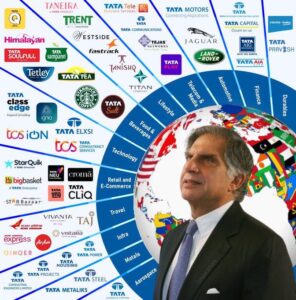
Ratan Tata was much more than a business icon. His vision and humanity were demonstrated in the work of several charities he founded and nurtured during his life, said former Prime Minister Manmohan Singh.

“Tata had the courage to speak truth to the men in power, a testament to his integrity and commitment to ethical business practices,” he wrote in a letter to N Chandrasekaran, chairman of Tata Sons.

Manmohan Singh told Chandrasekaran that he has very fond memories of working closely with Ratan Tata on many occasions. “He was having the courage of speaking the truth to the men in power. I have fond memories of working very closely with him on several occasions,” the former prime minister said. “I take this opportunity to convey my deepest condolences on this sad occasion. May his soul rest in peace.”

During the UPA government when Manmohan Singh was the Prime Minister, Tata’s contributions extended far beyond India’s borders, with significant investments and operations in Kenya and across Africa, particularly through Tata Chemicals Magadi, the largest soda ash manufacturer in East Africa. His leadership at Tata Group saw the acquisition of Magadi Soda Company in 2005, which solidified the group’s presence in the region.

During the Manmohan Singh’s government, the Tata Group expanded its global footprint significantly and Ratan Tata led major acquisitions such as Jaguar Land Rover and Corus Steel, transforming the group into a multinational conglomerate. His strategic vision pushed the group into new markets, increased its international revenues, and enhanced its brand image worldwide.

On domestic front, Tat was among the CEOs who visited Kashmir to explore investment opposrtunities to uplift the hill regions and help nation mantain stability in the sensitive border state.

Tata’s life was marked by resilience, innovation, and a deep-rooted connection to India. His leadership, vision, and commitment to ethical business practices have left an indelible mark on the Indian industrial landscape and will continue to inspire future generations of entrepreneurs and leaders.

‘Peak Benglauru Moment’ When Virtual Receptionist Greets Guest From Delhi

Bengaluru, often celebrated as India’s technology capital, is once again proving why it leads the charge in innovation. In a recent social media post, Ananya Narang, CEO of Entourage and a prominent business influencer, shared her firsthand experience of staying at a hotel managed almost entirely by virtual staff.

During her stay, Narang was surprised to find no traditional front desk employees. Instead, the hotel relied on a futuristic approach—guests were welcomed and assisted via remote hospitality professionals through video conferencing. On-site, only two security guards and a few technicians were present to handle the physical aspects of operations. All other guest interactions, from check-in to concierge services, were managed by staff seated at the hotel’s headquarters, remotely overseeing multiple properties at once.

In her LinkedIn and X (formerly Twitter) post, Narang dubbed the experience a “Peak Bengaluru moment,” capturing the spirit of the city’s tech-forward innovation. “You’ll see this nowhere in India yet, except the Silicon Valley,” she noted, highlighting Bengaluru’s unique embrace of technology.

Her post ignited discussions across social media platforms, with many users marveling at the seamless integration of technology into hospitality. However, it also sparked debate about whether such innovations could truly replace the personal touch that has long been a hallmark of the hotel experience.

As virtual receptionists begin to emerge in Bengaluru’s hotels, the city offers a glimpse into the future of hospitality—a future where efficiency, automation, and digital convenience redefine the guest experience. Whether this model will gain traction across India and beyond remains to be seen, but Bengaluru, once again, is setting the pace for what’s possible.

Ratan Tata’s Demise: ‘Extremely Pained’, says Modi; Condolences Pour In

Prime Minister Narendra Modi expressed profound sorrow on Thursday following the demise of Ratan Tata, Chairman Emeritus of Tata Sons, who passed away at Mumbai’s Breach Candy Hospital due to age-related health issues.

Sharing his condolences on X (formerly Twitter), the Prime Minister wrote, “My mind is filled with countless interactions with Shri Ratan Tata Ji. During my tenure as Gujarat CM, we would meet frequently, discussing various issues. His insights were always deeply enriching. These meaningful interactions continued when I moved to Delhi. I am extremely pained by his passing. My thoughts are with his family, friends, and admirers during this difficult time. Om Shanti.”

Congress leader and LoP Rahul Gandhi tweeted:”Ratan Tata was a man with a vision. He has left a lasting mark on both business and philanthropy. My condolences to his family and the Tata community.”

Defence Minister Rajnath Singh also mourned Tata’s death, acknowledging his significant contributions to India’s economy. “Saddened by the passing away of Shri Ratan Tata. He was a Titan of Indian industry, renowned for his monumental impact on our economy, trade, and industry. My deepest condolences to his family, friends, and admirers. May his soul rest in peace,” Singh wrote on X.

Ratan Tata’s hospitalization on Monday had sparked widespread concern, with speculation circulating about his health. Although he had issued a statement assuring that it was a routine check-up for age-related issues, his condition reportedly worsened, leading to him being placed on life support.

Tata Sons Chairman N. Chandrasekaran also paid tribute, saying, “It is with a profound sense of loss that we bid farewell to Mr. Ratan Naval Tata, a truly uncommon leader whose immeasurable contributions have shaped not only the Tata Group but also the very fabric of our nation. To me, he was more than just a chairperson—he was a mentor, guide, and friend. His unwavering commitment to excellence, integrity, and innovation ensured the Tata Group’s global expansion, while always remaining grounded in strong ethical values.”

Google DeepMind Scientists Among Nobel Prize Recipients For Chemistry 2024

Google DeepMind researchers Demis Hassabis and John M. Jumper, along with Professor David Baker from Washington University, have been awarded the 2024 Nobel Prize in Chemistry for groundbreaking work in protein design and structure prediction.

The Royal Swedish Academy of Sciences made the announcement on Wednesday, recognizing their contributions to solving key challenges in the field of biochemistry. One half of the prize goes to Baker “for computational protein design,” while Hassabis and Jumper share the other half “for protein structure prediction.”

Demis Hassabis, the CEO of Google DeepMind, and John M. Jumper, a senior researcher at the company, were celebrated for their development of an artificial intelligence (AI) model that cracked a 50-year-old puzzle: predicting the complex 3D structures of proteins based on their amino acid sequences. This AI model, AlphaFold2, revolutionized biology by allowing researchers to predict the structure of nearly all known proteins.

David Baker, based in the U.S., was recognized for his pioneering efforts in designing entirely new proteins. Since 2003, Baker’s research team has engineered novel proteins, which have been used in a range of applications from pharmaceuticals and vaccines to nanomaterials and biosensors.

“One of the discoveries being honored this year is about creating spectacular proteins, while the other fulfills a 50-year-old dream of predicting protein structures from amino acid sequences,” said Heiner Linke, Chair of the Nobel Committee for Chemistry. He emphasized that these advancements open up “vast possibilities” in scientific research and practical applications.

AlphaFold2, introduced by Hassabis and Jumper in 2020, is now used by millions of researchers worldwide. The AI has facilitated breakthroughs in understanding antibiotic resistance and even helped map enzymes capable of breaking down plastic. Its widespread adoption has provided insights into nearly 200 million proteins identified by researchers across the globe.

The total prize of 11 million Swedish kronor (around $1.1 million) will be split between the winners, with Baker receiving half and the remaining amount shared by Hassabis and Jumper.

These discoveries are expected to fuel future innovations in medicine, environmental science, and beyond.