NASA’s Artemis II crew completed a proximity operations test on April 2, maneuvering the Orion spacecraft near a detached rocket stage in Earth orbit. The demonstration, lasting about 70 minutes, tested manual control systems and gathered data critical for future lunar missions. The crew now prepares for a perigee raise burn, while engineers continue troubleshooting a minor onboard toilet system issue.
The astronauts aboard NASA’s Artemis II mission spent part of April 2 guiding their spacecraft through a tightly choreographed exercise hundreds of miles above Earth.
Inside Orion, the capsule named Integrity, the crew manually steered within close range of a discarded rocket stage, testing how precisely humans can control the spacecraft in space. The task lasted just over an hour. It marked one of the first hands-on demonstrations of Orion’s maneuverability under crew control.
The exercise is part of a broader effort by the National Aeronautics and Space Administration (NASA) to validate systems before sending astronauts farther into deep space, including eventual missions to the Moon under the Artemis program.
The proximity operations demonstration centered on Orion’s ability to approach and move away from another object in orbit. For this test, the crew used the detached interim cryogenic propulsion stage, or ICPS, as a reference target.
The ICPS, a temporary upper stage used during launch, had already separated from the spacecraft. It remained nearby long enough for the astronauts to conduct controlled approach and retreat maneuvers.
During the roughly 70-minute session, the crew adjusted Orion’s position repeatedly, testing navigation, thruster response, and onboard guidance systems. These maneuvers simulate conditions required for future missions that may involve docking or operating near other spacecraft.
At the end of the exercise, Orion executed an automated departure burn, increasing its distance from the ICPS. The stage is scheduled to perform a disposal burn, sending it into Earth’s atmosphere over a remote Pacific region, according to NASA mission updates.
The demonstration provides engineers with real-time data on how Orion performs under manual control, a capability considered essential for complex operations during lunar missions.
Alongside the crewed mission, four small satellites known as CubeSats launched as secondary payloads aboard the Space Launch System (SLS).
CubeSats are compact, shoebox-sized spacecraft designed for targeted scientific experiments. They will deploy after the Orion stage adapter separates from the main spacecraft.
Each satellite carries a distinct research objective:
ATENEA, developed by Argentina’s national space agency, focuses on radiation shielding and communication systems in high Earth orbit.
Space Weather CubeSat-1, built by the Saudi Space Agency, will measure solar radiation, X-rays, and magnetic field activity.
TACHELES, from the German Aerospace Center, is testing electrical systems for future lunar logistics vehicles.
K-Rad Cube, developed by the Korea AeroSpace Administration, will study radiation effects across the Van Allen belts, regions of charged particles surrounding Earth.
The CubeSat deployments expand the mission’s scientific output, offering data on space weather and radiation environments that astronauts may encounter during longer missions.
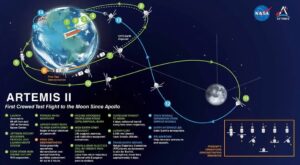
Trajectory for Artemis II, NASA’s first flight with crew aboard SLS, Orion to pave the way for long-term return to the Moon, missions to Mars
Perigee raise burn planned as engineers monitor onboard issue
Attention now shifts to the next key maneuver, the perigee raise burn, scheduled after the crew’s rest period.
Perigee refers to the lowest point in a spacecraft’s orbit around Earth. Raising it adjusts the shape of the orbit and prepares Orion for later phases of the mission, including potential translunar trajectories.
The maneuver follows an earlier apogee raise burn, which increased the spacecraft’s highest orbital point. Together, these burns define Orion’s initial orbital path and test propulsion performance under operational conditions.
Before the next burn, the crew completed routine spacecraft checks. During a systems review, they reported a blinking fault light in the onboard toilet system.
NASA ground teams are analyzing the data and working with the crew to diagnose the issue. No broader system impacts have been reported in official updates.
After a scheduled four-hour rest period, the astronauts are set to wake at 7 a.m. Eastern Time on April 2 to prepare for the maneuver. The timeline includes post-burn activities followed by another sleep cycle later in the morning.
The sequence of tests, adjustments, and troubleshooting reflects the mission’s dual purpose: demonstrating Orion’s readiness for deep space while gathering operational data from a live crewed environment.
NASA confirmed the Artemis II crew completed the apogee raise burn on April 2, increasing Orion’s orbital high point. The mission now transitions toward a proximity operations demonstration that will test manual spacecraft control near another object. Engineers continue to monitor a minor onboard system issue as the crew prepares for the next phase.
The spacecraft climbed higher. The mission grew more precise.
The National Aeronautics and Space Administration confirmed that Artemis II successfully executed its apogee raise maneuver, a key step in refining the Orion spacecraft’s orbit around Earth. The burn, powered by the interim cryogenic propulsion stage’s RL10 engine, increased the spacecraft’s highest orbital point and aligned it for upcoming tests.
The maneuver follows earlier orbital adjustments and forms part of a carefully sequenced plan to prepare Orion for operations beyond low Earth orbit. NASA officials said the spacecraft remains in stable condition, with power generation and thermal systems operating within expected limits.
Artemis II apogee raise burn and orbit shaping
The apogee raise burn works in tandem with the previously completed perigee adjustment. Together, these maneuvers define the shape and altitude of Orion’s orbit, ensuring the spacecraft is positioned correctly for subsequent demonstrations and trajectory changes.
Mission controllers at Johnson Space Center continue to track performance data, confirming that propulsion and navigation systems responded as expected.
Ahead of the burn, astronauts also began configuring the spacecraft for sustained operations in orbit. That included routine system checks such as evaluating the onboard toilet system. During that procedure, the crew reported a blinking fault light, which engineers are now analyzing.
NASA has not indicated that the issue affects mission safety, but teams are working with the crew to identify its cause and resolve it.
Trajectory for Artemis II, NASA’s first flight with crew aboard SLS, Orion to pave the way for long-term return to the Moon, missions to Mars
Proximity operations demonstration and manual control testing
The next phase of Artemis II will focus on proximity operations, a critical test of Orion’s ability to maneuver near another spacecraft.
The demonstration will use the detached upper stage of the Space Launch System as a reference target. Astronauts will guide Orion, named Integrity, through a series of controlled movements to evaluate how the spacecraft performs under manual control.
Before the maneuver begins, communications will transition from NASA’s Near Space Network to the Deep Space Network, systems that support spacecraft from launch through deep-space operations.
During the approximately 70-minute exercise, Orion will approach the upper stage to within about 300 feet before pausing. The crew will then take manual control, using onboard hand controllers to make precise adjustments and assess responsiveness.
At a closer range of roughly 30 feet, astronauts will evaluate the spacecraft’s fine handling capabilities. These maneuvers will rely on the reaction control system thrusters located on Orion’s European-built service module.
NASA said the demonstration also includes an automated backflip maneuver, allowing Orion to reorient and face the target stage. The test will generate detailed data on navigation and control systems, including measurements from the spacecraft’s docking camera.
These data points are expected to inform future missions that require rendezvous and docking in lunar orbit, where traditional GPS systems are not available.
Preparing for future lunar operations
At the conclusion of the demonstration, Orion will execute an automated departure burn to safely distance itself from the upper stage. The stage will then perform a disposal maneuver, re-entering Earth’s atmosphere over a remote region of the Pacific Ocean.
NASA said the spacecraft’s systems remain stable as the crew transitions into this next phase. Solar arrays continue to generate power, and environmental conditions inside Orion remain within predicted ranges.
Public interest in the mission’s technical milestones remains high. “This is the kind of test that proves whether astronauts can really control the vehicle in deep space,” wrote Reddit user LunarOpsWatcher in a post with more than 1,100 upvotes, highlighting the importance of manual maneuvering capabilities.
Artemis II is designed as a test mission, but each milestone carries implications for future exploration. The proximity operations demonstration, in particular, addresses a key requirement for sustained human activity beyond Earth orbit.
With the apogee burn complete, Orion now moves into one of its most intricate tests yet.
NASA confirmed the Artemis II crew completed a perigee raise maneuver on April 2, refining Orion’s orbit around Earth. A brief communications loss occurred shortly after the burn but was quickly resolved with no reported impact on crew safety. The agency will hold a press conference from Kennedy Space Center as the mission prepares for its next orbital milestone.
A routine engine burn sharpened Artemis II’s orbit. Minutes later, mission control lost contact. Then the signal came back.
The National Aeronautics and Space Administration said the Orion spacecraft successfully completed its perigee raise maneuver, one of the key early steps in shaping its path around Earth. The burn used the interim cryogenic propulsion stage’s RL10 engine to lift the spacecraft’s lowest orbital point, refining its trajectory for later mission phases.
The maneuver followed earlier orbital adjustments and forms part of a sequence designed to prepare Orion for operations beyond low Earth orbit. NASA officials said the burn occurred as planned, with precise timing required to achieve the desired orbital change.
Artemis II perigee raise burn and orbital adjustments
The perigee raise maneuver increases the spacecraft’s minimum altitude during its orbit. Along with a separate apogee raise burn, which affects the highest orbital point, these adjustments create a stable and elongated orbit suitable for further testing.
NASA said these burns are critical in preparing Orion for a planned high Earth orbit phase lasting about 23.5 hours. During that period, astronauts and ground teams will conduct system checkouts before committing to the next stage of the mission.
The work is coordinated through mission control at Johnson Space Center, where engineers track propulsion performance, navigation data, and onboard systems in real time.
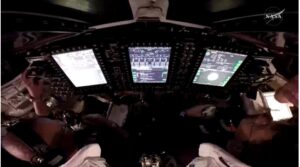
A view over the shoulders of NASA astronauts Victor Glover (left) and Reid Wiseman (right), pilot and commander, respectively, inside the Orion spacecraft as they participate in a proximity operations demonstration. This demonstration tests the spacecraft’s ability to manually maneuver relative to another spacecraft, the interim cryogenic propulsion stage, after separation, using its onboard navigation sensors and reaction control thrusters. NASA
Brief communication dropout under review
Shortly after completing the burn, ground teams experienced a temporary loss of communications with the spacecraft. NASA said controllers were unable to receive data from Orion or the crew for a brief period.
The interruption resolved quickly. Astronauts reported that they continued to hear communications from the ground throughout the event, indicating that onboard systems remained functional.
NASA said engineers are reviewing telemetry to determine the cause of the dropout. The agency has not indicated any impact on mission safety or trajectory.
Such communication gaps, while uncommon, are treated as high-priority review items during test missions. Artemis II, as a crewed test flight, is designed to expose and evaluate system behavior under real operating conditions.
NASA press conference and mission leadership
NASA will hold a post-launch press conference at 8 p.m. EDT from the Kennedy Space Center to provide further updates.
Scheduled participants include NASA Administrator Jared Isaacman, Associate Administrator Amit Kshatriya, Lori Glaze, who serves as acting associate administrator for the Exploration Systems Development Mission Directorate, and Norm Knight, director of the Flight Operations Directorate.
The briefing is expected to address the completed maneuver, the communication anomaly, and upcoming mission steps.
Public attention remains fixed on the mission’s progress. “Even a small signal loss gets people nervous, but that’s why they test,” wrote Reddit user SpaceTrackLive in a post that drew more than 900 upvotes, reflecting cautious optimism among spaceflight observers.
Next milestone: apogee raise burn and system checks
The next major step for Artemis II is the apogee raise maneuver. This burn will increase the highest point of Orion’s orbit, complementing the earlier perigee adjustment.
Together, these orbital changes define the spacecraft’s path before it transitions into high Earth orbit operations. NASA said this phase will allow for extended system verification and crew activity in preparation for the mission’s later trajectory toward the Moon.
Engineers view these incremental milestones as essential. Each burn, test, and anomaly review contributes to a broader goal: confirming that Orion can safely carry astronauts through deep space and back.
For now, Artemis II continues to move step by step. One maneuver completed, one anomaly under review, and another burn on the horizon.
Astronauts aboard NASA’s Artemis II mission completed a key proximity operations test on April 2 while orbiting Earth. The maneuver involved controlled movements around a detached rocket stage to evaluate spacecraft handling. With CubeSat deployments ahead and a minor onboard system issue under review, the crew is now preparing for a perigee raise burn to refine Orion’s orbit.
A shoebox-sized satellite deployment and a blinking fault light now share space in NASA’s latest Moon mission update.
The National Aeronautics and Space Administration confirmed that astronauts aboard Artemis II have completed one of the mission’s earliest and most technical tests. The crew piloted the Orion spacecraft, named Integrity, through a series of close-range maneuvers around a detached rocket stage, simulating scenarios required for future docking and deep-space operations.
The 70-minute exercise marked the mission’s proximity operations demonstration. Using the interim cryogenic propulsion stage, or ICPS, as a reference point, astronauts conducted controlled approach and retreat sequences to assess manual navigation capabilities in orbit.
At the end of the test, Orion executed an automated departure burn to safely distance itself from the stage. NASA said the ICPS will later perform a disposal burn, re-entering Earth’s atmosphere over a remote part of the Pacific Ocean.
A view over the shoulders of NASA astronauts Victor Glover (left) and Reid Wiseman (right), pilot and commander, respectively, inside the Orion spacecraft as they participate in a proximity operations demonstration. This demonstration tests the spacecraft’s ability to manually maneuver relative to another spacecraft, the interim cryogenic propulsion stage, after separation, using its onboard navigation sensors and reaction control thrusters. NASA
Orion proximity operations test and orbital maneuver plan
The proximity operations test is central to Artemis II’s role as a proving mission. Unlike future lunar landings, this flight focuses on validating systems and crew performance under real spaceflight conditions.
NASA officials said the demonstration provided critical data on how Orion behaves during manual piloting near another object. These conditions are expected to be essential for future missions involving docking, assembly, or logistics operations in lunar orbit.
The crew now turns to the next phase of orbital adjustments. After completing an earlier apogee raise maneuver, mission controllers are preparing for a perigee raise burn. This engine firing will increase the lowest point of Orion’s orbit around Earth, refining its trajectory for eventual translunar injection.
The sequence of burns shapes the spacecraft’s path before it departs Earth’s gravitational influence. These adjustments are necessary to ensure precision as the mission transitions toward its planned lunar flyby.
CubeSat deployments expand international science efforts
Alongside the crewed mission, Artemis II is carrying four CubeSats, compact satellites designed for scientific research and technology demonstrations.
These payloads, housed within the Space Launch System adapter, will deploy after separation from Orion. Each satellite represents an international collaboration and targets a different aspect of space science.
Argentina’s ATENEA CubeSat will study radiation shielding and communication systems. The Saudi Space Agency’s Space Weather CubeSat-1 will measure solar radiation and magnetic fields. Germany’s TACHELES mission will test components for future lunar logistics systems. South Korea’s K-Rad Cube will analyze radiation exposure and its biological effects across the Van Allen belts.
NASA describes CubeSats as small but versatile tools that can extend mission science at relatively low cost. Their deployment during Artemis II adds a layer of experimentation beyond the primary crewed objectives.
Toilet system issue under review during mission operations
Amid the technical milestones, engineers are also tracking a minor onboard issue.
During routine spacecraft configuration checks, the crew reported a blinking fault light in Orion’s toilet system. Mission control teams at Johnson Space Center are analyzing telemetry and working with astronauts to troubleshoot the problem.
NASA has not indicated that the issue poses a risk to crew safety or mission objectives. Such anomalies are not uncommon during test flights, where systems are evaluated under operational conditions for the first time.
The crew’s schedule includes carefully timed rest periods between mission activities. After a four-hour sleep cycle, astronauts are set to wake at 7 a.m. EDT to prepare for the upcoming burn, before returning to rest later in the day.
Public reaction to the update has reflected both enthusiasm and curiosity about the mission’s technical details. “It’s fascinating to see them actually test manual flying like this,” wrote Reddit user OrbitalWatcher, in a post that drew more than 1,200 upvotes, noting that such maneuvers are rarely visible to the public.
Preparing for deeper space operations
Artemis II continues to function as a systems validation mission, bridging the gap between uncrewed tests and future lunar landings.
Each milestone, from proximity operations to orbital burns, contributes to a broader objective. NASA aims to confirm that Orion and its supporting systems can reliably carry astronauts beyond low Earth orbit and back.
The upcoming perigee raise burn represents another step in that process. Once completed, it will help finalize the spacecraft’s orbit before the mission advances toward its lunar trajectory.
For engineers and mission planners, these incremental steps are essential. They provide the data needed to support more complex operations in future Artemis missions, including sustained human presence on the Moon.
The National Aeronautics and Space Administration launched four astronauts on April 2 from Kennedy Space Center in Florida aboard the Artemis II mission. The crew is set for a 10-day test flight around the Moon, marking the first human lunar flyby since the Apollo era. The mission aims to validate spacecraft systems and pave the way for future Moon landings and Mars exploration.
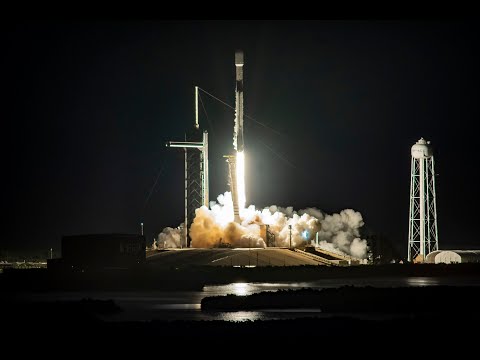
The countdown ended just after dusk in Florida. At 6:35 p.m. EDT on Wednesday, a new chapter in human spaceflight lifted off from Launch Pad 39B.
The National Aeronautics and Space Administration sent four astronauts toward the Moon aboard its Artemis II mission, marking the first crewed lunar journey in more than five decades. The launch took place at the agency’s Kennedy Space Center, the same historic ground that supported Apollo-era missions.
Aboard the Orion spacecraft were NASA astronauts Reid Wiseman, Victor Glover and Christina Koch, along with Canadian Space Agency astronaut Jeremy Hansen. The 10-day mission is designed as a test flight, with no lunar landing planned, but its implications extend far beyond a single journey.
“Today’s launch marks a defining moment for our nation and for all who believe in exploration,” NASA Administrator Jared Isaacman said in an official statement. “Artemis II builds on the vision set by President Donald J. Trump, returning humanity to the Moon for the first time in more than 50 years.”
Artemis II mission objectives and timeline
The mission began with the ignition of NASA’s Space Launch System (SLS), the most powerful rocket the agency has developed. About 49 minutes after liftoff, the rocket’s upper stage fired to place Orion into an elliptical orbit around Earth. A second burn is scheduled to push the spacecraft into a high Earth orbit extending roughly 46,000 miles from the planet.
From there, the spacecraft will separate and continue independently. Engineers confirmed that Orion deployed its solar arrays shortly after reaching space, allowing it to draw energy from the Sun.
The crew will spend about a day in high Earth orbit conducting system checks and a manual piloting demonstration. These early operations are designed to test the spacecraft’s handling and ensure its readiness for deeper space travel.
If all systems perform as expected, mission controllers at Johnson Space Center will authorize a translunar injection burn. This maneuver, lasting about six minutes, will send Orion on a trajectory toward the Moon.
NASA Associate Administrator Amit Kshatriya described the mission as a proving ground. “Artemis II is a test flight, and the test has just begun,” he said. “Over the next 10 days, the crew will put Orion through its paces so future missions can land on the Moon with confidence.”
Lunar flyby and scientific goals
The spacecraft is scheduled to reach the Moon for a flyby on April 6. During this phase, the astronauts will travel around the lunar far side, an area rarely seen directly by human eyes.
NASA officials said the lighting conditions during the flyby could provide enhanced visibility of surface features such as ridges, crater rims and slopes. The crew is expected to capture images and make observational reports that will inform future missions.
The mission also includes scientific experiments, including human health studies designed to assess how astronauts respond to deep-space conditions. These findings will contribute to planning for longer missions, including eventual journeys to Mars.
Alongside the primary mission, the rocket’s upper stage will deploy four CubeSats developed by international partners. These small satellites will conduct independent research and technology demonstrations, highlighting the global collaboration involved in Artemis.
Return to the Moon after Apollo
Artemis II is the first crewed mission in NASA’s Artemis program, which aims to establish a sustained human presence on the Moon. The last time astronauts traveled beyond low Earth orbit was during the Apollo program in the early 1970s.
The current mission does not include a landing, but it sets the stage for future Artemis missions that will attempt to place astronauts on the lunar surface. NASA has said the long-term goal is to build infrastructure that supports extended stays on the Moon.
The program also serves as a stepping stone for missions to Mars, with engineers using Artemis to test technologies and operational strategies required for deeper space exploration.
Public reaction to the launch reflected a mix of excitement and historical awareness. One widely shared comment on Reddit captured the moment’s significance. “We’re finally going back to the Moon with people on board,” wrote user AstroFan92 on a thread with more than 3,000 upvotes, calling it “a milestone that feels like history repeating itself in the best way.”
What comes next for Artemis
Following the lunar flyby, Orion will begin its return trajectory to Earth. The mission is expected to conclude with a splashdown in the Pacific Ocean. Recovery teams will retrieve the crew and spacecraft for post-mission analysis.
NASA officials describe Artemis II as a foundation mission. It tests life support systems, validates navigation and communication technologies, and confirms that astronauts can safely travel beyond low Earth orbit using the new spacecraft.
Future Artemis missions will build on these results. Planned objectives include landing astronauts on the Moon, establishing a long-term lunar presence, and eventually preparing for human exploration of Mars.
For now, Artemis II represents a return. Not just to the Moon, but to a scale of ambition that defined an earlier era of spaceflight.
Scientists from the Raman Research Institute have identified a possible cause behind irregular X-ray bursts from a distant space object, based on observations spanning 2001 to 2021. The study focuses on ULX M74 X-1, an ultraluminous X-ray source in the spiral galaxy M74, using data from NASA and European space telescopes. Researchers suggest that a wobbling accretion disk may explain the unusual and unpredictable flaring pattern observed over time.
A distant object in space has been flashing bursts of energy in a pattern that refuses to settle into rhythm. Indian scientists now think they know why.
Researchers at the Raman Research Institute in Bengaluru have analyzed years of observational data to explain the unusual behavior of a powerful X-ray source known as ULX M74 X-1. Their findings point to a wobbling disk of matter spiraling into a compact object, possibly a black hole or neutron star.
ULX M74 X-1 and the mystery of irregular X-ray flares
Ultraluminous X-ray sources, or ULXs, are among the brightest objects in the universe. They consist of a compact object such as a black hole or neutron star pulling in material from a companion star in what astronomers call an accreting binary system.
These systems can exceed the so-called Eddington limit, the theoretical cap on how bright an object can shine based on its mass. In some cases, ULXs surpass this limit by more than 100 times, making them key targets for astrophysical research.
The specific source studied, ULX M74 X-1, lies in the spiral galaxy M74 and first drew attention in the mid-2000s when scientists detected rapid bursts of energy, known as flares. These flares showed a repeating pattern, but not at consistent intervals, creating a puzzle that remained unresolved for years.
To investigate, the RRI team led by researcher Aman Upadhyay used archival data from Chandra X-ray Observatory and XMM-Newton, covering two decades of observations.
PIB
Spectral clues reveal shifting perspectives
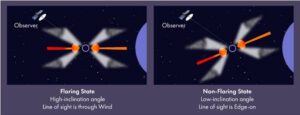
The team analyzed both flaring and non-flaring states of the source by studying its spectrum, which maps the intensity of radiation across energy levels.
During flares, the data showed a distinct feature around one kilo-electronvolt, a unit used to measure X-ray energy. This feature suggests the presence of strong winds blowing off the accretion disk due to intense radiation pressure.
In such scenarios, the structure of the system creates a funnel-like region around its axis. When observed through this funnel, the system appears at a low inclination angle. When viewed through the surrounding wind, it appears edge-on, or at a higher inclination angle.
However, the non-flaring data told a different story. High-energy photons dominated the spectrum, indicating a direct view of the inner, brightest region of the disk without interference from wind.
This contrast suggested that the observer’s line of sight was not fixed, but changing over time.
Wobbling accretion disk explains irregular bursts
To reconcile the conflicting observations, researchers proposed that the accretion disk itself is wobbling, similar to a spinning top.
As the disk tilts and shifts, the wind surrounding it moves in and out of the telescope’s line of sight. This leads to periodic changes in brightness, producing flares that repeat but not at regular intervals.
Co-author Prof. Vikram Rana said the wobble could explain why the same object appears differently depending on when it is observed, offering a unified explanation for both flaring and non-flaring states.
The mechanism provides a physical model for understanding irregular variability in ULXs, which has been a long-standing question in high-energy astrophysics.
Black hole or neutron star: the central debate
The nature of the compact object at the center of ULX M74 X-1 remains uncertain.
Earlier studies suggested the presence of an intermediate-mass black hole, based on lower temperature readings of the accretion disk. However, the RRI team applied updated spectral models that describe the disk as having multiple temperature zones.
Using this approach, they estimated the object’s mass to be about seven times that of the Sun, placing it in the category of stellar-mass black holes.
At the same time, the observed characteristics also resemble those of neutron star ULXs, leaving open the possibility that the object could be a neutron star instead.
Researchers say future work will focus on detecting pulsations, which would confirm the presence of a neutron star.
Expanding understanding of extreme cosmic systems
The findings contribute to a broader effort to understand how matter behaves under extreme gravitational and radiation conditions.
By linking irregular flaring patterns to geometric changes in the accretion disk, the study offers a framework that could be applied to other ULXs showing similar behavior.
The research, published in The Astrophysical Journal, highlights how long-term observational data can reveal subtle dynamics in distant cosmic systems that are otherwise impossible to detect directly.
For scientists studying the most energetic objects in the universe, the work adds a new piece to a complex puzzle that continues to evolve with each observation.
A star visible to the naked eye has held a secret for more than half a century.
Gamma Cassiopeiae, a bright star in the constellation Cassiopeia, has puzzled astronomers since the 1970s with its unusually intense X ray emissions. [1]
Now, researchers using the X Ray Imaging and Spectroscopy Mission, a joint space observatory developed by Japan, the United States and Europe, say they have identified the source. [1]
The emissions come from an unseen white dwarf companion that pulls in material from the larger star and releases X rays as it does so. [1]
Gamma Cas X ray origin explained by white dwarf companion
The findings are based on high resolution observations from XRISM’s Resolve spectrometer, which can track subtle changes in X ray signals.
Researchers found that the hot plasma responsible for the X rays moves in sync with the orbit of the hidden companion star. [1]
This motion provided direct evidence that the emissions are linked to accretion, a process in which matter falls onto a dense object such as a white dwarf.
Lead author Yaël Nazé, an astronomer at the University of Liège in Belgium, said the result concludes decades of investigation.
“There has been an intense effort to solve the mystery of gamma Cas across many research groups for many decades. And now, thanks to the high precision observations of XRISM, we have finally done it,” Nazé said. [1]
For years, scientists had narrowed the explanation to two possibilities. One involved magnetic interactions between the star and its surrounding disc. The other suggested that a companion object was drawing in material and generating X rays.
The XRISM data supports the second explanation. [1]
Be stars gamma Cas history and unusual emission features
Gamma Cassiopeiae belongs to a class known as Be stars, a type of hot, rapidly rotating star surrounded by a disc of material.
The star’s unusual behavior was first noted in 1866 by Italian astronomer Angelo Secchi, who observed unexpected emission lines in its light spectrum. [1]
Those observations led to the classification of Be stars, which are known for ejecting material that forms a rotating disc around them.
By the mid 20th century, astronomers had detected that gamma Cas also had a low mass companion, though it remained invisible to direct observation. [1]
The discovery of strong X ray emissions in the 1970s added another layer to the mystery. The radiation was traced to extremely hot plasma, reaching temperatures of about 150 million degrees, far exceeding typical levels for such stars. [1]
Subsequent observations with space telescopes such as XMM Newton, the European Space Agency’s X ray observatory, NASA’s Chandra X ray Observatory, and the eROSITA telescope identified similar behavior in a small group of stars now known as gamma Cas type objects. [1]
XRISM discovery impact on binary star evolution research
The identification of a white dwarf companion resolves the origin of the X rays and provides a clearer picture of how these systems function.
In this model, material from the Be star’s disc spirals toward the white dwarf, heating up and emitting high energy radiation in the process.
Researchers say the findings also raise new questions about how such binary systems form.
White dwarf companions were expected to be common in systems with lower mass stars. The new results suggest they may instead occur more frequently with high mass Be stars. [1]
Alice Borghese, a research fellow at the European Space Agency specializing in high energy astrophysics, said earlier missions helped narrow the possibilities.
“XMM Newton did so much of the groundwork in ruling out various theories about gamma Cas. And now with the next generation of advanced instrumentation, XRISM has brought us over the finish line,” she said. [1]
The study highlights the role of international collaboration in space science. XRISM combines contributions from Japanese, European and American teams.
Matteo Guainazzi, the European Space Agency’s XRISM project scientist, said the result demonstrates the value of that cooperation.
“This wonderful result underlines the strong collaboration between XRISM’s Japanese, European and American teams,” he said. [1]
For astronomers, the long running puzzle of gamma Cas has shifted from speculation to measurement.
A mystery that began with unusual light signatures in the 19th century now has a defined mechanism grounded in observation.
NASA is set to broadcast the launch and arrival of a Russian cargo spacecraft carrying essential supplies to astronauts aboard the International Space Station, as part of routine resupply operations that keep the orbital lab running.
The uncrewed Progress 94 spacecraft, operated by Russia’s space agency Roscosmos, is scheduled to lift off on Sunday, March 22, at 7:59 a.m. EDT from the Baikonur Cosmodrome in Kazakhstan. The mission will ride aboard a Soyuz rocket and is loaded with nearly three tonnes of food, fuel, and other critical materials for the station’s crew.
NASA will begin live coverage of the launch at 7:30 a.m. EDT. The broadcast will be available on NASA+, Amazon Prime, and the agency’s official YouTube channel, alongside other digital platforms.
Following a two-day journey in orbit, the spacecraft is expected to dock automatically with the space-facing port of the Poisk module at around 9:34 a.m. EDT on Tuesday, March 24. Live coverage of the rendezvous and docking is scheduled to start at 8:45 a.m.
Once attached, Progress 94 will remain at the station for roughly six months. During that time, it will serve both as a supply vessel and a storage unit for waste. At the end of its mission, it will detach and burn up upon re-entry into Earth’s atmosphere, safely disposing of onboard trash.
The mission follows the departure of Progress 92, which undocked from the station on March 16 and disintegrated over the Pacific Ocean without incident.
The International Space Station has been continuously inhabited for over 25 years, serving as a hub for scientific research in microgravity. The platform continues to support studies that cannot be conducted on Earth, while also helping space agencies prepare for longer missions beyond low Earth orbit, including NASA’s Artemis programme aimed at returning humans to the Moon, and eventual crewed missions to Mars.
NASA is scheduled to host a media teleconference Friday at 6 p.m. EDT to outline the next phase of flight testing for its X-59 quiet supersonic aircraft, with the briefing set to follow the plane’s second test flight over California the same day.
The call will include NASA leadership, representatives from the agency’s Quesst mission, and officials from primary contractor Lockheed Martin Skunk Works. The X-59’s test pilots are also expected to participate, addressing questions about flight conditions and pre-flight preparation protocols.
The Quesst mission, short for Quiet SuperSonic Technology, is designed to gather data on how communities on the ground perceive sonic disturbances from supersonic flight, with the goal of informing potential regulatory changes to current restrictions on overland supersonic commercial travel in the United States. The X-59 is engineered to reduce the sonic boom typically associated with supersonic aircraft to what NASA describes as a quieter “sonic thump.”
Lockheed Martin Skunk Works, the advanced development division behind the aircraft’s construction, has been working alongside NASA on the program since the agency awarded the contract in 2018. The X-59 completed its first flight in March 2024 at Lockheed’s facility in Palmdale, California.
Full teleconference details and dial-in credentials are expected to be made available through NASA’s media channels ahead of the Friday briefing, which will be streamed on NASA’s YouTube channel. An instant replay will be available online.
Participants include:
Bob Pearce, associate administrator, NASA Aeronautics Research Mission Directorate, Washington
Cathy Bahm, project manager, Low Boom Flight Demonstrator, NASA’s Armstrong Flight Research Center, Edwards, California
Peter Coen, Quesst mission integration manager, NASA’s Langley Research Center, Hampton, Virginia
The difference longer wavelengths of light make, even within the infrared spectrum, are stark when comparing the images from Webb’s MIRI and NIRCam (Near-Infrared Camera) instruments. Glowing gas and dust appear dramatically in mid-infrared light, while all but the brightest stars disappear from view.
In contrast to MIRI, colorful stars steal the show in Webb’s NIRCam image, punctuated occasionally by bright clouds of gas and dust. Further research into these stars will reveal details of their masses and ages, which will help astronomers better understand the process of star formation in this dense, active galactic center region. Has it been going on for millions of years? Or has some unknown process triggered it only recently?
Astronomers hope Webb will shed light on why star formation in the galactic center is so disproportionately low. Though the region is stocked with plenty of gaseous raw material, on the whole it is not nearly as productive as Sagittarius B2. While Sagittarius B2 has only 10 percent of the galactic center’s gas, it produces 50 percent of its stars.
“Humans have been studying the stars for thousands of years, and there is still a lot to understand,” said Nazar Budaiev, a graduate student at the University of Florida and the co-principal investigator of the study. “For everything new Webb is showing us, there are also new mysteries to explore, and it’s exciting to be a part of that ongoing discovery.”
More about Webb and MIRI
The James Webb Space Telescope is the world’s premier space science observatory. Webb is solving mysteries in our solar system, looking beyond to distant worlds around other stars, and probing the mysterious structures and origins of our universe and our place in it. Webb is an international program led by NASA with its partners, ESA (European Space Agency) and CSA (Canadian Space Agency).
Webb’s MIRI was developed through a 50-50 partnership between NASA and ESA. A division of Caltech in Pasadena, California, JPL led the U.S. contribution to MIRI. JPL also led development of MIRI’s cryocooler, done in collaboration with Northrop Grumman in Redondo Beach, California, and NASA’s Goddard Space Flight Center in Greenbelt, Maryland.
The night sky often brings a sense of awe, but every so often, a rocky visitor from deep space captures global attention. This week, astronomers are tracking asteroid 2025 FA22, which will sweep past Earth on Thursday, 18 September, 2025, in one of the year’s most closely monitored celestial events.
According to NASA, FA22 is about 520 feet (160 metres) wide and hurtles through space at over 24,000 miles per hour. On its closest approach, it will pass at a distance of 523,000 miles (841,900 km), tht is slightly farther than the Moon. While that might not sound close, in astronomical terms, it qualifies as a near miss.
The asteroid is part of the Aten group, a class of Near-Earth Objects (NEOs) whose orbits cross Earth’s path. Because of their trajectories, they are among the most carefully tracked objects in the solar system.
Despite its size, experts stress that FA22 poses no risk. NASA designates an asteroid as hazardous if it comes within 7.4 million kilometres of Earth and measures more than 85 metres across. Although FA22 fits the size category, its trajectory keeps it well outside the danger zone.
Still, scientists emphasise that close monitoring is essential. Even small shifts in an asteroid’s orbit, caused by gravitational nudges or solar radiation effects, can change its future path dramatically.
NASA noted that shortly after its discovery in March 2025, FA22 briefly reached Torino Scale 1, a category that flags objects worth monitoring, though unlikely to impact Earth. Further observations quickly ruled out any threat.
2025 – A Busy Year for Sky Watchers
The September encounter comes during a year filled with notable asteroid activity.
January 2025: Asteroid 2025 AB10, a 200-foot rock, passed at 1.2 million kilometres, offering astronomers early tracking practice for the year.
March 29, 2025: FA22 was first spotted by the Pan-STARRS 2 telescope in Hawaii, triggering the global observing campaign now underway.
July 2025: A smaller asteroid, 2025 JX3, skimmed within 400,000 kilometres, just inside the Moon’s orbit, sparking public interest.
September 2025: FA22 now headlines as the largest close-approaching asteroid of the year.
Later in 2025: Astronomers also anticipate the flyby of 2025 QH5 in December, which, while smaller, will pass even closer than FA22.
These encounters remind us that the Blue Planet shares a dynamic neighbourhood with thousands of NEOs, most harmless, but all worth studying.
Why Should We Care About Every Flyby?
Even when no danger exists, each asteroid provides a chance to refine tracking systems and test planetary defense protocols. The International Asteroid Warning Network (IAWN) has organised a worldwide observing campaign around FA22. Telescopes across the globe will collect data on its orbit, size, spin, and surface features.
IAWN explained: “For the purpose of the exercise, we will treat this object as a current virtual impactor with a hypothetical impact on September 19, 2089.” In reality, updated orbital calculations show no risk of impact.
Beyond FA22, attention is building toward Apophis, a much larger asteroid due in 2029. In fact, ISRO chief S. Somanath recently outlined India’s plans to join NASA, ESA, and JAXA in asteroid exploration, including potential landing missions. The goal is to understand their makeup, test resource extraction technologies, and sharpen defense strategies.
Past close approaches, such as 2019 OK, which flew within 73,000 kilometres, and 2020 QG, which zipped by at just 3,000 kilometres—show how unexpectedly close asteroids can appear. While FA22 will pass at a safe distance, its visit underscores why constant vigilance is critical.
For amateur astronomers, the event is also a spectacle. On September 18–19, FA22 is expected to reach magnitude 13, visible through small backyard telescopes. The Virtual Telescope Project will livestream the passage for global audiences.
Though harmless, FA22’s arrival highlights a core truth about our place in the cosmos: the skies above are far from static. Each asteroid encounter is both a reminder of Earth’s vulnerability and a chance to sharpen humanity’s readiness for the unexpected.
Using the Atacama Large Millimeter/submillimeter Array (ALMA), astronomers have spotted signs of a ‘hot spot’ orbiting Sagittarius A*, the black hole at the centre of our galaxy. The finding helps us better understand the enigmatic and dynamic environment of our supermassive black hole.
“We think we’re looking at a hot bubble of gas zipping around Sagittarius A* on an orbit similar in size to that of the planet Mercury, but making a full loop in just around 70 minutes. This requires a mind blowing velocity of about 30% of the speed of light!” says Maciek Wielgus of the Max Planck Institute for Radio Astronomy in Bonn, Germany, who led the study published today, Sept 22, 2022 in Astronomy & Astrophysics.
The observations were made with ALMA in the Chilean Andes — a radio telescope co-owned by the European Southern Observatory (ESO) — during a campaign by the Event Horizon Telescope (EHT) Collaboration to image black holes. In April 2017 the EHT linked together eight existing radio telescopes worldwide, including ALMA, resulting in the recently released first ever image of Sagittarius A.
To calibrate the EHT data, Wielgus and his colleagues, who are members of the EHT Collaboration, used ALMA data recorded simultaneously with the EHT observations of Sagittarius A. To the team’s surprise, there were more clues to the nature of the black hole hidden in the ALMA-only measurements.
By chance, some of the observations were done shortly after a burst or flare of X-ray energy was emitted from the centre of our galaxy, which was spotted by NASA’s Chandra Space Telescope. These kinds of flares, previously observed with X-ray and infrared telescopes, are thought to be associated with so-called ‘hot spots’, hot gas bubbles that orbit very fast and close to the black hole.
The flares were long thought to originate from magnetic interactions in the very hot gas orbiting very close to Sagittarius A*, and the new findings support this idea. “Now we find strong evidence for a magnetic origin of these flares and our observations give us a clue about the geometry of the proces,” says co-author Monika Mościbrodzka from Radboud University.
The observations confirm some of the previous discoveries made by the GRAVITY instrument at ESO’s Very Large Telescope (VLT), which observes in the infrared. The data from GRAVITY and ALMA both suggest the flare originates in a clump of gas swirling around the black hole at about 30% of the speed of light in a clockwise direction in the sky, with the orbit of the hot spot being nearly face-on.
This (above) latest image of Jupiter was captured by Hubble Space Telescope on 25 August 2020, when the planet was 653 million kilometres from Earth, giving clues on updated weather report on the monster planet’s turbulent atmosphere. A remarkable new storm is brewing, and a cousin of the Great Red Spot is changing colour again. The tiny new image is Jupiter’s icy moon Europa.
Hubble’s new snapshot appears at mid-northern latitudes as a bright, white, stretched-out storm moving at 560 kilometres per hour. This single plume erupted on 18 August 2020 and another has since appeared.
Unlike other common storms in this region, this particular disturbance appears to have more structure behind it than observed in the past storms. Trailing behind the plume are small, counterclockwise dark clumps also not seen in the past, which could mean the beginning of a longer-lasting northern hemisphere spot, perhaps to rival the legendary Great Red Spot that dominates the southern hemisphere.
Great Red Spot
Hubble shows that the Great Red Spot, rolling counterclockwise in the planet’s southern hemisphere, is ploughing into the clouds ahead of it, forming a cascade of white and beige ribbons, while its current exceptionally rich red colour, with its core and outermost band, is appearing deeper red.
Researchers say the Great Red Spot now measures about 15 800 kilometres across, big enough to swallow the Earth. The super-storm is still shrinking, as noted in telescopic observations dating back to 1930, but its rate of shrinkage appears to have slowed though the reason for its dwindling size remains a mystery.
The NASA/ESA Hubble Space Telescope is giving astronomers their most detailed view yet of a second red spot emerging on Jupiter. For the first time in history, astronomers have witnessed the birth of a new red spot on the giant planet, which is located half a billion miles away (about 800 thousand kilometres). The storm is roughly one-half the diameter of its bigger and legendary cousin, the Great Red Spot. Researchers suggest that the new spot may be related to a possible major climate change in Jupiter’s atmosphere. Credit: NASA, ESA, A. Simon-Miller (NASA/GSFC), and I. de Pater (University of California Berkeley)
Researchers are noticing that another feature has changed: the Oval BA, nicknamed by astronomers as Red Spot Jr., which appears just below the Great Red Spot in this image. For the past few years, Red Spot Jr. has been fading in colour to its original shade of white after appearing red in 2006. However, now the core of this storm appears to be darkening to a reddish hue. This could hint that Red Spot Jr. is on its way to reverting to a colour more similar to that of its cousin.
Hubble’s image shows that Jupiter is clearing out its higher-altitude white clouds, especially along the planet’s equator, which is enveloped in an orangish hydrocarbon smog.
Jupiter’s icy moon Europa is visible to the left of the gas giant. Europa is already thought to harbour a liquid ocean beneath its icy crust, making this moon one of the main targets in the search for habitable worlds beyond Earth.
Water vapour
In 2013 it was announced that the Hubble Space Telescope discovered water vapour erupting from the frigid surface of Europa, in one or more localised plumes near its south pole. ESA’s JUpiter ICy moons Explorer, a mission planned for launch in 2022, aims to explore both Jupiter and three of its largest moons: Ganymede, Callisto, and Europa.
Hubble also captured a new multiwavelength observation in ultraviolet/visible/near-infrared light of Jupiter on 25 August 2020, which is giving researchers an entirely new view of the giant planet. Hubble’s near infrared imaging, combined with ultraviolet views, provides a unique panchromatic look that offers insights into the altitude and distribution of the planet’s haze and particles. This complements Hubble’s visible-light picture that shows the ever-changing cloud patterns.
US private space agency SpaceX is targeting Friday, August 7 at 1:12 a.m. EDT, 5:12 UTC, for launch of its tenth Starlink mission which will include 57 Starlink satellites and 2 satellites from BlackSky, a Spaceflight customer.
The standard vehicle Falcon 9 will lift off from Launch Complex 39A (LC-39A) at Kennedy Space Center in Florida. In case you miss the event, a backup opportunity is available on Saturday, August 8 at 12:50 a.m. EDT, 4:50 UTC.
You can watch the launch webcast here, starting about 15 minutes before liftoff.
Sequential Deployment
Falcon 9’s first stage previously supported Crew Dragon’s first demonstration mission to the International Space Station, launch of the RADARSAT Constellation Mission, and the fourth and seventh Starlink missions. Following stage separation, SpaceX will land Falcon 9’s first stage on the “Of Course I Still Love You” droneship, which will be stationed in the Atlantic Ocean.
The BlackSky Global spacecraft will deploy sequentially beginning 1 hour and 1 minute after liftoff, and the Starlink satellites will deploy approximately 1 hour and 33 minutes after liftoff. Starlink satellites will be deployed in a circular orbit, as was done on the first through fourth Starlink missions.
Weather Forecast
The weather forecast is favorable for SpaceX’s Friday early hours launch from Kennedy Space Center, the Space Force said Wednesday. “The primary weather concern for launch day will be mid- and upper-level clouds streaming across the region from the south along with cumulus clouds over the nearshore waters,” 45th Weather Squadron forecasters said on Wednesday.
The 10th Starlink launch has been delayed nearly 10 times due to technical hurdles so far and several attempts in June and July were rolled back for additional hardware work. Today’s launch will be the booster’s fifth flight.
All Starlink satellites on this flight are equipped with a deployable visor to block sunlight from hitting the brightest spots of the spacecraft – a measure SpaceX has taken as part of their work with leading astronomical groups to mitigate satellite reflectivity.
A new study by researchers at Kyushu University’s International Institute for Carbon-Neutral Energy Research, Fukuoka in Japan after comparing findings of Mars Insight lander after comparing with our own planet Earth, found Mars might seem like a “dead” planet, but even there, the wind blows and the ground moves.
Similar to earthquakes, the ambient seismic noise rippling mainly due to ocean activity to peek underground at the structure of the Earth’s interior. Can we do the same on Mars without ocean? The Japanese researchers’ study, published in Geophysical Research Letters, is based on data collected by NASA’s InSight (Interior Exploration using Seismic Investigations, Geodesy and Heat Transport) Martian lander, which landed on Mars on November 26, 2018.
This is ambient noise on the Mars CREDIT: Takeshi Tsuji, I2CNER, Kyushu University
The InSight lander placed a seismometer on the surface of Mars and its readings collected between February and June 2019 revealed the existence of several hundred marsquakes, most of them much weaker than the quakes typically felt on Earth, although some reached a maximum magnitude of 4.
The data from these “microtremors” helped to determine the directions of propagation and directional intensity. Study co-author Tatsunori Ikeda said, “Our polarization analysis revealed that seismic waves of different frequencies and types showed different patterns of variation over the course of the Martian day. The temporal variations in low-frequency P-waves were related to distant changes in wind and solar irradiation, and the low-frequency Rayleigh waves were related to the wind direction in the region near the lander.”
This artist’s concept depicts NASA’s InSight lander after it has deployed its instruments on the Martian surface (NASA)
Higher-frequency ambient noises were, of course, made by vibration of the lander itself and hence, these microtremors of different types and frequencies likely have different sources, and some are probably influenced by geological structures, noted the scientists.
Mars Interior
These differences between the dominant sources of Martian microtremors may help in efforts to identify geological structures in Mars’s interior, as we inferred the lithological boundary beneath the seismometer from high frequency ambient noise.
A single seismometer is not yet enough to reconstruct images of the planet’s interior as usually done on Earth from data networks of multiple seismometers. But this analysis of the InSight lander’s seismic data is a key step toward achieving that goal on Mars, said scientists of the study.
The study’s senior author Takeshi Tsuji said:”These results demonstrate the feasibility of ambient noise methods on Mars. Future seismic network projects will enable us to model and monitor the planet’s interior geological structure, and may even contribute to resource exploration on Mars, such as for buried ice.”
US space agency NASA has informed that a solar storm brewing on Sun is flaring up splitting huge sun storms which may reach earth on Sunday, May 6. It said a coronal hole or sun spot has opened up releasing huge swarm of cosmic rays which may take 8 minutes to reach earth.
The space weather watching unit of National Oceanic and Atmospheric Administration (NOAA) said the solar tsunami can create an aurora or polar lights when it hits earth. Astronomers have estimated that three such solar storms are likely to reach earth on May 6, to be precise, the Indian Ocean and India is very much within the target area.
The storm classified as G-1 or ‘minor’ is the biggest since 2004 and it could trigger sparks and melt soil on Moon, while its impact on Earth is still not comprehended by astronomers but similar storms had apparently given birth to origin of life on earth.
A section of scientists warned that the solar storms on Sunday could be severe enough to disrupt communications, satellite-based GPS, flaring up magnetic field around electricity power stations or transmitters. A partial tech blackout is likely to disrupt the Internet-based communications, they added.
Effects on Earth?
Since the severity has been classified as low by NOAA, it may cause voltage fluctuations in electricity supply or even cause power failures for now. However, the US Space Weather Prediction Center (SWPC) has issued a storm alert on Sunday and Monday stating that the solar storm could cause a “high stream of activity” that is characteristic to any G1-class storm. The gigantic coronal hole in the sun’s surface was captured today by NASA’s Solar Dynamics Observatory (SDO), said SWPC.
“G1 (Minor) geomagnetic storm watches have been issued for 06 and 07 May 2018 due to the anticipated effects of a negative polarity coronal hole high speed stream… Aurora may be visible at high latitudes, that is, northern tier of the US such as northern Michigan and Maine,” said SWPC in a statement.
Meanwhile, conspiracy theorists woke up to the situation to claim that these disruptions are due to the effect of an approaching Nibiru planet which is lurking in the vicinity of our solar system. David Meade, its proponent, has repeated that the next seven years will witness tribulation with many more calamities. NASA has denied these claims as Internet Hoax, though.
50-Year-Cycle?
Researchers have long announced that a storm is likely to come and the most intense solar flare may reach earth in maximum fifty years. It is not sure whether the Sunday storm was the one or not.
Mausumi Dikpati of the National Center for Atmospheric Research (NCAR), who’s been working on these storms for decades, predicted that the next solar storm will be a stronger one. “The next sunspot cycle will be 30% to 50% stronger than the previous one,” she said a few years ago. It can produce a burst of solar activity second only to the historic Solar Max of 1958.
Earlier, such intense solar storms had been observed in 1805 and 1958 but with no mobiles and magnetic power lines, the disruption was not detectable as clearly as it would today when auroras and cell technology will showcase the real impact.
According to solar physicist David Hathaway of the National Space Science and Technology Center (NSSTC), a typical sunspot exists for just a few weeks. When it decays, it leaves behind a ‘corpse’ of weak magnetic fields.
Whether the big Doomsday is Sunday or not will be known sooner. For now, a storm is coming and how big will it be remains a major question.
Japanese astronomer team led by Teruyuki Hirano of Tokyo Institute of Technology has validated 15 exoplanets orbiting red dwarf systems and found one of them highly akin to Earth and habitable. It could be of particular interest as researchers describe it as a ‘super-Earth’, which could harbour liquid water, and potential alien life.
One of them, K2-155 located around 200 light years away from Earth, has three transiting super-Earths, which are slightly bigger than ours and interestingly the outermost planet, K2-155d, with a radius 1.6 times that of Earth, could be within the host star’s habitable zone, they said.
The findings, published in The Astronomical Journal, are based on data from NASA Kepler spacecraft’s second mission, K2, and other data from the ground-based telescopes, including the Subaru Telescope in Hawaii and the Nordic Optical Telescope (NOT) in Spain.
The Japanese researchers found that K2-155d could potentially have liquid water on its surface based on 3D climate simulations. Hirano said: “In our simulations, the atmosphere and the composition of the planet were assumed to be Earth-like, and there’s no guarantee that this is the case.”
A key outcome from the current studies was that planets orbiting red dwarfs may have remarkably similar characteristics to planets orbiting solar-type stars.
“It’s important to note that the number of planets around red dwarfs is much smaller than the number around solar-type stars,” says Hirano. “Red dwarf systems, especially coolest red dwarfs, are just beginning to be investigated, so they are very exciting targets for future exoplanet research.”
While the radius gap of planets around solar-type stars has been reported previously, this is the first time that researchers have shown a similar gap in planets around red dwarfs. “This is a unique finding, and many theoretical astronomers are now investigating what causes this gap,” says Hirano.
He adds that the most likely explanation for the lack of large planets in the proximity of host stars is photoevaporation, which can strip away the envelope of the planetary atmosphere.
The researchers also investigated the relationship between planet radius and metallicity of the host star. “Large planets are only discovered around metal-rich stars,” Hirano says, “and what we found was consistent with our predictions. The few planets with a radius about three times that of Earth were found orbiting the most metal-rich red dwarfs.”
The studies were conducted as part of the KESPRINT collaboration, a group formed by the merger of KEST (Kepler Exoplanet Science Team) and ESPRINT (Equipo de Seguimiento de Planetas Rocosos Intepretando sus Transitos) in 2016.
With the planned launch of NASA’s Transiting Exoplanet Survey Satellite (TESS) in April 2018, Hirano is hopeful that even more planets will be discovered. “TESS is expected to find many candidate planets around bright stars closer to Earth,” he says. “This will greatly facilitate follow-up observations, including investigation of planetary atmospheres and determining the precise orbit of the planets,” he said.
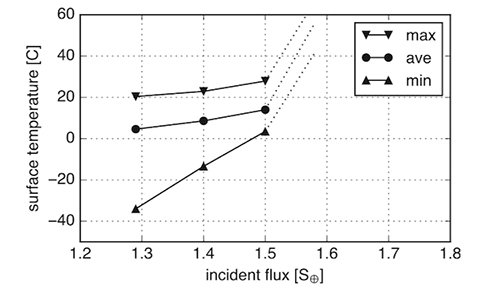
Figure 1. Results of 3D global climate simulations for K2-155d
Surface temperatures were plotted as a function of insolation flux (the amount of incoming stellar radiation) estimated at 1.67±0.38. When the insolation exceeds 1.5, a so-called runaway greenhouse effect occurs, signaling a cut-off point for life-friendly temperatures. If the insolation is under 1.5, the surface temperature is more likely to be moderate.
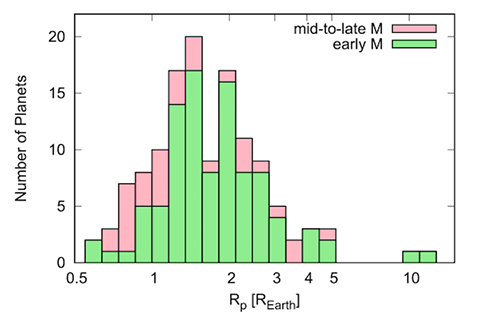
Figure 2. Distribution of planet sizes
Histogram of planet radius for the validated and well-characterized transiting planets around red dwarfs: The number counts for mid-to-late red dwarfs (those with a surface temperature of under 3,500 K) are shown above those for early red dwarfs (those with a surface temperature of around 3,500–4,000 K). The results show a “radius gap”, or a dip in the number of stars with a radius between 1.5–2.0 times that of Earth.
At present, there are 42 Indian satellites operational in orbit, 15 of them for communication, 4 for meteorological observations, 14 for earth observations, 7 for navigation and 2 for space science purposes.
During FY 2016-17, the total revenue accrued from communication satellites through leasing of INSAT/ GSAT transponders is Rs. 746.68 crore.
With respect to earth observation satellites, the annual income from sale of remote sensing satellite data is Rs. 25.17 crores.
The data and value added services derived from earth observation, meteorological, communication & navigation satellites are used to support various applications like resource monitoring, weather forecasting, disaster management, location based services, including societal applications, informed Union Minister of State for Atomic Energy and Space, Dr Jitendra Singh in a written reply to a question in Rajya Sabha on Wednesday, July 20, 2017.
In current calendar year of 2017, Indian Space Research Organisation (ISRO) has launched 104 satellites, in a single launch, onboard PSLV-C37 on February 15, 2017 and 31 satellites, in a single launch, on-board PSLV-C38 on June 23, 2017, he had informed the Lok Sabha earlier on July 19, 2017.
These satellites include – Two Indian Cartosat-2 series satellites, two Indian Nano-Satellites, one Nano satellite from Indian University and 130 foreign satellites from 19 countries viz. Austria, Belgium, Chile, Czech Republic, France, Finland, Germany, Italy, Israel, Japan, Kazakhstan, Latvia, Lithuania, Slovakia, Switzerland, The Netherlands, UAE, UK and USA.
Using Albert Einstein’s gravitational lensing theory, scientists have discovered a galaxy at about 10,000 million light years away but thousand times brighter than the nearest Milky Way.
Anastasio Diaz-Sanches from Polytechnic University of Cartagena (UPCT) in Spain used gravitational lensing phenomenon found by Einstein to magnify the apparent image of the original object.
“Thanks to the gravitational lens” explained Sánchez, “produced by a cluster of galaxies between ourselves and the source, which acts as if it was a telescope, the galaxy appears 11 times bigger and brighter than it really is.” It appears as several images on an arc centred on the densest part of the cluster, known as ‘Einstein Ring’.
To measure it they used the Gran Telescopio Canarias at the Roque de los Muchachos Observatory in Garafía, La Palma. The advantage of this type of amplification is that it does not distort the spectral properties of the light, enabling the study of very distant objects as if they were much nearer.
The galaxy is forming stars at a rate of 1,000 solar masses per year, compared to the Milky Way which is forming stars at a rate of some twice a solar mass per year. Susana Iglesias-Groth, co-author of the research said, “This type of objects harbour the most powerful star forming regions known in the universe. The next step will be to study their molecular content”.
The research findings were published in the Astrophysical Journal Letters.
The fact that the galaxy is so bright, its light is gravitationally amplifed, and has multiple images allows us to look into its internal properties, which would otherwise not be possible with such distant galaxies.
“In the future we will be able to make more detailed studies of its star formation using interferometers such ast the Northern Extended Millimeter Array (NOEMA/IRAM),in France, and the Atacama Large Millimeter Array (ALMA), in Chile,” said IAC researcher Helmut Dannerbauer, who is another contributor to the paper.
Chinese scientists have achieved a breakthrough in much-awaited quantum teleportation when they successfully teleported photons to an orbiting satellite 300 miles above, paving the way for a future unhackable quantum Internet.
In Star trek, Scotty beams up crew to distant locations anytime and in the latest experiment, Chinese researchers were able to beam photons from a ground station in Ngari, Tibet to their Micius satellite, which is orbiting 300 miles above in the sky.
“Space-scale teleportation can be realised and is expected to play a key role in the future distributed quantum internet,” said the team of authors, led by Professor Chao-Yang Lu from the University of Science and Technology of China.
Explaining the process, their research paper said, “An arbitrary unknown quantum state cannot be precisely measured or perfectly replicated. However, quantum teleportation allows faithful transfer of unknown quantum states from one object to another over long distance, without physical travelling of the object itself.”
Teleportation also enhances capabilities of unhackable large-scale quantum networks and distributed quantum computation. In previous experiments, photons were lost in optical fibres or space channels after about 100-km distance.
Chinese experiment was based on satellite platform and space-based link, which can conveniently connect two remote points on the Earth with greatly reduced channel loss because most of the photons’ propagation path is in empty space, they said.
The team was able to teleport independent single-photon qubits from a ground observatory to a low Earth orbit satellite – through an up-link channel – with a distance of up to 1,400 km. To optimize the link efficiency and overcome the atmospheric turbulence in the up-link, a series of techniques are developed, including a compact ultra-bright source of multi-photon entanglement, narrow beam divergence, high-bandwidth and high-accuracy acquiring, pointing, and tracking (APT).
“We demonstrate successful quantum teleportation for six input states in mutually unbiased bases with an average fidelity of 0.80+/-0.01, well above the classical limit. This work establishes the first ground-to-satellite up-link for faithful and ultra-long-distance quantum teleportation, an essential step toward global-scale quantum internet,” they said.