DR Congo: Human rights violations could amount to war crimes, UN experts say

Volker Türk told the Human Rights Council that the investigation and analysis undertaken by his office, OHCHR, had revealed “an apparent total disregard for the protection of civilians during and after military operations.”

The OHCHR’s Fact-Finding Mission in the eastern DRC is also investigating other alleged violations of international humanitarian law, “many of which may amount to war crimes,” he said.  

Arbitrary Arrests

After capturing cities and villages in early 2025, the M23 Rwanda-backed rebels arbitrarily arrested police officers and large numbers of other civilians, including children, the UN human rights office reported.  

According to witnesses, those captured were, and are, still being held in “inhumane conditions,” and many were forcibly recruited into the ranks of the M23.  

The Mission is also investigating alleged arbitrary arrests and enforced disappearances of suspected M23 supporters by the military intelligence arm of the DRC armed forces.  

Extrajudicial Killings

OHCHR also reported that members of the M23 carried out summary and extrajudicial executions, which likely amount to war crimes, said Mr. Türk.  

The Mission is also investigating alleged summary executions by members of the DRC armed forces and DRC-backed Wazalendo militias.  

UN human rights is also investigating reports of death threats, detention and other reprisals against human rights defenders, journalists, and members of civil society perceived as critical of the M23; including the alleged killings of at least two activists.  

Sexual Violence

The Mission received reports of “horrific” use of sexual violence by all parties as a means of reprisal against communities, relatives of perceived opponents, and people from other ethnic groups, said Mr. Türk.  

In North and South Kivu, nearly 40 per cent of survivors of sexual and gender-based violence are children. The UN International Children’s Emergency Fund (UNICEF) estimated that during the most intense phase of the conflict, a child was raped every 30 minutes.  

Mr. Türk called on “all parties to the conflict to commit immediately to a ceasefire and resume negotiations, and to respect international humanitarian and human rights law.” 

Source link

‘Behind each crisis, people are suffering,’ Türk tells Human Rights Council

We are on an indefensible path of escalating conflict and open disregard for international human rights and humanitarian law,” said Volker Türk, addressing the UN Human Rights Council in Geneva.

Offering a global overview, he painted a stark picture of a world in crisis – with surging armed conflict, deepening climate disruption, emerging technological threats, and a worrying rise in authoritarianism.

Spiralling conflicts

Conflicts around the world are spiralling, as civilians are deliberately attacked and starvation and rape is used as weapons of war by parties. Yet, “accountability is often absent,” said Mr. Türk, who heads the office of human rights, OHCHR.  

From Ukraine to Myanmar, conflicts are plunging countries deeper into chaos and lawlessness.  

In Sudan, the number of arbitrary killings of civilians as rival militaries battle for control, tripled between February and April, OHCHR reports.  

In Gaza, “Israel has weaponised food and blocked lifesaving aid,” Mr. Türk continued, calling for an “immediate ceasefire leading to a two-State solution, with Gaza as an integral part of a Palestinian State.”  

Describing the military escalation between Israel and Iran as “deeply worrying,”  Mr. Türk appealed “for de-escalation and urgent diplomatic negotiations to end these attacks and find a way forward.”  

“This violence must end,” he said.  

Civil society under attack

Around the world, at least 625 human rights defenders and media workers were killed or disappeared in 2024, OHCHR has reported.  

That is one every 14 hours,” the human rights chief said.  

In many places around the world, civil society and the media are being vilified, harassed and silenced; yet it is civil society and the media who play a vital role holding power to account.  

As investigating and reporting human rights abuses and violations are necessary tools to mitigate conflict and build peace, Mr. Türk said he was “deeply disturbed” by attacks on the international institutions, including the International Criminal Court (ICJ).  

“Sanctioning judges and prosecutors at national, regional or international levels, for doing their jobs, is an assault on the rule of law and corrodes justice,” he said.  

Persecuted minorities

From anti-immigrant rhetoric to hate speech targeting the LGBTIQ+ community, one in five people across 119 countries reported experiencing discrimination in the past year, OHCHR said.  

Discrimination is neither rare nor random, it is widespread,” said Mr. Türk.  

For instance, data gathered by the UN shows that women face discrimination at more than double the level experienced by men.  

Highlighting the war on women and girls in Afghanistan, the de facto authorities continue to enforce a systematic policy of erasing women and girls from public life, he continued.  

In these troubled times, “we need governments and societies to stand up for human rights, in word and deed,” concluded Mr. Türk.  

Source link

‘This is not just ice’: Glaciers support human livelihoods, UN deputy chief says

Located in north-central Tajikistan, the glacier is a vital water source for many communities in Central Asia, feeding rivers and helping to sustain millions of lives and livelihoods.

But due to climate change, it is melting. Quickly. Over the past 80 years, it lost the equivalent of 6.4 million Olympic sized pools of water.

The International Conference on Glaciers Preservation, held 29 May – 1 June in Tajikistan’s capital Dushanbe, is highlighting the ways in which glacier retreat threatens lives and livelihoods worldwide.

“This is not just ice. This is food, water and security for generations to come,” said Ms. Mohammed.

‘Our glaciers are dying’

Glaciers, along with ice sheets, store approximately 70 per cent of the world’s freshwater, making them essential for human survival and economies. But five of the past six years have witnessed the most rapid glacier retreat on record.

“Our glaciers are dying,” said Celeste Saulo, Secretary-General of the World Meteorological Organization (WMO), a co-organizer of the conference.

“The death of a glacier means much more than the loss of ice. It is a mortal blow to our ecosystems, economies, and social fabric.”

Melting glaciers increase the likelihood and severity of floods and mudslides, in addition to impacting various industries such as agriculture and forestry.  

Bridging science and action 

Ms. Mohammad said that the rate of glacier retreat means that the international community must take immediate action. 

“The time to act is now for our people and our planet,” she said.  

The conference in Dushanbe has worked to elevate glacier preservation to the top of the worldwide climate agenda ahead of the UN COP30 climate change conference in Brazil this November.

Ms. Saulo emphasized that strengthening glacier monitoring and improving warning systems for glacier collapse will help “bridge science and services.” She also said that this must all translate into concrete action to slow glacier retreat.  

In Tajikistan specifically, Parvathy Ramaswami — the UN Resident Coordinator in the country — said that they have focused on supporting farmers through training and knowledge transfer for local communities.  

“[The training] means that more children are safe from disasters, they can go to school, learn and grow,” she explained. “Families and communities become resilient and prosper.” 

Deputy Secretary-General Amina Mohammed (centre) with Model UN youths and Ambassador for a Day in Tajikistan.

Intergenerational conversations

In Tajikistan, the Deputy Secretary-General met with many youth climate activists. She emphasized that actions to address glacier retreat must be intergenerational, much like the conversations which the conference encouraged. 

“The global decisions we are shaping today will affect [young people’s] lives. So to think that we can begin to shape a person’s future without them, really doesn’t bode well for the rights that they have to determine their future, their aspirations,” she said.

In giving advice to younger generations, she expressed hope that young activists would continue to advocate for their vision of the future. 

“They should continue to raise their voices, they should continue to have their courage of conviction, they should remember that this is about a life journey and they need to make every step count.” 

UN warns of ‘catastrophic’ human rights crisis in Myanmar as violence and economic collapse deepen

Published ahead of the Human Rights Council’s upcoming session, the report highlighted the worsening situation since the military coup in 2021, which derailed Myanmar’s democratic transition and ignited widespread armed resistance.

In the years since, military forces have targeted civilian populations with airstrikes, artillery bombardments and other forms of violence, while anti-military armed groups have gained ground, particularly in Rakhine state.

The country has endured an increasingly catastrophic human rights crisis marked by unabated violence and atrocities that have affected every single aspect of life,” said UN High Commissioner for Human Rights Volker Türk.

Grim toll

The report documents a grim toll: military operations killed more civilians in 2024 than in any previous year since the coup.

In Rakhine, the Arakan Army seized control of most of the state, displacing tens of thousands, while Rohingya civilians were caught between warring factions, facing killings, torture, arbitrary arrests and widespread destruction of villages.

Some Rohingya armed groups have also been drawn into the conflict, according to reports.

Economic crisis deepening

The escalating violence has had a cascading effect on Myanmar’s economy, worsening already dire humanitarian conditions.

Myanmar’s economy has lost an estimated $93.9 billion since the coup, with the gross domestic product (GDP) not expected to recover to pre-pandemic levels before 2028.

Inflation has surged, the kyat has lost 40 per cent of its value, and over half the population now lives below the poverty line, facing food insecurity and soaring prices.

The March earthquakes further exacerbated the crisis, leaving thousands more displaced, homeless and without basic services.

Military control of revenue

Meanwhile, the military continues to control key revenue sources, including the central bank and state-owned enterprises, particularly in the extractive sector.

While targeted international sanctions slowed some revenue streams, the junta has maintained its financial lifelines through forced currency conversion, import restrictions, and a crackdown on informal money transfers.

Myanmar has also become the world’s largest producer of opium and synthetic drugs, with transnational criminal networks thriving under military rule.

Multifaceted approach needed

The report urged a multifaceted response to the crisis, including urgent humanitarian support, cross-border aid for displaced populations and increased political engagement with Myanmar’s democratic forces and emerging governance structures.

It also emphasised the need for accountability through international justice mechanisms, including a referral of the situation to the International Criminal Court (ICC).

The report also identified key “constituents for change” in the country’s future – women, youth, ethnic minorities, civil society and pro-democracy actors – and highlighted the work of communities who have established local institutions and forms of governance, often with increased participation from women.

Buildings lie in ruins in Mandalay region, central Myanmar, following the devastating 7.7 magnitude earthquake that struck in March.

Hopes for a peaceful future

The report underscored the importance of planning for the day-after, ensuring human rights are central to a future Myanmar – from rebuilding systems to restoring fundamental freedoms.

There are strong, resourceful and principled individuals and groups rallying and creating the conditions for an inclusive and democratic future,” High Commissioner Türk said. “They are a shining example of hope for a peaceful future.

The report will be formally presented to the UN Human Rights Council in Geneva on 1 July.

Scam centres are a ‘human rights crisis’, independent experts warn

It’s believed that hundreds of thousands of trafficked individuals of various nationalities are forced to carry out fraud in the centres located across Cambodia, Myanmar, Laos, the Philippines and Malaysia.

The situation has reached the level of a humanitarian and human rights crisis,” said right experts Tomoya Obokata, Siobhán Mullally and Vitit Muntarbhorn. They stressed that thousands of released victims remain stranded in inhumane conditions at the Myanmar-Thailand border.

The underground operations are often linked to criminal networks that recruit victims globally, putting them to work in facilities principally in Cambodia, Myanmar, Laos, the Philippines and Malaysia.  

Many victims are kidnapped and sold to other fraudulent operations, said the rights experts who are known as Special Rapporteurs, reporting to the Human Rights Council. They are not UN staff and work in an independent capacity.

They noted that workers are not freed unless a ransom is paid by their families and that if they try to escape, they are often tortured or killed with total impunity and with corrupt government officials complicit.  

“Once trafficked, victims are deprived of their liberty and subjected to torture, ill treatment, severe violence and abuse including beatings, electrocution, solitary confinement and sexual violence,” the Special Rapporteurs said.

‘Address the drivers of cyber-criminality’

The rights experts added that access to food and clean water is limited and that living conditions are often cramped and unsanitary.

The experts urged Southeast Asian countries, as well as the countries of origin of the trafficked workers, to provide help more quickly and increase efforts to protect victims and prevent the scams from taking place.  

This should include efforts that “go beyond surface-level public awareness campaigns” and which address the drivers of forced cyber-criminality – poverty, lack of access to reasonable work conditions, education and healthcare.

Other recommendations to governments included addressing the insufficient regular migration options that push people into the arms of people traffickers.

Tomoya Obokata, Special Rapporteur on contemporary forms of slavery, including its causes and consequences; Siobhán Mullally, Special Rapporteur on trafficking in persons, and Vitit Muntarbhorn, Special Rapporteur on the situation of human rights in Cambodia, are neither staff members of the UN nor paid by the global organization. 

Proliferation of scam farms post-pandemic

The dark inner workings of scam farms were revealed in a UN News investigation last year which found that they had proliferated following the COVID-19 pandemic.

“Southeast Asia is the ground zero for the global scamming industry,” said Benedikt Hofmann, from the UN agency to combat drugs and crime, UNODC

“Transnational organised criminal groups that are based in this region are masterminding these operations and profiting most from them,” said Mr. Hofmann, Deputy Regional Representative for Southeast Asia and the Pacific, at a Philippines scam farm that was shut down by the authorities in March 2024. 

When UN News gained access to the compound, it was found to have housed 700 workers who were “basically fenced off from the outside world,” Mr. Hofmann explained.

“All their daily necessities are met. There are restaurants, dormitories, barbershops and even a karaoke bar. So, people don’t actually have to leave and can stay here for months.” 

Escaping was a near-impossible task and came at a hefty price.

“Some have been tortured and been subjected to unimaginable violence on a daily basis as punishment for wanting to leave or for failing to reach their daily quota in terms of money scammed from victims,” the UNODC official insisted.

“There are multiple types of victims, the people who are being scammed around the world, but also the people who are trafficked here held against their will and who are exposed to violence.” 
Source link

US deportations raise serious human rights concerns

His Office, OHCHR, has received information that over 100 Venezuelan deportees are being detained at a notorious prison in El Salvador. 

OHCHR said 142,000 people were deported from the US between 20 January and 29 April, according to official data.

Harsh treatment in detention

In particular, the fate and whereabouts of at least 245 Venezuelans and some 30 Salvadorans sent to El Salvador remain unclear. 

Many were deported under the US Alien Enemies Act as alleged members of criminal groups and have reportedly been detained at the Centre for Terrorism Confinement (CECOT) in the Central American country.

Detainees at the maximum-security prison are treated particularly harshly, without access to legal counsel or family members and have no contact with the outside world.

Serious rights concerns

OHCHR has received information from family members and lawyers regarding more than 100 Venezuelans believed to be held in CECOT. 

The reports indicate that many were not informed of the US Government’s intention to deport them to be detained in a third country.  

Furthermore, many had no access to a lawyer and were unable to challenge the lawfulness of their removal before being flown out.

“This situation raises serious concerns regarding a wide array of rights that are fundamental to both US and international law,” Mr. Türk said.

They include the rights to due process, protection from arbitrary detention, equality before the law, and protection from exposure to torture or other irreparable harm in other States.

Families feel powerless

Neither the US or Salvadoran authorities have published official lists of the detainees, and their legal status in El Salvador remains unclear. 

Many family members interviewed by OHCHR voiced deep distress at not knowing where, and in what circumstances, their loved ones are being held. Some only became aware when they recognized their relatives from videos on social media of them in or being taken to CECOT. 

“Families we have spoken to have expressed a sense of complete powerlessness in the face of what has happened and their pain at seeing their relatives labelled and handled as violent criminals, even terrorists, without any court judgment as to validity of what is claimed against them,” said Mr. Türk.

“The manner in which some of the individuals were detained and deported – including the use of shackles on them – as well as the demeaning rhetoric used against migrants, has also been profoundly disturbing,” he added.

The High Commissioner welcomed the essential role that the US judiciary, legal community and civil society are playing to ensure the protection of human rights in this situation.

“I have called on the US Government to take the necessary measures to ensure compliance with due process, to give prompt and full effect to the determinations of its courts, to safeguard the rights of children, and to stop the removal of any individual to any country where there is a real risk of torture or other irreparable harm,” he said. 

Source link

‘Alarming’ slowdown in human development – could AI provide answers?

For several decades, human development indicators showed a steady, upward curve and UN researchers predicted that by 2030, a high level of development would be enjoyed by the global population.

Those hopes have been dashed in recent years following a period of exceptional crises such as the COVID-19 pandemic – and progress has stalled across all regions of the world.

‘Very real threat’ to progress

The Human Development Report, an annual publication from the UN Development Programme (UNDP), shows that inequalities between rich and poor countries have widened for the fourth year in a row.  

Global pressures, such as increasing trade tensions and a worsening debt crisis which limits the ability of governments to invest in public services, are narrowing traditional paths to development.

“This deceleration signals a very real threat to global progress,” said Achim Steiner, UNDP Administrator. “If 2024’s sluggish progress becomes ‘the new normal’, that 2030 milestone could slip by decades – making our world less secure, more divided, and more vulnerable to economic and ecological shocks.”

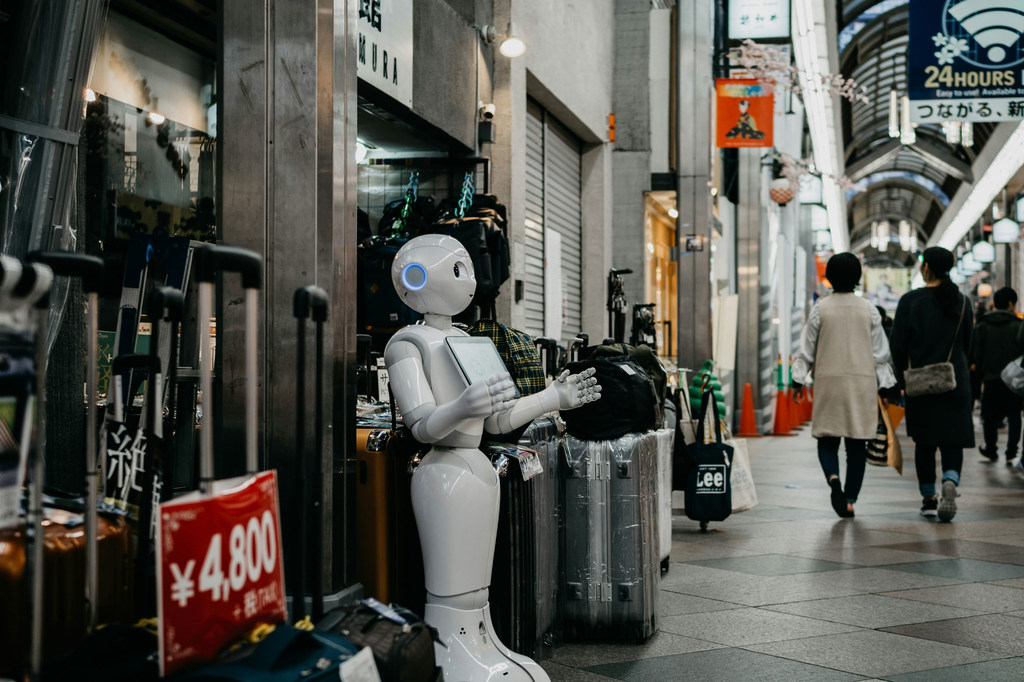
A robot which could carry out tasks assigned to humans stands in a shopping mall in Kyoto, Japan.

Maybe the robots aren’t coming for our jobs after all

Despite the gloomy indicators, the report is strikingly upbeat about the potential of artificial intelligence, noting the breakneck pace at which free or low-cost tools have been embraced by businesses and individuals alike.

UNDP researchers carried out a survey to gauge opinions on AI and discovered that around 60 per cent of respondents expect the technology to positively impact their work and create new opportunities.  

Those living in low and medium levels of development were particularly keen: 70 per cent expect AI to increase their productivity, and two thirds anticipate using AI in education, health, or work within the next year. 

Action stations

The report’s authors include recommendations for action to make sure that AI is as beneficial as possible, including the modernisation of education and health systems to adequately meet today’s needs – building an economy focused on human collaboration with AI (rather than competition) – putting humans at the heart of AI development, from design to deployment.

“The choices we make in the coming years will define the legacy of this technological transition for human development,” said Pedro Conceição, Director of UNDP’s Human Development Report Office.  

“With the right policies and focus on people, AI can be a crucial bridge to new knowledge, skills, and ideas that can empower everyone from farmers to small business owners.”

Ultimately, the report’s message is that the impact of AI is hard to predict. Rather than being an autonomous force, it is a reflection and amplifier of the values and inequalities of the societies that shape it.  

To avoid what it calls “development disappointment”, UNDP urges stronger global cooperation on AI governance, alignment between private innovation and public goals, and a renewed commitment to human dignity, equity, and sustainability.

“The 2025 HDR is not a report about technology,” writes Mr.  Steiner in the foreword. “It is a report about people – and our ability to reinvent ourselves in the face of profound change.”

© IMF/Andrew Caballero-Reynolds

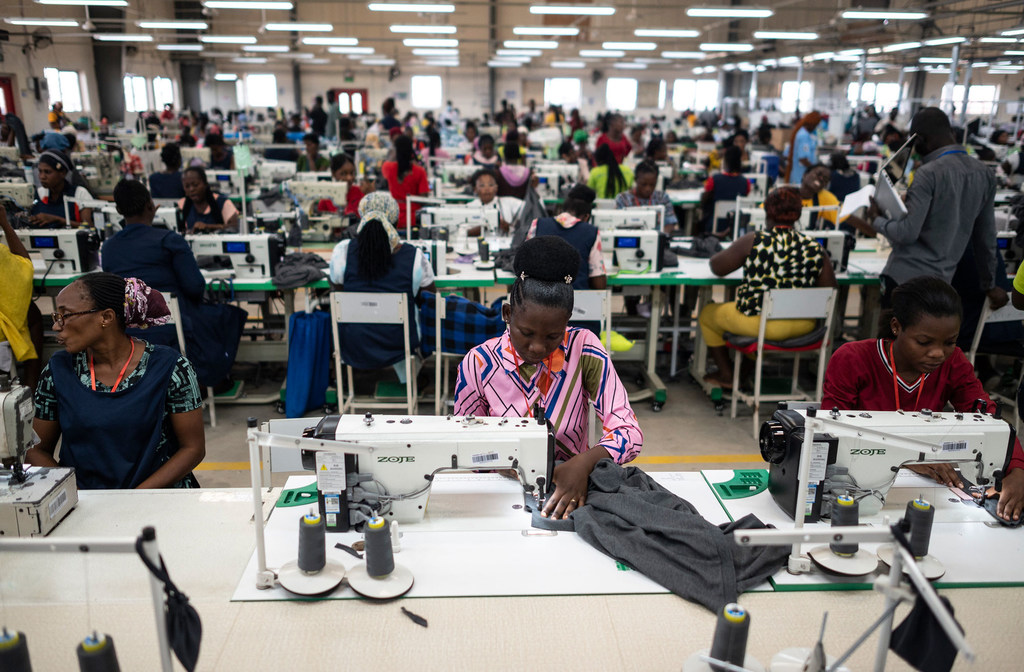
Workers sew fabric at an apparel factory in Ghana.

Source link