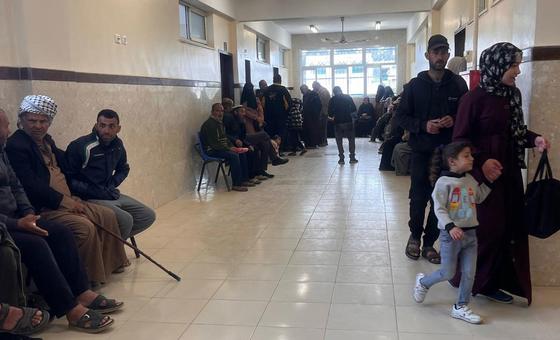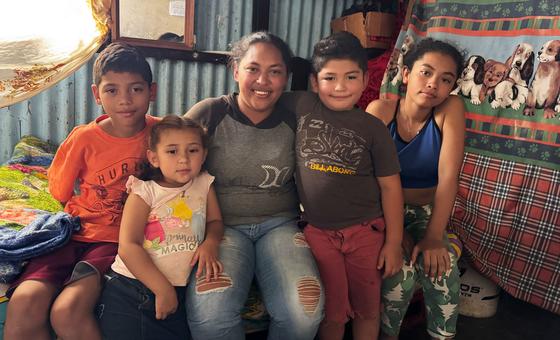
Costa Rica’s refugee lifeline at breaking point amid funding crisis

“Without funding, asylum seekers are left in limbo – undocumented, unsupported and increasingly desperate,” said Ruvendrini Menikdiwela, Assistant High Commissioner for Protection.

Her comments follow a 41 per cent budget cut to the UN agency’s operations in the country that have had devastating consequences. “This is not about luxuries; the assistance we’re cutting is critical and lifesaving,” she insisted.

The Central American nation today hosts more than 200,000 refugees and asylum seekers – adding up to nearly four per cent of its population.

More than eight in every 10 are from Nicaragua, fleeing deepening political and social turmoil linked to serious allegations of “systemic repression”, according to independent rights experts reporting to the Human Rights Council.

Despite economic constraints, Costa Rica has continued to offer safety and hope to those escaping persecution, UNHCR said.

Safe spaces at risk

On a recent official tour of Costa Rica, Ms. Menikdiwela described meeting indigenous Miskito women who had fled gender-based violence and established safe spaces, despite language and cultural barriers. “Their courage is humbling,” she said. “But the loss of services threatens everything they’ve tried to rebuild.”

The UN agency  has warned that legal support, mental health services, education, job training and child protection initiatives have already been scaled back or suspended.

Many were tailored to vulnerable women and children in remote areas.

No right to a job, school or healthcare

Because of the cuts, the capacity to register new arrivals has plummeted by 77 per cent. But without documentation, refugees cannot legally work, attend school or access healthcare. With over 222,000 claims backlogged, some cases may now take up to seven years to process.

“The Government’s plea to me was simple,” Ms. Menikdiwela said. “‘Help us to help these people.’”

Costa Rica has long played a leadership role in regional and global refugee protection frameworks. But this solidarity is now stretched to breaking point, the UN agency said, in an appeal for $40.4 million to maintain its operations in the country Rica through 2025.

“This is a stark reminder that protection must be backed by resources,” Ms. Menikdiwela warned. “If the international community does not step up, the consequences will be severe – not just for those already in Costa Rica – but for stability in the wider region as well.”

Source link

Lives of pregnant women and newborns at risk as funding cuts impact midwifery support

But despite their critical role, UN support for midwifery is under serious threat due to severe funding cuts.

Each year, three-quarters of all maternal deaths occur in just 25 countries, the majority of them located in sub-Saharan Africa and South Asia, according to the UN reproductive health agency, UNFPA

Midwives are often the first and only responders delivering life-saving care to pregnant women and their newborns in crisis settings, where the risk of dying during pregnancy or childbirth doubles.

Funding cuts are now forcing UNFPA to scale back its support for midwifery. In eight of the affected countries the agency will only be able to fund 47 per cent of the 3,521 midwives it had intended to support in 2025.

On the frontline

In times of crisis, women often lose critical access to vital maternity services. Coming to the rescue in the direst of circumstances and serving as a lifeline to pregnant women, “midwives save lives,” said Natalia Kanem, Executive Director of UNFPA.

UN support for midwives in humanitarian settings includes training, providing supplies and equipment and in some cases transportation for mobile health clinics. All this is having to be cut back amid the funding cuts. 

When crises strike and systems break down, midwives step up,” said UNFPA, marking International Day of the Midwife.

Funding cuts

Amid a global shortage of nearly one million midwives, rising death rates among women and newborns in conflict zones and fragile contexts are now being reported following budget cuts.

“We’re lacking everything, from blood bags to medicines. With the support of UNFPA and other partners, we can still provide services – but for how long?said Fabrice Bishenge, Director of Kyeshero General Hospital in eastern DR Congo.

Deaths during childbirth in fragile and conflict-affected settings now account for 60 per cent of all maternal deaths globally. Worldwide, deep funding cuts only exacerbate this trend. In Yemen, for instance, over 590,000 women of childbearing age are expected to lose access to a midwife.

© UNICEF/Mukhtar Neikrawa

The waiting room of a maternity hospital in Herat Province, Afghanistan.

New initiative

In light of the current funding crisis, UNFPA and partners recently launched the Global Midwifery Accelerator — a coordinated initiative to scale up midwife-led care in countries with the highest maternal mortality rates.

The initiative sets out a cost-effective roadmap focused on saving lives and strengthening national health systems, even in the most fragile contexts.

Making an urgent call for greater funding, training, and advocacy for midwifery, UNFPA stressed that universal midwife-led health coverage could avert two-thirds of maternal and newborn deaths, reduce healthcare costs, and lead to more productive workforces. 

Funding crisis increases danger and risks for refugees

With humanitarian resources running dry, critical support for millions of forcibly displaced people is under threat.

UNHCR said that two-thirds of countries hosting refugees are already severely overstretched and urgently need support to continue providing education, healthcare and shelter.

Global solidarity with those fleeing conflict and violence is weakening, the agency added.

‘No one wants to be a refugee for life’

“The safety that refugees seek in neighbouring countries is at risk,” said Elizabeth Tan, Director of International Protection at UNHCR.

Without international solidarity and burden-sharing, the institution of asylum is under threat.”

Ms Tan noted that some 12,000 Central African refugees in Chad and Cameroon have expressed a desire to return home but cannot do so safely without transport and reintegration assistance.

“No one wants to be a refugee for life,” she said.

Lifesaving services

Marking the agency’s 75th anniversary, Ms Tan reminded journalists that refugees – unlike migrants – have lost the protection of their home countries.

They arrive across borders traumatised, often after experiencing torture or persecution, and they need specialised support – including mental health care,” she said.

Children separated from their families face especially grave risks, including recruitment by armed groups, exploitation and trafficking.

Protecting them, Ms Tan stressed, “is not a luxury – it is lifesaving.”

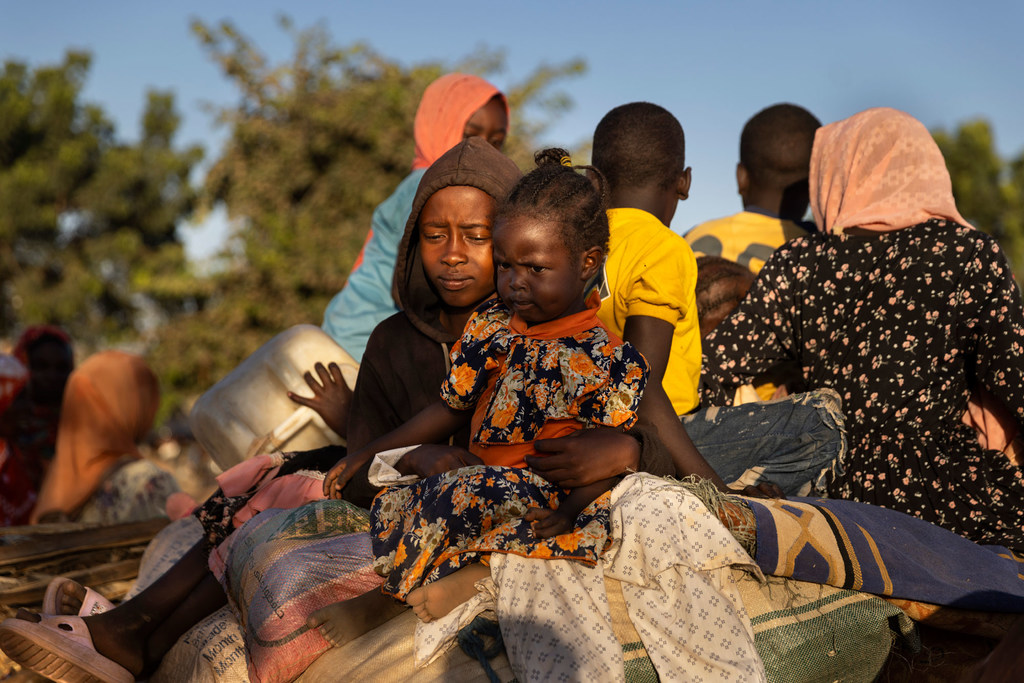
© UNHCR/Andrew McConnell

Refugees from Sudan arrive in Adre on the border with Chad.

Source link

WHO chief laments most disruptive cuts to global health funding ‘in living memory’

We are living through the greatest disruption to global health financing in memory,” said WHO Director-General Dr Tedros Adhanom Ghebreyesus.

He cautioned that abrupt withdrawals of funding are jeopardising hard-won medical progress, including efforts to combat tropical diseases, which are now re-emerging in some regions.

This is just the tip of the iceberg,” he told journalists at WHO headquarters in Geneva.

Outbreaks intensify

Since January, Angola has been facing its worst cholera outbreaks in 20 years, with over 17,000 cases and more than 550 deaths recorded so far. 

Inadequate access to safe water, hygiene and sanitation is fuelling the outbreak. 

As WHO and partners carry out a large-scale vaccination campaign on the ground, one of their priorities is to bring the death rate down, said Tedros. 

Amid funding cuts, advances in tackling neglected tropical diseases affecting over one billion people, are disproportionately impacting the poorest and most marginalized communities.

Reduced access

In many countries where insecurity is rife and hospitals are being targeted, access to healthcare has been severely reduced, Tedros continued. 

On April 22, one of Haiti’s largest public hospitals, Hôpital Universitaire de Mirebalais, was forced to shut down due to violence. In the capital Port-au-Prince, more than 40 per cent of health facilities remain closed, he said.  

Needless deaths

Turning to the Gaza blockade, he said the situation there was “catastrophically bad,” with the violence “driving an influx of casualties to a health system that is already on its knees.” 

While essential medicines, and trauma and medical supplies, are running out, “people are dying from preventable diseases while medicines wait at the border,” said Tedros. 

Reiterating the UN’s call for a ceasefire, Tedros added that “peace is the best medicine.” 

Source link

Millions will die from funding cuts, says UN aid chief

“Cutting funding for those in greatest need is not something to boast about…the impact of aid cuts is that millions die,” warned Emergency Relief Coordinator Tom Fletcher.

Speaking from an overcrowded hospital in Kandahar in southern Afghanistan where three or four patients have to share a bed, Mr. Fletcher warned that the financial crisis has already forced UN aid teams to close 400 primary health centres across the country so far.

His warning echoes dire announcements of drastic cost-cutting measures in response to chronic – and now acute – funding shortfalls, including an end to selected aid programmes by numerous UN relief agencies. These include the World Food Programme (WFP), the World Health Organization (WHO), the UN Children’s Fund (UNICEF), the UN aid coordination office (OCHA), the UN refugee agency (UNHCR) and UNAIDS.

Life-or-death call

Back in Afghanistan, the reality of funding cuts continues to play out in its hospitals “where you can see doctors making the most horrific decisions about which lives to save and which lives not to save”, Mr. Fletcher said at Mirwais Regional Hospital.

The lack of investment in aid relief has also affected female Afghan health workers whose salaries are being cut by up to two-thirds, Mr. Fletcher continued. The plight of women in the country is well documented and has been condemned by the international community, having deteriorated following numerous prohibitive edicts issued by the de facto authorities who overran Kabul in 2021.

As part of his official visit to Afghanistan, Mr. Fletcher met de facto provincial governor Mullah Shirin Akhund to discuss the need to address Afghanistan’s humanitarian crisis. It comes after more than four decades of conflict that have left almost half the population – some 22.9 million people – needing humanitarian assistance to survive.

Women’s key role

In earlier talks during his official visit, Mr. Fletcher stressed that development was not possible without girls’ education and their full participation in the country’s economy.

Amid soaring malnutrition, a lack of basic services and dire economic forecasts, Afghanistan has few resources to cope with the arrival of a growing number of Afghan refugees sent back by neighbouring countries including Pakistan and Iran.

The scale of the pushbacks is enormous, with more than 250,000 Afghans returned in April alone, including 96,000 who were forcibly deported. On Tuesday, the UN refugee agency, UNHCR, voiced particular alarm over the fate of women and girls, who face increasing repression under Taliban rule.

While in Kandahar, Mr. Fletcher also visited a reception centre where the UN and humanitarian partners provide support, including health check-ups and cash. He said that the closure of hundreds of health facilities in the region had denied more than three million people access to primary care.

OpenAI’s $6.6 Billion Funding Boosts Future Tech Trajectory Avenues Despite Challenges

OpenAI has shattered records by securing a monumental $6.6 billion in funding, a move that could elevate its valuation to an eye-popping $157 billion. This latest round, fueled by a diverse group of investors, positions the AI powerhouse at the forefront of global tech innovation despite undergoing significant internal shifts.

Investor Confidence Amidst Executive Changes

The timing of this funding round is noteworthy, as it comes during a period of organizational restructuring and leadership changes. Notably, the sudden departure of Chief Technology Officer Mira Murati has not dampened investor enthusiasm.

In fact, investor confidence remains robust, with heavyweights such as Thrive Capital, Khosla Ventures, and Microsoft doubling down on their backing. Microsoft’s ongoing support further strengthens its partnership with OpenAI, while Nvidia’s entry as a new investor signals its increasing stake in the future of AI.

The $6.6 billion was raised through convertible notes, with conversion to equity contingent on a structural overhaul. This transformation would shift OpenAI from its original non-profit framework to a for-profit entity, eliminating the cap on investor returns and marking a significant departure from its foundational principles.

Despite these shifts, the appeal of OpenAI’s vision—pioneering artificial general intelligence (AGI)—keeps investors bullish.

Financial Trajectory and Strategic Goals

OpenAI’s financial projections offer insight into why investor confidence remains high. The company anticipates generating $3.6 billion in revenue this year, with expectations of a sharp leap to $11.6 billion in 2025.

While the company currently faces operating losses exceeding $5 billion, these ambitious growth targets suggest that investors are betting on a long-term payoff as OpenAI continues to monetize its technological innovations.

To add further momentum, Thrive Capital has negotiated an additional $1 billion option for 2025, should OpenAI meet its revenue milestones, signaling even more future investment potential.

A Global Investor Lineup

A diverse set of global investors has further bolstered OpenAI’s financial position. SoftBank, Fidelity, and Abu Dhabi’s MGX are all contributing to the company’s future growth. Additionally, OpenAI plans to launch a tender offer to allow employees to sell their shares—an internal move that could increase liquidity, following similar initiatives earlier this year when employees sold shares at an $86 billion valuation.

Apple, a notable tech giant, opted out of this funding round despite early talks. The reasons behind its decision remain unclear, but its absence stands in contrast to the enthusiasm from other tech heavyweights.

Long-Term Vision: AGI and Commercialization

OpenAI’s long-term ambitions center on developing AGI, a form of artificial intelligence that would surpass human cognitive abilities. As the company edges closer to this goal, it is simultaneously scaling its revenue through commercialization, with its signature product, ChatGPT, now boasting 250 million weekly active users. OpenAI’s rapid rise in both valuation—from $14 billion in 2021 to a projected $157 billion—and revenue has outstripped even the most optimistic forecasts.

The next few years will be pivotal as OpenAI navigates its path to profitability while maintaining its bold pursuit of AGI. This dual strategy has resonated with investors, who view the company as a cornerstone of the future AI landscape, capable of reshaping industries from healthcare to finance.

A High-Stakes Future?

OpenAI’s record-breaking funding round marks a significant chapter in its meteoric rise. While internal restructuring and personnel changes raise questions, they have not shaken investor confidence. The substantial capital injection highlights faith in the company’s vision and its ability to lead the AI revolution.

As OpenAI marches toward its ultimate goal of AGI and balances commercialization with groundbreaking research, all eyes will be on how it leverages its newfound funding to secure its place as a transformative force in global technology. The stakes are higher than ever, and OpenAI’s next steps could shape the future of artificial intelligence for years to come.

Twitter India rival Koo lays off 40 employees

Twitter rival Koo has laid off at least 40 people in India to prune redundant staff as per its current business requirements, hinting at another failure in overcrowded social media platforms. Currently, WhatsApp and Twitter are the two laeding social platforms in India.

The development was reported by news portal Inc42, which said that Koo CEO Aprameya Radhakrishna is currently abroad, seeking a fresh round of funding. The platform is seeking rapid growth as it plans expansion into other Indian languages soon.

“We recently attained a major milestone of 45 million downloads, growing 10x in the last 2 months. The growth that we are witnessing in our business is reflected in our employee strength of 350+ people strong,” said a spokesperson, as reported by IANS.

Koo, which is aiming to reach the 100 million-download mark, said that it wants to diversify recruitment of machine learning teams.

“Our workforce is streamlined to ensure it is aligned to the current business requirements. As a people-first company, we appreciate the talent and contributions of each of our associates,” the spokesperson added.

Launched in March 2020, Koo is currently available in 10 languages — Hindi, Marathi, Gujarati, Punjabi, Kannada, Tamil, Telugu, Assamese, Bengali and English. So far, the platform has over 45 million downloads but actively leveraged by 7,000 people from across the spectrum.

In February this year, Koo raised nearly $10 million in two different trances from investors, including Capsier Venture Partner, Ravi Modi Family Trust, Ashneer Grover, FBC Venture Partners, and Adventz Finance. Earlier, Koo raised its Series B funding from Tiger Global, Accel Partners, and Blume Ventures.

Team Indus gears up for second chance at Lunar XPRIZE

India’s first private sector space agency Team Indus is gearing up for the XPRIZE lunar launch giving final touches to its stalled latest mini rover meant for lunar landing.

Since Team Indus failed to raise funds for ISRO-backed PSLV launch, it could not meet the deadline set by Google as of March 31, 2018. Eventually, Google withdrew the prize money of $30 million and called it off.

Now that XPRIZE, which had successfully launched similar scientific missions in the past has renewed its mission to undertake the Lunar XPRIZE and Bangalore-based Team Indus emerges with renewed vigour.

Team Indus founder and CEO Rahul Narayan was upbeat. “The Google Lunar XPRIZE served as an excellent early catalyst to get new people, partners and money involved. With the renewed interest in beyond Earth-orbit exploration by multiple large government space agencies, a new Lunar XPRIZE will be a perfectly timed platform with the chances of multiple successful launches being much higher than before,” he said.

Under the terms of Google XPRIZE competition, the space company or its competitors have to make a soft-landing of their lunar rover, which should traverse at least 500 metres and send high-quality images back to the ground control on the earth. However, the new parameters will be re-defined now, said XPRIZE in a statement.

While Team Indus was seen as a sure-shot winner with its progress in designing the lunar rover and displaying it at several space events in India and abroad, the company failed to raise the required funds to pay for ISRO’s PSLV launcher.

Since 2007, Google Lunar XPRIZE teams have raised over $300 million through corporate sponsorships, government contracts and venture capital. As of 2017 January, Team Indus from India, Japan’s HAKUTO, Israel-based SpaceIL, American firms Moon Express and Synergy Moon were selected out of the 33 teams from 17 countries for the $1 million initial prize. However, the failure of any of them to raise next round of funds forced Google to withdraw the $30 million grand prize.

Chanda Gonzales-Mowrer, Senior Director of XPRIZE, said: “These space entrepreneurs are developing long-term business models around lunar transportation and we cannot give up on them now.”

All the Lunar XPRIZE startups are equally enthusiastic to participate in the Lunar XPRIZE competition without a monetary prize but the organisers are hopeful to find a new sponsor to replace elusive Google. Peter H. Diamandis, XPRIZE founder and executive chairman said, “XPRIZE is now looking for our next visionary Title Sponsor who wants to put their logo on these teams and on the lunar surface.”

Bob Richards, founder & CEO of Moon Express welcomed XPRIZE decision to renew the competition. “While we plan to win this Moon race and are committed to carrying the Lunar XPRIZE logo, the real opportunity is in opening the lunar frontier and the multibillion dollar industry that follows.”

Takeshi Hakamada, founder and CEO of Japan’s space firm iSpace, which has designed HAKUTO, echoed similar views when he said, “We believe a new competition would again elevate our industry to an even higher level, so we eagerly welcome a new Lunar XPRIZE.”

While all eyes are on a new Title Sponsor, whoever pitches in would have the benefit of having their name and branding incorporated into the competition, and in success, on the surface of the Moon, said XPRIZE.

XPRIZE had conducted the $20M NRG COSIA Carbon XPRIZE, the $15M Global Learning XPRIZE, the $10M ANA Avatar XPRIZE, the $7M Shell Ocean Discovery XPRIZE, the $7M Barbara Bush Foundation Adult Literacy XPRIZE, the $5M IBM Watson AI XPRIZE, the $1.75M Water Abundance XPRIZE and the $1M Anu and Naveen Jain Women’s Safety XPRIZE in the past.