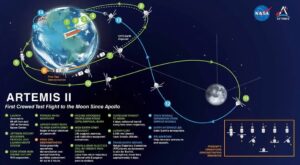
NASA will provide live coverage with commentary of the upcoming Artemis I cryogenic demonstration test beginning at 7:15 a.m. EDT on Wednesday, Sept. 21.
The demonstration test will allow teams to confirm the repair to a hydrogen leak seen during an early September Artemis I launch attempt, evaluate updated propellant loading procedures, and conduct additional evaluations. The demonstration will conclude when the objectives for the test have been met.+
Live coverage of the test will air on NASA Television, the NASA app, and the agency’s website. While NASA is airing coverage of the launch, rendezvous, docking, and hatch opening of the Soyuz MS-22 carrying NASA Astronaut Frank Rubio to the International Space Station on NASA’s Television’s Public Channel, the Artemis I demonstration test will air only on the Media Channel. During all other times, the test will air on both the Public and Media Channels.
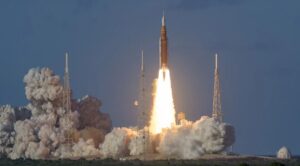
NASA’s Space Launch System (SLS) rocket with the Orion spacecraft aboard is seen atop a mobile launcher at Launch Pad 39B as preparations for launch continue, Sunday, Aug. 28, 2022, at NASA’s Kennedy Space Center in Florida. NASA’s Artemis I flight test is the first integrated test of the agency’s deep space exploration systems: the Orion spacecraft, SLS rocket, and supporting ground systems. Launch of the uncrewed flight test is targeted for no earlier than Aug. 29 at 8:33 a.m. ET. Photo Credit: (NASA/Joel Kowsky)
The agency also will host a media teleconference to preview the test at 11:30 a.m. Monday, Sept. 19. Participants include:
Tom Whitmeyer, deputy associate administrator for Common Exploration Systems Development, NASA Headquarters
Mike Sarafin, Artemis mission manager, NASA Headquarters
Jeremy Parsons, deputy manager, Exploration Ground Systems Program, NASA’s Kennedy Space Center
John Blevins, chief engineer, Space Launch System Program, NASA’s Marshall Space Flight Center
Audio of the media call will stream live on the agency’s website at:
To participate by telephone, media must RSVP no later than two hours prior to the start of the event to: ksc-newsroom@mail.nasa.gov.
Artemis I is an uncrewed flight test. It is the first in a series of increasingly complex missions to provide a foundation for human exploration in deep space and demonstrate our commitment and capability to extend human existence to the Moon and beyond.
Through Artemis missions, NASA will land the first woman and the first person of color on the Moon, paving the way for a long-term lunar presence and serving as a steppingstone to send astronauts to Mars.
For updates, follow along on NASA’s Artemis blog at:
NASA will provide live coverage of key events as a NASA astronaut and two cosmonauts launch and dock to the International Space Station on Wednesday, Sept. 21.
NASA astronaut Frank Rubio and Roscosmos cosmonauts Sergey Prokopyev and Dmitri Petelin will launch aboard the Soyuz MS-22 spacecraft from the Baikonur Cosmodrome in Kazakhstan at 9:54 a.m. EDT Wednesday, Sept. 21 (6:54 p.m. Baikonur time). Coverage will begin at 9 a.m. on NASA Television’s Public Channel, the NASA app, and on the agency’s website.
NASA also will air continuous coverage of an Artemis I tanking test on NASA TV’s Media Channel beginning at 7:15 a.m.
At the Baikonur Cosmodrome in Kazakhstan, NASA astronaut Frank Rubio performs preflight checkouts in the Soyuz MS-22 spacecraft. Rubio is scheduled to launch with crewmates Roscosmos cosmonaut Sergey Prokopyev and Dmitri Petelin Sept. 21 for a six-month mission on the International Space Station. Credits: NASA/Victor Zelentsov
Soyuz MS-22 launch and key events as well of coverage of the Artemis I tanking test will be available to watch online at:
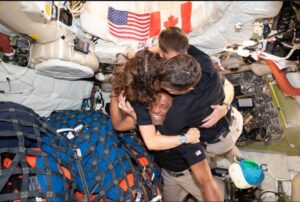
After a two-orbit, three-hour journey, the Soyuz will dock to the space station’s Rassvet module at 1:11 p.m. About two hours after docking, hatches between the Soyuz and the station will open and the crew members will greet each other.
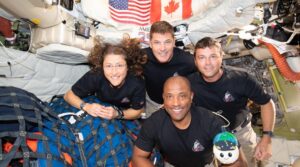
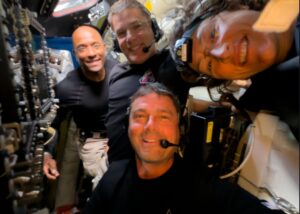
Once aboard station, the trio will join Expedition 67 Commander Oleg Artemyev, cosmonauts Denis Matveev and Sergey Korsakov of Roscosmos, as well as NASA astronauts Bob Hines, Kjell Lindgren, and Jessica Watkins, and ESA (European Space Agency) astronaut Samantha Cristoforetti. Rubio, Prokopyev, and Petelin will spend six months aboard the orbital laboratory.
This will be Prokopyev’s second flight into space and the first for Rubio and Petelin.
Mission coverage is as follows (all times Eastern):
Wednesday, Sept. 21
9 a.m. – Coverage begins on NASA TV’s Public Channel for 9:54 a.m. launch.
12:15 p.m. – Coverage begins on NASA TV’s Public Channel for 1:11 p.m. docking.
3:30 p.m. – Coverage begins on NASA TV for hatch opening and welcome remarks.
For decades, scientists have been trying to solve a vexing problem about the weather in outer space: At unpredictable times, high-energy particles bombard the earth and objects outside the earth’s atmosphere with radiation that can endanger the lives of astronauts and destroy satellites’ electronic equipment. These flare-ups can even trigger showers of radiation strong enough to reach passengers in airplanes flying over the North Pole. Despite scientists’ best efforts, a clear pattern of how and when flare-ups will occur has remained enduringly difficult to identify.
This week, in a paper in The Astrophysical Journal Letters, authors Luca Comisso and Lorenzo Sironi of Columbia’s Department of Astronomy and the Astrophysics Laboratory, have for the first time used supercomputers to simulate when and how high-energy particles are born in turbulent environments like that on the atmosphere of the sun. This new research paves the way for more accurate predictions of when dangerous bursts of these particles will occur.
“This exciting new research will allow us to better predict the origin of solar energetic particles and improve forecasting models of space weather events, a key goal of NASA and other space agencies and governments around the globe,” Comisso said. Within the next couple of years, he added, NASA’s Parker Solar Probe, the closest spacecraft to the sun, may be able to validate the paper’s findings by directly observing the predicted distribution of high-energy particles that are generated in the sun’s outer atmosphere.
NASA/Photo: Nasa.gov
In their paper, “Ion and Electron Acceleration in Fully Kinetic Plasma Turbulence,” Comisso and Sironi demonstrate that magnetic fields in the outer atmosphere of the sun can accelerate ions and electrons up to velocities close to the speed of light. The sun and other stars’ outer atmosphere consist of particles in a plasma state, a highly turbulent state distinct from liquid, gas, and solid states. Scientists have long believed that the sun’s plasma generates high-energy particles. But particles in plasma move so erratically and unpredictably that they have until now not been able to fully demonstrate how and when this occurs.
Using supercomputers at Columbia, NASA, and the National Energy Research Scientific Computing Center, Comisso and Sironi created computer simulations that show the exact movements of electrons and ions in the sun’s plasma. These simulations mimic the atmospheric conditions on the sun, and provide the most extensive data gathered to-date on how and when high-energy particles will form.
The research provides answers to questions that scientists have been investigating for at least 70 years: In 1949, the physicist Enrico Fermi began to investigate magnetic fields in outer space as a potential source of the high-energy particles (which he called cosmic rays) that were observed entering the earth’s atmosphere. Since then, scientists have suspected that the sun’s plasma is a major source of these particles, but definitively proving it has been difficult.
Aldrin walks on the surface of the Moon during Apollo 11(NASA)
Comisso and Sironi’s research, which was conducted with support from NASA and the National Science Foundation, has implications far beyond our own solar system. The vast majority of the observable matter in the universe is in a plasma state. Understanding how some of the particles that constitute plasma can be accelerated to high-energy levels is an important new research area since energetic particles are routinely observed not just around the sun but also in other environments across the universe, including the surroundings of black holes and neutron stars.
While Comisso and Sironi’s new paper focuses on the sun, further simulations could be run in other contexts to understand how and when distant stars, black holes, and other entities in the universe will generate their own bursts of energy.
“Our results center on the sun but can also be seen as a starting point to better understanding how high-energy particles are produced in more distant stars and around black holes,” Comisso said. “We’ve only scratched the surface of what supercomputer simulations can tell us about how these particles are born across the universe.”
Engineers are making progress repairing the area where a liquid hydrogen leak was detected during the Artemis I launch attempt Sept. 3, and NASA is preserving options for the next launch opportunity as early as Friday, Sept. 23.
Technicians constructed a tent-like enclosure around the work area to protect the hardware and teams from weather and other environmental conditions at Launch Pad 39B. They have disconnected the ground- and rocket-side plates on the interface, called a quick disconnect, for the liquid hydrogen fuel feed line, performed initial inspections, and began replacing two seals – one surrounding the 8-inch line used to fill and drain liquid hydrogen from the core stage, and another surrounding the 4-inch bleed line used to redirect some of the propellant during tanking operations. The SLS rocket and Orion spacecraft are in good condition while remaining at the launch pad.
Once the work is complete, engineers will reconnect the plates and perform initial tests to evaluate the new seals. Teams will check the new seals under cryogenic, or supercold, conditions no earlier than Sept. 17 in which the rocket’s core stage and interim cryogenic propulsion stage will be loaded with liquid oxygen and liquid hydrogen to validate the repair under the conditions it would experience on launch day. Engineers are in the process of developing a full plan for the checkouts.
Artemis I logo/NASA
NASA has submitted a request to the Eastern Range for an extension of the current testing requirement for the flight termination system. NASA is respecting the range’s processes for review of the request, and the agency continues to provide detailed information to support a range decision.
In the meantime, NASA is instructing the Artemis team to move forward with all preparations required for testing, followed by launch, including preparations to ensure adequate supplies of propellants and gases used in tanking operations, as well as flight operations planning for the mission. NASA has requested the following launch opportunities:
Sept 23: Two-hour launch window opens at 6:47 a.m. EDT; landing on Oct. 18
Sept. 27: 70-minute launch window opens at 11:37 a.m.; landing on Nov. 5
NASA’s teams internally are preparing to support additional dates in the event flexibility is required. The agency will evaluate and adjust launch opportunities and alternate dates based on progress at the pad and to align with other planned activities, including DART’s planned impact with an asteroid, the west coast launch of a government payload, and the launch of Crew-5 to the International Space Station.
NASA/Photo: Nasa.gov
Listen to a replay of today’s media teleconference on the status of the Artemis I mission. Artemis I is an uncrewed flight test to provide a foundation for human exploration in deep space and demonstrate our commitment and capability to extend human existence to the Moon and beyond.
NASA is awarding more than $4 million to institutions across the U.S. to help bring the excitement of authentic NASA experiences to groups of middle and high school students who are traditionally underserved and underrepresented in STEM.
The new Space Grant K-12 Inclusiveness and Diversity in STEM (SG KIDS) opportunity will boost these students’ sense of belonging in STEM subjects, a critical first step toward STEM degrees and careers.
SG KIDS is a pilot program made possible through NASA’s National Space Grant and Fellowship Project, which comprises Space Grant Consortia led by an institution in each of the 50 states, the District of Columbia, and Puerto Rico. This opportunity represents a new approach by asking the awarded consortia to reach beyond state boundaries to create regional projects tailored to students in those areas. Through partnerships, the awardees will be able to share these exciting STEM opportunities with students residing in other states.
sg_kids_award/Photo: NASA
“Through Space Grant KIDS, we’ve asked the nation’s Space Grant consortia to deploy educational activities across state lines to share the excitement of NASA and STEM with students who otherwise might not have that opportunity,” said Mike Kincaid, NASA’s associate administrator for the Office of STEM Engagement, which administers NASA Space Grant. “We’re looking forward to seeing how these regional partnerships will make a lasting difference for the Artemis Generation.”
SG KIDS addresses the White House Executive Order on Advancing Racial Equity and Support for Underserved Communities Through the Federal Government, as well as NASA Administrator Bill Nelson’s focus on providing authentic STEM opportunities to K-12 students.
The projects funded under SG KIDS will provide students with hands-on experiences and lessons that bring NASA’s missions to life, provide training and resources to the educators teaching those students, and boost the STEM ecosystem in these regions.
NASA/Photo: Nasa.gov
“Space Grant KIDS is designed to establish networks that deliver enriching NASA STEM experiences to underserved student populations,” said Dr. Erica Alston, NASA’s deputy Space Grant manager. “We can leverage these networks to reach traditionally overlooked groups in future DEIA efforts.”
Each of the four grantees, Virginia Space Grant Consortium, Georgia Space Grant Consortium, Ohio Space Grant Consortium and Texas Space Grant Consortium, will receive approximately $1,050,000 in cooperative agreements to put their proposals into action during the next three years.
Vice President Kamala Harris highlighted the importance of climate, human spaceflight, and STEM education during the Biden-Harris Administration’s second National Space Council meeting Friday, held at NASA’s Johnson Space Center in Houston.
“For generations, with our allies and partners around the globe, America has led our world in the exploration and use of space,” said Harris. “Our leadership has been guided by a set of fundamental principles – cooperation, security, ambition, and public trust – which is the recognition, of course, that space can and must be protected for the benefit of all people.
There is so much we still don’t know and so much we still haven’t done – space remains a place of undiscovered and unrealized opportunity. Our test and our responsibility is to work together to guide humanity forward into this new frontier and to make real the incredible potential of space for all people.”
National Space Council Meeting led by Chairwoman, Vice President Kamala Harris. Photo Date: September 9, 2022. Location: Building 9NW, SVMF. Photographer: Robert Markowitz.
For more than 50 years, NASA satellites have provided open-source and publicly available data on Earth’s land, water, temperature, weather, and climate. Improving access to key climate information is a priority for the agency. Building on his previous announcement, NASA Administrator Bill Nelson released the first concept, and shared a new video for the Earth Information Center. The center will allow the public to see how the Earth is changing and guide decision makers to mitigate, adapt, and respond to climate change.
“Just like we use mission control to monitor operations during spaceflight, we’re embarking on this effort to monitor conditions here on our home planet, and it will be available to everyone in an easy-to-access format,” Nelson said.
Planning for the Earth Information Center is underway with the initial phase providing an interactive visual display of imagery and data from NASA and other government agencies. NASA Headquarters plans to house this initial interactive display with goals to expand in person and virtual access over the next five years.
The Vice President also underscored the important research conducted on the International Space Station that will enable long duration stays on the Moon and future human missions to Mars, in addition to benefits to life here on Earth.
NASA/Photo: Nasa.gov
“NASA uses the International Space Station to conduct critical research on the risks associated with future Mars missions – space radiation, isolation, and distance from Earth, just to name a few. It’s also a testbed to develop the technologies we’ll need for long duration stays on the Moon, where we will build an Artemis Base Camp on the surface and Gateway outpost in lunar orbit,” Nelson said. “Research on the space station demonstrates that the benefits of microgravity are not just for discovery. We also develop new technologies that improve life on Earth, like treatments for cancer.”
In conjunction with the meeting, NASA announced a new Space Grant K-12 Inclusiveness and Diversity in STEM (SG KIDS) opportunity that will award more than $4 million to institutions across the U.S. to help bring the excitement of NASA and STEM to traditionally underserved and underrepresented groups of middle and high school students. The announcement is a part of a broader set of commitments made by public, private, and philanthropic partners announced by the Vice President to help in the recruitment and development of the next generation of the space workforce.
SG KIDS also addresses the White House Executive Order on Advancing Racial Equity and Support for Underserved Communities Through the Federal Government, as well as NASA Administrator Bill Nelson’s focus on providing authentic STEM opportunities to K-12 students.
While at NASA’s Johnson Space Center, Vice President Harris toured the agency’s mission control with Nelson and Johnson Center Director Vanessa Wyche. The Vice President also spoke with NASA astronauts Bob Hines, Kjell Lindgren, and Jessica Watkins, living and working aboard the International Space Station about how their research benefits life on Earth, supports long duration space flight, and protects our planet.
The Vice President also received a tour of the Space Vehicle Mockup Facility (SVMF), where space flight crews and their support personnel receive world class training on high-fidelity hardware for real-time mission support. The SVMF consists of space station, Orion, Commercial vehicle mockups, part-task trainers and rack interfaces, a Precision Air Bearing Floor, and a Partial Gravity Simulator.
A recording of the full National Space Council meeting is available online at:
Thousands of never-before-seen young stars spotted in a stellar nursery called 30 Doradus, captured by NASA’s James Webb Space Telescope, called Tarantula Nebula owing to its appearance in dusty filaments.
The nebula has long been a favorite for astronomers studying star formation and the Webb has been revealing beautiful distant background galaxies, as well as the detailed structure and composition of the nebula’s gas and dust ever since it’s started capturing the deep space.
At only 161,000 light-years away in the Large Magellanic Cloud galaxy, the Tarantula Nebula is the largest and brightest star-forming region in the Local Group, the galaxies nearest our Milky Way. It is home to the hottest, most massive stars known. Astronomers focused three of Webb’s high-resolution infrared instruments on the Tarantula. Under the lens of Webb’s Near-Infrared Camera (NIRCam), the region resembles a burrowing tarantula’s home, lined with its silk.
The nebula’s cavity centered in the image above has been hollowed out by blistering radiation from a cluster of massive young stars, which sparkle pale blue in the image. Only the densest surrounding areas of the nebula resist erosion by these stars’ powerful stellar winds, forming pillars that appear to point back toward the cluster. These pillars contain forming protostars, which will eventually emerge from their dusty cocoons and take their turn shaping the nebula.
Caption: Nestled in the center of the Tarantula Nebula in the Large Magellanic Cloud is the largest star yet discovered, astronomers have produced the sharpest image ever of this star. Photo:Observatory/NOIRLab/NSF/AURA Acknowledgment
Webb’s Near-Infrared Spectrograph (NIRSpec) caught one very young star doing precisely emerging out of the dust. Astronomers previously thought this star might be a bit older and already in the process of clearing out a bubble around itself. However, NIRSpec showed that the star was only just beginning to emerge from its pillar and still maintained an insulating cloud of dust around itself. Without Webb’s high-resolution spectra at infrared wavelengths, this episode of star formation-in-action could not have been revealed.
The region takes on a different appearance when viewed in the longer infrared wavelengths detected by Webb’s Mid-infrared Instrument (MIRI). The hot stars fade, and the cooler gas and dust glow. Within the stellar nursery clouds, points of light indicate embedded protostars, still gaining mass.
While shorter wavelengths of light are absorbed or scattered by dust grains in the nebula, and therefore never reach Webb to be detected, longer mid-infrared wavelengths penetrate that dust, ultimately revealing a previously unseen cosmic environment.
Caption: NASA’s James Webb Space Telescope
One of the reasons the Tarantula Nebula is interesting to astronomers is that the nebula has a similar type of chemical composition as the gigantic star-forming regions observed at the universe’s “cosmic noon,” when the cosmos was only a few billion years old and star formation was at its peak. Star-forming regions in our Milky Way galaxy are not producing stars at the same furious rate as the Tarantula Nebula, and have a different chemical composition.
Caption: In this mosaic image displays the Tarantula Nebula star, including tens of thousands of never-before-seen young stars that were previously shrouded in cosmic dust. The most active region appears to sparkle with massive young stars, appearing pale blue./Photo:NASA
This makes the Tarantula the closest (i.e., easiest to see in detail) example of what was happening in the universe as it reached its brilliant high noon. Webb will provide astronomers the opportunity to compare and contrast observations of star formation in the Tarantula Nebula with the telescope’s deep observations of distant galaxies from the actual era of cosmic noon.
Roving the Red Planet. Perseverance landed on Mars in February 2021 and has been gathering data on the planet’s geology and climate and searching for signs of ancient life.
What lies beneath. The rover’s subsurface radar experiment, co-led by UCLA’s David Paige, has returned images showing unexpected variations in rock layers beneath the Jezero crater.
Probing the past. The variations could indicate past lava flows or possibly a river delta even older than the one currently being explored on the crater floor.
After a tantalizing year-and-a-half wait since NASA’s Mars Perseverance rover touched down on our nearest planetary neighbor, new data is arriving — and bringing with it a few surprises.
The rover, which is about the size of car and carries seven scientific instruments, has been probing Mars’ 30-mile-wide Jezero crater, once the site of a lake and an ideal spot to search for evidence of ancient life and information about the planet’s geological and climatic past.
Rendering of Perseverance, whose RIMFAX technology is exploring what lies beneath the Martian surface. Photo: NASA/JPL/Caltech/FFI
In a paper published today in the journal Science Advances, a research team led by UCLA and the University of Oslo reveals that rock layers beneath the crater’s floor, observed by the rover’s ground-penetrating radar instrument, are unexpectedly inclined. The slopes, thicknesses and shapes of the inclined sections suggest they were either formed by slowly cooling lava or deposited as sediments in the former lake.
Perseverance is currently exploring a delta on the western edge of the crater, where a river once fed the lake, leaving behind a large deposit of dirt and rocks it picked up along its course. As the rover gathers more data, the researchers hope to clear up the complex history of this part of the Red Planet.
“We were quite surprised to find rocks stacked up at an inclined angle,” said David Paige, a UCLA professor of Earth, planetary and space sciences and one of the lead researchers on the Radar Imager for Mars Subsurface Experiment, or RIMFAX. “We were expecting to see horizontal rocks on the crater floor. The fact that they are tilted like this requires a more complex geologic history. They could have been formed when molten rock rose up towards the surface, or, alternatively, they could represent an older delta deposit buried in the crater floor.”
Paige said that most of the evidence gathered by the rover so far points to an igneous, or molten, origin, but based on the RIMFAX data, he and the team can’t yet say for certain how the inclined layers formed. RIMFAX obtains a picture of underground features by sending bursts of radar waves below the surface, which are reflected by rock layers and other obstacles. The shapes, densities, thicknesses, angles and compositions of underground objects affect how the radar waves bounce back, creating a visual image of what lies beneath.
During Perseverance’s initial 3-kilometer traverse, the instrument has obtained a continuous radar image that reveals the electromagnetic properties and bedrock stratigraphy — the arrangement of rock layers — of Jezero’s floor to depths of 15 meters, or about 49 feet. The image reveals the presence of ubiquitous layered rock strata, including those that are inclined at up to 15 degrees. Compounding the mystery, within those inclined areas are some perplexing highly reflective rock layers that in fact tilt in multiple directions.
“RIMFAX is giving us a view of Mars stratigraphy similar to what you can see on Earth in highway road cuts, where tall stacks of rock layers are sometimes visible in a mountainside as you drive by,” Paige explained. “Before Perseverance landed, there were many hypotheses about the exact nature and origin of the crater floor materials. We’ve now been able to narrow down the range of possibilities, but the data we’ve acquired so far suggest that the history of the crater floor may be quite a bit more complicated than we had anticipated.”
The data collected by RIMFAX will provide valuable context to rock samples Perseverance is collecting, which will eventually be brought back to Earth.
“RIMFAX is giving us the backstory of the samples we’re going to analyze. It’s exciting that the rover’s instruments are producing data and we’re starting to learn, but there’s a lot more to come,” Paige said. “We landed on the crater floor, but now we’re driving up on the actual delta, which is the main target of the mission. This is just the beginning of what we’ll hopefully soon know about Mars.”
The paper, “Ground penetrating radar observations of subsurface structures in the floor of Jezero crater, Mars,” is one of three simultaneously published papers discussing some of the first data from Perseverance.
Digital content creators are invited to register to attend the launch of the fifth SpaceX Crew Dragon spacecraft and Falcon 9 rocket that will carry astronauts to the International Space Station for a science expedition mission. This mission is part of NASA’s Commercial Crew Program.
The earliest targeted launch date for the agency’s SpaceX Crew-5 mission is Oct. 3, from Kennedy’s Launch Complex 39A. The launch will carry NASA astronauts Nicole Mann, commander; Josh Cassada, pilot; and mission specialists Koichi Wakata, of JAXA (Japan Aerospace Exploration Agency), and Roscosmos cosmonaut Anna Kikina.
If your passion is to communicate and engage the world online, then this is the event for you! Seize the opportunity to be on the front line to see and share the #Crew5 mission launch.
A maximum of 35 social media users will be selected to attend this two-day event and will be given access similar to news media.
NASA Social participants will have the opportunity to:
View a launch of the SpaceX Falcon 9 rocket
Tour NASA facilities at Kennedy Space Center
Meet and interact with Crew-5 subject matter experts
Meet fellow space enthusiasts who are active on social media
NASA Social registration for the Crew-5 launch opens on August 31 and the deadline to apply is September 6 at 3 p.m. EDT. All social applications will be considered on a case-by-case basis.
Do I need to have a social media account to register?
Yes. This event is designed for people who:
Actively use multiple social networking platforms and tools to disseminate information to a unique audience.
Regularly produce new content that features multimedia elements.
Have the potential to reach a large number of people using digital platforms.
Reach a unique audience, separate and distinctive from traditional news media and/or NASA audiences.
Must have an established history of posting content on social media platforms.
Have previous postings that are highly visible, respected and widely recognized.
Users on all social networks are encouraged to use the hashtag #NASASocial, and #Crew5. Updates and information about the event will be shared on Twitter via @NASASocial and @NASAKennedy, and via posts to Facebook and Instagram.
How do I register?
Registration for this event opens August 31 and closes at 3 p.m. EDT on September 6. Registration is for one person only (you) and is non-transferable. Each individual wishing to attend must register separately. Each application will be considered on a case-by-case basis.
Can I register if I am not a U.S. citizen?
Because of the security deadlines, registration is limited to U.S. citizens. If you have a valid permanent resident card you will be processed as a U.S. citizen.
When will I know if I am selected?
After registrations have been received and processed, an email with confirmation information and additional instructions will be sent to those selected. We expect to send the first notifications on September 13 and waitlist notifications on September 14.
What are NASA Social credentials?
All social applications will be considered on a case-by-case basis. Those chosen must prove through the registration process they meet specific engagement criteria.
If you do not make the registration list for this NASA Social, you still can attend the launch offsite and participate in the conversation online. Find out about ways to experience a launch here.
What are the registration requirements?
Registration indicates your intent to travel to NASA’s Kennedy Space Center in Florida and attend the two-day event in person. You are responsible for your own expenses for travel, accommodation, food, and other amenities.
Some events and participants scheduled to appear at the event are subject to change without notice. NASA is not responsible for loss or damage incurred as a result of attending. NASA, moreover, is not responsible for loss or damage incurred if the event is cancelled with limited or no notice. Please plan accordingly.
Kennedy is a government facility. Those who are selected will need to complete an additional registration step to receive clearance to enter the secure areas.
IMPORTANT: To be admitted, you will need to provide two forms of unexpired government-issued identification; one must be a photo ID and match the name provided on the registration. Those without proper identification cannot be admitted. For a complete list of acceptable forms of ID, please visit: NASA Credentialing Identification Requirements.
All registrants must be at least 18 years old.
Photo: Nasa.gov
What if the launch date changes?
Hundreds of different factors can cause a scheduled launch date to change multiple times. The launch date will not be official until after the Flight Readiness Review. If the launch date changes prior to then, NASA may adjust the date of the NASA Social accordingly to coincide with the new target launch date. NASA will notify registrants of any changes by email.
If the launch is postponed, attendees will be invited to attend a later launch date. NASA cannot accommodate attendees for delays beyond 72 hours.
NASA Social attendees are responsible for any additional costs they incur related to any launch delay. We strongly encourage participants to make travel arrangements that are refundable and/or flexible.
What if I cannot come to the Kennedy Space Center?
If you cannot come to the Kennedy Space Center and attend in person, you should not register for the NASA Social. You can follow the conversation using the #NASASocial hashtag on Twitter. You can watch the launch on NASA Television or www.nasa.gov/live. NASA will provide regular launch and mission updates on @NASA, @NASAKennedy, and @Commercial_Crew.
What are the safety protocols for this event? COVID-19 safety protocols for this event will be communicated closer to the date of the event.
If you cannot make this NASA Social, don’t worry; NASA is planning many other Socials in the near future at various locations! Check back here for updates.
NASA’s James Webb Space Telescope has captured the first clear evidence for carbon dioxide in the atmosphere of a planet outside the solar system. This observation of a gas giant planet orbiting a Sun-like star 700 light-years away provides important insights into the composition and formation of the planet. The finding, accepted for publication in Nature, offers evidence that in the future Webb may be able to detect and measure carbon dioxide in the thinner atmospheres of smaller rocky planets.
WASP-39 b is a hot gas giant with a mass roughly one-quarter that of Jupiter (about the same as Saturn) and a diameter 1.3 times greater than Jupiter. Its extreme puffiness is related in part to its high temperature (about 1,600 degrees Fahrenheit or 900 degrees Celsius). Unlike the cooler, more compact gas giants in our solar system, WASP-39 b orbits very close to its star – only about one-eighth the distance between the Sun and Mercury – completing one circuit in just over four Earth-days. The planet’s discovery, reported in 2011, was made based on ground-based detections of the subtle, periodic dimming of light from its host star as the planet transits, or passes in front of the star.
Previous observations from other telescopes, including NASA’s Hubble and Spitzer space telescopes, revealed the presence of water vapor, sodium, and potassium in the planet’s atmosphere. Webb’s unmatched infrared sensitivity has now confirmed the presence of carbon dioxide on this planet as well.
NASA Prepares Webb Telescope /NASA
Filtered Starlight
Transiting planets like WASP-39 b, whose orbits we observe edge-on rather than from above, can provide researchers with ideal opportunities to probe planetary atmospheres.
During a transit, some of the starlight is eclipsed by the planet completely (causing the overall dimming) and some is transmitted through the planet’s atmosphere.
Because different gases absorb different combinations of colors, researchers can analyze small differences in brightness of the transmitted light across a spectrum of wavelengths to determine exactly what an atmosphere is made of. With its combination of inflated atmosphere and frequent transits, WASP-39 b is an ideal target for transmission spectroscopy.
First Clear Detection of Carbon Dioxide
The research team used Webb’s Near-Infrared Spectrograph (NIRSpec) for its observations of WASP-39b. In the resulting spectrum of the exoplanet’s atmosphere, a small hill between 4.1 and 4.6 microns presents the first clear, detailed evidence for carbon dioxide ever detected in a planet outside the solar system.
“As soon as the data appeared on my screen, the whopping carbon dioxide feature grabbed me,” said Zafar Rustamkulov, a graduate student at Johns Hopkins University and member of the JWST Transiting Exoplanet Community Early Release Science team, which undertook this investigation. “It was a special moment, crossing an important threshold in exoplanet sciences.”
No observatory has ever measured such subtle differences in brightness of so many individual colors across the 3 to 5.5-micron range in an exoplanet transmission spectrum before. Access to this part of the spectrum is crucial for measuring abundances of gases like water and methane, as well as carbon dioxide, which are thought to exist in many different types of exoplanets.
“Detecting such a clear signal of carbon dioxide on WASP-39 b bodes well for the detection of atmospheres on smaller, terrestrial-sized planets,” said Natalie Batalha of the University of California at Santa Cruz, who leads the team.
Understanding the composition of a planet’s atmosphere is important because it tells us something about the origin of the planet and how it evolved. “Carbon dioxide molecules are sensitive tracers of the story of planet formation,” said Mike Line of Arizona State University, another member of this research team. “By measuring this carbon dioxide feature, we can determine how much solid versus how much gaseous material was used to form this gas giant planet. In the coming decade, JWST will make this measurement for a variety of planets, providing insight into the details of how planets form and the uniqueness of our own solar system.”
NASA will target Saturday, Sept. 3 at 2:17 p.m. EDT, the beginning of a two-hour window, for the launch of Artemis I, the first integrated test of NASA’s Orion spacecraft, Space Launch System (SLS) rocket, and the ground systems at the agency’s Kennedy Space Center in Florida.
Mission managers met Tuesday to discuss data and develop a forward plan to address issues that arose during an Aug. 29 launch attempt for the flight test. During that launch attempt, teams were not able to chill down the four RS-25 engines to approximately minus 420 degrees F, with engine 3 showing higher temperatures than the other engines. Teams also saw a hydrogen leak on a component of the tail service mast umbilical quick disconnect, called the purge can, and managed the leak by manually adjusting propellant flow rates.
Artemis I launch on Aug 27, 2022 / NASA
In the coming days, teams will modify and practice propellant loading procedures to follow a procedure similar to what was successfully performed during the Green Run at NASA’s Stennis Space Center in Mississippi. The updated procedures would perform the chilldown test of the engines, also called the kick start bleed test, about 30 to 45 minutes earlier in the countdown during the liquid hydrogen fast fill liquid phase for the core stage.
Teams also are configuring platforms at Launch Pad 39B to enable engineers access to the purge can on the tail service mast umbilical. Once access is established, technicians will perform assessments and torque connection points where necessary.
Meteorologists with the U.S. Space Force Space Launch Delta 45 predict favorable weather conditions for Saturday. While rain showers are expected, they are predicted to be sporadic during the launch window.
The mission management team will reconvene Thursday to review data and overall readiness.
Finding water on the Moon could be easier with a Goddard technology that uses an effect called quantum tunneling to generate a high-powered terahertz laser, filling a gap in existing laser technology.
Locating water and other resources is a NASA priority crucial to exploring Earth’s natural satellite and other objects in the solar system and beyond. Previous experiments inferred, then confirmed the existence of small amounts of water across the Moon. However, most technologies do not distinguish among water, free hydrogen ions, and hydroxyl, as the broadband detectors used cannot distinguish between the different volatiles.
Goddard engineer Dr. Berhanu Bulcha said a type of instrument called a heterodyne spectrometer could zoom in on particular frequencies to definitively identify and locate water sources on the Moon. It would need a stable, high-powered, terahertz laser, which was prototyped in collaboration with Longwave Photonics through NASA’s Small Business Innovation Research (SBIR) program.
“This laser allows us to open a new window to study this frequency spectrum,” he said. “Other missions found hydration on the Moon, but that could indicate hydroxyl or water. If it’s water, where did it come from? Is it indigenous to the formation of the Moon, or did it arrive later by comet impacts? How much water is there? We need to answer these questions because water is critical for survival and can be used to make fuel for further exploration.”
As the name implies, spectrometers detect spectra or wavelengths of light in order to reveal the chemical properties of matter that light has touched. Most spectrometers tend to operate across broad sections of the spectrum. Heterodyne instruments dial in to very specific light frequencies such as infrared or terahertz. Hydrogen-containing compounds like water emit photons in the terahertz frequency range — 2 trillion to 10 trillion cycles per second — between microwave and infrared.
Like a microscope for subtle differences within a bandwidth like terahertz, heterodyne spectrometers combine a local laser source with incoming light. Measuring the difference between the laser source and the combined wavelength provides accurate readings between sub-bandwidths of the spectrum.
Traditional lasers generate light by exciting an electron within an atom’s outer shell, which then emits a single photon as it transitions, or returns to its resting energy level. Different atoms produce different frequencies of light based on the fixed amount of energy it takes to excite one electron. However, lasers fall short in a particular portion of the spectrum between infrared and microwave known as the terahertz gap.
“The problem with existing laser technology,” Dr. Bulcha said, “is that no materials have the right properties to produce a terahertz wave.”
This tiny laser capitalizes on quantum-scale effects of materials just tens of atoms across to generate a high-powered beam in a portion of the spectrum where traditional lasers fade in strength/NASA/Michael Giunto
Electromagnetic oscillators like those that generate radio or microwave frequencies produce low-powered terahertz pulses by using a series of amplifiers and frequency multipliers to extend the signal into the terahertz range. However, this process consumes a lot of voltage, and the materials used to amplify and multiply the pulse have limited efficiency. This means they lose power as they approach the terahertz frequencies.
From the other side of the terahertz gap, optical lasers pump energy into a gas to generate photons. However, high-powered, terahertz-band lasers are large, power hungry, and not suitable for space exploration purposes where mass and power are limited, particularly hand-held or Small Satellite applications. The power of the pulse also drops as optical lasers push towards the terahertz bandwidths.
To fill that gap, Dr. Bulcha’s team is developing quantum cascade lasers that produce photons from each electron transition event by taking advantage of some unique, quantum-scale physics of materials layered just a few atoms thick.
In these materials, a laser emits photons in a specific frequency determined by the thickness of alternating layers of semiconductors rather than the elements in the material. In quantum physics, the thin layers increase the chance that a photon can then tunnel through to the next layer instead of bouncing off the barrier. Once there, it excites additional photons. Using a generator material with 80 to 100 layers, totaling less than 10 to 15 microns thick, the team’s source creates a cascade of terahertz-energy photons.
This cascade consumes less voltage to generate a stable, high-powered light. One drawback of this technology is its beam spreads out in a large angle, dissipating quickly over short distances. Using innovative technology supported by Goddard’s Internal Research and Development (IRAD) funding, Dr. Bulcha and his team integrated the laser on a waveguide with a thin optical antenna to tighten the beam. The integrated laser and waveguide unit reduces this dissipation by 50% in a package smaller than a quarter.
He hopes to continue the work to make a flight-ready laser for NASA’s Artemis program.
The laser’s low size and power consumption allow it to fit in a 1U CubeSat, about the size of a teapot, along with the spectrometer hardware, processor, and power supply. It could also power a handheld device for use by future explorers on the Moon, Mars, and beyond.
By harnessing the capabilities of the 8.1-meter Gemini South telescope in Chile, which is part of the International Gemini Observatory operated by NSF’s NOIRLab, astronomers have obtained the sharpest image ever of the star R136a1, the most massive known star in the Universe. Their research, led by NOIRLab astronomer Venu M. Kalari, challenges our understanding of the most massive stars and suggests that they may not be as massive as previously thought.
Astronomers have yet to fully understand how the most massive stars — those more than 100 times the mass of the Sun — are formed. One particularly challenging piece of this puzzle is obtaining observations of these giants, which typically dwell in the densely populated hearts of dust-shrouded star clusters. Giant stars also live fast and die young, burning through their fuel reserves in only a few million years. In comparison, our Sun is less than halfway through its 10 billion year lifespan. The combination of densely packed stars, relatively short lifetimes, and vast astronomical distances makes distinguishing individual massive stars in clusters a daunting technical challenge.
By pushing the capabilities of the Zorro instrument on the Gemini South telescope of the International Gemini Observatory, operated by NSF’s NOIRLab, astronomers have obtained the sharpest-ever image of R136a1 — the most massive known star. This colossal star is a member of the R136 star cluster, which lies about 160,000 light-years from Earth in the center of the Tarantula Nebula in the Large Magellanic Cloud, a dwarf companion galaxy of the Milky Way.
Previous observations suggested that R136a1 had a mass somewhere between 250 to 320 times the mass of the Sun. The new Zorro observations, however, indicate that this giant star may be only 170 to 230 times the mass of the Sun. Even with this lower estimate, R136a1 still qualifies as the most massive known star.
Astronomers are able to estimate a star’s mass by comparing its observed brightness and temperature with theoretical predictions. The sharper Zorro image allowed NSF’s NOIRLab astronomer Venu M. Kalari and his colleagues to more accurately separated the brightness of R136a1 from its nearby stellar companions, which led to a lower estimate of its brightness and therefore its mass.
“Our results show us that the most massive star we currently know is not as massive as we had previously thought,” explained Kalari, lead author of the paper announcing this result. “This suggests that the upper limit on stellar masses may also be smaller than previously thought.”
This result also has implications for the origin of elements heavier than helium in the Universe. These elements are created during the cataclysmicly explosive death of stars more than 150 times the mass of the Sun in events that astronomers refer to as pair-instability supernovae. If R136a1 is less massive than previously thought, the same could be true of other massive stars and consequently pair instability supernovae may be rarer than expected.
The star cluster hosting R136a1 has previously been observed by astronomers using the NASA/ESA Hubble Space Telescope and a variety of ground-based telescopes, but none of these telescopes could obtain images sharp enough to pick out all the individual stellar members of the nearby cluster.
Gemini South’s Zorro instrument was able to surpass the resolution of previous observations by using a technique known as speckle imaging, which enables ground-based telescopes to overcome much of the blurring effect of Earth’s atmosphere [1]. By taking many thousands of short-exposure images of a bright object and carefully processing the data, it is possible to cancel out almost all this blurring [2]. This approach, as well as the use of adaptive optics, can dramatically increase the resolution of ground-based telescopes, as shown by the team’s sharp new Zorro observations of R136a1 [3].
“This result shows that given the right conditions an 8.1-meter telescope pushed to its limits can rival not only the Hubble Space Telescope when it comes to angular resolution, but also the James Webb Space Telescope,” commented Ricardo Salinas, a co-author of this paper and the instrument scientist for Zorro. “This observation pushes the boundary of what is considered possible using speckle imaging.”
“We began this work as an exploratory observation to see how well Zorro could observe this type of object,” concluded Kalari. “While we urge caution when interpreting our results, our observations indicate that the most massive stars may not be as massive as once thought.”
Zorro and its twin instrument `Alopeke are identical imagers mounted on the Gemini South and Gemini North telescopes, respectively. Their names are the Hawaiian and Spanish words for “fox” and represent the telescopes’ respective locations on Maunakea in Hawai‘i and on Cerro Pachón in Chile. These instruments are part of the Gemini Observatory’s Visiting Instrument Program, which enables new science by accommodating innovative instruments and enabling exciting research. Steve B. Howell, current chair of the Gemini Observatory Board and senior research scientist at the NASA Ames Research Center in Mountain View, California, is the principal investigator on both instruments.
“Gemini South continues to enhance our understanding of the Universe, transforming astronomy as we know it. This discovery is yet another example of the scientific feats we can accomplish when we combine international collaboration, world-class infrastructure, and a stellar team,” said NSF Gemini Program Officer Martin Still.
Remember when you first learned about reproduction process in health class at school? Well, NASA biologists are wondering how some of those basics of how fertilization would work if sperm and egg were to unite in space. In other words, having sex aboard on ISS and examine how the sperm squirm in weightlessness — is their plan.
A cargo mission is launching to the International Space Station in April 2018 to study how weightlessness affects sperm. NASA’s Ames Research Center in California’s Silicon Valley manages the investigation, called Micro-11, aboard SpaceX’s 14th cargo resupply services mission to the International Space Station for NASA.
Little is currently known about the biology of reproduction in space, and this experiment will begin to address that gap by measuring, for the first time, how well bull and human sperm functions in space, said NASA in a statement. Studying reproductive biology in space is useful because the unique environment of microgravity can reveal processes and connections not visible in gravity on Earth, it explained the rationale behind such step.
In mammals, including humans, fertilization occurs when a sperm cell swims toward an egg and fuses with it. Before this can happen, the sperm cell must be activated to start moving. Next, to prepare it for fusing with the egg, the sperm needs to move faster, and its cell membrane must become more fluid.
Previous experiments with sea urchin and bull sperm suggest that activating movement happens more quickly in microgravity, while the steps leading up to fusion happen more slowly, or not at all. Delays or problems at this stage could prevent fertilization from happening in space.
For this experiment, two types of mammalian sperm, human and bull, will be sent to the space station as frozen samples. Bull sperm show similar changes in movement and other markers of fertility as human sperm. However, human sperm are inherently more varied in motion and appearance. So, the measurements of bull sperm will provide quality control to ensure the researchers can detect subtle differences in sperm from both species.
The astronaut crew will thaw the samples and add chemical mixtures that trigger activation of sperm movement and preparation for fusing with an egg. Researchers will use video to assess how well the space sperm move. Finally, the samples will be mixed with preservatives and returned to Earth, where they’ll be analyzed to see whether the steps necessary for fusion occurred and whether the samples from space differ from sperm samples activated on the ground.
We don’t know yet how long-duration spaceflight affects human reproductive health, and this investigation would be the first step in understanding the potential viability of reproduction in reduced-gravity conditions.
Managed by NASA’s Ames Research Center in California’s Silicon Valley, the Micro-11’s principal investigator for the fertilization in space experiment is Joseph S. Tash of the University of Kansas Medical Center in Kansas City. The experimental hardware for Micro-11 was developed by BioServe Space Technologies at the University of Colorado Boulder, and will launch aboard SpaceX’s 14th cargo resupply services mission to the International Space Station for NASA.
Japanese astronomer team led by Teruyuki Hirano of Tokyo Institute of Technology has validated 15 exoplanets orbiting red dwarf systems and found one of them highly akin to Earth and habitable. It could be of particular interest as researchers describe it as a ‘super-Earth’, which could harbour liquid water, and potential alien life.
One of them, K2-155 located around 200 light years away from Earth, has three transiting super-Earths, which are slightly bigger than ours and interestingly the outermost planet, K2-155d, with a radius 1.6 times that of Earth, could be within the host star’s habitable zone, they said.
The findings, published in The Astronomical Journal, are based on data from NASA Kepler spacecraft’s second mission, K2, and other data from the ground-based telescopes, including the Subaru Telescope in Hawaii and the Nordic Optical Telescope (NOT) in Spain.
The Japanese researchers found that K2-155d could potentially have liquid water on its surface based on 3D climate simulations. Hirano said: “In our simulations, the atmosphere and the composition of the planet were assumed to be Earth-like, and there’s no guarantee that this is the case.”
A key outcome from the current studies was that planets orbiting red dwarfs may have remarkably similar characteristics to planets orbiting solar-type stars.
“It’s important to note that the number of planets around red dwarfs is much smaller than the number around solar-type stars,” says Hirano. “Red dwarf systems, especially coolest red dwarfs, are just beginning to be investigated, so they are very exciting targets for future exoplanet research.”
While the radius gap of planets around solar-type stars has been reported previously, this is the first time that researchers have shown a similar gap in planets around red dwarfs. “This is a unique finding, and many theoretical astronomers are now investigating what causes this gap,” says Hirano.
He adds that the most likely explanation for the lack of large planets in the proximity of host stars is photoevaporation, which can strip away the envelope of the planetary atmosphere.
The researchers also investigated the relationship between planet radius and metallicity of the host star. “Large planets are only discovered around metal-rich stars,” Hirano says, “and what we found was consistent with our predictions. The few planets with a radius about three times that of Earth were found orbiting the most metal-rich red dwarfs.”
The studies were conducted as part of the KESPRINT collaboration, a group formed by the merger of KEST (Kepler Exoplanet Science Team) and ESPRINT (Equipo de Seguimiento de Planetas Rocosos Intepretando sus Transitos) in 2016.
With the planned launch of NASA’s Transiting Exoplanet Survey Satellite (TESS) in April 2018, Hirano is hopeful that even more planets will be discovered. “TESS is expected to find many candidate planets around bright stars closer to Earth,” he says. “This will greatly facilitate follow-up observations, including investigation of planetary atmospheres and determining the precise orbit of the planets,” he said.
Figure 1. Results of 3D global climate simulations for K2-155d
Surface temperatures were plotted as a function of insolation flux (the amount of incoming stellar radiation) estimated at 1.67±0.38. When the insolation exceeds 1.5, a so-called runaway greenhouse effect occurs, signaling a cut-off point for life-friendly temperatures. If the insolation is under 1.5, the surface temperature is more likely to be moderate.
Figure 2. Distribution of planet sizes
Histogram of planet radius for the validated and well-characterized transiting planets around red dwarfs: The number counts for mid-to-late red dwarfs (those with a surface temperature of under 3,500 K) are shown above those for early red dwarfs (those with a surface temperature of around 3,500–4,000 K). The results show a “radius gap”, or a dip in the number of stars with a radius between 1.5–2.0 times that of Earth.
US space agency NASA has denied global hackers group Anonymous claim that it is going make announcement on the discovery of alien life, said a spokesman.
Last week, the hacking group Anonymous posted a video on YouTube that said NASA is about to announce the discovery of life in our galaxy but NASA scientist beyond Earth.
“Contrary to some reports, there’s no pending announcement from NASA regarding extraterrestrial life,” said NASA science chief Thomas Zurbuchen in a tweet.
“Are we alone in the universe? While we do not know yet, we have missions moving forward that may help answer that fundamental question,” Zurbuchen said.
In fact, Anonymous has put out its video based on Zurbuchen’s testimony to the House of Representatives’ Committee on Science and Space in April this year. However, NASA has always maintained that there is no discovery of alien life and Anonymous video (see below) has surprised many.
Anonymous on their website said, “NASA says aliens are coming!” and uploaded the above video citing alien-friendly comments made by NASA astronauts and space scientists.
Anonymous quoted Zurbuchen’s rendering before a Congressional hearing in April titled “Advances in the Search for Life” that said: “NASA`s recent advances, such as the discovery of hydrogen in Saturn`s moon Enceladus and the Hubble team’s promising results from the oceans of Jupiter`s moon Europa, are promising signs that we’re closer than ever to discovering evidence of alien life.”
“Taking into account all of the different activities and missions that are specifically searching for evidence of alien life, we are on the verge of making one of the most profound, unprecedented, discoveries in history,” Zurbuchen said. Perhaps the second part of the quote has made Anonymous see NASA forthcoming with an announcement.