DR Congo crisis: Aid teams appeal for support to help displaced communities left with nothing

Since the beginning of the year, Rwanda-backed M23 fighters have swept across eastern DRC, taking key cities including Goma and Bukavu. The violence has displaced more than one million people in Ituri, North Kivu and South Kivu provinces.

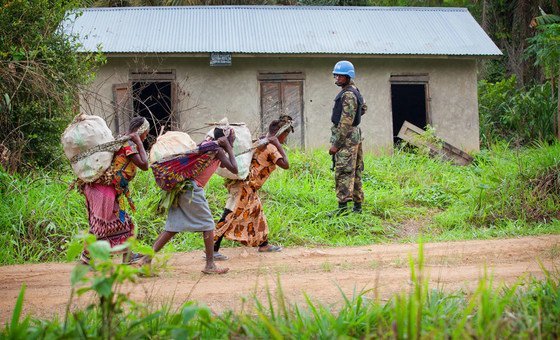
Speaking from the village of Sake in North Kivu, UNDP Resident Representative Damien Mama described meeting a woman whose house had been destroyed after she fled the advancing fighters in January.

Cut off from livelihoods

“You know, with five children, you can imagine what this represents,” Mr. Mama said. “She was telling me that [her family] were given food and temporary shelter; but what she needs is to go back to her farm to continue farming, to continue her activities, and also have her home rebuilt.”

All those newly displaced by the M23 rebel advance are in addition to the five million people already living in displacement camps in eastern DRC.

Health workers have repeatedly warned that the crowded and unsanitary conditions provide ideal conditions for the spread of diseases including mpox, cholera and measles.

Given the scale of need it is urgent that small businesses get the help they need to get up and running again “providing income-generating activities for the women and the youth creating jobs”, the UNDP official insisted.

“The economy has suffered a lot,” he explained. “The banks have closed, businesses have been destroyed, and many are now operating under 30 per cent of their capacity, which is a major blow to their businesses.”

Support for women and girls

At the same time, the UN agency remains committed to helping the many women and girls impacted by alarming levels of sexual violence.

This echoes an alert issued last month by the UN Children’s Fund (UNICEF), that during the most intense phase of this year’s conflict, a child was raped every half an hour.

In the next five months, UNDP intends to support the creation of 1,000 jobs and restore basic infrastructure, benefiting about 15,000 people.

To do this, the UN agency will need $25 million.

“We have so far secured $14 million thanks to [South] Korea, Canada, UK as well as Sweden; and our call will be to encourage other countries and donors to provide us with [the] $11 million gap.”

Source link

World News in Brief: Education suffers amid DR Congo violence, WHO greenlights RSV vaccines, more hurricanes ahead for Haiti

According to UN Children’s Fund, UNICEF, more than 290 schools have been damaged or destroyed in Ituri this year alone, bringing the total number of out-of-school children in the province to over 1.3 million.

Protection crisis

Between January and April 2025, a surge in violence displaced more than 100,000 people – half of them children. During this period, reported cases of abduction, maiming, sexual violence, and the recruitment and use of children by armed groups rose by 32 per cent compared to the same timeframe last year.

John Adbor, UNICEF’s representative in the DRC, referred to the situation as a “protection crisis”, stating: “Violence and conflict are shattering children’s right to learn – putting them at far greater risk of being recruited by armed groups, exploited, and abused.”

“The needs are immense, and our resources are not enough,” Mr. Adbor added, referring to UNICEF’s emergency response in the region.

With more than 1.8 million conflict-affected children now out of school across the DRC, UNICEF is prioritising mental health and psychosocial support through child-friendly spaces, reintegration of children formerly associated with armed groups, and treatment for acute malnutrition.

WHO approves two new vaccines to protect infants from RSV

Respiratory syncytial virus (RSV) is the leading cause of severe lung infections in young children globally, resulting in approximately 100,000 deaths each year among children under the age of five.

Alarmingly, 97 per cent of these deaths occur in low and middle-income countries.

Although RSV can infect people of all ages, “it is especially harmful to infants, particularly those born prematurely,” said Kate O’Brien from the World Health Organization (WHO).

Around half of all RSV-related deaths occur in babies younger than six months.

New immunisation products

On Friday, WHO issued recommendations for two new immunisation tools: a maternal vaccine, administered to pregnant women in their third trimester to protect their newborns; and a long-acting antibody injection for infants, which begins to protect within a week of administration and lasts for at least five months.

Considering the global burden of severe RSV illness in infants, WHO recommends  that all countries adopt either the maternal vaccine or the antibody injection as part of their national immunisation strategies.

“These RSV immunisation products can transform the fight against severe RSV disease, dramatically reduce hospitalisations and deaths, and ultimately save many infant lives worldwide,” said Ms O’Brien.

Dire hurricane forecasts compound Haiti woes

UN humanitarians have raised alarm over Haiti’s heightened vulnerability to natural disasters, warning that the country’s limited capacity to respond could be severely tested during the 2025 hurricane season – forecast to be significantly more intense than average across Latin America and the Caribbean.

Rubbish burns on the coast of Haiti.

Running from June to November, the upcoming season poses a serious threat to the impoverished island nation, where economic crisis, ongoing gang-related violence and rampant insecurity have already displaced over one million people.

Displacement sites at risk

More than 200,000 people are currently living in displacement sites across the country, many of which are situated in flood-prone areas.

Lacking proper shelter, drainage and sanitation, these camps “leave families acutely vulnerable to storms,” said UN Spokesperson Stéphane Dujarric.

The UN Office for the Coordination of Humanitarian Affairs (OCHA) is working with national authorities and humanitarian partners to prepare for the hurricane season. Ongoing efforts include contingency planning, mapping of high-risk areas – particularly displacement sites – and strengthening early warning systems.

However, humanitarian access remains limited, and preparedness is severely hindered by the lack of pre-positioned supplies throughout the country.

This is a “direct consequence of underfunding,” said Mr. Dujarric, adding that “funding remains a major obstacle” to the UN’s emergency response in Haiti.

Source link

Escalating violence drives food crisis across eastern DR Congo, warns WFP

Conflict has plagued the DRC for decades, particularly in the east. Armed clashes escalated sharply this year as M23 rebels wrested control of Goma, the capital of North Kivu, in January, followed by Bukavu in South Kivu a month later.

The security and humanitarian situation further deteriorated with recent outbreaks of anthrax and mpox in April and May, fuelled by overcrowded conditions and poor sanitation.

Deepening food insecurity

WFP’s latest report estimates that 7.9 million people are food insecure in the conflict-affected eastern provinces, with 28 million in need across the country.

Food production in Grand Nord, an important agricultural hub in eastern DRC, has been slashed due to recent conflict and displacement. In addition, the closure of Goma’s airport – critical for aid delivery – continues to disrupt operations.

Despite these challenges, WFP reached 1.1 million people in the east between January and March, providing school meals and take-home rations for 100,000 children, nutrition supplements for 340,000 children and pregnant or breastfeeding women – along with logistics and supply chain assistance.

Regional turbulence

The 140,000 Congolese who have fled to neighbouring countries since January – mainly Burundi, Uganda, Rwanda and Tanzania – have turned a national emergency into a regional crisis.

Refugee camps in these countries, already under strain from refugees from other countries, are struggling to absorb the new arrivals.

WFP warned that the surge in need is outpacing available resources. Budget constraints have forced the agency to make sharp cuts: food rations have been halved in Burundi, while cash support has also been halved in Rwanda.

In Uganda, the number of refugees receiving assistance has dropped from 1.6 million to 630,000. In Tanzania, food rations have been reduced from 82 to 65 per cent.

To sustain its emergency operations, WFP is appealing for $433 million to support its work inside the DRC through October.

Additional funding needs include $16.6 million to provide full food assistance in Burundi through 2025, $12 million to maintain full rations for refugees in Rwanda through 2025, $26 million to sustain operations in Uganda through 2025, and $18 million to provide just 75 per cent of full rations in Tanzania through April 2026.

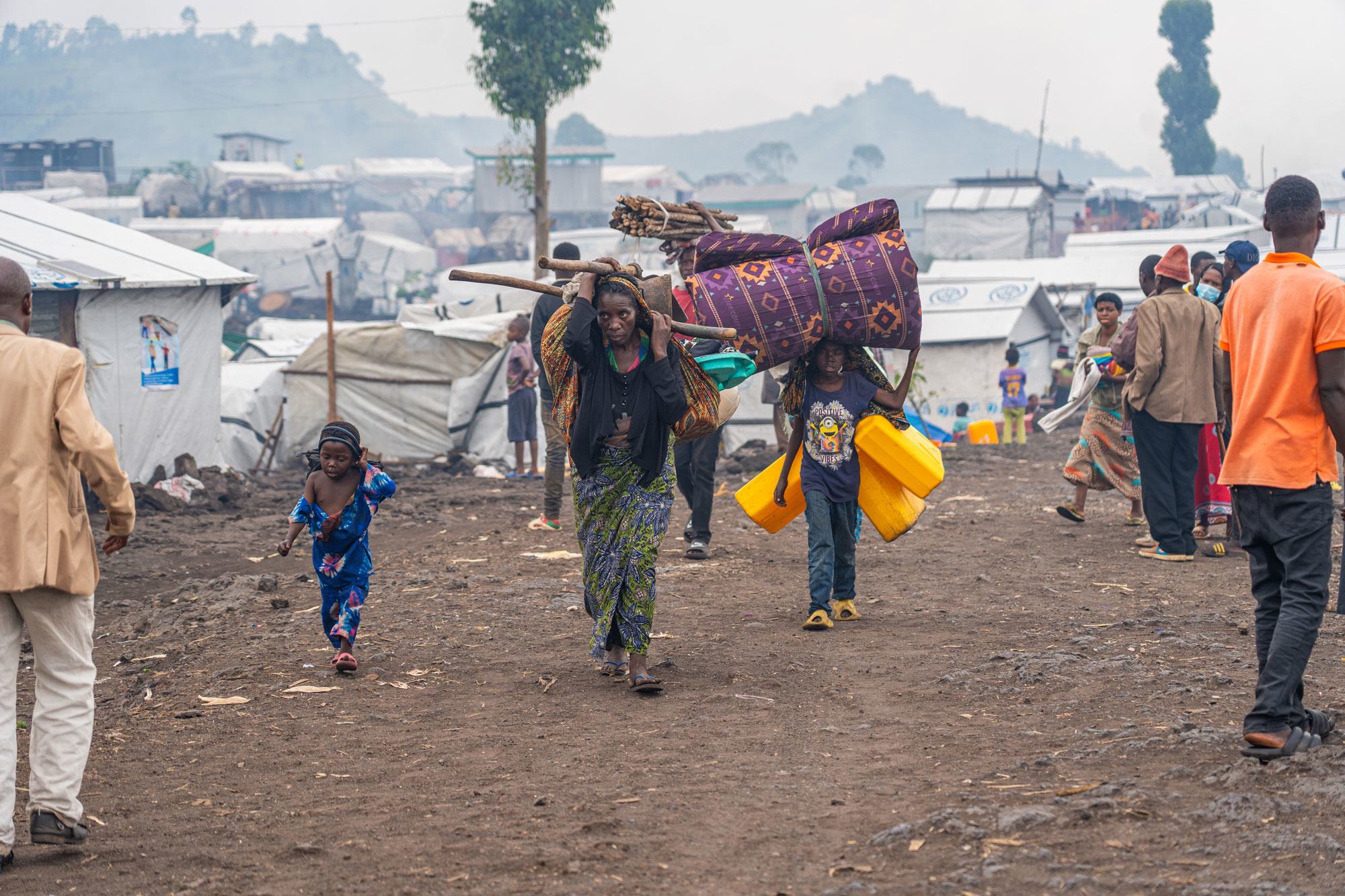
Displaced families in the Bulengo camp on the outskirts of Goma face a dire and uncertain future as M23 authorities instruct them to dismantle their makeshift shelters.

Source link

World News in Brief: ‘Massive’ needs in Sudan, DR Congo aid shortfall, support for Congolese refugees and Angola cholera relief

The UN estimates that in the past few weeks, over 330,000 people have fled into Tawila after the Rapid Support Forces (RSF) launched violent attacks in the Zamzam and Abu Shouk displacement camps and in El Fasher, the regional capital. 

Over 100,000 people also remain trapped in El Fasher. 

‘Massive’ humanitarian needs

Since the beginning of the civil war in Sudan in April 2023, over 18,000 civilians have been killed and over 13 million have been forced from their homes. 

According to UN estimates, over 30.4 million Sudanese are in desperate need of humanitarian aid. 

The World Food Programme (WFP) has provided food assistance to over 300,000 people from the Zamzam displacement camp. Yet, UN Humanitarian Affairs Coordinator Tom Fletcher noted on Thursday that needs remain “massive” in the region. 

“Our humanitarian colleagues also underscore the urgent need for stepped-up, flexible funding to sustain and expand life-saving support for people in need in North Darfur and elsewhere in Sudan,” said UN Deputy Spokesperson Farhan Haq, briefing reporters on Friday. 

However, with ongoing drone strikes in Port Sudan, the main entry point for humanitarian supplies, and increasing violence in North Darfur, providing life-saving assistance has become increasingly difficult. 

“We call once again on all parties to facilitate safe, unhindered and sustained access to the area, via all necessary routes,” Mr. Haq said. 

© UNICEF/Jospin Benekire

A displaced family sit in front of their makeshift shelter in Goma, North Kivu province, DR Congo.

DR Congo: Dire impact of funding cuts amidst cholera outbreak   

Funding shortfalls have forced the humanitarian community to re-prioritise its response plan to alleviate the crisis in the Democratic Republic of the Congo (DRC), the UN aid coordination office OCHA said on Friday. 

Nearly seven million people have already been forcibly displaced by violence since advances by M23 rebels earlier this year.

While the 2025 UN humanitarian plan aims to provide life-saving interventions to 11 million people across the DRC at a cost of $2.5 billion, only $233 million has been received so far. 

Despite escalating needs in the wake of the crisis in the east of the country, “that’s only half the amount we had secured by this time last year,” Farhan Haq told journalists in New York.

Congolese health authorities are facing shortages of medical supplies as the DRC is now facing a cholera outbreak in six provinces.

OCHA is calling for greater protection of civilians in conflict-affected areas, and more support to prevent the collapse of essential services and address the root causes of the crisis.

UN fund allocates over $4 million to support Congolese refugees, Angola cholera outbreak

Two new allocations from the UN Central Emergency Response Fund (CERF) will support Congolese refugees in Uganda and efforts to combat a deadly cholera outbreak in Angola. 

UN Emergency Relief Coordinator Tom Fletcher released the funding on Friday.

More than 60,000 people have fled violence in the Democratic Republic of the Congo (DRC) for neighbouring Uganda since January.

The first allocation, for $2.5 million, will allow the UN and partners to provide life-saving assistance to over 40,000 refugees, including clean drinking water, food, healthcare and nutrition support.

The $1.8 million CERF contribution in Angola will support the urgent response to the country’s worst cholera outbreak in two decades.

Since the beginning of the year, the outbreak has spread to 17 out of 21 provinces, with more than 18,000 cases and 586 deaths reported as of 7 May. 

The funding will go towards scaling up the response and helping to prevent further spread of the disease. 

Source link

DR Congo aid operation reaches Beni with food supplies for thousands

The UN World Food Programme (WFP) said that trucks packed with cereals, beans and cooking oil reached the city of Beni in North Kivu province from neighbouring Uganda, amid clashes between Rwanda-backed M23 rebel fighters and Congolese forces.

Aid for 140,000

WFP said that it intends to use the thousands of tonnes of relief supplies transported to warehouses in Beni to help around 140,000 people living in Lubero territory, south of the city of Butembo.

Violence escalated on 2 May across Lubero territory, uprooting some 30,000 people, according to the UN aid coordination office, OCHA.

The development comes amid ongoing peace talks in Qatar between the DRC Government and the M23 rebels. At previous talks in April, both sides pledged to work towards peace.

Amid rampant insecurity caused by proliferating armed groups, the Rwandan-backed M23 rebels have been at war for years with the Congolese army and allied forces in the mineral-rich region. In 2021, negotiations between the group and Kinshasa collapsed.

January offensive

Hostilities ramped up in January this year when M23 fighters captured Goma, the capital of North Kivu Province. A month later they seized Bukavu, the capital of South Kivu and threatened to take Kinshasa, on the other side of the huge country.

Since then, ongoing fighting has caused mass displacement, killed more than 7,000 people and fuelled fears of regional conflict.

A total of 21 million people need humanitarian assistance in DRC today. UN aid teams and partners remain on the ground to help and have condemned the looting of aid warehouses by armed groups which have destroyed food and medicine.

Source link

Anthrax outbreak compounds security crisis in eastern DR Congo

And with nearly seven million people forcibly displaced by violence since advances by M23 rebels earlier this year, the DRC is facing one of the world’s most complex displacement crises, according to the UN migration agency (IOM).

Living in overcrowded and under-resourced camps, displaced populations are increasingly vulnerable to both disease and attack.

Since January 2025 alone, over 660,000 people have been forced to flee the Goma region after Government forces lost control of the key city along with Bukavu to the south.

Tipping point

The scale of the humanitarian needs in the country has reached a tipping point, according to IOM, with outbreaks of mpox and anthrax underway in the east.

While both mpox and anthrax typically affect livestock and other animals, food insecurity resulting from the ongoing conflict, paired with unsanitary living conditions in displacement camps, puts humans at greater risk of transmission.

Dangerous infections

Both the potentially deadly infections can be contracted through contact with infected or contaminated animals. Although anthrax is not generally contagious, mpox is, the World Health Organization (WHO) underlines.

Mpox is typically accompanied by fever and rash and rarely requires hospitalisation, while all human cases of anthrax do, the UN health agency added.

Since 22 March, following the deaths of dozens of buffalo and hippopotamuses in Virunga National Park from anthrax poisoning, 16 suspected human cases of anthrax have been reported, including one confirmed case. One person has died so far.

Outbreak response

WHO is conducting assessments in the eastern part of the DRC to determine the risk of the anthrax infection spreading further across the region.

As both mpox and anthrax are treatable with antibiotics, and preventable through vaccination, WHO and its partners are working to prevent future outbreaks by adopting a unified approach, prioritising human, animal and environmental safety.

Awareness campaigns and efforts to vaccinate livestock against anthrax are now underway.

World News in Brief: Guterres on India-Pakistan tensions, eastern DR Congo update, weather boost for locusts in Africa

UN Secretary-General Guterres has spoken to leaders on both sides on India-Pakistan tensions.

“This morning, he spoke separately by telephone with Muhammad Shebaz Sharif, the Prime Minister of the Islamic Republic of Pakistan, and he also spoke earlier in the day with Subrahmanyam Jaishankar, the Minister for External Affairs of the Republic of India,” said UN Spokesperson Stéphane Dujarric, briefing journalists at UN Headquarters in New York.

During the calls the UN chief reiterated his strong condemnation of the 22 April terrorist attack, noting “the importance of pursuing justice and accountability for these attacks through lawful means.”

He expressed major concern over “rising tensions between India and Pakistan and he also underscored the need to avoid a confrontation that could result in tragic consequences,” added Mr. Dujarric.

The Secretary-General also offered to help mediate in support of any de-escalation efforts.

Escalating violence displaces thousands in eastern DR Congo

Ongoing violence in eastern Democratic Republic of the Congo (DRC) is uprooting families, crippling essential services, and placing civilians at growing risk, the UN humanitarian affairs office (OCHA) warned on Tuesday.

Fresh fighting in South Kivu province has forced communities to flee and left at least 10 civilians dead in Walungu territory alone, according to local authorities. “The violence is disrupting both economic life and the delivery of urgently needed humanitarian aid,” said OCHA.

Multiple rape cases

In nearby Kalehe, Minova hospital has reported multiple cases of rape and physical assault in recent days amid worsening insecurity. Meanwhile, clashes in Fizi territory last week led to health centres being looted and schools burned, threatening already fragile public services.

OCHA urged all combatants to respect international humanitarian law and ensure the protection of civilians. “Humanitarian access must be safe and unhindered,” the agency stressed.

The surge in displacement comes as eastern DRC remains gripped by fighting between the M23 rebel group and government forces, particularly in North Kivu. Since January, the violence has displaced hundreds of thousands.

In Walikale territory, civilians are trapped in a dangerous cycle of displacement and return, OCHA said, calling for strengthened protection and support for affected communities.

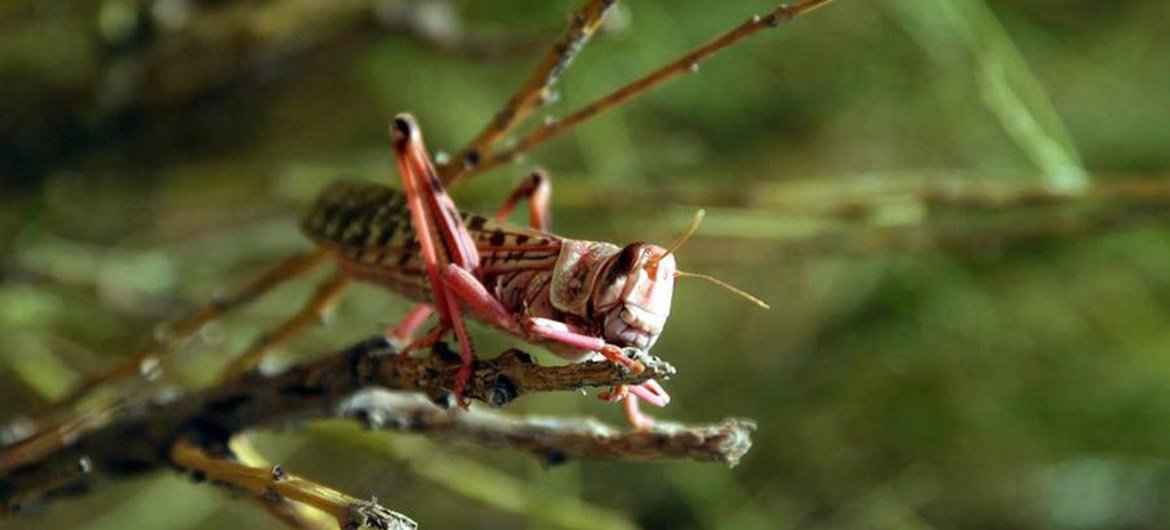
Locust swarms can devastate crops and pastures in many parts of Africa and elsewhere.

Favourable weather fuels desert locust surge in North Africa

Unusually high levels of desert locust infestations have been reported during the current breeding season, raising alarms across affected regions, the UN Food and Agriculture Organization (FAO) warned on Tuesday.

“Desert locusts remain among the most devastating migratory pests on the planet,” said UN Spokesperson Stéphane Dujarric, emphasising the threat they pose to food security and livelihoods.

A single swarm of locusts can cover anywhere from one to several hundred square kilometres and may contain up to 80 million adult locusts. In just 1 km², they can eat as much food in a day as 35,000 people.

Feeding on crops and pastureland, they pose a threat to crops grown for both people and livestock, risking starvation in communities that depend on agriculture for survival.

Clement weather for pests

According to the FAO, favourable weather conditions have created suitable breeding grounds for the flying pests. Winds and rainfall patterns have facilitated the movement of desert locusts from the Sahel to North Africa.

The FAO recommends conducting intensive ground surveys across key areas where locust breeding is likely to occur.

The area spanning from south of the Atlas Mountains in Morocco, through the Sahara in Algeria, and extending to southern Tunisia and western Libya is particularly at risk.

“Surveys and control operations are particularly urgent in locations where winter and early spring rains have created suitable breeding conditions,” said Cyril Piou, the FAO’s Locust Monitoring and Forecasting Officer.

Early detection and rapid response are critical to preventing a wider crisis, the UN food agency underscores.

Source link

DR Congo crisis forces refugees to swim for their lives to Burundi

We’re pushed to our limits,” said Ayaki Ito, Director for Emergencies for the UN refugee agency, UNHCR.

One mother was so desperate to reach safety she crossed the 100-metre wide Rusizi river separating DRC and Burundi with her three small children and their belongings, Mr. Ito told journalists in Geneva:

“I saw this plastic sheeting ball – it’s one mother and three small children – she put her belongings and wrapped it with a plastic sheet, to make it float…It’s a very perilous journey and I was told it’s full of crocodile and hippos.”

Overstretched resources

Since January, more than 71,000 people have crossed into Burundi, fleeing ongoing violence in eastern DRC, UNHCR data shows. Since then, more than 12,300 have been relocated to Musenyi refugee site, while others live with host communities in border areas.

Living conditions in Musenyi – five hours’ drive from the DRC border – are becoming unsustainable.

The site today houses 16,000 people although it was designed for 3,000, adding to tensions. “Food rations are already cut to half of what they’re supposed to be,” Mr. Ito explained, warning that even these rations will run out by the end of June without additional funding.

Food is far from the only concern, however, as emergency tents set up on lowland farming areas have now flooded during the onset of the rainy season.

Aid teams are already bracing themselves for diseases to spike.

People who fled violence in DR Congo to Burundi use a water point at a refugee camp in Cibitoke Province.

“Schools, clinics, basic sanitation systems are either non-existent or overwhelmed” and the UN agency has no more dignity kits, leaving nearly 11,000 women and girls with access to basic hygiene items, Mr. Ito said.

Funding crisis cutbacks

UNHCR’s funding crisis has also “severely reduced” support for family tracing, making it increasingly difficult to identify, locate, and reunite separated children with their families.

There are currently no child-friendly or women-friendly spaces where groups can gather for services and peer support in key hosting areas, Mr. Ito added.

Confronted with the catastrophic living conditions in Burundi and ongoing violent clashes in eastern DRC between Rwanda-backed M23 rebels and government forces, refugees often move back and forth between the two countries. “Nearly half of last week’s registered 700 arriving refugees have been previously registered in Burundi,” the UN official said, pointing out that Congolese refugees are among the most vulnerable in the world.

Citing reduced resources and operational challenges, the UN agency insisted that the delivery of lifesaving aid and protection services remains a priority. This includes additional support amid a 60 per cent increase in reported sexual violence cases, most involving rape in the DRC.

This balancing act is becoming increasingly impossible, with teams on the ground running a full-scale emergency response, responding to the needs of existing refugees in the country and preparing for future arrivals while also facing pressure to reduce their operations because of funding shortages,” Mr. Ito said.

Source link