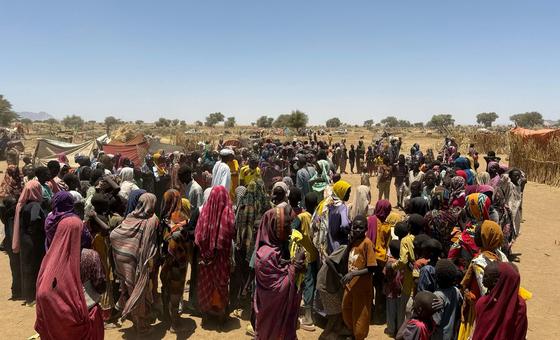
Deadly storms sweep South and Southeast Asia, leaving over 1,600 dead

Since mid-November, overlapping tropical storms and intensified monsoon systems have triggered catastrophic flooding and landslides across Sri Lanka, Indonesia, Thailand, Malaysia and Viet Nam.

UN teams across the region are supporting government-led emergency operations with food, health, water and sanitation aid, medical deployments and early recovery assessments, as heavy rains continue and fears grow that the crisis could deepen.

“We continue to closely monitor the situation and remain in close contact with national authorities,” UN Spokesperson Stéphane Dujarric told reporters in New York on Thursday.

The UN stands ready to support any ongoing efforts.

Storms and cyclones across south and southeast Asia from 17 November to 3 December.

Overlapping storms

Experts say the disasters were driven by an unusual convergence of powerful weather systems, including Cyclones Ditwah and Senyar, alongside a strengthened northeast monsoon.

Warm ocean temperatures and shifting storm tracks have produced extreme rainfall in areas that historically faced lower cyclone risk.

Across the region, nearly 11 million people have been affected, including about 1.2 million forced from their homes into shelters, while roads, utilities and farmlands have been washed away.

Heavy toll on children

Children are bearing a devastating share of the storms, with millions cut off from schools, clean water and basic services. More than 4.1 million children across the region have had their education disrupted since late November alone, according to the UN Children’s Fund (UNICEF).

Some three million students in Viet Nam have been unable to attend class, while nearly one million were affected in the Philippines, and hundreds of thousands more in Indonesia, Thailand and Malaysia.
Many children are now living in overcrowded evacuation shelters, exposed to disease, malnutrition and heightened protection risks.

Children are sitting at the frontline of the climate crisis, experiencing firsthand what it means when extreme weather becomes more frequent, more intense, and less predictable,” UNICEF Deputy Spokesperson Ricardo Pires said, calling for urgent action to protect them and their futures.

A man stands in over three feet of floodwaters in Gampaha, Sri Lanka.

Sri Lanka: Nationwide devastation

Sri Lanka bore some of the worst impacts after Cyclone Ditwah made landfall on 28 November, triggering floods and landslides across nearly the entire island.

The highest death tolls were reported in the hill districts of Kandy, Nuwara Eliya and Badulla, where landslides swept through plantation communities. Severe flooding also inundated western and north-western districts – including Colombo’s outer suburbs – disrupting markets, transport and water supplies.

Early assessments point to heightened gender-specific risks in the aftermath of the disaster.

With livelihoods disrupted and thousands sheltering in overcrowded centres, women and girls face increased exposure to gender-based violence, economic insecurity and interruptions to sexual and reproductive health services, particularly in rural and plantation communities already grappling with poverty and limited access to care.

Bridges and access roads swept away by a landslide in West Sumatra, Indonesia.

Indonesia: Flash floods and landslides

In Indonesia, relentless downpours between 22 and 25 November triggered deadly floods and landslides across Aceh, West Sumatra and North Sumatra, devastating dozens of districts.

Official figures indicate more than 830 deaths, with at least 500 people still missing, and more than 880,000 displaced. In total, over three million people have been affected by floodwaters, collapsed hillsides and destroyed infrastructure.

Entire villages have been submerged, bridges washed away and roads cut off, isolating communities and slowing rescue efforts. Emergency teams are relying on helicopters and boats to deliver aid to areas unreachable by land.

“We are working closely with the government on water, sanitation and hygiene (WASH), logistics, and coordination with local partners,” UN Spokesperson Dujarric said.

A teacher inspects the damage in a kindergarten classroom at a school in Thailand.

Thailand and Malaysia: Mass evacuations

Moving east, intensified monsoon rains have battered southern Thailand, where 12 provinces have been affected.

At least 185 people have died, with 367 missing and over four million people impacted. More than 219,000 residents have been displaced as rivers burst their banks and low-lying coastal areas flooded.

In neighbouring Malaysia, flooding across eight northern and central states has displaced around 37,000 people. Authorities continue to issue evacuation orders and weather warnings as rain persists.

A UNICEF staff member hands ready to eat food to a family in Tuyên Quang, Viet Nam.

Viet Nam: A relentless typhoon season

Viet Nam is confronting the cumulative toll of one of its harshest typhoon seasons in years. Since October, a succession of storms has flooded and damaged large swathes of the country, particularly in northern and central provinces.

Persistent downpours since mid-November, compounded by Tropical Cyclone Koto, have triggered new landslides and prolonged displacement. A national joint response plan is under way to address food insecurity, health risks and damaged infrastructure.

To support the response, $2.6 million has been allocated from the UN Central Emergency Response Fund (CERF).

Gampaha (pictured), a district on Colombo’s outskirts, has been among the areas hardest hit by flooding after Cyclone Ditwah.

Disasters supercharged by climate change

UN agencies say the storms reflect a broader shift toward more intense and unpredictable weather across the Asia-Pacific. Cyclone Ditwah tracked unusually far south along Sri Lanka’s coast, while Cyclone Senyar formed near the equator in the Strait of Malacca – a rare occurrence.

The UN Economic and Social Commission for Asia and the Pacific (ESCAP), in its latest report issued last week, warned that rising temperatures are fundamentally reshaping the region’s risk landscape.

Warmer ocean waters are increasing the potential for extreme rainfall, while rapid urban growth, deforestation and wetland loss are magnifying flood impacts. Even where early warnings were issued, fast-rising waters overwhelmed evacuation routes in some locations.

Arab region pushed to limits by climate extremes as 2024 smashes heat records

The World Meteorological Organization’s (WMO) first State of the Climate in the Arab Region report paints a stark picture of a region under constant pressure from rising temperatures and increasingly extreme weather.

The UN agency noted that “a number of countries [in the Arab region] reported temperatures of above 50°C (122°F) last year, while average regional temperatures for 2024 were 1.08°C higher than from 1991 to 2020.

Highlighting the significance of this data, WMO Secretary-General Celeste Saulo noted that scorching temperatures marked by intense and longer-lasting heatwaves “are pushing society to the limits…it is simply too hot to handle,” she said.

“Human health, ecosystems and economies can’t cope with extended spells of more than 50°C,” the WMO chief continued. “Droughts are becoming more frequent and severe in one of the world’s most water-stressed regions. And at the same time, we have seen some disruptive and dangerous deluges.”

Hostile climate

The UN report indicates an 83 per cent rise in recorded disasters in Arab nations between 1980-1999 and from 2000-2019. 

In addition to record-breaking heat, the region – which encompasses 15 of the world’s most water-scarce countries – has endured dust storms, prolonged drought and destructive floods.

Drought worsened in 2024 in western North Africa after six consecutive failed rainy seasons, especially over Morocco, Algeria and Tunisia, WMO said. Whereas in otherwise arid countries including Saudi Arabia, Bahrain and the United Arab Emirates, extreme rainfall and flash floods caused death and destruction. 

These weather shocks have deepened pressure on communities already grappling with conflict, rapid population growth, urbanisation and economic fragility. WMO warned that without stronger adaptation measures, these pressures will only intensify as temperatures continue their rapid upward trajectory.

2024 was the Arab region’s hottest year on record
• Temperatures rising nearly twice global average
• Heat, drought and extreme rain all intensified last year
• Nearly 60 per cent of Arab countries now have early warning systems
• WMO urges greater coordination on climate action

These rising extremes are already reshaping daily life across the Arab region where water shortages are worsening as higher temperatures accelerate evaporation and strain groundwater reserves.

Daily life imperilled

Urban centres face growing threats to energy provision, transport networks and public health, particularly for people working outdoors or living in informal housing. In rural areas, prolonged drought is eroding food production and forcing difficult trade-offs between agriculture, domestic water use and environmental protection.

Claire Ransom, Associate Scientific Officer at WMO’s Climate Monitoring & Policy Section, stressed that extreme heat is only of many extreme weather threats. “Dust storms, severe flooding, and other climate extremes placed immense pressure on communities all across the region in 2024, disrupting lives and impacting millions of people,” she said.

These events have inflicted major economic losses, displacing families, damaging crops and overwhelming emergency response systems, which are unevenly distributed across the region.

Coordinated action

Despite these challenges, the WMO assessment identifies areas of progress. Many countries have expanded preparedness systems and begun investing more strategically in adaptation. “There is progress; nearly 60 per cent of Arab countries now have multi-hazard early warning systems in place, and many are prioritizing water security strategies to cope with the mounting climate risks that we’ve seen in 2024 and beyond,” Ms. Ransom said.

While adaptation efforts are growing, the report concludes that only swift, sustained and collaborative action will be enough to prevent the harsh climate of 2024 from becoming the new normal.

Pressure for coordinated solutions is mounting as temperatures climb. The combination of extreme heat, water scarcity and fast-growing populations is amplifying existing vulnerabilities and threatening development goals across multiple countries. Many governments already struggle to maintain essential services during heatwaves, while poorer communities face the greatest risks from both rising temperatures and worsening storms.

“The key message from the report is clear. The Arab region really stands on the front lines of climate change, and timely information and coordinated action are no longer optional. They’re absolutely essential,” Ms. Ransom said.

The report was produced by the UN agency in partnership with the Economic and Social Commission for Western Asia and the League of Arab States. It is the first climate assessment dedicated entirely to the Arab region and aims to provide actionable science-based information to support decision-makers in the water-scarce region.

Communities struggle to rebuild following Pakistan’s worst floods

As communities struggle to rebuild, many have little time to grieve the immense losses they have suffered.  

Since June, over six million people in Pakistan have been affected by what have been described as “unusually heavy monsoon rains” which have claimed nearly 1,000 lives, including about 250 children.

Residents are still recovering from flash floods that turned streams into roaring rivers of mud, with many displaced still sheltering in Government-run camps or with host families who are already stretched to their limit.

In the Buner district of northern Pakistan, dozens perished in Bishnoi village under boulders and debris when flash floods came crashing down the slopes, sweeping away homes and lives in a matter of minutes.

In Buner, northern Pakistan, flash floods turned mountain streams into fields of boulders, with iron rods protruding like rusted crops.

“We had never seen anything like this,” said 35-year-old Habib-un-Nabi, a teacher from Bishnoi village.  

His simple words carry the weight of grief and disbelief. Habib lost eighteen family members in a single day, including his parents and brother.

Those who survived barely had time to mourn. “We were too busy trying to dig out others, to help whoever we could,” recalled Habib.  

IOM support  

The International Organization for Migration (IOM) in Pakistan began humanitarian operations in the northern flood-affected areas, where hundreds of lives were lost and thousands were left homeless.  

In Punjab – Pakistan’s most populous province and the hardest hit in terms of infrastructure damage during the 2025 floods – IOM worked with partners and through the Common Pipeline, a shared humanitarian logistics system that stores and delivers emergency goods.  

Between August and September 2025, the UN migration agency distributed nearly 14,000 family relief kits tailored to local needs across all four provinces under a single project.

These interventions are part of broader efforts to help communities adapt to a climate crisis that is increasingly human-driven, fuelled by deforestation, rapid urbanisation, and the degradation of natural drainage systems.  

In Naseer Khan Lolai, a village in Kashmore, 65-year-old Ali Gohar has lived through many floods, yet none has been as devastating as this one.  

Entire homes collapsed, cattle were swept away, and the land – owned by local landlords – left farmers like him with little control over their recovery.  

As floods and heatwaves intensify across Pakistan, communities are showing that adaptation is not only possible but essential, turning the human cost of climate change into a call for shared responsibility and stronger action.  

From ruins to rebuilding: Three Jamaican mothers face the future after hurricane

Three women in Jamaica whose lives were upended by the destructive force of a hurricane which battered the Caribbean island are looking to rebuild their future. 

Right before Hurricane Melissa swept across Jamaica in late October 2025, Rose* took her two children to a friend’s sturdy concrete home to keep them safe. When they returned the next morning, everything had vanished.

“The house was gone,” she said. “I didn’t even see the roof, just a piece of lumber.”

A school serves a temporary shelter for people whose lives were upended by Hurricane Melissa.

Entire neighbourhoods were reduced to splinters by the hurricane which left 36 per cent of houses in the western part of the country either damaged or destroyed.

Schools became shelters overnight, turning classrooms into temporary homes. Roads disappeared under water, power outages spread, and thousands were cut off for days. 

Nearly half a million people were left in precarious living conditions, facing profound uncertainty.

Among them are Rose, Sharon, and Sonia – three mothers whose lives changed overnight.

‘I have a key but no house’

For nine years, Rose lived in her small wooden home, a donated structure that had become her family’s refuge. 

Now, only the foundation remains. “I have a key to the house but no house,” she said. The air reeked of mud and decay. Nothing could be saved.

Sonia sits on a bed at a shelter for people who lost their homes due to Hurricane Melissa.

Before the storm, Rose worked as a cruise dispatcher in Negril, and her son as a hotel photographer. Both lost their jobs when the tourism industry shut down.

A few classrooms away, Sharon* faces a similar struggle. She arrived at the shelter with her two small children the same day her home, and her father’s collapsed. 

Before the storm, she worked as a gas station supervisor, now her workplace is closed indefinitely. Her children sleep on desks in the sweltering heat.

Between the rows of desks and makeshift beds, families share what little they have: a meal, a blanket, a few words of comfort. Amid loss, small acts of kindness create fragile connections.

Living in limbo 

More than 1,100 people remain in 88 shelters in Jamaica, and over 120,000 households need urgent repairs after Melissa’s destruction. 

Among them is Sonia*, who fled her coastal home carrying her grandson with a heart condition. 

“I can’t swim, so I grabbed him and ran,” she recalled.

Since the start of the emergency, the International Organization for Migration (IOM) teams have supported the Government of Jamaica and the wider UN response, delivering tarpaulins, shelter repair materials, hygiene kits, generators, and other essentials to families whose homes were damaged or destroyed.

For women like Rose, Sharon, and Sonia, each day is a test of endurance and solidarity. Their homes are gone, but the support of their communities helps them move forward. 

Their lives, once far apart, are now linked by loss, uncertainty, and the slow process of rebuilding.

*Names changed to protect identities


A sustainable future requires new thinking: UN environment report

The Global Environment Outlook lays out a simple choice for humanity: continue down the road to a future devastated by climate change, dwindling nature, degraded land and polluted air, or change direction to secure a healthy planet, healthy people and healthy economies,” said UNEP Executive Director Inger Andersen.

The report has input from 287 multi-disciplinary scientists from 82 countries and stretches to well over 1,000 pages.

Looking beyond GDP

The report makes a case for interconnected ‘whole-of-society’ and ‘whole-of-government’ approaches to transform economy and finance, materials and waste, energy, food and the environment.

Taking this path starts with moving beyond gross domestic product (GDP) as a measure of economic wellbeing and instead using inclusive indicators that also track the health of human and natural capital.

It continues with a transition to circular economy models; a rapid decarbonisation of the energy system; a shift towards sustainable diets, reduced waste and improved agricultural practices; and expanding protected areas and restoring degraded ecosystems – all backed by behavioural, social and cultural shifts that include Indigenous and local knowledge.

Two pathways to change

The report lays out a social and a technological pathway to transformation.

  1. Behaviour-focused transformation pathway: lifestyle, behavioural and value changes. Social awareness of the environmental crises drives a shift in worldview.
  2. Technology-focused transformation pathway: innovation and technological solutions. An urbanized world with significant global trade and technological spill-over.

Why it matters

According to UNEP:

  • The state of the environment will dramatically worsen if the world continues to power economies under a business-as-usual pathway.
  • Without action, global mean temperature rise is likely to exceed 1.5°C above pre-industrial levels in the early 2030s, exceed 2.0°C by the 2040s and keep climbing.
  • Climate change would cut 4 per cent off annual global GDP by 2050 and 20 per cent by the end of the century.
  • If made, the changes have the potential to avoid nine million pollution-related premature deaths, lift 200 million people out of undernourishment, and move 150 million people out of extreme poverty by 2050.

The agency called on countries to follow the whole-of-society and whole-of-government approaches laid out in the report to achieve a sustainable future.

“This sounds like, and indeed is, a massive undertaking. But there is no technical reason why it cannot be done,” Ms. Andersen said.

Five climate trailblazers: UNEP’S 2025 Champions of the Earth

As the world moves to slow climate change and create a more sustainable future, the UN Environment Programme (UNEP) named five new climate visionaries on Wednesday as its 2025 Champions of the Earth — the UN’s highest environmental honour.

These five extraordinary leaders, who work on issues ranging from climate justice to sustainable cooling and forest protection, show that bold action can drive real change for people and planet.

“As the global impacts of the climate crisis intensify, innovation and leadership across every sector of society have never been more essential,” said Inger Andersen, Executive Director of UNEP. 

“Young students demanding climate justice, subnational governments and architects leading on sustainable cooling and smart building design, research institutes slowing deforestation – and passionate individuals driving methane emissions reductions – this year’s Champions of the Earth show the kind of leadership that will inspire the world to face down the challenge of climate change.”

This year, the laureates are tackling some of the most urgent challenges of our time: climate justice, methane emissions, sustainable cooling, resilient buildings, and forest conversation, according to the UN’s environment agency.

UNEP’s 2025 Champions of the Earth are: 

Pacific Islands Students Fighting Climate Change – Policy Leadership

When Cynthia Houniuhi addressed the International Court of Justice in The Hague a year ago, she spoke plainly: climate change is devastating Pacific Island nations like her home, the Solomon Islands.  

Through her youth-led NGO, which secured a landmark International Court of Justice (ICJ) opinion affirming states’ legal duties to prevent climate harm and uphold human rights, she is helping to reshape global climate law and empower vulnerable nations. 

Champions of the Earth Award winner Cynthia Houniuhi, a climate justice advocate from the Solomon Islands who co-founded and led Pacific Islands Students Fighting Climate Change.

Supriya Sahu, Additional Chief Secretary, Government of Tamil Nadu – Inspiration and Action

Indian environmentalist Ms. Sahu is redefining how communities adapt to extreme heat – restoring nature to cool cities, redesigning schools for safety, and promoting climate-smart infrastructure.  

Her sustainable cooling and restoration initiatives have created 2.5 million green jobs, expanded forest cover, and improved resilience for 12 million people. 

© UNEP/Florian Fussstetter

Champions of the Earth Award winner Supriya Sahu is recognized for her groundbreaking leadership in subnational climate action, restoring ecosystems and scaling sustainable cooling innovations across Tamil Nadu.

Mariam Issoufou, Principal and Founder, Mariam Issoufou Architects, Niger/France – Entrepreneurial Vision

By grounding her architecture in local materials and cultural heritage, Ms. Issoufou is redefining sustainable, climate-resilient buildings across the Sahel and inspiring a new generation of designers shaping Africa’s built environment.  

Through projects like the Hikma Community Complex in Niger, she pioneers passive cooling techniques that keep buildings up to 10°C cooler without air conditioning. 

Champions of the Earth Award winner Mariam Issoufou is a Nigerien architect whose work redefines the relationship between contemporary design and cultural heritage.

Imazon, Brazil – Science and Innovation

Imazon has developed AI deforestation prediction models that inform policies and help law enforcement protect the Amazon rainforest, while promoting sustainable economic growth.        

By combining science and AI-driven geospatial tools to curb deforestation, Imazon’s non-profit research institute has strengthened forest governance, supported thousands of legal cases, and revealed the scale of illegal deforestation, driving systemic change in the Amazon basin. 

Champions of the Earth Award winner Cynthia Houniuhi is awarded for pioneering forest monitoring systems that combine cutting-edge geospatial science and AI to prevent deforestation in the Amazon.

Manfredi Caltagirone (posthumous) – Lifetime Achievement

Mr. Caltagirone has dedicated his career to one of the most urgent challenges of our time. Guided by his vision for open, reliable, and actionable data, he has driven efforts to turn knowledge into climate action.  

As the former head of UNEP’s International Methane Emissions Observatory, he advanced transparency and science-based policy on methane emissions, helping shape the EU’s first regulation on methane emissions and shaping global energy policy. 

Manfredi Caltagirone, posthumously honoured with the Lifetime Achievement Award for his visionary leadership in founding the International Methane Emissions Observatory and advancing global action on methane.


UN environment assembly wraps up in Nairobi

The assembly is the world’s highest-level decision-making body for matters related to the environment. 

More than 6,000 people – representing 186 countries – took part in the week-long gathering which was held at the headquarters of the UN Environment Programme (UNEP).

Wide-ranging resolutions

The UNEA-7 resolutions cover issues such as the sound management of minerals and materials essential to the shift to clean energy, international cooperation to combat wildfires, and greater protection of coral reefs and glaciers.

The ministerial declaration outlined commitment to bold actions that drive sustainable solutions, such as promoting local and national zero-waste initiatives.

It also called for implementing obligations under multilateral environmental agreements and frameworks, as well as advancing equitable and inclusive participation in all efforts. 

Rising above differences

In her closing remarks, UNEP Executive Director Inger Andersen recalled that participants came to Nairobi to show the determination and solidarity needed to tackle environmental challenges that threaten to undermine economies and societies.

“You have succeeded,” she said.  “The beacon of environmental multilateralism that rises above the fog of geopolitical differences today shines a little brighter.”

She noted that the assembly had also approved UNEP’s Medium-Term Strategy (MTS) for the next four years.

Support UN environment agency

As Member States also handed new mandates to UNEP, on top of existing ones, she urged countries to make their full contributions so that it can deliver “with results and impact.”

“You will now return to the world outside the negotiation halls. A world in which – let us not forget amid our euphoria – people are dying, homes and livelihoods are being destroyed, economies are being damaged, and inequity is growing because action on environmental challenges has not been fast or strong enough,” Ms. Andersen said. 

“Yes, you have brightened the beacon and better lit the path forward. But we must now, together, hurry down this path to make good on our collective promise to deliver real solutions for a resilient planet and resilient people.” 

Paris Agreement turns 10

Friday also marked 10 years since the adoption of the Paris Agreement on climate change, which Ms. Andersen also highlighted in her remarks.

The landmark treaty, signed by 194 countries and the European Union, aims to limit global temperature rise to 1.5 degrees Celsius above pre-industrial levels.

UN Secretary-General António Guterres used the anniversary to call for more climate action.

“A decade ago, the world found the courage to adopt the Paris Agreement – a pillar of hope for humanity,” he said in a tweet.

“Today, we must find courage once again. The climate crisis is one of the defining challenges of our time. Together, we can – and we must – build a livable future for all.” 

How climate change is threatening human rights

UN High Commissioner for Human Rights Volker Türk echoed this message in Geneva earlier this year and posed a question before the Human Rights Council:

“Are we taking the steps needed to protect people from climate chaos, safeguard their futures and manage natural resources in ways that respect human rights and the environment?”

His answer was very simple: we are not doing nearly enough.

In this regard, the impacts of climate change must be understood not only as a climate emergency, but also as a violation of human rights, Professor Joyeeta Gupta told UN News recently

She is the co-chair of the international scientific advisory body Earth Commission and one of the United Nations’ high-level representatives for science, technology, and innovation for the Sustainable Development Goals (SDGs).

Who suffers the most?

Professor Gupta said that the 1992 climate convention never quantified human harm. 

She noted that when the Paris Agreement was adopted in 2015, the global consensus settled on limiting warming to 2° Celsius, later acknowledging 1.5° Celsius as a safer goal. 

But for small island States, even that was a compromise forced by power imbalance, and “for them, two degrees was not survivable,” said Professor Gupta.

“Rising seas, saltwater intrusion, and extreme storms threaten to erase entire nations. When wealthy countries demanded scientific proof, the Intergovernmental Panel on Climate Change (IPCC) was tasked with studying the difference between 1.5° Celsius and 2° Celsius,” she continued.

She said that the results were clear that 1.5° Celsius is significantly less destructive but still dangerous.

In her own research published in Nature, she argues that one degree Celsius is the just boundary, because beyond that point, the impacts of climate change violate the rights of more than one per cent of the global population, around 100 million people.

The tragedy, she noted, is that the world crossed one degree in 2017, and it is likely to breach 1.5° Celsius by 2030. 

She underscored that the promises of cooling later in the century ignore irreversible damage, including melting glaciers, collapsing ecosystems, and lost lives.

“If Himalayan glaciers melt,” she said, “they won’t come back. We will be living with the consequences forever.”

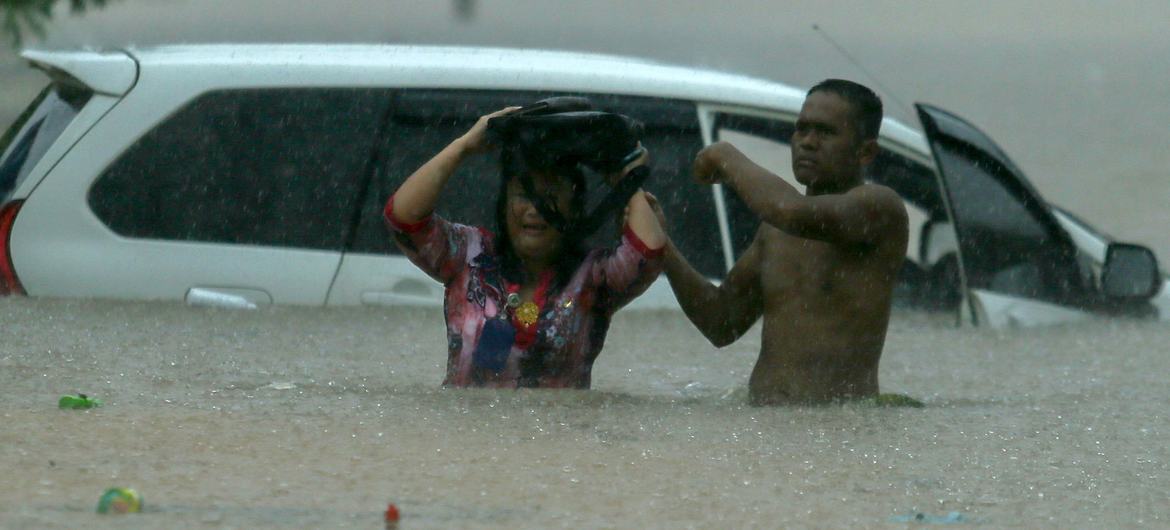
A man helps a woman after her car is stranded in waist-deep water. Globally rains are being more extreme due to impacts of climate change.

A question of responsibility 

Climate justice and development go hand in hand. Every basic right – from water and food to housing, mobility, and electricity – requires energy.

“There is a belief that we can meet the Sustainable Development Goals without changing how rich people live. That doesn’t work mathematically or ethically,” Professor Gupta explained. 

Her research shows that meeting basic human needs has a significant emissions footprint. 

The research also highlights that since the planet has already crossed safe limits, wealthy societies must reduce emissions far more aggressively, not only to protect the climate, but to create carbon space for others to realise their rights.

“Failing to do so turns inequality into injustice.” she underlined.

Climate change and displacement

Displacement is one of the most obvious effects of climate injustice. Yet international law still does not recognise ‘climate refugees.’

Professor Gupta explains the progression clearly. 

“Climate change first forces adaptation for example, shifting from water-intensive rice to drought-resistant crops. When adaptation fails, people absorb losses: land, livelihoods, security. When survival itself becomes impossible, displacement begins,” she said.

“If land becomes too dry to grow crops and there is no drinking water,” she said, “people are forced to leave.”

She added that the most climate displacement today occurs within countries or regions, not across continents. 

“Moving is expensive, dangerous, and often unwanted. The legal challenge lies in proving causation: Did people leave because of climate change, or because of other factors like poor governance or market failures?

“This is where attribution science becomes crucial. New studies now compare decades of data to show when and how climate change alters rainfall, heat, health outcomes, and extreme events. As this science advances, it may become possible to integrate climate displacement into international refugee law,” she noted.

“That,” she said, “will be the next step.”
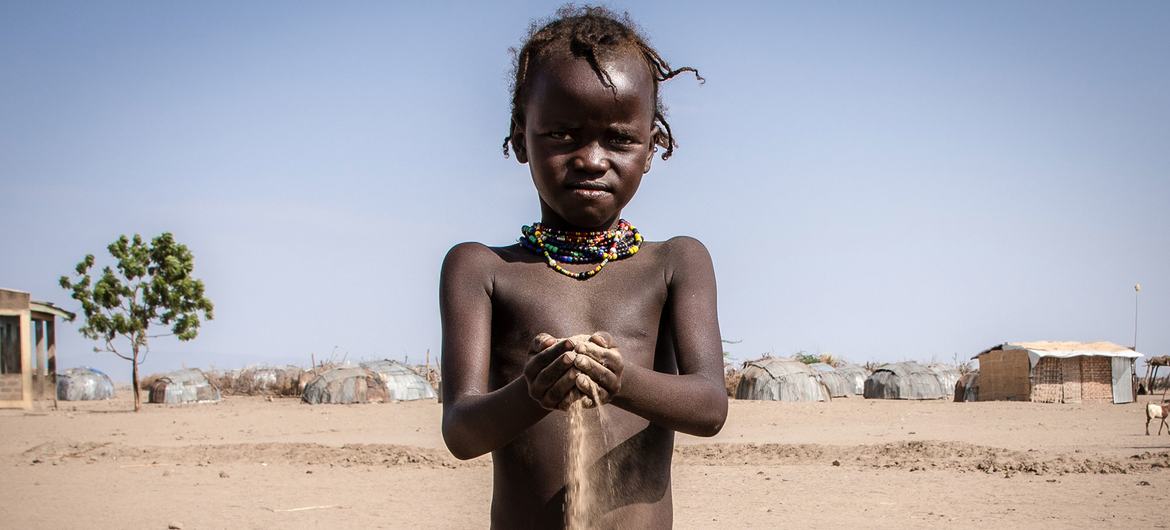
Children in Africa are among the most at risk of the impacts of climate change.

A broken legal framework

Professor Gupta said that climate harms have been quite difficult to address through human rights law due to the fragmented architecture of international law.

“This fragmentation allows States to compartmentalise responsibility…They can say, “I agreed to this here, but not there,” she said. 

“Environmental treaties, human rights conventions, trade agreements, and investment regimes operate in parallel worlds. Countries may sign climate agreements without being bound by human rights treaties, or protect investors while ignoring environmental destruction,” she added.

She asserted that this is why invoking climate change as a human rights violation at the global level has been so difficult. Until recently, climate harm was discussed in technical terms – parts per million of carbon dioxide, temperature targets, emission pathways – without explicitly asking: What does this do to people?

Only recently has this begun to change.

In a landmark advisory opinion, the International Court of Justice (ICJ) clarified that climate change cannot be assessed in isolation. Courts and governments, the ICJ said, must consider climate obligations together with human rights and other environmental agreements.

For Professor Gupta, this legal shift is long overdue but vital.

“It finally tells governments: you cannot talk about climate without talking about people.”

Climate change is transboundary

Assigning responsibility for climate change is exceptionally complex because its impacts cross borders, she said.

“For instance, a Peruvian farmer sued a German company in a German court for damages caused by climate change. The court acknowledged that foreign plaintiffs can bring such cases, but proving the link between emissions and harm remains a major challenge. This case highlights the difficulties of holding states or companies accountable for transboundary climate-related human rights harms,” she added.

Professor Gupta said that attribution science is making it possible to link emissions to specific harms.

The ICJ has now affirmed that continued fossil fuel use may constitute an internationally wrongful act. States are responsible not only for their emissions, but for regulating companies within their borders.

“Different legal strategies are emerging, from corporate misrepresentation lawsuits in the US to France’s corporate vigilance law,” she added
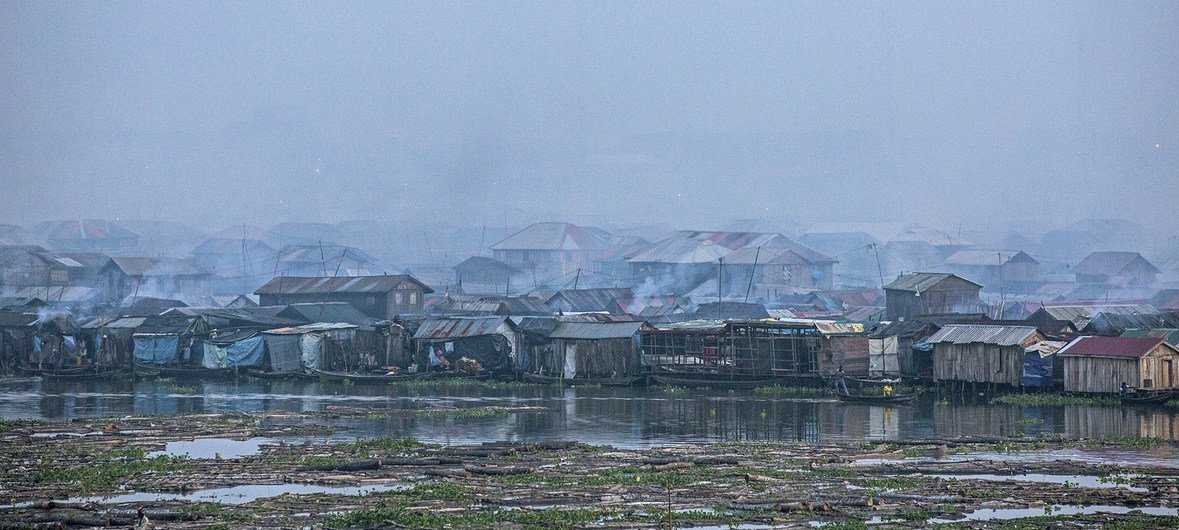
Vehicle emissions, diesel generators, the burning of biomass and garbage have all contributed to poor air quality in Lagos Lagoon in Nigeria. (file 2016)

Climate stability as a collective human right

Rather than framing climate as an individual entitlement, Professor Gupta argues for recognising a collective right to a stable climate.

She explained that climate stability sustains agriculture, water systems, supply chains, and everyday predictability, and without it, society cannot function.

“Climate works through water,” she said. “And water is central to everything.”

Courts around the world are increasingly recognising that climate instability undermines existing human rights even if climate itself is not yet codified as one.

This thinking is now echoed at the highest levels of the UN.

Erosion of fundamental rights

Speaking at the Human Rights Council in Geneva in June of this year, UN High Commissioner Volker Türk warned that climate change is already eroding fundamental rights, especially for the most vulnerable.

But he also framed climate action as an opportunity.

“Climate change can be a powerful lever for progress,” he said, if the world commits to a just transition away from environmentally destructive systems.

“What we need now,” he stressed, “is a roadmap to rethink our societies, economies and politics in ways that are equitable and sustainable.”

Political will, power, and responsibility

“The erosion of multilateralism symbolised by repeated US withdrawals from the Paris Agreement has weakened global trust. Meanwhile, 70 per cent of new fossil fuel expansion is driven by four wealthy countries: the US, Canada, Norway, and Australia,” said Professor Gupta.

She argues that neoliberal ideology focused on markets, deregulation, and individual freedom cannot solve a collective crisis.

“Climate change is a public good problem,” she said. “It requires rules, cooperation, and strong States.”

Developing countries face a dilemma: wait for climate finance while emissions rise, or act independently and seek justice later. Waiting, she warns, is suicidal.

As the UN High Commissioner concluded in Geneva, a just transition must leave no one behind.

“If we fail to protect lives, health, jobs and futures,” Volker Türk warned, “we will reproduce the very injustices we claim to fight.”

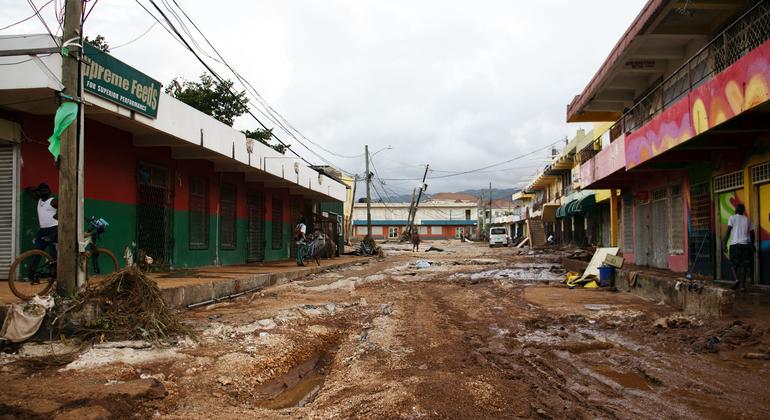
Fifty days on, Jamaica struggles to rebuild after Hurricane Melissa’s unprecedented destruction

Current estimates place the total damage and loss between $8 billion and $15 billion – nearly a quarter of Jamaica’s gross domestic product (GDP), said Dennis Zulu, UN Resident Coordinator for Jamaica, the Bahamas, Bermuda, the Cayman Islands, and Turks and Caicos.

The hurricane affected more than 626,000 people and claimed 45 lives, underscoring its profound human toll.

Despite notable progress in recovery efforts, 90 emergency shelters are still up and running, accommodating nearly 950 people who have yet to return home.

Communities left exposed

Entire communities are still fully exposed, with at least 120,000 buildings – most of them in southwestern Jamaica – having lost their roofs, reported Mr. Zulu.

Hurricane Melissa triggered “prolonged” and “cascading” disruptions to essential services, added the resident coordinator.

“Western parishes were left without electricity for weeks on end.”

In addition, many children remain out of school due to extensive damage to educational facilities.

Approximately 450 schools, nearly two-thirds of all institutions nationwide, have reported significant impacts, including roof loss, structural failure, and other damages.

Unprecedented scale of destruction

The tourism industry and agricultural production – once the cornerstones of Jamaica’s economy and major sources of employment – have suffered extensive damage, putting thousands of jobs and livelihoods at risk, adding further strain.

This scale of destruction has not only been unprecedented, but it has also really reversed hard-won development gains in a country that was firmly on a positive social and economic trajectory,” emphasised M. Zulu.

Despite these challenges, the United Nations continues to work closely with the Government of Jamaica, national institutions, civil society, and international partners, delivering life-saving aid to the most vulnerable communities.

Immediate priorities for recovery:

  • Restore health services to safe and fully functional operating levels.
  • Support the education sector, particularly as schools prepare to reopen.
  • Assist in restoring essential community services for areas still without access.
  • Contribute to the repair and reconstruction of homes, roads, and critical infrastructure.
  • Restore livelihoods through targeted support to small farmers, fishers, and micro and small enterprises
  • Strengthen the agriculture sector to enhance food production, food security, and rural employment.
  • Support the tourism sector as a key employer and source of foreign exchange to safeguard jobs and accelerate recovery.
  • Ensure recovery efforts are inclusive, climate-resilient, and risk-informed, enabling Jamaica to rebuild stronger and better than before.

Sudan: Intensifying hostilities bring new displacement, more casualties

Hostilities have been intensifying between the Sudanese Armed Forces (SAF) and two armed groups – the rival Rapid Support Forces (RSF) militia that has been battling the military government for control since April 2023 and the Sudan People’s Liberation Movement-North.

Over the weekend, drone attacks targeted a UN base killing six peacekeepers from the UNIFSA mission, while another six people were killed in a hospital attack in South Kordofan State, according to initial information from the UN human rights office (OHCHR).

Meanwhile, OCHA said artillery shelling was reported on Monday, posing further threats to civilians.

I urge all parties to the conflict and States with influence to ensure an immediate ceasefire and to prevent atrocities,” said UN human rights chief Volker Türk in a statement.

Mr. Türk also cautioned that medical facilities are protected under international humanitarian law.

New displacement

The UN International Organization for Migration (IOM) estimates that more than 1,700 people were displaced between Thursday and Saturday from multiple towns in South Kordofan.

Meanwhile, in North Darfur State, displacement continues to rise from the besieged El Fasher into Tawila, where the UN is delivering emergency aid.

More than 25,000 people in Twila have been registered since late October, after fleeing along insecure routes where they face extreme danger.

Despite severe access and logistical constraints, the World Food Programme (WFP) assisted about half a million people in Tawila in November and has consistently reached some 2 million people every month across the Darfur region.

Attacks against peacekeepers

Providing an update at Tuesday’s noon briefing in New York, UN Deputy Spokesperson Farhan Haq said that the wounded peacekeepers who underwent lifesaving surgery in Kadugli, Sudan, were evacuated to the UN mission headquarters in the disputed Abyei region on Tuesday morning.

Other injured personnel were also evacuated there, and four of them have since been sent to Nairobi, Kenya, for further medical treatment.

The remains of the six fallen soldiers have been transported to Entebbe, Uganda, and arrangements are underway for their repatriation to Bangladesh.

Mr. Haq underscored that “attacks targeting United Nations peacekeepers may constitute war crimes under international law and call for accountability.”

ALSO READ:

London’s Far-Right Rally Sends Shockwaves Through South Asian Communities