Covid raises brain complications, epilepsy risks in kids: Report

A latest study has shown that not only adults but children who suffered from Covid-19 are prone to risk of cognitive deficit, insomnia, ischaemic stroke, nerve or psychotic disorders and epilepsy or seizures  months later.

The post-Covid risk trajectories differed in children compared with adults, said the team of researchers at the University of Oxford.  Published in The Lancet Psychiatry journal, the findings are based on a  data of 185,748 children found that post-Covid risk trajectories differed in children compared with adults.

In the six months after SARS-CoV-2 infection, children were not at an increased risk of mood or anxiety disorders. However, they developed “an increased risk of cognitive deficit, insomnia, intracranial haemorrhage, ischaemic stroke, nerve, nerve root, and plexus disorders, psychotic disorders, and epilepsy or seizures”.

Unlike adults, cognitive deficit in children had a finite risk horizon (75 days) and a finite time to equal incidence (491 days). “Children have a more benign overall profile of psychiatric risk than do adults and older adults, but their sustained higher risk of some diagnoses is of concern,” said the study.

A sizeable proportion of older adults who received a neurological or psychiatric diagnosis, in either cohort, subsequently died, especially those diagnosed with dementia or epilepsy or seizures.

Just after the emergence of the delta variant, increased risks of ischaemic stroke, epilepsy or seizures, cognitive deficit, insomnia, and anxiety disorders were observed, compounded by an increased death rate.

“With Omicron, there was a lower death rate than just before emergence of the variant, but the risks of neurological and psychiatric outcomes remained similar,” revealed the study.

The observational study extracted data from the ‘TriNetX’ electronic health records network, an international network of de-identified data from health care records of approximately 89 million patients collected from hospital, primary care, and specialist providers from the US, Australia, the UK, Spain, Bulgaria, India, Malaysia, and Taiwan.

Transcription service Otter limits access to archives, free users

Automated transcription provider Otter has reduced the free hours for transcription from 600 to 300 minutes per month for free users, said the company on Thursday.

The popular tool to record interviews with real-time transcription is now limited for free access to 25 most recent conversations, with older ones available via paid mode only.

The company said it is making some big changes to its offerings for both free and paying customers, applicable from September 27. It will add Otter Assistant which will automatically join meetings (even if you don’t) on Zoom, Microsoft Teams, or Google Meet to capture and share notes and meeting insights.

“We’re also adding our recently launched ‘Automated Outline’ feature. Now you’ll have access to automatic meeting summaries curated and displayed in the Outline panel so you and your colleagues can easily access a summary of what was discussed,” said the company.

The company is also making changes to Otter Pro, including expanding Otter Assistant features, adding Automated Outline, raising the price, and changing other features and usage limits.

While Otter Pro annual pricing will remain the same at $8.33 per month (billed annually), the company will increase Otter Pro monthly pricing from $12.99 a month to $16.99 a month.

Otter Pro users will get 1,200 minutes of transcription per month, 90 minutes per conversation, 10 imports per month, 100 names aling with 100 other terms custom vocabulary with ‘no Dropbox sync’ (available on Otter Business).

TikTok in-app browser on iOS monitoring keystrokes, taps: Cybersecurity researcher

Chinese short-form video app TikTok may be monitoring all keyboard inputs and taps via its in-app browser on iOS, said independent cyber-security researcher Felix Krause.

Founder of Fastlane that was acquired by Google, Krause said that when the user opens any link on the TikTok iOS app, it’s opened inside their in-app browser leveraging access to other information.

“While you are interacting with the website, TikTok subscribes to all keyboard inputs (including passwords, credit card info) and every tap on the screen, like which buttons and links you click,” Krause claimed in a blog post on Thursday.

From a technical perspective, it amounts to installing a keylogger on third-party websites and the company confirmed those features exist in the code but deneid that it was using them.

It proves that “TikTok injects code into third party websites through their in-app browsers that behaves like a keylogger. However, claims it’s not being used,” said the researcher. “This was an active choice the company made. This is a non-trivial engineering task. This does not happen by mistake or randomly.”

“Like other platforms, we use an in-app browser to provide an optimal user experience, but the Javascript code in question is used only for debugging, troubleshooting and performance monitoring of that experience – like checking how quickly a page loads or whether it crashes,” a company spokesperson was quoted as saying in a Forbes report.


BJP MLA detained ahead of comedian Munawar Faruqui’s Hyderabad show

Hyderabad police on Friday detained BJP MLA T. Raja Singh who had threatened to burn down the venue of stand-up comedian Munawar Faruqui’s show scheduled to be held in Hyderabad on Saturday, just before he prepared to go there.

Raja Singh has been detained and shifted to Bolaram police station in a police vehicle. His supporters raised slogans against the state government and Chief Minister K. Chandrashekar Rao when police officials detained him from his office in Mangalhat. Some of them tried to block the police vehicle but were taken into custody.

Police had tightened the security at the MLA’s office since morning. He represents Goshamahal constituency in Hyderabad and had warned in a video that if the comedian goes ahead with the show, he would beat him up and burn down the venue.

Raja Singh alleged that Faruqui had hurt the religious sentiments of Hindus by making jokes on their gods after Munawar took to his Instagram account to announce his show “Dongri to Nowhere” in Hyderabad on August 20.

He had earlier planned to perform in Hyderabad in January but the show had to be canceled due to a surge in Covid-19 cases.

“In the past too, our idiot minister KTR had offered police protection and invited him, saying his event will be a great success. But even then, when Hindu groups across Telangana united to threaten him, he got scared and cancelled the event,” Raja Singh said, in a reference to state minster K.T. Rama Rao.

“I am seriously telling this. Everybody knows about the law and order in Telangana. I am telling KTR, if you don’t want this to deteriorate further, don’t allow the comedian in Hyderabad,” the MLA from Goshamahal warned KTR.

The BJP leader has also issued an open threat. “See what will happen, If they invite him. Wherever the program is, we will go and beat him up. Whoever offers him a venue, we will burn it down. If something goes wrong, KTR and the government and police officers will be responsible,” Raja Singh said.

Faruqui had announced his Hyderabad show on December 22, 2021, days after KTR had extended him an open invite to perform in Hyderabad, saying the city is truly cosmopolitan. he had also tweeted that he was receiving several calls and mails from Hyderabad to perform in the city.

50% companies planning job cuts amid economic downturn: PwC

At least half of the companies worldwide are planning to cut jobs or prune bonuses and rescinding job offers due to the onset of a global economic downturn, said global financial monitoring firm PwC in its latest report.

In its “PwC ‘Pulse: Managing business risks in 2022” survey in the US, it said 50 per cent of respondents are reducing their overall headcount. “At the same time, respondents are also taking proactive steps to streamline the workforce and establish the appropriate mix of worker skills for the future,” said the report released on Thursday.

This comes as no surprise, after a frenzy of hiring and a tight labour market over the past few years, as “executives see the distinction between having people and having people with the right skills… For example, 50 per cent of all respondents are reducing their overall headcount, 46 per cent are dropping or reducing signing bonuses and 44 per cent are rescinding offers.”

More than 32,000 tech workers have been laid off in the US till July, including at Big Tech companies like Microsoft and Meta, and the worst has not been over yet, said the report.

India job cuts at 25K

In India, more than 25,000 startup workers have lost jobs since the pandemic and more than 12,000 have been fired this year, said the PwC report. “Consumer markets and technology, media and telecommunications companies, for example, are more likely to invest in automation to address labour shortages,” the PwC report mentioned.

At the same time, healthcare is seeing bigger talent challenges than other industries and is more focused on rehiring employees who have recently left.

The global consulting firm last month polled more than 700 US executives and board members across industries. With increasing economic uncertainty, 83 per cent of executives are focusing their business strategy on growth.

“On the whole, this generation of corporate leaders have minimal experience navigating a recession, yet with the possibility of one looming amid increasing geopolitical divides and skyrocketing inflation, they are bullish on their ability to handle what could be ahead,” said Kathryn Kaminsky, vice chair, trust solutions co-leader, PwC US.

Nearly two-thirds of businesses (63 per cent) have changed or are planning to change processes to address labour shortages, up from 56 per cent in January 2022, the report noted.

Google Search cracks whip on ‘low-quality’, non-original content

Search giant Google has woken up to crack whip on repeated or copied content which is of low-quality in its search results with the roll out of a new algorithm. The search ranking update called the “Helpful Content Update” will start rolling out globally to English language users on August 22.

“We know people don’t find content helpful if it seems like it was designed to attract clicks rather than inform readers. So starting next week for English users globally, we’re rolling out a series of improvements to Search to make it easier for people to find helpful content made specifically by and for people,” said Danny Sullivan, Public Liaison for Search in Google.

This update will make sure that “unoriginal, low-quality content ” doesn’t rank highly in Search, particularly for online-educational materials, entertainment, shopping, and tech-related searches, he said in a blog post late on Thursday.

Over the past one year, Google has been making efforts to review content and framed the new rules to filter or vet the content online before showing them in search results. “For example, if you search for information about a new movie, you’ll see more results with unique, authentic information, so you’re more likely to read something you haven’t seen before,” Sullivan explained in his blog post.

Last year, Google kicked off a series of updates to show more helpful, in-depth reviews based on first-hand expertise in search results. “We’ve continued to refine these systems, and in the coming weeks, we’ll roll out another update to make it even easier to find high-quality, original reviews,” said the company.

Just ahead of Asia Cup, UAE remove Ahmed Raza as T20 skipper

Just one week before the opening of a T20 tournament in UAE, the Emirates Cricket Board (ECB) has made a huge change by removing Ahmed Raza as skipper of UAE’s T20 side, replacing him with batter CP Rizwan.

Raza. however, will continue to remain UAE’s One-day International captain but the surprising decision just three days before their match against Kuwait in Al-Amerat, and two months before their T20 World Cup tournament in Australia.

A statement issued by the ECB did not reveal the reason but just said: “The committee believes, after extensive discussions, and following a detailed review of the side’s recent 50-over performance, by providing the respective captain’s with a sole-format-focus it creates a strong leadership succession plan, and encourages a singular commitment to fine-tuning strategic on-field components of the game.

“UAE’s High Performance unit believes this presents a solid opportunity to consider and open-up all options – player make-up and Captaincy – to take the game forward,” said the statement.

Raza has an outstanding record as T20I captain of the side, winning 18 of 27 matches. He was appointed as captain in 2019. His winning percentage in the format was an impressive 68 per cent. Raza had even spoken to ICC-cricket.com about his team’s performance in Australia for the T20 World Cup.

Rizwan had played seven T20Is, where he scored just 100 runs at an average of just 16.66. UAE feature on the opening day of the 2022 T20 World Cup action, meeting the Netherlands in Geelong in Group A of the first round.

Streaming platform overtakes cable TV in US first time: Nielsen report

Streaming viewership in the United States has exceeded cable usage for the first time in the US as traditional television failed to cope up with the new content demand and reduced sports programming, said the industry monitoring agency Nielson.

According to Nielsen, streaming represented a 34.8 per cent share of total TV viewing in the US in July — an increase of 22.6 per cent compared to July 2021. Cable consumption was a little behind at 34.4 per cent, an 8.9 per cent drop from the year prior and a 2 per cent decline compared to June.

“Streaming claimed the largest share of TV viewing in July — a first after four consecutive months of hitting new viewership highs. Streaming viewership in a given month has exceeded broadcast viewing before, but this is the first time it has also surpassed cable viewing,” said Nielsen in a statement.

Overall, streaming usage grew 3.2 per cent from June. In July, Prime Video, Hulu, Netflix and YouTube reached new heights again.

Individually, Netflix gained 8 per cent per cent share, boosted by the nearly 18 billion minutes of ‘Stranger Things’ that viewers watched, complemented by the nearly 11 billion minutes of combined viewing of ‘Virgin River’ and ‘The Umbrella Academy’. Movies such as ‘The Gray Man’ and ‘The Sea Beast’ contributed over 5 billion minutes.

Amazon’s Prime Video reported 3 per cent share with new series ‘The Terminal List’ and new episodes of ‘The Boys’, which netted over 8 billion viewing minutes.

“In addition to claiming the largest viewership share during the month, audiences watched an average of 190.9 billion minutes of streamed content per week — easily surpassing the 169.9 billion minutes that audiences watched during the pandemic lockdown period back in April 2020,” the report said.

India Covid cases rise again to 15K today

India on Friday reported marginal rise at 15,754 fresh Covid-19 cases in the last 24 hours, against 12,608 infections on Thursday, with 47 more Covid deaths, taking the nationwide death toll to 5,27,253 so far.

The active caseload of the country stands at 1,01,830 cases, accounting for 0.23 per cent of the country’s total positive cases. The recovery of 15,220 patients in the last 24 hours took the cumulative tally to 4,36,85,535. Consequently, India’s recovery rate stands at 98.58 per cent, said the Union Health Ministry.

Meanwhile, India’s daily positivity rate has marginally declined to 3.47 per cent, while the weekly positivity rate in the country currently also stands at 3.90 per cent. In the same period, a total of 4,54,491 tests were conducted across the country, increasing the overall tally to over 88.18 crore.

As of Friday morning, India’s Covid-19 vaccination coverage exceeded 209.27 crore, achieved via 2,78,10,025 sessions. More than 3.99 crore adolescents have been administered with a first dose of Covid-19 jab since the beginning of vaccination drive for this age bracket.

Interest rates on small savings schemes remain unchanged

The government-run small savings schemes remained to provide the same interest rates since the past two years though the bank fixed deposit rates have considerably increased the interest rate.

The small savings schemes’ interest rates were last revised in the first quarter of 2020-21, though banks have drastically hiked their home loan and term deposit rates after the Reserve Bank of India (RBI) raised its repo rate by 140 basis points since May 2022.

Small savings schemes like Public Provident Fund (PPF), National Savings Certificate (NSC), Post Office Savings Scheme and Sukanya Samriddhi Yojana are vital savings instruments for the common man, as they provide long-term benefits.

Here are the current interest rates of key small savings schemes:

* Public Provident Fund (PPF): 7.1 per cent

* National Savings Certificate (NSC): 6.8 per cent

* Post Office Monthly Income Scheme: 6.6 per cent

* Sukanya Samriddhi Yojana: 7.6 per cent

* Five-year Senior Citizens Saving Scheme: 7.4 per cent

* Kisan Vikas Patra: 6.9 per cent


The RBI had brought down its benchmark repo rate by 75 basis points to 4.40 per cent on March 27, 2020 — just three days after a nationwide lockdown was announced but the government had not reduced interest rates of small savings schemes, keeping in mind the interests of the pensioners.

RBI sources said the government will monitor inflation as well as the liquidity position before taking any decision to raise interest rates of small savings schemes. “Depending on how much inflation rises and whether there is tightening of liquidity position in future, the government may take a call on small savings schemes rates,” said a senior banking official told IANS.

On June 30, 2022, the Finance Ministry had notified that interest rates of small savings schemes have been kept unchanged for the July-September quarter of the current fiscal, effective from July 1.

“The rates of interest on various small saving schemes for the second quarter of the financial year 2022-23, starting July 1, and ending September 30, shall remain unchanged from those notified for the first quarter (April 1 to June 30) for FY 2022-23,” the Finance Ministry notification had said.

Samsung’s Galaxy Z Flip4, Z Fold4 sweep market; Specs, Prices, All Details

Samsung, India’s largest consumer electronics brand, today launched the latest Galaxy Z series in India. The fourth generation foldables, Galaxy Z Fold4 and Galaxy Z Flip4 are now open for pre-book online and across retail stores in the country.

Equipped with flagship camera, the fastest processor and all new design, Galaxy Z Fold4 is the most powerful smartphone yet. Galaxy Z Flip4’s compact clamshell design offers unique experiences and its FlexCam enables shooting hands-free videos.

“At Samsung, we continuously push the boundaries of innovation to create new smartphone experiences for consumers. Our latest Galaxy Z series is a testimony to just that. Now, in its fourth generation,” said Aditya Babbar, Senior Director and Head, Product Marketing, Samsung India.

Galaxy Z Flip4

Galaxy Z Flip4 sports compact clamshell design and offers unique smartphone experiences. The innovative form factor allows you to go truly hands-free and do more without even unfolding the phone, including answering calls and replying to texts.


With Quick Shot, users can click selfies in portrait mode and see the preview in actual photo ratio. Additionally, with upgraded camera equipped with 65 percent brighter sensor, Galaxy Z Flip4 comes with Samsung’s flagship Nightography feature ensuring your photos and videos are crisper and more stable through the day or night.

Galaxy Z Flip4 comes with the latest Snapdragon 8+ Gen1 processor and 10% higher battery capacity at 3700mAh, allowing users to capture, watch and connect longer between charges. With Super Fast Charging, users can charge up to 50 percent in around 30 minutes.

With slimmer hinge, straightened edges, contrasting hazed back glass and glossy metal frames, the design is sleeker and the most refined one yet. Additionally, you can customize the cover screen clock with your AR emoji character. With Galaxy Themes on both Cover and Main Screen, users can tailor-make their Galaxy Z Flip4 inside out to complement their style with custom fonts, icons and designs.

Galaxy Z Fold4

The most powerful and productive smartphone in your pocket, Galaxy Z Fold4 combines balanced and premium design, enhanced durability and powerful performance. Galaxy Z Fold4 offers increased functionality whether opened, closed or in Flex mode.

With slimmer hinge, lighter-than-ever body and even narrower bezels, the wider screen enables easier one-handed interactions while using the Cover Screen.

Content is even more immersive and distinctive on the 7.6-inch main screen with improved 1Hz-120Hz adaptive refresh rate and less visible Under Display Camera (UDC).

Take stunning photos and videos with its flagship camera hosting 50MP wide lens, 30X Space Zoom lens and 3x optical zoom – all significant improvements as compared to its predecessor. Galaxy Z Fold4 also gets Samsung’s flagship Nightography feature owing to 23 percent brighter sensor, enhanced Optical Image Stabilization and Video Digital Stabilization (OIS+VDIS) and all new AI Image Signal Processor (AI ISP).


Galaxy Z Fold4 comes with the latest Snapdragon 8+ Gen1 processor that among other things improves the output of the flagship camera producing stunning images during the day or at night. Variety of camera modes, including Capture View Mode, Dual Preview and Rear Cam Selfie are also custom-built to take advantage of the unique form factor for increased capturing flexibility.

The new taskbar provides PC-like multitasking enabling smooth switching between apps, easy access to favourite and recently used apps and launch of multiple windows instantly from the task bar. You can also easily switch full-screen apps to pop-up windows or split your screen in half for more ways to multitask.

Galaxy Z Fold4 is the first device to ship with Android 12L, a special version of Android created by Google for large-screen experiences, including foldables.

Samsung’s partnerships with Google and Microsoft take multitasking to the next level. Google apps, including Chrome and Gmail now support drag-and-drop, allowing users to quickly copy and paste links or other files.

With Google Meet, users can now connect with more people while enjoying virtual co-activities, including co-watching videos on YouTube or playing games together on a video call. Microsoft’s full Office suite and Outlook provide more information on the large foldable screen offering faster ways to interact with content.

The useful S Pen coupled with the Flex mode enables on-the-go drawing and note-taking while also simultaneously attending back-to-back calls and meetings. The S Pen also comes with streamlined storage inside the Standing Cover with Pen case.

With Armor Aluminum frames and hinge cover along with exclusive Corning Gorilla Glass Victus+ on the Cover Screen and rear glass, along with IPX8 water resistance, the latest Galaxy Z series are our toughest foldables ever.

Price and Availability

Pre-book for Galaxy Z Flip4 and Galaxy Z Fold4 started on August 16, 2022 across all leading online and offline retails stores. Consumers can also pre-book on Samsung Live at 12 noon on August 16.

Available in Bora Purple, Graphite and Pink Gold colours, Galaxy Z Flip4 is priced at Rs.89,999 for 8GB+128GB variant and Rs.94,999 for 8GB+256GB variant. Bespoke Edition that offers glass colours and frame options will be available on Samsung Live and Samsung Exclusive Stores for Rs.97,999.

Available in Graygreen, Beige and Phantom Black colours, Galaxy Z Fold4 is priced at Rs.154,999 for 12GB+256GB variant and Rs.164,999 for 12GB+512GB variant. Consumers can purchase 12GB+1TB variant exclusively on Samsung Live and Samsung Exclusive Stores for Rs.184,999.

Pre-book customers will also get 1 year Samsung Care Plus worth Rs. 11,999 at just Rs. 6,000. They can also opt for No Cost EMI offer up to 24 months.


SPECIFICATION GALAXY Z FLIP4 GALAXY Z FOLD4
Display Main: 6.7’’ Dynamic AMOLED 2X with Adaptive 120Hz FHD+ Infinity-O Display

Cover: 1.9’’ Super AMOLED 60Hz

Main: 7.6’’ Dynamic AMOLED 2X 1Hz-120Hz with Infinity Flex Display

Cover: 6.2’’ Dynamic AMOLED 2X 48Hz-120Hz with Infinity-O Display

Camera Rear: 12MP (Ultra-wide) + 12MP (Wide)

Front: 10MP

Rear: 12MP (Ultra-wide) + 50MP (Wide) + 10MP (Tele)

Front: 10MP

UDC: 4MP

Battery 4400mAh 3700mAh
Processor Snapdragon 8+ Gen1 4nm Snapdragon 8+ Gen1 4nm
Memory RAM: 8GB

Storage: 128GB/256GB/512GB

RAM: 12GB

Storage: 256GB/512GB/1TB

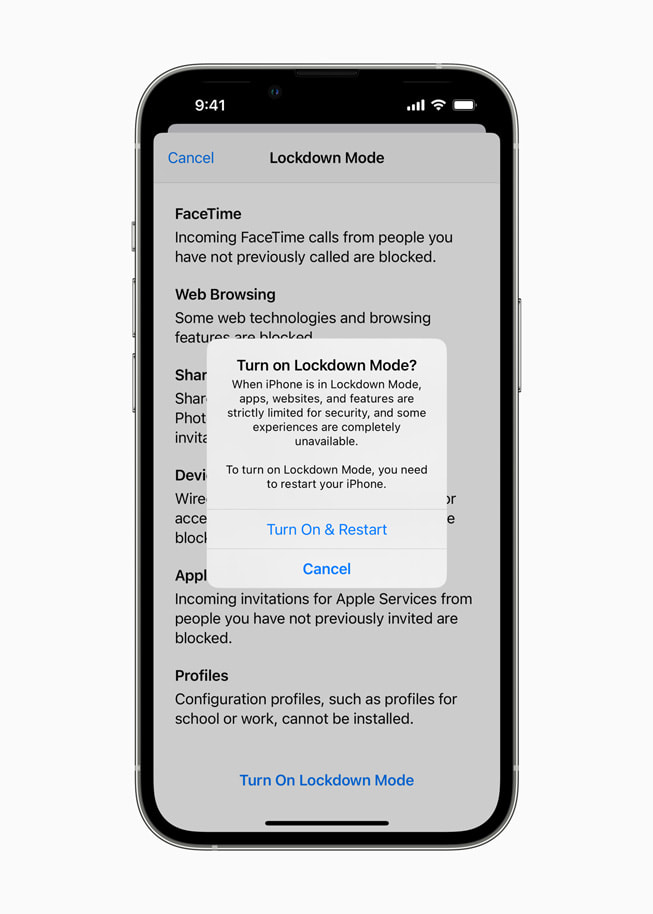
Apple unveils ‘Lockdown Mode’ to protect iPhone users from Pegasus spyware

Apple has recently unveiled two initiatives to help protect users who may be personally targeted by some of the most sophisticated digital threats, such as those from private companies developing state-sponsored mercenary spyware.

Lockdown Mode — the first major capability of its kind, coming this fall with iOS 16, iPadOS 16, and macOS Ventura — is an extreme, optional protection for the very small number of users who face grave, targeted threats to their digital security. Apple also shared details about the $10 million cybersecurity grant it announced last November to support civil society organizations that conduct mercenary spyware threat research and advocacy.

“Apple makes the most secure mobile devices on the market. Lockdown Mode is a groundbreaking capability that reflects our unwavering commitment to protecting users from even the rarest, most sophisticated attacks,” said Ivan Krstić, Apple’s head of Security Engineering and Architecture. “While the vast majority of users will never be the victims of highly targeted cyberattacks, we will work tirelessly to protect the small number of users who are. That includes continuing to design defenses specifically for these users, as well as supporting researchers and organizations around the world doing critically important work in exposing mercenary companies that create these digital attacks.”

Lockdown Mode offers an extreme, optional level of security for the very few users who, because of who they are or what they do, may be personally targeted by some of the most sophisticated digital threats, such as those from NSO Group and other private companies developing state-sponsored mercenary spyware. Turning on Lockdown Mode in iOS 16, iPadOS 16, and macOS Ventura further hardens device defenses and strictly limits certain functionalities, sharply reducing the attack surface that potentially could be exploited by highly targeted mercenary spyware.

At launch, Lockdown Mode includes the following protections:

  • Messages: Most message attachment types other than images are blocked. Some features, like link previews, are disabled.
  • Web browsing: Certain complex web technologies, like just-in-time (JIT) JavaScript compilation, are disabled unless the user excludes a trusted site from Lockdown Mode.
  • Apple services: Incoming invitations and service requests, including FaceTime calls, are blocked if the user has not previously sent the initiator a call or request.
  • Wired connections with a computer or accessory are blocked when iPhone is locked.
  • Configuration profiles cannot be installed, and the device cannot enroll into mobile device management (MDM), while Lockdown Mode is turned on.

The Lockdown Mode capability further hardens device defenses and strictly limits certain functionalities, sharply reducing the attack surface that could potentially be exploited by highly targeted mercenary spyware.

Apple will continue to strengthen Lockdown Mode and add new protections to it over time. To invite feedback and collaboration from the security research community, Apple has also established a new category within the Apple Security Bounty program to reward researchers who find Lockdown Mode bypasses and help improve its protections. Bounties are doubled for qualifying findings in Lockdown Mode, up to a maximum of $2,000,000 — the highest maximum bounty payout in the industry.

Apple is also making a $10 million grant, in addition to any damages awarded from the lawsuit filed against NSO Group, to support organizations that investigate, expose, and prevent highly targeted cyberattacks, including those created by private companies developing state-sponsored mercenary spyware. The grant will be made to the Dignity and Justice Fund established and advised by the Ford Foundation — a private foundation dedicated to advancing equity worldwide — and designed to pool philanthropic resources to advance social justice globally. The Dignity and Justice Fund is a fiscally sponsored project of the New Venture Fund, a 501(c)(3) public charity.

“The global spyware trade targets human rights defenders, journalists, and dissidents; it facilitates violence, reinforces authoritarianism, and supports political repression,” said Lori McGlinchey, the Ford Foundation’s director of its Technology and Society program. “The Ford Foundation is proud to support this extraordinary initiative to bolster civil society research and advocacy to resist mercenary spyware. We must build on Apple’s commitment, and we invite companies and donors to join the Dignity and Justice Fund and bring additional resources to this collective fight.”

The Dignity and Justice Fund expects to make its first grants in late 2022 or early 2023, initially funding approaches to help expose mercenary spyware and protect potential targets that include:

  • Building organizational capacity and increasing field coordination of new and existing civil society cybersecurity research and advocacy groups.
  • Supporting the development of standardized forensic methods to detect and confirm spyware infiltration that meet evidentiary standards.
  • Enabling civil society to more effectively partner with device manufacturers, software developers, commercial security firms, and other relevant companies to identify and address vulnerabilities.
    Increasing awareness among investors, journalists, and policymakers about the global mercenary spyware industry.
  • Building the capacity of human rights defenders to identify and respond to spyware attacks, including security audits for organizations that face heightened threats to their networks.
  • The Dignity and Justice Fund’s grant-making strategy to research, track, and hold the enhanced cyber weapons trade accountable will be advised by an independent, global Technical Advisory Committee.

“There is now undeniable evidence from the research of the Citizen Lab and other organizations that the mercenary surveillance industry is facilitating the spread of authoritarian practices and massive human rights abuses worldwide,” said Ron Deibert, director of the Citizen Lab, a research group at the University of Toronto. “I applaud Apple for establishing this important grant, which will send a strong message and help nurture independent researchers and advocacy organizations holding mercenary spyware vendors accountable for the harms they are inflicting on innocent people.”

Crypto.com again fires hundreds of employees in 2nd round

Crypto lending exchange Crypto.com has laid off more employees in the second round and this time, the firing of employees is worse than the previous job cut, as the global crypto meltdown gets deeper.

According to a Decrypt report, the latest round of job cuts has not been announced publicly. During the call, “leadership expressed they had no intention of going public. Top management is unlikely to make an announcement as, after the June layoffs, they claimed that everyone’s job was safe, and that no more layoffs will happen,” the report said, citing sources.

According to the report, the Singapore-based company this time fired people from critical products like exchange, app and wallet. “The company is hiding the fact that they’ve laid off more than 1,000 employees even though they officially announced laying off 260,” a Crypto.com employee had said on LinkedIn.

“They’ve removed the company directory so we can’t see the numbers go down. It’s not good for morale to see that 1/3 of the invitation list on your next meeting is disabled accounts,” the employee had mentioned.

In June, Crypto.com announced it’s laying off around 260 employees, or nearly 5 per cent of its workforce. Its CEO Kris Marszalek said the company’s approach is to stay focused on executing against its roadmap and optimising for profitability.

“That means making difficult and necessary decisions to ensure continued and sustainable growth for the long term by making targeted reductions of approximately 260 or 5 per cent of our corporate workforce,” he had announced.

Netaji Death Anniversary: Bring back remains from Japan, asks Shiv Sena MP Priyanka Chaturvedi

On the death anniversary of Netaji Subhas Chandra Bose on August 18, Shiv Sena MP Priyanka Chaturvedi has written a letter to the Centre to bring back the remains of Netaji kept at the Renkoji Temple in Tokyo, Japan.
In her letter to Prime Minister Narendra Modi, she said: “As we celebrate ‘Azadi ka Amrit Mahotsav’ and pledge to take pride in our heritage as a part of the ‘Panchpran’, I am writing this letter to you in support of the request of Ms. Anita Bose Pfaff, daughter of Netaji Subhash Chandra Bose, to bring his last remains back to India.

Netaji’s statue at Renkoji temple in Tokyo where the remains of the Indian leader are preserved.

“It shall be our greatest honour to commemorate Netaji’s sacrifice and dedication towards independence of India by fulfilling his last wish of returning to the Indian soil.

“I request you to make a note of the request of Ms. Anita Bose Pfaff and expeditiously take all such diplomatic and other measures to bring Netaji home and duly acknowledge his insurmountable contributions in India’s freedom. struggle. This shall indeed be a true tribute to our forefathers who sacrificed their lives for India’s freedom.”

Netaji’s remains are kept at the Renkoji Temple in Tokyo.

CUET 4th Phase exam cancelled in 13 centres

The first and second shift examinations of the fourth phase of the CUET (UG) entrance test held on Wednesday were cancelled for 13 centres, affecting 8,693 candidates due to technical reasons, said UGC.

The new date for the examinations is likely to be August 25, said UGC Chairman M. Jagadesh Kumar.

The examination was conducted for 1,45,885 candidates in two shifts on Wednesday but cancelled due to some unavoidable technical reasons in 13 centres.

Out of 1,45,885 candidates in both shifts, Uttar Pradesh had the maximum number of candidates (44033), followed by Delhi with 25,131 students. The examinations were conducted in one centre each in Andaman and Nicobar Islands, Daman and Diu, Goa, Leh, Ladakh, Manipur, Mizoram, Puducherry and Tripura.

The entrance test was conducted across 245 cities, which even included remote cities like Navsari, Itanagar, Barpeta, Nalbari, Araria, Arrah, Begusarai, Bettiah. , Bhabua, Buxar, Jammu, Samastipur, Bilaspur, Deoghar, Kargil, Leh, Morena, Behrampur, Bhadrak, Jajpur, Jharsuguda, Sambalpur, Sri Ganganagar, Ballia, Basti, Chandauli, Ghazipur, Mau, Sonbhadra, Srinagar (Uttarakhand).

Apart from Wednesday, the fourth phase of the CUET (UG) is also to be held on Thursday and Friday. Admit cards were issued to the candidates for these examinations last week. A total of 3.72 lakh candidates will appear for the exam in the fourth phase. So far around 6.31 lakh students have appeared for the CUET (UG) examinations.

The CUET (UG) admissions will be given to undergraduate courses in a total of 91 universities, including all central universities in the country. The first phase of CUET UG examinations started on July 15. These examinations will continue till August 30.

According to the UGC chairman, most of the candidates have been given cities of their choice. Despite this, there are about 11,000 candidates who could not be given the exam centre or city of their choice. Examinations of all such students have been scheduled for August 30.

The candidates who could not appear in Phase 2 examinations held on August 4, 5, and 6 either due to technical reasons or due to cancellation of the examination centre will be allowed to appear in examinations to be held from August 24 to 30. The admit cards of these students will be issued on August 20, said the UGC.

Rajamouli’s protege Ashwin Gangaraju to direct magnum opus ‘1770’

Ashwin Gangaraju, who assisted S. S. Rajamouli in ‘Eega’ and ‘Baahubali’ and recently known for directing ‘Aakashvani’ is all set to direct the magnum opus ‘1770’, which will be based on Bankim Chandra Chatterjee’s Bengali novel ‘Anandamath’.

The producers of the film — Shhailendra Kumar, Sujayy Kuttiy, Krishna Kumar B and Suraj Sharma — released a motion poster of the film on Wednesday to mark 150 years of ‘Vande Mataram’.

“This subject was a huge challenge for me, but with legendary V Vijayendra Prasad sir writing the adapted story and screenplay, I think what we have on paper is a blockbuster cinematic experience,” says director Ashwin Gangaraju.

This year also marks 150 years of Vande Mataram, the song that appeared first in Bankim Chandra’s novel ‘Anandamath’, which almost shook the roots of the British Empire.

India’s most celebrated storyteller V Vijayendra Prasad who penned the screenplay said, “I feel that Vande Mataram was a magical word. It was a mantra that was given by Maharishi Bankim Chandra for a nation to unite against tyranny and injustice. In 1770, we dealt with the story of unknown warriors who ignited the fire of the freedom movement.”

Shhailendra Kkumar from SS1 Entertainment collaborated with Suraj Sharma from PK Entertainment and former Zee Studio head Sujayy Kuttiy and producer Krishna Kumar B to make the film.

Producer Sujoyy Kuttiy, known for making historical sagas like ‘Manikarnika-The Queen of Jhansi’ and many other prestigious films under Zee Studios, collaborated in ‘1770’ because he could see the potential in the narrative.

The film will be made in Hindi, Telugu, Tamil, Malayalam, Kannada and Bengali. The team will lock the main lead before Dussehra, and by Diwali, they will announce the cast of the film. Ashwin along with his team has started researching the period and is trying to create a visual that is unique.

BKU, SKU to resume farmers’ protest in Lakhimpur Kheri today

Both the Bhartiya Kisan Union-Tikait (BKU-Tikait) and the Samyukt Kisan Morcha (SKM) have announced that they will hold a 75-hour sit-in at Rajapur Krishi-Utpadan Mandi Samiti in Lakhimpur Kheri from Thursday to seek justice for those killed in October violence last year.

On Oct. 3, 2021, when protesters were walking on the road in Lakhimpur Kheri, they were hit and ran over from behind by a speeding SUV car and two other vehicles in a row. The protesters torched the vehicles and killed three of its occupants, while the driver of the third car fled the site. Eight people, including four farmers, were killed in the violence that erupted soon after.

Their other demands include the withdrawal of cases registered against them during the stir against the Centre’s now-withdrawn farm laws, compensation to families of farmers who died during the year-long protest and legal guarantee for the minimum support price of crops.

Bhudev Sharma, national organisation secretary of BKU-Tikait, said the farmers would demand dismissal of Union minister of state for home Ajay Kumar Mishra ‘Teni’ in connection with Tikunia violence of October 3, 2021, in which his son Ashish Mishra is the key accused.

Other demands

He added their demands also included withdrawal of cases against the four farmers, who are in jail in connection with their alleged involvement in the Tikunia violence case. Already, farmers from Punjab, Haryana, Uttarakhand and various other parts of Uttar Pradesh have started arriving in Lakhimpur to participate in the demonstration.

Apart from BKU national president Naresh Tikait and national spokesperson Rakesh Tikait, Darshan Singh Pal, Joginder Singh Ugrahan, Yogendra Yadav and other leaders of the Samyukt Kisan Morcha will participate in the sit-in.

Here’s how coffee and cigarettes are complementary

In a cell-based study, the researchers identified two compounds in coffee that directly affect certain high-sensitivity nicotine receptors in the brain. In smokers, these brain receptors can be hypersensitive after a night of nicotine withdrawal.

The recently published findings have yet to be tested in humans but are an important step toward better understanding how coffee and cigarettes affect nicotine receptors in the brain, said Roger L. Papke, Ph.D., a pharmacology professor in the UF College of Medicine. Caffeine is coffee’s feel-good ingredient for most people but smokers may get another kind of boost.

“Many people like caffeine in the morning but there are other molecules in coffee that may explain why cigarette smokers want their coffee,” Papke said.

The researchers applied a dark-roasted coffee solution to cells that express a particular human nicotine receptor. An organic chemical compound in coffee may help restore the nicotine receptor dysfunction that leads to nicotine cravings in smokers, the researchers concluded.

The findings have led Papke to a broader hypothesis: One of the compounds in brewed coffee, known as n-MP, may help to quell morning nicotine cravings.

Papke said he was intrigued by the idea that nicotine-dependent smokers associate tobacco use with coffee in the morning and alcohol in the evening. While alcohol’s effect on nicotine receptors in the brain has been thoroughly researched, the receptors’ interaction with coffee has been studied less.

“Many people look for coffee in the morning because of the caffeine. But was the coffee doing anything else to smokers? We wanted to know if there were other things in coffee that were affecting the brain’s nicotine receptors,” Papke said.

Coffee increases consumer spending, says another study

However, a global research team said customers are prone to impulsive purchases after consuming coffee, tea, or soda at retail stores or car dealerships.

About 85% of Americans consume at least one caffeinated beverage every day with coffee being the primary source of caffeine, followed by tea and soda. Caffeine is also found in energy drinks, chocolate, and in many over the counter and prescription medications.

These researchers said, “Understanding how and why caffeine consumption influences spending is important since caffeine is one of the most powerful stimulants that is both legal and widely available.”

The study finds that drinking a caffeinated beverage before shopping leads to more items purchased at the store and increased spending. Their studies also show that the effect of caffeine is stronger for “high hedonic” products such as scented candles, fragrances, décor items, and massagers and weaker for “low hedonic” products such as notebooks, kitchen utensils, and storage baskets.

Yoga awareness campaign of the Ministry of Ayush with the help of human size Yoga mascots in the run up to the International Day of Yoga, at Metro Walk Mall, Rohini, in New Delhi on June 10, 2017.(PIB Photo)

Caffeine also impacted the types of items bought at the stores. The group that took in caffeine bought more hedonic (enjoyable/fun) items such as scented candles and fragrances. However, there was very little difference between the two groups with regard to utilitarian purchases such as utensils and storage baskets. Also, the effects of caffeine on spending hold for those who drink a little over two cups of coffee (or less) daily and is weakened for heavy coffee drinkers.

“Overall, retailers can benefit financially if shoppers consume caffeine before or during shopping and that the effects are stronger for high hedonic products. This is important for retailers to factor in to determine the proportion of hedonic products in their stores. Policy makers may also want to inform consumers about the potential effects of caffeine on spending,” conclude the researchers.


Sri Lanka former President Gotabaya Rajapaksa to return home on Aug 24

It’s back to normal in Sri Lanka as former President Gotabaya Rajapaksa, who fled the country following protests against economic crisis in July is all set to return on August 24. Sri Lanka is still facing unprecedented economic crisis.

This was confirmed by former Ambassador to Sri Lanka and Rajapaksa’s cousin Udayanga Weeratunga, who said that the former President would return to the country.

“Gotabaya should return to the country and people will welcome him but he would not continue in politics as he is not suitable,” Weeratunga, who was critical of the role of Gotabaya as a President, told media.

After protesters stormed President’s house on July 9, Gotabaya left the palace and later fled to the Maldives and then to the Singapore. He later entered Thailand last week. However, no country was ready to provide asylum, nor any request thereof was made, according to local reports.

The Thailand government is the latest to deny reports that Rajapaksa had sought asylum there. The Thailand Foreign Ministry said it received a request from Rajapaksa to visit the country but no request for asylum was made.

“Thailand saw no problem with Rajapaksa entering on a diplomatic passport, which would allow him to stay 90 days,” Thailand Foreign Ministry had stated.

Festive Season: Fixed Deposit rates hiked by banks

As festive season is approaching, all Indian banks from State Bank of India to Kotak Mahindra Bank, have raised their fixed deposit rates by 15 to 50 basis points.

Bulk deposit rates have been increased by 25-50 basis points for a period of one year and more than one year deposit rates have gone up to 75-125 basis points.

The hike in deposit rates is in line with the Reserve Bank of India’s (RBI) 50 basis points hike in repo rate in the month of August. Accordingly, banks have also increased their FD rates, just as the festive season begins.

The largest state-owned bank, State Bank of India, increased its deposit rate by 15 basis points on FDs maturing between 180 days and 210 days from 4.40 per cent to 4.55 per cent.

Indian Overseas Bank increased deposit rates by 10 basis points for 444 days and three years and above periods for the retail term deposits.

Indian Bank and Punjab National Bank have hiked their deposit rates by 5-15 basis points, while the private HDFC Bank has increased interest rates by around 15 basis points on fixed deposits greater than Rs 5 crore in August.

ICICI Bank increased interest rates on fixed deposits of Rs 2 crore to Rs 5 crore in August.

Kotak Mahindra Bank has also increased rates by 15 basis points for select tenures for deposits up to Rs 2 crore, CareEdge data showed.

“Going forward, banks are expected to raise deposit rates for boosting deposits to support this rising credit offtake given that liquidity is narrowing in the banking system,” said Sanjay Agarwal, Senior Director, CareEdge.