Not just chemotherapy, now phototherapy is here for cancer treatment [Details]

One approach to treating cancer is photodynamic therapy using photo-uncaging systems, in which light is used to activate a cancer-fighting agent in situ at the tumor. However, suitable agents must be stable under visible light, have an anti-tumor effect in low-oxygen environments, and have the ability to be activated by low-energy tissue-penetrative red light – a combination of properties that is difficult to achieve. Now, a team from The Institute of Industrial Science at The University of Tokyo has developed a new platform that uses, for the first time, organorhodium(III) phthalocyanine complexes to achieve this combination of traits.

Conventional photodynamic techniques depend on the formation of reactive oxygen species to destroy tumor cells, but many tumors contain environments that lack oxygen. Photo-uncaging systems, where the agent is administered in an inactive form and then activated, or “uncaged”, in the location of the tumor, address this issue. They uncage alkyl radicals, which are known to be capable of inducing cell death both with and without the presence of oxygen. Alkyl radicals are converted into terminal aldehydes in the presence of oxygen, and these terminal aldehydes can also induce cell death. The team used molecules called “organorhodium(III) phthalocyanine (Pc) complexes” to develop, for the first time, a novel platform for photo-uncaging therapy.

Researchers from The Institute of Industrial Science, The University of Tokyo have developed a streamlined photo-uncaging system for photodynamic cancer therapy, using a pulse of light for tumor-specific activation of a cancer-fighting agent/CREDIT
Institute of Industrial Science, The University of Tokyo

“The organorhodium(III) phthalocyanine (Pc) complexes we developed are highly stable under ambient light during the processes of synthesis, purification, and measurement, but can be activated by a laser that gives out nanosecond pulses of red light,” explains lead author Kei Murata. These nanosecond-pulsing lasers (pulsing for a billionth of a second) are relatively easy for medical staff to handle.

They went on to show that the compounds that were released after the organorhodium(III) phthalocyanine (Pc) complexes were activated showed toxicity to HeLa cells, a cell line developed from cancer, indicating that these compounds would have the ability to fight cancer if released inside a tumor.

“Our new technology could allow the photochemical generation of a wide variety of alkyl radicals and aldehydes, making possible the site-selective release of various bioactive molecules,” says senior author Kazuyuki Ishii. As an improvement on other photo-uncaging systems, it opens an exciting new avenue for the treatment of cancer by phototherapy.

Electronic health records: Quick access to patient’s records improves patient care

When a patient gets transferred from a hospital to a nearby specialist or rehabilitation facility, it is often difficult for personnel at the new facility to access the patient’s electronic health records – which includes important patient-specific information such as their medication history and allergies. This lack of electronic compatibility often leads to wasteful and expensive duplication of tests, X-rays and paperwork that can interfere with the treatment of patients.

A recent study at the University of Missouri highlights how the use of electronic health records have resulted better quality of care – which can direct the next steps of government programs to ensure hospitals use electronic health records in a way that promotes interoperability, or the ability for various health care organizations to quickly access a patient’s records, reduce waste and speed up decision-making to improve patient health outcomes.

So far, the adoption and implementation of electronic health records has been a bumpy road, said Kate Trout, assistant professor in the MU School of Health Professions and lead author on the study. Electronic health records have widely been cited in research literature as the most cumbersome technology ever implemented in the health care industry.

“They have the potential to be very helpful, but in practice they tend to be very disruptive because it’s time consuming to train personnel how to use them. They’re expensive, and there’s always new complicated updates and new forms that come out, and there is often a lack of interoperability for the data to be shared among different health care organizations,” Trout said. “Given the massive national investments, we wanted to see if electronic health records are being utilized in a meaningful way to promote interoperability and ultimately improve quality of care.”

electronic health records/University of Missouri

More than $30 billion has been invested by the federal government in the adoption and use of electronic health records by health care organizations in an attempt to improve the quality of care delivered to patients.

In 2011, Centers for Medicare and Medicaid established the “Meaningful Use” program – now known as the “Promoting Interoperability Program” – which offers financial incentives to health care providers who effectively utilize electronic health records in a way that promotes information sharing, public health reporting and interoperability.

Trout analyzed the impact of electronic health records on mortality rates for patients with various medical procedures and conditions. More than 5 million patients in 300 U.S. hospitals were included in the study, which merged large datasets from the electronic health records, the American Hospital Association and Centers for Medicare and Medicaid.

Three main categories emerged:

  1. hospitals that meet the “Meaningful Use” requirements with their electronic health records,
  2. hospitals that fully implement electronic health records but not in a way that meets the “Meaningful Use” requirements, and
  3. hospitals that have either none or only partially implemented electronic health records.

Trout found that the hospitals that meet the “Meaningful Use” requirements were able to improve quality of care and reduce patient mortality rates to a greater extent than hospitals in the other two groups. While the results show some optimism, Trout cautions that more still needs to be done, including the need to analyze the impact of interoperability and advanced electronic health record functions on quality of care.

“This research highlights the importance of using electronic health records in a way that promotes interoperability to streamline processes, speed up decision-making, reduce wasted time and ultimately improve patient health outcomes,” Trout said. “Ideally, the United States could implement one standardized electronic health records system for everyone to ensure compatibility, so policy makers can hopefully benefit from this research.”

Trout added that with the use of data mining and analytics, electronic health records can be better used going forward to potentially identify patient characteristics that put them at higher risks for possible infections or other conditions.

healthcare

“With this information, are there alerts we can put in after a surgery to ensure we follow up at critical points in time?” Trout said. “Are there certain patient populations that we can use the data to catch them earlier and make sure we give them extra care and not just put them through the same routine protocols as everyone else? That is how we move away from only focusing on implementing the technology and progress toward encouraging innovative ideas that ultimately improve patient health outcomes.”

Trout said this research can be particularly useful for rural hospitals that historically have less resources and lag behind their urban counterparts in adopting health technology like telehealth and electronic health records. There have been many closures of rural hospitals, an issue that has been worsened by the COVID-19 pandemic, and rural patients tend to have more co-morbidities and worse health outcomes.

“I am passionate about helping vulnerable, underserved populations, and our personal health is often tied to where we live and various social determinants of health,” Trout said. “Those ideas are not incorporated into our clinical data yet, but they should be going forward. My overall goal is to harness the data in a way that we can hopefully start to spend less and get more.”

Mars lander InSight’s power diminishing fast, end of mission in sight?

InSight, which has hit headlines this week with the realtime recording of sound from the Mars when meteoroids struck Mars’ surface at four places since its landing on the Red Planet in November 2018, is nearing the end of its mission by mid-2023.

The first NASA mission to explore Mars’ deep interior, InSight rover landed on Mars surface on Nov. 26, 2018, in the Elysium Planitia region and collected enormous data over the past four years.

To its credit, the lander has detected more than 1,300 marsquakes since touching down on Mars, providing information that has allowed scientists to measure the depth and composition of Mars’ crust, mantle, and core.

As power on the spacecraft diminishes, the InSight team hopes to maximize the science and increase the possibility of recording additional marsquakes.

However, the lander achieved a milestone when NASA released the sound of a meteoroid striking Mars that was captured by its Reconnaissance Orbiter’s High Resolution Imaging Science Experiment (HiRISE) camera. The sound resembled like a “bloop” due to a peculiar atmospheric effect and the sound can be heard three times.

In addition, the InSight lander has provided visuals of three craters created between 2020 and 2021, ranging between 53 and 180 miles (85 and 290 kilometers) at Elysium Planitia.

It has proved a point that Mars has escaped from many such meteoroids as its atmosphere is just 1 per cent as thick as Earth’s, and several meteoroids pass through it without disintegrating, according to NASA. InSight’s team also said other impacts may have been obscured by noise from wind or by seasonal changes in the atmosphere.

The data helps NASA scientists to know the impact rate and estimate the age of different surfaces by counting its impact craters. The more they find, the older is the surface.

Auto shutdown of seismometer deferred

Initially, the lander was to automatically shut down the seismometer, its last operational science instrument by the end of June in order to conserve energy, surviving on what power its dust-laden solar panels can generate until around December.

Now, the team plans to program the lander to keep the seismometer operate three more months though batteries get discharged sooner and cause the spacecraft to run out of power soon. The team hopes that it might enable the seismometer to detect additional marsquakes.

“InSight hasn’t finished teaching us about Mars yet,” said Lori Glaze, director of NASA’s Planetary Science Division in Washington. “We’re going to get every last bit of science we can before the lander concludes operations.”

This collage shows three other meteoroid impacts that were detected by the seismometer on NASA’s InSight lander and captured by the agency’s Mars Reconnaissance Orbiter using its HiRISE camera. / NASA/JPL

As of September 10, 2022, InSight was generating an average of 420 watt-hours of energy per Martian day, or sol. The tau, or level of dust cover in the atmosphere, was estimated at .80 (typical tau levels outside of dust season range from 0.6-0.7).

All instruments but the seismometer have already been powered down. Like other Mars spacecraft, InSight has a fault protection system that automatically triggers “safe mode” in threatening situations and shuts down all but its most essential functions, allowing engineers to assess the situation. Low power and temperatures beyond pre-determined limits can trigger safe mode.

Seisomometer helps detect more Marsquakes

To enable the seismometer to continue to run for as long as possible, the mission team is turning off InSight’s fault protection system. While this will enable the instrument to operate longer, it leaves the lander unprotected from sudden, unexpected events that ground controllers wouldn’t have time to respond to.

“The goal is to get scientific data all the way to the point where InSight can’t operate at all, rather than conserve energy and operate the lander with no science benefit,” said Chuck Scott, InSight’s project manager at NASA’s Jet Propulsion Laboratory in Southern California.

Railway Protection Force (RPF) celebrates its 38th Raising Day

The Railway Protection Force (RPF) celebrated its 38th Raising Day on 20th September 2022 by organizing a parade for the first time at the central level at Jag Jeewan Ram RPF Academy, Lucknow. This is the first time that a National Level Parade of RPF was organized outside New Delhi. The choice of venue at the Jagjivan Ram RPF Academy at Lucknow – the Centralized Training Institute of RPF and the alma mater of the officers of the Force recruited through the civil service exam, assumes notable significance.

Railway Protection Force (RPF) celebrated its 38th Raising Day

The Union Minister of State for Railways and Textiles, Smt. Darshana Vikram Jardosh, graced the occasion as the Chief Guest and took the salute of the Parade. The programme was attended by Shri Brij Lal, MP, Rajyasabha, senior officers of Central Armed Police Forces, State Police, various Government Departments, Railways and other dignitaries.

The Minister of State for Railways presented the ‘President’s Police Medal for Distinguished Service’, ‘Indian Police Medal for Meritorious Service’, ‘Sarvottam Jeevan Raksha Padak’, ‘Uttam JeevanRaksha Padak’ and ‘ Jeevan Raksha Padak’ to 23 RPF personnel, including award of Sarwottam Jeewan Raksha Padak posthumously to Late Shri Gyan Chand, Head Constable RPF NCR who laid down his life at the altar of duty while saving a lady who had jumped in front of a moving train with intention to commit suicide. The force remembered Shri Gyan Chand with tearful eyes and chest swelling with pride.

The Chief Guest inaugurated and hoisted a 100 feet high Monumental National Flag at the Academy Campus and unveiled and dedicated the installation of a Railway Coach with Engine for train intervention training. The renovated main-hall of the Academy, which has now been air-conditioned was also inaugurated by the Minister. A Special “Azadi ka Amrit Mahotsav” Edition of the “Rail Sainik”, the quarterly e-magazine of RPF was released on the occasion.

Railway Protection Force (RPF) celebrated its 38th Raising Day

The Minister of State for Railways praised the poise, turnout and march of the contingent. In her speech, she appreciated the role of RPF in ensuring safe travel for women passengers. She heaped fulsome praise on Meri Saheli teams for providing security to women traveling alone in long distance trains. She outlined the prominent role of training and skill up gradation in improving the performance of any organization and announced sanction of Rs 55 Crores for enhancing training facilities in RPF.

Smt. Jardosh also announced setting up of a skill up-gradation training centre in the premises of 3rd Battalion RPSF, Lucknow for up-gradation of skills of family members of RPF personnel, especially ladies at the cost of Rs 3 Crores. Further, she announced construction of rest shelters cum mobilization halls for lady RPF train escorting personnel at 75 locations across the country.

The Director General, RPF, Shri Sanjay Chander, welcomed the Minister and outlined the various new initiatives taken by the force to provide a safe and secure train travel to the passengers. He stated that the RPF is making use of technology in various spheres of its working to ensure an optimal utilization of the manpower. The force has been on the forefront in providing assistance to the needy passengers, the elderly and the children. The RPF has been doing commendable work in preventing Human Trafficking, Transport of Narcotics, Hawala Money, Prohibited Wildlife and other illegal activities on trains and stations. He pointed out that we have entered the Amrit Kaal which would last till 2047 during which we have to work with our heart and soul to take India to the pinnacle of glory that she deserves. The vision 2047 is the roadmap towards such a lofty ideal. He mentioned the vision 2047 of the force which will include innovation, use of technology, optimum utilization of resource to increase the response, reach and effectiveness of the force. He underlined that the goal of the force is Sewa Hi Sankalp and all members of the force, from Constable to DG, have to work towards reinforcing its service commitment.

The Railway Protection Force was constituted by an Act of Parliament in 1957 for providing security to Railway property. Subsequently, the force was empowered to enquire, arrest and prosecute the offenders involved in unlawful possession of railway property in 1966. Over the years, it was felt that the force needed to be given the status of “An Armed Force of the Union” and finally the status was bestowed upon the force on 20th September 1985 by amending the RPF Act by the Parliament. Therefore, 20th September is celebrated every year as the Raising Day of RPF by members of the force and their families.

The Raising Day is an important milestone in the growth of a force and celebrated with festive spirit by members of the force where they share their happiness with the public and reaffirm their commitment to serve them and work for the overall public good.

Earlier the Raising day was celebrated by organizing parades and other functions at the zonal, divisional and battalion levels. However, from this year it has been decided to organize only one parade at the central level to symbolize the national character of the force.

Central Bureau of Narcotics destroys 1,032 hectares of illicit cannabis (ganja) cultivation in Himachal Pradesh

In one of the biggest destruction operations conducted over 2 weeks in Himachal Pradesh, officers of Central Bureau of Narcotics (CBN) destroyed 1032 hectares (12,900 bighas) of illicit cannabis (ganja) cultivation.

On receiving specific intelligence about illicit cannabis (ganja) cultivation in Himachal Pradesh, teams of officers of CBN were formed and dispatched. Officers of CBN verified the intelligence and further carried out physical surveys resulting in detection of more areas of illicit cultivation. Subsequently, destruction operation was started with support of District Administration, Forest Department and the Police.

Narcotics Bureau destroyed 1032 hectares of illicit cannabis (ganja) cultivation in Himachal Pradesh

During this operation, two-pronged approach of creating awareness among villagers along with enforcement was adopted by officers of CBN.

Community mobilisation was adopted by sensitising villagers about adverse effects of drugs on body and mind. Threats that drugs tend to pose to the future of youth and children were explained. Relevant penal provisions of NDPS act were also explained to Village Pradhans and members, consequent to which resolutions were passed by villagers to destroy illicit cannabis plantations around the villages. Villagers assisted officers of CBN to destroy illicit cultivation by actively taking part in exercise under supervision of CBN officers.

4 teams of CBN Officers were simultaneously allotted different areas of operation and given the flexibility to work jointly in certain areas with large illicit cultivation of cannabis. Officials from Forest department, Revenue & the Police department also accompanied teams during operations in light of sensitive nature of operation. It is noteworthy to mention that since this is a season of apple & pomegranate harvesting, labour availability was a problem but it failed to deter the grit and determination of CBN teams which swung into action and conducted destruction operation in hostile terrain with steep slopes and rains. The officers climbed daily up to 11,000 feet above sea level and even camped in sensitive areas to expedite the destruction of illicit cultivation of cannabis. Later on, officers from DRI (Directorate of Revenue Intelligence) also joined this operation.

GPS coordinates were used to tag / mark the sensitive locations and DRONES were used for detection and surveillance of the illicit cannabis (ganja) cultivation areas which resulted in greater success of the entire operation.

Narcotics Bureau destroyed 1032 hectares of illicit cannabis (ganja) cultivation in Himachal Pradesh

“Mission Crackdown shall continue with same vigour in other parts of the country and CBN is fully committed against the Drug Menace” said Shri Rajesh F Dhabre, Narcotics Commissioner, Central Bureau of Narcotics.

Active support in terms of logistics and manpower was provided throughout the operation by the Office of Dist. Collector, CCF and SP Kullu and DRI.

Narcotics Bureau destroyed 1032 hectares of illicit cannabis (ganja) cultivation in Himachal Pradesh

The Central Bureau of Narcotics (CBN) is the Apex Drug Law Enforcement Agency under Department of Revenue, Ministry of Finance, Government of India tasked with identification and destruction of illicit cultivation of cannabis and Opium along with its other responsibilities.

Narcotics Bureau destroyed 1032 hectares of illicit cannabis (ganja) cultivation in Himachal Pradesh

CBN has conducted destruction operation in many states like West Bengal, Jammu & Kashmir, Arunachal Pradesh, Manipur, Uttarakhand etc., resulting in destruction of more than 25,000 hectares of illicit cultivation of Opium and Cannabis over the years. CBN had also destroyed approximately 3,600 hectares of Illicit Opium in Arunachal Pradesh in the month of February and March this year. CBN intends to continue such destruction operations of illicit cultivation across India in future as well.

People who are ‘night owls’ face greater risk of diabetes: Study

Are you an early bird or a night owl? Our sleep cycles could influence our risk of diseases, such as type 2 diabetes and heart disease, said a new study published in Experimental Physiology.

As sleep cycles cause metabolic differences and alter our body’s preference for energy sources, those who stay up later have a reduced ability to use fat for energy, meaning fats may build-up in the body and increase risk for type 2 diabetes and cardiovascular disease, said the study

The metabolic differences relate to how well each group can use insulin to promote glucose uptake by the cells for storage and energy use. People who are ‘early birds’ or individuals who prefer to be active in the morning rely more on fat as an energy source and are more active during the day with higher levels of aerobic fitness than ‘night owls’.

On the other hand, ‘night owls’ who prefer to be active later in the day and night use less fat for energy at rest and during exercise, found the study

Researchers from Rutgers University, New Jersey classified participants (n=51) into two groups (early and late) based on their ‘chronotype’ – our natural propensity to seek activity and sleep at different times. They used advanced imaging to monitor body vitals as well as insulin sensitivity and breath samples to measure fat and carbohydrate metabolism.

After monitoring them for a week, they were tested while at rest before completing two 15-minute bouts of exercise: one moderate and one high intensity session on a treadmill. Aerobic fitness levels were tested through an incline challenge where the incline was raised 2.5% every two minutes until the participant reached a point of exhaustion.

Researchers found that early birds use more fat for energy at both rest and during exercise than night owls. Early birds were also more insulin sensitive. Night owls, on the other hand, are insulin resistant, meaning their bodies require more insulin to lower blood glucose levels, and their bodies favoured carbohydrates as an energy source over fats.

This group’s impaired ability to respond to insulin to promote fuel use can be harmful as it indicates a greater risk of type 2 diabetes and/or heart disease. The cause for this shift in metabolic preference between early birds and night owls is yet unknown and needs further investigation.

Senior author Professor Steven Malin of Rutgers University said: “A sensitive or impaired ability to respond to the insulin hormone has major implications for our health. This observation advances our understanding of how our body’s circadian rhythms impact our health. ”

The study also found that early birds are more physically active and have higher fitness levels than night owls.

Facemask can detect coronavirus in air droplets or from infected person; wearers gets alert via smartphone[Details]

Scientists have created a face mask that can detect common respiratory viruses, including influenza and the coronavirus, in the air in droplets or aerosols. The highly sensitive mask, presented September 19 in the journal Matter, can alert the wearers via their mobile devices within 10 minutes if targeted pathogens are present in the surrounding air.

“Previous research has shown face mask wearing can reduce the risk of spreading and contracting the disease. So, we wanted to create a mask that can detect the presence of virus in the air and alert the wearer,” says Yin Fang, the study’s corresponding author and a material scientist at Shanghai Tongji University.

Respiratory pathogens that cause COVID-19 and H1N1 influenza spread through small droplets and aerosols released by infected people when they talk, cough, and sneeze. These virus-containing molecules, especially tiny aerosols, can remain suspended in the air for a long time.

Fang and his colleagues tested the mask in an enclosed chamber by spraying the viral surface protein containing trace-level liquid and aerosols on the mask. The sensor responded to as little as 0.3 microliters of liquid containing viral proteins, about 70 to 560 times less than the volume of liquid produced in one sneeze and much less than the volume produced by coughing or talking, Fang says.

Facemask

The team designed a small sensor with aptamers, which are a type of synthetic molecule that can identify unique proteins of pathogens like antibodies. In their proof-of-concept design, the team modified the multi-channel sensor with three types of aptamers, which can simultaneously recognize surface proteins on SARS-CoV-2, H5N1, and H1N1.

Once the aptamers bind to the target proteins in the air, the ion-gated transistor connected will amplify the signal and alert the wearers via their phones. An ion-gated transistor is a novel type of device that is highly sensitive, and thus the mask can detect even trace levels of pathogens in the air within 10 minutes.

“Our mask would work really well in spaces with poor ventilation, such as elevators or enclosed rooms, where the risk of getting infected is high,” Fang says. In the future, if a new respiratory virus emerges, they can easily update the sensor’s design for detecting the novel pathogens, he adds.

coronavirus

Next, the team hopes to shorten the detection time and further increase the sensitivity of the sensor by optimizing the design of the polymers and transistors. They are also working on wearable devices for a variety of health conditions including cancers and cardiovascular diseases.

“Currently, doctors have been relying heavily on their experiences in diagnosing and treating diseases. But with richer data collected by wearable devices, disease diagnosis and treatment can become more precise,” Fang says.

CUET PG Result 2022 to be out soon, where to check?

Following last week’s announcement of result for CUET-UG, the National Testing Agency (NTA) will release Central Universities Entrance Test Postgraduate (CUET PG) result 2022 today or tomorrow, reports said.

Candidates can check their CUET PG 2022 results through the official website of NTA CUET – cuet.nta.nic.in. There are 42 central universities participating in CUET PG 2022 for the academic session 2022-2023. The top colleges accepting CUET PG 2022 scores are mentioned in detail below.

Along with the CUET PG 2022 results, the NTA will also release the CUET 2022 final answer key following the closure of challenging was Sept 16. Candidates must visit the results page link and enter their roll number, date of birth on the CUET PG login page to check their results.

The CUET PG 2022 result will be published as a scorecard. The scorecard will include the candidate’s qualifying status, rank, sectional, and total marks. The CUET PG 2022 exam was conducted on September 1, 2, 3, 4, 5, 6, 7, 9, 10, 11 and 12, 2022.

Chinese spy working at Twitter? FBI asks company after whistleblower reveals it

Chinese rights activists overseas have said that they are concerned but unsurprised at recent allegations that an agent of the Chinese Communist Party (CCP) was working at Twitter, saying such infiltration is part of Beijing’s global influence operation, media reports said.

The FBI informed Twitter of at least one Chinese agent among its employees, according to US Senator Chuck Grassley, while hacker and whistleblower Peiter Zatko said the company’s lax security sparked fears that personal data on Chinese users was being collected by authorities in China, RFA reported.

Zatko, Twitter’s former head of security, levelled the allegations during his testimony before the Senate Judiciary Committee, detailing internal clashes between some who sought advertising revenue from China, and others who were concerned about doing business inside China amid rising geopolitical tensions, the report said.

“This was a big internal conundrum,” Zatko told the hearing, adding that Twitter appeared reluctant to turn away from China. “In a nutshell, if we were already in bed, it would be problematic if we lost that revenue stream,” he said.

Zatko said the FBI had told the company that China’s secret service, the Ministry of State Security, had an agent on the payroll, RFA reported.

A Twitter spokesperson said the microblogging platforms hiring process was independent of foreign influence, and that access to personal data was subject to stringent controls, adding that Zatko’s allegations were “riddled with inconsistencies and inaccuracies.”

France-based commentator Wang Longmeng said the CCP has long targeted Western social media platforms to wage its overseas influence campaigns, and that some of the company’s regional executives have close ties to the CCP, including Kathy Chen, RFA reported.

Chen’s 2016 appointment as Twitter’s managing director for Greater China raised concerns in particular, as it emerged she had served as a software engineer in the People’s Liberation Army’s strategic missile force.

“Kathy Chen, who had a military background, joined [the company], then Fei-fei Li became an independent director,” Wang said. “The CCP’s infiltration of Western media is one of its key strategies.”

“It’s not surprising that the whistleblower revealed there are Chinese agents at Twitter, because there have been suspensions and deleted accounts, and yet Twitter still allows CCP diplomats to spread rumors and lies,” he said, RFA reported.

While China bans Twitter, Facebook and other US social media firms, government agencies and diplomats use the platforms to reach an international audience.

Prince Harry not singing national anthem ‘God save the King’? Here’s the truth

The funeral of Queen Elizabeth II at the Westminster Abbey on Monday raised questions on Prince Harry for not singing in chorus the national anthem “God save the King”.

Besides the British royal family, 2,000 state heads gathered at Westminster Abbey for the funeral and they reportedly paid tribute to the monarch by singing ‘God Save the King’.

But some netizens were quick to point out on social media that Prince Harry didn’t join the royals in singing the anthem and the claim had a video of the Prince seemingly not singing.

The video shows the Duke of Sussex looking around and not syncing words frequently as the new anthem gets changed from the Queen to the King. Many Twitter users accused the Prince of being “disrespectful”.

One user wrote, “Prince Harry not singing the national anthem.” Others expressed their disappointment with Prince Harry’s actions.

Before the debate heated up, others were quick to point out that Prince Harry was, indeed, seen with lips moving. “Give him a chance. It’s changed since the last time he sang it – he hasn’t learnt the new words yet,” wrote a user. Many others said they could see him singing clearly.

“I can see Harry’s lips moving. He’s obviously not singing like he’s at karaoke, but he clearly forms the “Qu” sound and he shuts his mouth at the end. You’re a hateful non,” wrote another. Whoever sees the video (above) can make out that he is not singing loudly but at the end made lips sync with the tune.

A third user joined the debate saying, “Edward wasn’t singing either. I think it’s sometimes hard to sing when you’re emotional.”

Harry was seen sitting behind his father, King Charles III, and the Queen Consort Camilla. His wife Meghan Markle was seen by his side throughout the service.

Mars lander records sound of meteoroids hitting Red Planet (Listen Now)

The Mars lander’s seismometer has picked up vibrations from four separate impacts in the past two years, which is the first of its kind to have recorded seismic and acoustic waves from an impact on the Red Planet.

NASA’s InSight lander has detected seismic waves from four space rocks that crashed on Mars in 2020 and 2021, detected by the spacecraft’s seismometer since its landing in 2018.

A new paper published Monday in Nature Geoscience details the impacts, which ranged between 53 and 180 miles (85 and 290 kilometers) from InSight’s location, a region of Mars called Elysium Planitia.

The first of the four confirmed meteoroids – the term used for space rocks before they hit the ground – made the most dramatic entrance: It entered Mars’ atmosphere on Sept. 5, 2021, exploding into at least three shards that each left a crater behind.

Credit: NASA/JPL-Caltech

Then, NASA’s Mars Reconnaissance Orbiter flew over the estimated impact site and confirmed the  location using its black-and-white Context Camera to find three darkened spots on the surface. After locating these spots, the orbiter used the High-Resolution Imaging Science Experiment camera, or HiRISE, to get a color close-up of the craters.

“After three years of InSight waiting to detect an impact, those craters looked beautiful,” said Ingrid Daubar of Brown University, a co-author of the paper and a specialist in Mars impacts. Finally, scientists confirmed three other impacts had occurred on May 27, 2020; Feb. 18, 2021; and Aug. 31, 2021.

Researchers have puzzled over why they haven’t detected more meteoroid impacts on Mars. The Red Planet is next to the solar system’s main asteroid belt, which provides an ample supply of space rocks to scar the planet’s surface. Because Mars’ atmosphere is just 1% as thick as Earth’s, more meteoroids pass through it without disintegrating.

InSight’s seismometer has also detected over 1,300 marsquakes. Provided by France’s space agency, the Centre National d’Études Spatiales, the instrument is so sensitive that it can detect seismic waves from thousands of miles away. But the Sept. 5, 2021, event marks the first time an impact was confirmed as the cause of such waves.

InSight’s team suspects that other impacts may have been obscured by noise from wind or by seasonal changes in the atmosphere. But now that the distinctive seismic signature of an impact on Mars has been discovered, scientists expect to find more hiding within InSight’s nearly four years of data.

Listen to a Meteoroid Hitting the Red Planet

The sound of a meteoroid striking Mars – created from data recorded by NASA’s InSight lander – is like a “bloop” due to a peculiar atmospheric effect. In this audio clip, the sound can be heard three times: when the meteoroid enters the Martian atmosphere, explodes into pieces, and impacts the surface.

The four meteoroid impacts confirmed so far produced small quakes with a magnitude of no more than 2.0. Those smaller quakes provide scientists with only a glimpse into the Martian crust, while seismic signals from larger quakes, like the magnitude 5 event that occurred in May 2022, can also reveal details about the planet’s mantle and core.

But the impacts will be critical to refining Mars’ timeline. “Impacts are the clocks of the solar system,” said the paper’s lead author, Raphael Garcia of Institut Supérieur de l’Aéronautique et de l’Espace in Toulouse, France. “We need to know the impact rate today to estimate the age of different surfaces.”

Scientists can approximate the age of a planet’s surface by counting its impact craters: The more they see, the older the surface. By calibrating their statistical models based on how often they see impacts occurring now, scientists can then estimate how many more impacts happened earlier in the solar system’s history.

InSight’s data, in combination with orbital images, can be used to rebuild a meteoroid’s trajectory and the size of its shock wave. Every meteoroid creates a shock wave as it hits the atmosphere and an explosion as it hits the ground. These events send sound waves through the atmosphere. The bigger the explosion, the more this sound wave tilts the ground when it reaches InSight. The lander’s seismometer is sensitive enough to measure how much the ground tilts from such an event and in what direction.

“We’re learning more about the impact process itself,” Garcia said. “We can match different sizes of craters to specific seismic and acoustic waves now.”

The lander still has time to study Mars. Dust buildup on the lander’s solar panels is reducing its power and will eventually lead to the spacecraft shutting down. Predicting precisely when is difficult, but based on the latest power readings, engineers now believe the lander could shut down between October of this year and January 2023.

Britain’s Queen Elizabeth II laid to rest, next to her beloved husband Prince Phillip after grand farewell

Sep 19 (IANS) Britain’s Queen Elizabeth II on Monday afternoon began her last journey- 25 mile stretch westward from Westminster Abbey in central London to Windsor Castle in the county of Berkshire, where she spent much of her time in recent years.

There she was to be laid to rest at the royal chapel next to her beloved husband Prince Phillip, who predeceased her in 2021. Only members of the British royal family, led by her successor King Charles III, attended the private ceremony.

Earlier, in an hour long church service at the Abbey, which has existed and expanded since 960 AD and is located in central London, Elizabeth, who reigned for 70 years, was given the grandest of final farewells. She had got married at the same Abbey 75 years ago.

President of India Droupadi Murmu was present at the proceedings. Compared to other Commonwealth heads of government or state, she unassumingly arrived early at the venue, wearing a dark blue silk sari and a cardigan. She took her appointed seat in the midst of 2,000 assembled invitees. On Sunday evening, she attended a reception hosted by Charles and Queen Consort Camilla for 500 foreign dignitaries. Charles greeted the President warmly and was seen engaged in a brief conversation with her.

Queen Elizabeth II/Ians

In an Anglican Christian service, with leaders of multiple religions in the audience, Baroness Patricia Scotland, Secretary General of the Commonwealth – an organisation near and dear to Elizabeth – read the first lesson from Paul’s first letter to the Corinthians about the ressurrection of Jesus Christ. She was followed by the British Prime Minister Liz Truss, who read a passage from John, which said: ‘Let not your heart be troubled…’

Then spoke the Archbishop of Canterbury Justin Welby, who is the global head of the Church of England. He said: “She (Elizabeth) was present to so many, touching a multitude of lives.”

Emperor Naruhito of Japan, President Joe Biden of the US and President Emmanuel Macron of France were among a galaxy of foreign dignitaries seated either side of the south and north aisles. “I’ll miss her terribly,” said Canadian Prime Minister Justin Trudeau. Canada, Australia and New Zealand, among other territories, were among the “realms” where Elizabeth was head of state and Charles now is.

All living former British Prime Ministers and their spouses were noticeable attired in black, like most others.

On what was declared a Bank Holiday, there was no Monday morning traffic in the British capital. Sniffer dogs, though, were busy in the area around the Abbey to prevent any untoward incident.

Queen Elizabeth II/Ians

The live television coverage by BBC was projected on big screens at spacious locations around Britain. Tens of thousands camped overnight in such places to ensure they got a ringside view of the state adieu to Elizabeth. 125 cinemas in the country reportedly showed the ceremonies live as well.

200 other nations, including India, watched simulcasts of the coverage via the BBC World News channel or bbc.com. Foreign TV networks like PBS, CNN and Fox of the US and ABC of Australia, with their own anchors and studio commentators, covered the event in parallel.

The scale of global interest was unprecedented. Increasingly, from 8 a.m., accredited reporters hovered around the Abbey. This day was inevitable and had been planned for years by the royal household. Nevertheless, the organisers gave themselves 11 days’ time between Elizabeth’s death to her funeral to get it right.

At 6.30 a.m., the last of the estimated three quarter of a million mourners filed past the coffin lying in state at Westminster Hall in the Houses of Parliament opposite the Abbey. Disruptions on trains arriving in London and parts of the city’s underground system inconvenienced commuters.

Queen Elizabeth II

15 minutes before the service commenced, the coffin was ceremonially moved in a gun carriage with soldiers in accompaniment from Westminster Hall to the Abbey. Charles, his brothers Andrew and Edward, sister Anne and sons William and Harry followed the body on foot.

Finally, the coffin, with Elizabeth’s crown placed on it – as it has been for days – was carried away from the Abbey on the shoulders of soldiers in bright red tunics into a sunny courtyard, which faces London’s Parliament Square, the centrepiece of which is a statue of Mahatma Gandhi.

Back on the gun carriage, Charles and family and soldiers of various armed forces marching around it, Elizabeth embarked on her triumphant last journey via Buckingham Palace, her London home, to the green and pleasant fields of Windsor.

APSRTC to operate 1,081 special buses to clear Dasara rush; Available buses on APSRTC website

Sep 19 (IANS) The Andhra Pradesh State Road Transport Corporation (APSRTC) will operate 1,081 special buses to clear festival rush before and after Dasara.

The buses will be operated from September 29 to October 10. The state-run transport operator announced on Monday that the buses will run from Vijayawada to various places in Andhra Pradesh and also to neighbouring states.

The special buses will run from Vijayawada to Visakhapatnam, Rajamahendravaram, Kakinada, Tirupati, Rayalaseema district, Amalapuram, Bhadrachalam and other destinations in Andhra Pradesh.

Dasara:/Iana

Officials said special buses will also be operated to Hyderabad, Bengaluru, and Chennai. Most of the buses will be operated from and to Hyderabad as a large number of people living there travel to their villages in Andhra Pradesh to celebrate Dasara.

The corporation will not charge extra fare for the special buses. Last year the APSRTC had charged 1.5 times more than the normal ticket prices. It had come under criticism for charging extra.

Reservation facility will also be available for the special buses. Details of these buses will be available on APSRTC website.

APSRTC Bus/Ians

Vijayadashami is scheduled to be celebrated on October 5. Every year, lakhs of people from various cities in Cnd also Hyderabad, Bangalore and Chennai travel to their native places for the festival.

Revoked Doctor Falsified Documents to Steal $1.8 Million Under Healthcare Scheme

A federal jury convicted a Michigan man today for his role in devising and executing a $1.8 million scheme to defraud Medicare by billing for services under another doctor’s name after Medicare revoked his privileges to participate in the program.

The defendant, Dr. Kenneth Mitchell, 60, of Oakland County, Michigan, was also convicted for falsification of records designed to prevent detection of this fraud and aggravated identity theft for falsely corresponding with Medicare under the name of another physician.

According to court documents and evidence presented at trial, Mitchell was revoked from participating in the Medicare program in January 2015. Shortly thereafter, he convinced his then-partner to enroll in Medicare and assist in opening a new clinic called Urban Health Care Group PLLC.

healthcare

Once the new business was set up, Mitchell continued to bill Medicare for services just as he had prior to his revocation, only now exclusively under the name of his partner. Upon law enforcement’s discovery of this scheme, Medicare suspended payments to Urban Health Care Group PLLC.

Mitchell subsequently submitted false statements to Medicare regarding the fraud allegations (again, under his partner’s name) in an effort to undermine the government’s investigation and ensure the release of Medicare funds to the bank account he controlled.

Mitchell was convicted of one count of conspiracy to commit health care fraud and wire fraud; three counts of health care fraud; one count of falsification of records in a federal investigation; and one count of aggravated identity theft.

He is scheduled to be sentenced on Jan. 26, 2023 and faces a maximum penalty of imprisonment of 20 years for conspiracy to commit wire fraud and wire fraud, 10 years for health care fraud, 20 years for falsification of records, and two years for aggravated identity theft (to be served consecutive to any other sentence).

A federal district court judge will determine any sentence after considering the U.S. Sentencing Guidelines and other statutory factors.


Man Sentenced to 43 Years for Victimizing 1,100 Minor Girls in Sextortion Scheme

A St. Paul man was sentenced to 516 months in prison followed by a lifetime term of supervised release for victimizing more than 1,100 minor girls across the country and abroad in an extensive online sextortion scheme.

“For several years, Yue Vang victimized more than 1,000 young girls – in Minnesota and beyond – through a vicious sextortion scheme. Using popular social media apps to prey on his victims, Vang’s manipulation began with compliments and expressions of flattery, which quickly turned into threats and extortion,” said U.S. Attorney Andrew Luger.

“There are few crimes as damaging and traumatic to a young person as sextortion. Vang is a predator who targeted innocent and impressionable young girls, exploiting their innocence for pictures and videos. He robbed them of their childhood and forever altered their lives and the lives of their families,” said Michael Paul, FBI Special Agent in Charge, Minneapolis Division.

According to court documents, for at least five years, Yue Vang, 31, created and used multiple Internet applications and social media services, including Kik, Snapchat, and Skype, to communicate with hundreds of minor girls throughout the United States and elsewhere.

Vang created fake female personae to prey on vulnerable minor girls he met online in order to entice and coerce them to create sexually explicit images and videos to send to him. Vang also threatened to disseminate sexually explicit images of the minor victims to their family members, friends, and classmates, unless they created and sent him additional images and videos of themselves nude or engaging in sexually explicit conduct.

For example, in June 2016, Vang contacted a 15-year-old girl and threatened to distribute sexually explicit pictures of her to her classmates and parents to “ruin her life” unless she complied with Vang’s demands to send additional sexually explicit images and videos.

On June 2, 2022, Vang pleaded guilty to two counts of production of child pornography, one count of possession of child pornography, and one count of interstate communications with intent to extort. Vang was sentenced today in U.S. District Court before Judge Eric C. Tostrud.

To date, at least 750 minor females have been identified, although law enforcement is attempting to confirm the identity of other victims.

3 Found Guilty of Felony, Misdemeanor Related to Capitol Breach

Three men were found guilty in the District of Columbia of felony and misdemeanor offenses for their actions during the Jan. 6, 2021, Capitol breach, disrupting a joint session of the U.S. Congress.

In the 20 months since Jan. 6, 2021, more than 870 individuals have been arrested in nearly all 50 states for crimes related to the breach of the U.S. Capitol, including over 265 individuals charged with assaulting or impeding law enforcement.

The three defendants found guilty include Patrick E. McCaughey III, 25, of Ridgefield, Connecticut; Tristan Chandler Stevens, 26, of Pensacola, Florida, and David Mehaffie, 63, of Kettering, Ohio.  The verdicts followed a bench trial before U.S. District Judge Trevor N. McFadden.

According to the evidence, on Jan. 6, 2021, McCaughey, Stevens, and Mehaffie all traveled to Washington, D.C. from their respective homes and made their way on to the restricted grounds of the U.S. Capitol. McCaughey and Stevens taunted officers at the West Front, and Mehaffie yelled at nearby rioters who were hesitating to illegally cross the outer perimeter, “if we can’t fight over this wall, we can’t win this battle!”

The three defendants ultimately broke through the police line after approximately 2:30 p.m., when the line on the West Front failed under the siege of the advancing mob. Each of the defendants scaled the Southwest scaffolding and staircase, to converge together at the tunnel created by the inaugural platform structure on the Lower West Terrace of the Capitol Building.

At the Lower West Terrace, the three defendants attempted to break into the building by directing other rioters, participating in heave-hos against the police line, using riot shields stolen from the Capitol Police, and assaulting three specific officers. Mehaffie hung from an archway and shouted direction from above, and McCaughey and Stevens were key players in the melee below.

McCaughey grabbed a riot shield and used it as a weapon. Even after officers finally cleared the tunnel area, the three defendants illegally remained on Capitol grounds. He was arrested on Jan. 19, 2021, in South Salem, New York. Stevens was arrested on Feb. 5, 2021, in Pensacola, Florida. Mehaffie was arrested on Aug. 12, 2021, in Kettering, Ohio.

McCaughey was found guilty of a total of nine offenses and Stevens was also found guilty of a total of nine offenses. Mehaffie was found guilty of a total of four offenses.

McCaughey is to be sentenced on Jan. 26, 2023. Stevens will be sentenced on Jan. 13, 2023 and  Mehaffie is to be sentenced on Jan. 27, 2023. The Court will determine any sentence after considering the U.S. Sentencing Guidelines and other statutory factors.

2 dead, 9 mn people to evacuate after super typhoon hits Japan; Typhoon expected to travel across Honshu

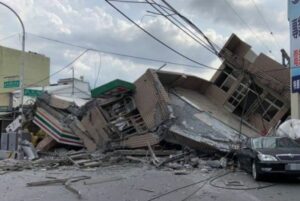
Sep 19 (IANS) At least two people were killed in Japan and some nine million others asked to evacuate from their homes after super typhoon Nanmadol, deemed to be one of the worst, made landfall in the region of Kyushu, bringing heavy rain and gales, local media reported on Monday.

In Fukuoka prefecture, a man who was believed to be on his way to find shelter from the typhoon was found collapsed and later confirmed dead, reports Xinhua news agency.

Another man was declared dead after being pulled out of a car submerged in a flooded farmland in Miyazaki prefecture, according to local authorities.

According to a Miyazaki prefectural official, a man in his 40s was reported missing after his cabin was destroyed by a landslide.

Typhoon/Ians

The 14th typhoon of the year was moving near Hagi, Yamaguchi prefecture on Monday afternoon, at a speed of some 20 km per hour.

It had an atmospheric pressure of 975 hectopascals at its centre, packing winds up to 108 kph with maximum gusts of 162 kph.

More than 70 people were injured amid the extreme weather, with bullet trains suspended in Kyushu on Monday and around 600 flights cancelled by the country’s two main airlines ANA and Japan Airlines, the local media reports said.

The typhoon is expected to travel across Japan’s largest island, Honshu through Tuesday, with the Japan Meteorological Agency continuing to issue warnings for strong winds, high tides and mudslides.

Typhoon/Ians

Tens of thousands of people spent Sunday night in emergency shelters, and almost 350,000 homes are without power.

Prime Minister Fumio Kishida has delayed a visit to New York, where he is due to give speech at the UN General Assembly, until Tuesday, to monitor the impact of the storm.

Take a deep breath, your smartphone could help measure blood oxygen levels at home [Details]

First, pause and take a deep breath.

When we breathe in, our lungs fill with oxygen, which is distributed to our red blood cells for transportation throughout our bodies. Our bodies need a lot of oxygen to function, and healthy people have at least 95% oxygen saturation all the time.

Conditions like asthma or COVID-19 make it harder for bodies to absorb oxygen from the lungs. This leads to oxygen saturation percentages that drop to 90% or below, an indication that medical attention is needed.

In a clinic, doctors monitor oxygen saturation using pulse oximeters — those clips you put over your fingertip or ear. But monitoring oxygen saturation at home multiple times a day could help patients keep an eye on COVID symptoms, for example.

In a proof-of-principle study, University of Washington and University of California San Diego researchers have shown that smartphones are capable of detecting blood oxygen saturation levels down to 70%. This is the lowest value that pulse oximeters should be able to measure, as recommended by the U.S. Food and Drug Administration.

The technique involves participants placing their finger over the camera and flash of a smartphone, which uses a deep-learning algorithm to decipher the blood oxygen levels. When the team delivered a controlled mixture of nitrogen and oxygen to six subjects to artificially bring their blood oxygen levels down, the smartphone correctly predicted whether the subject had low blood oxygen levels 80% of the time.

In a proof-of-principle study, University of Washington and University of California San Diego researchers have shown that smartphones are capable of detecting blood oxygen saturation levels down to 70%. The technique involves having participants place their finger over the camera and flash of a smartphone, which uses a deep-learning algorithm to decipher the blood oxygen levels from the blood flow patterns in the resulting video./Photo:Dennis Wise/University of Washington

“Other smartphone apps that do this were developed by asking people to hold their breath. But people get very uncomfortable and have to breathe after a minute or so, and that’s before their blood-oxygen levels have gone down far enough to represent the full range of clinically relevant data,” said co-lead author Jason Hoffman, a UW doctoral student in the Paul G. Allen School of Computer Science & Engineering. “With our test, we’re able to gather 15 minutes of data from each subject. Our data shows that smartphones could work well right in the critical threshold range.”

Another benefit of measuring blood oxygen levels on a smartphone is that almost everyone has one.

“This way you could have multiple measurements with your own device at either no cost or low cost,” said co-author Dr. Matthew Thompson, professor of family medicine in the UW School of Medicine. “In an ideal world, this information could be seamlessly transmitted to a doctor’s office. This would be really beneficial for telemedicine appointments or for triage nurses to be able to quickly determine whether patients need to go to the emergency department or if they can continue to rest at home and make an appointment with their primary care provider later.”

The team recruited six participants ranging in age from 20 to 34. Three identified as female, three identified as male. One participant identified as being African American, while the rest identified as being Caucasian.

To gather data to train and test the algorithm, the researchers had each participant wear a standard pulse oximeter on one finger and then place another finger on the same hand over a smartphone’s camera and flash. Each participant had this same set up on both hands simultaneously.

“The camera records how much that blood absorbs the light from the flash in each of the three color channels it measures: red, green and blue,” said Wang, who also directs the UC San Diego DigiHealth Lab. “Then we can feed those intensity measurements into our deep-learning model.”

Each participant breathed in a controlled mixture of oxygen and nitrogen to slowly reduce oxygen levels. The process took about 15 minutes. For all six participants, the team acquired more than 10,000 blood oxygen level readings between 61% and 100%.

“Smartphone light can get scattered by all these other components in your finger, which means there’s a lot of noise in the data that we’re looking at,” said co-lead author Varun Viswanath, a UW alumnus who is now a doctoral student advised by Wang at UC San Diego. “Deep learning is a really helpful technique here because it can see these really complex and nuanced features and helps you find patterns that you wouldn’t otherwise be able to see.”


Telangana paddler Akula Sreeja keen to make a strong impact in the 36th National Games

Sep 19 (IANS) After phenomenal performances in the senior National Championship and Commonwealth Games, Telangana paddler Akula Sreeja is keen to make a strong impact in the 36th National Games.

“Although there are no ranking points to be won in the competition, it is a prestigious event. But playing for your State is a matter of pride. This will be my first National Games. All the top players will be in action. It is good preparation for the World Championship,” she said, hoping to contribute to Telangana’s medal haul.

“The welcome at the airport was really great and the organisers are taking care of everything really well. Our accommodation and food are of really good quality and I’m very happy to be here in Surat,” she said, having enjoyed the carnival on Sunday evening. “We also participated in the tribal dance which was really fun.”

Sreeja has been in the spotlight after her recent displays when she stole the thunder from players like Manika Batra. “Surely, I’m relishing the challenges. The success in the Nationals, where I won my maiden women’s singles title, and then my Commonwealth Games Gold-winning show with Sharath Anna has given me more confidence. I want to maintain consistency.”


Telangana paddler Akula Sreeja /Ians

Coached by Somnath Ghosh, Sreeja said she always dreamt of winning a title in the senior National championships. “I did not win a title in cadet, sub-junior, junior and youth nationals. Therefore, my maiden title gave me immense satisfaction, though I did not expect to win the title this year. I worked very hard for it.”

Ranked World No. 73, Sreeja wants to break into the top 50. “Before next year’s Asian Games, I want to be among the top 50. The Commonwealth Games and National Championships performances instilled greater belief that I can compete in major events. Asian Games would be the toughest of them all as the continent’s best players will show up,” she said.

Talking about her success in Birmingham in her maiden Commonwealth Games appearance, Sreeja said she owes the Gold to Sharath Kamal. “After I won the National title, Sharath Anna readily agreed to a suggestion by my coach to let me partner him in the Commonwealth Games. The rest is history,” she said.

“Partnering Anna, as we call him, was a dream come true. He is a big inspiration. His behaviour on and off the court is amazing. We have all grown up watching him and others. He is the big game changer as far as table tennis is concerned in the country,” she said, hoping to emulate her Commonwealth Games doubles partner.

Two Karnataka II PUC students drown while taking selfie

 Sep 19 (IANS) The Karnataka Police, the Fire Force and Emergency personnel have retrieved the bodies of two students who fell into a water body on Monday in Raichur district.

The deceased students have been identified as Sujith and Vaibhav. Both students of II PUC (Class 12) in Vidya Nidhi College.

According to police, the students went for a picnic near Kalamala in Tungabhadra left bank canal. They slipped while taking selfies near the canal and drowned in the water.

Two K’taka students drown while taking selfie/Ians

The Raichur Rural police and fire force personnel had rushed to the spot and taken up operations. Further investigation is on.