Use of Boron in Proteins to Create New Treatments to Cure Cancer: Study

A large number of the most important proteins of modern medicine and science are insoluble. These comprise a host of signalling proteins and protein hormones, and all of the receptors embedded in the cell membranes, which are directed at approximately 60 percent of the active ingredients presently utilized in medicines. When the concentration of these proteins crosses some given level, they will form clumps and become useless.

This aggregation renders synthesis of these molecules in lab impossible. Since specialised production with specialised synthesing robots always needs more than a single fragment to be conjugated into a full protein, a single poorly soluble fragment of protein is usually sufficient to inhibit production. The reason is that the current techniques employed by chemists to assemble protein fragments merely perform successfully when the fragments exist in solution and in very high concentrations.

A team of researchers, headed by Jeffrey Bode, professor at the Laboratory of Organic Chemistry at ETH Zurich has now discovered how to couple even the poorly soluble portions of proteins into functional proteins. In order to do this, they utilized special properties of a chemical compound comprising an element named boron.

The slow carbon chemistry has a concentration constraint.

The only major difference between the ETH technique and the traditional strategies is in the rate of the coupling reaction. Unlike in biochemistry, which occurs extremely fast in cells of living organisms, through enzymes, reactions such as these typically need to be carried out at unnatural concentrations within the laboratory. The reason behind this is that the slower the reaction is taking place, the greater the concentration of the reacting substances should be so that the reaction processes take place as intended.

The novel coupling technique invented by the team of Bode is approximately 1000 times faster and thus was also applicable in 1000 times lower concentrations.

Boron opens up new opportunities bio-chemistry

The ETH chemists hastened the reaction by including Boron atoms to the carbon-based molecules. These are not found in natural molecules.

In several of its properties, the metalloid boron behaves in a somewhat different way. On bonding with metals, it forms very tough and heat-resistant metal alloys. Alternatively, it is capable of bonding with the nonmetals carbon, oxygen or nitrogen in the lab to form molecules that tend to have bizarre reaction characteristics. In 2010, Akira Suzuki, a Japanese researcher and Richard Heck, an American researcher, won the Nobel Prize in Chemistry due to the development of boron-based coupling reactions to enable laboratory synthesis of natural substances.

According to Bode, “We reach an ultimate limit of reaction rate with purely carbon based systems. It is further expansion into previously untapped boron based reagents that places us in a space where even the most recalcitrant reactions that bring large biological molecules together can occur in a very brief time.”


cancer cells/photo:en.wikipedia.org

Protective acids: a rocky road

As shown by Bode and colleagues in 2012, this was the first study to demonstrate that it was possible to add an element of a hitherto unexplored chemical group to proteins fragments and do so with great speed and stability. Nevertheless, this compound was not stable with strong acids hence could not be utilized in automated synthesis.

To endure the tough environment that was applied to the sensitive boron compound in normal laboratory robots, the compound would require protection in the form of a chemical packaging, but this was easier said than done. The researchers experimented with a number of strategies in four years to little effect.

The discovery was made by mistake and eventually, the discovery occurred when a doctoral student tried an experimental method that the team had indeed thought was ineffective. The resulting protective compound binds to the boron group on three sides, therefore, being unable to be terminated in the acids in protein production.

According to Bode, such fundamental research, in which there is no assurance of success, is feasible only due to the unrestricted funds provided by the Swiss National Science Foundation and ETH.

Inorganic amino acids and cancer treatment

The ETH method implies that new peptide and protein drugs or drugs of medical interest to cure cancer that are prone to clumping, can now be produced via the usual laboratory protocols.

Moreover, special amino acids that are not natural can also be incorporated in the location of choice on the poorly soluble proteins. As an example, the chemists can functionalized these building blocks in a protein in a specific way in case they wish to attach it to an active substance on a particular location. Some of the applications of antibody-drug conjugates prepared through this method include cancer treatment procedures that do not damage normal tissues.

The way in which the method will be applied to clinical practice is not yet clear. In 2020 Bode co-founded the ETH spin-out Bright Peak Therapeutics, which applications the technologies invented in his lab to build immunotherapies to fight cancer. A therapeutic agent has already entered clinical trials and the new method based on boron may assist in increasing the size of the product pipeline of the spin-off.

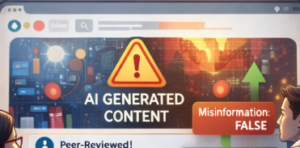
AI disclosure labels can be more harmful than good, finds Chinese Study

The increased application of AI-generated scientific and science-related texts, particularly social media, is the source of concern: they can include fake or highly persuasive information, which cannot be easily detected by the users, and can influence the way people think and make decisions.

Various jurisdictions and platforms are heading in the direction of explicitly disclosing AI-generated or AI-synthesised content to safeguard the population. Nevertheless, according to a recent study published in Jacom there is a risk that such labels can backfire, reducing the effectiveness of legitimate scientific knowledge and boosting alleged knowledge.

The Dangers of AI-Scientific Content.

AI content can be deceptive at least on two grounds. To start with, language models can hallucinate and make statements that are valid, but are factually incorrect. Second, the users can intentionally request AI systems to produce fake and plausible messages. Due to this reason, various nations have come up with transparency requirements whereby online content created or synthesized by AI should be clearly labeled.

Teng Lin, a PhD student at the School of Journalism and Communication, University of Chinese Academy of Social Sciences (UCASS), Beijing, and Yiqing Zhang, a Master student at the same school, in their new study tested whether these disclosure labels do what they claim they do; that is, protect the public against misinformation.

Experimental Study

According to Teng, they concentrated on science-related news posted on the social media.

The experimental research was conducted on 433 participants who were online recruited via the Credamo site in the month of March to May 2024. The authors developed four categories of social media posts, including correct information with or without an AI label, and misinformation with or without an AI label. The researchers used GPT-4 to adapt the texts based on the items published by the Science Rumour Debunking Platform in China to produce the correct and deceptive versions of the text in Weibo and were subsequently vetted by the researchers themselves. The participants were requested to provide a rating on the perceived credibility of each of the posts on the basis of 1 to 5. The negative attitudes of the participants toward AI and the level of engagement with this subject were also measured by the researchers.

A Paradoxical Effect

The findings showed an anti-intuitive trend. Teng says that its most significant result is what he refers to as a truth-falsity crossover effect. The same AI label creates two ways and two directions of credibility across messages as to whether the message is true or false where it lowers credibility of true messages and raises credibility of false messages. He further notes that it does not necessarily imply that the effect would be the same on all platforms or formats but in their experimentation the trend was evident.

In this regard, AI disclosure fails to assist individuals in selecting real and fake information. Rather, it seems to redistribute credibility in a counter-intuitive fashion.

Teng and Zhang also discovered that the personal attitudes towards AI are involved. The people with more negative attitudes to AI punished the correct information even more punishments when it was referred to as AI-generated. Nevertheless the credibility enhancement that was seen on misinformation did not entirely vanish in the negative attitudes, rather it was simply attenuated and was attenuated in topics specific manner, not being removed in general.

It implies that so-called algorithm aversion does not contribute to the homogeneous rejection of AI-generated content, but rather causes an even more sophisticated and asymmetrical response.

The necessity of a careful policy formulation.

Such studies emphasise the importance of thorough-testing the regulatory interventions before they are implemented because well-meaning transparency initiatives can have unintended effects.

Teng says, “We provide some recommendations in our paper but they have to be confirmed in order to be accepted as valid.” One of the suggestions is to use a dual-labeling protocol. Rather than just writing that the material is the result of the work of AI, a label might also contain a disclaimer, that the information has not been evaluated separately, or place a warning of a risk. In brief, it might not be enough to tell audiences that a text has been created by AI.

Another suggestion, Teng makes, is the use of graded or categorical system of labeling. Various forms of scientific information have varying risks. As an example, a warning can be more intense with medical or health-related information and less serious with information about new technologies. “Accordingly, we would propose various degrees of disclosure, based on the nature and the risk of the content.”

Europe Deforestation to Double, Predicts AI Study Citing Fires, Storms and Bark Beetles

A new study estimated the extent to which the area covered by Europe in forest could be disturbed by fire, storms, and bark beetles by the year 2100 in varying climate conditions. With satellite data and forest simulations, an artificial intelligence model predicted the disturbances on a continental scale using 13,000 points in Europe.

In every case, disturbances of the forests in the future were greater than it is today, with great impact on forests and services to the society.
There is a significant effect of wildfires, storms, and even bark beetles on forests and the benefits that they bring to people and environment.

This is the first time when a big international team of researchers at the Technical University of Munich (TUM) has computed how disrupts would alter the forests in Europe in the year 2100. In even the most optimistic of scenarios, the team does project a significant expansion of the damaged forest area, in the worst case, the disturbance might even be doubled.

It is not novel that trees die, and in fact, it is a normal process in the forest that is in the process of natural dynamics whereby old trees die, young trees regenerate and become the next generation of canopy trees.

The new thing is the magnitude of how wildfires, storms, and bark beetles are transforming forests due to the change of climate. The amount of forest destruction in Central Europe demonstrated dramatic figures in recent years, however until this time it was unknown how much the area covered by forests could be deterred by future disturbances. The disturbances define the carbon storage capacity of the forests, the timber they are capable of offering, and the habitats of which species they are able to offer, thus making the results very significant to the policymakers and society.

A great number of researchers headed by Professor of Ecosystem Dynamics and Forest Management, Rupert Seidl, TUM, has now filled this gap in knowledge. The researchers have approximated that, the space disrupted by fires, storms, and bark beetles might increase threefold by 2100 with a global warming of slightly above 4 degrees Celsius.

The researchers used remote sensed data as a reference point between 1986 and 2020, a timeframe that experienced abnormally high disturbance in the forests. Although it is in the best scenario, the researchers are projecting increased destruction of forests in future compared to this reference period even with the warming of about 2 degrees Celsius.

Regional differences

In combination with 13,000 simulations of forests in Europe, the model was an AI-based simulation, which was trained on 135 million data points of forest simulations and multi-decadal satellite data of forest disturbances. This enabled them to model how the forests would develop in future and how disturbances would occur and penetrate to the scale of a single hectare providing very accurate information on regional variation in future forest disturbance patterns.

A view of Białowieża Forest, Belarus-Poland. CREDIT: IUCN Elena Osipova

The study has indicated that forests in Southern and Western Europe will be affected especially and will experience the strongest forest disturbances.

The overall impact of the future on Northern Europe is less expected to be severe, though the hotspots of the future forest damage are predicted to appear as well. According to Rupert Seidl, disturbances are becoming a cross-regional problem, that is, they destroy timber markets in Europe and endanger the ecosystem services that forests bring to society.

The study authors hence regard the growing disturbance rates as being an urgent demand on forest policy and management to consider: “We should be ready to witness a lot of forest damage in the near future. On the one hand, this implies that we have to prepare and cushion against more severe changes in the services forests offer. Conversely, disruptions also provide a chance to create new and climate-resistant forests – they are agents of change,” said Seidl.

Forestry has to meet the threat and the opportunity of increasing the level of disturbance, with the help of new scientific techniques and knowledge, explained Seidl.

When Trump Came for Everyone With Tariffs, China Fought, Europe Flinched, Japan Bowed; India Simply Walked Away

There is a test that powerful countries administer to everyone else every few decades. It is not announced formally. There is no letter, no ceremony, no official notice. The test arrives disguised as a trade policy. You discover you are being tested only by watching how you respond.

Trump administered that test in 2025. The tariffs were the instrument. The real question underneath them was simpler and older: how much humiliation will you absorb to keep America happy?

Every major economy answered differently. The answers were more revealing than any diplomatic communiqué.

China Bled First, Then Negotiated

China did what China always does when cornered. It hit back.

The moment Trump’s tariffs landed, Beijing retaliated, hard, fast, and with surgical precision aimed at the American constituencies that hurt most. Agriculture. Soybeans. Pork. The farmers in Iowa and Kansas who had voted for the man now watching their export markets evaporate. Bilateral tariff rates escalated rapidly until both sides were effectively taxing each other’s goods at 125 per cent, a trade war in everything but name, conducted with the cold efficiency of two countries that understand leverage.

It lasted months. It cost both sides real money. And then, in May 2025, they sat down and cut a deal, tariffs rolled back to ten per cent, a 90-day truce extended in August, formalised for a full year by November.

China did not get everything it wanted. But it negotiated from a position of demonstrated willingness to inflict pain. Washington knew, going into those talks, that Beijing had already shown it could make the phone ring in congressional offices across the Farm Belt. That knowledge shaped every sentence of the agreement.

You do not get a good deal by being easy to ignore.

Canada Went Loud, Then Went Quiet

Canada’s response was emotional, immediate, and very Canadian, which is to say it was righteous, noisy, and ultimately pragmatic.

Within hours of Trump’s announcement, Prime Minister Trudeau slapped 25 per cent retaliatory tariffs on $155 billion worth of American goods. Ontario pulled every bottle of American alcohol from government-run liquor shelves. Provincial premiers held press conferences. The phrase “economic sovereignty” appeared in Canadian newspapers approximately ten thousand times in a single week.

Then, by June, Canada paused further retaliation and entered negotiations. The shelves were quietly restocked. The trade talks ground on behind closed doors, away from the cameras that had captured all the initial fury.

Canada had made its point. It had shown it was not a pushover. It had then returned to the business of being America’s largest trading partner and closest neighbour, because geography and economics do not pause for diplomatic theatre.

The noise was genuine. So was the accommodation that followed. Canada fought for its dignity and then negotiated for its interests. Both things can be true simultaneously.

Europe Built Its Weapons and Never Used Them

The European Union spent much of 2025 in a state that can only be described as armed paralysis.

Brussels prepared retaliatory lists covering nearly €72 billion of American goods. It drafted legislation activating the Anti-Coercion Instrument — a legal mechanism designed specifically for moments like this one. It threatened to go after American services, American tech platforms, American financial firms operating within EU borders. The paperwork was meticulous. The political will was not.

Europe blinked. Repeatedly. Quietly. Without ever formally announcing that it had blinked.

The reasons were not difficult to identify. European economies depend on American markets to a degree that makes genuine trade war genuinely painful. And Europe’s dependence on Washington’s military support for Ukraine, a war being fought on European soil, paid for partly with American weapons, meant that Brussels could not afford to turn a trade dispute into an alliance crisis. Trump knew this. He had always known it. The tariffs on Europe were, in part, a test of exactly that dependency.

Europe failed the test by passing on the opportunity to take it. It armed itself thoroughly and then stood very still, hoping the moment would pass.

It mostly did. The cost was invisible but real, the credibility of the threat had been spent without anything to show for it.

Japan Bent the Knee and Got a Discount

Japan’s response was, in historical context, entirely unsurprising. It notified the World Trade Organisation of its intent to suspend concessions on steel, aluminium, automobiles and parts. It made the appropriate official noises. Then it negotiated.

Tokyo’s instinct, refined across a century and a half of managing the American relationship, through gunboat diplomacy and occupation and Nixon’s triple shocks and Bush’s dinner table incident, is always to find the accommodation rather than force the confrontation. Japan reached a trade agreement setting tariffs on its goods, including automobiles, at 15 per cent. Significantly below the 25 per cent that had been threatened. Meaningfully better than nothing.

Japan conceded. Japan got a discount. Japan went home.

There is no contempt in that observation. Japan’s circumstances, 54,000 American troops on its soil, an American-authored pacifist constitution embedded in its foundational law, a security architecture built entirely around the US-Japan alliance, leave Tokyo with genuinely limited room to manoeuvre. Japan knows this. Washington knows Japan knows this. The discount was the acknowledgement that Japan had been a cooperative subject.

A discount is not the same as respect. But it is what cooperative subjects receive.

Brazil Made Speeches

Brazil’s President Lula gave several impassioned addresses about sovereignty, fairness, the rights of developing nations, and the injustice of a global trading system designed by the powerful for the powerful. The speeches were good. They were well-delivered. They contained several genuinely quotable passages.

Brazil did not fire a single retaliatory shot.

Not one.

It evaluated potential measures. It confirmed willingness to negotiate. It reserved its position. It talked loudly, at length, and carried nothing at all.

And Then There Comes India

India did not retaliate. It did not make speeches. It did not prepare retaliatory lists it never used or schedule press conferences to announce tariffs it never imposed.

It filed a WTO challenge, a legal mechanism, quiet and procedural, that signalled disagreement without escalation. It absorbed the blow. And then it got on with its own business, which turned out to be rather more interesting than anything Washington had planned for it.

When Trump publicly claimed credit for mediating the India-Pakistan ceasefire after the May 2025 conflict, India rejected the claim flatly. No US role in the military negotiations, New Delhi said. Full stop. No diplomatic softening. No grateful hedging.

When Trump claimed India had agreed to slash its duties to zero, purchase $500 billion in American goods, and stop buying Russian oil entirely, Indian authorities confirmed none of it. Oxford Economics described the claims as unrealistic. India said nothing publicly and kept buying Russian oil, which it had been doing all along, which it continued doing through February 2026, and for which it eventually received a waiver from the very Treasury Department that had spent months punishing it for exactly this behaviour.

When Trump intensified outreach to Pakistan, even as he was hitting India with 50 per cent tariffs, India noted the irony and said nothing.

When the EU came calling, India signed what European Commission President Ursula von der Leyen called the “mother of all deals” — a trade agreement delivering an estimated €30 billion in export gains for both sides, accompanied by a defence pact. Modi then signalled warming relations with China. Precisely the strategic drift that Washington’s tariff pressure had been designed to prevent was happening, visibly, in full public view.

India’s exports to the US dipped 12 per cent in the final quarter of 2025. India’s economy grew 8.2 per cent in the same period, driven by its domestic market, which is large enough to not need Washington’s permission to function.

The tariff eventually came down to 18 per cent in the February 2026 truce. Trump announced it as a triumph. India accepted it as a correction.

What the Answers Tell You

China showed that if you make the cost of the tariff high enough, Washington will negotiate. Canada showed that you can be angry and practical simultaneously. Europe showed that a threat only works if you are willing to pull the trigger. Japan showed that a century of accommodation produces a discount, not dignity. Brazil showed that rhetoric unaccompanied by action is indistinguishable from silence.

India showed something different. It showed that a country large enough, confident enough, and strategically patient enough does not need to choose between fighting and submitting. It can simply decline to play on those terms, grow its economy, sign deals with other partners, wait for the logic of geography and demography to reassert itself, and let Washington eventually arrive at the conclusion India had been sitting on all along.

Trump came for India with tariffs, public insults, selective punishment, and demands that India manage its energy policy according to American geopolitical convenience. India filed a WTO complaint, kept buying Russian oil, grew at 8.2 per cent, signed a landmark deal with Europe, and waited.

China fought. Canada shouted. Europe trembled. Japan bowed. Brazil talked.

India walked away.

And Washington eventually followed when it conceded Russian oil for India amid Iran war.

Trump Called Starmer ‘No Churchill’ But History Has a Different Tale for Trump, Unfolding in Iran

Donald Trump has a Churchill problem. Not the kind he thinks.

When British Prime Minister Keir Starmer hesitated to open UK military bases for the Iran strikes last week, Trump was furious. Standing in the Oval Office beside German Chancellor Friedrich Merz, he delivered his verdict on the special relationship in nine words: “This is not Winston Churchill that we’re dealing with.”

The implication was clear. Churchill would have said yes immediately, bombed enthusiastically, and never flinched. Starmer — cautious, legalistic, quietly horrified — was cast as the timid contrast to the great wartime bulldog.

But here is what Trump’s Churchill invocation leaves out: the real Churchill didn’t just bomb his enemies. He also tried to talk to them. He negotiated. He built alliances painstakingly. He worried constantly about unintended consequences. He wrote, after witnessing the Boer War as a young officer, that once the signal for conflict was given, statesmen lose control of events.

That warning has aged remarkably well. It is, in fact, the story of the past ten days.

“I Got Him Before He Got Me”

The strikes that killed Ayatollah Ali Khamenei on February 28 were not framed by the White House in the language of grand strategy. Trump was more direct than that. “I got him before he got me,” he told ABC News, referencing Iranian-backed plots to assassinate him during the 2024 election cycle. In a separate conversation with The Atlantic, he admitted that Iran had offered significant concessions in the final round of nuclear talks — but that his recent military successes, including the capture of Venezuela’s Nicolas Maduro, had made him feel he could demand more. “A year ago, it would have been great to accept that deal,” he said. “But we have become spoiled.”

Personal vendetta and military overconfidence, in other words, sat alongside any strategic calculation. The killing of Khamenei was, by Trump’s own account, partly about scores settled.

Then the consequences arrived — exactly as they always do.

The Heir Nobody Wanted, the Oil Shock Nobody Needed

Within nine days of Khamenei’s death, his son Mojtaba was installed as Supreme Leader. Brent crude punched above $114 a barrel. The Strait of Hormuz — through which roughly one fifth of the world’s daily oil supply travels — was effectively sealed. Iran kept launching missiles, now with the new supreme leader’s name inscribed on the warheads.

The regime did not crumble. It promoted from within and kept shooting.

This outcome was not unforeseeable. In fact, it was predicted — repeatedly, by historians, strategists, and the kind of sober analysts Trump tends to dismiss. The belief that removing one man from the top of a hostile state will unravel that state is among the most persistent and most thoroughly disproven assumptions in modern warfare. It doesn’t matter how precisely the strike is executed. The system underneath simply replaces whoever falls.

Yamamoto died over the Solomon Islands in 1943, shot down by American fighters after US codebreakers intercepted his travel plans. Japan kept fighting for two more years. Saddam Hussein survived the opening “decapitation strike” of the Iraq War, and when he was eventually caught, dishevelled and hiding underground, the country did not stabilise — it fractured along lines that bled for the next two decades. The CIA tried to kill Fidel Castro at least eight times between 1960 and 1965, deploying methods ranging from poison pills to an exploding cigar. Castro outlasted ten American presidents.

None of these precedents stopped Trump. None of them ever stop anyone, which is precisely the point.

What Churchill Actually Believed

Trump invoked Churchill as the archetype of resolve — the leader who never hesitated, never lawyered, never blinked. The historical record is more complicated.

Churchill’s actual strategic philosophy, documented across decades of speeches, memoirs and private correspondence, rested on a specific combination: negotiate from positions of strength, but always keep channels of communication open with adversaries. Even during the Cold War, at the height of his anxieties about Soviet power, he pursued the idea that western strength might eventually bring Moscow to the table. Firmness and diplomacy were, in his mind, not opposites but partners.

He was also deeply clear-eyed about Iran specifically. Churchill had attended the 1943 Tehran Conference, sitting between Roosevelt and Stalin as allied leaders carved up wartime arrangements. He emerged sobered, aware that Iran sat at the intersection of competing great-power interests and that interventions there carried long historical tails. A decade later, the Anglo-American coup that toppled Iranian Prime Minister Mohammad Mosaddegh in 1953 — in which Churchill’s government was intimately involved — produced exactly the kind of unintended consequence he feared: it handed the Islamic Republic its founding grievance, a story of western interference that the regime has weaponised for legitimacy ever since.

Trump’s Churchill, in other words, is a simplified cartoon of the man — the bulldog without the brain, the fighter stripped of the diplomat.

A War Trump Is Now Fighting Alone

The Churchill jibe has also exposed something Trump didn’t intend to reveal: just how isolated the United States is in this war.

After a year of tariff threats, diplomatic insults, and the systematic alienation of European partners, Trump launched a major military operation with only Israel beside him. Britain eventually allowed limited use of its bases for defensive strikes, but drew a clear legal boundary around wider involvement. France’s Emmanuel Macron declared the strikes illegal under international law. Spain barred American military planes from its jointly operated bases in Andalusia — and received a trade war threat in response. NATO intercepted an Iranian missile near Turkish airspace, but the alliance has moved carefully to avoid being dragged deeper in.

“This is not Winston Churchill we’re dealing with,” Trump said of Starmer. The irony is that Churchill’s entire doctrine of Western power rested on precisely the alliances Trump has spent years eroding.

The War That Was Supposed to End Quickly

Trump told ABC News the Iran operation could last weeks. He demanded Iran’s “unconditional surrender” on social media. He said the strike had been so successful it had killed most of the post-Khamenei candidates he had identified — “second or third place is dead” — as if the problem of Iranian governance could be resolved by eliminating enough people on a list.

At least 1,230 Iranians have been killed since the strikes began, according to the Iranian Red Crescent. Over 120 died in Lebanon. Ten Israelis have been killed by Iranian attacks. Oil is above $114 a barrel. Asian markets recorded their worst single session since the COVID crash of 2020. Mojtaba Khamenei is firing missiles under his own name.

Churchill wrote, reflecting on a lifetime of wars, that once the signal for conflict is given, statesmen lose control of events. That insight didn’t make him a pacifist. It made him careful.

Trump saw Churchill and thought: warrior. History offers a fuller picture — a man who understood that the hardest part of any war is not the killing. It is knowing what you want the morning after.

That morning is arriving in Tehran now. The question of what comes next has no clear answer. And the man who ordered the strike, confident and unilateral, is discovering what every leader who has walked this road before him eventually discovers:

Decapitation is easy. What follows is not.

Sensex Falls 1,097 Points, Nifty Down 315 as Iran Crisis Rattles Markets, Oil Above $100 per Barrel

Escalating tensions involving Iran have unsettled global financial markets, with Indian equities and the rupee facing pressure as investors react to rising crude oil prices and geopolitical uncertainty in West Asia.

Domestic benchmark indices slipped sharply in recent sessions as risk sentiment weakened. The BSE Sensex fell about 1,097 points, or 1.4 per cent, to close at 78,918.90, while the Nifty 50 dropped 315 points, or 1.3 per cent, to settle at 24,450.45 as investors turned cautious amid the growing geopolitical crisis.

The broader trend during the week also reflected heightened volatility. The Sensex recorded a weekly decline of about 3.08 per cent, tracking weakness in global markets as oil prices climbed amid concerns about potential disruptions to energy supplies from the Middle East.

For India, the primary risk from the Iran crisis lies in crude oil. Brent crude prices surged sharply, at one point rising above $100 per barrel for the first time in nearly four years as the Iran conflict escalated and Ayatollah Mojtaba Khamenei was chosen as supreme leader.

WTI crude was trading at $108.66, up $17.76 or 19.54%, while Brent crude was at $108.69, up $16.00 or 17.26%, as traders priced in the possibility that an escalation could affect shipments through the Strait of Hormuz, a crucial maritime route for global energy trade.

Heavily Dependent on Oil Imports

India is particularly vulnerable to such shocks because of its heavy dependence on imported oil. The country imports more than 85 per cent of its crude oil requirements, meaning any sustained rise in prices can quickly increase the import bill, put pressure on the rupee and add to inflationary concerns.

Market participants say geopolitical tensions have already injected volatility into equities, with investors shifting to safer assets while trimming exposure to riskier markets.

Ponmudi R., CEO of Enrich Money, said investors should brace for continued swings in the market as geopolitical developments unfold. He said “the week ahead is likely to remain volatile” as tensions in the Middle East continue to shape investor sentiment.

Sectoral impacts are expected to vary depending on exposure to crude oil and global trade flows. Industries that rely heavily on fuel or petrochemical inputs — such as aviation, paints and chemicals — could face pressure on margins if oil prices remain elevated. On the other hand, energy producers and some defence-linked companies could see gains as commodity prices rise and geopolitical tensions increase.

Strait of Hormuz Poses Real Challenge

Another key concern for India is the security of shipping routes. A large share of India’s crude imports passes through the Strait of Hormuz, making any disruption in that corridor a major risk for the economy. Even the threat of disruption can push up insurance and freight costs, raising expenses for importers and exporters alike.

Global investor sentiment has also turned more cautious as the crisis deepens. Analysts note that Indian equity markets have already fallen about 4 per cent within two days of the conflict escalating, underscoring how quickly geopolitical shocks can reverberate through financial markets.

Veteran investor Jim Rogers warned that oil prices could climb further if the conflict intensifies. He said crude “could definitely cross $100 a barrel again” if geopolitical tensions escalate.

Despite the immediate volatility, market observers say the long-term impact on Indian equities will depend on how prolonged the crisis becomes. If tensions ease and oil prices stabilise, markets may recover. However, a prolonged conflict that disrupts energy supplies or shipping lanes could keep Indian markets under pressure in the weeks ahead.

Who Is Mojtaba Khamenei? The Shadow Cleric Who Became Supreme Leader of Iran, Why Trump Already Wants him dead?

Thirty years he had been the most powerful man in Iran ever to be seen.

No speeches. No sermons. No interviews. And, even as his father was roaring away in pulpits and making a name in the history of a nation, Mojtaba Khamenei was toiling in the shadows, pushing through corridors, whispering into the correct ears, pulling the right threads that wigged the whole clockwork of the Islamic Republic without ever leaving the slightest trace of them upon it.

On Sunday the shadow got into the light.

As a successor to his father Ayatollah Ali Khamenei who was killed in a joint US-Israel attack just nine days ago, Mojtaba Khamenei is currently the new Supreme Leader of one of the most heavily armed theocracies in the world. He is 56 years old. He has been sanctioned by the US since 2019. And Washington and Tel Aviv had succeeded in a few hours after his appointment to issue a public death warrant against him.

The Man Nobody Heard Coming

Mojtaba was born in 1969 in Mashhad as the second child of the Ayatollah. He had enlisted in the Revolutionary Guard in his teens in the Iran-Iraq War, pursued theology with his father in Qom and then did something uncharacteristic of a cleric with ambitions he went off to the gears of power instead of attempting to drive them in the limelight.

He had been the gatekeeper of his father over the course of decades. He controlled access to meetings and non-access. He established relationships among the most conservative branches of the IRGC. The kind of profile that was necessary in his case was the one that worked in subterranean deliberations between generals and clerics; this was already a mighty one.

His name was familiar to Iranian people. To the majority, he had never been heard.

What they were aware of and democracy activists have been screaming years ago, was that Mojtaba was the man behind the crackdown on the 2009 Green Movement, the bloody crackdown of hundreds of thousands of Iranians who flooded the streets following a contested election. Such demonstrations were systematically suppressed and brutally. Investigators say that his fingerprints were everywhere on it.

A Vote Held Under the Gun

The process of selection said it all about what Iran is going through. As the nation was at war, its skies still reeking of Israeli attacks, members of the Assembly of Experts, senior ones, were under heavy pressure by the IRGC commanders just before the vote was taken. The individuals who objected were allowed little time to speak. Discussion was cut short. The vote was called quickly.

The outcome was packaged instantly in the tone of rebellion. One of the members of the Assembly said that the new leader was selected specifically because he was a man that the enemy hated – a literal, intentional attack on Donald Trump, who had already referred to the appointment as unacceptable before it was even official.

Iran had chosen the man that America did not want. And they would have that people know it was done on purpose.

A Warning to the World, Which Trump Delivers Not Diplomatically Dressed

Washington was not subtle in his position. A few days prior to the vote, Trump was confrontational as usual when he spoke to the ABC News that Mojtaba would not be able to remain in power without American approval, and that without it he would not last long. In another interview, he rejected the younger Khamenei saying that he even had a father who was reportedly incompetent.

Israel was equally direct. The Israeli Defence Minister was quoted saying that the appointment also placed Mojtaba an instantaneous target to be killed.

The response of Iran was not verbal but in the shape of missiles. Soon after the announcement, the Iranian state television showed footage of another strike, that is, the projectiles, which, reports said had the inscription: At Your Command, Sayyid Mojtaba.

The new supreme leader was an heir of a war. The initial move that he made was to continue fighting it.

Why This Changes Means Everything

The decision of Mojtaba Khamenei informs you about something significant where the actual power of Iran currently lies. This is not a pragmatist. This is not a diplomat. It is a man who has spent his whole career within the bosom of the IRGC, a man whose instincts were developed not in the bargaining table but in the culture of violence and the inculcate of military obedience.

The appointment, analysts pay close attention to, indicates that the hardline security establishment of Iran has solidly established itself in power, and that the off-ramp of the ceasefire or diplomacy has indeed become even even more distant.

And to that, a Bloomberg investigation published earlier this year which has implicated Khamenei in an offshore financial system that goes across London, Dubai real estate, shipping, banking and the image that comes out is of a man who knows power in all its variants.

Iran has a new supreme leader. He is younger, tougher and more imbedded in the war machine than his father was. Trump has threatened to cause consequences. Israel has promised strikes. And the man to whom most Iranians had never heard a word spoken has already responded to them both, one missile at a time.


What is H-1B Visa? Complete Guide for Indians in 2026 

H-1B Visa is both a golden ticket and a constant anxiety source to hundreds of thousands of Indians who study or work in the United States. It is the most common work visa in America but also happens to be one of the most disputed, most amended and most politically unstable immigration tools in the world. This is all you want to know in 2026 as the H1B visa window opens.

After the allegations of H1B visa misuse, US Secretary of Homeland Security Kristi Noem, has affirmed that the department was already starting its review of the program.

“Yes, we are. We are still engaged in such a review and will have it finished here in 2026,” Noem said when Senator Eric Schmitt pushed the department to the question of whether they will devote themselves to completing the reassessment in the year. Estimates show that nearly 600,000 Indian students and techies will be affected by any changes in H1B visa, which was designed to allow American firms to employ highly skilled foreign professionals including the international students, technology firms, and universities.

What Is the H-1B Visa?

The H-1B is a non-immigrant visa, through which US employers can temporarily hire foreign employees in positions of specialty, jobs that demand a bachelor’s degree or other equivalent degree in a specialty. The most common qualifying areas include technology, engineering, mathematics, medicine, accounting, and architecture. The visa is initially issued for three years which may be furthered to another three. The status of H-1B of an Indian applicant to the green card of the US is frequently extended over a long period of time, based on the green card backlog.

How H-1B Lottery Will be in 2026?

The US government annually provides 85,000 new H-1B visas, 65,000 under the annual limit and 20,000 under a masters (or higher) degree in the US. In case of the surpassing demand and supply, a lottery is done by US Citizenship and Immigration Services (USCIS), an agency of the US Department of Homeland Security that administers the country’s naturalization and immigration system.

The FY2027 H-1B registration period was open from March 4 to 19. Registration fee is now US$215 per beneficiary which is a considerable increase compared to the previous $10. There was one major change that was implemented on February 27, 2026: USCIS substituted the previous random lottery with a weighted selection system. The higher wage level positions of the Department of Labor have more entries in the pool. A level IV gets four entries, level III gets three, level II gets two and level I gets one. This is fundamentally beneficial and advantageous to candidates sponsored to high-paying positions in senior positions.

How Many Indians Get H-1B Visas?

H-1B program is dominated by India. In FY2023, the Indians took up 68,825 initial H-1B visa approvals, 58 per cent of all approvals and 2.10 lakh extensions, 79 per cent of all extensions. There were 343,981 qualified registrations in the FY2026 lottery, 26.9% lower than FY2025, owing to the new beneficiary-centered system, which does not allow more than one employer to register a candidate.

2026 Warning: There are no slots to stamp visa

New slots in visa interviewing to stamp H-1B in the US consulates in India, Delhi, Mumbai, Chennai, Hyderabad and Kolkata have been not changing during most of 2026. On X, Immigration attorney Emily Neumann wrote that she had not been seeing new slots in more than 50 days. It is not that they are in a hurry to issue you with a visa. They are attempting to reject visas whenever they get an opportunity. “It is a totally a new world compared to what was seen under the Biden administration,” she said. The H-1B who are in the US are not advised to travel to India to have their stamping until the status quo is improved.

What Will Go wrong in case you are not chosen?

Those candidates who are not picked during the first lottery are kept in the system to await the possibility of taking supplemental selections later in the year either in July or October. Contenders will only be eligible based on registration during the March window. As Senator Eric Schmitt refers to the abuse of H-1B as rampant and the DHS undertaking the entire program for review, Indian applicants and employers are advised to seek the services of an experienced immigration attorney long before the next registration window.

US Senator Flags H-1B Misuse: DHS Orders Full Review; What It Means for 600,000 Indian Techies

India is keenly following up the investigation of the US Department of Homeland Security on H-1B and OPT programs which are major immigration programs through which Indian technology professionals and students access the country.

Most H-1B visa are controlled by Indian nationals. According to the statistics of the US Citizenship and Immigration Services, 70-75 percent of successful H-1B applications are processed with Indians as the primary beneficiaries due to the requirements of the American technology companies and consultants. With the visa, US employers are able to recruit foreign talent in the areas of software engineering, data science, finance and biotechnology.

The H-1B program has been a primary entry point of Indian talent into the US technocratic industry. Big Indian companies, such as Infosys, Tata Consultancy Services, Wipro, and HCLTech, are the largest users, together with the US giant tech companies.

India’s Response to H1B Row

No fresh DHS or USCIS statements emerged tied directly to Schmitt’s “plea” or Senate oversight. However, related processing changes persist: premium processing fees increased effective March 1, 2026, and the FY 2027 H-1B registration window opened March 4–19, 2026, under the updated skills-based selection process (selections expected by March 31).

The Indian Ministry of External Affairs recently made detailed public comments on H-1B disruptions, following expanded social media vetting (effective December 15, 2025), which triggered mass rescheduling of consular interviews in India (many pushed from late 2025/early 2026 to mid-2026 or even 2027 in some cases).
MEA Spokesperson Randhir Jaiswal (December 26, 2025 briefing) said: “The Government of India has received multiple representations from Indian nationals facing delays and difficulties in scheduling or rescheduling US visa appointments. While visa matters fall under the sovereign domain of the issuing country, India has raised these concerns with the US authorities in New Delhi and Washington DC.” He added that prolonged delays cause “hardship for families and children,” and India remains “actively engaged” with U.S. authorities to “minimize the impact on Indian nationals” and address disruptions.Current Practical Impact on Indian Applicants

Consular backlogs in India remain severe due to vetting layers (social media over 5 years required public, site visits, wage checks). Some January–March 2026 slots were deferred as far as 2027. No evidence of resolution or easing in early March.

No major regulatory changes to H-1B/OPT have been finalized yet as reviews remain ongoing. Indian tech firms and NASSCOM continue highlighting project delays.
The Indian students may witness setbacks during the review due to the OPT program, which allows foreign students who complete their studies in US universities to remain and have a temporary work period. Most Indian students spend this period to have professional experience and then move on to other long term visas such as the H-1B.

A change in the policy towards these paths may extend throughout the Indian labour force in technology, its education sector overseas and remittance. America is still the number one destination of the Indian IT talents and the income of Indian employees to foreign markets is one of the largest contributors to the global remittances of the nation.

Although the Department of Homeland Security has not yet confirmed that the review would result in a change in the regulations, immigration experts fear that a tighter rule may impact thousands of Indian workers and students who plan their careers in the US technology market.

Israel Strikes Iran Oil Fields, Black Rain Envelopes Tehran; Breathing Problem Pervades

Thick black clouds covered the Tehran areas on Sunday with residents claiming that when it rains, oily residue fell onto the ground following Israeli airstrikes to various oil storage and fuel distribution sites around the Iranian capital that caused massive fires, causing plumes of smoke to fill the Iranian capital.

The attacks, which were declared late on Saturday, were directed to the oil storage tanks and fuel transfer stations in Tehran and the adjacent province of Alborz, as per Iranian media. There were also large mass fires and explosions observed in various areas because the combustible tanks emitted heavy smoke which covered big parts of the city.

The inhabitants reported about a weird dark rain that made the streets, automobiles and buildings black. This was found to be due to the mixing of soot, oil particles and other pollutants of the burning facilities with rain clouds as they swept over the capital.

Governments encouraged their citizens to remain at home and wear masks because of poor air quality. The environmental officials had cautioned that the smoke had hydrocarbons and other chemicals which might irritate the lungs and eyes.

“It is raining oil in Tehran this morning after major airstrikes on oil facilities in the south and west of the capital,” CNN correspondent Frederik Pleitgen wrote on social media.

Fars, an Iranian news agency reported that in the attacks, there were at least four oil storage depots and fuel transfer centres that were hit. There were local reports that a fuel facility was hit in the strikes killing several tanker drivers.

The assault is among the most major attacks on the Iranian energy infrastructure since the present stage of the conflict commenced towards the end of the previous month. Israel has indicated that its military activities are to undermine the strategic and military power of Iran.

Oil Pivotal in Iran Vs US-Israel Conflict

The Iranian leadership has threatened to take revenge as the tension in the region keeps building up. The escalating conflict has already had an impact on shipping operations in the Strait of Hormuz which is one of the most important oil transit routes globally.

“The world is watching the Strait of Hormuz closely because any disruption there immediately sends shockwaves through global oil markets,” one energy market analyst said.

Any kind of disturbance in the Strait of Hormuz has become a global obsession due to the fact that any kind of disruption will automatically cause ripples to the oil markets in the world, as one of the energy market analysts remarked.

To the people of Tehran, though, the burning issues are the smog that stands over the city and the strange black rain that ensued the night of the explosions and fire. Officials reported that the air quality monitoring would be ongoing when emergency personnel tried to contain the fires and know the damage.

Amid Iran Tensions, US Asks India To Absorb Russian Oil Meant For China; What The Proposal Means For India?

• US suggested India absorb Russian oil waiting for Chinese refineries
• Over 100 million barrels of crude currently floating offshore
• Extra cargoes could benefit Indian refiners through discounted supply
• Move aimed at cooling global oil prices amid Middle East tensions

The United States has proposed that India reflect on absorbing over 100 million barrels of Russian oil which is already offshore to be transported to refineries in China, which Washington reckons will assist in alleviating the soaring oil prices amidst the threats of violence in the Middle East.

US Energy Secretary Chris Wright said the suggestion was part of a short-term effort by the Trump administration to stabilise energy markets unsettled by disruptions in the Middle East. Speaking in television interviews on CNN and CBS News, Wright said senior US officials had directly raised the idea with New Delhi.

“I did call up the Indians, as did Treasury Secretary Scott Bessent,” Wright said, noting that a large volume of Russian oil is currently idling at sea while waiting to be processed by Chinese refineries. According to Wright, more than 100 million barrels of Russian crude are effectively stuck in a queue offshore because of limited unloading capacity in China.

The proposal, he said, was to divert those cargoes to Indian refineries instead of leaving them anchored for weeks.

“Instead of having it wait six weeks to unload there, let’s just pull that oil forward, have it land at Indian refineries and tamp this fear of shortage of oil, tamp the price spikes and the concerns we see in the marketplace,” Wright said.

“This is simply a pragmatic step with a short time horizon,” Wright said. The US official emphasised that the outreach to India does not signal any shift in Washington’s broader policy toward Moscow.

“The United States’ policy towards Russia has not changed,” Wright said when asked whether the move contradicts Western efforts to reduce reliance on Russian energy.

Wright added that the global oil market remains fundamentally well supplied and that recent price spikes are largely driven by uncertainty rather than an actual shortage.

“The world is very well supplied with oil right now,” he said.

Tanker movement through the Strait of Hormuz, a key artery for global oil shipments, has begun to resume following disruptions linked to the Iran conflict, although traffic remains below normal levels.

“We’re nowhere near normal traffic right now, and it will take some time,” Wright said, adding that any disruption is likely to last weeks rather than months.

What It Means For India?

India has become one of the biggest purchasers of discounted Russian crude since the war in Ukraine changed the global energy trade in 2022. The Russian oil is currently taking up approximately a 1/3rd of the crude imports into India and assists Indian refiners to obtain supplies at prices which are usually lower than those of the producers found in the Middle East.

Should the Indian refiners intervene and absorb some of the oil that is already awaiting China, this may contribute to alleviating congestion in global supply chains and avoid another round of crude prices soaring. Analysts opine that more discounted cargoes may also enhance the company refining margins of companies like Indian Oil Corp, Reliance Industries and Nayara Energy, which have increased their consumption of Russian crude in the last three years.

Nevertheless, the concept is not fully unproblematic.

The refining system already used in India has the capacity to process the blend of crude grades and the high volume would require a larger refinery capacity, logistics and contracts in place. The shipping routes and insurance arrangements may also come into play especially with the complicated system of sanctions on Russian energy exports.

New Delhi has always justified its energy buying decisions with Russia by saying that it is vital to buy low-cost gas to support its economy. Indian officials have reiterated on several occasions that the country would purchase oil anywhere it could at good prices.

In the case of international markets, the diversion of cargoes that is lying offshore may assist in abating the so-called fear premium which has increased the oil prices in the recent Middle East tensions.

In the case of India, however, the scenario may provide it with another opportunity to consolidate its as one of the most versatile and opportunistic purchasers in the rapidly divided energy market.

H-1B Visa Abuse: US Visa Program Under DHS Review, says Senator Schmitt

The issue of how some of the major U.S. job-visa programmes are operating was raised in a Senate oversight hearing this week. Much of this was alleged by Republican Senator Eric Schmitt to have been in misuse through programs like the H -1B visa and the Optional Practical Training (OPT). The hearing triggered the U.S. Department of Homeland Security (DHS) to affirm that it is undertaking a formal review of the student work program.

Presenting his argument to the Senate Judiciary Committee, Schmitt stated that the H-1B visa program, which was designed to allow American firms to employ highly skilled foreign professionals, was being misused more often, posing a threat to the employment opportunities of the U.S. workers.

“For those listening, the H-1B programme was marketed as a programme to bring in the best and the brightest for jobs that we don’t have people for,” Schmitt said. “What’s happening is this abuse, is that American citizens are being displaced by cheaper, more obedient foreign labour.”

Schmitt claimed that there are those employers who take advantage of the apply to reduce the cost of getting a specialized talent to get cheaper labor. The senator explained that the American citizens are getting forced out by cheaper foreign labor that is more obedient.

Schmitt also attacked the OPT program that international students studying in the U.S. can stay and work in a restricted number of years after the completion of their academic programs. The senator says that the policy has developed to have lopsided incentives to universities and employers. He pointed out that some of the institutions are becoming more and more dependent on foreign students, in part due to employment offers attached to OPT. He characterized the system as successfully serving as “visa mills for universities taking away opportunities for American students because they don’t have to pay taxes on the foreign labour for at least a year if you have this visa for OPT.”

Schmitt claimed that he had sent a letter to DHS requesting a formal examination of not only the H-1B program but also applicable scope and length of work authorization on the program of optional training. In response at the hearing, Kristi Noem, Secretary of Homeland Security, affirmed that the department was already starting its review of the programs. “Yes, we are. We are still engaged in such a review and will have it finished here in 2026, Noem said. Schmitt pushed the department to the question of whether they will devote themselves to completing the reassessment in the year. “Yes, we are. We have done that review still, and we are doing it here in 2026, the same way, said Noem.

The exchange occurred within a wider oversight hearing that emphasized much of the immigration enforcement policies, border management and operational oversight of DHS. Nomad lawmakers inquired Noem on a variety of matters such as the process of deportation, the implementation of detention, and national security concerns that are related to the issue of immigration enforcement.

Debate of H-1B visas and the OPT program was one of the few parts of the hearing devoted to legal avenues of immigration, as opposed to enforcement strategies of undocumented migration. DHS manages immigration compliance and visa management by enforcing agencies like U.S. citizenship and immigration services and U.S immigration and customs enforcement.

The international students, technology businesses, and universities, especially Indian students and talent,  might experience any changes caused by the review, but the authorities have not yet described the possible changes to the policy.