
How being squeezed contributes to risk of breast cancer cells

A recent study conducted by scientists working in Adelaide University and published in the journal Science Advances has shown the reason as to why certain cancers may grow and survive the body, whereas others do not. It happens that the hard mechanical stress to which the early cancer cells undergo as they are squeezed into a narrow area, causes some of the cancer cells to grow quicker, not to grow, as would otherwise be supposed.

This squeeze worked to the favor of the early breast cancer cells as scientists discovered.

The key point that was explained by the lead researcher, Professor Michael Samuel, of the Centre of Cancer Biology at Adelaide University and the Basil Hetzel Institute is that these breast cancer cells steal a particular sensor – one that our bodies rely on to sense touch – and use it to divide quickly and aid them in making their escape off the major tumour.

The process creates an indefinitely lasting mechanical memory in the breast cancer cells and it still contributes towards aggressive behaviour even after the pressure itself has been removed, Professor Samuel said.

The tumours which are solid are exposed to a lot of physical pressure when the disease is at its early stage of development, as the cancer cells grow in tissues that are limited in space, e.g. the milk ducts of the breast. Up to this day, the mechanism by which these cancer cells detect this pressure and whether or not it impacts the progression of the disease is unknown.

We have a tendency to believe that cancer is a genetic disease, but through this work we know that there is the same importance of physical forces within the tumours as the cause of cancer as there are genetic changes that cause cancer.

The researchers discovered that cancer cells respond to pressure via a molecule named PIEZO1, which is a hole in the cell that relates the interior of a cell to the exterior environment. Upon pressure stimulation, PIEZO1 enables the movement of calcium ions into the cell and subsequent signal transduction containing the Rho-ROCK pathway – a central regulator of cell movement, shape and growth.

The team demonstrated that mechanical pressure of a short duration that is obtained through compressing cancer tissue was sufficient to cause tumour growth to increase significantly. Mechanically compressed tumours in laboratory models of breast cancer became larger and the cancer cells in them fragmented faster than control groups.

In addition to promoting growth, compression was also identified to drive cancer cells into a more aggressive, invasive, state in a process known as epithelial-mesenchymal transition. When either of the PIEZO1 or the Rho-ROCK pathway had, however, been inhibited with the help of suitable drugs, compression did not propel cancer aggressiveness, making their role in this process definite.
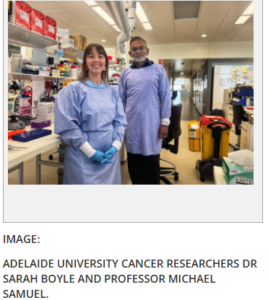
Co-lead author Dr Sarah Boyle mentioned that one of the most significant findings was that the cancer aggressiveness effects of compression remained even after removal of the force itself.

According to Dr Boyle, even relatively short durations of pressure can lead to a mechanical memory by altering the way the DNA is packed into the cell, by chemically modifying the histone proteins.

These changes, which are called epigenetic changes, are modifications of the interpretation of the DNA code by the cell, which enables the process of switching on some genes that promote tumour growth and aggressiveness.

This type of epigenetic mechanical memory offers a molecular basis to the long term effects of short term mechanical forces on the cell level of the behaviour of tumours.

Notably, the research established that PIEZO1 is over-expressed in human breast cancers compared to normal breast tissue, and that the level of PIEZO1 differs among the patients. The high PIEZO1 levels have been linked to low patient survival implying that the identical pressure-detecting system found in test animals would probably be applicable in human cancer.

The results indicate a little-known role of mechanical pressure in the development of cancer aggressiveness and represent the PIEZO1 -Rho-ROCK pathway as a possible new therapeutic objective that can be used as an early intervention.

According to the researchers, future therapies can restrict tumour growth and invasiveness by interfering with the sensory and response of cancer cells to mechanical pressure. The results can also be applied in diagnosing the patients who are susceptible to aggressive breast cancers due to excessively high concentrations of PIEZO1.

That work has opened up a whole new field of so-called mechanotherapy – the use of treatments that disrupt the mechanical signals that tumours are dependent on to develop and spread out, as cancers grow to be mechanically responsive diseases, said Professor Samuel.

Use of Boron in Proteins to Create New Treatments to Cure Cancer: Study

A large number of the most important proteins of modern medicine and science are insoluble. These comprise a host of signalling proteins and protein hormones, and all of the receptors embedded in the cell membranes, which are directed at approximately 60 percent of the active ingredients presently utilized in medicines. When the concentration of these proteins crosses some given level, they will form clumps and become useless.

This aggregation renders synthesis of these molecules in lab impossible. Since specialised production with specialised synthesing robots always needs more than a single fragment to be conjugated into a full protein, a single poorly soluble fragment of protein is usually sufficient to inhibit production. The reason is that the current techniques employed by chemists to assemble protein fragments merely perform successfully when the fragments exist in solution and in very high concentrations.

A team of researchers, headed by Jeffrey Bode, professor at the Laboratory of Organic Chemistry at ETH Zurich has now discovered how to couple even the poorly soluble portions of proteins into functional proteins. In order to do this, they utilized special properties of a chemical compound comprising an element named boron.

The slow carbon chemistry has a concentration constraint.

The only major difference between the ETH technique and the traditional strategies is in the rate of the coupling reaction. Unlike in biochemistry, which occurs extremely fast in cells of living organisms, through enzymes, reactions such as these typically need to be carried out at unnatural concentrations within the laboratory. The reason behind this is that the slower the reaction is taking place, the greater the concentration of the reacting substances should be so that the reaction processes take place as intended.

The novel coupling technique invented by the team of Bode is approximately 1000 times faster and thus was also applicable in 1000 times lower concentrations.

Boron opens up new opportunities bio-chemistry

The ETH chemists hastened the reaction by including Boron atoms to the carbon-based molecules. These are not found in natural molecules.

In several of its properties, the metalloid boron behaves in a somewhat different way. On bonding with metals, it forms very tough and heat-resistant metal alloys. Alternatively, it is capable of bonding with the nonmetals carbon, oxygen or nitrogen in the lab to form molecules that tend to have bizarre reaction characteristics. In 2010, Akira Suzuki, a Japanese researcher and Richard Heck, an American researcher, won the Nobel Prize in Chemistry due to the development of boron-based coupling reactions to enable laboratory synthesis of natural substances.

According to Bode, “We reach an ultimate limit of reaction rate with purely carbon based systems. It is further expansion into previously untapped boron based reagents that places us in a space where even the most recalcitrant reactions that bring large biological molecules together can occur in a very brief time.”

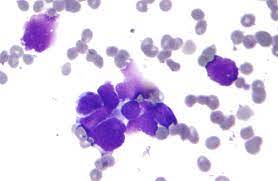
cancer cells/photo:en.wikipedia.org

Protective acids: a rocky road

As shown by Bode and colleagues in 2012, this was the first study to demonstrate that it was possible to add an element of a hitherto unexplored chemical group to proteins fragments and do so with great speed and stability. Nevertheless, this compound was not stable with strong acids hence could not be utilized in automated synthesis.

To endure the tough environment that was applied to the sensitive boron compound in normal laboratory robots, the compound would require protection in the form of a chemical packaging, but this was easier said than done. The researchers experimented with a number of strategies in four years to little effect.

The discovery was made by mistake and eventually, the discovery occurred when a doctoral student tried an experimental method that the team had indeed thought was ineffective. The resulting protective compound binds to the boron group on three sides, therefore, being unable to be terminated in the acids in protein production.

According to Bode, such fundamental research, in which there is no assurance of success, is feasible only due to the unrestricted funds provided by the Swiss National Science Foundation and ETH.

Inorganic amino acids and cancer treatment

The ETH method implies that new peptide and protein drugs or drugs of medical interest to cure cancer that are prone to clumping, can now be produced via the usual laboratory protocols.

Moreover, special amino acids that are not natural can also be incorporated in the location of choice on the poorly soluble proteins. As an example, the chemists can functionalized these building blocks in a protein in a specific way in case they wish to attach it to an active substance on a particular location. Some of the applications of antibody-drug conjugates prepared through this method include cancer treatment procedures that do not damage normal tissues.

The way in which the method will be applied to clinical practice is not yet clear. In 2020 Bode co-founded the ETH spin-out Bright Peak Therapeutics, which applications the technologies invented in his lab to build immunotherapies to fight cancer. A therapeutic agent has already entered clinical trials and the new method based on boron may assist in increasing the size of the product pipeline of the spin-off.