Michelle Obama lashes out at Trump, overshadows Joe Biden, Kamala at 2020 Convention

Wearing a viral DNC ‘V-O-T-E’ necklace, Michelle Obama brought to the Democratic National convention Monday an entirely new twist to lash out at President Donald Trump with her fiery speech that obliterated the candidates.

Urging Americans to vote for Joe Biden, she said, he “is not perfect,” but “there is no perfect candidate, no perfect president… His ability to learn and grow — we find in that the kind of humility and maturity that so many of us yearn for right now.”

Reiterating the popular contention that things cannot go worse than what they are, she reminded the US voters that “if you think things cannot possibly get worse, trust me, they can — and they will if we don’t make a change in this election.”

Overshadowed Joe Biden, Kamala Harris

The former First Lady said in a pre-recorded two-hour video address, “If we have any hope of ending this chaos, we have to vote for Joe Biden like our lives depend on it.” She said the country had been “living with the consequences” of the 2016 election and reminded that apathy to vote for right candidate results in disaster.

The widely popular message caught up with Republicans who described it as overshadowing the main candidates — Joe Biden and Kamala Harris — in the 2020 Democratic National Convention. In fact, the message has obliterated all the negative views which may have gone in among the democrats since the selection of Kamala Harris and not other candidates in waiting.


“Whenever we look to this White House for some leadership or consolation or any semblance of steadiness, what we get instead is chaos, division, and a total and utter lack of empathy,” Michelle Obama said, defending the choice of candidates for Presidential race this time.

Divided Nation

Ever since the coronavirus pandemic started “people shouting in grocery stores, unwilling to wear a mask to keep us all safe has made the children of this country torn apart by “torch-bearing white supremacists,” she reminded them. “Sadly, this is the America that is on display for the next generation,” she said. “That’s not just disappointing; it’s downright infuriating.”

“He cannot meet this moment. He simply cannot be who we need him to be for us. It is what it is,” she said sending out a unity call stating that “we live in a nation that is deeply divided,” she reminded.”

Reiterating her infamous 2016 slogan, she said, “when they go low, we go high” and redefined going high means harder path and standing fierce against hatred, unlocking the shackles of lies and mistrust. Finally, she declared that “Donald Trump is the wrong president for our country.”


Trump targets Kamala Harris under oft-rejected ‘natural-born’ citizenship row

US President Donald Trump, who had once brushed aside Newsweek as a source of fakenews has embraced its dubiously opinionated article alleging that Kamala Harris, the Vice Presidential candidate of Joe Biden Kamala is not a natural-born citizen of the United States.

The Newsweek column was aimed at repeating the same old argument leveled against Barack Obama when he contested for the Presidential election in 2008 and Trump was among those who rallied behind it on social media. In fact, he had brought it up several times during his 2016 campaign but in vain. But it smacks of his prejudice against the natural born citizens from the immigrant parents.

What Does US Constitution Say?

In order to become the President or Vice President of the United States, a person must be a natural-born citizen under Section 1 of Article 2 of the US Constitution. Under the 14th Amendment, it clearly states: “All persons born or naturalized in the United States, and subject to the jurisdiction thereof, are citizens of the United States and of the state wherein they reside.”

The Newsweek article takes exception under the tweaked argument that the Amendment does not confer citizenship on everyone born in the US. During the elections, this old argument has often been revived to weaken the candidates and Obama in 2008 was a victim while Kamala Harris stands to witness the same in 2020. However, the poll outcome has remained neutral to such last-ditch efforts by already weakened opponents.

The column by John C. Eastman, a law professor at Chapman University, sought revive the old argument that undocumented immigrants aren’t subject to the jurisdiction of the U.S. and hence, their children though born in the US are not citizens. However, this argument was repeatedly rejected by federal courts and no legal luminary can take shelter to push forward such controversy.

Nervous Trump Camp?

Trump himself proposed such false claim against Obama that he was not born in Hawaii, but rather in Kenya, though he had to withdraw it later. The US Constitution holds the view that anyone born in the country — even if the parents are undocumented immigrants — is a citizen. And that stands unarguably for Kamala Harris, who is set to become the Vice President for sure as Trump camp is dwindling under pressure to prepare for a defeat.

In another article that appeared in Newsweek debate, UCLA law professor Eugene Volokh takes an entirely different view and supports Harris’ citizenship, with citations from the Constitution and the legal interpretation of it in William Rawle’s 1825 treatise on the Constitution. Rawle, who was a lawyer when  the US Constitution was being framed, and served as the federal prosecutor in Pennsylvania during the Washington and Adams administrations, said that “every person born within the United States, …whether the parents are citizens or aliens, is a natural-born citizen.”


It’s Official: Kamala Harris Becomes Joe Biden’s pick for Vice President

As expected, Joe Biden has chosen Kamala Harris, the voice for coloured people as well as Indian Americans and prominent senator from California, as his Vice President running mate, setting the speculations to rest on Tuesday. Her selection is likely to send shockwaves even among her own followers and India as well.

Harris, who was among those who pitched for Presidential race but withdrew later faced off Joe Biden in the 2020 first primary debate on racial issues. Her views, however, stood the ground that Biden has chosen her as she represents not onl the Indian-origin community but also the Black due to her descent.

Kamala’s grandfather was from Chennai who had participated in India’s freedom movement and later served as a senior diplomat when India attained independence. Moreover, she would be the first woman American vice president, if elected.

Harris represents the racial diversity that Biden wanted prominently to reassure the huge number of voters when the Black Lives Matter movement is knocking the very roots of the United states political system despite the vicious Covid-19 is downrating the country’s economy. Kamala Harris, 55, will be 22 years younger to Biden, who would be the oldest president-elect in U.S. history.

22 Years Younger

“You make a lot of important decisions as president. But the first one is who you select to be your Vice President. I’ve decided that Kamala Harris is the best person to help me take this fight to Donald Trump and Mike Pence and then to lead this nation starting in January 2021,” Biden wrote in an email from his campaign to supporters. “I need someone working alongside me who is smart, tough, and ready to lead. Kamala is that person,” he wrote. “I need someone who understands the pain that so many people in our nation are suffering. Whether they’ve lost their job, their business, a loved one to this virus.”

“This president says he ‘doesn’t want to be distracted by it.’ He doesn’t understand that taking care of the people of this nation — all the people — isn’t a distraction — it’s the job,” Biden continued. “Kamala understands that. I need someone who understands that we are in a battle for the soul of this nation. And that if we’re going to get through these crises — we need to come together and unite for a better America. Kamala gets that.”

In her reply, Kamala Harris tweeted, “can unify the American people because he’s spent his life fighting for us. And as president, he’ll build an America that lives up to our ideals. I’m honored to join him as our party’s nominee for Vice President, and do what it takes to make him our Commander-in-Chief.”

Joint Campaign Ahead

Both Biden and Harris will appear together at the campaign from Biden’s hometown of Wilmington, Delaware, on Wednesday.

Harris, a native of Oakland, California, and the child of Jamaican and Indian immigrants, worked as attorney general, closely with Biden’s late son, Beau Biden, when he was Delaware’s attorney general, particularly in challenging big banks amid the housing crisis. She also wrote a book, “The Truths We Hold: An American Journey,” where she revealed how she worked with Beau Biden.

Though Miami debate left behind a bad taste in their views, which Trump immediately tried to focus on. Soon after the announcement, at a White House press conference, Trump said Harris was “nasty” and “disrespectful” to Biden during the primary. “She was nasty to a level that was just a horrible thing, the way she was,” Trump said. “I won’t forget that soon.”

However, after she left the race, Harris had extended her full support to the Biden campaign, holding joint fundraisers and roundtables around issues like the racial disparities in coronavirus cases and protecting the Affordable Care Act. In a June she went on successfully raising $3.5 million for the campaign.

Kamala Opposed India’s Policies

However, back home in India, her selection and possibility to become the US Vice President may send shockwaves as she was among those who opposed New Delhi’s policies in Jammu and Kashmir and revocation of autonomy.

She has reportedly said: “We have to remind the Kashmiri people that they are not alone in the world. We are keeping track on the situation. There is a need to intervene if the situation demands.” Notably, Harris was among the India-origin Democrats, barring Raja Krishnamoorthy, who boycotted the Howdy Modi event in Texas.

When Biden wins the November Presidential election, it will be pertinent for Indian forign minister and the Indian diplomats to work their way through to meet her expectations, especially on Jammu and Kashmir issue.

Google COVID-19 Global Case Map now available throughout world

Google in collaboration with Stanford University has launched a global COVID-19 map to provide media tools to embed up-to-date visualizations of the pandemic in media earlier this year and now extended to throughout the world.

The ‘COVID-19 Global Case Mapper’ allows local reporters to embed a map of their area showing cases and analytics with comparison to the entire local population. “It’s colored by numbers of cases per 100,000 people over the past 14 days and shows you the severity of outbreak by the number of people in each location,” said Simon Rogers, Data Editor, Google News Lab.

Johns Hopkins Covid-19 map

Available for nearly 200 countries, the map is accessible in more than 80 languages worldwide. The data is from the New York Times’ open COVID-19 county dataset and the COVID-19 Data Repository by the Center for Systems Science and Engineering (CSSE) at Johns Hopkins University and is updated daily.

Stanford University’s Big Local News and Pitch Interactive has launched the new global map originally with support from the Google News Initiative (GNI). “More in-depth, country-level data will be added over time as the map is developed further and as journalists around the world use it to explain how the pandemic has spread,” Rogers said in a statement.

The overall number of global coronavirus cases has surpassed the 20 million mark, while the deaths have increased to over 734,000, according to Johns Hopkins University.

Malaria study targeting enzymes instead of pathogens paves way for faster treatment of COVID-19

New research into malaria suggests targeting enzymes from the human host, rather than from the pathogen itself, could offer effective treatment for COVID-19, besides offering faster treatment for a range of many diseases.

The international study, led by RMIT University’s Professor Christian Doerig, proposes a strategy that could save years of drug discovery research and millions of dollars in drug development with the help of repurposing existing treatments meant for other diseases such as cancer.

The approach shows promise for its potential application in the fight against COVID-19 pandemic that has gripped the entire world with over 700,000 deaths already. Published in Nature Communications, the study showed that the parasites that cause malaria are heavily dependent on enzymes in red blood cells where the parasites hide and proliferate.


Antibody array data showing activation of kinases in human red blood cells infected with the malaria parasite / CREDIT: RMIT University


Since there are drugs developed for cancer which inactivate these human enzymes, known as protein kinases, to effectively kill the parasite.This method represents an alternative to drugs that target the parasite itself, instead of focusing on enzymes. During the infection, the host cell enzymes were activated revealing novel points of target when the parasite exists in human body host.

Lead author, RMIT’s Dr Jack Adderley, said,”These host enzymes are in many instances the same as those activated in cancer cells, so we can now jump on the back of existing cancer drug discovery and look to repurpose a drug that is already available or close to completion.”

Repurposing of Drugs in Future

In addition to enabling the repurposing of drugs, the approach is likely to reduce the drug resistance, as the pathogen cannot escape by simply mutating the target of the drug, as is the case for many available antimalarials, he noted. Moreover, this approach has the potential to considerably reduce the cost and accelerate the deployment of new and urgently needed antimalarials, explained Dr Adderley.

Doerig, Associate Dean for the Biomedical Sciences Cluster at RMIT and senior author of the paper, described the findings as exciting since as drug resistance is one of the biggest challenges in modern healthcare.

“By targeting the host and not the pathogen itself, we remove the possibility for the pathogen to rapidly become resistant by mutating the target of the drug, as the target is made by the human host, not the pathogen,” said Doering.

Doerig’s team will now collaborate with the Peter Doherty Institute for Infection and Immunity (Doherty Institute) to investigate potential COVID-19 treatments using this approach. Doherty. a Nobel laureate, is known already as vocal voice about the Covid-19 treatment and vaccines.

Fatal Cancer found in dinosaur that lived in present Canada 76 million years ago

Roughly 76 million years ago, a Centrosaurus that lived in what is now Canada was walking around with a malignant tumour in its lower leg, found scientists based on its deformed fossil bone.

The cancer was diagnosed osteosarcoma and this is the first time that cancer has been confirmed in a dinosaur, although scientists have identified benign tumours in Tyrannosaurus rex fossils in the past.
Researchers say that the tumour could have eventually been fatal, but the Centrosaurus probably died in a flood with the rest of its herd.

dinosaur bone cancer / © ROYAL ONTARIO MUSEUM/MCMASTER UNIVERSITY

This deformed bone had a malignant tumor in the dinosaur fossil of partial fibula—a bone from the lower leg—belonged to a horned, plant-eating Centrosaurus that lived about 76 million years ago in what is now Dinosaur Park in southern Alberta in Canada.

Paleontologists initially thought the bone was deforemd due to a fracture but a new study, published in The Lancet Oncology, found it after comparing it with a bone tumor from a human patient. The osteosarcoma cancer primarily attacks teens and young adults and causes tumors of immature bone tissue, frequently in the long bones of the leg.

Similar cancer diagnosis in dinosaurs

In the past such a tumor was found in Tyrannosaurus rex fossils and arthritis in duck-billed hadrosaurs, as well as an osteosarcoma in a 240-million-year-old turtle but they were benign. The present study is the first to confirm a dinosaur cancer diagnosis at the cellular level.

Scientists examined the full fossil with high-resolution computerized tomography scans and examined thin sections under the microscope to find the tumor advanced enough that it had probably plagued the animal for some time.

A similar case in a human, left untreated, would be fatal, they wrote. However, because the fossil was found in a bone bed with lots of other Centrosaurus specimens, the dinosaur likely died in a flood with the rest of its herd and not from the cancer, they said.

WATCH LIVE TODAY: Starlink Mission all set to take off today

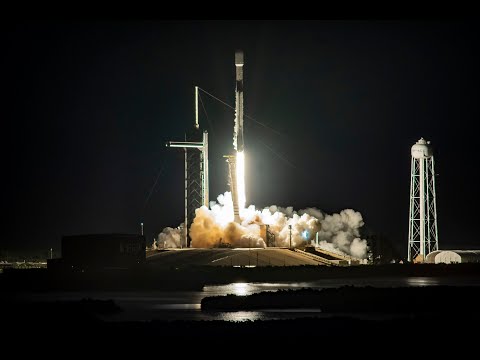
US private space agency SpaceX is targeting Friday, August 7 at 1:12 a.m. EDT, 5:12 UTC, for launch of its tenth Starlink mission which will include 57 Starlink satellites and 2 satellites from BlackSky, a Spaceflight customer.

The standard vehicle Falcon 9 will lift off from Launch Complex 39A (LC-39A) at Kennedy Space Center in Florida. In case you miss the event, a backup opportunity is available on Saturday, August 8 at 12:50 a.m. EDT, 4:50 UTC.

You can watch the launch webcast here, starting about 15 minutes before liftoff.

Sequential Deployment

Falcon 9’s first stage previously supported Crew Dragon’s first demonstration mission to the International Space Station, launch of the RADARSAT Constellation Mission, and the fourth and seventh Starlink missions. Following stage separation, SpaceX will land Falcon 9’s first stage on the “Of Course I Still Love You” droneship, which will be stationed in the Atlantic Ocean.

The BlackSky Global spacecraft will deploy sequentially beginning 1 hour and 1 minute after liftoff, and the Starlink satellites will deploy approximately 1 hour and 33 minutes after liftoff. Starlink satellites will be deployed in a circular orbit, as was done on the first through fourth Starlink missions.

Weather Forecast

The weather forecast is favorable for SpaceX’s Friday early hours launch from Kennedy Space Center, the Space Force said Wednesday. “The primary weather concern for launch day will be mid- and upper-level clouds streaming across the region from the south along with cumulus clouds over the nearshore waters,” 45th Weather Squadron forecasters said on Wednesday.

The 10th Starlink launch has been delayed nearly 10 times due to technical hurdles so far and several attempts in June and July were rolled back for additional hardware work. Today’s launch will be the booster’s fifth flight.

All Starlink satellites  on this flight are equipped with a deployable visor to block sunlight from hitting the brightest spots of the spacecraft – a measure SpaceX has taken as part of their work with leading astronomical groups to mitigate satellite reflectivity.

Passive Immunity may be a fast track in providing relief for Covid-19 pandemic: Study

Mutated versions of the 80r and m396 antibodies can be produced and given as a therapeutic to fight the Covid-19 infection

A researcher, using computer models to understand the structure of viruses at the molecular level, has figured out how the old 2002 SARS coronavirus virus functions vis-a-vis the novel coronavirus or SARS-COV-2 that causes Covid-19. He discovered that sequence differences prevent 80R and m396 from binding to COVID-19 using ‘in silico’ analysis to fast-track passive immunity.

Since both illnesses (SARS-CoV and SARS-CoV-2) share the same spike protein, the entry key that allows the virus into the human cells, Padilla-Sanchez plans to take the antibodies found in the first outbreak in 2002 — 80R and m396 — and reengineer them to fit the current COVID-19 virus.

In his June 2020 publication in the online journal, Research Ideas and Outcomes, he describes efforts to unravel this problem using computer simulation based on his discovery that sequence differences prevent 80R and m396 from binding to COVID-19.

“Understanding why 80R and m396 did not bind to the SARS-CoV-2 spike protein could pave the way to engineering new antibodies that are effective,” Padilla-Sanchez said. “Mutated versions of the 80r and m396 antibodies can be produced and administered as a therapeutic to fight the disease and prevent infection.”

Supercomputing Process

His docking experiments showed that amino acid substitutions in 80R and m396 should increase binding interactions between the antibodies and SARS-CoV-2, providing new antibodies to neutralize the virus. “Now, I need to prove it in the lab,” he said.


Structural model of SARS-CoV-2 infection. This structural model was built with UCSF Chimera using high-performance computers (Bridges Large and Frontera). The model shows 16 viruses, with the spike proteins shown in green (PDB ID: 6VSB) and an actual lipid bilayer membrane, with ACE2 dimers shown in magenta. All these structures are at atomic resolution. The length of the membrane is approximately 1 micrometer / CREDIT: Victor Padilla-Sanchez


For this research, Padilla-Sanchez used supercomputing resources and ran the docking experiments for computational modeling and analysis of protein structures. The software virtually binds the proteins then provides a score for each binding experiment. “If you find a good docking position, then you can recommend that this new, mutated antibody should go to production.”

Currently, various labs across the world are already testing vaccines. “If we don’t find a vaccine in the near term we still have passive immunity, which can prevent infection for several months as long as you have the antibodies,” Padilla-Sanchez said. “Of course, a vaccine is the best outcome. However, passive immunity may be a fast track in providing relief for the pandemic.”

As of July 2020, COVID-19 has infected more than 16 million people worldwide with more than 630,000 deaths with no vaccine or therapeutics to fight the disease.

Russia completes Phase III trials, gets ready to first vaccinate doctors in October

Despite apprehensions on the sample numbers of human trials, Russia is preparing a mass vaccination campaign against the novel coronavirus in October, after a vaccine completed clinical trials including Phase III trial on Saturday, August 1, 2020.

Health Minister Mikhail Murashko said the Gamaleya Institute, a state research facility in Moscow, had completed clinical trials preparing the required paperwork to register it, Interfax news agency reported. First to be vaccinated will be the frontline workers, doctors and teachers.

“We plan wider vaccinations for October,” Murashko was quoted as saying. Russia’s first potential COVID-19 vaccine is likely to apply for regulatory approval in August. As of Saturday, Augutst 1, 2020, Russia reported 95 new deaths from the novel coronavirus, taking its total to 14,058 out of a total 845,443 cases.

Russian vaccine

As already reported, the Gamalei Institute of Epidemiology and Microbiology had been working on an adenovirus-based vaccine at a lighting speed and announced its Phase III trials on June 18. The Sechenov First Moscow State Medical University to conduct and complete the trails of the vaccine.

The clinical trials had been conducted on volunteers by the Institute for Translational Medicine and Biotechnology of the Unviersity and the first group of volunteers were discharged on 15 July and the second on 20 July.

The head of the Russian Direct Investment Fund, Kirill Dmitriev, took pride in claiming Russia’s success in developing a vaccine the same way erstwhile Soviet Union’s 1957 launch of Sputnik 1, the world’s first satellite. Despite questions raised by some Western media whether Moscow is putting national prestige before safety.

More than 100 vaccines are being developed around the world against the COVID-19 pandemic but only four are in final Phase III human trials, according to World Health Organization (WHO) data, including three developed in China and another in Britain. The vaccine developed by Russia is not among them.

Other Vaccines

Elsewhere, Gilead Sciences, Oxford University’s researchers and American biotech company Moderna are at the forefront of developing a Covid-19 vaccine, while a Canadian and Chinese joint project is equally pushing the date for completion of clinical trials.


Ahead of US schools reopen, study finds kids 100 times more potential to spread Covid-19

As schools in the United States are gearing up to open, anew study has come out stating that children are equally susceptible to infection with severe acute respiratory syndrome coronavirus 2 (SARS-CoV-2) but exhibit mild symptoms compared with adults. Though data is sparse on children, they do spread respiratory and gastrointestinal illnesses far wider than previously thought.

Early reports did not find strong evidence of children as major contributors to SARS-CoV-2 spread owing to school closures ahead of the pandemic and no large-scale investigations of schools in community transmission had been conducted, said the researchers. Now that public health systems ponder to reopen schools and day cares, the new study on children’s transmission potential has sent alarm bells to public health officials in the US and elsewhere.

The study conducted between March 23 and April 27, 2020 on replication of SARS-CoV-2 in older children found similar levels of viral nucleic acid as adults, but significantly greater amounts of viral nucleic acid among those younger than 5 years. The SARS-CoV-2 reverse transcriptase–polymerase chain reaction (PCR) was performed on nasopharyngeal swabs collected at various hospitals and clinics including drive-through testing sites at a pediatric tertiary medical center in Chicago, Illinois.

This cohort included all individuals aged younger than 1 month to 65 years who tested positive for SARS-CoV-2 or those with symptoms suggestive of a COVID-19–compatible illness and/or high-risk exposures. In all, 145 patients with mild to moderate illness within 1 week of symptom onset were tested.

Divided in 3 groups — young children younger than 5 years, older children aged 5 to 17 years, and adults aged 18 to 65 years — researchers found young children had significantly equivalent or more viral nucleic acid in their upper respiratory tract compared with older children and adults. Some had even 100-fold greater amount of SARS-CoV-2 in the upper respiratory tract.

Thus, the study suggests that young children can potentially be important drivers of SARS-CoV-2 spread in the general population, and are more likely to transmit. “Behavioral habits of young children and close quarters in school and day care settings raise concern for SARS-CoV-2 amplification in this population as public health restrictions are eased,” wrote authors in their paper published in the journal JAMA Pediatrics.

What’s India’s future once Coronavirus is contained? Collection of Expert Views

Now that India is bracing for relaxation of nationwide lockdown imposed in the wake of coronavirus pandemic, economists and world renowned Indian brains had a discussion on almost all the aspects of Indian life from e-commerce to gold-buying spree to frugal mindset to sanitation consciousness.

Here are some takeaway points:

General Outlook

  1. India seems to have suppressed the curve for long but not now with 1.6 million cases and more than 36,000 deaths so far. It looks like it might escalate further.
  2. Possibility of W Curve –  There is a good chance of re-occurrence of the virus, which could see a possibility of regular lockdowns. Businesses need to plan accordingly.
  3. Capital inflow will look for countries that are less battered. Western economies are badly battered while countries like India, Indonesia, among others are not so battered.
  4. Emotional and Economic backlash against China is expected. Already, countries and companies are working on strategy to pivot away from China as part of their supply chains. Japan has announced packages for it’s companies bringing back manufacturing home. Businesses need to keep this in mind and work accordingly.

Discretionary Spending

  1. For individuals, health and safety will become No.1 on their agenda from the 3rd of 4th place. There will be more spending on this and reduction in other discretionary spending.
  2. The ticket size of spending will drop for a while. People will spend on cheaper goods than on expensive goods, or delay spending for a while.
  3. Extreme acceleration in digital economy — home education, home entertainment, home fitness, etc
  4. Loyalty shock: People will be less loyal towards brands as other aspects will take over. People will switch brands faster due to various other concerns like safety.
  5. General Trust deficit among stakeholders like vendors, customers, employees, borrowers, banks, etc. visible. Banks will have trust deficit with borrowers, companies will have trust deficit with suppliers, and it goes on.

Liquidity and P&L

  1. Segregate Good Costs and Bad Costs
  2. Good costs (Eg. Digitization, tech costs, digital marketing, best employees, etc) need to be insulated and protected
  3. Bad Costs (Eg. Fancy office, unnecessary spending, bad performers, traditional working methods) need to be ruthlessly eliminated. Companies will not entertain or be emotional about non-core businesses.
  4. Be Frugal – Not necessary to have fancy office, fancy cars, excess employee strength, etc. Companies tend to remove all the flab and be lean.
  5. Maintain Good behaviour – Have frank and open conversation with all stakeholders like suppliers, employees, etc and try to find the middle ground, so that the burden can be shared justly.
  6. Be Future Ready – In this crisis, there will be winners and there will be losers. Those who re-orient their strategy will be winners.

Govt Stimulus

  1. Economy was in poor shape even before Covid. The govt has little leeway to provide large stimulus.
  2. Govt earns about $60-70 billion a week from taxes. Imagine what a hit a 5-week lockdown will have. Size of Indian economy is about $3 Trillion. In some scenarios, it is predicted that Govt could take a hit of nearly $1 Trillion.
  3. Inequality has already sharpened. The gap between rich and poor has further increased. Govt needs to concentrate on mass health and mass welfare. If not, 200 million people could sink into poverty.
  4. Govt must explore printing currency (Quantitative easing), but there are limitations here. It has side effects like inflation. Rich countries have more leeway for such quantitative easing.
  5. Govt will focus on more capital from outside.

Result of backlash against China

  1. Internationally, and domestically there is an emotional and economic backlash against China due to border clashes recently.
  2. Businesses with supply chains passing through China will need to insulate themselves and build alternatives.
  3. India and Indian businesses need to try to become the contract manufacturer of the world, just like China is. India needs to make use of this opportunity.
  4. All big wealth funds and sovereign funds will be awash with liquidity. This liquidity needs to be attracted to India.
  5. In every sector, there are good and bad companies. Management has to invest correctly in manufacturing and modern tech, be honest and fair to all stakeholders, etc., Those companies with good management and displaying good behaviour will come out victorious.

Export Business

  1. Indian exporters need to build trust. They need to live up to promises made. They need to deliver on time and deliver the promised quality. They shouldn’t make incorrect promises just to get more business.
  2. Bangladesh export business has built trust and a good reputation. Despite a chequered past (low quality, human rights issues, etc) they have managed to overcome and are winning.

Wholesale, Retail, etc.

  1. More people will prefer to buy from retail stores where there is perception of safety (Eg. Sanitation, cleanliness, crowds, etc). They will move away from malls and mega markets. Many will move towards online stores. Wholesale suppliers also need to concentrate on such retailers.
  2. Customers also need to be ring-fenced.
  3. A high end restaurant in Delhi is giving 40% of bill value as a gift coupon to be used anytime up to December 2020.
  4. Car companies are giving buy back offers, in case the customer loses his job in the next one year.
  5. Pricing needs to be re-approached. People are looking for cheaper prices or cheaper good.

Brick & Mortar in Discretionary Spends

  1. Cinemas could take a big hit in the near future. Entertainment could move to home.
  2. Because of this, cafes and restaurants might see some increase in business. Many chains are implementing measures like social distancing like lesser furniture, etc, to build confidence to consumers.
  3. Smaller retailers need to send a message of safety. Eg: Have sanitisers, put up notice of no Covid positive employee found in the store, maintain social distancing, etc.
  4. Since travel and tourism will take a big hit, connected purchases will also shift. Purchases that happened abroad will happen at home. (Eg. Electronics, Luxury goods and apparel, etc.,). But travel related purchases will drop.

Real Estate

  1. Indian real estate economy is sitting on a huge inventory with a huge cost-of-carry
  2. The industry is highly leveraged with low margins.
  3. Unsold inventory is considered an appreciating asset, but might turn out to be a flawed view.
  4. Market was already overdue for a huge reset, which will be accelerated by the pandemic.
  5. Also, the sharing and co-working space could be hit as more businesses try to have their own smaller spaces and more WFH employees.

Jewellery 

  1. Gold-as-an-asset could see appreciation.
  2. Jewelry, as a discretionary spend, will take a hit.
  3. The Indian wedding industry will take a hit, as social distancing, cost consciousness, travel avoidance, etc., will prevent fat weddings, destination weddings, etc. This will hit all connected industries. (Eg. Silk, partywear, etc)

Financial Markets

  1. There will be value destruction and value creation in different companies in the same sector.
  2. High Debt low margin companies will find it difficult. (indicates risky or unscrupulous management)
  3. High Debt high margin companies could be rewarded, but caution needs to be exercised. (may indicate sharp or dynamic management)
  4. No debt high margin companies are best rewarded now.
  5. Know more about the CEO and management and their actions and activities. (Eg: 3 branches of Starbucks were kept open in India for last few days. The CEO of Starbucks India sat in the Fort (Mumbai) branch throughout the day to give his employees confidence and motivation).
  6. New tech unicorns will be born. Those involved in cyber security, cloud services, online education services, etc.

Forex Markets

  1. No doomsday scenario (i.e. Dollar will become 90 rupees etc). Such scenarios don’t seem realistic
  2. Govt should be buying as much oil as possible, as such prices may never be seen in the future of oil.
  3. As the western economies are more battered and Indian economy too faces same fate, depending on the spread of the disease in India.
  4. Watch out for sharp spikes in the market. Better to avoid the spikes.

Outlook for near future

  1. Large Companies survive.
  2. Huge concern seen for employees. Companies are paying the employees even when closed.
  3. HUL decided not to cut a single rupee for their suppliers, service providers, etc. No haircuts.
  4. Safety of employees and customers is becoming a major point of focus.
  5. This is possible because they have reserves of funds, etc that have been built up over the years.

Medium and Small businesses

  1. They have to work with thin capital reserves. Excess capital is taken out of the business and applied into personal assets.
  2. Small businesses take out the surplus and purchase personal assets instead of re-investing in the business. There are various factors and motivations here.
  3. Because of this, they are unable to meet the cash expenses of even the next month.
  4. A high end restaurant chain in Delhi (with Rs.40 crore annual turnover) is unable to pay the salaries of the current month as it has no liquid reserve. Owner has invested in personal assets like house in London, etc.
  5. Medium and Small business need to have a look at how they can build some business reserves to endure such disruptions.

‘Force Majeure’ in Contracts

  1. Should force majeure clauses be triggerd in various contracts like rent, supply, etc? It will lead to litigation, but there is no point in getting into litigation now.
  2. All parties have been affected by the crisis. The tenants, the landlords, the lenders/financiers, etc.
  3. Parties need to sit across the table and find a common ground and mutually decide upon the costs, rentals, etc. Burden has to be shared.

Work From Home Scenario

  1. It is possible for lot of employees to not visit the office and still be productive.
  2. In one corporate office, it is found that it is enough that only 30% staff stay in the office. Others can be connected from homes. This leads to lesser commute expense, stress of the commute, time wasted, etc.,
  3. Parents can take care of children more effectively while Working From Home. There can be dark hours when no calls will be made.

Optimism

As per a McKinsey survey of entrepreneurs released in May, 53% of Indian entrepreneurs are optimistic, while only 25% of Japanese entrepreneurs are optimistic. Now it’s the equally bad everywhere.


100-million-year-old microbes revived in Japan labs, only to see them hungry and ready to multiply

A team of researchers from Japan have brought some sediment samples from the seafloor to study the past climate. Small life forms such as microbes trapped in the sediments too were revived too given the right food and right lab conditions and to the surprise of the researchers, they are hungry and ready to multiply aven after remaining dormant for over 100 years.

In a new study published in Nature Communications, the team of Japanese researchers said they gathered the ancient sediment samples 10 years ago during an expedition to the South Pacific Gyre, where the lowest productivity and fewest nutrients are available to fuel the marine food web. On the seafloor, there are layers of sediment consisting of marine snow or organic debris sourced from the sea surface, dust, and particles carried by the wind and ocean currents. These microbes get trapped in this sediment.

Not a lifeless zone

“Our main question was whether life could exist in such a nutrient-limited environment or if this was a lifeless zone,” said the paper’s lead author Yuki Morono, senior scientist at the Japan Agency for Marine-Earth Science and Technology (JAMSTEC). “And we wanted to know how long the microbes could sustain their life in a near-absence of food.”

The research drillship JOIDES Resolution drilled numerous sediment cores 100 meters below the seafloor and nearly 6,000 meters below the ocean’s surface. They found that oxygen was present in all of the cores, suggesting that if sediment accumulates slowly on the seafloor at a rate of no more than a meter or two every million years, oxygen will penetrate all the way from the seafloor to the basement.

Such conditions give room for aerobic microorganisms which require oxygen to live to survive for geological time scales of millions of years.

The team, led by Morono, incubated the samples to coax their microbes to grow and results showed that rather than being fossilized remains of life, the microbes in the sediment had survived, and were capable of growing and dividing.

Capable of reviving, growing and dividing

Morono was taken aback by the results in the lab. “At first I was skeptical, but we found that up to 99.1% of the microbes in sediment deposited 101.5 million years ago were still alive and were ready to eat,” he said.

With the newly developed ability to grow, manipulate and characterize ancient microorganisms, the research team is looking forward to applying a similar approach to other questions about the geological past as life for microbes in the subseafloor is very slow compared to life above it, and so the evolutionary speed of these microbes will be slower.

“We want to understand how or if these ancient microbes evolved,” said Morono. “This study shows that the subseafloor is an excellent location to explore the limits of life on Earth.”

French Biriyani Gets Wider Appaluse for Danish Sait

Amazon Prime Video’s Kannada film French Biriyani recently saw a release on the 24 July 2020 on the platform of Amazon Prime Video. The film stars Danish Sait and has received immense commendations from the audience for the laugh riot it is! The comedy-drama film is sure to leave you with burst of giggles.

“It’s a good feeling that the film has been appreciated and admired”, says Danish Sait about his film ‘French Biriyani’.

Talking about how does he feel about the success of French Biriyani, Danish Sait replied, “I feel very happy and I am glad that our promise to make people laugh has been delivered. I feel like a political party who lives up to the promise. it’s a good feeling that the film has been appreciated and admired. ”

In the Midst of Coronavirus

The actor said further added “In the midst of the pandemic, what can we do except for making people laugh and I am glad that we managed to do that! I am also very honest about the fact that the good will not be taken to the head and I am gonna wake up the next day and work harder.”

When asked if the pressure on the comedian playing a comic role is a lot more than a pressure on an actor playing a comic role, Danish Sait said, “To be honest with you it will be really unfair for one person to take the entire film’s pressure as a film is the sum of its total parts.”

The actor further added, “The only person who really has pressure, whether it is an actor playing a comic role or a comedian playing a comic role, is the director. Yes, when you do comedy, the pressure becomes a bit higher but I do realize with all reviews that I have read in general I believe that people have managed to separate the two.”

Danish continued: “They see a film is a film, the shows that you do on stage are separate and your content is separate. As long as you enjoy what you do, I think the real pressure is on the director and not the actors because then you’re just there in the front. The moment I put pressure on myself I think I am taking myself too seriously and I am not that guy.”

The film is directed by Pannaga Bharana and is produced by Ashwini Puneeth Rajkumar and Gurudath A Talwar under the banner of PRK productions. Make sure that you grab a bowl of popcorn and watch giggle-inducing film!

NEP 2020 Highlights; ‘No One to be Left Behind,’ Says Minister

India’s Union Minister for Human Resource Development Ramesh Pokhariyal ‘Nishank’ has unveiled the National Education Policy 2020 aimed at bringing transformational reforms in school and higher education systems in the country.

Speaking at media briefing in New Delhi Wednesday, after Cabinet gave its approval to the New Education Policy 2020, the HRD Minister said that the NEP was drawn up after consultation and discussion process. He said 2.25 lakh suggestions have been received after the draft was placed in public domain for consultations.

Nishank said that this National Education Policy 2020 will bring transformational reforms in both school and higher education sectors. He said that NEP2020 will ensure universal access to high-quality Early Childhood Care & Education across India. “We will focus on developing social capacities, sensitivity, good behaviour, ethics, teamwork and cooperation among children through a joyful pedagogy,” he added.

The new NEP will replace 34-year-old National Policy on Education (NPE), 1986. MoS for HRD Ministry Sanay Dhotre said that the NEP 2020 is most comprehensive, radical and futuristic and does not recognise any barrier in bringing quality and outcome-based education to each and everyone. It now includes children during their most foundational years, that is 3-5 years, for their care and education.

Critical thinking, experiential and application-based learning, flexibility in learning, focus on life skills, multidisciplinary, and continuous review are some of the salient features of this policy, he noted. Bringing back 2 crore out-of-school and drop-out children and universalisation of school education from 3 years onwards — reflect commitment to the philosophy of ‘no one to be left behind’, he said.

Here are the Highlights of NEP 2020:

1. 10+2 board structure will be dropped

2. New school structure will be 5+3+3+4

3. Upto 5 pre school, 6 to 8 Mid School, 8 to 11 High School , 12 onwards Graduation

4. Any Degree will be 4 years

5. 6th std onwards vocational courses available

6. From 8th to 11, students can choose subjects

7. All graduation course will have major and minor. A science student majoring in Physics can choose Music as minor.

8. All higher education will be governed by only one authority

9. UGC and AICTE (technical and MBA education) will be merged

10. All University, government, private, Open, Deemed, Vocational institutions will have same grading system and rules.
11. New Teacher Training board will be setup for all kinds of teachers, no state can change

12. Same level of Accreditation to any collage. Based on rating, colleges get autonomous rights and funds

13. New learning program for parents to teach children up to 3 years at home and for pre-school 3 to 6

14. Multiple entry and exit from any course

15. Credit system for graduation for each year. If a student takes break, he can come back again to complete course

16. All school exams will be semester wise twice a year

17. The syllabus will be reduced to core knowledge of any subject

18. More focus on student’s practical and application knowledge

19. For any graduation course, if student completes only one year he will get a basic certificate, if he completes two years, then he will get Diploma certificate and if he completes full course, then he will get degree certificate. No year loss for any student.

20. All the graduation courses in Universities will be governed by single authority.

Mega Millions: No winner for Tuesday numbers July 28, 2020, Next Jackpot Friday at $22 Million Now

The Mega Million Lottery Winning numbers for the draw held at 11 p.m. ET are — 17,20,27,31,34, and Gold Ball 19, with megaplier at 4X. The prize amount for Tuesday’s lottery is $20 Million and the cash option is for $16.2 Million but there is no winner of these jackpot numbers pushing the amount to 422 million for the next draw on Friday, July 31, 2020.

Mega Millions lottery game holds its draw every Tuesday and Friday. The last game on Friday, July 24, 2020, had the jackpot prize of Mega Millions lottery at $124 Million and the cash option was for $100.8 Million. It was won in New Jersey and the ticket was sold in Bayonne. So far, the state of New jersy won two jackpots this year.

Mega Millions lottery as mentioned earlier was drawn on Friday, July 24, 2020 and the winning numbers were 8, 33, 39, 54, 58, besides the Mega Ball number 17. The jackpot prize amount was $124 Million and the cash option is $100.8 Million. Prior to it, on June 9, 2020, a jackpot of $414 million ($319.9 million cash) was won by an anonymous player in Glendale, Ariz, and on February 11, 2020, a jackpot of $202 million ($142.6 million cash) was won for a ticket sold in Edison, N.J.

How to play Mega Millions game?

If you are interested in playing the Mega Millions lottery you need to purchase a ticket from a licensed lottery retailer. Ticket sales deadlines vary according to jurisdiction, usually one or two hours before the draw. After purchasing the lottery, you need to choose five numbers from one to 70 for the white balls and then you need to choose one number between 1 and 25 for the gold Mega Ball. Players have the option of choosing the number themselves or the lottery terminal will select them randomly for them.

Cost of the Mega Millions Lottery ticket

The price of the Mega Millions ticket is $2 per play. You can add the Megaplier to the Mega Millions lottery ticket by paying an additional $1. The Megaplier number is randomly selected just before the draw and it will range from X2, X3, X4, or X5. If a player wins a prize using the Megaplier their prize will be multiplied based on this configuration. The Megaplier number is chosen from a pool of 15 balls — 5 of them marked with X2, six with X3, while 3 of them with X4, and just 1 will have X5.

Vidya Balan gives a glimpse at her character in Shakuntala Devi as an evergreen one

Vidya Balan has spoken about her character in Shakuntala Devi as one that would remain chirpy and happy forever. Shakuntala Devi is one of the most anticipated releases set for July 31 and it showcases the life of the ‘Human Computer’ Shakuntala Devi who was a world class educator and a brilliant mathematician.

Essaying the role of Shakuntala Devi is none other than Vidya Balan and the film is just a few days away from its release. In a recent interview, talking about how her character in Shakuntala Devi is so chirpy and happy as seen in the trailer, Vidya shared, “Shakuntala Devi loved to play dress up and lived life to her fullest. She kept her hair black till the very end and also loved applying bright lipsticks, red lipsticks.”

She also shared, “We’ve showcased her life from 20’s to 60’s which are like 5 stages. So in every stage the hair makeup costume change which built up alot about the character.”

For Vidya, the experience of portraying the role of a genius who was as lively as Shakuntala Devi was fascinating and it was one if the best characters the actress has played. Apart from Vidya Balan, the film also stars Jisshu Sen Gupta, Sanya Malhotra and Amit Sadh in pivotal roles.

Vidya Balan in Shakuntala Devi promo

The upcoming film will stream on Amazon Prime Video and is directed by Anu Menon. Shakuntala Devi is produced by Sony Pictures Network Productions and Vikram Malhotra and will start streaming on the 31st of July 2020.

Shakuntala Devi demonstrated her arithmetic abilities at the University of Mysore, astonishing people just at the age of six! The audience will witness the magic of math happen on Amazon Prime Video as the biographical drama film ‘Shakuntala Devi’ will see a release on the 31st of July.

An astounding fact about Shakuntala Devi is that she was much ahead of her years and just at the age of six she demonstrated her arithmetic abilities at the University of Mysore without any formal education. The age of six is when most children are in pre-school but Shakuntala was already demonstrating her staggering arithmetic abilities at a university!

Shakuntala Devi was known as ‘the human-computer’ for her awe-striking abilities to perform complex mathematical calculations quickly and once she had even pointed out a mistake made by a computer which is how she attained that name! The audience looks forward to witnessing the highs and lows of Shakuntala Devi’s life on the screens.

The upcoming film ‘Shakuntala Devi’ is directed by Anu Menon and produced by Sony Pictures Networks Productions and Vikram Malhotra. The film also stars Jisshu Sengupta, Sanya Malhotra, and Amit Sadh in prominent roles. You can watch the film on Amazon Prime Video on the 31st of July.

Here’s a hilarious video from film ‘Lootcase’ set for release on July 31

Fox Star Hindi’s upcoming film Lootcase has been making a lot of buzz ever since the trailer was released. As the film nears its release, the makers have been sharing hilarious promos with the most recent one being Gajraj Rao’s character MLA Patil as Uday Bhai from the film ‘Welcome.’

Gajraj Rao shared the video on his social media with a tweaked version of Nana Patekar’s famous dialog from the film and said, “Just like Uday bhai, MLA Patil ke paas bhagwaan ka diya hua sab kuch hai – daulat hai, shohrat hai, izzat hai. Par suitcase?

Watch #Lootcase on @DisneyplusHSVIP from July 31 to find out! @DailyWelcomePic”

Lootcase has a stellar star cast of Kunal Kemmu, Rasika Dugal, Gajraj Rao, Vijay Raaz, and Ranvir Shorey. As Lootcase nears its release, the excitement for the Kunal Kemmu starrer is getting higher and to ensure the same, the makers have been releasing dialog promos and songs from the film.

The most recent dialog promo shows Vijay Raaz talking to his goons about how to flush out someone by using an example that his subordinates don’t understand. Following which he asks them if they subscribed to Nat Geo or not.

Fox star shared the promo on their social media with the caption, “Yeh Junglee Don kaunsi Bhaasha bol raha hai? Lagta hai Nat Geo ka subscription lena hi hoga! See the Youtube bit here:

The story revolves around Nandan Kumar, a middle class family man who finds a suitcase with ?10 Crores in a lonely desolate market on his way back from his night shift. However, the dark past of the suitcase catches up and what happens next— Does he fight or take the survival flight?

Get ready to laugh out loud with this one on July 31 on Disney+ Hotstar


Besides Remdesvir, 20 other drugs can stop Covid-19; Full List

After screening 12,000 drugs from the library of collections ReFRAME, scientists have isolated 21 drugs for their antiviral activity as effective in providing treatment to Covid-19 patients depending upon dosage and other modifications. The list includes astemizole for allergies and clofazamine for leprosy, and remdesivir, which are already approved by the the U.S. Food and Drug Administration (FDA).

Nature study authored by a global team of scientists led by Sumit Chanda, professor at Sanford Burnham Prebys Medical Discovery Institute, has identified these existing drugs that stop the replication of SARS-CoV-2, which causes coronavirus or COVID-19.

The scientists analyzed 12,000 known drugs for their ability to block the replication of SARS-CoV-2, and reported 100 molecules with confirmed antiviral activity in tests and found 21 of these drugs to be effective at concentrations that could be safely given to patients. Moreover, four of these compounds were found to work synergistically with remdesivir, which is now a standard-of-care treatment for COVID-19 patients.

Extensive testing

“Remdesivir has proven successful at shortening the recovery time for patients in the hospital, but the drug doesn’t work for everyone who receives it. That’s not good enough,” says Chanda. “As infection rates continue to rise in America and around the world, the urgency remains to find affordable, effective, and readily available drugs that can complement the use of remdesivir, as well as drugs that could be given prophylactically or at the first sign of infection on an outpatient basis.”

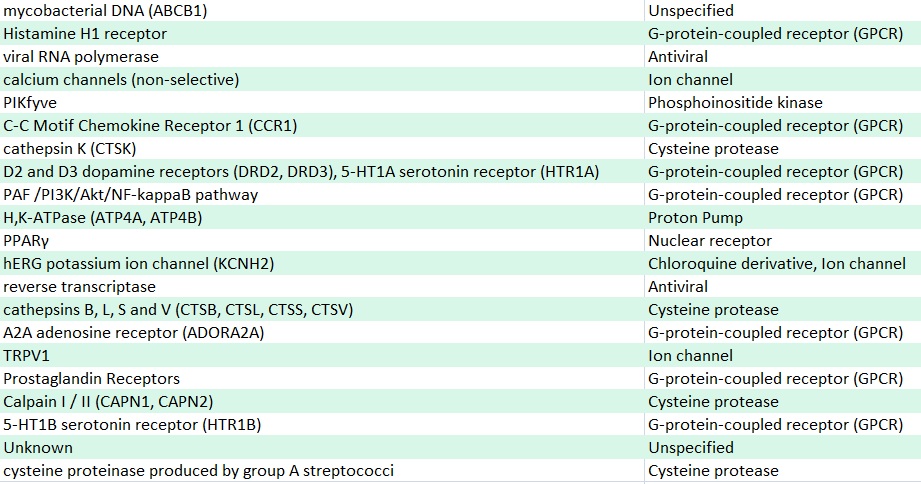
The team conducted extensive testing and validation to evaluate the drugs on human lung biopsies of Covid-19 patients and also evaluated the drugs for synergies with remdesivir, besides monitoring dose-response relationship between the drugs and antiviral activity. Here’s the full list of 21 drugs:

Of the 21 drugs,the scientists found:

  • 13 have previously entered clinical trials and are found effective at concentrations, or doses, that could potentially be safe for COVID-19 patients.
  • Two are already FDA approved — astemizole (allergies), clofazamine (leprosy), while remdesivir has received Emergency Use Authorization from the FDA.
  • Four worked synergistically with remdesivir, including the chloroquine derivative hanfangchin A (tetrandrine), an antimalarial drug that is into Phase 3 clinical trials.


What’s Next?

The researchers are currently testing all 21 compounds in small animal models and lung organoids that mimic human tissue. Once these studies are favorable, the team hopes to approach the FDA for more clinical trials to test these drugs for COVID-19 patients.

The drugs were identified after screening of more than 12,000 drugs from the ReFRAME drug repurposing collection–the most comprehensive drug repurposing collection of compounds that have been approved by the FDA for other diseases.

Tiny Dinosaur claim by Chinese Scientists in March Proved Wrong, could be lizard; Nature retracts paper

A diminutive bird-like skull, exquisitely preserved in amber for almost 100 million years, did not belong to the smallest dinosaur ever discovered. It was probably a lizard. The skull was believed to offer a whole new lineage of birds, but the paper was retracted on Monday.

The story on tiny dinosaur, its skull measuring only 7.1mm long, smaller than the bee hummingbird, was  reported by Prof Jingmai O’Connor and his team members referred to the specimen as “Teenie Weenie”.

When questioned whether it was a bird or a dinosaur, Prof O’Connor then told media that the lines were extremely blurry. “We think it’s a bird – the skull has a shape that only occurs in birds and some dinosaurs. However there are no skull characteristics that define birds, therefore it could be a dinosaur or even something else,” she said. “It’s the weirdest fossil I’ve ever been lucky enough to study.”

Co-author Dr Luis Chiappe, from the Natural History Museum of Los Angeles County, said: “It’s lucky this tiny creature was preserved in amber, as such small, fragile animals aren’t common in the fossil record.”

Retracted Now

New findings revealed that it did not belong to the smallest dinosaur ever discovered. “I agree we were wrong and an unpublished specimen will eventually prove it,” palaeontologist and study author Jingmai O’Connor told Retraction Watch, though she disagreed with the choice to retract the paper. New evidence suggests that the specimen, trapped in amber in what is now Myanmar nearly 100 million years ago, might actually be a lizard.

The authors of the paper, published in Nature on 11 March, say that their original description of the fossil — a bird-like skull less than 2 centimetres long, its mouth packed with dozens of teeth — is still accurate but its classification as a dinosaur is incorrect.

This fossil trapped in amber was thought to be a dinosaur but is likely a lizard.Credit: Lida Xing

The new data “do definitively say that we were wrong”, says O’Connor, a palaeontologist at the Chinese Academy of Sciences Institute of Vertebrate Paleontology and Paleoanthropology in Beijing, who co-led the now-retracted study.

Andrea Cau, a vertebrate palaeontologist in Parma, Italy,  said the fossil has several characteristics typical of lizards that have never before been seen in a bird-like fossil from that era. “The idea that it was instead a lizard could not be excluded,” said Cau who is not surprised by the retraction, and notes that reclassifications, especially of incomplete fossil specimens from unknown groups, are not uncommon in the field.

Although the fossil is no longer thought to be the smallest-known dinosaur, O’Connor and Cau both believe that it is still compelling because of its unusual combination of features. “The specimen is still very interesting to science,” O’Connor said.

Mexico cave stone tools hint Americans arrived much earlier, say 30,000 years ago

A massive haul of stone tools discovered in a cave in Mexico provide evidence that people occupied the area more than 30,000 years ago, suggesting that humans arrived in North America at least 15,000 years earlier than had been previously thought. The discovery is backed up by a separate statistical analysis incorporating data from sites in North America and Siberia.

But some researchers are not convinced. They question the age of the tools, and whether the artefacts are tools or rather created by natural processes. Data from caves are “notoriously troublesome” to interpret, says archaeologist François Lanoë from the University of Arizona in Tucson.

First Humans in America

The first humans in the Americas came from East Asia, but when the date of their arrival remains still debatable. Some researchers suggest that it could have been as early as 130,000 years ago, but lacking the archaeological evidence, this theory is disputed. Many stone artefacts are so simple that sceptics say they were probably produced by natural geological processes and not by humans.

The mainstream consensus is that the people ff the Americas began about 15,000 or 16,000 years ago — based on genetic evidence and artefacts found at sites including the 14,000-year-old Monte Verde II in Chile.  The latest discoveries, published on 22 July in Nature, question that consensus.

New evidence from Chiquihuite Cave in Mexico joins other sites across the Americas where scientists have found signs of early human occupation (kyr, a thousand years ago) / Nature

Since 2012, a team led by Ciprian Ardelean at the Autonomous University of Zacatecas in Mexico has been excavating Chiquihuite Cave in Astillero Mountains. The researchers found 2,000 stone tools, 239 of which were embedded in layers of gravel that have been carbon dated to between 25,000 and 32,000 years old.

Caves Occasional Camps

There are some tools that Ardelean thinks suggest the site could have been visited only occasionally, perhaps as a refuge every few decades, during severe winters. At the height of the last ice age, 26,000 years ago, North America would have been a dangerous place. “There must have been horrible storms, hail, snow,” he says. He adds that the Chiquihuite Cave is well insulated and could have provided shelter to any humans who were around to witness the blizzards.

Other controversial studies claim that humans reached Americas 100,000 years earlier than thought but the analysis was disputed pointing out that it purposely omitted information from the most controversial sites, to make its case stronger. If there were people in North America so early, it’s unclear what happened to them.

“There continues to be no convincing genetic evidence of a pre-15,000-years-ago human presence in the Americas,” says geneticist David Reich at Harvard Medical School in Boston, Massachusetts

However, Ardelean says there is a simple reason why genetic studies suggest that humans spread across the Americas only relatively recently, and early groups such as the one he thinks was present at Chiquihuite Cave didn’t survive to contribute to modern gene pools. “I definitely advocate for the idea of lost groups,” he says.