
Malaria study targeting enzymes instead of pathogens paves way for faster treatment of COVID-19

New research into malaria suggests targeting enzymes from the human host, rather than from the pathogen itself, could offer effective treatment for COVID-19, besides offering faster treatment for a range of many diseases.

The international study, led by RMIT University’s Professor Christian Doerig, proposes a strategy that could save years of drug discovery research and millions of dollars in drug development with the help of repurposing existing treatments meant for other diseases such as cancer.

The approach shows promise for its potential application in the fight against COVID-19 pandemic that has gripped the entire world with over 700,000 deaths already. Published in Nature Communications, the study showed that the parasites that cause malaria are heavily dependent on enzymes in red blood cells where the parasites hide and proliferate.


Antibody array data showing activation of kinases in human red blood cells infected with the malaria parasite / CREDIT: RMIT University


Since there are drugs developed for cancer which inactivate these human enzymes, known as protein kinases, to effectively kill the parasite.This method represents an alternative to drugs that target the parasite itself, instead of focusing on enzymes. During the infection, the host cell enzymes were activated revealing novel points of target when the parasite exists in human body host.

Lead author, RMIT’s Dr Jack Adderley, said,”These host enzymes are in many instances the same as those activated in cancer cells, so we can now jump on the back of existing cancer drug discovery and look to repurpose a drug that is already available or close to completion.”

Repurposing of Drugs in Future

In addition to enabling the repurposing of drugs, the approach is likely to reduce the drug resistance, as the pathogen cannot escape by simply mutating the target of the drug, as is the case for many available antimalarials, he noted. Moreover, this approach has the potential to considerably reduce the cost and accelerate the deployment of new and urgently needed antimalarials, explained Dr Adderley.

Doerig, Associate Dean for the Biomedical Sciences Cluster at RMIT and senior author of the paper, described the findings as exciting since as drug resistance is one of the biggest challenges in modern healthcare.

“By targeting the host and not the pathogen itself, we remove the possibility for the pathogen to rapidly become resistant by mutating the target of the drug, as the target is made by the human host, not the pathogen,” said Doering.

Doerig’s team will now collaborate with the Peter Doherty Institute for Infection and Immunity (Doherty Institute) to investigate potential COVID-19 treatments using this approach. Doherty. a Nobel laureate, is known already as vocal voice about the Covid-19 treatment and vaccines.

Besides Remdesvir, 20 other drugs can stop Covid-19; Full List

After screening 12,000 drugs from the library of collections ReFRAME, scientists have isolated 21 drugs for their antiviral activity as effective in providing treatment to Covid-19 patients depending upon dosage and other modifications. The list includes astemizole for allergies and clofazamine for leprosy, and remdesivir, which are already approved by the the U.S. Food and Drug Administration (FDA).

Nature study authored by a global team of scientists led by Sumit Chanda, professor at Sanford Burnham Prebys Medical Discovery Institute, has identified these existing drugs that stop the replication of SARS-CoV-2, which causes coronavirus or COVID-19.

The scientists analyzed 12,000 known drugs for their ability to block the replication of SARS-CoV-2, and reported 100 molecules with confirmed antiviral activity in tests and found 21 of these drugs to be effective at concentrations that could be safely given to patients. Moreover, four of these compounds were found to work synergistically with remdesivir, which is now a standard-of-care treatment for COVID-19 patients.

Extensive testing

“Remdesivir has proven successful at shortening the recovery time for patients in the hospital, but the drug doesn’t work for everyone who receives it. That’s not good enough,” says Chanda. “As infection rates continue to rise in America and around the world, the urgency remains to find affordable, effective, and readily available drugs that can complement the use of remdesivir, as well as drugs that could be given prophylactically or at the first sign of infection on an outpatient basis.”

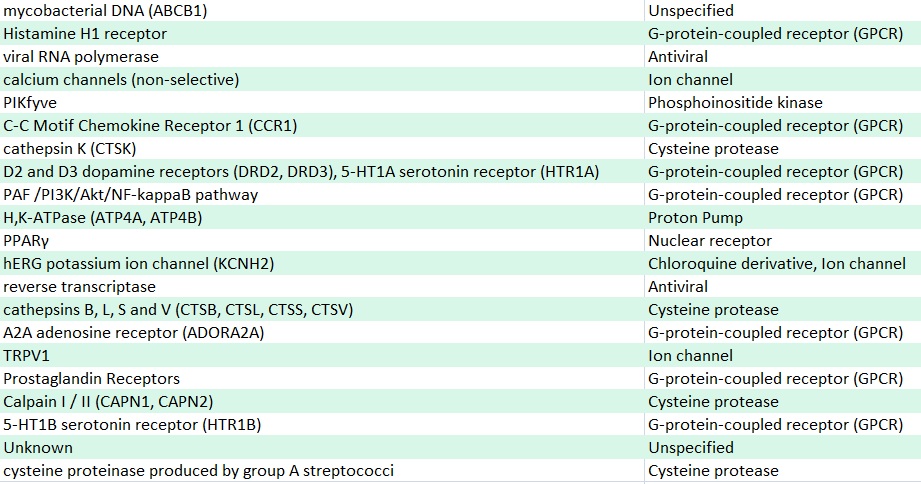
The team conducted extensive testing and validation to evaluate the drugs on human lung biopsies of Covid-19 patients and also evaluated the drugs for synergies with remdesivir, besides monitoring dose-response relationship between the drugs and antiviral activity. Here’s the full list of 21 drugs:

Of the 21 drugs,the scientists found:

  • 13 have previously entered clinical trials and are found effective at concentrations, or doses, that could potentially be safe for COVID-19 patients.
  • Two are already FDA approved — astemizole (allergies), clofazamine (leprosy), while remdesivir has received Emergency Use Authorization from the FDA.
  • Four worked synergistically with remdesivir, including the chloroquine derivative hanfangchin A (tetrandrine), an antimalarial drug that is into Phase 3 clinical trials.


What’s Next?

The researchers are currently testing all 21 compounds in small animal models and lung organoids that mimic human tissue. Once these studies are favorable, the team hopes to approach the FDA for more clinical trials to test these drugs for COVID-19 patients.

The drugs were identified after screening of more than 12,000 drugs from the ReFRAME drug repurposing collection–the most comprehensive drug repurposing collection of compounds that have been approved by the FDA for other diseases.