Cassini Takes Plunge Into Saturn, Scientists Cross-Fingered

In its line up for final plunge into Saturn’s atmosphere, Cassini has once again taken a proximal plunge into the surface of Saturn on June 29, 2017. The final plunge is scheduled for mid-September.

The Cosmic Dust Analyzer’s (CDA) science team, in Germany adjusted the instrument’s settings this week based on experience in recent “proximal” passages between Saturn’s rings and atmosphere. They have created a string of 39 commands that would set the instrument to make the best possible observations during the next proximal plunge. Now the instrument’s data-collection rate has been adjusted to 4 kilobits per second, thus making sure all ring-particle impacts would be sensed.

Here is a week-long update previous to the plunge:

Wednesday, June 21 (DOY 172)

Writers, bloggers, photographers, educators, students, artists and others who use social media to engage specific audiences are encouraged to apply for special access to Cassini’s Grand Finale event in mid-September.

Thursday, June 22 (DOY 173)

The Composite Infrared Spectrometer (CIRS) turned and looked at Saturn’s large icy moon Dione for 3.5 hours today. The Imaging Science Subsystem (ISS), the Visible and Infrared Mapping Spectrometer (VIMS), and the Ultraviolet Imaging Spectrograph (UVIS) – all the other Optical Remote-Sensing (ORS) instruments – rode along to make observations as well. CIRS’s goal was to measure Dione’s surface emissivity at thermal-infrared wavelengths, which hold clues to the composition and structure of that moon’s regolith.

Friday, June 23 (DOY 174)

Beginning late today, the spacecraft trained its High-Gain Antenna dish on the distant Earth. It then accurately tracked our planet for a total of 28 hours. Accordingly, the Radio Science Subsystem (RSS) team had Cassini power on its S-band (2 GHz) and Ka-band (32 GHz) radio transmitters, which directed their beams of energy out the HGA along with the main communications beam at X-band (8 GHz).

The result was a high-precision measurement of Saturn’s gravitation, which will be analyzed to reveal deviations from spherical symmetry.

Saturday, June 24 (DOY 175)

CIRS observed the dark side of Saturn’s A ring at far-infrared wavelengths for five hours today, with the other ORS instruments riding along. In addition to studying ring-particle compositions, the observation was part of a campaign to compare the spectral properties of ices among different regions of Saturn’s rings and icy moons.

Cassini and Titan happened to come close to one another today, to a distance about the same as that from Earth to our own Moon.

Sunday, June 25 (DOY 176)

This week’s Titan observing wrapped up with its final 4.3 hours devoted to observing clouds on the planet-like moon; VIMS rode along.

Monday, June 26 (DOY 177)

ISS turned and spent 7.7 hours observing Saturn’s irregular moon Bebhionn, an object of about six kilometers diameter, which orbits Saturn in an inclined ellipse that reaches as far as 25.1 million km from the planet. It might have a binary or contact-binary nature. Bebhionn was named after the goddess of birth in early Irish mythology.

The flight team held a Command Approval Meeting fine-tuning commands with consent from representatives from each of the affected spacecraft subsystems and instruments.

Tuesday, June 27 (DOY 178)

UVIS observed. Ten minutes after the Deep Space Network (DSN) station in Australia acquired Cassini’s downlink, its 18-kilowatt transmitter was turned on, and comands were sent. After a round-trip of 2 hours 31 minutes, telemetry confirmed that the commands had been received and were ready to take effect right before Cassini’s eleventh proximal plunge on June 29.

A total of 58 individual commands were uplinked, and about 1,625 megabytes of science and engineering telemetry data were downlinked and captured at rates as high as 142,201 bits per second.

Wrap up:

Cassini is executing its set of 22 Grand Finale Proximal orbits, which have a period of 6.5 days, in a plane inclined 61.9 degrees from the planet’s equatorial plane. Each orbit stretches out to an apoapsis altitude of about 1,272,000 km from Saturn, where the spacecraft’s planet-relative speed is around 6,000 km/hr. At periapsis, the distance shrinks to about 2,500 km above Saturn’s visible atmosphere on the planet’s total 120,660 km in diameter with a speed of 123,000 km/hr.

Mars Colony with Child Slaves? No Way, Says NASA Denying Ex-CIA Man’s Allegations

NASA has always been accused of wrong doing in space or hiding aliens or UFOs spotted in the sky and the US space agency has kept silent or denied very often any such conspiracy theories and the lastest one was Anonymous video and in less than a week another conspiracy theory has hit the agency.

In a bizarre revelation on Jones’ TV show , Robert David Steele, an erstwhile CIA officer proposed that kids have been secretly shipped to Mars in the last two decades to live and work as slaves. However, his contention had no evidence but enough of an allegation that forced NASA to deny it.

In his allegations, Steele said: “We actually believe that there is a colony on Mars that is populated by children who were kidnapped and sent into space on a 20-year ride. So that once they get to Mars they have no alternative but to be slaves on the Mars colony.”

Jones pointed out that 90 percent of NASA’s missions are secret and hence the allegations get credence. Soon, a NASA official gave a curt statement to the Daily Beast, which had published the allegation:

“There are no humans on Mars. There are active rovers on Mars. There was a rumor going around last week that there weren’t. There are,” said Guy Webster, a spokesperson for Mars exploration at NASA told the site. “But there are no humans,” he added categorically.


The “discovery” or allegation was made after showing an image on Mars that showed tracks, which looked like man-made.

NASA Denies Anonymous Video on Alien Life Discovery Announcement

US space agency NASA has denied global hackers group Anonymous claim that it is going make announcement on the discovery of alien life, said a spokesman.

Last week, the hacking group Anonymous posted a video on YouTube that said NASA is about to announce the discovery of life in our galaxy but NASA scientist beyond Earth.

“Contrary to some reports, there’s no pending announcement from NASA regarding extraterrestrial life,” said NASA science chief Thomas Zurbuchen in a tweet.

“Are we alone in the universe? While we do not know yet, we have missions moving forward that may help answer that fundamental question,” Zurbuchen said.

In fact, Anonymous has put out its video based on Zurbuchen’s testimony to the House of Representatives’ Committee on Science and Space in April this year. However, NASA has always maintained that there is no discovery of alien life and Anonymous video (see below) has surprised many.

Anonymous on their website said, “NASA says aliens are coming!” and  uploaded the above video citing alien-friendly comments made by NASA astronauts and space scientists.

Anonymous quoted Zurbuchen’s rendering before a Congressional hearing in April titled “Advances in the Search for Life” that said: “NASA`s recent advances, such as the discovery of hydrogen in Saturn`s moon Enceladus and the Hubble team’s promising results from the oceans of Jupiter`s moon Europa, are promising signs that we’re closer than ever to discovering evidence of alien life.”

“Taking into account all of the different activities and missions that are specifically searching for evidence of alien life, we are on the verge of making one of the most profound, unprecedented, discoveries in history,” Zurbuchen said. Perhaps the second part of the quote has made Anonymous see NASA forthcoming with an announcement.


NASA Successfully Tests Mini Methane Sensor for Future Mars Exploration

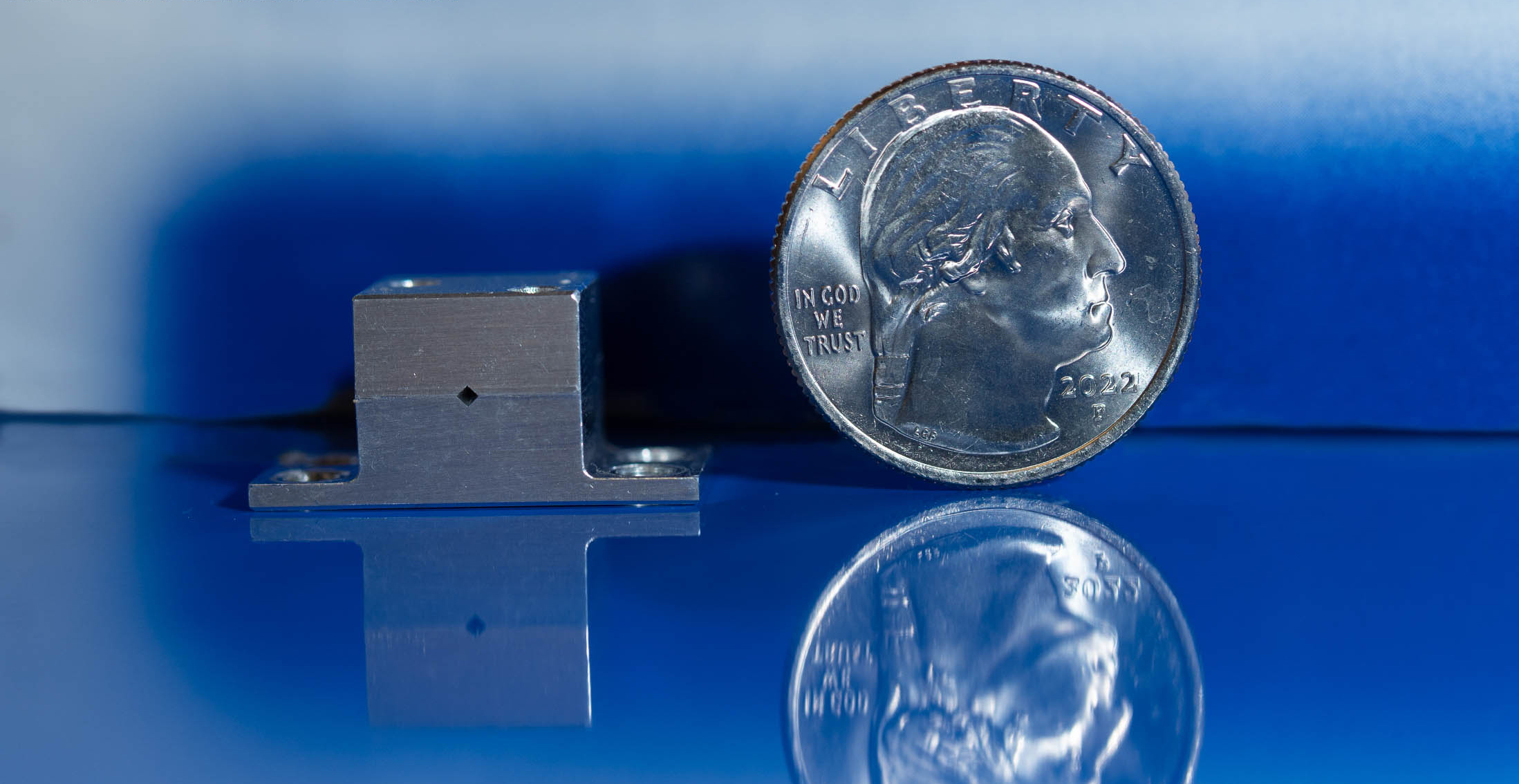
NASA researchers have developed a mini drone-like methane sensor that can fly and successfully tested it on a Vertical Take-off and Landing like any small unmanned aerial system (sUAS). The sensor, developed by JPL for use on Mars, will be used to detect methane with much higher sensitivity than previously available, especially in NASA’s next mission to Mars in 2018.

The tests were conducted in central California at the Merced Vernal Pools and Grassland Reserve, in partnership with Pipeline Research Council International (PRCI). The jointly conducted test of NASA’s Open Path Laser Spectrometer (OPLS) sensor also helps to detect methane in parts per billion by volume could help the pipeline industry more accurately pinpoint small methane leaks.

“These tests mark the latest chapter in the development of what we believe will eventually be a universal methane monitoring system for detecting fugitive natural-gas emissions and contributing to studies of climate change,” said Lance Christensen, OPLS principal investigator at JPL.

Researchers from JPL and the Mechatronics, Embedded Systems and Automation (MESA) Lab at the University of California, Merced, conducted the flight tests in late February. They flew a small unmanned aerial system equipped with the OPLS sensor at various distances from methane-emitting gas sources. Tests were done in a controlled setting to test the accuracy and robustness of the system, said NASA.

Next stage of testing later this year will feature a fixed-wing UAS, which can fly longer and farther so as to monitor natural-gas transmission pipeline systems, which are often hundreds of miles long and can be located in rural or remote areas.

A JPL mini methane gas sensor is flight tested on a small unmanned aerial system (sUAS) under a project to improve energy pipeline industry safety. The sensor enables methane detection with higher sensitivity than previously available for the industry in hand-carried or sUAS-deployable instruments.Credit: University of California, Merced.

NASA-Cassini Probe: Image of Titan’s Tallest Mountain Measuring 10948 Ft Mesmerizes

NASA’s Cassini probe mission has sent images of Saturn’s moon Titan showing some tallest mountains on its surface measuring more than 10,000 feet.

The mountainous ridges called the Mithrim Montes showed three series of mountain ridges and the top measured 10,948 feet in height. Most of these mountain ridges are located near the equator. The region is called Xanadu.

“It’s not only the highest point we’ve found so far on Titan, but we think it’s the highest point we’re likely to find,” said Stephen Wall of the Cassini radar team at NASA. Another observer of the Cassini radar team Jani Radebaugh said, “Titan’s extremes also tell us important things about forces affecting its evolution.”

The mountainous cliffs point at the evolution of a planet where forces have shoved the surface upward from underneath. Earth too has similar mountains and cliffs and the tallest mountain Everest is one such star example. The Himalaya and Andes Mountains still manifest such forces of nature underneath.

Cassini has found that Titan also has rain and rivers and some active tectonic forces causing quakes. Titan’s rotation, tidal forces from Saturn or cooling of the crust are some of its natural effects tied to this phenomenon.

Since its arrival in 2004, Cassini’s observations have changed whole dimension of saturn and its largest moon Titan. It has revealed that Titan’s surface is shaped by rivers and lakes of liquid ethane and methane, which forms clouds and causes occasional rains from the sky as water does on Earth. Winds sculpt vast regions of dark, hydrocarbon-rich dunes that girdle the moon’s equator and low latitudes, while volcanoes erupt spewing liquid water as the lava.

On its journey to Saturn, Cassini carried the European-built Huygens probe, which landed on Jan. 14, 2005, becoming humankind’s first landing on a body in the Outer Solar System when it parachuted through Titan’s murky skies. Currently, scientists are eager to get new data that could confirm the presence of a liquid ocean beneath the Titan’s surface.

Radar images do not present scenes as they would appear to human eyes but use radio waves beamed by the spacecraft that are reflected and scattered off of Titan’s surface in order to see through Titan’s opaque atmosphere. Bright regions indicate materials that are rough or that otherwise scatter the beam; dark regions indicate materials that are relatively smooth or that otherwise absorb radar waves. A side effect of this technique is the grainy pattern called “speckle” that typically is present in Cassini radar images.

This view was produced using a technique for handling noise in Cassini radar images, called despeckling, that produces clearer, easier-to-interpret views. Titan’s icy crust sits atop a deep ocean of liquid water that probably acts much like Earth’s upper mantle — the layer of hot, high-pressure rock below the crust that can slowly flow and deform over time.

This radar view was obtained on May 12, 2008 taken from a location at 2 degrees south latitude, 127 degrees west longitude. The incidence angle is about 34 degrees.

The Cassini-Huygens mission is a cooperative project of NASA, the European Space Agency and the Italian Space Agency. NASA’s Jet Propulsion Laboratory, a division of the California Institute of Technology in Pasadena, manages the mission for NASA’s Science Mission Directorate, Washington.