Interest rates on small savings schemes remain unchanged

The government-run small savings schemes remained to provide the same interest rates since the past two years though the bank fixed deposit rates have considerably increased the interest rate.

The small savings schemes’ interest rates were last revised in the first quarter of 2020-21, though banks have drastically hiked their home loan and term deposit rates after the Reserve Bank of India (RBI) raised its repo rate by 140 basis points since May 2022.

Small savings schemes like Public Provident Fund (PPF), National Savings Certificate (NSC), Post Office Savings Scheme and Sukanya Samriddhi Yojana are vital savings instruments for the common man, as they provide long-term benefits.

Here are the current interest rates of key small savings schemes:

* Public Provident Fund (PPF): 7.1 per cent

* National Savings Certificate (NSC): 6.8 per cent

* Post Office Monthly Income Scheme: 6.6 per cent

* Sukanya Samriddhi Yojana: 7.6 per cent

* Five-year Senior Citizens Saving Scheme: 7.4 per cent

* Kisan Vikas Patra: 6.9 per cent


The RBI had brought down its benchmark repo rate by 75 basis points to 4.40 per cent on March 27, 2020 — just three days after a nationwide lockdown was announced but the government had not reduced interest rates of small savings schemes, keeping in mind the interests of the pensioners.

RBI sources said the government will monitor inflation as well as the liquidity position before taking any decision to raise interest rates of small savings schemes. “Depending on how much inflation rises and whether there is tightening of liquidity position in future, the government may take a call on small savings schemes rates,” said a senior banking official told IANS.

On June 30, 2022, the Finance Ministry had notified that interest rates of small savings schemes have been kept unchanged for the July-September quarter of the current fiscal, effective from July 1.

“The rates of interest on various small saving schemes for the second quarter of the financial year 2022-23, starting July 1, and ending September 30, shall remain unchanged from those notified for the first quarter (April 1 to June 30) for FY 2022-23,” the Finance Ministry notification had said.

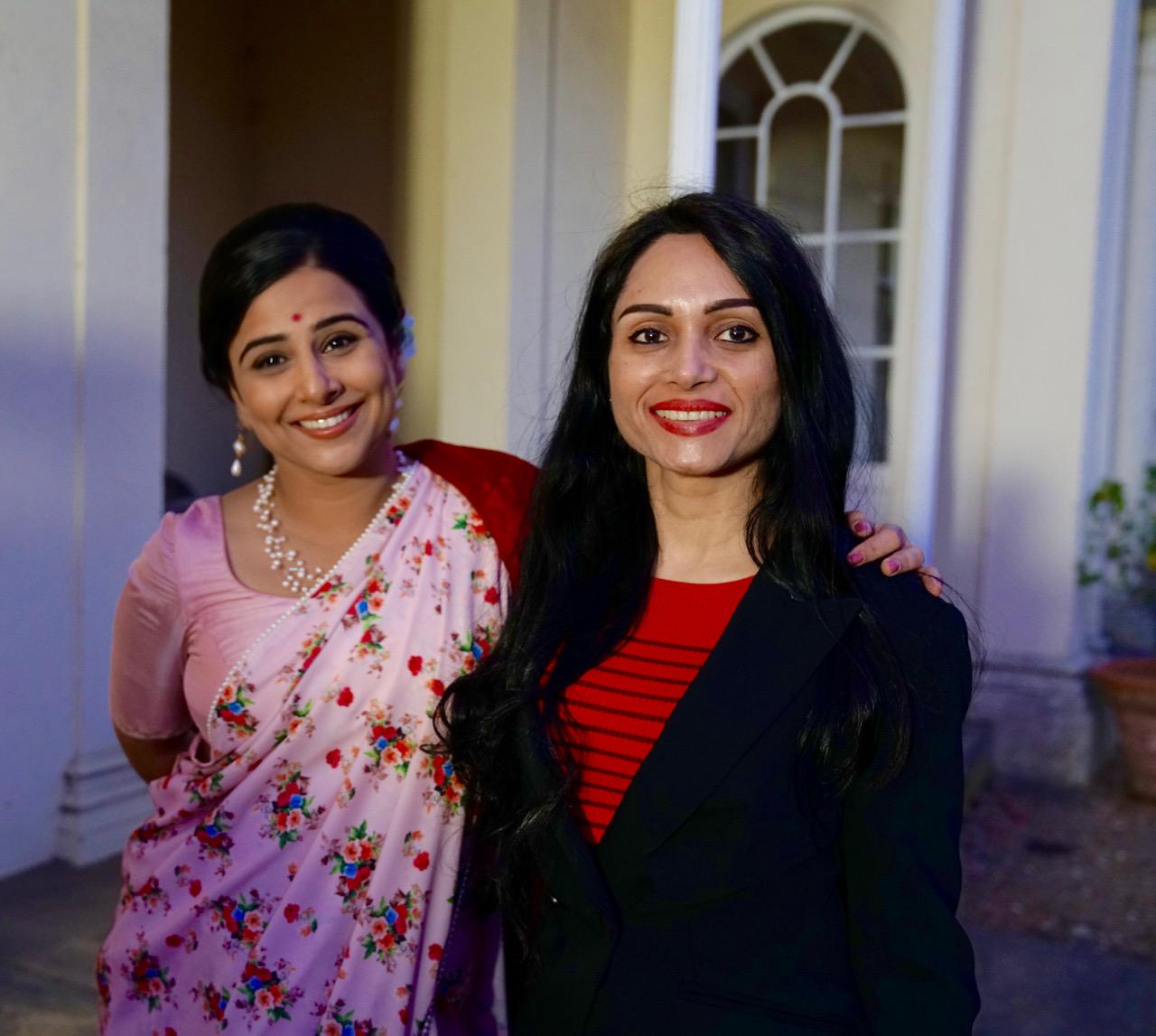
Vidya Balan gives a glimpse at her character in Shakuntala Devi as an evergreen one

Vidya Balan has spoken about her character in Shakuntala Devi as one that would remain chirpy and happy forever. Shakuntala Devi is one of the most anticipated releases set for July 31 and it showcases the life of the ‘Human Computer’ Shakuntala Devi who was a world class educator and a brilliant mathematician.

Essaying the role of Shakuntala Devi is none other than Vidya Balan and the film is just a few days away from its release. In a recent interview, talking about how her character in Shakuntala Devi is so chirpy and happy as seen in the trailer, Vidya shared, “Shakuntala Devi loved to play dress up and lived life to her fullest. She kept her hair black till the very end and also loved applying bright lipsticks, red lipsticks.”

She also shared, “We’ve showcased her life from 20’s to 60’s which are like 5 stages. So in every stage the hair makeup costume change which built up alot about the character.”

For Vidya, the experience of portraying the role of a genius who was as lively as Shakuntala Devi was fascinating and it was one if the best characters the actress has played. Apart from Vidya Balan, the film also stars Jisshu Sen Gupta, Sanya Malhotra and Amit Sadh in pivotal roles.

Vidya Balan in Shakuntala Devi promo

The upcoming film will stream on Amazon Prime Video and is directed by Anu Menon. Shakuntala Devi is produced by Sony Pictures Network Productions and Vikram Malhotra and will start streaming on the 31st of July 2020.

Shakuntala Devi demonstrated her arithmetic abilities at the University of Mysore, astonishing people just at the age of six! The audience will witness the magic of math happen on Amazon Prime Video as the biographical drama film ‘Shakuntala Devi’ will see a release on the 31st of July.

An astounding fact about Shakuntala Devi is that she was much ahead of her years and just at the age of six she demonstrated her arithmetic abilities at the University of Mysore without any formal education. The age of six is when most children are in pre-school but Shakuntala was already demonstrating her staggering arithmetic abilities at a university!

Shakuntala Devi was known as ‘the human-computer’ for her awe-striking abilities to perform complex mathematical calculations quickly and once she had even pointed out a mistake made by a computer which is how she attained that name! The audience looks forward to witnessing the highs and lows of Shakuntala Devi’s life on the screens.

The upcoming film ‘Shakuntala Devi’ is directed by Anu Menon and produced by Sony Pictures Networks Productions and Vikram Malhotra. The film also stars Jisshu Sengupta, Sanya Malhotra, and Amit Sadh in prominent roles. You can watch the film on Amazon Prime Video on the 31st of July.

Coca-Cola reports 33% decline in Quarterly earnings due to Coronavirus

The global beverages giant Coca-Cola on Tuesday reported second quarter 2020 results that showed 33% decline in its earnings, though the company is optimistic on strategic actions to emerge stronger from the ongoing coronavirus pandemic.

The Coca-Cola system remained agile in the second quarter, with a focus on maintaining a safe
environment for employees while also providing necessary products and services to consumers, customers and communities during this unprecedented time, said the company.

“I’m proud of the people of the Coca-Cola system as we continue to adjust and accelerate our strategies in this fastchanging landscape,” said James Quincey, chairman and CEO of the Coca-Cola Company. “We believe the second quarter will prove to be the most challenging of the year; however, we still have work to do as we drive our pursuit of ‘Beverages for Life’ and meet evolving consumer needs.”

Highlights of Quarterly Performance

Revenues: Net revenues declined 28% to $7.2 billion. Organic revenues (non-GAAP) declined 26%. Revenue performance included a 22% decline in concentrate sales and a 4% decline in price/mix. The revenue declines were primarily driven by pressure in away-from-home channels, which represent approximately half of the company’s revenues.
Margin: Operating margin, which included items impacting comparability, was 27.7% versus 29.9% in the prior year, while comparable operating margin (non-GAAP) was 30.0% versus 30.3% in the prior year. Operating margin contraction was primarily driven by top-line pressure and currency headwinds, partially offset by effective cost management.
Earnings per share: EPS declined 32% to $0.41, and comparable EPS (non-GAAP) declined 33% to $0.42.
Market share: The company lost value share in total nonalcoholic ready-to-drink (NARTD) beverages as an underlying share gain was more than offset by negative channel mix due to pressure in away-from-home channels, where the company has a strong share position.
Cash flow: Year-to-date cash from operations was $2.8 billion, down 38%. Free cash flow (non-GAAP) was $2.3 billion, down 40%.

Business Environment 

Since the company’s last earnings update in April, global unit case volume trends have improved sequentially, from a decline of approximately 25% in April to a decline of approximately 10% in June. Unit case volume for July month-to date was down mid single digits globally. Performance has been driven by improving trends in away-from-home channels, along with sustained, elevated sales in at-home channels.


While the company believes the second quarter will be the most severely impacted quarter of the year, given the ongoing uncertainty surrounding the coronavirus pandemic and levels of lockdown, the ultimate impact on full year 2020 results is unknown. The company’s balance sheet remains strong, and the company is confident in its liquidity position as it continues to navigate through the crisis.

Despite the high degree of uncertainty, the company said it is committed to emerging stronger by gaining share and consumers, maintaining strong system economics, strengthening its reputation with stakeholders and positioning the organization to win in the new reality.

CSR Activities

The Coca-Cola Foundation has partnered with the world’s largest humanitarian network,
the International Red Cross and Red Crescent Movement, and supported programs in more than 60 countries, reaching an estimated 7.5 million people impacted by the pandemic.

In the first original ad during the pandemic for brand Coca-Cola, the company offered “The Great Meal” that features 13 real households in eight countries preparing and sharing home-cooked meals over an ice-cold Coca-Cola, bringing to life the comfort and authenticity of the brand’s connection to food.

However, the company has paused social media activity for July to review policies, including its own, and to hold partners to a higher level of accountability and transparency. The company has committed to spend an incremental $500 million with Black-owned suppliers over the next five years in the United States.

In support of social justice, the Coca-Cola Foundation has contributed $4 million to several initiatives and, to date, the company has contributed an additional $1.3 million through brands Coca-Cola and Sprite.

New Income Tax Return Forms for Assessment Year 2018-19 issued

The Central Board of Direct Taxes(CBDT) has issued new Income Tax Return Forms (ITR Forms) for the Assessment Year 2018-19, making it one page simplified ITR Form-1(Sahaj), that may benefit around 3 crore taxpayers. However, criticism mounted on personal questions it seeks from the taxpers.

This new ITR Form-1 (Sahaj) can be filed by an individual who is resident other than not ordinarily resident, having income upto Rs.50 lakh and who is receiving income from salary, one house property / other income (interest etc.).

Further, the parts relating to salary and house property have been rationalised and furnishing of basic details of salary (as available in Form 16) and income from house property have been mandated.

ITR Form-2 has also been rationalised by providing that Individuals and HUFs having income under any head other than business or profession shall be eligible to file ITR Form-2. The Individuals and HUFs having income under the head business or profession shall file either ITR Form-3 or ITR Form-4 (in presumptive income cases).

In case of NRIs, the requirement of furnishing details of any one foreign Bank Account has been provided for the purpose of credit of refund. Further, the requirement of furnishing details of cash deposit made during a specified period as provided in ITR Form for the Assessment Year 2017-18 has been done away with from Assessment Year 2018-19.

There is no change in the manner of filing of ITR Forms as compared to last year. All these ITR Forms are to be filed electronically. However, where return is furnished in ITR Form-1 (Sahaj) or ITR-4 (Sugam), the following persons have an option to file return in paper form:

(i) an Individual of the age of 80 years or more at any time during the previous year; or

(ii) an Individual or HUF whose income does not exceed five lakh rupees and who has not claimed any refund in the Return of Income.

The notified ITR Forms are available on the official website of the Department www.incometaxindia.gov.in.

Improving clinical trials with machine learning

Machine learning could improve our ability to determine whether a new drug works in the brain, potentially enabling researchers to detect drug effects that would be missed entirely by conventional statistical tests, finds a new UCL study published in Brain.

“Current statistical models are too simple. They fail to capture complex biological variations across people, discarding them as mere noise. We suspected this could partly explain why so many drug trials work in simple animals but fail in the complex brains of humans. If so, machine learning capable of modelling the human brain in its full complexity may uncover treatment effects that would otherwise be missed,” said the study’s lead author, Dr Parashkev Nachev (UCL Institute of Neurology).

To test the concept, the research team looked at large-scale data from patients with stroke, extracting the complex anatomical pattern of brain damage caused by the stroke in each patient, creating in the process the largest collection of anatomically registered images of stroke ever assembled. As an index of the impact of stroke, they used gaze direction, objectively measured from the eyes as seen on head CT scans upon hospital admission, and from MRI scans typically done 1-3 days later.

They then simulated a large-scale meta-analysis of a set of hypothetical drugs, to see if treatment effects of different magnitudes that would have been missed by conventional statistical analysis could be identified with machine learning. For example, given a drug treatment that shrinks a brain lesion by 70%, they tested for a significant effect using conventional (low-dimensional) statistical tests as well as by using high-dimensional machine learning methods.

The machine learning technique took into account the presence or absence of damage across the entire brain, treating the stroke as a complex “fingerprint”, described by a multitude of variables.

“Stroke trials tend to use relatively few, crude variables, such as the size of the lesion, ignoring whether the lesion is centred on a critical area or at the edge of it. Our algorithm learned the entire pattern of damage across the brain instead, employing thousands of variables at high anatomical resolution. By illuminating the complex relationship between anatomy and clinical outcome, it enabled us to detect therapeutic effects with far greater sensitivity than conventional techniques,” explained the study’s first author, Tianbo Xu (UCL Institute of Neurology).

The advantage of the machine learning approach was particularly strong when looking at interventions that reduce the volume of the lesion itself. With conventional low-dimensional models, the intervention would need to shrink the lesion by 78.4% of its volume for the effect to be detected in a trial more often than not, while the high-dimensional model would more than likely detect an effect when the lesion was shrunk by only 55%.

“Conventional statistical models will miss an effect even if the drug typically reduces the size of the lesion by half, or more, simply because the complexity of the brain’s functional anatomy–when left unaccounted for–introduces so much individual variability in measured clinical outcomes. Yet saving 50% of the affected brain area is meaningful even if it doesn’t have a clear impact on behaviour. There’s no such thing as redundant brain,” said Dr Nachev.

The researchers say their findings demonstrate that machine learning could be invaluable to medical science, especially when the system under study–such as the brain–is highly complex.

“The real value of machine learning lies not so much in automating things we find easy to do naturally, but formalising very complex decisions. Machine learning can combine the intuitive flexibility of a clinician with the formality of the statistics that drive evidence-based medicine. Models that pull together 1000s of variables can still be rigorous and mathematically sound. We can now capture the complex relationship between anatomy and outcome with high precision,” said Dr Nachev.

“We hope that researchers and clinicians begin using our methods the next time they need to run a clinical trial,” said co-author Professor Geraint Rees (Dean, UCL Faculty of Life Sciences).

GST Roll-Out at Midnight Signifies Power Shift to Centre, Common Man at Receiving End?

India ushered in GST amid historic midnight session of Parliament, replicating the mid-night transfer of Independence from the British Raj on August 15, 1947. However, GST inauguration speaks volumes on the tax burden than power transfer.

President Pranab Mukherjee, Prime Minister Narendra Modi, and Finance Minister Arun Jaitley addressed the gathering, before the President and the Prime Minister pressed a button to mark the launch of GST, amid allegations that it would squarely burden the common man.

Prime Minister Narendra Modi described it as “Good and Simple Tax” which would ultimately benefit the people. He even quoted a shloka from the Rig Veda to describe the spirit of common goal, common determination, leading to mutual and shared benefit for the society. He said the day marks a decisive turning point, in determining the future course of the country.

He recalled that the Central Hall had been witness to several historic occasions in the past as well, including the first session of the Constituent Assembly, India’s independence, and the adoption of the Constitution, which have set the future course of action on power shift in India. He described GST is an example of Cooperative Federalism, another power shift from the states to centre in tax revenue and share.

Recalling the famous scientist Albert Einstein who said that income tax is the most difficult thing to understand in the world, he said that GST would ensure one nation, one tax and makes it simple. He noted that it would eliminate inordinate delay in movement of goods and services across the country and makes the modern tax administration far simple and curbs corruption.

Finance Minister Arun Jaitley said, “We have made sure that small traders and businessmen are out and the compliance burden on those with annual turnover of Rs 20 to Rs 75 lakh is lower through the composition scheme,” referring to criticism that the commonman and small traders will be the worst hit under the new GST regime.

The common man faces paying higher price for every purchase he makes when he buys daily needs like jam, cornflakes and hotel food bills. He pays higher when he uses shampoo in the morning, pays higher for life insurance, mobile bills and transportation tickets of all modes. The only visible carrot in the deal is biscuits, which are not good for health as vegetable oil is mostly used in manufacturing them.

He saves if he buys annually once products like shoes, garments, hair oil, cell phones, plastic kitchenware (not steel), pressure cooker, economy class air tickets among others. Once in five-year purchase of a car may cost less now after GST but still beyond the common man’s reach.

However, the impact would be felt in a month from now, while traders will have to make adjustments meanwhile. Last year, demonetisation had affected the country and this year the GST will burden the merchant community further. But there is no choice for the middle class, which gets the impact maximum every time the government ushers in something new.

Messi Joins ‘Just Married’ Club, End of Robust Career?

Football star player Lionel Messi finally married his childhood sweetheart Antonella Roccuzzo on Friday at his Argentine hometown Rosario, amid presence of top football players and celebrities including pop singer Shakira, billed as the “wedding of the century” in local media.

After Messi said, “I do” to his bride whom he knew for two decades, they reached a hotel where the glitteratti and celebrities gathered while Shakira and her husband, Messi’s teammate Gerard Pique, joined the other 260 guests including Neymar and Luis Suarez.

The top player, who is facing a court case over tax evasion, was seen happy at last over the domestic events taking priority over game, name and fame. Messi and Roccuzzo will soon move to Barcelona in Spain where he plays for FC Barcelona.

A winner of top Ballon d’Or award five times, Messi has become iconic figure among the football fans and he was even featured in TATA car endorsement in India last year.

Some reactions on social media Twitter were hillarious to modest.


EC Launches Voter Registration Reminder on Facebook

Election Commission of India (ECI) is launching a ‘Special Drive’ to enrol left-out electors, especially first time electors from 1st July , 2017 , to ensure that ‘NO VOTER TO BE LEFT BEHIND’.

In order to reach out to maximum eligible voters, the ECI has roped in Facebook to launch first Nationwide “Voter Registration Reminder” on 1st July ,2017 .  With over 180 million people in India on Face book, the ‘Register Now’ button is designed to encourage Indian citizens to register themselves with the Election Commission of India.

On 1st July, a notification of the “voter registration reminder” will be sent to people on Facebook in India who are eligible to vote. The reminder will be sent out in 13 Indian languages – English, Hindi, Gujarati, Tamil, Telugu, Malayalam, Kannada, Punjabi, Bengali, Urdu, Assamese, Marathi and Oriya.

This is the first time Facebook’s voter registration reminder has been rolled out across India. In 2016 and 2017, Chief Electoral Officers made such efforts at state level during their respective state elections.

By clicking on the “Register Now” button on Facebook from 1st July 2017, people will be directed to the National Voters’ Services Portal which will guide them through the registration process.

Speaking about nationwide launch of “Voter Registration Reminder” the Chief Election Commissioner Dr Nasim Zaidi said  “I am pleased to announce that the Election Commission of India is launching a ‘Special Drive to enrol left out electors, with a special focus on first time electors This is a step towards fulfilment of the motto of ECI that    ‘NO VOTER TO BE LEFT BEHIND‘.”


Commenting on scheduled launch of “Voter Registration Reminder” by Facebook for the first time in India, Ms. Ankhi Das, Facebook’s Public Policy Director for India, South & Central Asia, said “People use Face book to learn, talk and get involved with issues that matter to them. We want to build engagements that support this type of civic engagement – on Election Day and every day. We believe that democracies are stronger when more people are engaged – that’s why we are encouraging everyone who is eligible to register to vote and connecting them with resources.”

RBI Silent on Rs.200 New Currency Notes in Print

The Reserve Bank of India is planning to go ahead with the printing of Rs.200 currency notes to replenish the 18 percent gap in currency circulation owing to November 8 demonetisation drive that banned Rs.1000 and old Rs.500 notes, said a media report.

The Economic Times report said the RBI did not confirm or deny to a query on this but based on sources close to the printing schedule, a Kolkata report confirmed that the printing process is underway for the trial printing of the notes. The features and the colour of the note still remain secret.

The only confirmation from the Central bank was that it had approved a new Re.1 currency note, printed not by the RBI but by the Government of India as the base currency unit, under the Coinage Act of 2011.

The existing currency notes in this denomination in circulation will also continue to be legal tender. New Currency Note of Re.1 will be in rectangular shape with Ashoka Pillar in the window without words ‘सत्‍यमेव जयते’, hidden Numeral ‘1’ in the centre, hidden Word ‘भारत’ vertically arranged on right hand side.

On the other side, it contains the words ‘भारत सरकार’ above the words “Government of India” with the bilingual signature of Shri Shaktikanta Das, Secretary, Ministry of finance and with the replica of New Rupee One coin with ₹ symbol of 2017 issued with ‘सत्‍यमेव जयते’ and capital insert letter ‘L’ in numbering panel.

The numbering will be in black at right hand bottom portion of the note in ascending size of numerals from left to right, while the first three alphanumeric characters (prefix) remains constant in size. It will have the picture of ‘Sagar Samrat’ the oil exploration platform and with the authentic rendering of value in fifteen Indian languages in language panel with the year figure shown on the centre bottom in international number.

The colour of One Rupee Currency Note shall be predominantly pink green on obverse and reverse in combination with others.


PM Congratulates Kidambi Srikanth on Winning Australian Open

Prime Minister Narendra Modi has congratulated Indian Badminton Player Kidambi Srikanth, on winning Australian Open Super Series.

“We are really proud of the victory of Kidambi Srikanth in the Australian Open. I congratulate him for yet another wonderful win”, the Prime Minister said.

Srikanth won the Australian Open over his Chinese counterpart Chen Long, finishing the game 22-20, 21-16 on Sunday, June 25, 2017.This is Srikanth’s 4th Super Series title, and first win over Chen Long in their six plays so far.

Ranked World No 11, Srikanth’s second straight title victory in a week after the Indonesian Open Super Series Premier last Sunday, sets him take on bigger names in the near future.

Srikanth took 11-9 lead at the break and gave in slightly to Long who made a return with three straight points at 12-11.Despite Chen’s game point with a cross court smash, Srikanth finally held the sway and won it 22-20.

In the second game too, Srikanth dominated with a five-point lead at 19-15 and finally sealed it with 21-16 to win the singles title.

Srikanth was honoured with Arjuna Award in 2015. President Pranab Mukherjee presented the Arjuna Award for the year-2015 to Kidambi Srikanth Nammalwar for Badminton, at a ceremony in Rashtrapati Bhavan, in New Delhi on August 29, 2015.

Rare Wish Fulfilling Brahma Kamal Blooms Tonight


Today, June 24, 2017, being a Saturday with Amavasya night, is witnessing the rare Brahma Kamal flower blooming once in a year for two hours in the night and Hindu mythology says that it has wish-fulfilling powers and believed to have been showered on the ground by Gods after Lakshmana was revived on the battle ground in Ramayana.

Brahma Kamal, native flower of Uttarakhand and Himalayas and known by its scientific name Saussurea obvallata, is a species of flowering plant in the Asteraceae, which was seen held by Brahma in one of his four hands like a white flower.

In the Himalayas, it is found at an altitude of around 4500 metres while it has been accorded the status of state flower in Uttarakhand. The plant Saussurea obvallata grows maximum one feet and the flowers are hermaphrodite (with both male and female organs) and are pollinated by insects.

These flowers bloom during the monsoon (June–August) amongst the rocks and grasses of the hillside at an altitudinal range of 3000–4800 metres and the flower heads are closed during the day time to protect from the cold mountain environment.

Some people, however, claim that the flower of Epiphyllum oxypetalum, the orchid cactus, which blooms at night, is the true Brahma Kamal but in the Northern India, the flower of Saussurea obvallata is known as the Brahma Kamal. It is believed that Brahma was born from this white lotus and hence called the Brahma Kamal.

Hindus believe that anybody who sees this rare flower blooming will have his or her wishes fulfilled and flower rarely blooms for just two to three hours during the mid-monsoon. In the epic Ramayana, when the Sanjivani herb was administered to Lakshmana, he miraculously revived. In celebration, Gods showered Brahma Kamal flowers from heaven, which took root in the Valley of Flowers, goes the legend around the Brahma Kamal.

The flower also has many medicinal properties, especially in Tibetan medicine called Sah-du Goh-ghoo. However, the plant is endangered due to its use for medicinal purposes and is known to cure urogenital disorders.


New Index on City Liveability Launched, 116 Cities Under Radar

The Indian Ministry of Urban Development on Friday, June 23, 2017, launched the ‘City Liveability Index’ for measuring the quality of life in 116 major cities including smart cities, capital cities and cities with a population of above one million each.

The Index, a Common Minimum Reference Framework enables the cities realise their standing on qualities such as quality of life and the interventions needed, said Minister of Urban Development M.Venkaiah Naidu in New Delhi at a National Workshop on Urban Transformation.

“Time has now come to measure life quality in cities and rank them accordingly,” said Mr Venkaiah Naidu.

The first of its kind, the City Liveability Index will assess cities on 79 paratmeters to measure the extent and quality of infrastructure including availability of roads, education and health care, mobility, employment opportunities, emergency response, grievance redressal, pollution, availability of open and green spaces, cultural and entertainment opportunities etc.

After selecting the agency for undertaking this assessment next month, data collection will be completed in the next about six months, informed the minister.

The Ministry of Urban Development also disbursed Rs.500 crore as incentive to 16 States that performed well in implementing urban reforms during 2016-17 such as e-governance, Audit of accounts, Tax revision policies and extent of tax revenue collection, Energy and Water Audit, Establishing State Level Financial Intermediaries for resource mobilization, Credit Rating etc., were also taken into account.

Venkaiah Naidu’s home state Andhra Pradesh topped the list scoring 96.06% marks, followed by Odisha (95.38%), Jharkhand (91.98%), Chattisgarh (91.37%), Madhya Pradesh (90.20%), Telangana (86.92%), Rajasthan (84.62%), Punjab (77.02%), Kerala (75.73%), Goa (75.38*), Mizoram (75.00%), Gujarat (73.80%), Chandigarh (72.73%), Uttar Pradesh (70.67%) and Maharashtra (70.52).

India Unhappy? So is it, Says UN Report


Money is not the sole reason to be happy but India cannot bask upon its social cohesiveness and
political leadership as the World Happiness Report 2017 has put it in 122nd rank, behind
Pakistan and Nepal. It has also jumped from 118 last year to 122 this year.

The report, released on Monday at the United Nations, ranked 155 countries and Pakistan was
surprsingly at 80th position, Bhutan at 97, Nepal at 99, Bangladesh at 110 and sri Lanka at
120th position.

The top ten nations are of course the Scandinavian countries followed by Canada, New Zealand and
Australia. Here is the list of top 10 Happiness Nations:

HAPPIEST COUNTRIES
1. Norway 7.54
2. Denmark 7.42
3. Iceland 7.5
4. Switzerland 7.49
5. Finland 7.47
6. Netherlands 7.38
7. Canada 7.32
8. New Zealand 7.321
9. Australia 7.28
10. Sweden 7.28

Here is the list of least happiness countries:

146. Yemen 3.59
147. South Sudan 3.59
148. Liberia 3.53
149. Guinea 3.51
150. Togo 3.49
151. Rwanda 3.47
152. Syria 3.46
153. Tanzania 3.35
154. Burundi 2.91
155. Central African Republic 2.69

Norway is the top most this year surpassing Denmark that topped it last year. The trend to study
happiness began in 2013 when the US National Academy of Sciences issued a report recommended
questions on happiness. The United States is ranked 14.

However, the report has brought to light the misery of people behind mental illness which has a
lot to do with happiness and not merely money. “Differences in mental health, physical health
and personal relationships (is) the biggest single source of misery is mental illness,” the
report said.“Income differences matter more in poorer countries, but even their mental illness
is a major source of misery,” it said.

“What works in the Nordic countries is a sense of community and understanding in the common
good,” said Meik Wiking, CEO of the Happiness Research Institute in Copenhagen, who wasn’t part
of the global scientific study that came out with the rankings.

The rankings are based on GDP per person, healthy life expectancy, social support, their freedom to make their own life choices, their sense of corruption in society and generosity.

Gopal Baglay Succeeds Vikas Swarup as MEA Spokesperson

Diplomat Gopal Baglay, a 1992 batch IFS officer, will Succeed Vikas Swarup as Spokesperson in the External Affairs Ministry. Mr Swarup will move on to be India’s new High Commissioner to Canada.

Gopal Baglay (MEA Twitter)

Mr Baglay was earlier heading the PAI (Pakistan-Afghanistan-Iran) division in the ministry and in his place, Mr Deepak Mittal will assume the new charge of the PAI division.

In a twitter message, baglay said: “Delighted to take over as Official Spokesperson. Hope to have your cooperation in continuing the high traditions set by my predecessors.”

Mr Baglay currently holds the Joint Secretary rank in the External Publicity (XP) division of Ministry of External Affairs.

Mr Swarup hoped that his successor would take the MEA communications to the next level. “I wish my successor Gopal Baglay all the best for the new assignment. He will take MEA communications to the next level, online & offline! Today I bid farewell as the Official Spokesperson, an extraordinary privilege and honour! You can follow me in my new role on @VikasSwarup.”

Baglay was ealier Director of External Publicity, Director PAI and Indian Deputy High Commissioner to Pakistan.

Arun Jaitley Undertakes 5-day UK Sojourn to Invite Investors

The Union Finance Minister Arun Jaitley will leave tomorrow, Febrary 24, 2017, for London on a five-day official visit to hold business interaction with UK-India Business Council, meet his UK counterpart and the Chancellor of Exchequer, besides delivering a talk at London School of Economics on ‘Transforming India: Vision for the Next Decade”.

On Saturday, he will deliver a talk at London School of Economics and on Sunday, the Finance Minister will attend a reception being organised by Federation of Indian Chambers of Commerce & Industry (FICCI), British Council and Indian High Commission at UK.

On Monday, Jaitley will perform Market Opening Ceremony at London Stock Exchange followed by a Roundtable Meeting with prospective issuers and leading investors and fintech leaders.

Later in the day, the Finance Minister will have Business interaction with over 100 senior business leaders from the UK-India Business Council (UKIBC). In the evening, he will call on Boris Johnson, Foreign Secretary of UK before attending a reception being hosted by the Queen at Buckingham Palace.

On Tuesday, he will meet with his UK counterpart and the Chancellor of Exchequer and then attend a meeting with CEOs being organized by the Confederation of British Industry before leaving back for home in the evening.

India, Russia to Celebrate 2017 as Year to Mark 70-Years of Friendship, Ties

India and Russia will celebrate 2017 is a special year of completion of 70 years of diplomatic relations with several programs and events scheduled throut the year.

On 13 April 1947, four months before India’s independence, diplomatic relations were established by India with Russia, then USSR. Over the last seven decades, bilateral relations have seen strong and special Strategic Partnership.

Pankaj Saran, Ambassador of India to the Russian Federation, said, “2017 will be a joint celebration of a long and successful journey together, in which India and Russia have stood side by side with each other as true partners and friends. The Jawaharlal Nehru Cultural Centre will be separately announcing details of individual events.”

During the visit of Russian President Vladimir Putin to India in October 2016, Prime Minister Narendra Modi and President Putin agreed to commemorate this important occasion and adopted a Roadmap for its celebrations, including series of events planned in Russia and in India during 2017.

The events include seminars, discussions, exhibitions, exchanges and many other activities and the Indian embassy in Russia has unveiled a special logo to mark the anniversary. India will also be the Guest Country at the St. Petersburg International Economic Forum to held in June 2017.

India’s cultural program “Namaste Russia!” will be vrought to different cities of Russia to showcase the glimpses of India’s rich cultural heritage in the form of world famous musicians, artists and classical music and dance, said the embassy. It will host an ‘India Week’ in St. Petersburg in late May to bring the best of Indian culture, dance, yoga and cuisine.

The performances under Namaste Russia will include:

Sitar maestro Ustad Shujaat Hussain Khan;
The Shillong Chamber Choir;
The Sufi dance and music of the Nizami Brothers;
Shubhra Bhardwaj Bollywood Group;
Indian Fusion group ‘Indian Ocean’;


Veronika Yadav, Indian Origin Ukraine Girl, Wins Global Trophies in Gymnastics

Ms. Veronika Yadav, daughter of Mr. Sanjay Prasad Yadav, living in Kharkiv, Ukraine, who has won several international championships and trophies in gymnastics, met met with Ambassador of India to Ukraine Mr. Manoj K. Bharti on February 7th, 2017 and expressed her desire to represent India.

A promising rhythmic gymnast, Veronika is sure to win many medals in international competitions for India in the coming years, said the embassy in a statement.

Kyiv Conference on agribusiness 2017 Held

On 25 January 2017 a conference titled “Agribusiness-2017: financing instruments, innovative technologies, evaluation and risk management” was organized by International Financial Club “Banker” in Kyiv.

Held in two parts focusing on “Effective financial decisions” and “Evaluation and Risk Management”, the conference has become a platform for exchange of experience between representatives of state government, agricultural companies, insurance companies, banks and investment institutions as well as legal, leasing, auditing and IT-companies.

Addressing the conference, Indian Ambassador Manoj Kumar Bhartisaid this year marks 25 years since the day of establishment of diplomatic relations between the two countries.

India is the largest consumer of oil from Ukraine and in 2016 Ukraine supplied to India 100,000 tons of pulses, but this figure can be increased at least 10 times, he said.


India Seeks Belgium Cooperation in Sagarmala Project

India’s Minister of Shipping and Road Transport & Highways Mr. Nitin Gadkari on Monday 7th Feb, 2017, met the Deputy Prime Minister of Belgium Mr. Alexander De Croo, in Mumbai to seek greater participation of Belgian companies in Sagarmala projects, inland waterways and development of industrial clusters.

The minister explained the immense opportunities in India in coastal shipping, inland water transport, cruise, new port development, smart-port industrial city and development of green ports and urged the Belgian delegation to strengthen the cooperation that already exists between the two countries in the maritime sector.

Earlier, Belgium helped India in setting up the JNPT Antwerp Port Training Centre, which is now functioning well. The Belgium Deputy PM assured that Belgium would extend full cooperation for the development of the maritime sector in India. He said that these issues can be discussed in detail in the forthcoming Belgium-Luxembourg Economic Union (BLEU) meeting to be held in May 2017. Another Belgian delegation is scheduled to visit India in November 2017.

The Mumbai meeting was attended by Mr. Ravindra Agrawal, Joint Secretary for Sagarmala in the Ministry of Shipping, Mr. Neeraj Bansal, Chairman In-charge of Jawaharlal Nehru Port Trust.

India Invited as Guest Nation at St. Petersburg Economic Forum 2017

India has been invited as a Guest Country in the St. Petersburg International Forum, Official Spokesperson said, confirmin the news on Wednesday in a briefing to the reporters.

“This is to confirm that India has been invited as a Guest Country at the St. Petersburg International Economic Forum (SPIEF) which will be held in the city of St. Petersburg, Russia from June 1 to 3, 2017,” said MEA spokesperson Mr. Vikas Swarup.

The invite comes following the current visit of Ajit Doval, India’s National Security Advisor (NSA), who visited Moscow to discuss security and anti-terrorism issues with Russian Deputy Foreign Minister Igor Morgulov. Recent media reports have said that Iran, Russia and India trilateral security arrangement is on the cards.

Indian Prime Minister Narendra Modi will attend the Forum as a Guest of Honour and other details of the visit are being worked out, and “we will announce them as and when they are finalized,” he said.

Russian Presidential Press Secretary Dmitry Peskov said on Monday that Russia attaches great importance to Modi’s visit.

The St. Petersburg International Economic Forum (SPIEF) is an annual event held in St. Petersburg devoted to discuss global economic and business issues. It is also called the “Russian Davos,” and the first conference was held in 1997.

Republic Day Celebrated in Kyiv, Ukraine; Tunis, Tunisia

Indian Republic Day function was celebrated with traditional fervor and gaiety at the Embassy of India, Kyiv on Thursday morning.

Flag hoisting ceremony was performed by Indian Ambassador Manoj K. Bharti, which was followed by singing of the Indian National Anthem. Mr Bharti later read out speech of Indian President on the occasion, which was well attended by the Indian community in Kyiv.

Another report from Tunis said the Republic Day was observed by the Indian mission with hoisting of the tricolour in the embassy premises on Thursday. Here is a photo of the event:

Indian embassy in Tunis, Tunisia hoisted tricolour on the occasion of Indian Republic Day on Thursday. (Photo: Indian mission, Tunis)