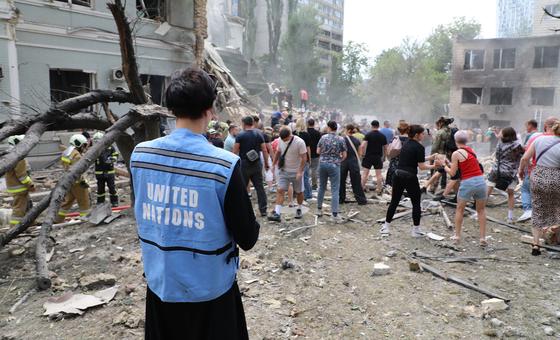
Sudan: UN rights chief appeals for greater protection of civilians in besieged El Fasher

The horror unfolding in Sudan knows no bounds,” Volker Türk said in a statement calling for an end to the war between the Sudanese Armed Forces (SAF) and former ally the Rapid Support Forces (RSF), now in its third year.

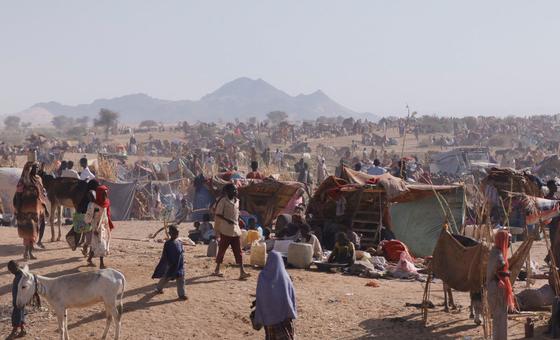
He noted that three days ago, the RSF launched coordinated attacks from multiple directions on the North Darfur capital El Fasher and nearby Abu Shouk camp, killing at least 40 civilians.

Fear of more bloodshed

This brings the confirmed number of civilians killed in the region to at least 542 in just the last three weeks, he said, although the actual death toll is likely much higher.

“My fears are all the greater given the ominous warning by the RSF of ‘bloodshed’ ahead of imminent battles with the Sudanese Armed Forces (SAF) and their associated armed movements,” Mr. Türk said.

“Everything must be done to protect civilians trapped amid dire conditions in and around El Fasher.”

Stop the fighting

Furthermore, reports of extrajudicial executions in Khartoum state are also extremely disturbing, he added.

The High Commissioner said he has personally alerted both leaders of the RSF and SAF to the catastrophic human rights consequences of the war. 

These harrowing consequences are a daily, lived reality for millions of Sudanese. It is well past time for this conflict to stop,” he said.

Diplomatic efforts continue

Meanwhile, the UN Secretary-General’s Personal Envoy for Sudan, Ramtane Lamamra, was in Cairo this week where he met with senior Egyptian officials, including Foreign Minister Badr Abdelatty, to discuss the Sudan crisis. 

They shared the view that an inclusive Sudanese-led political path is needed to restore peace in the country, preserving the unity of Sudan, its sovereignty and territorial integrity,” said UN Spokesperson Stéphane Dujarric, speaking on Thursday in New York.

Mr. Lamamra also exchanged views with Ahmed Aboul Gheit, the Secretary General of the League of Arab States, on coordinating efforts between the UN, the Arab League and concerned multilateral organizations to advance a lasting peace in Sudan.  
 

Source link

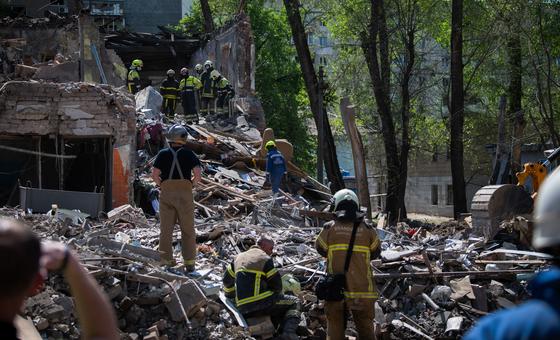
Ukraine: Continued Russian assaults drive civilians from frontline communities

Attacks on frontline regions (are) increasing and it’s always civilians that are bearing the highest cost of the war,” said UNHCR Representative Karolina Lindholm Billing.

Since January, more than 3,500 newly displaced people have transited through a centre in Pavlohrad towards central Ukraine; in total, more than 200,000 people have been evacuated or displaced from frontline areas between August last year and the start of 2025.

Last to leave

Last month, more than 4,200 evacuees arrived at a transit centre in the northeastern city of Sumy where UNHCR and partners provide humanitarian support. These numbers are only a fraction of all those made homeless by the violence and mandatory evacuation orders issued by Kyiv in the face of ongoing Russian aggression.

The majority of those being moved are the elderly with low mobility or disabilities, families with few resources and children. In many cases, they stayed until the end because they didn’t want to leave everything they had behind, UNHCR said.

Cities and civilians targeted

On Thursday, UN aid agencies led condemnation of Russian missile-and-drone attack on Kyiv that killed 12 people and injured 84, one of a wave of attacks across the country that point to an intensification of the conflict since the start of the year – and growing humanitarian needs for refugees.

“Those deadly Russian attacks have intensified alarmingly since January,” said Ms. Billing, speaking to journalists in Geneva via videolink from Kyiv.

“More than 1,000 people have been directly affected as their homes have been damaged or completely destroyed. Civilian infrastructure were also hit in several other regions yesterday, including in Kharkiv, where I myself woke up around 2 am in the morning to the loud sound of explosions.”

According to the UN Human Rights Monitoring Mission in Ukraine, civilian casualties in Ukraine were 70 per cent higher in March this year compared to 12 months earlier.

Supporting lives and livelihoods

The war has left four million internally displaced since 24 February 2022 when Russian tanks rolled into Ukraine. Many of those uprooted have yet to find affordable housing and a new job – which is why support from humanitarian organizations is so crucial, the UNHCR official continued.

“One of the main things we deliver as part of the emergency response are emergency shelter materials that help people cover broken windows, roofs and doors,” Ms. Billing said.

Since 2022, UNHCR has supported around 450,000 people making repairs on their homes. The UN agency also provides psychological first aid and legal support to those who have lost their identity documents and emergency cash assistance to help people cover most basic needs.   

Funding impacts

But more support is needed to sustain a timely and predictable response to the many calls for assistance the agency receives from the affected people and the authorities.

Last year, US funding for UNHCR accounted for around 40 per cent of its overall contributions. For 2025, UNHCR has appealed for $803.5 million to address the emergency situation in Ukraine. Today, that appeal is just 25 per cent funded. During the winter period, the agency had to put some of its programmes partially on hold, impacting psychosocial support, emergency shelter material and cash assistance. 

Source link

Gaza: Aid ban pushes civilians to the brink

UN Spokesperson Stéphane Dujarric told reporters at a news briefing at UN Headquarters on Thursday that the humanitarian situation continues to deteriorate rapidly.

Children are going hungry, patients remain untreated, and people are dying,” he said.

“It is time to lift those restrictions immediately.”

According to latest reports, the disruption in the flow of goods has led to dramatic price hikes – up to 1,400 per cent above pre-ceasefire levels – with  basic items such as dairy, eggs, fruits and meat now absent from local markets.

In April alone, prices have risen by 50 per cent compared to March, according to the UN aid coordination office, OCHA. Shortages of cash and plummeting purchasing power have forced many families deeper into hunger.

Conditions on the ground

On Wednesday, UN’s acting Humanitarian Coordinator for the occupied Palestinian territory, Suzanna Tkalec, visited Deir al Balah and Khan Younis to assess conditions on the ground.

In Khan Younis, the team inspected the main desalination plant for southern Gaza, which has been operating at only 15 per cent capacity since early March due to electricity cuts imposed by Israel. As a result, access to clean water remains extremely limited.

They also visited two overcrowded displacement sites to evaluate living conditions.

In Deir al Balah, the UN team observed operations at a community kitchen run by the Atfaluna Society for Deaf Children, which offers meals and training for youth, women and people with disabilities.

Severe shortages

Meanwhile, humanitarian partners are reporting severe shortages of tents, tarpaulins and other critical materials, Mr. Dujarric said.

Warehouses are almost depleted, which is limiting shelter assistance to just a fraction of what is needed to survive.

UN agencies continue to provide relief as best they can. UN reproductive health agency, UNFPA, this week supplied 10 reproductive health kits – enough to support over 6,900 people – to six health partners, and emergency supplies to key hospitals.

More than 900 women and girls were reached with dignity kits and agency workers held around 240 sessions addressing gender-based violence, with 200 new case files opened.

Call for accountability over killing of UN staffer

Responding to a question on the deadly 19 March strike that killed a UN staff member and severely injured at least five others in Gaza, Mr. Dujarric said that Israeli authorities had reported the outcome of their internal investigation to the UN.

“There has been more cooperation and transparency on their side that we have had in these types of incidents, since the beginning of this conflict,” he said, underscoring the need to ensure accountability and transparency – for this case as well as all others.

“We have seen UN colleagues killed in Gaza or UN infrastructure attacked. And again, we call on all parties to fully comply with international humanitarian law, including the protection of civilians but also the protection of UN and humanitarian staff.”

Outrage as Russian overnight attacks on Ukraine cities kill at least nine civilians

Reports indicate that the latest Russian strikes damaged 12 buildings in the capital, causing widespread damage to homes, businesses and key services, while phones have been heard ringing from the rubble.

Other Ukrainian cities targeted included Zhytomyr – due west of Kyiv – and the northeastern cities of Sumy –  where a daytime missile strike killed at least 34 people on 13 April – and Kharkiv – where the authorities reported 24 drone and missile strikes in total.

“The casualty count is expected to rise as emergency teams continue search-and-rescue operations amid,” said the UN aid coordination office, OCHA.

The development follows Ukrainian President Volodymyr Zelensky’s reported decision on Wednesday to reject a US-led proposal to seek a peace deal with Russia that would have involved ceding territory lost during the war. In theory, this would include the eastern Ukrainian regions of Donetsk, Luhansk, Kherson and Zaporizhzhia, in addition to Crimea, which Russia annexed illegally in 2014.

“Last night’s large-scale attack by the armed forces of the Russian Federation on residential areas in Kyiv and surrounding regions is yet another appalling violation of international humanitarian law,” said the UN’s top aid official in Ukraine, Matthias Schmale.

Children and a pregnant woman were among the more than 70 people injured by Wednesday night’s reported missile and drone strikes. “This senseless use of force must stop… Civilians must never be targets”, insisted Mr. Schmale, UN Humanitarian Coordinator for Ukraine.

Echoing that message, the UN Children’s Fund, UNICEF, appealed for an end to the use of explosive weapons in civilian areas.

Source link