As coronavirus lockdown has been lifted or being lifted gradually, all state governments are working overnight to facilitate migrant labourers to return safely to their home states across the country. They have to register on official websites to return home and here are the links to register.
For migrant labour registration, one can go to the link of the state mentioned against the name. To register, click on the link of state and go to the migrant labour registration link. Fill in all the details.
Provide a document such as Aadhar card for identity verification.
Here is the state-wise list of websites with links for migrant labourers’ registration:
Cyclone Amphan from the Bay of Bengal wreaked havoc on eastern India and Bangladesh on Wednesday, killing at least 14 people and destroying thousands of homes, with officials struggling to evacuate and provide relief amid a surging coronavirus outbreak.
The populous Indian state of West Bengal took the brunt of Cyclone Amphan, with gusting winds of up to 185 km per hour (115 mph) and a storm surge of around five metres. West Bengal Chief Minister Mamata Banerjee said at least 10 people had died in the state, and two districts been completely battered.
“Area after area has been devastated. Communications are disrupted,” Banerjee said, adding that although 500,000 people had been evacuated, state authorities had not entirely anticipated the ferocity of the storm.“We are facing greater damage and devastation than the CoVID-19,” she said as the disease has so far killed 250 people in the state.
With rains continuing, the hardest hits areas were not immediately accessible, while the Centre asked the National Disaster Relief Force to move in and promised that they could make a proper assessment of the destruction on Thursday morning.
2.4 million Evacuated in Bangladesh
In neighbouring Bangladesh, at least four people were killed, reported Reuters quoting officials. Around 2.4 million people have been shifted to more than 15,000 storm shelters this week and Bangladeshi officials also said they had moved hundreds of Rohingya refugees from Myanmar, living on a flood-prone island in the Bay of Bengal, to shelter.
But officials said they feared that standing crops could be damaged and large tracts of fertile land in the densely-populated country washed away. “Fortunately, the harvesting of the rice crop has almost been completed. Still it could leave a trail of destruction,” said Mizanur Rahman Khan, a senior official in the Bangladesh agriculture ministry.
Cyclones frequently batter parts of eastern India and Bangladesh between April and December, often forcing the evacuations of tens of thousands and causing widespread damage.
US vaccine maker Inovio Pharmaceuticals said on Wednesday that its experimental vaccine to prevent coronavirus infection produced protective antibodies and immune system responses in mice and guinea pigs, raising hopes that it could provide relief if Moderna’s vaccine fails.
The company’s shares, which have more than quadrupled this year on hopes of its vaccine working, surged another 18% to $15.77 in early trading, reports Reuters.
“We saw antibody responses that do many of the things we would want to see in an eventual vaccine,” said Dr. David Weiner, director of the immunotherapy center at the Wistar Institute, which has collaborated with Inovio. “We are able to target things that would prevent the virus from having a safe harbor in the body.”
There are currently no approved treatments or vaccines for COVID-19, and more than 100 vaccines are under trials across the world, with more than 12 to 18 months to develop one effective vaccine among the candidates.
Apart from Inovio, other drug makers such as Moderna, Pfizer, Johnson & Johnson, Sanofi and AstraZeneca are in various stages of vaccine development. On Monday, Moderna said its experimental COVID-19 vaccine produced protective antibodies in a small group of healthy volunteers.
Inovio said preliminary results from its human trial are expected in June. The 40 healthy participants in the Phase 1 trial are given two shots, four weeks apart, of the vaccine, called INO-4800, and then followed for two weeks.
“We are already seeing safety data and it has been benign,” Dr. Katherine Broderick, head of research and development at Inovio, told Reuters. “Some people have slight redness of the arm.”
Both Moderna and Inovio are focusing on specific genes on the outer “spike” portion of the virus for vaccine. Inovio’s vaccine was designed using its DNA medicine platform, while Moderna’s vaccine uses messenger RNA (mRNA) technology. Once the preliminary data is in, Inovio will seek FDA approval to move into a Phase 2/3 trial, which could happen in July or August.
Japan’s National Institute of Advanced Industrial Science and Technology (AIST) and IIT-Delhi joint research on Indian ayurvedic component Ashwagandha in combinaton with propolis, an actve ingredent from New Zealand can be developed as possible drug treatment to cure Coronavirus or COVID-19.
The research by IIT-D was led by Professor D Sundar from DAILAB (DBT-AIST International Laboratory for Advanced Biomedicine) discovered that Withanone (Wi-N), a natural compound derived from Ashwagandha (Withania somnifera) and Caffeic Acid Phenethyl Ester (CAPE), an active ingredient of New Zealand propolis, have the potential to block the activity of Mpro, responsible for COVID-19 infection in the human body. Japan’s AIST has not made any such claim so far and either removed the relevant sections and pages from its website or put them Under Construction mode.
The study to be published in Journal of Biomolecular Structure and Dynamics soon, claimed that properties of the ayurvedic herb Ashwagandha have “therapeutic and preventive value” against COVID-19 infection. “SARS-CoV-2 virus genome and structure have been recently published triggering drug designing, devising and development using informatics and experimental tools, worldwide.
DAILAB and AIST Japan, working on natural compounds from Ashwagandha and propolis for last several years, explored the possibility of some of their bio-actives to interact with SARS-CoV-2,” IIT-D said in a statement. The journal JBSD ranks 57 out of 286 in the category of journals in biochemistry and molecular biology, 12 out of 73 in the category of journals in biophysics.
“The researchers targeted the main SARS-CoV-2’s enzyme for splitting proteins, known as the Main protease or Mpro that plays a key role in mediating viral replication. This is an attractive drug target for this virus… They discovered that Withanone (Wi-N), a natural compound derived from Ashwagandha (Withania somnifera) and Caffeic Acid Phenethyl Ester (CAPE), an active ingredient of New Zealand propolis, have the potential to interact with and block the activity of Mpro,” the statement said.
Sundar said, “While the reputation of Ashwagandha as an immunity enhancer forms a basis of the recent initiative of the Indian government in forming an interdisciplinary task force to launch its clinical research studies related to SARS-CoV-2 and the Covid-19 disease, the current research report of this team provide hints on its direct anti-viral activities.”
However, Japan’s AIST has not made any such claim so far and either removed the relevant sections and pages from its website or put them Under Construction mode.
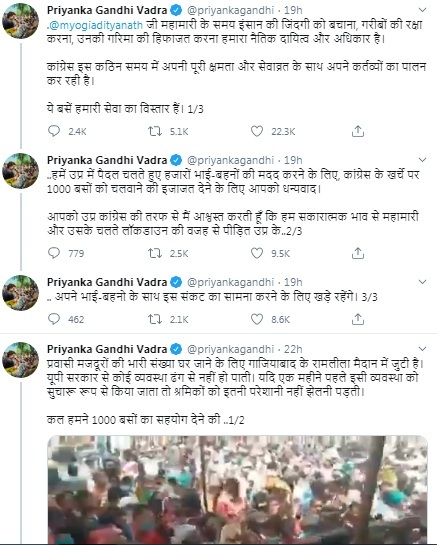
Congress leader Priyanka Gandhi’s offer to ply 1,000 buses to transport stranded labourers and migrants in Delhi to their homes in Uttar Pradesh has been accepted by the UP government after dragging ts feet for over two days. The state Additional Chief Secretary Awanish Awasthi replied to Priyanka Gandhi’s private secretary accepting the offer and requesting more details including a list of the drivers and conductors.
प्रवासी मजदूरों की भारी संख्या घर जाने के लिए गाजियाबाद के रामलीला मैदान में जुटी है। यूपी सरकार से कोई व्यवस्था ढंग से नहीं हो पाती। यदि एक महीने पहले इसी व्यवस्था को सुचारू रूप से किया जाता तो श्रमिकों को इतनी परेशानी नहीं झेलनी पड़ती।
— Priyanka Gandhi Vadra (@priyankagandhi) May 18, 2020
In her May 16 letter soon after the tragic road accident when 25 migrants had died near Aurraiya, Congress general secretary Priyanka Gandhi wrote to CM Yogi Adityanath offering to bear the cost of 1,000 buses to transport migrants to UP. She said thousands of migrants from various parts of the country were walking down to their homes and 65 of them died on the road that was more than the COVID-19 tally in the state.
.@myogiadityanath जी महामारी के समय इंसान की जिंदगी को बचाना, गरीबों की रक्षा करना, उनकी गरिमा की हिफाजत करना हमारा नैतिक दायित्व और अधिकार है।
कांग्रेस इस कठिन समय में अपनी पूरी क्षमता और सेवाव्रत के साथ अपने कर्तव्यों का पालन कर रही है।
ये बसें हमारी सेवा का विस्तार हैं। 1/3
— Priyanka Gandhi Vadra (@priyankagandhi) May 18, 2020
Priyanka Gandhi offered to provide 1,000 buses to transport migrants and bear the cost by the Congress Party and said 500 buses were being parked at Ghazipur border in Ghaziabad and another 500 buses at Noida. Amid adverse media reports, the UP Government has finally decided to give permission.
Earlier, Priyanka had deplored the poor mismanagement at Ghaziabad’s Ram Lila ground where a large uncontrollable crowd of migrants had gathered and were seen pushing each other, ignoring social distancing norms in the wake of coronavirus pandemic, to register to return home.
“If this exercise had started a month ago the migrants would not have had to undergo such hardship. I had offered 1,000 buses and had parked them at the UP border but the UP Government kept playing politics and did not give permission. The UP Government is not helping those hit by this pandemic and is neither allowing others to do it,” Priyanka had said in her earlier tweet.
After the approval of her request, she said, “The nation-building workers cannot be left like this to fend for themselves. The Congress party is committed to help them,” and thanked the state government for accepting the offer.
Matthew Harrell appeared to be the owner of several mental health businesses that treated young people. But he wasn’t a mental health provider; he was a youth football coach.
“He got kids’ information when they signed up for football camp and other after-school activities he sponsored,” said Special Agent Gregory Peacock, who investigated this case out of the FBI’s Atlanta Field Office. “He used that information to bill Medicaid for mental health services that were never provided.”
Although he started in Georgia, Harrell, 44, eventually expanded his business into Florida and Louisiana. In Louisiana, Harrell bought a list of 13,000 stolen identities of children who were on Louisiana’s Medicaid program. Harrell used the data to bilk Louisiana’s Medicaid program out of more than a half-million dollars in mental health services never provided.
He tried to make his companies look legitimate. Harrell had offices and employees, although those employees didn’t provide care—they simply engaged in fake billing. Harrell even kept patient “charts” sitting on the shelf at his offices in case of an audit.
Harrell interviewed medical providers for non-existent jobs, asking them to provide their credentials and Medicaid provider numbers. Harrell didn’t hire the providers, but he used their Medicaid billing numbers without their knowledge. Neither the parents of the children nor the providers knew Harrell was using their information fraudulently. From 2012 through 2015, Harrell’s companies received about $2.5 million in reimbursements—all of which were fraudulent.
“There is only so much money to go around, and this money was meant to be used for kids who really need help” — Gregory Peacock, special agent, FBI Atlanta
The scheme was uncovered when Georgia Medicaid fraud personnel made an unannounced site visit to one of Harrell’s companies. This evolved into a multi-agency investigation involving the FBI, U.S. Department of Health and Human Services – Office of Inspector General, and Medicare fraud investigators from Georgia, Florida, and Louisiana.
The partnership among the agencies was key to investigating and prosecuting the case. “Every health care fraud case we work, we work alongside these agencies,” Peacock said. “Our relationships are excellent, and it was beneficial to have them working with us on this case.”
In December 2019, Harrell pleaded guilty to health care fraud and aggravated identity theft charges. In March 2020, he was sentenced to 11 years in prison. Two of the Georgia participants in the scheme were also convicted on similar federal charges. Another five were convicted on state charges in Florida and Louisiana.
For the investigative team, taking down this ring of fraudsters sends an important message. “There is only so much money to go around, and this money was meant to be used for kids who really need help,” Peacock said. “It’s a really important thing to be working on, and we take health care fraud very seriously.”
The US Federal Bureau of Investigation (FBI) and Cybersecurity and Infrastructure Security Agency (CISA) have ncreased their vigilance in the wake of increased threat to COVID-19-related research in the country. The FBI is investigating the targeting and compromise of U.S. organizations conducting COVID-19-related research by China-affiliated cyber actors and non-traditional collectors.
These actors have been observed attempting to identify and illicitly obtain valuable intellectual property (IP) and public health data related to vaccines, treatments, and testing from networks and personnel affiliated with COVID-19-related research. The potential theft of this information jeopardizes the delivery of secure, effective, and efficient treatment options,” said FBI in a note.
Referring to China’s efforts to target these sectors, it described it a significant threat to the nation’s response to COVID-19 and sought to raise awareness for research institutions and the American public and provide resources and guidance for those who may be targeted. The FBI requested organizations who suspect suspicious activity contact their local FBI field office. CISA is asking for all organizations supporting the COVID-19 response to partner with the agency to help protect these critical response efforts.
A sound-activated camera was used to capture this image during a routine nighttime firearms training session /FBI
“The FBI and CISA urge all organizations conducting research in these areas to maintain dedicated cybersecurity and insider threat practices to prevent surreptitious review or theft of COVID-19-related material,” said FBI in a statement. FBI is responsible for protecting the U.S. against foreign intelligence, espionage, and cyber operations, while CISA protects the nation’s critical infrastructure from physical and cyber threats. CISA is providing support to the federal and state/local/tribal/territorial entities and private sector entities that play a critical role in COVID-19 research and response.
Cybersecurity Guidelines
Assume that press attention affiliating your organization with COVID-19-related research will lead to increased interest and cyber activity.
Patch all systems for critical vulnerabilities, prioritizing timely patching for known vulnerabilities of internet-connected servers and software processing internet data.
Actively scan web applications for unauthorized access, modification, or anomalous activities.
Improve credential requirements and require multi-factor authentication.
Identify and suspend access of users exhibiting unusual activity.
Victim Reporting and Additional Information
The FBI encourages victims to report information concerning suspicious or criminal activity to their local field office.
Even the United Kingdom’s National Cyber Security Agency released a similar alert earlier this month warning of malicious actors targeting COVID-19 response organizations using a tactic of password spraying.
Preventon of heart attack efforts are found to be unequal in patients who usually reach the stage after several cardovascular diseases and stroke, according to a recent study, whch advocated early treatment methods to ward off such eventualites among patients.
The findings were presented at the American Heart Association’s Quality of Care & Outcomes Research Scientific Sessions 2020, which had its virtual conference, May 15-16, at a global level exchangng the latest advances in quality of care and outcomes research in cardiovascular disease and stroke for researchers, health care professionals and policymakers.
Researchers found that patients with peripheral artery disease or stroke were less likely than those with coronary artery disease to receive proper treatment to prevent heart attack. All three are types of atherosclerotic cardiovascular disease — coronary artery disease, stroke and peripheral artery disease — lead to heart attack. The 2016 AHA/ACC guidelines recommend aspirin for patients with symptomatic peripheral artery disease, while 2018 guidelines undeerscore that statin therapy reduces the risk of atherosclerotic events.
Heart Diseases
Worldwide, a major contributor to cardiovascular disease is atherosclerosis, which occurs when cholesterol, fat and inflammatory cells build up and form plaque that blocks the arteries and impedes blood flow. Depending on its location, atherosclerosis increases the risk for the three serious conditions. Coronary artery disease results from damaged heart arteries. A common type of stroke occurs when clogged arteries block blood flow to brain. Peripheral artery disease results from damaged arteries in the extremities such as legs, and can lead to amputation.
“Our study highlights the need for public health campaigns to direct equal attention to all three major forms of atherosclerotic cardiovascular disease,” said senior study author Erin Michos, from the Johns Hopkins University School of Medicine in Baltimore. “We need to generate awareness among both clinicians and patients that all of these diseases should be treated with aggressive secondary preventive medications, including aspirin and statins, regardless of whether people have heart disease or not.”
Guidelines to treat all 3 cardiovascular diseases alike
Since atherosclerosis can affect arteries in more than one part, guidelines are to treat coronary artery disease, stroke and peripheral artery disease similarly with lifestyle changes and medication, including statins to lower cholesterol levels and aspirin to prevent blood clots.
Lifestyle changes include eating a healthy diet, being physically active, quitting smoking, controlling high cholesterol, controlling high blood pressure, treating high blood sugar and losing weight. If people with stroke and peripheral artery disease received the same treatments prescribed for those with coronary artery disease, the results would be encouragng, said the study.
For the study, researchers compared more than 14,000 U.S. adults enrolled in the 2006-2015 Medical Expenditure Panel Survey, and slightly more than half of the patients were men, the average age was 65, and all had either coronary artery disease, stroke or peripheral artery disease. These individuals were representative of nearly 16 million U.S. adults living with one of the three forms of atherosclerotic cardiovascular disease.
“Our study highlights a missed opportunity for implementing life-saving preventive medications among these high-risk individuals,” Michos said. “Peripheral artery disease and stroke should generally be treated with the same secondary prevention medications as coronary artery disease.”
Compared to participants with coronary artery disease:
Participants with peripheral artery disease were twice more likely to report no statin use and three times more likely to report no aspirin use;
People with peripheral artery disease had the highest, annual, total out-of-pocket expenditures among the three atherosclerotic conditions;
Participants with stroke were more than twice as likely to report no statin or aspirin use; and
Those with stroke were more likely to report poor patient-provider communication, poor health care satisfaction and more emergency room visits.
As India prepares to ease the lockdown from May 18, a survey revealed that more than 70% people do not want to use public transport while 62% are reluctant to use cab-hailing apps like Ola and Uber. The new survey conducted by market research and analysis firm Velocity MR revealed on Friday that 71% would reduce shopping in malls and supermarkets and 80% would prefer to continue with online shopping.
At least 50% people anticipated increase in unemployment rates, followed by lack of job security in the private sector (53%) due to the Covid-19 pandemic. “Our study shows that in the next six months to one year, 47% are planning to invest in mutual funds followed by stock/shares (33%) and gold (30%),” said Jasal Shah, Managing Director and CEO, Velocity MR.
About 77% of those surveyed wish to use Arogya Setu app and more than 57% want to maintain social distancing and washing and sanitizing hands at regular intervals going forward in their daily lifestyle in the wake of the coronavrus pandemic.
Banking sector can witness a major boost through their digital payment services as close to 90% of respondents are willing to shift from cash to digital payments. “Almost 80% of respondents considered the non-availability of alcohol and cigarettes as one of the major benefits, and 74% considered work from home advantage and not a disadvantage,” the survey said.
The survey was conducted in April with a sample size of 3,000, covering categories including shopping habits, purchase habits, travel, social activities, investments, social responsibilities during the pandemic.
COVID-19 outbreak is nothing like India has ever seen before. If smallpox that took over 15,000 lives in 1974, is regarded as the worst epidemic in India, then COVID-19 is the one deadliest pandemic case that the country has ever come across. With just a little over 3 months, the virus-infected over 4 million people across the globe.
Velocity MR, acknowledging the impact of the COVID-19, conducted a study to understand and gauge the sentiments of the Indian towards the virus outbreak. This study covers the concern level, awareness level of the consumers as well their thoughts on the outbreak, the business it impacted and the initiatives taken by the government in India.
For those who often say my Grandma used to say — will have a real challenge chronicling them in right and scientific format now. Very often, these proverbs for generations handed over precautions owing to climate change, indicate signs when it rains on an unusual day.
Spanish researchers from the Institut de Ciència i Tecnologia Ambientals of the Universitat Autònoma de Barcelona (ICTA-UAB), for one, have embarked upon such novel study to study proverbs related to environmental issues traditionally used by the local population in rural areas, which are currently considered imprecise and unreliable due to climate change impact.
The study, published in the journal Regional Environmental Change, studied the trend in Sierra Nevada (Granada, Southern Spain), which is unique since it’s in high mountainous regions with vulnerable ecosystem to climate change, besides being a historical place where local knowledge dominated for long in water management and agriculture.
Weather forecast through proverbs
Traditionally, weather forecasting was linked to weather, says María Garteizgogeascoa, who led the study. “I was particularly impressed by the numerous indicators (clouds, wind patterns, animal behavir) that, still nowadays, people in the area use for weather forecasting,” she said and added that some of these local sayings here are perceptibly changing in their meaning.
“I no longer pay attention to water signals because they are no longer credible” or
“In the past, cattle used to announce the rain; but now they only know when it rains after they get wet, as rain now is unpredictable” — are some of the statements made by the inhabitants of Sierra Nevada who participated in the study.
The study further explored information in local proverbs to study the impact of climate change on environment such as precipitation, snow cover and flowering periods.
For example, the proverb “por Todos los Santos la nieve en los altos, por San Andrés la nieve en los pies” indicates the arrival and abundance of snow cover. So, the proverb says at the beginning of November (Todos los Santos is celebrated on November 1st) snow can be found on the peaks of the mountains, and by the end of the month (November 30th) it normally reaches lower altitudes. But participants stated that the proverb barely reflects the current situation, as snow arrives much later now later and often scarce. Even the scientific data and literature show delayed snow periods now.
Farmer working his land and looking at the mountains, without snow. CREDIT: David García del Amo
Another proverb “Septiembre o lleva los puentes o seca las fuentes” describes rain variability in September as it might downpour a lot (the bridges are washed away) or barely rains (the fountains dry up). Participants agreed that the proverb is no longer accurate as there is hardly any rain in the month of September now. Scientific data corroborates the fact.
The study found 19 of the 30 proverbs examined turned out to be irrelevant now due to climate change. Other proverbs could not be established for their scientific validation. For instance, “Cuando vienen los vilanos es conclusion del verano” talks about the flowering period (end of August to beginning of September) of the cardus flower that produces thistledown fluffy seeds that are transported by the wind. This proverb was considered not accurate now due to change in flowering periods.
Encrypted local knowledge
“This work shows that, despite some limitations, these traditional ways of encrypted local knowledge could be a useful source to do so and a window of opportunity to engage with local communities. During my work in the field, proverbs proved to be a useful tool to engage participants in discussions about climate change issues”, says María Garteizgogeascoa.
According to another team member and researcher Victoria Reyes-García, “In the absence of meteorological data from the past, traditional knowledge collected in proverbs and other forms of popular knowledge can be an alternative source of information to understand the impacts of climate change.”
The study reveals that older people thought that the proverbs they used in the past to guide their decisions are not reliable anymore. The study documents literature and impact of climate change through a Global Change Observatory established in the area in 2007.
Now that India and other glbal nations are being forced to re-open normal life and movement, here is an expert from Monash University in Australia who differs strongly at this idea as too early to reap the benefits of lockdowns in several nations that could effectively bar the spread of coronavirus or COVID-19.
Ever since the coronavirus hit the city of Wuhan in December last year, more than two months went in observing how the virus transfers from human to human and what kind of restrictions China imposed to contain the virus. When the infection entered Europe and destroyed several historic cities and devastated the economies, US woke up to the dangers more intensely than previously thought.
While most of the world’s scientists are working on developing a vaccine, “the bottom line is that we simply don’t yet know enough about how it works,” says Stephen Turner, Professor of Microbiology at the Monash University. He warns that the COVID virus can’t be wished away by opening gyms, allowing sports like boating and golf, and resuming church congregations, which may relieve those who feel their personal rights have been stymied, but it’s no signal that this virus has been conquered.
“In this world we’ve created of instant gratification, we equally expect a pandemic to be studied, solved and an answer made available to everyone, so we can all return to our normal lives,” he said.
Short-lived South Korean example
Citing South Korea, one of the countries that has done an exemplary job of dampening the disease with social distancing and widespread testing, some people who recovered from coronavirus have retested positive, according to the Korea Centers for Disease Control and Prevention (KCDC). Alongwith Singapore, these two nations showed how to flatten the COVID-19 curve, but then a spike in new cases washed offsuch hopes. Many of them showed negligible and below the detection of current tests, according to KCDC deputy director Kwon Joon-Wook.
But the prospect of people remaining positive for the virus, and therefore potentially infectious, is of utmost concern now when life is returned to normal levels. Of the more than 4 million people globally who have tested positive for the virus, more than one million have recovered and assuming they’re OK to interact with those who haven’t been infected is not true.
“We simply don’t know whether they remain infectious, all while the world is already starting to pull back on lockdown laws and allowing people to congregate with restrictions… Thankfully, the virus doesn’t appear to mutate much, which makes the development of a universal vaccine easier, but its super power may be that, as appears to be the case for other human non-SARS coronaviruses, immunity wanes over time – so those of us who have been infected, and think we’re immune against developing or spreading the disease, may only be confident in that for a period of time.”
A recent study by Chinese researchers published in The Lancet, showed that those with severe COVID illness have, not surprisingly, a heavier viral load, and took longer to rid themselves of the virus. Other data suggests that about seven in 10 of those mildly infected actually develop antibodies to kill the virus and eradicate it from the body. This will be crucial in the development of a prototype vaccine.
“Every day we learn something new about this coronavirus. But most often, like these cases of South Koreans mysteriously testing positive after ridding themselves of the disease, what we learn every day is how little we know about how SARS-CoV-2 operates. To assume we can just resume our previous normal lives, when we still don’t truly know what we’re fighting, could be considered premature,” writes Stephen Turner.
The US National Institute of Allergy and Infectious Diseases (NIAID), part of the National Institutes of Health (NIH) has started working on a clinical trial to evaluate whether the malaria drug hydroxychloroquine, given together with the antibiotic azithromycin, can prevent hospitalization and death from coronavirus disease 2019 (COVID-19).
The Phase 2b trial will enroll approximately 2,000 adults across the United States who have confirmed infection with SARS-CoV-2, the virus that causes COVID-19, and experiencing fever, cough and/or shortness of breath. The investigators anticipate that many of those enrolled will be 60 years of age or older or have a comorbidity associated with developing serious complications from COVID-19, such as cardiovascular disease or diabetes.
Participants will be randomly assigned to receive short-term treatment with either hydroxychloroquine and azithromycin or matching placebos. People living with HIV and pregnant and breastfeeding women also are eligible to participate in the study. The first participant enrolled today in San Diego, California.
Fauci defends clinical trial
“We urgently need a safe and effective treatment for COVID-19. Repurposing existing drugs is an attractive option because these medications have undergone extensive testing, allowing them to move quickly into clinical trials and accelerating their potential approval for COVID-19 treatment,” said NIAID Director Anthony S. Fauci.
Currently, there are no specific therapeutics approved by the U.S. Food and Drug Administration to treat people with COVID-19. Hydroxychloroquine is FDA-approved to prevent and treat malaria, as well as to treat the autoimmune diseases rheumatoid arthritis and lupus.
FDA approval
Some preliminary reports have suggested that hydroxychloroquine, alone or in combination with the FDA-approved antibiotic azithromycin, may benefit people with COVID-19. On March 28, FDA issued an Emergency Use Authorization (EUA) to allow hydroxychloroquine and medical-grade chloroquine to be distributed from the Strategic National Stockpile and prescribed by doctors to hospitalized adolescents and adults with COVID-19, as appropriate, when a clinical trial is not available or feasible.
“This study will provide key data to aid responses to the COVID-19 pandemic,” said ACTG Chair Judith Currier of the University of California, Los Angeles. “We are pleased to be able to leverage ACTG’s existing infrastructure for HIV treatment clinical trials to quickly implement this important study.”
Treatment with antivirals such as interferons may significantly clear virus and reduce levels of inflammatory proteins in COVID-19 patients, said a new study conducted by researchers in Toronto.
Researchers conducting an exploratory study on some confirmed COVID-19 cases in Wuhan found that treatment with interferon (IFN)-α2b significantly reduced the duration of detectable virus in the upper respiratory tract and reduced blood levels of interleukin(IL)-6 and C-reactive protein (CRP), two inflammatory proteins found in the human body.
The findings, published in the journal Frontiers in Immunology show potential for the development of an effective antiviral drug COVID-19 global pandemic caused by the novel coronavirus, SARS-CoV-2, said researchers.
“Interferons are our first line of defence against any and all viruses – but viruses such as corona-viruses have co-evolved to very specifically block an interferon response”, said lead author Dr Eleanor Fish of the Toronto General Hospital Research Institute & University of Toronto’s Department of Immunology. “This informs us of the importance of interferons for the clearance of virus infections. Treatment with interferon will override the inhibitory effects of the virus,” he noted.
Earlier study on SARS helped
Fish and his team of doctors considered IFN-α therapy for COVID-19 based on their earlier findings during the 2003 SARS outbreak. “My group conducted a clinical study in Toronto to evaluate the therapeutic potential of IFN-α against SARS. Our findings were that interferon treatment sped up the resolution of lung abnormalities in patients treated with interferon compared with those not treated with interferon” said Fish.
The authors examined the course of disease in a group of 77 individuals with confirmed COVID-19 and admitted to Union Hospital, Tongii Medical College, Wuhan in China, between January 16 and February 20, 2020. The individuals were in their preliminary stage of disease and required no intensive care or oxygen supplementation or intubation.
Patients were either treated with IFN-α2b, arbidol (ARB), which is a broad-spectrum antiviral, or a combination of IFN-α2b plus ARB, and viral clearance was defined as two consecutive negative tests for virus at least 24 hours apart, from throat swab samples.
The researchers found treatment with IFN-α2b, whether alone or in combination with ARB, accelerated viral clearance when compared to ARB treatment alone. IFN treatment was able to significantly reduce circulating levels of IL-6 and CRP, whether alone or in combination with ARB. Noticeably, age and sex did not negate the effects of IFN treatment on viral clearance times or on the reduction in the inflammatory proteins IL-6 and CRP, they said.
Clinical trial next
Despite the study being a small and non-randomised cohort, the work provides new insights into COVID-19 disease, notably accelerated viral clearance from the upper respiratory tract and reduced circulating inflammatory biomarkers, hinting at functional connections between viral infection and host end organ damage by limiting the subsequent inflammatory response in the lungs of patients.
In defense of the treatment method, Fish argues, “Rather then developing a virus-specific antiviral for each new virus outbreak, I would argue that we should consider interferons as the ‘first responders’ in terms of treatment. Interferons have been approved for clinical use for many years, so the strategy would be to ‘repurpose’ them for severe acute virus infections.”
Fish says a randomized clinical trial is a crucial next step but for now, the current findings suggest therapeutic efficacy of IFN-α2b as an available antiviral intervention for COVID-19, which may also benefit public health measures by shortening the duration of viral clearance and therefore slowing the tide of the pandemic.
The largest collection of footprints from the human fossil record in Africa belonging to human life during the Late Pleistocene period (126,000 to 11,700 years ago), suggests a division of labour in ancient human communities.
Arcaeologists Kevin Hatala and his team from the Center for the Advanced Study of Human Paleobiology, George Washington University, Washington DC, unearthed 408 human footprints in Engare Sero, Tanzania after the site was discovered by members of a nearby Maasai community.
The researchers dated the footprints to between 19,100 and 5,760 years ago. Based on their size, the distances between them and their orientations, the authors estimate their speed and suggest that 17 tracks of footprints were created by a group of individuals moving in a southwesterly direction.
“Within this assemblage is a collection of 17 trackways that is estimated to include at least 14 adult females traveling in the same direction and at similar speeds,” said researchers in their paper.
Footprints / Hatala, K.G., Harcourt-Smith, W.E.H., Gordon, A.D. et al.
The group, besides 14 adult females, had two adult males and one young male. The authors speculate that the females were foraging together and were accompanied by the males, as this behaviour is observed in modern hunter-gatherers such as the Ache and Hadza. Essentially, the findings may indicate a division of labour based on sex in ancient human communities, said researchers.
In addition, six tracks of footprints oriented to the northeast, reflecting a broader range of variation in speed, may suggest that they were not a single group travelling together, but several individuals running and walking at different speeds. The findings provide clues to group behaviour of humans living in east Africa during the Late Pleistocene period, said the study.
“The Engare Sero footprint assemblage provides a tantalizing snapshot of the movements of a group of modern humans living in East Africa in the Late Pleistocene. These trace fossils offer windows into anatomy, locomotion, and group behavior, which help to supplement what is known from other forms of fossil and archaeological data,” wrote authors in their paper published in the journal Nature.
Footprints also provide evidence of body sizes from a region and area where skeletal fossil data are scarce, and they preserve direct evidence of both walking and running behaviors, said the authors. “This may represent direct fossil evidence of sexually divided foraging behaviors in Late Pleistocene humans. Such insights cannot be gleaned from most other forms of fossil data.”
Important lessons learned from the Severe Acute Respiratory Syndrome (SARS) outbreak of 2002-2003 could inform and guide vaccine design for COVID-19 according to University of Melbourne Professor Kanta Subbarao, Director of the WHO Centre for Reference.
In an article published Thursday in Cell Host and Microbe, Prof. Kanta Subbarao stressed the importance of detecting a neutralising antibody response in recovered COVID-19 patients, and of studies of COVID-19 vaccines in animal models.
Neutralising antibodies prevent infection by binding to a virus and blocking their ability to infect. After an infection, a host can produce neutralising antibodies to protect against future infection. “The speed with which SARS-CoV-2, the virus that causes COVID-19, has spread around the world and its toll in numbers of cases, severe illness, and death has been staggering,” she said.
“However, technological advances have made rapid vaccine development possible. We have to ask ourselves what the new vaccines should aim to achieve – prevent all infection or prevent severe disease and death? In which age group(s)? What effect will vaccines that address these choices have on subsequent epidemics?”
How they worked on SARS in 2003?
Professor Subbarao was the Chief of the Emerging Respiratory Viruses Section of the Laboratory of Infectious Diseases at the National Institute for Allergy and Infectious Disease at the US National Institutes of Health during the SARS outbreak in 2002-2003, and was central to an important discovery of how neutralising antibodies protect from infection.
Halden’s technique boasts high sensitivity, with the potential to detect the signature of a single infected individual among 100 to 2 million persons. To accomplish this, wastewater samples are screened for the presence of nucleic acid fragments of the SARS-CoV-2 virus. The RNA genomes are amplified through a process known as reverse-transcriptase quantitative PCR (RT qPCR) / CREDIT: Shireen Dooling
“We used mouse experiments to establish the very important principle that neutralising antibodies alone were sufficient to protect them from SARS-CoV infection,” Professor Subbarao described.
She also explained the crucial discovery that the ‘spike’ protein of the virus induced neutralising antibodies, and the importance of animal trials of several SARS vaccine candidates. Coronavirus particles have a corona (crown) of spike proteins that allow the virus to attach and enter cells.
“The ‘spike’ proteins of both SARS-CoV and SARS-CoV-2 are related and they attach to the same molecule called ACE 2 on human cells to infect people. We now also know through animal experiments with SARS-CoV-2 that neutralising antibodies protect from reinfection,” Professor Subbarao said.
“Two SARS vaccines were evaluated in humans, and a number of promising candidates were tested in pre-clinical studies, but they weren’t pursued because SARS didn’t re-emerge. “However, the work on SARS is relevant to the COVID-19 pandemic because the two viruses share several features and many of the principles and experience with SARS vaccines will apply to SARS-CoV-2.”
The Cold War era that had seen seen both super powers — the United States and the erstwhile Soviet Union — engaged in a nuclear weapons development under a mutual deterrence program, left behind immense impact in political and defense purview. A new study claims that it did leave its impact on how the test clouds changed the rain patterns on Earth.
One such leftover is traceable to radioactive period following nuclear bomb tests, which have changed rainfall patterns thousands of miles from the detonation sites. The study says that these nuclear bomb tests during the Cold War may have changed rainfall patterns thousands of miles from the detonation sites.
Scientists at the University of Reading have researched how the electric charge released by radiation from the test detonations, carried out predominantly by the US and Soviet Union in the 1950s and 1960s, affected rainclouds at the time.
The study, published in Physical Review Letters, examined historic records between 1962-64 from a research station in Scotland. Scientists compared days with high and low radioactively-generated charge, finding that clouds were visibly thicker, and there was 24% more rain on average on the days with more radioactivity.
Rain falling from a cloud. Photo taken in Gloucestershire CREDIT Prof Giles Harrison, University of Reading
Professor Giles Harrison, lead author and Professor of Atmospheric Physics at the University of Reading, said: “By studying the radioactivity released from Cold War weapons tests, scientists at the time learnt about atmospheric circulation patterns. We have now reused this data to examine the effect on rainfall.”
It has long been thought that electric charge modifies how water droplets in clouds collide and combine, potentially affecting the size of droplets and influencing rainfall, which is difficult to observe in the atmosphere. But combining the bomb test data with weather records, the scientists were able to retrospectively probe it.
The race to develop nuclear weapons was a key feature of the Cold War and detonations were carried out in remote Nevada Desert in the US, and on Pacific and Arctic islands, though radioactive pollution spread widely throughout the atmosphere. Radioactivity ionises the air, releasing electric charge. The researchers from the Universities of Reading, Bath and Bristol, studied records from Met Office research weather stations at Kew near London and Lerwick in the Shetland Isles.
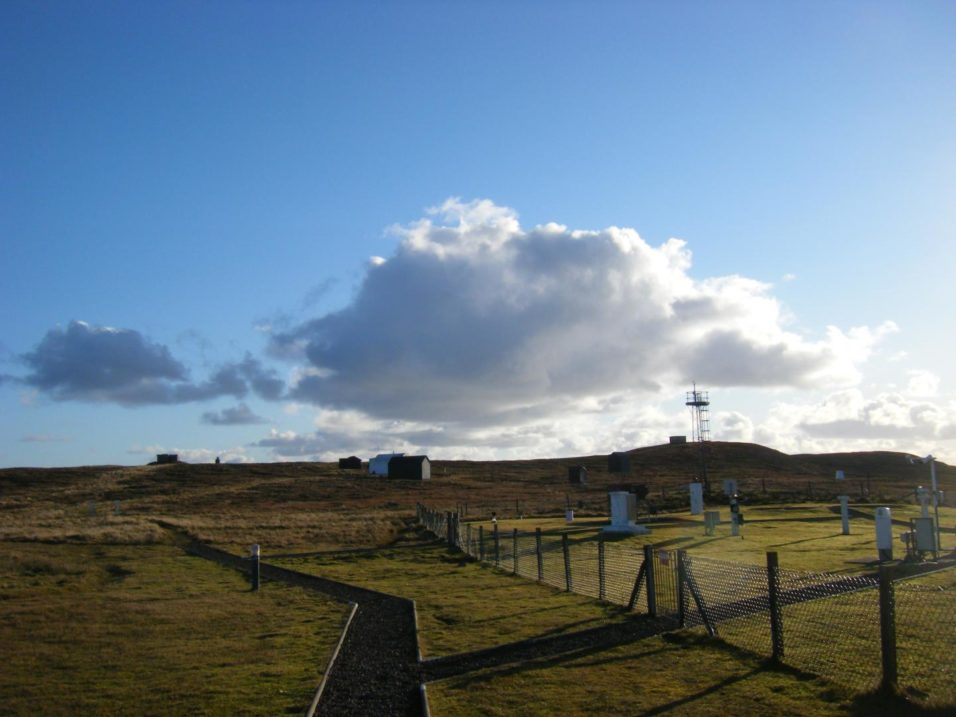
The weather observatory in Lerwick, Shetland Isles, Scotland, where the historic rainfall records were taken / CREDIT: Dr Keri Nicoll, University of Reading and University of Bath
Located 300 miles north west of Scotland, the Shetland site was relatively unaffected by other sources of anthropogenic pollution, making it suitable for a test site to observe rainfall effects which, although likely to have occurred elsewhere too, would be much more difficult to detect.
Atmospheric electricity is most easily measured on fine days, so the Kew measurements helped to identify nearly 150 days where there was high or low charge generation over the UK while it was cloudy in Lerwick. The Shetland rainfall during the same period showed differences which vanished after the major radioactivity episode was over.
The findings, which will pioneer new research in cloud-related geoengineering and to explore how electric charge could influence rain, relieve droughts or prevent floods, without the use of chemicals.
External Affairs Minister S. Jaishankar has described Finance Minister Nirmala Sitharaman’s announcement under government’s Rs 20 lakh crore stimulus package under Atma Nirbhar Bharat as “bold initiatives” and noted that freign policy begins at home, hinting at changes soon to foreign policy too.
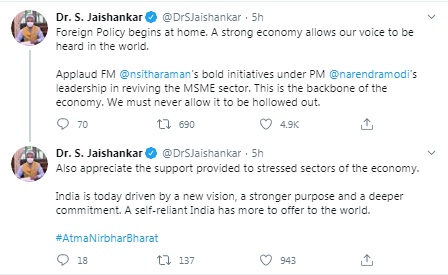
“Foreign Policy begins at home. A strong economy allows our voice to be heard in the world. Applaud FM @nsitharaman’s bold initiatives under PM @narendramodi’s leadership in reviving the MSME sector,” Jaishankar tweeted.
In a series of tweets on the stimulus plan, he followed it saying, “This is the backbone of the economy. We must never allow it to be hollowed out…Also appreciate the support provided to stressed sectors of the economy… India is today driven by a new vision, a stronger purpose and a deeper commitment. A self-reliant India has more to offer to the world.”
The finance minister’s plan included several measures for helping various economic sectors amid the coronavirus crisis such as — a Rs 5.9 lakh crore with a sharp focus on MSMEs, a liquidity scheme for NBFCs, HFCs and MFIs. It has reduced the rates of TDS and by 25%, lowering statutory deductions on EPF contributions by employees and employers.
Earlier on Wednesday, Prime Minister Narendra Modi tweeted describing the announcements by the FM “will go a long way in addressing issues faced by businesses, especially MSMEs… The steps announced will boost liquidity, empower the entrepreneurs and strengthen their competitive spirit.”
India to grow with World
Referring to Modi’s speech earlier this week, Jaishankar clarified that the call for self-reliant India doesn’t mean shutting down doors to globalization. He tweeted saying India seeks to grow with the world. “Vision of a self-reliant India that will convert the Corona challenge into opportunity. India will grow, but grow with the world. Will contribute fully to global resilience,” he tweeted.
Be Vocal about Local: PM @narendramodi’s mantra for economic recovery.
Vision of a self-reliant India that will convert the #Corona challenge into opportunity.
An Indian-origin engineer by name Shashank Rai has been charged by Texas prosecutors for fraudulent applications for $10 million loans under the COVID-19 relief program claiming to be for his firm employees. The charges include bank fraud and making false statements to a federal agency.
Paycheque Protection Programme (PPP) is an initiative of the federal government to provide emergency help to small businesses hit by the COVID—19 crisis to enable them to keep their employees availing loans under the program, which are written off after eight weeks if all the workers stay on the payroll. US Congress approved $649 billion for the program.
Shashank Rai, 30, of Beaumont, Texas, allegedly sought millions of dollars in forgivable loans in forgivable loans guaranteed by the Small Business Administration (SBA) under the Coronavirus Aid, Relief, and Economic Security (CARES) Act, from two different banks by claiming to have 250 employees earning wages when, in fact, no employees worked for his purported business. Rai is charged with violations of wire fraud, bank fraud, false statements to a financial institution, and false statements to the SBA.
“As alleged, Rai fraudulently pursued millions of dollars in loans intended for legitimate small businesses suffering the economic hardships of the COVID-19 pandemic,” said Assistant Attorney General Brian A. Benczkowski of the Justice Department’s Criminal Division. “The department and our law enforcement partners will remain vigilant in our efforts to protect critical CARES Act relief programs from fraud and abuse.”
“The behavior in this case was very brazen,” said U.S. Attorney Joseph D. Brown of the Eastern District of Texas. “Those who submit these applications for loans or other assistance need to understand that there are people checking on the representations made, and those representations are made under oath and subject to the penalties of perjury. Federal agencies are watching for fraud, and people who lie and try to cheat the system are going to be caught and prosecuted.”
Pre-meditated plan, says prosecution
“To support small and community banks, the Federal Home Loan Banks can accept Paycheck Protection Program (PPP) loans as collateral when making loans to their members,” said Richard Parker, Acting Deputy Inspector General for Investigations for the Federal Housing Finance Agency, Office of Inspector General.
“Today’s charges hold the defendant responsible for his actions to swindle money out of a federal program intended to help those in need during a pandemic crisis,” said Inspector General Jay N. Lerner of the Federal Deposit Insurance Corporation Office of Inspector General (FDIC OIG). “When an individual cheats the Paycheck Protection Program out of money, it deprives hard-working Americans and deserving small businesses.”
diaspora news
According to court documents unsealed today in U.S. District Court in Beaumont, Rai allegedly made two fraudulent claims to two different lenders for seek loans guaranteed by the SBA for COVID-19 relief through the PPP. In the application submitted to the first lender, Rai allegedly sought $10 million in PPP loan proceeds by fraudulently claiming to have 250 employees with an average monthly payroll of $4 million. In the second application, Rai allegedly sought approximately $3 million in PPP loan proceeds by fraudulently claiming to have 250 employees with an average monthly payroll of approximately $1.2 million.
According to court documents, the Texas Workforce Commission provided information to investigators of having no records of employee wages having been paid in 2020 by Rai under his business, Rai Family LLC. In addition, the Texas Comptroller’s Office of Public Accounts reported to investigators that Rai Family LLC reported no revenues for the fourth quarter of 2019 or the first quarter of 2020.
According to court documents, materials recovered from the trash outside of Rai’s residence included handwritten notes that appear to reflect an investment strategy for the $3 million, which is the amount of money that Rai allegedly sought from the second lender.
What is PPP?
The CARES Act is a federal law enacted on March 29, 2020, designed to provide emergency financial assistance to the millions of Americans who are suffering the economic effects caused by the COVID-19 pandemic. One source of relief provided by the CARES Act was the authorization of up to $349 billion in forgivable loans to small businesses for job retention of employees. In April 2020, Congress authorized over $300 billion in additional PPP funding.
The PPP allows qualifying small-businesses and other organizations to receive loans with a maturity of two years and an interest rate of 1 percent. PPP loan proceeds must be used by businesses on payroll costs, interest on mortgages, rent, and utilities. The PPP allows the interest and principal to be forgiven if businesses spend the proceeds on these expenses within eight weeks of receipt and use at least 75 percent of the forgiven amount for payroll.
Using machine learning to track surges in interest in health topics on popular online comment boards, especially Reddit, a new study conducted during the COVID-19 outbreak by researchers in the Perelman School of Medicine at the University of Pennsylvania (Penn Medicine) fund peaks of interest among the public.
Such insight could help public health officials better understand and address public concerns and priorities, and stem the spread of misinformation, said the study, published in the Journal of General Internal Medicine. The researchers vetted discussions on Reddit because it is one of the most popular sites on the internet, as well as being relatively unfiltered and up-to-date.
“Public health priorities do not always align with community priorities, and the success of public health efforts often depends on having a plan to address community concerns,” said Daniel Stokes, a research fellow with the Center for Emergency Care Policy and the Center for Digital Health at Penn Medicine. “Having a source like Reddit that is directly tied to people’s thoughts could prove invaluable in crafting plans that meet people where they are.”
Researchers said real-time monitoring of Reddit could have allowed for a nimbler response during a surge of questions around whether it was safe to go outside in mid-March when the US Centers for Disease Control and Prevention (CDC) did not issue official guidelines for safely enjoying parks and outdoor activities until early April. If there had been more monitoring of online discussion activity on just Reddit, the guidance could have been issued closer to the peak of interest, said Stokes.
As a conduit directly to the thoughts of some, Reddit is also valuable because it is the place where some of the “infodemic” –the plague of misinformation about COVID-19–has spread. Examples include one Reddit poster’s belief that a natural remedy like licorice root might prevent COVID-19 infection, or another’s thought that the virus was human engineered. Here, too, a quick, tailored response from public health officials could lead to more fact-based and productive discourse.
To identify surges of interest in the public, the study’s researchers collected nearly 95,000 posts from March 3 through March 31, 2020 on the most popular COVID-19 thread on Reddit, r/Coronavirus. It had 50 different discussion topics through a machine learning technique of natural language processing. And, 10 of those topics were determined to be most related to three areas of interest in the study:
— the response to public health measures,
— the sense of the pandemic’s severity, and
— its impact on daily life.
By tracking how the popularity of these topics varied day-by-day, the team was able to demonstrate how areas of interest ebbed and flowed, say, hand-washing was found to peak early, between March 3 and 6, while concern about personal finances was discussed roughly 50 percent more by the end of March as compared to the beginning. The analysis showed some topics popular at the start of the month remained on top, or had a comeback later in the month, such as the case for mask-wearing.
“The CDC didn’t make their recommendations on wearing masks in public until early April, so it is interesting to see that masks were being discussed a great deal prior to that recommendation,” Stokes said. “Perhaps it was a sign that many people were ready for these guidelines earlier.”
The team hopes to continue to track and analyze posts on this COVID-19-specific thread. In another effort from Penn’s Center for Digital Health, led by Raina Merchant, MD, an associate professor of Emergency Medicine, they collected similar data through Twitter across the United States.
“We are aiming to incorporate input from several digital sources that would allow us to not just track the public’s sentiment and perception of the virus, but also track, in real time, the emergence of new outbreaks,” said Merchant, author of the study published in the Journal of General Internal Medicine.
Stokes and Merchant believe that such insight will be heeded by public health officials to better combat the spread of misinformation that accompanied the COVID-19 outbreak. “Early comparisons to the flu on Reddit may have indicated a gap in public understanding of pandemic severity. Recognizing such gaps can be useful in developing targeted campaigns to close them,” Stokes said.
Earth had far more oxygen levels early in its history than previously thought, which culd have aided setting the stage for the evolution of complex life on it, said a study by scientists at the University of Alberta and the University of Tartu in Estonia.
The international team of researchers, led by UA scientists, studied a Russian drill core containing shungite — a unique carbon-rich sedimentary rock deposited 2 billion years ago and the unearthed material provided clues about oxygen concentrations on Earth’s surface at that time. Besides, the study also showed strikingly high levels of molybdenum, uranium, and rhenium, as well as elevated uranium isotope ratios during the time.
This two-billion-year-old shungite records evidence for balmy, oxygen-rich conditions on the early Earth. Photo credit: K. Paiste
“These trace metals are only thought to be common in Earth’s oceans and sediments when oxygen is abundant,” explained Kaarel Mänd, a PhD candidate in the University of Alberta’s Department of Earth and Atmospheric Sciences and lead author of the study. “These trace metal concentrations are unrivaled in early Earth’s history, suggesting elevated levels of oxygen at the time.”
Previously, it was widely accepted that the models of Earth’s carbon and oxygen cycles predict that shungite should have been deposited at a time of rapid decrease in oxygen levels. “What we found contradicts the prevailing view,” says Mänd. “This will force the Earth science community to rethink what drove the carbon and oxygen cycles on the early Earth.”
The new findings throw new insight into the evolution of complex life on Earth, which had its “middle age” representing the backdrop for the appearance of eukaryotes.
Eukaryotes are the precursors to all complex life, and require high oxygen levels in their environment to thrive and here, the new study strengthens the idea that suitable conditions for the evolution of complex life on early Earth began much earlier than previously thought.
The findings will pen wide the requirement of future research to examine the delay between the initial rise of oxygen and the appearance and spread of eukaryotes.