NASA’s Cassini probe mission has sent images of Saturn’s moon Titan showing some tallest mountains on its surface measuring more than 10,000 feet.
The mountainous ridges called the Mithrim Montes showed three series of mountain ridges and the top measured 10,948 feet in height. Most of these mountain ridges are located near the equator. The region is called Xanadu.
“It’s not only the highest point we’ve found so far on Titan, but we think it’s the highest point we’re likely to find,” said Stephen Wall of the Cassini radar team at NASA. Another observer of the Cassini radar team Jani Radebaugh said, “Titan’s extremes also tell us important things about forces affecting its evolution.”
The mountainous cliffs point at the evolution of a planet where forces have shoved the surface upward from underneath. Earth too has similar mountains and cliffs and the tallest mountain Everest is one such star example. The Himalaya and Andes Mountains still manifest such forces of nature underneath.
Cassini has found that Titan also has rain and rivers and some active tectonic forces causing quakes. Titan’s rotation, tidal forces from Saturn or cooling of the crust are some of its natural effects tied to this phenomenon.
Since its arrival in 2004, Cassini’s observations have changed whole dimension of saturn and its largest moon Titan. It has revealed that Titan’s surface is shaped by rivers and lakes of liquid ethane and methane, which forms clouds and causes occasional rains from the sky as water does on Earth. Winds sculpt vast regions of dark, hydrocarbon-rich dunes that girdle the moon’s equator and low latitudes, while volcanoes erupt spewing liquid water as the lava.
On its journey to Saturn, Cassini carried the European-built Huygens probe, which landed on Jan. 14, 2005, becoming humankind’s first landing on a body in the Outer Solar System when it parachuted through Titan’s murky skies. Currently, scientists are eager to get new data that could confirm the presence of a liquid ocean beneath the Titan’s surface.
Radar images do not present scenes as they would appear to human eyes but use radio waves beamed by the spacecraft that are reflected and scattered off of Titan’s surface in order to see through Titan’s opaque atmosphere. Bright regions indicate materials that are rough or that otherwise scatter the beam; dark regions indicate materials that are relatively smooth or that otherwise absorb radar waves. A side effect of this technique is the grainy pattern called “speckle” that typically is present in Cassini radar images.
This view was produced using a technique for handling noise in Cassini radar images, called despeckling, that produces clearer, easier-to-interpret views. Titan’s icy crust sits atop a deep ocean of liquid water that probably acts much like Earth’s upper mantle — the layer of hot, high-pressure rock below the crust that can slowly flow and deform over time.
This radar view was obtained on May 12, 2008 taken from a location at 2 degrees south latitude, 127 degrees west longitude. The incidence angle is about 34 degrees.
The Cassini-Huygens mission is a cooperative project of NASA, the European Space Agency and the Italian Space Agency. NASA’s Jet Propulsion Laboratory, a division of the California Institute of Technology in Pasadena, manages the mission for NASA’s Science Mission Directorate, Washington.
Google Map Makes JNU Symbol for Sedition, Antinational Search Strings Now.
Goole, which has some top brains in its Headquarters from JNU should be ashamed that its search engine etiquette surpasses basic tenets of slander and defame against an institution like Jawaharlal Nehru University for pointing at it for its Google Map search for sedition and antinational key words.
As shown in the image here, when you type the two words, JNU campus gate pops up as the answer and a red marker on JNU campus vividly shows Google’s endorsement of the campus for these search strings. Google Maps was either hacked or someone had intentionally made it to defame the campus, which has been defamed by the government crackdown on its students recently.
Despite Home Minister Rajnath Singh’s remarks in parliament, JNU has been the victim of hatred spread by the government crackdown based on ill-found videos in circulation or aired by ZeeNews recently and now that the case is sub-judice, the BJP-ruled government is awaiting a bigger onslaught on the campus on social media with Google falling in line.
JNU student leader Kanhaiya Kumar and two other JNU students were last month arrested for sedition and freed on bail later but the damage brought upon the unique institution of the country has been dented forever, thanks to Delhi Police which too has sevveral officers from JNU and no political party nor an educational institution has been without a JNU alumni.
The JNU Students’ Union (JNUSU) has asked the administration to file a formal complaint with Google. “We have been protesting against the branding of an institution as anti-national and now the search giant has gone a step ahead in certifying that,” said Shehla Rashid Vora, Vice President of JNUSU.
Last year, similar faux pas by Google angered the BJP when top 10 criminals string popped up Prime Minister Narendra Modi’s name.
Otherwise, JNU is already under duress from the over-vigilant administration which is raiding hostel rooms and even lecture rooms frequently. When students of the Centre of Law and Governance were recently viewing a movie by Anand Patwardhan, “Father, Son and Holy war”, the administration raided the lecture room apprehensive about screening some illegal movie. That is the state of affairs in the top univeristy of the country and the knee-jerk reaction of its benevolent administration.
Bollywood actress Deepika Padukone, who attended one of her best friend’s wedding in Sri Lanka recently was reportedly accompanied by her friend Ravneer Singh and her mother Ujjala Padukone.
While NDTV flashed some photographs of their presence at the wedding, Ranveer’s presence has raised eyebrows of many at the possible intimacy the actor has on the family of Padukones.
The pair is not new in Bollywoood functions but the fact that they went together with Deepika’s mother in toe has given scope to speculation that the family is also approving Ranveer Singh gradually.
However, both actors of Bollywood are currently serious about their professional commitments. Deepika is busy with the Hollywood movie ‘xXx: The Return of Xander Cage’. She is not actting in any Bollywood film this year.
Ranveer is acting in the forthcoming Yash Raj Films’ ‘Befikre’ with Vaani Kapoor. Though both of them have been paired by media, they have not made anything official to the media. They worked together in Sanjay Leela Bhansali’s 2013 film ‘Ram-Leela’ and in Bhansali’s next film ‘Bajirao Mastani’.
[tags, deepika padukone, ranveer singh,spotted, sri lanka wedding,ujjala padukone,]
Scientists were surprised to find fragments of DNA of extinct human species in 35 people living in islands off New Guinea in Melanesian tribes.
The DNA was traceable to two early human species: Denisovans, whose remains were found in Siberia, and Neandertals, first discovered in Germany.
D. Andrew Merriwether, a molecular anthropologist at Binghamton University, collected the modern-day blood samples used in the study about 15 years ago in Melanesia. This is the first time full genomes from those samples have been sequenced.
"Substantial amounts of Neandertal and Denisovan DNA can now be robustly identified in the genomes of present-day Melanesians, allowing new insights into human evolutionary history," said a team of international anthropologists who studied the DNA and compared it with ancient DNA samples. "As genome-scale data from worldwide populations continues to accumulate, a nearly complete catalog of surviving archaic lineages may soon be within reach."
These tribes have been there for at least 48,000 years but remained aloof and in isolation from the rest of the human race.
Earlier studies have revealed some genetic overlap of about 2 percent between Neandertals and non-African populations, and little or no Neandertal and Denisovan ancestry among Africans.
This new research suggests Neandertals and modern human ancestors intersected at least three times. It also found an overlap of between 1.9 and 3.4 percent in the genetic codes of Denisovans and modern-day Melanesians.
Skepticism about the new findings is entirely appropriate, said Merriwether, who specializes in reconstructing the past using samples from contemporary populations and ancient DNA from the archaeological record.
"Ancient DNA is always damaged and broken into small pieces," he explained. "You only need one molecule of modern DNA to outperform all the ancient DNA."
The human genome contains about 3 billion "letters".
Studies like this one may enable scientists to answer big questions about human migrations and evolution thousands of years ago.
The finding of the study were published in the journal Science.
[tags, ancient dna, melanesian tribes, denisovans, neandertal dna sample, living neandertal dna, mutant dna]
Since diabetes can only be controlled by an individual either by medicines, diet contrl or regular exercise, experts have come out with the finding that diabetes can be reversed if people who reversed it keep their weight considerably low.
A study by Roy Taylor at the Newcastle University showed that those with Type 2 diabetes who were able to loose their weight could also successfully reverse the chronic ailment because the excess fat remooved from the pancreas helped normal production of insulin.
The researchers studied 30 volunteers who have Type 2 diabetes for 10 years or less and found that it may not apply to those with more than 10 years of chronic ailment. Out of 30 volunteers, 12 had the ailment for less than 10 years and were able to reverse their condition and remain free from diabetes after six months, said the study published in Diabetes Care.
The volunteers reducedd their weight by a strict diet of 600 to 700 calories per day, mostly consisting of three diet shakes per day and 240 grams of non-starchy vegetables for 8 weeks. Later they returned to their normal food but within the control regime for next two weeks. Later, they ate only one-third of their normal food to maintain their weight loss.
For those who had diabetes for over 10 years, Taylor has an advice: “If you had the diagnosis for longer than that, then don’t give up hope – major improvement in blood sugar control is possible.”
Explaining the Personal Fat Threshold theory, he said:“If a person gains more weight than they personally can tolerate, then diabetes is triggered, but if they lose that amount of weight then they go back to normal.” It depends on each individual as to how much weight they can afford to keep their metabolism in tact, said Taylor.
Even 70% of those who are obese are not necessarily diabetics. Even the 13 volunteers who reversed their condition were either overweight or obese, but their insulin production levels remained the same, he explained. Taylor is planning a bigger sample of 280 volunteers to study the finding in-depth.
About two-thirds of American adults are overweight or obese, facing an increased risk for diabetes, hypertension, heart disease, osteoarthritis, stroke, gallbladder disease, sleep apnea and respiratory problems, while India is also increasingly facing the problem of obesity and overweight, thanks to modern life and TV viewing by kids and adults alike.
The Government said it has kept its promise with regard to the decision taken on 05 September 2015 to implement the demand of Ex-Servicemen for One Rank One Pension (OROP) and ensured that payments have been made in record time by issuing orders through a notification on 07 November 2015 by the Department of Ex-Servicemen Welfare (ESW) of the Ministry of Defence.
In three months since the issue of these orders, the Department of Ex-Servicemen Welfare (ESW) brought out detailed OROP tables on 03 February 2016, which are available on their website www.desw.gov.in. The 101 tables in these implementation orders contain revised pension of different ranks and categories overcoming the hurdles faced in 2012 when the implementation of CSC-2012 and 6th CPC had taken a longer time.
More than two-thirds of the Ex-Servicemen have now been paid the OROP arrears and the money reached the accounts of 13.02 lakh pensioners amounting to about Rs.2,293 crore. This amount has been released through Defence Pension Disbursing Offices (DPDOs), the State Bank of India (SBI) and the Punjab National Bank (PNB).
As on March 17, the DPDOs have released an amount of about Rs. 606 crore to about 3.20 lakh defence personnel. Of this amount, the SBI has released as of March 17 an amount of Rs. 1,337 crore to 7.75 lakh pensioners which includes Family Pension cases. The PNB has released as on March 17, an amount of about Rs. 350 crore to about 2.07 lakh pensioners which includes Family Pension cases, said a Defence Ministry statement.
Other Banks who have also been assigned the task of disbursement of revised defence pension to Ex-Servicemen have been directed to complete the process of payment latest by March end, it said. Those who have not received their payments or faced problems in receiving the payments, can file their grievances at the following web page of the DESW, http://pgportal.gov.in/pension/RegistrationForm.aspx.
As World Water Day is observed on March 22 since 1993 with the theme designated by the UN — "Better water, better jobs", several organisations such as UN-WATER and UN-HABITAT are organising the day officially on behest of the UN.
While the UN says that a billion people around the world still do not have access to safe drinking water, it has focused on creating more jobs related to water this year.
"Today, almost half of the world’s workers – 1.5 billion people – work in water related sectors and nearly all jobs depend on water and those that ensure its safe delivery. Yet the millions of people who work in water are often not recognized or protected by basic labour rights. The theme in 2016 — water and jobs — is focusing on how enough quantity and quality of water can change workers’ lives and livelihoods – and even transform societies and economies," it said.
The UN video on water revealed that half of all workers on Earth were employed in water-related sectors, though many of them were unrecognized and unprotected. The World Water Day is observed to create awareness about conservation and protection of water resources.
Also, a number of NGOs promoting water conservation, water harvesting and sustainable aquatic habitats organize activities to focus public awareness, attention and action on the local water issues.
Agasthyamala Reserve Joins UN Top 20 World Biospheres’ List
The Agasthyamala Biosphere Reserve in Tamil Nadu and Kerala has made it to top 20 new sites added by the UN to its list of UNESCO World Network of Biosphere Reserves.
The International Co-ordinating Council, which met in Lima, Peru on Saturday said with the addition of 20 more reserves, the total number of biosphere reserves will be 669 sites in 120 countries, including 16 transboundary sites. This year’s transboundary site is shared between Spain and Portugal.
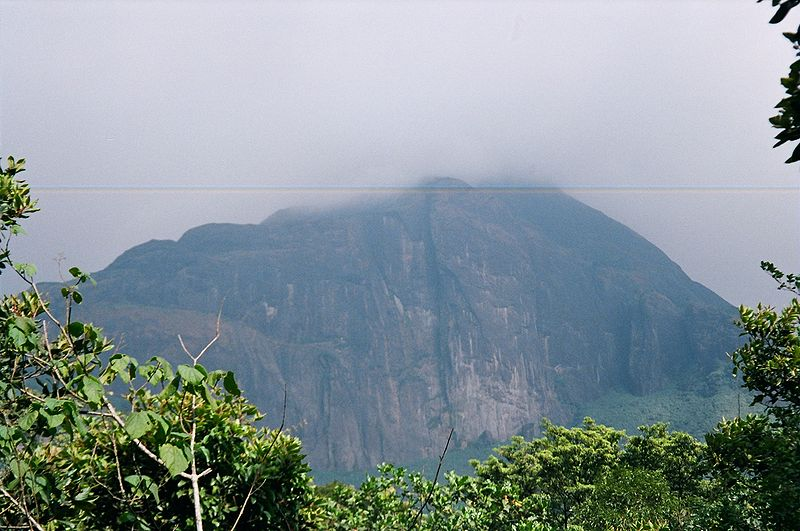
“Located in the Western Ghats, in the south of India, the Agasthyamala biosphere reserve includes peaks reaching 1,868 metres above sea level. Consisting mostly of tropical forests, the site is home to 2,254 species of higher plants including about 400 that are endemic,” UNESCO said.
Set up in 2001, the Agasthyamala Biosphere Reserve (ABR) in Kerala and Tamil Nadu with several tribal settlements and biosphere. Other biosphere in India included in the list are the Nilgiris, Nanda Devi, Nokrek, Gulf of Mannar, Sundarban, and Great Nicobar. New biosphere reserves are designated by the International Co-ordinating Council of the UNESCO’s Man and the Biosphere (MAB) Programme and its representatives come from 34 UNESCO Member States.
Under the biosphere program, protection is granted not only to the flora and fauna but also to the human, especially the tribal settlements in these reserves.
The following site joined the network this year:
Agasthyamala (India)—Located in the Western Ghats, in the south of the country, the biosphere reserve includes peaks reaching 1,868m above sea level. Consisting mostly of tropical forests, the site is home to 2,254 species of higher plants including about 400 that are endemic. It is also a unique genetic reservoir of cultivated plants especially cardamom, jamune, nutmeg, pepper and plantain. Three wildlife sanctuaries, Shendurney, Peppara, Neyyar and Kalakad Mundanthurai Tiger reserve are included in the site. A number of tribal settlements with a total population of 3,000 are located in the biosphere reserve. They largely rely on biological resources for their sustenance and recent projects have been set up successfully to reduce their dependence on the forests.
Monts de Tlemcen (Algeria)—The 8,225 ha reserve is situated in the Province of Tlemcen, an area of great biodiversity, which also has major archaeological sites, cultural landscapes and caves and covers the same area as the Tlemcen National Park.
Beaver Hills (Canada)—Located in the province of Alberta in western Canada, this morainic landscape developed its characteristic Boreal-zone features of abundant wetlands, shallow lakes and rock formations during the progressive retreat of glaciers some 12,000 years ago. Today, the reserve comprises a mixture of lands modified by agricultural activity, mixed wood forests, grasslands and wetlands. The diversity of forest and upland habitats provided optimal conditions for bison, deer, elk and moose, as well as diverse and abundant waterfowl, and an abundant beaver population. Thirty-six plants and six plant communities within the moraine are considered sensitive due to low distribution within the province. Agriculture provides a livelihood to most of the biosphere’s 12,000 permanent inhabitants
Tsá Tué (Canada)—Located in Canada’s Northwest Territories, the area is the homeland of the Sahtúto’ine (The Bear Lake People). It includes Great Bear Lake, the last pristine arctic lake, and part of its watershed. The Taiga that covers much of the site is important to wildlife species including the muskox, general moose and caribou. The only human residents in the site are the traditional First Nation Dene Déline (whose name means “where the water flows”). Their community of 600 is established on the western shore of the lake, where they live off harvesting and limited tourism activity.
Lake Bosomtwe (Ghana)—Situated in the Ashanti region of Ghana, Bosomtwe comprises one of six meteoritic lakes in the world. The southernmost section of the site overlaps with the northern section of the Bosomtwe Range Forest Reserve creating a combination of forest, wetland and mountain ecosystems. The biosphere reserve sustains 35 tree species, including some used for timber. The site is also home to a great diversity of wildlife and to a human population of over 50,000 inhabitants whose main economic activities are farming, fishing and tourism as the lake is a major national tourist destination. The area is widely used for research focusing primarily on climate change, as well as environmental education for schools and universities.
La Hotte (Haiti)—Located in the south-east of the country the biosphere reserve encompasses both terrestrial and marine areas. The region is considered a biodiversity hotspot due to its wide climate range: from humid to subtropical dry. The reserve covers six mountain peaks culminating at 2,347m, as well as a coastal and marine ecosystem in the north (Iles Cayemites) and south (Ile-à-Vache). It is home to more than 850,000 inhabitants, whose main economic activities are farming, agroforestry, fishing, commerce, and handcrafts.
Balambangan (Indonesia)—The biosphere reserve in the province of East Java encompasses three national parks (Alas Purwo, Baluran and Meru) and one nature reserve (Kawah Ijen) with terrestrial and marine ecosystems featuring karst landscapes, savannah, and forests that are alpine/subalpine, upper, dry and lower montane (mountain), lowland, coastal and mangrove. The site also features seagrass beds, and coral reefs. Food crops and horticultural are among the main economic activities of the biosphere reserve alongside agroforestry (teak and mahogany).
Hamoun (Iran)—Located in the southeast of the country, the biosphere reserve includes terrestrial and wetland ecosystems with a total of seven habitat types, including desert and semi-desert areas, as well as Hamoun Lake, with its marshlands and watersheds. The three wetlands of the biosphere reserve are the most important in the region. The area is a hot spot for migratory birds (183 species) and home to 30 mammal species, and 55 plant species. The site is also valuable culturally due to the presence of important historical monuments and ancient temples such as Mount Kooh Khajeh and Shahr-e-Soukhteh.
Collina Po (Italy)—The biosphere reserve is located in the north Italian Piedmont Region and covers the whole Turin stretch of the River Po with its main tributaries and the Collina Torinese hillside. The river Po is the main reservoir of biodiversity in the Turin plain, partly due to the numerous wetlands along its course. Its physical and geological characteristics have led to the formation of numerous gravelly shores, oxbows and riparian woods hosting various species. These natural features are particularly valuable in a densely populated environment close to the city of Turin with its 900,000 inhabitants and other towns nearby.
Barsakelmes (Kazakhstan)—The biosphere reserve is situated in the Sahara-Gobi Desert zone of the Aral Sea basin. The Aral Sea region is a priority area for wetland conservation and several bird migration routes converge over the region. The territory of the proposed biosphere reserve is a valuable site to preserve the biodiversity of the Aral Sea. It numbers approximately 2,000 species of invertebrates, 30 mammal species, 178 bird species, and 20 reptile species. The reserve also includes four nomadic Kazakhs medieval archaeological sites that were part of the Silk Roads.
Belo-sur-Mer—Kirindy-Mitea (Madagascar)—Situated on the western coast of the island, the site includes watershed upstream and marine and coastal ecosystems downstream. It presents a mosaic of rich but fragile ecosystems such as dry forests, thickets, thorn forests, savannahs, salty swampy depressions known as “tannes”, mangroves and coral reefs. The reef is a feeding area of spectacular marine megafauna of whales (humpback), dolphins, dugongs and marine turtles. People in the area rely on these natural resources for their livelihood and income. The site’s marine biodiversity, islands and two sacred salted lakes that are home to the Lesser Flamingo (Phoenicopterus minor), are valuable assets for tourism. Aquaculture, pelagic fishing and salt production complement the development potential of the biosphere reserve.
Isla Cozumel (Mexico)—Situated off the south-eastern coast of the country, Cozumel Island encompasses diverse marine and terrestrial ecosystems rich in amphibian and reptile species. The main terrestrial ecosystems are medium semi-deciduous forests and mangroves. The biosphere reserve forms part of the second largest reef system in the world, the Mesoamerican Reef, which is home to 1,192 marine species. Nearly 80,000 people live in the biosphere reserve, mainly in the city of San Miguel. Tourism is the most developed sector on the island, which numbers close to 40 Mayan archaeological sites.
Atlas Cedar (Morocco)—Situated in the central Atlas Mountains, the biosphere reserve is home to 75% of the world’s majestic Atlas cedar tree population. This part of the Atlas Mountains is rich in ecosystems and its peaks, reaching up to 3,700 metres, provide the region with critically important water resources. Fruit plantations, modern agriculture and tourist activities, which have replaced semi-nomadic pastoral traditions, are taking their toll on scarce water resources. The rich local Berber culture is particularly strong in this area.
Gran Pajatén (Peru)—Located in the Central Cordillera, the biosphere reserve is characterized by high altitudes and a pristine ecosystem. It encompasses the National Park del Río Abiseo, a UNESCO World Heritage site. The reserve is home to fauna and flora of rainforests characteristic of this part of the Andes and has a high level of endemism. It is the only place on earth where the yellow-tailed woolly monkey, previously thought extinct, is to be found. Gran Pajatén also lends its name to an archaeological site in the Andean cloud forests of Peru, which provides insight into pre-Inca society. More than 170,000 people live in the biosphere reserve whose main economic activities are agriculture (cacao, coffee), livestock and mining.
Albay (Philippines)—Located at the southern end of the Luzon Island, the biosphere covers some 250,000 hectares. The terrestrial elevation of the site culminates at 2,462 metres and its marine part reaches a depth of 223 metres below sea level. The site’s high conservation value is constituted notably by its 182 terrestrial plant species, 46 of which are endemic. Its marine and coastal ecosystems number 12 species of mangrove, 40 species of seaweed or macro-algae, and 10 species of sea grass. Five of the world’s seven species of marine turtles are to be found in Albay. Agriculture is the main source of income in this area.
Fajãs de São Jorge (Portugal)—The biosphere reserve covers the entire Island of São Jorge, the fourth largest in the Azores Archipelago. At 1,053m, the Pico da Esperança is island’s highest elevation. The site’s rugged coastal cliffs form a unique landscape of highland meadows, peat bogs and scrubs. The combination of high altitude and coastal ecosystems has resulted in a wealth of endemic terrestrial flora. It is also the habitat of diverse invertebrate, terrestrial arthropod, mollusc and bird species. Close to 9,000 people live on the Island.
Tejo/Tajo (Portugal and Spain)—The biosphere reserve is located in the western part of the Iberian Peninsula shared between Spain and Portugal with the Tajo River as its main axis. It is characterized by low altitude and sharp relief. Vegetation in the site consists largely of cork oak formations and patches of scrub, as well as cultivated areas and pastures. The fauna is typically Mediterranean and includes many rare species. Most important among them are the European imperial eagle, Bonelli’s eagle, the black stork, the black vulture and the otter. Livestock and forestry are the main sources of income for the Island’s small population.
Jozani-Chwaka Bay (Tanzania)—The biosphere reserve encompasses the only national park on the island of Zanzibar. Its landscape consists of mosaics of mangroves, tropical forests and coral rug forests as well as groundwater, salt marshes, and both agricultural and residential areas. The site is a biodiversity hotspot area including inter alia reef fish species, dolphins, the Zanzibar leopard (Panther pardus adersi), 168 species of birds including 30 of global and regional relevance. The site’s 291 known plant species include 21 considered to be threatened. Inhabitants mainly live from activities relating to tourism, fishing, bee keeping, butterfly rearing and crab fattening
Isle of Man (United Kingdom)—Located in the Irish Sea, the Island is home to more than 80,000 people. Its coastline features cliffs, stacks, islets, and long beaches. The hills hold important peat reserves and are deeply cut by wooded glens in the east. The coastal plain in the north is covered by grasslands, pools and wetlands. The site’s marine environment is rich in biodiversity and harbours important populations of European eel, Atlantic cod and basking sharks, among others. In the countryside, farming activities centre on sheep and cattle livestock, as well as arable areas. The sea is harvested for shellfish. The Island has been a popular tourist destination since the late 19th century and has experienced a notable development in its services and manufacturing sectors over recent decades.
A gene called GT198, known for its ability to repair DNA, is actually causing breast cancer, found scientists hoping that it may help in diagnosing breast cancer early, said Dr. Lan Ko, cancer biologist in the Department of Pathology at the Medical College of Georgia at Augusta University and at the Georgia Cancer Center at AU.
Mutations of the gene are known to be present in both early onset breast and ovarian cancer. Now scientists have shown that the stem, or progenitor cells, which should ultimately make healthy breast tissue, can also have GT198 mutations that prompt them to instead make a perfect bed for breast cancer.
Their studies, published in the American Journal of Pathology, were done on an international sampling from 254 cases of breast cancer in pre- and postmenopausal women.
"This gene mutation can be in both the blood and the tumor tissue of patients, and in the tissue, it’s in high percentages," said Ko, the study’s corresponding author. "We believe that once this gene is mutated, it induces the tumor to grow."
GT198, which is also a coactivator of receptors for steroid hormones such as estrogen, is normally regulated by estrogen, Ko said. But once mutated, GT198 can enable tumor production without estrogen. "Regardless of how much hormone you have, it’s out-of-control growth," Ko said of the resulting classic, rapid growth of cancer.
In a cancerous breast, scientists have seen the problems with the various components of breast tissue but could not fully explain why they happened. The tissue, called the stroma, includes fat cells, or adipocytes, that provide padding; fibroblasts, which make the framework for tissue; pericytes in blood vessels, which are contractile cells that help regulate blood pressure; as well as myoepithelial cells comprising the outer layer of the ductal system through which milk flows.
The new study backs up a few steps and shows that mutated GT198 also directly affects stem cells found on blood vessels that make these various components of breast tissue. "This puts it together," Ko said.
"It’s a new target in cancer. It’s very exciting," said Dr. Nita Maihle, MCG cancer biologist, associate center director for education at the university’s Cancer Center and a study co-author. "This tells you that all the different types of stromal cells in breast tissue are affected by the GT198 mutation because they all come from a common progenitor cell."
Ko first cloned the human GT198 gene while a postdoctoral fellow at Harvard Medical School. All cells have the GT198 gene but most adult cells don’t express it. In the breast, for example, it may be transiently expressed in a pregnant woman preparing for milk production and, potentially, in the case of breast injury. Males express it in the testes.
Ductal breast cancer, which is in the ducts that carry milk, is the most common type of breast cancer and lobular carcinoma, which begins in the milk-producing glands, is the second most common. Most breast cancer comes from the cells that line those ducts, Maihle said.
BRCA1 and 2, genes whose proteins are supposed to work as tumor suppressors and also repair DNA damage, were the first known risk factor genes for familial breast cancer as well as ovarian and other cancers. About 4 percent of familial breast cancers would include inherited mutations of GT198, which is also considered a causative gene in sporadic cases, Ko said.
[tags, breast cancer, cause, gt198 gene, cause behind breast cancer, isolated]
Small birds, which measure just one percent of Humans in mass, have vision that is incredibly twice the speed of human vision, found a team of Swedish scientists. It is known that perching birds (small passerines) do not only have good visual eyesight but they also see things at lightning speed. Compared to them, humans are still in slow-motion world, said scientists.
Scientists from Uppsala University, the Swedish University of Agricultural Sciences and Stockholm University, studied the visual speed of pied flycatchers, blue tits and collared flycatchers and say they have incredibly fast vision. Their paper in the journal PLOS ONE, probed perching birds’ ability to resolve visual details against the clock.
Lead author Anders Ödeen of Uppsala University’s Department of Ecology and Genetics, and his colleagues studied Visual acuity vs. speed of vision in these perching birds’ ability to resolve visual detail against the clock. He said:“Fast vision may, in fact, be a more typical feature of birds in general than visual acuity. Only birds of prey seem to have the ability to see in extremely sharp focus, while human visual acuity outshines that of all other bird species studied.”
Twelve blue tits were tested once at one of the light intensities 750, 1500 (n = 3) and 3000 cdm-2 (n = 6) and the critical flicker fusion frequency (CFF), with a maximum of 131 Hz and 130.3 ± 0.94 Hz (±SD) on average, was reached at 1500 cdm-2.
In terms of visual acuity vs. speed of vision, referred as the temporal resolution of eyesight, the number of changes per second a bird, human or any other animals is capable of perceiving, scientists compared visual acuity (spatial resolution), which measures how many details per degree are detected in the field of vision.
The wild-caught birds were taught to receive a food reward whenever they were able to distinguish between a pair of lamps: one shining in a constant light and the other flickering. Temporal resolution was determined by raising the flicker rate to a point at which the birds could no longer tell the two lamps apart.
This threshold, called the Critical Flicker Fusion (CFF) rate, in three small bird species averaged between 129 and 137 Hz (hertz). A 146 Hz was recorded with one of the pied flycatchers, which is about 50 Hz higher than anything encountered for any other vertebrate. Similarly, flycatcher experiment was conducted on 7 collared and 8 pied flycatchers and they were repeatedly tested at up to 5 different light intensities each.
Researchers found that humans’ Critical Flicker Fusion (CFF) rate averages at about 60 Hz compared to 129 to 136 in passerines and hence, we humans live in a world where everything moves slowly.
The study, for the first time, established the fact scientifically and emperically that small and agile wild birds had extremely fast vision. In fact, researchers were surprised to find that flycatchers and blue tits had faster CFF rates than they would have predicted from their size and metabolic rates.
From the evolutionary history of natural selection for fast vision, it occurred in these species much faster than humans as these small airborne birds needed to detect and track tiny objects whose images move ultra-fast across the retina. The rapid vision was badly needed to hunt and avoid predators for these tiny birds.
The difference between a human and an eagle regarding visual acuity is about the same as a human’s versus the pied flycatcher’s vision speeds – 60 and 146 Hz respectively. In other words, the flycatcher’s vision is faster than ours roughly to the same extent as an eagle’s vision is sharper (than ours).
While eagles, hawks and other birds have the best visual acuity in the animal kingdom as they can see the most detail per square inch, small perching birds have the fastest vision as they can see the most movement per second.
Indian Prime Minister Narendra Modi never claimed himself but his ministers and the BJP coterie around him are bringing him more ridicule than applomb.
While cracking on JNU campus in hurry, Home Minister Rajnath Singh branded all JNU students as "anti-national" only to eat his own words on the floor of the house and they saw what they created instead — Kanhaiya Kumar, JNUSU leader who has become a national hero in less than month that he can outshine even the charisma of Narendra Modi anyday.
Undaunted, another minister in the Home Ministry, that is Union Minister of State Kiren Rijiju has worked overnight or the entire week to calculate and put out what he claims was indeed one of the predictions of French prophet Nostradamus that Narendra Modi in India would ascend to rule India and the world.
Nostradamus is credited with predicting the French Revolution, the atom bomb, the rise of Adolf Hitler and the 9/11 attacks on the World Trade Center in New York. But none of these he mentioned in perfection but our new age admirers of Doomsday Prophecy avowedly attributed these events to re-interpret his writings.
Perhaps following similar footsteps, Rijiju has compiled some so-called ‘AMAZING FACTS !!!’ and puts out his mathematical calculations which he claimed to have shown BJP’s victory in May 2014 based on number 13.
In Current Lok Sabha
"BJP – 283 Seats 2+8+3 = 13
NDA – 337 Seats 3+3+7 = 13
UPA – 58 Seats 5+8 = 13
Others-148 Seats 1+4+8 = 13
Prediction of Nostradamus “450 years ago of Modi Era”: How ???" he left his followers in wonder but the whole nation has a topic after Kanhaiya Kumar’s arrest joled the nation in February.
Rijuju and BJP admirers and think-tanks have come out with the new interrpretation now that the French prophet Nostradamus wrote way back in 1555 that "from 2014 to 2026, a man will lead india, whom initially, people will hate but after that people will love him. Under his leadership India will not only just become the Global Master, but many countries will also come into the shelter of India."
But what about Hitler? Even Hitler was predicted in an obscure way and later they attributed the reference to Hitler. What about Kanhaiya Kumar? Even he was referred to in Nostradamus, if one reads it carefully.
The other two JNU students — Umar Khalid and Anirban Bhattacharya — who were charged for sedition by Delhi Police amid national acrimony against the highhanded charges over students, were granted bail today but back home at JNU an equally acrimonious situation awaits them.
The over-enthusiastic administration that is eager to serve the wishes of the ministry for funds and existence has turned the guns on 8 students to begin with among the 21 and they are facing rustication charges.
Umar Khalid is facing charges for organising the event to mark the anniversary of the hanging of Parliament attack convict Afzal Guru, which turned ugly when the group clashed with ABVP and ended in raising allegedly "anti-India" slogans.
The defence lawyers argued that the two student leaders were actually handling the crowd which raised anti-India slogans. The defence also produced 10 eyewitnesses who have sought permission from the university authorities for the event, finalised the posters and got them printed.
Umar Khalid’s lawyers also argued that being a doctorate student, he has only 6 months left for submission of his thesis. While the court granted them the bail, back in the campus the situation has turned hostile with the administration flexing its muscles on 21 students and serving them show-cause notices, including the two who were granted bail by the court.
The JNU row has grown from mere a campus-based issue to a bigger national debate and brought India under scrutiny of many global human rights organizations, including the Latin American political scientist Chomsky.
Now the country’s intellectual centre (JNU) is pitted against BJP, which is hoping to turn the universities into pro-ABVP centres and enhance its leverage on them in future. In the process, even the national media and intellectuals have turned the tide against the BJP-ruled government.
Capital flows to emerging economies are considered to be volatile. Influenced as much by global liquidity and risk aversion as by economic conditions in receiving countries, capital flows move in a synchronous fashion across emerging economies. There are periods of rapid capital inflows, fueling credit booms and asset price inflation; followed by reversals when exchange rates depreciate, equity prices decline, financial volatility increases, and GDP growth and investment slows down. These periods of extreme flows have unintended financial and real implications for the recipient countries. Central banks typically react with a mix of policies to cushion their impacts, ranging from managing the exchange rate and liquidity, to using reserves, monetary policy and macroprudential tools, and calibrating the pace of capital account openness. Overtime, along with the underlying characteristics of the emerging market economies and their available policy space, this policy mix has evolved too.
Wary of excessive exchange rate volatility emerging market economies have traditionally tended to either peg their exchange rates or maintain defacto managed floats. Unable to raise external debt in domestic currency, emerging markets have typically held debts denominated in foreign currency, with exchange rate depreciation resulting in adverse balance sheet effects. A customary response to capital flows has been to manage the impact on exchange rate through procyclical monetary policy– loosening the monetary policy during periods of rapid capital inflows and high economic growth (to resist exchange rates appreciation) and tightening it during the reversals of flows and economic slowdowns (to moderate the extent of exchange rate depreciation).
However much has changed in emerging countries policy landscape in the last one and a half decade. After a series of high profile currency crises in the mid-1990s-early 2000s, many countries have moved from pegged exchange rate regimes to floating ones. They maintain less negative foreign currency positions, and have built a larger stock of reserves. An increasing number of central banks now operate under an inflation targeting framework, affording them a more definitive mandate to pursue monetary policy geared toward domestic policy imperatives. As a result countries now tolerate greater exchange rate volatility, while using their reserves when warranted; monetary policy is more countercyclical than before; and the use of macroprudential tools has become a more pervasive element of their policy mix.
My recent paper Capital flows and Central Banking-The Indian experience reviews India’s experience with handling capital flows, putting it in context with the experience of other emerging markets. It establishes three stylized facts.
First, India has increasingly become more financially integrated with the rest of the world. The pattern of capital flows it receives mirrors those in other emerging economies, pointing to the importance of common factors in driving capital flows to India. In the post liberalization period since the early 1990s, capital flows to India have evolved in three phases—a first phase from the early 1990s-early 2000s, during which capital flows increased steadily but remained modest compared to the size of the economy or monetary aggregates; a second phase of “surge” from the early 2000s-2007, when inflows increased rapidly, outpacing GDP and monetary aggregates; and a third period of volatility, starting in 2008 when capital flows reversed in the post Lehman Brother collapse period and again in 2013 during the taper tantrum and remained volatile. [1]
The policy mix that India has deployed has evolved in sync with the capital flow cycle and is consistent with the trends observed in other large emerging economies. Its exchange rate, which was largely pegged to the US dollar until the early 1990s, is increasingly more market determined. Just like in other emerging countries, India has built a large buffer of external reserves, and for the most part has used it to modulate excessive fluctuations in the exchange rate. While monetary policy focused on price stability during the first phase, it was also conditioned by the pace of capital inflows in later phases–money supply increased during the capital flow surge and was tightened during the stop episodes. Additionally macro prudential measures have been used countercyclically, e.g. they were strengthened during the surge to limit excessive risk taking and deter asset price inflation.
Particularly interesting is the countercyclical liberalization of capital account. Contrary to a common perception, India has steadily liberalized its capital account since 1991; while the pace of incremental liberalization has been conditioned by the capital flow cycle. The pace of liberalization of inflows slowed during the capital surge episode of 2003-2007, while outflows were liberalized rapidly. Inflows were then liberalized vigorously during the reversal of capital in 2008-09 and in 2013.
While the capital flows to emerging markets are expected to remain volatile in the years ahead, their policy mix is likely to evolve further. Specifically for India, the move to an inflation targeting framework will likely reinforce the domestic orientation in monetary policy; whereas due to a progressively liberalized capital account over the last two and a half decades, further scope to manage the pace of capital account liberalization seems limited. Going forward, reserve management and macroprudential measures are likely to play a larger role in responding to capital flow cycles; even as the markets, economy and policy makers develop greater tolerance for inevitable market determined adjustments in exchange rate.
Despite its post-drink acidic effect on stomach, beer has always been under radar for many scientists and the latest finding is that it could be used in treating cancer as it contains hops, which taste bitter but give beer its unique taste.
Hops contain acid compunds known as humulones and lupulones (alpha and beta acids, respectively), which are found in the soft resin material of the female hop cone. Hops have been used in beer brewing for thousands of years. During wort boiling, in the beer brewing process, the alpha acids isomerize to isohumulones (cis and trans) which are the main bittering agents in beer, explains Kristopher Waynant of University of Idaho in US.
"Hop extracts (as well as isolated humulones and lupulones) have shown a wide variety of health benefits (I have attached a semi recent review). Many studies have shown that theyse compounds or extracts possess anti-inflammatory, anti-cancer activity (mostly in vitro), and COX-2 inhibition, in addition to their well-documented antibacterial properties," wrote Waynant in an exclusive email interview to India International Times.
"I am also aware of a company in Seattle (Kindex pharmaceuticals) that is using an isomerized humulone (isohumulone) in phase 2 murine models towards a diabetes drug," he said with a note of caution: "Just because a natural compound is biologically active, doesn’t mean it will be a great medicine."
Elaborating his findings, Waynant said, his research team is using known chemistries to start a library of humulones and lupulones to create a series of more biologically active compounds.
"We are interested in synthesizing the natural product (-)-humulone, but it has been made before (by Kindex) and is actually isolatable from the hop resins. We would like to extend these syntheses towards the other (smaller concentration) humulones, (-)-cohumulone and (-)-adhumulone as well as a variety of new humulone analogs. Adhumulone has a 2nd undetermined stereocenter that we hope to specify. In conjunction with the natural products, we are interested in developing our synthetic strategy as to see if we can efficiently develop a diverse (but small) library of humulone analogs that also lends towards understanding the scope of our synthetic strategy," he told India International Times.
However, Waynant was cautious when he said his project is still in its infancy and they are yet to produce a natual humulone or a new humulone derivative. "We hope to have humulones available for testing in the near future," he said and his final words are equally cautious: "We certainly do not suggest drinking beer as medicine."
His study was presentted at the National Meeting of the American Chemical Society.
The religious divide in India is getting worse with the Hindu nationalists, especially the Rashtriya Swayamsevak Sangh (RSS), the ideology wing of Hindu Sanghis calling for imparting education to all Indians to say “Bharat Mata ki Jai’ from childhood to invoke nationalism getting an equally reverse rhetoric by AIMIM leader Asaduddin Owaisi.
Speaking to Muslim groups in Udgir tehsil, Latur district of Maharashtra, Owaisi said: “I don’t chant that slogan. What are you going to do, Bhagwat sahab?” He further said,”I won’t utter that even if you put a knife to my throat… Nowhere in the Constitution it says that one should say: Bharat Mata ki Jai.”
Earlier RSS chief Mohan Bhagwat told a meeting of RSS members, “Now the time has come when we have to tell the new generation to chant ‘Bharat Mata Ki Jai’… It should be real, spontaneous and part of all-round development of the youth.”
RSS has been playing pivotal role in BJP rule and it believes that the time has come for a Hindu ruler to ascend the throne after 900 years and it should not be wasted without instilling the spirit of nationalism in India. Prthviraj Chouhan was the last acknowledged Indian ruler by the Sanghis, while Atal Behari Vajpayee’s 5-year-rule remains a failure for them in terms of implementing the Hindu agenda.
WATCH: Asaduddin Owaisi to RSS chief Mohan Bhagwat- Won’t say “Bharat Mata Ki Jai” in Latur (Maharashtra) (March 13)https://t.co/nRNtaBfi6z
‘PK’ superstar Aamir Khan turned 51 and unlike last year, he looked no more young in looks but matured to befit the 50s as he grew thick mustache reminiscent from his earlier film ‘Mangal Pandey’.
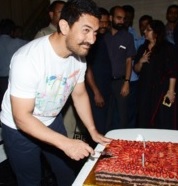
Dressed in white T shirt and jeans, Aamir khan has reduced half of his weight gained for the upcoming film ‘Dangal’. But he did not remove the mush which reveal his real age too.
There is one thing the the actor vows on every birthday — to quit smoking — but ends up lighting one at the end of his every new film’s release, revealed his brother.
“Every year he decides to quit smoking but then when a film is about to release he invariably ends up giving into it,” said his brother to the media in whose presence Aamir Khan cut the cake on his 51st birthday.
From his first appearance in his uncle Nasir Hussain’s film Yaadon Ki Baaraat(1973) to his first adult appearance opposite Juhi Chawla in the highly successful tragic romance Qayamat Se Qayamat Tak(1988) to his latest ‘PK’, the actor never turned to exemplary films and is known as ‘Mr Perfect’ in Bollywood.
National Film Award – Special Mention (also forRaakh)
Filmfare Award for Best Male Debut
Nominated—Filmfare Award for Best Actor
Raakh
1989
Yes
Amir Hussein
Nominated—Filmfare Award for Best Actor
Love Love Love
1989
Yes
Amit
Awwal Number
1990
Yes
Sunny
Tum Mere Ho
1990
Yes
Shiva
Dil
1990
Yes
Raja
Nominated—Filmfare Award for Best Actor
Deewana Mujh Sa Nahin
1990
Yes
Ajay Sharma
Jawani Zindabad
1990
Yes
Shashi Sharma
Afsana Pyaar Ka
1991
Yes
Raj
Dil Hai Ke Manta Nahin
1991
Yes
Raghu Jetley
Nominated—Filmfare Award for Best Actor
Isi Ka Naam Zindagi
1992
Yes
Chotu
Daulat Ki Jung
1992
Yes
Rajesh Chaudhry
Jo Jeeta Wohi Sikandar
1992
Yes
Sanjaylal Sharma
Nominated—Filmfare Award for Best Actor
Pehla Nasha
1993
Yes
Himself
Cameo appearance
Parampara
1993
Yes
Ranbir Prithvi Singh
Damini – Lightning
1993
Yes
Himself
Cameo appearance
Hum Hain Rahi Pyar Ke
1993
Yes
Screenwriter
Rahul Malhotra
Nominated—Filmfare Award for Best Actor
Andaz Apna Apna
1994
Yes
Amar Manohar
Nominated—Filmfare Award for Best Actor
Baazi
1995
Yes
Amar Damjee
Aatank Hi Aatank
1995
Yes
Rohan
Rangeela
1995
Yes
Munna
Akele Hum Akele Tum
1995
Yes
Rohit Kumar
Nominated—Filmfare Award for Best Actor
Raja Hindustani
1996
Yes
Raja Hindustani
Filmfare Award for Best Actor
Ishq
1997
Yes
Raja
Ghulam
1998
Yes
Playback singer
Siddharth Marathe
Nominated—Filmfare Award for Best Actor
Nominated—Filmfare Award for Best Male Playback Singer
Earth
1998
Yes
Dil Navaz
Canadian-Indian film
Released in India as 1947: Earth
Sarfarosh
1999
Yes
Ajay Singh Rathod
Nominated—Filmfare Award for Best Actor
Mann
1999
Yes
Dev Karan Singh
Mela
2000
Yes
Playback singer
Kishan Pyare
Lagaan
2001
Yes
Yes
Bhuvan
National Film Award for Best Popular Film Providing Wholesome Entertainment
Filmfare Award for Best Film
Filmfare Award for Best Actor
Nominated—Academy Award for Best Foreign Language Film
Dil Chahta Hai
2001
Yes
Akash Malhotra
Nominated—Filmfare Award for Best Acto
Madness in the Desert
2004
Yes
Yes
Himself
Documentary film
Also known as Chale Chalo: The Lunacy of Film Making
National Film Award for Best Exploration/Adventure Film
Mangal Pandey: The Rising
2005
Yes
Playback singer
Mangal Pandey
Nominated—Filmfare Award for Best Actor
Rang De Basanti
2006
Yes
Playback singer
Daljit “DJ” Singh/
Chandrashekhar Azad[IV]
Filmfare Critics Award for Best Actor
Nominated—Filmfare Award for Best Actor
In a bizarre incident that was caught on camera and going viral all over India, a young engineering Dalit student who married an upper caste girl was hacked to death in a bazaar road in Tirupur, a city known for its knitting garment exports all over the world.
The chilling video footage shows that three men killed Shanakr, 23, in view of the public on the road and then attacked his wife Kausalya, 19, who is reportedly in critical condition and her father surrendered to the police.
The police have sent out five teams of police to catch the attackers, while they believe two more will be behind the murder that shook the entire country close on the heels of outrage over the HCU dalit student Rohith Vemula’s suicide a month ago.
The couple were married eight months ago against the wishes of the girl’s parents who belong to Thevar community, supposedly a powerful upper caste in Tamil Nadu.
Sankar, Tirupur Dalit student killed in public.
The video shows the 3rd year engineering student being dragged on to a pavement and repeatedly attacked with weapons until he rolled down on the pavement and died. Once he was not moving, then they immediately turned their attention to the girl who was shocked and stunned on the pavement. She was repeatedly attacked and left on the road.
And soon, they got on to their motorbike and sped away from the scene. It was not from any Tamil film but a real chilling incident that has shocked the entire nation and the video is going viral on YouTube.
Sankar’s father Velu Samy told media:”We thought her parents would accept them but it has ended in this bloody tragedy. We have lost him.”
Thevar community takes pride in its divine origin and zamindari traditions and was known to have practised female infanticide in the past.
India has banned 94 drugs and their use in combination already while more than 300 will be banned this week, said K.L. Sharma of the Union Health Ministry after a committee reviewed more than 6,000 combination drugs in the market being sold without approval.
Image courtesty: www.anh-usa.org
The list of combination drugs include popular the codeine-based cough syrups Phensedyl and Corex made by Abbott and Pfizer. Phensedyl drug alone reportedly contributed $300 million to Abbott’s revenue from India, which has become a dumping ground where half the drugs sold in 2014 were clasfied “fixed dose combinations.”
Though combination drugs are not banned per se, failure to adhere to ratios in drug mix has led to mushrooming of combination drugs in the country, especially by some Chennai and Hyderabad-based medicines’ manufacturers.
The committee reviewed 6,000 combinations in the market based on state government authorities’ approval and asked the pharmaceutical companies to prove their safety and efficacy. After classifying the drugs into rational, irrational, and those require further study, the committee has recommended more than 300 drugs which will be prohibited, Sharma told Reuters.
While World Health Organization is warning against the increased use of antibiotic combinations due to increased resistence, India is facing an overwhelming market for combination drugs than generic drugs, not seen in other markets. Several reports in the past have highlighted how certain combination drugs are hitting the market without approval, while they are not allowed in the United States, Europe, Japan or Australia.
To see the list of 94 drugs and their combinations which have been banned already, click here:
The much awaited the Real Estate (Regulation and Development) Bill, 2015 has been passed by the Rajya Sabha on March 10, 2016. The key points of the proposed bill which is going to benefit property buyers but impact consderably promoters, developers and real estate agents, are as follows:
Ø The Bill requires setting up a new regulator for the real estate sector. As real estate comes under the purview of state governments, individual States are responsible for setting up the Regulatory Authority at the State level. State-level authorities, called Real Estate Regulatory Authorities (RERAs), will now regulate transactions related to both residential and commercial projects.
Ø An authority will be created to help frame policies for the real estate sector. The regulator will also monitor compliance of rules on an ongoing basis as developers have to provide updates on progress and maintain a database on violators.
Ø The specified residential real estate projects need to be registered with RERAs. Further, Promoters cannot book or offer these projects for sale without registering them. The regulator will maintain records of all projects and promoters.
Ø It is mandatory for developers to register all projects larger than 500 sq mtr or, alternatively, more than 8 apartments, to be registered with the regulatory authority. Further, if the project is developed in phases, each phase must be registered separately.
Ø The duly filed application should be submitted by the promoters/developers/real estate agents with the RERA for approval along with prescribed supporting documents like layout plan of the project; the carpet area of property for sale; the details of existing projects of the promoters; details of various approvals received by the promoters; details of land title on which the project is proposed and details about the payment dues on land title etc.,.
Ø If the applicant does not hear back from the RERA within 15 days of the application for registration, the project will be considered as registered. However, RERA is empowered to revoke the approval by giving 30 days’ notice period.
Ø Real estate agents dealing in these projects also need to register with RERAs. The registration is necessary to facilitate the sale or purchase of property in real estate projects that have been registered. Registered agents must not facilitate the sale of unregistered projects.
Ø The regulation requires the buyers to pay consideration on purchase of house on carpet area basis (which clearly defines in the bill). Hitherto, it was payable on super built-up area basis.
Ø In general the buyers faced the problem in the form of change in building plans including change in number of floors constructed after entering into an agreement with promoter. The Bill requires that builders take consent of 2/3rd of the home buyers in case of changes.
Ø To mitigate developers from diverting funds to other projects, which will endup delaying completion of projects, the bill proposed that the 70% of the amount collected for the project by the buyers must deposit in a separate bank account.
Ø In a cases where there are delays in completion, the developers/promoters will not pay any penalty or if pay it will be a low rate of interest as agreed between parties during execution of agreement. To avoid ambiguity/favour to one party, the bill is proposed that both parties have to pay the same rate of interest in case of delays in payment by buyer or hand-over by the developer.
Ø The promoter shall :
a) obtain a completion certificate from the relevant authority;
b) form an association or society of buyers;
c) provide essential services till the association of buyers take over the maintenance of the project.
If the promoter is unable to give possession of the property with agreed time, he shall be liable to return the amount received by him for the project along with interest.
Ø In case the promoter fails to register the property, he may be penalized upto 10% of the estimated cost of the project. Failure to register despite orders issued by the RERA will lead to imprisonment for up to 3 years, and/or an additional fine of 10% of the estimated cost of the project. The promoter will have to pay upto 5% of the estimate cost of the project if he violates any other provisions of the Bill.
Ø Real estate agents will have to pay a fine of Rs. 10,000/- for violating any provision of the Bill, for each day the violation continues.
With the extension of e-Tourist Visa Facility for 37 more countries, India’s online eTV is available for nationals of following countries/territories:
Albania, Andorra, Anguilla, Antigua & Barbuda, Argentina, Armenia, Aruba, Australia, Austria, Bahamas, Barbados, Belgium, Belize, Bolivia, Bosnia & Herzegovina, Botswana, Brazil, Brunei, Bulgaria, Cambodia, Canada, Cape Verde, Cayman Island, Chile, China, China- SAR Hongkong, China- SAR Macau, Colombia, Comoros, Cook Islands, Costa Rica, Cote d’lvoire, Croatia, Cuba, Czech Republic, Denmark, Djibouti, Dominica, Dominican Republic, East Timor, Ecuador, El Salvador, Eritrea, Estonia, Fiji, Finland, France, Gabon, Gambia, Georgia, Germany, Ghana, Greece, Grenada, Guatemala, Guinea, Guyana, Haiti, Honduras, Hungary, Iceland, Indonesia, Ireland, Israel, Jamaica, Japan, Jordan, Kenya, Kiribati, Laos, Latvia, Lesotho, Liberia, Liechtenstein, Lithuania, Luxembourg, Madagascar, Malawi, Malaysia, Malta, Marshall Islands, Mauritius, Mexico, Micronesia, Moldova, Monaco, Mongolia, Montenegro, Montserrat, Mozambique, Myanmar, Namibia, Nauru, Netherlands, New Zealand, Nicaragua, Niue Island, Norway, Oman, Palau, Palestine, Panama, Papua New Guinea, Paraguay, Peru, Philippines, Poland, Portugal, Republic of Korea, Republic of Macedonia, Romania, Russia, Saint Christopher and Nevis, Saint Lucia, Saint Vincent & the Grenadines, Samoa, San Marino, Senegal, Serbia, Seychelles, Singapore, Slovakia, Slovenia, Solomon Islands, South Africa, Spain, Sri Lanka, Suriname, Swaziland, Sweden, Switzerland, Taiwan, Tajikistan, Tanzania, Thailand, Tonga, Trinidad & Tobago, Turks & Caicos Island, Tuvalu, UAE, Ukraine, United Kingdom, Uruguay, USA, Vanuatu, Vatican City-Holy See, Venezuela, Vietnam., Zambia, Zimbabwe.
Eligibility
International Travellers whose sole objective of visiting India is recreation , sight seeing , casual visit to meet friends or relatives, short duration medical treatment or casual business visit.
Passport should have at least six months validity from the date of arrival in India. The passport should have at least two blank pages for stamping by the Immigration Officer.
International Travellers should have return ticket or onward journey ticket,with sufficient money to spend during his/her stay in India.
International Travellers having Pakistani Passport or Pakistani origin may please apply for regular Visa at Indian Mission.
Not available to Diplomatic/Official Passport Holders.
Not available to individuals endorsed on Parent’s/Spouse’s Passport i.e. each individual should have a separate passport.
Not available to International Travel Document Holders.