
Pravasi Bharatiya Divas 2017: The Overseas Indians have come a long way

By PRIYADARSHI DUTTA

The 15th edition of Pravasi Bharatiya Divas convention will be heldin Bengaluru, Karnataka from January 7 to 9, 2017. The first annual convention was held between January 9 and 11, 2003. January 9 was adopted as the Pravasi Bharatiya Divas or Overseas Indian Day based on the recommendations of a High Level Committee constituted in August, 2000.

The then Prime Minister Atal Bihari Vajpayee was keenly interested in the issue of overseas Indians. The oversubscription of the Resurgent India Bonds in 1998, when India was battling sanctions post-Pokhran II, showed their strong faith in an emerging India. In a post-Liberalization environment the Indian Diaspora was willing to engage back with their country of origin. India becoming an IT power hub, fast growing economy and atomic power gave the Diaspora much needed confidence. It was on display at various places – from sports field to trade conferences and international meets.

The concerns of the overseas Indians had been on the mind of the Indian leadership for long.The House of Commons in Britain was forced to investigate, as early as 1841, into the pitiable condition Indian indentured workers in Mauritius. This was within a few years of beginning of the indentured system following the abolition of slavery in British Empire (1833). Way back in 1894, the Madras session of Congress had adopted a resolution against disenfranchisement of the Indians in South African colonies. The Congress adopted similar resolutions at Poona (1895), Calcutta (1896), Madras (1898), Lahore (1900), Calcutta (1901) and Ahmedabad (1902) sessions. In those days the question of overseas Indians pertained mostly to Indians in South and Eastern Africa. It is they who had launched numerous struggles against encroachment on their rights by the local British government. The Gandhi-Smuts Agreement, 1914 signified a major victory for them.

But there were overseas Indians in South East Asia viz. Burma, Singapore, Malaya, Thailand etc. Many of them contributed towards India’s freedom movement in the 1940s by volunteering in or funding the Azad Hind Fauz of Netaji Subhas Chandra Bose. Of particular interest could be the stories of those teenaged Tamil girls, born in rubber plantations of Malaya, who decided to shoulder guns for the independence of India, a country they had never actually seen.

The PravasiBharatiya Divas memorializes the arrival of Mahatma Gandhi to India on January 9, 1915. He had spent 21 years in South Africa fighting for the rights of Indian community. His technique of Passive Resistance, which he named Satyagraha, was developed in South Africa before being implemented in India. In the colonial world that Gandhi inhabited the profile, status and condition of the overseas Indians were markedly different from today.

Those were the days when one could not have been starry-eyed about ‘going abroad’ and ‘settling abroad’. A bulk of those who migrated abroad went for toiling in plantations or factories under Indenture System (to Africa, West Indies, Fiji etc), Kangany System (to Sri Lanka) and Maistry System (Burma). But they deserve credit as the pioneers who reversed the religious prohibition on seafaring that had fallen upon the Hindu society in the medieval ages.

In colonial times racial discrimination was instituted as a state policy by the colonial government. But the de-colonization brought in its wake another set of problems. In Gandhi’s lifetime itself the Indians in Ceylon (Sri Lanka) and Burma (Myanmar) entered a critical phase with Ceylonese and Burmese population respectively wanting to get rid of them. The first two legislations passed by the D.S. Senanayake government in independent Ceylon deprived almost a million people of Indian origin of their citizenship. While Indians might have captured power in Mauritius, they have been reduced to a miniscule minority in Myanmar. Thus Indians face a new kind of racialism in those erstwhile colonies.

The age of colonialism was an age of maritime empires. Till late 1950s, steamships were the most dependable mode of inter-continental travels. In early 1960s, the air plane replaced ship as the most preferred mode for long distance travels. It reflected upon the pattern of migration in terms of reach, human resource quality and connectivity with India.

Coincidentally around the same time the passage of Immigration and Nationality Act, 1965 in the USA paved path for immigration of highly skilled professionals and students. This historic piece of legislation changed the size and profile of the Indian immigrant community. From a meager 12,000 in 1960 the number of Indian immigrants has risen to 2.5 million now. Such educated and successful immigrants are providing sinews to the Indian Diaspora.

But there is another side of the coin. When during the years of ‘Socialism’ India remained trapped in poor economic growth rate, the immigrants to the West were somewhat apologetic about their Indian identity. In India also the Non Residents Indians were perceived as escapers. But faster economic growth rate post-Liberalization, India’s emergence as IT power hub and the advent of Vajpayee government etc boosted the morale of the overseas Indians.

The advent of satellite television, Internet and rising tele-density in the 1990s meant overseas Indians could be in regular touch with India. It was now possible for an overseas Indian to spend time thinking the interests of his mother country. Indians, resident and overseas, could commonly exercise opinion on bolstering India’s position in the world stage. This gave rise to the concept of ‘New Global Indian’ as the title of magazine launched from Boston in 2008 by Kanchan Banerjee stated.

But overseas Indian community, in several parts, continues to face severe challenges of racism, religious fanaticism and legislative disabilities. As against popular misconception not everyone is successful. Thus it is not yet time to lower the baton raised by Gandhi in South Africa in the 1890s.

(The writer is a columnist and independent researcher based in New Delhi. The opinions expressed above are his personal.)

 

India, Kazakhstan Sign Protocol on Double Taxation

India and Kazakhstan signed in New Delhi today a Protocol to amend the existing Double Taxation Avoidance Convention (DTAC) between the two countries, renewing the earlier pact signed on 9th December, 1996 for the avoidance of double taxation and for the prevention of fiscal evasion with respect to taxes on income.

The new protocol provides for internationally accepted standards for effective exchange of information on tax matters. Further, the information received from Kazakhstan for tax purposes can be shared with other law enforcement agencies with authorisation of the competent authority of Kazakhstan and vice versa.

The Protocol this time included a Limitation of Benefits clause, to provide a main purpose test to prevent misuse of the DTAC and to allow application of domestic law and measures against tax avoidance or evasion.

It provides for specific provisions to facilitate relieving of economic double taxation in transfer pricing cases, which is considered a taxpayer-friendly measure and in line with the Base Erosion and Profit Shifting (BEPS) Action Plan to meet the minimum standard of providing Mutual Agreement Procedure (MAP) access in transfer pricing cases.

The bilateral Protocol inserts service PE provisions with a threshold and also provides that the profits to be attributed to PE will be determined on the basis of apportionment of total profits of the enterprise.

The new Protocol replaces existing Article on Assistance in Collection of Taxes with a new Article to align it with international standards, said a statement from the Finance Ministry.

What President of India Said on Demonetisation?

In his New Year message to Governors and Lt. Governors, President Pranab Mukherjee on January 5, 2017 clearly indicated his unhappiness over the slowdown it will have on Indian economy though he termed it temporary. The message is a clear signal that the President, also former finance minister himself, is unhappy at the prolonged impact on people, who are not soldiers but citizens of the country.

He gave an advice to the centre over its adventure towards demonetisation.

Poor people need to fill their stomachs first and then roped in our long march towards transition to entrepreneurial approach. In his refined words, it read:  “We all will have to be extra careful to alleviate the suffering of the poor which might become unavoidable for the expected progress in the long term.”
The President said while he appreciates the thrust on transition from entitlement approach to an entrepreneurial one for poverty alleviation, he is not too sure that the poor can wait that long. “They need to get succour here and now, so that they can also participate actively in the national march towards a future devoid of hunger, unemployment and exploitation,” he said.
In addition, the President pondered over the state assembly elections in as many as seven states in 2017 as the dates for elections in five states have already been announced. “Elections reflect the attitudes, values and beliefs of the people towards their political environment. They symbolize the sovereignty of the people and provide legitimacy to the authority of the government. They also serve the purpose of regulation of public policies and mobilization of public opinion,” he noted hinting at the outcome in these elections would be the vox populi on demonetisation.
The President advised Governors and Lt. Governors to play an important role in easing the tensions in the society. Goodwill must prevail between different communities. “In a pluralistic democracy like ours, tolerance, respect for contrary views and patience are a must. These values have to be preserved. The multiplicity in culture, faith and language is what makes India special. Governors/Lt. Governors can, through their calm influence, inculcate amongst the citizens of their state this fundamental ethos of our civilization,” he said.

Assembly Elections Schedule Goes Viral on Twitter, Facebook

The announcement of Election Commission of India on State Assembly Elections in five States on 4th January, 2017 has gone viral reaching 21 lakh people on social media within 24 hours, achieving widest possible outreach of information on the election schedules and other ECI guidelines for citizens.

The combined effort made by Press Information Bureau (PIB) and Ministry of Information & Broadcasting (MIB) to use Social Media (SM) Platforms like Facebook, Twitter and YouTube, coupled with the live-streaming of it on YouTube channel, and on the Facebook Pages of PIB, MIB and Facebook India proved successful with tweets going LIVE.

The actual figures of the reach of the information on the ECI Press Conference as on 7:00 PM, on 4th January, 2017, showed a total of 22 tweets, 5 Facebook and 1 YouTube posts on Ministry of Information & Broadcasting platform. On Facebook, the 5 posts reached over 5.24 Lakh people, with 1,219 Likes and 140 Shares. The ECI press conference was also Live-streamed on Ministry’s Facebook page, which received 12,000 views and reached over 4.95 Lakh people.

Also, a total of 55,127 Impressions were achieved for the 22 tweets made from MIB handle and these were re-tweeted 1,448 times and 550 favourites were received. Further, the Live Stream of the ECI Press Conference on YouTube got 1,700 views.

Among PIB’s social media accounts, a total of 68 tweets and 10 Facebook posts were made on Assembly Election Schedule. The Facebook posts achieved a total reach of more than 29,700 people, 167 Likes and 46 Shares, while PIB’s tweets resulted in 6.5 lakh impressions (views), 4,140 retweets and 951 favourites. The live-streaming of the event on PIB’s Facebook page has reached 3.04 lakh people and fetched more than 800 views.

In addition to the above platforms, the ECI press conference was live streamed for the first time on two Facebook pages, namely Facebook India and Government, Politics and Non Profits, which collectively received a massive response with more than 1 Lakh video views and reached over 13 Lakh people on Facebook. The Facebook Live Stream received 6,400 likes and 624 shares. (Figures as on 7:00 PM, 4th January, 2017)

On Twitter, Top Trending Hashtags throughout the day were #ElectionCommission, #AssemblyElection, Manipur & Goa, 5 States, Phase2, Uttarakhand and Model Code of Conduct. The maximum potential reach was achieved on the hashtags #ElectionCommission and #AssemblyElection of about 21.2 crores and 20.1 crores of people respectively.

Festival of India in Cambodia Next Week

A Festival of India is being organized in Cambodia from 10th January to 16th February, 2017 featuring  Ramayana Performance, Rajasthani Folk Music and Dance Group (Manganiyar Group) and Classical Dance.

A Buddhist Mahotsav – Exhibition titled Dhamma Darshana – to explore the life, teachings and important events connected with Lord Buddha and Photo Exhibition on Buddhist religious/heritage sites in India will also be organized, said a statement.

To complete the experience, a Food Festival will also be held and the Festival events are being showcased in three cities of Phnom Penh, Siem Reap and Battambang in Cambodia.

Cambodia is among the four Souteast Asian nations — Cambodia, Laos, Myanmar and Vietnam — (CLMV Region) where India is keen to increase its economic presence and a Project Development Fund (PDF) with a corpus of Rs 500 Crore was set up last year by the government.

These four nations offer a gateway for market access to China/EU and other markets due to various trade agreements for India. The key advantage of positioning India on the regional value chains is securing on a long term basis, a dedicated market for Indian raw materials and intermediate goods besides a dedicated source for inputs and raw materials for Indian industry.

While opportunities are a plenty in CLMV region, Indian entrepreneurs’ endeavors in these countries have, thus far, been limited due to limited information, infrastructure and other contingent risks. The fund is created to benefit India’s industrial community for business expansion, and to maintain cost competitive supply chains, besides integrating with global production networks.

Bangalore Pravasi Bharatiya Divas 2017 to Focus on Diaspora Achievements

The Pravasi Bharatiya Divas 2017 or the annual global convention for the Indian diaspora, to be held in Bangalore from January 7 to 9, 2017 will focus on what the Indian origin NRIs and PIOs achieved in the last few years and an awards function at the end of it will felicitate some of them.

The event, to be attended by over 4,000 delegates from across the world will be opened by Prime Minister Narendra Modi and President Pranab Mukherjee will present the awards on the last day. The Bangalore event will be the first full-fledged festival of diaspora Indians under a new format adopted by the government last year.

Dhyaneshwar Mulay, Secretary, Overseas Indian Affairs, said, “Highlight of the Pravasi Bharatiya Divas 2017 is social innovations by Indians, 20 social innovations will be highlighted and there will also be a contest of innovators and the winner will get an award of Rs.1 lakh.”

Muley said all sessions will be held in plenary format to allow more interaction with delegates from overseas to convey their suggestions to the government directly. “The sessions will focus on immigration and the role of diaspora organisations,” he said.

The event initially raised several eye-brows over the rumour that participation from the Gilgit-Baltistan region of Pakistan would make it different this year but no confirmation has been made so far about it.

The theme this year is ‘Redefining engagement with Indian diaspora’ and the event exhibition would showcase the achievements of the government in various sectors, and the delegates can also explore business opportunities in India and connect with government officials, business owners and entrepreneurs.

India to Allocate Dwarka Land for 2nd Diplomatic Enclave in Delhi

Indian Cabinet has approved the transfer of 34.87 Hactares of land in Sector 24, Dwarka, New Delhi from Delhi Development Authority to Land and Development Office (L&DO) for the purpose of allocating it to the proposed Second Diplomatic Enclave in the national capital.

Currently, there is only one Diplomatic Enclave in Chanakyapuri, where land has been allotted to the Embassies soon after Independence and several embassies and foreign missions have been set up in nearby Shanti Niketan or Vasant vihar areas.

The Ministry of External Affairs has long been demanding for more land for allotment to Diplomatic Missions/ International Organizations for building their Chanceries/ Embassies in Delhi. For this DDA has earmarked 34.87 Ha land in Sector 24, Dwarka, which will be transferred to L&DO, said a statement.

This will provide land for Second Diplomatic Enclave in Dwarka near the International Airport in New Delhi, which will be easy to access for foreign missions in the capital.

Indian Cabinet Okays MoU with Portugal, Kenya, Uruguay

Indian Cabinet, chaired by the Prime Minister Narendra Modi, on Wednesday approved signing of bilateral agreements with Portugal, Kenya and Uruguay in the field of agriculture and allied sectors.

The Agreements cover exchange of scientific and technical information, trade in plants and plant products, exchange of information in phytosanitary issues, training programmes, seminars and visits of experts and consultants.

These agreements will faciitate constitution of a Joint Working Groups comprising of representatives from both countries, to monitor the implementation of MoU and making concrete proposals for agriculture cooperation in the future.

The agreements will remain in force for five years, to be automatically extended for another five years unless either Party gives written notice through diplomatic channels to the other Party of its intention to terminate the Agreement at least six months before its expiration, said a statement by the government.

The agreement with Uruguay is significant as it also envisages cooperation in Customs Matters. It vouches for help in the availability of information for the prevention and investigation of Customs offences to ensure efficient clearance of goods traded between the two countries.

The Agreement also takes care of Indian Customs’ concerns and requirements, particularly in the area of exchange of information on the correctness of the Customs value declared, the authenticity of certificates of origin of goods and the description of the goods traded between the two countries.

Uruguay is an important trading partner of India among members of the MERCOSUR, a trading block in Latin America, with which India signed a Preferential Trade Agreement (PTA) that came into effect from 1st June, 2009.

As trade between India and the Uruguay has been expanding gradually, the pact provides a legal framework for sharing of information and intelligence between the Customs authorities of the two countries and help in the proper application of Customs laws, prevention and investigation of Customs offences and the facilitation of legitimate trade.

Dawood Ibrahim UAE Properties Seized, BJP Claims Modi’s Victory

By Pallavi Kumari
pallavik

Following news reports from Dubai about the United Arab Emirates government seizing the properties of underworld don Dawood Ibrahim worth Rs.15,000 crore, BJP has gone to the street basking on its new accomplishment.

In a tweet, the Bharatiya Janata Party said the credit goes to PM Narendra Modi’s "major diplomatic success". It has also claimed that a dossier provided by the Indian government played the trick to narrow down the properties in UAE which allegedly belong to Dawood Ibrahim.

"Major diplomatic success of PM Modi: One of India’s most wanted criminals, Dawood Ibrahim’s properties worth Rs. 15,000 crore seized in UAE," the BJP tweeted on its official social media site.

The Mumbai don who was the most wanted criminal in India for his alleged Mumbai riots in 1993 in which 257 people were killed, is believed to be entering his 60 years of age and hiding in Pakistan’s Karachi.

Already termed a terrorist by the UN, he is accused by India and the US of financing al Qaeda and Lashkar-e-Taiba terrorist groups. Last year, the UN sanctions committee made changes to its entry on Dawood making it easier to impose sanctions such as blocking wealth and accounts, ban on travel and arms on the person.

Indian Coast Guard Holds Talks With Visitng Sri Lanka Counterparts

A three member delegation led by Director General Sri Lanka Coast Guard (SLCG) Rear Admiral Samantha Wimalathunge, which is on a three day visit to India from 03 January 2017 for a High Level Meeting, held talks with the Indian Coast Guard delegation was led by Director General of Indian Coast Guard Mr Rajendra Singh.

The visit was part of the bilateral efforts by the governments of the two countries to cooperate with the coast guards of two countries on maritime issues of mutual concerns to formulate a cooperative approach.

The meeting indicates the pro-active efforts of the Sri Lankan Coast Guard in meeting the challenges in the new global safety and security regime in the region. The visit also provides impetus to the existing ties between the two organisations at the operational level interaction for search and rescue, preservation and protection of marine environment, revalidating operational and communication procedures between the two maritime forces.

During the visit, the Sri Lanka delegation also called on the Defence Secretary G. Mohan Kumar and discussed on issues of common maritime interests. It was also agreed to strengthen the cooperation on evolving collaborative approach, in addressing the procedure for release and repatriation of fishermen, which tops the agenda.

India to be in Top 3 Nations in Science by 2030: PM Modi

Addressing scientists in the holy city of Tirupati, Prime Minister Narendra Modi said the rapid global rise of Cyber-Physical Systems has the potential to pose unprecedented challenges and the science community should be prepared to face it.

The 104th session of The Indian Science Congress was opened on Tuesday in the campus of Sri Venkateswara University, Tirupati on Tuesday focusing on theme “Science & Technology for National Development”.

The PM also paid tributes to eminent scientist Dr. M.G.K. Menon who died on November 2016. On new technologies, he said, “We equally need to keep an eye on the rise of disruptive technologies and be prepared to leverage them for growth.”

On the rapid global rise of Cyber-Physical Systems, he said it has the potential to pose unprecedented challenges and stresses to our demographic dividend but it should be turned into an opportunity by research, training and skilling in robotics, artificial intelligence, digital manufacturing, big data analysis, deep learning, quantum communication and Internet-of-Things.

“We need to develop an Inter-Ministerial National Mission in the Cyber-Physical Systems to secure our future by creation of basic R&D infrastructure, manpower and skills,” he added.

On ocean exploration, he said the Indian peninsula with over 1,300 islands, provides the nation a 7,500 kilometre coastline and 2.4 million square kilometres of Exclusive Economic Zone with huge opportunities in energy, food, medicine and a host of other natural resources, which may provide a significant dimension of a sustainable future.

He also noted that the Ministry of Earth Sciences is working to launch a Deep Ocean Mission to explore, understand and harness ocean resources.

“By 2030 India will be among the top three countries in science and technology and will be among the most attractive destinations for the best talent in the world. The wheels we set in motion today will achieve this goal,” he said and asked Indian institutions to involve foreign and NRI Ph.D. students in post-doctoral research in their projects.

He said the Ministry of Science & Technology is initiating a programme focused on students of classes 6 to 10 that will scout, mentor, reward and showcase 10 lakh top innovative ideas focused on local needs from 5 lakh schools.

IFC Invests $67 Million in Apollo to Open 1000 Access Health Centers

IFC, a World Bank investment arm, is investing $67 million in Apollo Health and Lifestyle Limited, a subsidiary of Apollo Hospitals group to focus on small-format healthcare centers across India, improve access to quality healthcare and create jobs.

IFC is investing half for its own account and half will come from the IFC Emerging Asia Fund, an investment fund managed by IFC Asset Management Company.

Apollo Health and Lifestyle Limited will use IFC’s equity investment to open nearly 1,000 medical facilities, laboratories and collection centers. The investment will create over 4,000 new jobs across India for healthcare professionals, including doctors, nurses, and technicians.

“The investment will help us meet the ever-increasing demand for quality healthcare in the country,” said Neeraj Garg, CEO of Apollo Health and Lifestyle Limited.

India accounts for 20% of the world’s disease burden but access to quality healthcare remains an acute problem. Small-format healthcare centers will allow Apollo to provide affordable and quality healthcare accessible to a broader population, including lower-income patients and those living in areas under-served by tertiary hospitals.

Henrik Elschner Pedersen, IFC Senior Manager – Consumer and Social Services – Asia, said: “Since 2005, IFC has made multiple rounds of debt and equity investments in Apollo Hospitals to help the company with its expansion plans and increase access to affordable healthcare in the country.”

Apollo Health & Lifestyle Limited runs a network of multispecialty clinics including diagnostic centers, maternity clinics, planned surgery formats, and diabetes management clinics,

[category, finance]

Indian Cabinet Approves International Solar Alliance

The Indian Cabinet, chaired by Prime Minister Narendra Modi has given its ex-post facto approval to the proposal of Ministry of New & Renewable Energy (MNRE) for ratification of ISA’s Framework Agreement by India.

ISA was launched jointly by the Prime Minister of India and the President of France on 30th November, 2015 at Paris on the side-lines of the 21st CoP meeting of the United Nations Framework Convention on Climate Change.

The ISA will strive to bring together more than 121 solar resource rich nations for coordinated research, low cost financing and rapid deployment.

The foundation stone of the ISA Headquarters was laid at Gwal Pahari, Guragaon in Haryana. India has already committed the required support of operationalization of ISA. ISA will put India globally in a leadership role in climate and renewable energy issues. It will also give a platform to showcase its solar programmes.

The Agreement was opened for signature on the sidelines of 22nd CoP meeting at Marrakesh, Morocco. The Agreement invokes the Paris Declaration on ISA and encapsulates the vision of the prospective member nations. UNDP and World Bank have already announced their partnership with the ISA. Till now, 25 nations have signed the Framework Agreement.

New Year’s Eve Celebrated Around the World

Come New Year’s Eve, display of fireworks to revelers displaying the joyous mood mark the night of December 31 every year. Throughout the world the celebration begin with New Zealand and Australia reporting it first and New York or California joining the party much later in the day.

New Zealand:

A giant digital clock on Auckland’s landmark Sky Tower will show the countdown to New Year with people joining the spree shouting the seconds down to midnight. This is the first New Year Celebration every year to report with horns blared and crowds cheered as the tower goes up in lights varying from green to red to white in colour accompanied by fireworks.

Australia:

In Australia, Sydney’s famed harbour hosts pyrotechnics followed by waterfall of multicoloured fireworks in the sky, witnessed more than a million people off the Harbour Bridge.

Japan:

It’s holiday mood in Japan with most of the offices empty and cities virtually deserted. The New Year’s eve is celebrated by Tokyoites with children by releasing balloons from the top of the Tokyo Tower. Otherwise, millions of people leave cities for hometowns in trains. Temple ceremonies come to life on the New Year’s eve with the bronze bells ringing in the new year.

South Korea:

South Koreans too mark New Year’s Eve with traditional bell ringing ceremonies in Buddhist temples, with fireworks and music accompanied by pubic shows and performances in cities. On this day, several North Korean refugees, usually gather near the border to wish for a united Korea one day.

Malaysia

It is the fireworks time and celebrations on top of Kuala Lumpur’s landmark, Petronas Twin Towers, make the New Year’s Eve celebration in Malaysia comparable with the ‘Ball Drop’ at Times Square in New York.

China

China celebrates New Year’s Eve hosting performances and fireworks near Beijing’s Forbidden City in the Imperial Ancestral Temple in Beijing. Those at home are usually glued to TV broadcast of a gala from the National Stadium, known to most as the iconic Bird’s Nest.

Philippines

Fireworks mark both the revelry and tragedy of Filipinos on New Year Eve over the years. Traditionally Filipinos eat “media noche” on the midnight as others try thier hands at fireworks to make the loudest noise possible in Manila. After 2015 New Year Eve tragedy that injured about 850, shopping malls are holding the fireworks display to discourage individuals firing crackers in the city. Even the annual procession called the Black Nazarene, or carrying a black wooden statue of Jesus Christ, is being held a day earlier now to avoid injuries due to left over crackers on the streets.

Thailand

Following the demise of King Bhumbol, the New Year Eve will not be held in Thailand, which is observing one year mourning. Some of the canceled events include the Central World’s New Year Countdown Party & Beer Garden, the annual Patong Carnival, no fireworks at Wat Arun (Temple of Dawn) this year, and the New Year celebrations in Pattaya.

India:

Delhi, known for its showcase culture, will see many youngsters celebrating the New Year’s Eve on the streets dancing in an inebriated status while the police try to keep an eye on motorcyclists and drunk vehicle drivers. Usually Rashtrapati Bhavan is illuminated on the New Year’s Eve and 5-star hotels hold special events with live bands, dancing and plenty of drinks.

United Arab Emirates

In Dubai, the world’s second tallest building Burj Khalifa will be fitted with 400,000 LED lights and 1.6 tons of fireworks planned on every New Year’s Eve.

Gaza Strip

Palestinia hardly celebrates the New Year as Gaza’s Islamist Hamas rulers have banned New Year celebrations in the Palestinian territory and hotels and restaurants were not allowed to hold parties for three days, a day before the New Year and a day after the New Year.

France

The Champs Elysee in Paris is usually the centre of New Year’s Eve celebrations every year though last year it was not held due to November terrorist attacks in the city. It is likely that the Elysee may bring back the revelry of the New Year this time.

Belgium

Brussels, the capital of Belgium, canceled last year’s New Year’s Eve fireworks due to fear of terrorist attack but this year, it may be resumed though at a scaled down level.

United Kingdom

Fireworks in London are the most watched scenes around the world over the New Year’ Eve until the New York Ball drop takes place. Spectacular fireworks in London, Edinburgh and other big cities mark the event but police keep a tab on those without tickets.

Brazil

Remember the Copacabana beach in Rio de Janeiro, Brazil? It’s here the giant Christ statue will be lighted to say goodbye to 2016 and welcome 2017. Last year’s New Year’s Eve show was illuminated by 24 tons of fireworks spanning over 16 minutes. Music shows, samba dances and revelers mark the day with their performance.

US – New York

Come to New York on New Year’s Eve and watch the historic Ball Drop at Times Square at the midnight. Nearly one million people watch the event every year and big music bands including Luke Bryan, Charlie Puth, Demi Lovato and Carrie Underwood would perform. The descent of a glittering crystal ball from a rooftop flagpole marks the fireworks.

Queen Elizabeth’s Health Triggers Anxiety Levels in London

The long-reigning monarch of the United Kingdom, Queen Elizabeth II’s health after she missed mass on Christmas Day for the first time in six decades has fuelled enough fire over the next course of events in Buckingham Palace. The palace, however, said the queen had a “heavy cold” and preferred to stay indoors, though she would participate in other ceremonies.

Queen Elizabeth II is longest reigning monarch of the United Kingdom surpassing the earlier record created by her great-great-grandmother Queen Victoria, who took over India’s Queen in 1857, heralding the long British rule in the country. She is the only monarch who has visited over 115 countries so far.

Queen Elizabeth ascended the throne on February 6, 1952, at the age of 25 years and now she is 90. While other media outlets rubbished the reports in some quarters of the British media, the BBC said it was merely "undue concern”.

The queen has four children – Prince Charles, Princess Anne, Prince Andrew and Prince Edward. The ledest Prince Charles is the heir to the throne even if the Queen relinquishes her throne or dies.

India’ Ambitious Maritime Project Sagarmala Development Company Inaugurated


Minister of Shipping and Road Transport & Highways Nitin Gadkari has inaugurated Sagarmala coastal and maritime development projects worth Rs. 1 Lakh Crore under Sagarmala programme.

At a ceremony to inaugurate the Sagarmala Development Company in New Delhi on Monday, he said the Sagarmala Development Company (SDC) will achieve India’s maritime ploans. It has been incorporated under the Companies Act, 2013 with an initial Authorized Share Capital of Rs. 1,000 Crore and a subscribed share capital of Rs. 90 Crore.

The main objective of the company is to identify port-led development projects under the Sagarmala Programme and provide equity support for the project Special Purpose Vehicles (SPVs) set up by the Ports / State / Central Ministries and funding window and /or implement only those residual projects which cannot be funded by any other means / mode.

The Cabinet had approved the formation of the SDC under the administrative control of the Ministry of Shipping in July 2016. The company would help in structuring activities, bidding out projects for private sector participation, identifying suitable risk management measures for strategic projects across multiple States / Regions and obtaining requisite approvals and clearances.

The implementation of the identified projects would be taken up by the relevant Ports, State Governments/Maritime Boards, Central Ministries, through private or PPP mode. The Company would act as the nodal agency for coordination and monitoring of all the currently identified projects under Sagarmala as well as other projects emerging from the master plans or other sources.

It would also undertake the preparation of the detailed master plans for the Coastal Economic Zones (CEZs) identified as part of the National Perspective Plan (NPP) SDC would be raising funds as debt/equity (as long term capital), as per the project requirements, by leveraging resources provided by the Government of India and from multi-lateral and bilateral funding agencies. It would also aim to increase the scope of private sector participation in project development.

The incorporation of SDC is part of the ambitious Sagarmala Programme to harness India’s 7,500 km long coastline, 14,500 km of potentially navigable waterways and strategic location on key international maritime trade routes. The concept of the Sagarmala Programme was approved by the Cabinet in March 2015.

Foreign Ministry Announces New Passport Rules, Streamlining Online Process

The Ministry of External Affairs has announced new passport rules liberalizing the process of issue of passport to benefit the ordinary citizens as government officials and ministers and legislators have the privilege of getting a Silver Passport that is considered a status symbol and obtained easily within the legislature and bureaucracy.

Under the changed rules, all applicants born after January 26, 1989 should submit the Birth Certificate as the proof of Date of Birth (DOB) and it should have been issued by the Registrar of Births & Deaths or the Municipal Corporation or any other prescribed authority empowered under the Registration of Birth & Deaths Act, 1969 to register the birth of a child born in India;

The Transfer/School leaving/Matriculation Certificate issued by the school last attended/recognized educational board containing the Date Of Birth of the applicant; or

PAN Card issued by the Income Tax Department with the DOB of applicant; or

Aadhar Card/E-Aadhar having the DOB of applicant; or

Copy of the extract of the service record of the applicant (only in respect of Government servants) or the Pay Pension Order (in respect of retired Government Servants), duly attested/certified by the officer/in-charge of the Administration of the concerned Ministry/Department of the applicant, having his DOB; or

Driving licence issued by the Transport Department of concerned State Government, having the DOB of applicant; or

Election Photo Identity Card (EPIC) issued by the Election Commission of India having the DOB of applicant; or

Policy Bond issued by the Public Life Insurance Corporations/Companies having the DOB of the holder of the insurance policy.

In case of children applying for a passport, a three-member Committee comprising of the officials of the Ministry of External Affairs and the Ministry of Women and Child Development was constituted to examine various issues pertaining to passport applications where mother/child has insisted that the name of the father should not be mentioned in the passport and also relating to passport issues to children with single parent and to adopted children. The Report of the Committee has been accepted by the Minister of External Affairs.

The following policy changes have been made inter-alia on the basis of the recommendations of this Committee:

(i) The online passport application form now requires the applicant to provide the name of father or mother or legal guardian, i.e., only one parent and not both. This would enable single parents to apply for passports for their children and to also issue passports where the name of either the father or the mother is not required to be printed at the request of the applicant.

(ii) The total number of Annexes prescribed in the Passport Rule, 1980, has been brought down to 9 from the present 15. Annexes A, C, D, E, J, and K have been removed and certain Annexes have been merged.

(iii) All the annexes that are required to be given by the applicants would be in the form of a self declaration on a plain paper. No attestation/swearing by/before any Notary/Executive Magistrate/First Class Judicial Magistrate would be henceforth necessary.

(iv) Married applicants would not be required to provide Annexure K or any marriage certificate.
(v) The Passport application form does not require the applicant to provide the name of her/his spouse in case of separated or divorced persons. Such applicants for passports would not be required to provide even the Divorce Decree.

(vi) Orphaned children who do not have any proof of DOB such as Birth Certificate or the Matriculation Certificate or the declaratory Court order, may now submit a declaration given by the Head of the Orphanage/Child Care Home on their official letter head of the organization confirming the DOB of the applicant.

(vii) In case of children not born out of wedlock, the applicant for the passport of such children should submit only Annexure G while submitting the passport application.

(viii) In case of issue of passport to in-country domestically adopted children, submission of the registered adoption deed would no longer be required. In the absence of any deed to this effect, the passport applicant may give a declaration on a plain paper confirming the adoption.

(ix) Government servants, who are not able to obtain the Identity Certificate (Annexure-B)/ No-Objection Certificate (Annexure-M) from their concerned employer and intend to get the passport on urgent basis can now get the passport by submitting a self-declaration in Annexure-‘N’ that he/she has given prior Intimation letter to his/her employer informing that he/she was applying for an ordinary passport to a Passport Issuing Authority.

(x) Sadhus/ Sanyasis can apply for a passport with the name of their spiritual Guru mentioned in the passport application in lieu of their biological parent(s) name(s) subject to their providing of at least one public document such as Election Photo Identity Card (EPIC) issued by the Election Commission of India, PAN card, Adhar Card, etc wherein the name of the Guru has been recorded against the column(s) for parent(s) name(s).

4.Necessary notifications would be soon published in the Official Gazette to give effect to these changes. Instructions are also being issued to the Passport Issuing Authorities in India and abroad on these revised regulations.

5.The Ministry of External Affairs expects that the above changes in the Passport Rules would further ease the process for passport applicants in getting their Passport. At the same time, it would enable this Ministry to continue to deliver passport related services to the citizens in a timely, transparent, more accessible, reliable manner and in a comfortable environment through streamlined processes and committed, trained and motivated workforce.

Future Spacecraft Material Found, Resists 4,000 Degrees Celsius

Paving the path for future space missions to withstand atmospheric escape and re-entry hurdles, scientists from Imperial College London in the UK discovered that the metal hafnium carbide has a melting point that is the highest ever recorded that can withstand temperatures of nearly 4,000 degrees Celsius.

This can prove a path-breaking discovery to manufacture future spacecraft with the heat resistant shielding for hypersonic space vehicles. It can also provide as fuel cladding in the super-heated environments of nuclear reactors, thus avoiding Chernobyl type of nuclear reactor accidents in the future.

Tantalum carbide (TaC) and hafnium carbide (HfC) are refractory ceramics, with extraordinarily resistance to heat. Until recently, the technology to test the melting point of TaC and HfC in the lab was not available and now the researchers have developed a new extreme heating technique using lasers to test the heat tolerance of TaC and HfC.

Now he scientists have used the laser-heating to find the point at which TaC and HfC melted, both separately and as mixed compositions of both. The mixed compound (Ta0.8Hf0.20C) was melting at 3,905 degrees Celsius, but the two compounds on their own exceeded past record as the compound TaC melted at 3,768 degrees Celsius, and HfC melted at 3,958 degrees Celsius.

"So far, TaC and HfC have not been potential candidates for hypersonic aircraft, but our new findings show that they can withstand even more heat than we previously thought," said Cedillos-Barraza, who has conducted the research as a PhD student at Imperial College, London.

The researchers are upbeat as the new discovery can help manufacture future space vehicles to withstand extreme heat when travelling above Mach 5 -hypersonic speeds, which cannot carry humans. Even the future spacecraft will travel faster with humans, armed with the new material.

External Affairs Ministry Launches Twitter Seva

In an effort to provide quick services and responses to Indians abroad and in the country for passport and other services, the Ministry of External Affairs has launched “Twitter Seva” platform, enabling the quick resolution of grievances.

In the past two years, External Affairs Minister Sushma Swaraj often used Twitter to help Indians who’re caught in difficulties abroad. Now, the Twitter Seva will monitor the complaints throughout the day and night to provide help from local Indian embassy or regional passport office.

The service was launched by Minister of State for External Affairs VK Singh. Ministry spokesman Vikas swarup said the twitter Seva will act as “an umbrella platform” of all Ministry-affiliated Twitter handles. VK Singh said it would offer new frontiers in the use of digital technology for citizen engagement.

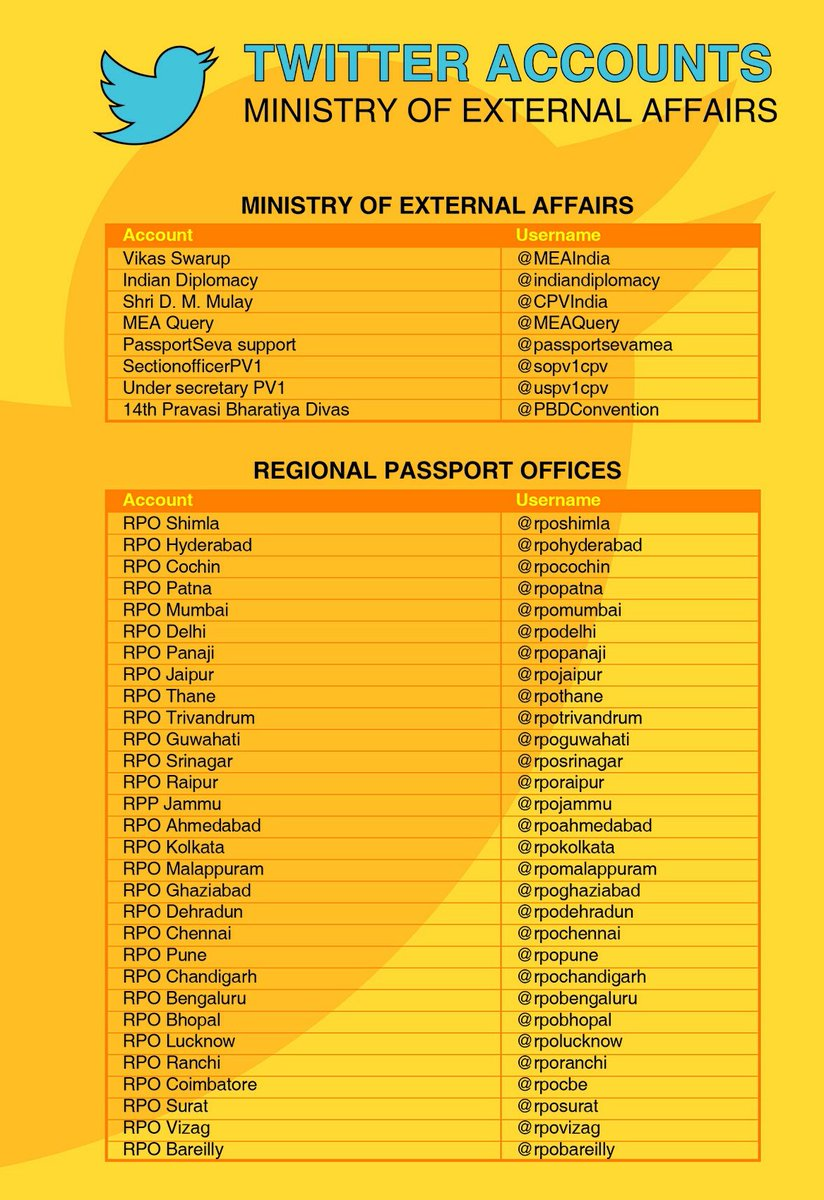
Twitter Seva will bring about 200 social media handles, including those of 198 Indian Missions abroad, 29 Regional Passport Offices and 8 other handles such as @MEAIndia, @Indiandiplomacy and @MEAQuery — all under one platform. Swarup said the enhanced, timely and transparent manner will now take the ministry to “a new leap forward.”

The launch of Twitter Seva service was first launched by the commerce and industry ministry in april, by the Telecom Ministry in August and now the External Affairs Ministry.

Cyanogen Shut Down, Google Android Excels

Cyanogen, the original Operating Software and rival of Google Android which was installed in One Plus first series of phones way back in 2013 has finally shut down its services with effect from Dec. 23, 2016.

In a statement, the company said: "As part of the ongoing consolidation of Cyanogen, all services and Cyanogen-supported nightly builds will be discontinued no later than 12/31/16. The open source project and source code will remain available for anyone who wants to build CyanogenMod personally."

The users of original One Plus mobile phones will have no updates to their original Cyanogen OS but those who bought OnePlus 2 and other latest series may not worry as their OS is supported by OxygenOS of One Plus.

The parent company Yanogen said Cyanogen will continue as an open source project that can be built upon by those interested. But the appreciation for the initial concept of the country was forthcoming from all tech circles.

Forbes magazine said, "Cyanogen Wanted To Kill Google’s Android, But Instead Killed Itself." The report said in 2015 Cyanogen CEO Kirt McMaster said:"We’re putting a bullet through Google’s head". Since Cyanogen is an off-shoot of Google Android, which is an open source project itself, its existence was dependant on Google support. In fact, Yanogen went on to make a deal with Google rope in Google that allowed it to refine its services sold to third-parties.

[ tags cyanogen shut, cyanogenmod, one plus operating system, one plus OS, oxygenOS, cyanogen ceo kirk mcmaster, google rival, android rival, cyanogen shut down]