Japan commits ODA loan to India in urban Transport, health and agriculture sectors

The Government of Japan has committed an Official Development Assistance loan worth JPY 275.858 billion, about ₹16,420 crore, to India for four infrastructure and social sector projects. The agreement, signed on March 24, 2026, in New Delhi, covers metro rail expansion in Bengaluru and Mumbai, healthcare upgrades in Maharashtra, and horticulture development in Punjab. The funding will be implemented through the Japan International Cooperation Agency and is part of the broader India-Japan strategic partnership.

A fresh tranche of Japanese funding is set to shape some of India’s most critical urban and social infrastructure projects, from metro rail expansion in its largest cities to strengthening healthcare systems and farm incomes.

The agreement, finalized on March 24, brings together officials from both governments at a time when India’s infrastructure pipeline is expanding rapidly across states.

The Notes for the loan were exchanged between Alok Tiwari, Joint Secretary in the Department of Economic Affairs under India’s Ministry of Finance, and Keiichi Ono, Japan’s ambassador to India. Loan agreements were also signed with the Japan International Cooperation Agency, the country’s primary development finance arm. [1]

Bengaluru and Mumbai metro expansion projects funding details

A significant portion of the funding is directed toward urban transport, with two metro rail projects accounting for the bulk of the allocation.

The Bengaluru Metro Rail Project Phase 3 will receive JPY 102.480 billion. The expansion aims to meet rising commuter demand in the Bengaluru Metropolitan Region by extending the mass rapid transit network.

Officials say the project is designed not only to improve mobility but also to reduce congestion and vehicle emissions, contributing to climate mitigation efforts in one of India’s fastest-growing urban centers. [2]

In Mumbai, the Metro Line 11 Project will receive JPY 92.400 billion. The line is expected to address similar pressures in the country’s financial capital, where traffic density and air pollution remain persistent challenges.

Both metro projects are positioned as long-term investments in urban sustainability, linking transport infrastructure with environmental goals. [3]

Maharashtra healthcare system upgrade and Punjab agriculture project

Beyond transport, the loan package includes funding aimed at strengthening public health systems in Maharashtra.

The Project for Strengthening Tertiary Healthcare Delivery, Medical Education System and Nursing Education System in Maharashtra will receive JPY 62.294 billion. The initiative includes the construction and upgrading of tertiary care hospitals, medical colleges, and nursing schools.

The goal is to improve both access to advanced medical care and the quality of medical education, with a broader focus on advancing Universal Health Coverage across the state. [4]

In Punjab, JPY 18.684 billion has been allocated for a project focused on sustainable horticulture. The initiative aims to help farmers diversify into high-value crops, supported by infrastructure development and capacity-building programs.

Officials say the project is intended to strengthen agricultural value chains while promoting environmentally sustainable practices. [5]

India Japan development cooperation and strategic partnership

The latest funding builds on decades of development cooperation between India and Japan, which dates back to 1958. Economic collaboration has become a central pillar of the bilateral relationship, with Japan emerging as one of India’s key partners in infrastructure financing.

Projects funded through Japanese ODA have historically included metro systems, industrial corridors, and environmental initiatives across multiple states.

The current loan package reinforces that trajectory, linking infrastructure expansion with broader goals such as climate resilience, public health, and rural income growth.

It also reflects Japan’s continued focus on supporting large-scale, long-term development projects through concessional financing mechanisms, often implemented via JICA.

The four projects, spread across Karnataka, Maharashtra, and Punjab, are expected to move into implementation phases following the signing of loan agreements, marking another step in the evolving India-Japan strategic and global partnership.

Also Read:

Japan Launches High-Seas Gamble to Break China’s Grip on Critical Minerals

India and Japan Partnership in ‘Specified Skilled Worker’: Details of areas

DNA screen: World-first preventative saliva test for cancer and heart disease risk

Young Australians can now access a free DNA saliva test to learn whether they face increased risk of some cancers and heart disease, which can be prevented or treated early if detected, in a world-first DNA screening study.

The nationally collaborative project, led by Monash University and supported by researchers and clinicians across Australia, will screen at least 10,000 people aged 18-40 for genes that increase risk of certain types of cancers and heart disease that often go undetected.

Those found to be at high risk after DNA testing – about one in 75 or 1.3 per cent – will have their situation explained by experts and be offered genetic counselling and prevention measures, such as regular scans and check-ups.

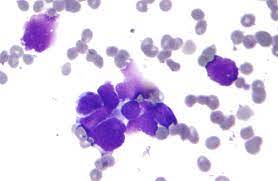
cancer/photo:en.wikipedia.org

Until now, genetic testing for the DNA changes that increase disease risk has only been available on a small scale for those with a known family history or prior disease diagnosis. Population testing, open to everyone, has the potential to drastically improve access and maximize the preventive benefits of DNA testing.

Monash University’s Associate Professor Paul Lacaze said the project enabled a more efficient and equitable approach to genetic testing, identifying far more people at high risk than current testing methods.

“We hope to identify those at risk while they are young and healthy, not after the fact, and empower them to make more informed decisions about their health,” he said. “For some people, this could save their lives through early detection and prevention of cancer and heart disease. This will also save considerable health system costs in Australia through prevention.

“Providing genetic testing based on family history alone is not enough. Up to 90 per cent of those at high risk in the general population are not identified by current family history-based testing. Most people don’t find out about their genetic risk until it’s too late, like after an incurable cancer or heart attack is diagnosed. We want to change that.”

DNA Screen will identify people with DNA variants in the BRCA1 and BRCA2 genes that lead to an increased risk of hereditary breast and ovarian cancer in women. These genes are also linked to breast and prostate cancer in men, although not as strongly. Men and women who carry DNA variants in the BRCA1 and BRCA2 genes can also pass them onto their children.

The DNA Screen test will also focus on Lynch Syndrome – another condition that increases risk for colorectal, endometrial, and other gastrointestinal cancers. Both cancer-related conditions have effective, proven interventions available to reduce risk if identified early.

This includes attending annual check-ups and screens from age 30, and the option of risk-reducing surgery for some people. Early detection and prevention are often life-saving for cancer.

The DNA test also encompasses heart disease risk, focusing on familial hypercholesterolemia (FH) or ‘genetic high cholesterol’, which results in high risk of heart disease from a young age. Despite effective medications such as statins being available to reduce risk, an estimated 95 per cent of FH carriers are currently undiagnosed.

Associate Professor Lacaze, from the Monash University School of Public Health and Preventive Medicine, is leading a team of national collaborators who were awarded a $2.97 million Medical Research Future Fund (MRFF) grant for the project. The project is supported by the Precision Medicine laboratory at Monash University and the state-of-the-art Biobanking Victoria facility.

The eventual goal is to develop a new population-based DNA screening program that could be offered through the Australian public healthcare system, available to everyone but targeted on certain medically-actionable conditions where early detection is key.

“We expect to identify about 1 in 75 people at high risk of these diseases. Those found to be high risk won’t necessarily get the disease, but pinpointing risk before symptoms appear enables prevention through regular check-ups, medication, or risk-reducing surgery. It could save their life.

DNA Screen, which is recruiting young people via social media, is expected to save lives and could lead to a wide scale preventive DNA testing program for cancer and heart disease risk, where early detection and prevention can be life-saving.

DNA Screen is the world’s first preventive DNA screening study designed specifically to assess population DNA screening through a national healthcare system. The test is free and involves placing a saliva sample into a small tube received by mail, and sending it back in a postage paid envelope. People can sign up online at dnascreen.monash.edu