Pentagon Tests Micro-Drone Swarm Technology

U.S. military has successfully tested more than 103 micro-drones released from 3 F/A-18 Super Hornets, in what it said the largest-ever test for the cutting-edge “swarm” technology.

The swarm of 103 Perdix micro drones, too small and of battery-powered were launched from three separate Super Hornets at China Lake in California, by the Pentagon’s Strategic Capabilities Office, or SCO, in collaboration with Naval Air Systems Command, said a statement.

The micro-drones demonstrated swarm behavior in terms of “collective decision-making, adaptive formation flying, and self-healing,” said a Defense Department release on Monday.

“This is the kind of cutting-edge innovation that will keep us a step ahead of our adversaries. This demonstration will advance our development of autonomous systems,” Secretary of Defense Ash Carter, who created the SCO in 2012. The test was conducted in October 2016 and aired on Sunday’s CBS News program “60 Minutes”.

Perdix micro drones are low-altitude flying devices too small to be detected with naked eye or a radar but they are capable of autonomously conducting intelligence collection and useful for surveillance operations.

Perdix are not pre-programmed synchronized individuals but act like a collective organism, sharing one distributed brain for decision-making and adapting to each other like swarms in nature, said SCO Director William Roper. “Because every Perdix communicates and collaborates with every other Perdix, the swarm has no leader and can gracefully adapt to drones entering or exiting the team.”

These devices were originally developed by engineering students at the Massachusetts Institute of Technology in the Aeronautics and Astronautics Department and they were eventually modified for military application at MIT’s Lincoln Laboratory in 2013.

Earlier, they were test using F-16 flare canisters by the Air Force Test Pilot School at Edwards Air Force Base in 2014 and in 2015. About 90 Perdix missions were undertaken so far under U.S. Pacific Command’s Northern Edge exercise in Alaska.

India, Portugal to Work Out Pact on Co-Production in Films Sector

India and Portugal have agreed to work out modalities for a co-production agreement in the Film Sector and an agreement would be framed in a time-bound manner keeping in mind the legal aspects, said a statement.

The possibility of an MoU between the Public Broadcasters of both the Countries to share best practices and seek cooperation in Technical and Content related matters was discussed during the talks between Indian Minister of State for Information & Broadcasting Col. Rajyavardhan Rathore and Portugal Minister of Culture, Mr. Luis Filipe Castro Mendes on Tuesday in New Delhi.

During the deliberations, Col. Rathore apprised the Portuguese Minister on the initiatives taken by India to provide Single Window clearances for Foreign Film Producers in the country through the Film Facilitation Office. He also highlighted the prestigious National Film Heritage Mission of the Government to Digitise, Restore, Preserve the rich filmic heritage of the Country.

Rathore also apprised the Portuguese Minister about the IIMC and FTII as the premier educational institutes in the field of Journalism and Film Production respectively in the country. Both Ministers also discussed the possibility of Student Exchange programmes between educational institutions of both the countries.

Ministers also expressed interest for possible co-operation in the areas of Renewable energy, information and communication technology and Start-ups.

Indian Rupee to Touch 70 Per US$ in 2017: Reuters Poll

After demonetisation, all calculations and projections have been turning red and even on forex front, the Indian rupee is seen dwindling further in value to about 70 per US dollar in 2017, said a poll-based survey by Reuters.

“The rupee is expected to fall further against the US dollar this year to a record low, hit by rising global bond yields and an economic blow from New Delhi’s dramatic currency crackdown launched two months ago,” said the Reuters poll.

“It is expected to fall further to 69.50 by year-end. That 12-month consensus is the weakest for several years and would mark a record low,” it said. Quoting a poll conducted three months ago, Reuters Polling team said three months back the view in a Reuters poll was for the rupee to trade at 67.73 in 2017.

In the year 2016, the rupee remained stronger with variance at below 2 percent, which was better than most of the regional peers making the India’s economy the fastest-growing in Asia. But the election of Donald Trump in the US presidential election and the effect of demonetisation by Indian Prime Minister Narendra Modi have reversed the expections, said the report.

“We see a less rosy scenario in the capital account and current account front in the coming two years, with global bond yields and money flowing back to the US,” said Bhupesh Bameta, head of FX research at Edelweiss Financial Services in Mumbai, participating in the poll.

Since demonetization has roughed up many savings avenues, the attraction for gold may come back again, he added.

Japan Seeks India to Resolve Transfer Pricing Issue First

Commerce and Industry Minister Nirmala Sitharaman held talks with the visiting Japanese delegation led by Hiroshige Seko, Minister, Ministry of Economy Trade and Industry (METI) where the Japanese side raised the Transfer Pricing issue that has remained contentious between the two sides for long.

Japanese side said India should address the complaints raised by the Japanese chamber from time time to enhance the investments by Japanese companies in India. He also requested that the issue of Transfer Pricing assessment raised by Japan Chambers of Commerce and Industry in India (JCCII) needs to be resolved.

Sitharaman said the pace of implementation of India-Japan Comprehensive Economic Partnership Agreement (CEPA) requires greater momentum to tap the potential of India-Japan bilateral trade and Seko in his reply said 25 Japanese companies are participating in Vibrant Gujarat Summit.

The Japanese business delegates briefed about their business presence in India and expressed their willingness to diversify their business in sectors such as Agriculture, Power, Electronics, Railways, Logistics Sectors, manufacturing of ATMs, which has become urgent and imminent in view of demonetisation and the consequent cash crunch in the country.

The Japanese side also expressed interest in enhancing co-operation in the area of Intellectual Property Rights (IPR) between India and Japan and offered to train Indian IPR examiners in Japan to underline the need for a high level meeting between India and Japan on IPR cooperation. Seko offered an invitation to 100 IPR Examiners for training in Japan.

Sitharaman requested the Japanese side to take steps to increase Indian Exports to Japan in sesame seeds, Surimi fish and Indian generic drugs. She said that the Japanese Industrial Townships (JITs) in India would be transformational and will bring in significant Japanese investments and further strengthen India-Japan Economic Cooperation.

On the Logistics front she mentioned that India plans to build Logistics University wherein the cooperation from Japan would be needed.

French Team Visits Gujarat Global Summit 2017

Jean-Marc Ayrault, French Minister of Foreign Affairs and International Development, led a 147-member French delegation to the Vibrant Gujarat Global Summit, on Tuesday, 10th January 2017 being a Partner Country of the Summit.

French Nobel Laureate Serge Earache, renowned for his work on atomic physics, quantum optics, the study of the photon, and developing laser spectroscopy, will also participate in the Nobel Laureates Conclave during the event.

The French business delegation included 60 French companies with expertise in the sectors of energy and power, urban development, water and waste management, aviation and logistics, agrifood industry, multimodal transport, IT and communications, planning, housing, industry (biotechnology, ceramic and metallic coatings, dental, electronics, pharmaceuticals, textile), consulting, and banking and finance.

CEOs of leading French multinationals including Electricity de France (EDF) and Cap Gemini will also attend the CEOs Conclave. “France, with its industrial experience and expertise in cutting-edge technologies is building a partnership for the future with India for actively supporting it in achieving its major goals in the areas of sustainable urban development, transport, energy, food processing, infrastructure and industry,” said a statement.

France will hold a Country Seminar on Wednesday, 11th January at 10 am, in Hall 2, Country Hall 1, at Mahatma Mandir, focusing on energy requirements for the future and integrated urban transportation for the smart city. About 12 experts from France will share their innovative proposals for transforming waste to energy, smart street lighting, off-grid solutions for smart villages, solar cell manufacturing, ticketless solutions for urban transport, smart parking and railway stations of the future, amongst others.

List of French Companies at the Vibrant Gujarat Global Summit 2017:

2PS, Accor Hotels, Adamas Avocats Associés, Agence Goutal, Architecture et Patrimoine, AGS Four Winds, Airbus Group India, Airbus Division in India, Airbus Helicopters, Altios, Antea, Anthogyr, Assystem India, ATR, Atherm Thermal Solution India P Ltd, Groupe Axereal, BNP Paribas, Be Bound, Boccard SA, Bureau Veritas, Cap Gemini, CEA LITEN, Cimulec, Citelum, CMA CGM, Coldway, Dassault Systemes, Decathlon Sports India, Dommen, EDF, EDF EN, EGIS, Engie, Energy4u, Enia Architectes, Famoco, Hubbard SAS, IMV, JC Décaux, Keolis, Laboratoires Gilbert, Groupe Batteur, Lumiplan, Lhotellier, Ikos Group – Mailhem Parkeon Pomagalski, Poma, RATP DEV TRANSDEV, Roquette Riddhi Siddhi Pvt Ltd, Saneco, Schneider-Electric, Serap India Pvt Ltd, Indian Partner ADEPTA, SNCF, SNF SAS France, Société Générale, Systra India, Technip, Thales, Tecofi, Total Oil India P Ltd, Veolia India, Verteole, Indo-French Chamber of Commerce & Industry.

‘Slumdog Millionnaire’ Fame Dev Patel Misses Golden Globe 2017 for ‘Lion’

Dev Patel in Slumdog Millionnaire (2008) (Photo: Creative Commons)

London-born actor Dev Patel known for his role in Slumdog Millionaire, was able to make it in nominations round as the Best film supporting actor for playing Saroo Brierley in the film ‘Lion’, though he failed to make it finally.

But it is time to reckon the young actor for his future chances of winning an Academy or Golden Globe Award in the future.

Patel made his screen debut as Anwar Kharral in the British teen drama television series Skins (2007–2008), though he had no prior professional acting experience. He was noticed by Danny Boyle’s daughter who pointed at him to her father when he was looking for not a hero but someone who could play the ordinary role of slum dweller in Mumbai slum.

Once he played the lead role of Jamal Malik in Boyle’s film “Slumdog Millionaire” (2008), he never looked back for similar roles later. He was nominated for the Screen Actors Guild Award for Outstanding Performance by a Male Actor in a Supporting Role and the BAFTA Award for Best Actor in a Leading Role, and was awarded the Screen Actors Guild Award for Outstanding Performance by a Cast in a Motion Picture.

Later, he went on to play the roles of Indian-origin characters as Neal Sampat on the HBO television series The Newsroom (2012–2014), as Sonny Kapoor in The Best Exotic Marigold Hotel (2012), in Night Shyamalan’s The Last Airbender (2010) and in The Man Who Knew Infinity (2015).

Last year, he earned rave reviews for his performance as Saroo Brierley in Lion, which was nominated to golden Globe Awards 2017 though he could not make it. But certainly future beholds the award for him.

India Development Foundation of Overseas Indians Set up

India Development Foundation of Overseas Indians (IDF-OI),  a not-for-profit Trust set-up by the Government of India, was set up on the occasion of the closing day of the PBD convention in Bangalore on Monday. It facilitates philanthropic contributions by Overseas Indians to social and development projects in India and it will be chaired by External Affairs Minister Sushma Swaraj.

Presently, IDF-OI is promoting flagship programmes of Government of India- Swachh Bharat Mission and National Mission for Clean Ganga; and projects identified by the State Govts, for funding by Overseas Indians.

Working with State Governments in areas such as sanitation; education; drinking water; women’s empowerment et/c, IDF-OI is offering projects for funding by Overseas Indians. Overseas Indians can contribute as an individual, or a group of individuals or even through their respective Indian Associations.

IDF-OI does not recover any administrative cost from contributions received from Overseas Indians.
At the Pravasi Bharatiya Divas Convention 2017 the Plenary Session I focused on the Indian Diaspora- Catalyst for Realising India’s Development on 08 January 2017, chaired by Minister of State for External Affairs M.J Akbar.

The session discussed how IDF-OI can effectively enable Overseas Indians to reconnect and contribute to India’s social and development efforts. They expressed interest in working with IDF-OI and highlighted the need for credibility i.e. accountability, efficiency, and transparency in project implementation and fund utilisation. At the conclusion of the session IDF-OI also received contributions from Overseas Indians.

Unfold Indian Story, President Asks Diaspora

President of India Mr. Pranab Mukherjee in his Valedictory Address at the 14th Edition of the Pravasi Bhartiya Divas Convention on Monday asked the diaspora to be foremost emissaries of Indian story in the world and conferred the Pravasi Bhartiya Samman Awards on recipients at the closing ceremony in Bengaluru.

Speaking on the occasion, the President expressed hope that the Indian Diaspora across the world will remain foremost emissaries of the unfolding Indian story. Since they are the people exposed to the best of western technology and yet having their civilisational moorings in the ageless and eternal ethos of India, they are doubly blessed for the task, he noted.

The synergy of the west and the east that they represent, provides them with a unique position and opportunity that involves sharing knowledge between their home land and their adopted countries, said the President. While they showcase India to their host countries, they also bring along the cultural heritage of their adopted lands to India in true spirit exemplifying our belief in ‘Vasudhaiva Kutumbakam’, said Mr. Mukherjee.

The President said , “Establishing linkages between the Government of India’s skilling programmes and the skill gap that exists amongst the migrant workforce will go a long way in enhancing their employability as well as earnings.”

The President also touched upon the concerns of women and girls in India marrying into NRI families and the government and its agencies deal with this issue, but said it could be best addressed by local Community Organisations. He called upon Indian Community Organisations abroad to continue to complement the government’s efforts.

The President also released a compilation of Selected Speeches by the Prime Minister Narendra Modi on foreign policy on the occasion.

Pravasi Bharatiya Samman Awards 2017 Presented

The Pravasi Bharatiya Divas celebrations, being held in Bangalore from January 7-9,2017, came to close on Monday with the presentation of Pravasi Bharatiya Samman awards to recipients from Canada to Trinidad & Tobago by President Pranab Mukherjee.

PBD conventions are being held every year since 2003 and we have been honoring our Pravasis since the first edition. Since it was decided late last year to hold the PBD conventions after an interval of two years. Therefore, the number of awards to be conferred for PBD 2017 have been doubled to 30.

The Jury can also make up to six suo-motto nominations for persons from the fields in which the awards are to be conferred. This year, the jury also considered Pravasi’s contribution for achievements on philanthropic investments and charitable work in India and for contribution towards India’s development.

The Jury members considered several eligible nominations and unanimously recommended 30  for Pravasi Bharatiya Samman Awards, 2017 by the Committee on December 20,2016. The list is as follows:

List of Pravasi Bharatiya Samman-2017 Awardees

S.NO. Name Country Field
1 Dr. Gorur Krishna Harinath Australia Community Service
2 . Mr. Rajasekharan Pillai Valavoor Kizhakkathil Bahrain Business
3 . Antwerp Indian Association Belgium Community Service
4 . Mr. Nazeer Ahamed Mohamed Zackiriah Brunei Community Service
5. Mr. Mukund Bhikhubhai Purohit Canada Business
6. Mr. Nalinkumar Sumanlal Kothari Djibouti Community Service
7. Mr. Vinod Chandra Patel Fiji Social Service
8. Mr. Raghunath Marie Antonin Manet France Arts & Culture
9. Dr. Lael Anson E. Best Israel Medical Science
10. Dr. Sandip Kumar Tagore Japan Arts & Culture
11. Mr. Ariful Islam Libya Community Service
12 . Tan Sri Dato Dr. Muniandy Thambirajah Malaysia Education and Community
Service
13 . Hon’ble Mr. Pravind Kumar Jugnauth Mauritius Public Service
14 . H.E. Mr. Antonio Luis Santos da Costa Portugal Public Service
15 . Dr. Raghavan Seetharaman Qatar Business Management
16 . Ms. Zeenat Musarrat Jafri Saudi Arabia Education
17. Singapore Indian Association Singapore Community Service
18. Dr. Carani Balaraman Sanjeevi Sweden Medicine
19 . Mr. Susheel Kumar Saraff Thailand Business
20. Mr. Winston Chandarbhan Dookeran Trinidad & Tobago Public Service
21. Mr. Vasudev Shamdas Shroff United Arab Emirates Community Service
22 . India Social and Cultural Centre, Abu Dhabi United Arab Emirates Philanthropy and Community Service
23 . Rt. Hon’ble Ms. Priti Patel United Kingdom Public Service
24 . Ms. Neena Gill United Kingdom Public Service
25 . Mr. Hari Babu Bindal USA Environmental Engineering
26 . Dr. Bharat Haridas Barai USA Community Service
27 . Ms. Nisha Desai Biswal USA Public Affairs
28 . Dr. Mahesh Mehta USA Community Service
29 . Mr. Ramesh Shah USA Community Service
30. Dr. Sampatkumar Shidramapa Shivangi USA Community Leadership


****

YSK/Uma
(Release ID :156225)

Portugal PM Visits Ancestral Home in Goa

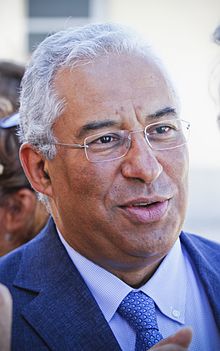
António Costa

Portugal Prime Minister António Costa, who is on an official visit to India, was greeted with six Memorandum of Understandings (MoUs) between India and Portugal being signed on the occasion, including one pact on defence cooperation.

Later Mr Costa visited Goa, his ancestral home and Bengaluru where he was the Chief Guest at the Pravasi Bharatiya Divas opened on Saturday. The Portugal PM is on a seven-day visit to India. Portugal PM Costa presented PM Modi with Portuguese soccer player Cristiano Ronaldo’s jersey.

PM Narendra Modi, welcoming the visiting Portugal PM, said, “It gives me immense pleasure to welcome you and your delegation to India. We are deeply honoured that you accepted our invitation to be the Chief Guest at the Pravasi Bharatiya Divas. In my extensive discussion with Portugal PM we reviewed the full range of India-Portugal ties.”

On Portugal’s support to India’s Nuclear Supply Group membership, he said, “We are grateful to Portugal for their continued support for India’s membership in Nuclear Suppliers Group. The MoU on Defence cooperation signed today will help us harness our respective strengths in this field for mutual benefit.”

Costa’s father was writer Orlando da Costa, who was of Goan, Portuguese, and French descent. His 200-year-old ancestral house on Abade Faria Road in Margao, where Anna Kaarina Costa, first cousin of the Portugal Prime Minister, currently lives was spruced up for his visit.

This is his second visit to the house, the first was when he had come with his parents as a teenager. Portugal ruled Goa till 1961.

US Envoy Richard Verma to Quit as Trump Admn. Takes Over

US Ambassador Richard Verma

Indian-origin US ambassador to India, Richard Verma, will quit as he was a political appointee of President Barack Obama and as per the tradition all political appointees quit after a new President is sworn in.

Since the trasition team of President-elect Donald Trump refused any grace period to political appointees, all of them including Richard Verma will relinquish their offices before the swearing in of the new president January 20, 2017.

The Washington Post in a report said the Obama administration has already directed all “non-career ambassadors” to submit their resignations as of Jan. 20 when Trump takes over and the report said officials have confirmed that all the ambassadors have complied with it, including Verma, who is the first Indian origin envoy from the US to India.

The Post said “the unusually stern and specific directive to political ambassadors” came sternly without the grace period usually allowed to let them close their desks.

Richard Verma was an airforce advocate and judge who was recruited in 2009 to be the Assistant Secretary of State under Hillary Clinton, then the Secretary of State. He resigned in 2011 and was nominated again in 2014 to be the envoy to India.

A member of the Democratic Party, he had served as the senior national security advisor to Senator Harry Reid and also as an aide to the late Democratic Congressman Jack Murtha and as a director with National Democratic Institute for International Affairs.

Pravasi Bharatiya Divas 2017: The Overseas Indians have come a long way

By PRIYADARSHI DUTTA

The 15th edition of Pravasi Bharatiya Divas convention will be heldin Bengaluru, Karnataka from January 7 to 9, 2017. The first annual convention was held between January 9 and 11, 2003. January 9 was adopted as the Pravasi Bharatiya Divas or Overseas Indian Day based on the recommendations of a High Level Committee constituted in August, 2000.

The then Prime Minister Atal Bihari Vajpayee was keenly interested in the issue of overseas Indians. The oversubscription of the Resurgent India Bonds in 1998, when India was battling sanctions post-Pokhran II, showed their strong faith in an emerging India. In a post-Liberalization environment the Indian Diaspora was willing to engage back with their country of origin. India becoming an IT power hub, fast growing economy and atomic power gave the Diaspora much needed confidence. It was on display at various places – from sports field to trade conferences and international meets.

The concerns of the overseas Indians had been on the mind of the Indian leadership for long.The House of Commons in Britain was forced to investigate, as early as 1841, into the pitiable condition Indian indentured workers in Mauritius. This was within a few years of beginning of the indentured system following the abolition of slavery in British Empire (1833). Way back in 1894, the Madras session of Congress had adopted a resolution against disenfranchisement of the Indians in South African colonies. The Congress adopted similar resolutions at Poona (1895), Calcutta (1896), Madras (1898), Lahore (1900), Calcutta (1901) and Ahmedabad (1902) sessions. In those days the question of overseas Indians pertained mostly to Indians in South and Eastern Africa. It is they who had launched numerous struggles against encroachment on their rights by the local British government. The Gandhi-Smuts Agreement, 1914 signified a major victory for them.

But there were overseas Indians in South East Asia viz. Burma, Singapore, Malaya, Thailand etc. Many of them contributed towards India’s freedom movement in the 1940s by volunteering in or funding the Azad Hind Fauz of Netaji Subhas Chandra Bose. Of particular interest could be the stories of those teenaged Tamil girls, born in rubber plantations of Malaya, who decided to shoulder guns for the independence of India, a country they had never actually seen.

The PravasiBharatiya Divas memorializes the arrival of Mahatma Gandhi to India on January 9, 1915. He had spent 21 years in South Africa fighting for the rights of Indian community. His technique of Passive Resistance, which he named Satyagraha, was developed in South Africa before being implemented in India. In the colonial world that Gandhi inhabited the profile, status and condition of the overseas Indians were markedly different from today.

Those were the days when one could not have been starry-eyed about ‘going abroad’ and ‘settling abroad’. A bulk of those who migrated abroad went for toiling in plantations or factories under Indenture System (to Africa, West Indies, Fiji etc), Kangany System (to Sri Lanka) and Maistry System (Burma). But they deserve credit as the pioneers who reversed the religious prohibition on seafaring that had fallen upon the Hindu society in the medieval ages.

In colonial times racial discrimination was instituted as a state policy by the colonial government. But the de-colonization brought in its wake another set of problems. In Gandhi’s lifetime itself the Indians in Ceylon (Sri Lanka) and Burma (Myanmar) entered a critical phase with Ceylonese and Burmese population respectively wanting to get rid of them. The first two legislations passed by the D.S. Senanayake government in independent Ceylon deprived almost a million people of Indian origin of their citizenship. While Indians might have captured power in Mauritius, they have been reduced to a miniscule minority in Myanmar. Thus Indians face a new kind of racialism in those erstwhile colonies.

The age of colonialism was an age of maritime empires. Till late 1950s, steamships were the most dependable mode of inter-continental travels. In early 1960s, the air plane replaced ship as the most preferred mode for long distance travels. It reflected upon the pattern of migration in terms of reach, human resource quality and connectivity with India.

Coincidentally around the same time the passage of Immigration and Nationality Act, 1965 in the USA paved path for immigration of highly skilled professionals and students. This historic piece of legislation changed the size and profile of the Indian immigrant community. From a meager 12,000 in 1960 the number of Indian immigrants has risen to 2.5 million now. Such educated and successful immigrants are providing sinews to the Indian Diaspora.

But there is another side of the coin. When during the years of ‘Socialism’ India remained trapped in poor economic growth rate, the immigrants to the West were somewhat apologetic about their Indian identity. In India also the Non Residents Indians were perceived as escapers. But faster economic growth rate post-Liberalization, India’s emergence as IT power hub and the advent of Vajpayee government etc boosted the morale of the overseas Indians.

The advent of satellite television, Internet and rising tele-density in the 1990s meant overseas Indians could be in regular touch with India. It was now possible for an overseas Indian to spend time thinking the interests of his mother country. Indians, resident and overseas, could commonly exercise opinion on bolstering India’s position in the world stage. This gave rise to the concept of ‘New Global Indian’ as the title of magazine launched from Boston in 2008 by Kanchan Banerjee stated.

But overseas Indian community, in several parts, continues to face severe challenges of racism, religious fanaticism and legislative disabilities. As against popular misconception not everyone is successful. Thus it is not yet time to lower the baton raised by Gandhi in South Africa in the 1890s.

(The writer is a columnist and independent researcher based in New Delhi. The opinions expressed above are his personal.)


India, Kazakhstan Sign Protocol on Double Taxation

India and Kazakhstan signed in New Delhi today a Protocol to amend the existing Double Taxation Avoidance Convention (DTAC) between the two countries, renewing the earlier pact signed on 9th December, 1996 for the avoidance of double taxation and for the prevention of fiscal evasion with respect to taxes on income.

The new protocol provides for internationally accepted standards for effective exchange of information on tax matters. Further, the information received from Kazakhstan for tax purposes can be shared with other law enforcement agencies with authorisation of the competent authority of Kazakhstan and vice versa.

The Protocol this time included a Limitation of Benefits clause, to provide a main purpose test to prevent misuse of the DTAC and to allow application of domestic law and measures against tax avoidance or evasion.

It provides for specific provisions to facilitate relieving of economic double taxation in transfer pricing cases, which is considered a taxpayer-friendly measure and in line with the Base Erosion and Profit Shifting (BEPS) Action Plan to meet the minimum standard of providing Mutual Agreement Procedure (MAP) access in transfer pricing cases.

The bilateral Protocol inserts service PE provisions with a threshold and also provides that the profits to be attributed to PE will be determined on the basis of apportionment of total profits of the enterprise.

The new Protocol replaces existing Article on Assistance in Collection of Taxes with a new Article to align it with international standards, said a statement from the Finance Ministry.

What President of India Said on Demonetisation?

In his New Year message to Governors and Lt. Governors, President Pranab Mukherjee on January 5, 2017 clearly indicated his unhappiness over the slowdown it will have on Indian economy though he termed it temporary. The message is a clear signal that the President, also former finance minister himself, is unhappy at the prolonged impact on people, who are not soldiers but citizens of the country.

He gave an advice to the centre over its adventure towards demonetisation.

Poor people need to fill their stomachs first and then roped in our long march towards transition to entrepreneurial approach. In his refined words, it read:  “We all will have to be extra careful to alleviate the suffering of the poor which might become unavoidable for the expected progress in the long term.”
The President said while he appreciates the thrust on transition from entitlement approach to an entrepreneurial one for poverty alleviation, he is not too sure that the poor can wait that long. “They need to get succour here and now, so that they can also participate actively in the national march towards a future devoid of hunger, unemployment and exploitation,” he said.
In addition, the President pondered over the state assembly elections in as many as seven states in 2017 as the dates for elections in five states have already been announced. “Elections reflect the attitudes, values and beliefs of the people towards their political environment. They symbolize the sovereignty of the people and provide legitimacy to the authority of the government. They also serve the purpose of regulation of public policies and mobilization of public opinion,” he noted hinting at the outcome in these elections would be the vox populi on demonetisation.
The President advised Governors and Lt. Governors to play an important role in easing the tensions in the society. Goodwill must prevail between different communities. “In a pluralistic democracy like ours, tolerance, respect for contrary views and patience are a must. These values have to be preserved. The multiplicity in culture, faith and language is what makes India special. Governors/Lt. Governors can, through their calm influence, inculcate amongst the citizens of their state this fundamental ethos of our civilization,” he said.

Assembly Elections Schedule Goes Viral on Twitter, Facebook

The announcement of Election Commission of India on State Assembly Elections in five States on 4th January, 2017 has gone viral reaching 21 lakh people on social media within 24 hours, achieving widest possible outreach of information on the election schedules and other ECI guidelines for citizens.

The combined effort made by Press Information Bureau (PIB) and Ministry of Information & Broadcasting (MIB) to use Social Media (SM) Platforms like Facebook, Twitter and YouTube, coupled with the live-streaming of it on YouTube channel, and on the Facebook Pages of PIB, MIB and Facebook India proved successful with tweets going LIVE.

The actual figures of the reach of the information on the ECI Press Conference as on 7:00 PM, on 4th January, 2017, showed a total of 22 tweets, 5 Facebook and 1 YouTube posts on Ministry of Information & Broadcasting platform. On Facebook, the 5 posts reached over 5.24 Lakh people, with 1,219 Likes and 140 Shares. The ECI press conference was also Live-streamed on Ministry’s Facebook page, which received 12,000 views and reached over 4.95 Lakh people.

Also, a total of 55,127 Impressions were achieved for the 22 tweets made from MIB handle and these were re-tweeted 1,448 times and 550 favourites were received. Further, the Live Stream of the ECI Press Conference on YouTube got 1,700 views.

Among PIB’s social media accounts, a total of 68 tweets and 10 Facebook posts were made on Assembly Election Schedule. The Facebook posts achieved a total reach of more than 29,700 people, 167 Likes and 46 Shares, while PIB’s tweets resulted in 6.5 lakh impressions (views), 4,140 retweets and 951 favourites. The live-streaming of the event on PIB’s Facebook page has reached 3.04 lakh people and fetched more than 800 views.

In addition to the above platforms, the ECI press conference was live streamed for the first time on two Facebook pages, namely Facebook India and Government, Politics and Non Profits, which collectively received a massive response with more than 1 Lakh video views and reached over 13 Lakh people on Facebook. The Facebook Live Stream received 6,400 likes and 624 shares. (Figures as on 7:00 PM, 4th January, 2017)

On Twitter, Top Trending Hashtags throughout the day were #ElectionCommission, #AssemblyElection, Manipur & Goa, 5 States, Phase2, Uttarakhand and Model Code of Conduct. The maximum potential reach was achieved on the hashtags #ElectionCommission and #AssemblyElection of about 21.2 crores and 20.1 crores of people respectively.

Festival of India in Cambodia Next Week

A Festival of India is being organized in Cambodia from 10th January to 16th February, 2017 featuring  Ramayana Performance, Rajasthani Folk Music and Dance Group (Manganiyar Group) and Classical Dance.

A Buddhist Mahotsav – Exhibition titled Dhamma Darshana – to explore the life, teachings and important events connected with Lord Buddha and Photo Exhibition on Buddhist religious/heritage sites in India will also be organized, said a statement.

To complete the experience, a Food Festival will also be held and the Festival events are being showcased in three cities of Phnom Penh, Siem Reap and Battambang in Cambodia.

Cambodia is among the four Souteast Asian nations — Cambodia, Laos, Myanmar and Vietnam — (CLMV Region) where India is keen to increase its economic presence and a Project Development Fund (PDF) with a corpus of Rs 500 Crore was set up last year by the government.

These four nations offer a gateway for market access to China/EU and other markets due to various trade agreements for India. The key advantage of positioning India on the regional value chains is securing on a long term basis, a dedicated market for Indian raw materials and intermediate goods besides a dedicated source for inputs and raw materials for Indian industry.

While opportunities are a plenty in CLMV region, Indian entrepreneurs’ endeavors in these countries have, thus far, been limited due to limited information, infrastructure and other contingent risks. The fund is created to benefit India’s industrial community for business expansion, and to maintain cost competitive supply chains, besides integrating with global production networks.

Bangalore Pravasi Bharatiya Divas 2017 to Focus on Diaspora Achievements

The Pravasi Bharatiya Divas 2017 or the annual global convention for the Indian diaspora, to be held in Bangalore from January 7 to 9, 2017 will focus on what the Indian origin NRIs and PIOs achieved in the last few years and an awards function at the end of it will felicitate some of them.

The event, to be attended by over 4,000 delegates from across the world will be opened by Prime Minister Narendra Modi and President Pranab Mukherjee will present the awards on the last day. The Bangalore event will be the first full-fledged festival of diaspora Indians under a new format adopted by the government last year.

Dhyaneshwar Mulay, Secretary, Overseas Indian Affairs, said, “Highlight of the Pravasi Bharatiya Divas 2017 is social innovations by Indians, 20 social innovations will be highlighted and there will also be a contest of innovators and the winner will get an award of Rs.1 lakh.”

Muley said all sessions will be held in plenary format to allow more interaction with delegates from overseas to convey their suggestions to the government directly. “The sessions will focus on immigration and the role of diaspora organisations,” he said.

The event initially raised several eye-brows over the rumour that participation from the Gilgit-Baltistan region of Pakistan would make it different this year but no confirmation has been made so far about it.

The theme this year is ‘Redefining engagement with Indian diaspora’ and the event exhibition would showcase the achievements of the government in various sectors, and the delegates can also explore business opportunities in India and connect with government officials, business owners and entrepreneurs.

India to Allocate Dwarka Land for 2nd Diplomatic Enclave in Delhi

Indian Cabinet has approved the transfer of 34.87 Hactares of land in Sector 24, Dwarka, New Delhi from Delhi Development Authority to Land and Development Office (L&DO) for the purpose of allocating it to the proposed Second Diplomatic Enclave in the national capital.

Currently, there is only one Diplomatic Enclave in Chanakyapuri, where land has been allotted to the Embassies soon after Independence and several embassies and foreign missions have been set up in nearby Shanti Niketan or Vasant vihar areas.

The Ministry of External Affairs has long been demanding for more land for allotment to Diplomatic Missions/ International Organizations for building their Chanceries/ Embassies in Delhi. For this DDA has earmarked 34.87 Ha land in Sector 24, Dwarka, which will be transferred to L&DO, said a statement.

This will provide land for Second Diplomatic Enclave in Dwarka near the International Airport in New Delhi, which will be easy to access for foreign missions in the capital.

Indian Cabinet Okays MoU with Portugal, Kenya, Uruguay

Indian Cabinet, chaired by the Prime Minister Narendra Modi, on Wednesday approved signing of bilateral agreements with Portugal, Kenya and Uruguay in the field of agriculture and allied sectors.

The Agreements cover exchange of scientific and technical information, trade in plants and plant products, exchange of information in phytosanitary issues, training programmes, seminars and visits of experts and consultants.

These agreements will faciitate constitution of a Joint Working Groups comprising of representatives from both countries, to monitor the implementation of MoU and making concrete proposals for agriculture cooperation in the future.

The agreements will remain in force for five years, to be automatically extended for another five years unless either Party gives written notice through diplomatic channels to the other Party of its intention to terminate the Agreement at least six months before its expiration, said a statement by the government.

The agreement with Uruguay is significant as it also envisages cooperation in Customs Matters. It vouches for help in the availability of information for the prevention and investigation of Customs offences to ensure efficient clearance of goods traded between the two countries.

The Agreement also takes care of Indian Customs’ concerns and requirements, particularly in the area of exchange of information on the correctness of the Customs value declared, the authenticity of certificates of origin of goods and the description of the goods traded between the two countries.

Uruguay is an important trading partner of India among members of the MERCOSUR, a trading block in Latin America, with which India signed a Preferential Trade Agreement (PTA) that came into effect from 1st June, 2009.

As trade between India and the Uruguay has been expanding gradually, the pact provides a legal framework for sharing of information and intelligence between the Customs authorities of the two countries and help in the proper application of Customs laws, prevention and investigation of Customs offences and the facilitation of legitimate trade.

Dawood Ibrahim UAE Properties Seized, BJP Claims Modi’s Victory

By Pallavi Kumari
pallavik

Following news reports from Dubai about the United Arab Emirates government seizing the properties of underworld don Dawood Ibrahim worth Rs.15,000 crore, BJP has gone to the street basking on its new accomplishment.

In a tweet, the Bharatiya Janata Party said the credit goes to PM Narendra Modi’s "major diplomatic success". It has also claimed that a dossier provided by the Indian government played the trick to narrow down the properties in UAE which allegedly belong to Dawood Ibrahim.

"Major diplomatic success of PM Modi: One of India’s most wanted criminals, Dawood Ibrahim’s properties worth Rs. 15,000 crore seized in UAE," the BJP tweeted on its official social media site.

The Mumbai don who was the most wanted criminal in India for his alleged Mumbai riots in 1993 in which 257 people were killed, is believed to be entering his 60 years of age and hiding in Pakistan’s Karachi.

Already termed a terrorist by the UN, he is accused by India and the US of financing al Qaeda and Lashkar-e-Taiba terrorist groups. Last year, the UN sanctions committee made changes to its entry on Dawood making it easier to impose sanctions such as blocking wealth and accounts, ban on travel and arms on the person.