Strait of Hormuz crisis: Chronology of 10 major developments so far

The Strait of Hormuz crisis has become a test of US President Donald Trump’s Iran strategy, Tehran’s regional leverage and international diplomacy’s ability to prevent a wider conflict. Washington’s military campaign and economic pressure have collided with Iran’s efforts to assert control over passage through the strategic waterway.

Disputes over a ceasefire, maritime access, sanctions and nuclear negotiations have repeatedly undermined diplomatic efforts, leaving the confrontation unresolved and raising questions about the future security of the Gulf. Here’s a chronology of top ten developments captured from the conflict:

Chronology

Oct. 20, 2026: Iran tells Pakistan’s army chief, Field Marshal Asim Munir, that it will not resume negotiations with Washington until its demands are met. Tehran seeks an end to US military operations, the lifting of sanctions on Iranian oil exports and the removal of the US blockade on Iranian ports. Washington insists that Iran’s nuclear programme must be addressed.

Oct. 18, 2026: Iranian Foreign Minister Abbas Araqchi renews Tehran’s proposal to reopen the Strait of Hormuz within seven days, conditional on US concessions. The two sides remain divided over whether maritime access or Iran’s nuclear programme should be addressed first.

Sept. 24, 2026: US and Iranian negotiators explore a phased agreement in New York that would reopen the strait and end Washington’s economic blockade of Iran. The talks expose a central obstacle: neither side wants to surrender its principal source of negotiating leverage first.

Sept. 2, 2026: Reports indicate that senior Trump administration officials favour limiting further military escalation until after the November US midterm elections, amid concerns about public opposition to the war. The administration continues economic pressure on Tehran while weighing its next diplomatic and military steps.

Aug. 18, 2026: Iranian parliament speaker Mohammad Baqer Qalibaf says the strait will remain closed until Washington meets conditions outlined in an interim agreement, including lifting the blockade, easing oil sanctions and releasing frozen Iranian assets. Tehran declares that the diplomatic framework has unravelled.

Aug. 9, 2026: Iran says negotiations with Oman on new maritime routes through the strait are nearing completion but insists that changing shipping lanes alone will not reopen the waterway. Tehran continues to demand concessions from Washington, including relief from sanctions and military pressure.

Aug. 6, 2026: The Trump administration faces a choice between accepting an arrangement that could give Iran a greater role in supervising the strait and escalating military action. The dispute highlights the gap between Washington’s opposition to Iranian control and Tehran’s determination to secure political concessions.

July 7, 2026: Trump declares the interim agreement with Iran over, deepening the dispute over maritime control and the conditions for ending hostilities. Iran subsequently describes the agreement as suspended, further weakening prospects for a negotiated settlement.

June 17, 2026: Washington and Tehran sign an interim memorandum of understanding committing them to negotiate a broader settlement. The arrangement provides for efforts to ensure safe passage through the strait for 60 days, but disagreements over implementation and control of maritime traffic undermine the agreement.

Feb. 28, 2026: The United States and Israel launch coordinated strikes against Iran, killing Supreme Leader Ayatollah Ali Khamenei and several senior Iranian military and security officials. US President Donald Trump says the operation is intended to eliminate threats from Iran and prevent it from developing nuclear weapons, while Israeli Prime Minister Benjamin Netanyahu backs the assault.

Kim Jong Un Death Rumours: A Chronology of Reports Since 2011

Kim Jong Un has been the subject of repeated death rumours since taking power in North Korea in December 2011. The claims have ranged from assassination reports and alleged US military strikes to speculation about a fatal illness. Here’s a list of major death claims documented below, which forced the North Korean leader’s public appearance soon to defy the claim.

February 10, 2012: Foreign Policy reported on February 10, 2012, that an unverified message circulating on Chinese social media claimed unknown assailants had broken into Kim’s residence and shot him dead. The post cited unnamed sources and alleged unusual activity around North Korea’s embassy in Beijing. The report was published less than two months after Kim succeeded his father, Kim Jong Il, who died on December 17, 2011.

February 12, 2012: The Korea Times reported on February 12, 2012, that US officials had rejected claims that Kim was assassinated during a visit to Beijing. The rumours had spread from Chinese social media to Twitter. According to the report, US officials said they had seen no evidence of abnormal activity in North Korea to support the claim.

July 6, 2017: A website published a story on July 6, 2017, claiming Kim had died from a gunshot wound to the head fired by an American sniper. The report alleged that North Korean state media had attributed the shooting to a US operative. PolitiFact examined the claim on July 20, 2017, and found it fabricated. North Korean state media had reported that Kim visited the Kumsusan Palace of the Sun on July 8, two days after the original claim appeared.

July 23-28, 2017: A separate fabricated story claimed Kim was killed in a US military operation against North Korea. The story appeared on a website known for publishing fictional reports presented as news. PolitiFact published its assessment on August 4, 2017, concluding that the alleged US operation and Kim’s death had not occurred.

April 21, 2020: CNN reported on April 21, 2020, that US officials were monitoring intelligence suggesting Kim was in grave danger after undergoing surgery. The report followed his absence from public view and his failure to attend an April 15 ceremony marking the birthday of his grandfather, North Korean founder Kim Il Sung. The speculation followed an earlier report by the Seoul-based website Daily NK, which cited an unnamed source as saying Kim was recovering after a cardiovascular procedure. The reports did not establish that he had died.

April 22, 2020: PolitiFact reported on April 22, 2020, that online videos were falsely claiming Kim had died. The fact-check said rumours and reports based on anonymous sources had fuelled speculation about his health, but there were no confirmed breaking-news reports of his death. The episode illustrated how an initial report about a possible medical emergency developed into more definitive claims about his condition.

May 2, 2020: North Korean state media released photographs on May 2, 2020, purporting to show Kim attending the opening of a fertiliser factory the previous day. It was his first reported public appearance in about 20 days. The images followed weeks of international speculation about his health, including claims that he was critically ill or had died. The Guardian reported that the photographs showed Kim cutting a ribbon and touring the factory, although independent journalists had not been allowed to verify the event themselves.

October 19-20, 2026: A post attributed to US-based Chinese dissident Wanjun Xie claimed Kim had suffered a severe brain haemorrhage, fallen into a coma and been taken to Beijing for treatment before dying. It further alleged that his body had been returned secretly to North Korea and that the death was being concealed.

October 20, 2026: North Korean state media reported on October 20 that Kim had visited a garment and footwear exhibition in Pyongyang on October 19, accompanied by his daughter, Kim Ju Ae. The release of the photographs followed the circulation of the death rumours in media outlets. Yonhap reported that the images showed Kim touring the exhibition.

How US Tariffs Played Havoc in Markets? Timeline of Key Tariff Moments

Over the past year, U.S. trade policy has swung sharply back toward broad-based tariffs, reviving uncertainty across global markets and supply chains.

The shift began on Feb. 1, 2025, when the administration imposed new tariffs on Chinese imports, citing fentanyl-linked supply chains, unfair trade practices and trade imbalances. Days later, Washington announced plans for 25% tariffs on imports from Mexico and Canada on national security grounds, though these were later paused and modified, with exemptions for USMCA-compliant goods.

The most dramatic move came on April 2, 2025, when the White House unveiled sweeping “Liberation Day” reciprocal tariffs on most U.S. imports. Invoking emergency powers, the administration imposed a baseline tariff of about 10%, with higher rates for selected countries. Subsequent executive orders in April and May adjusted rates and expanded coverage, including changes to duties on low-value Chinese imports.

Legal pressure mounted on May 28, when the U.S. Court of International Trade ruled that parts of the emergency tariffs exceeded presidential authority, throwing their durability into question. Despite this, tariff actions continued, including higher duties on copper imports in June and threats of tariffs of up to 50% on Brazilian goods in July.

By mid-2025, new tariffs were announced on Indonesian and Indian imports, while several high duties came into force in August amid diplomatic talks and WTO challenges. Further rate adjustments followed in November.

By late 2025, U.S. average tariff rates had climbed to multi-decade highs, boosting customs revenue but weighing on business confidence.

On Feb. 20, 2026, the Supreme Court struck down most emergency tariffs imposed under the IEEPA. Hours later, the president imposed a temporary 10% global tariff under separate legal authority, keeping trade tensions firmly in place.

Timeline of Market Movements

Feb. 1, 2025 – New US tariffs against China revive trade-war risk; Asian equities and exporters come under pressure.

Feb.–Mar. 2025 – Trump Threatens tariffs on Mexico and Canada unsettle North American supply chains before exemptions ease market stress.

April 2, 2025 – “Liberation Day” tariffs trigger global equity sell-offs, currency volatility and higher import-cost forecasts.

April–May 2025 – Repeated rate adjustments fuel uncertainty, complicating pricing decisions for manufacturers and retailers.

May 28, 2025 – Trade court ruling introduces refund risk for importers, lifting bond-market focus on fiscal exposure.

June 30, 2025 – Copper tariffs push metals prices higher and raise costs for construction and manufacturing firms.

July 2025 – Tariff threats against Brazil, followed by moves on Indonesia and India, widen emerging-market trade risk premiums.

August 2025 – Implementation of high tariffs lifts U.S. customs revenue but deepens concerns over inflation pass-through.

Nov. 2025 – Further tariff tweaks add to year-end volatility in equities and currencies.

Feb. 20, 2026 – US Supreme Court ruling briefly boosts markets on hopes of tariff rollback.

Feb. 20, 2026 – A new temporary 10% global tariff reins in optimism, restoring uncertainty over trade, inflation and growth.

Timeline of UFO Sightings, Events Leading to Trump Order on Release of US Govt Files

Former U.S. President Barack Obama’s surprising remarks on the possibility of extraterrestrial life have reignited the century-old debate on aliens prompting President Donald Trump to quickly order a review and release of government files related to unidentified flying objects (UFO) and aliens.

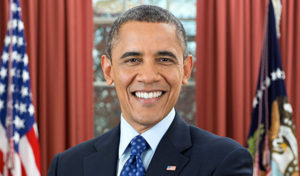
Former US President Barack Obama pardons Chelsea Manning and commutes her sentence . (Photo: US White House)


Here’s a Chronology of Major UFO/UAP Events showing the timeline of key sightings, incidents, government investigations, and disclosures related to unidentified flying objects (UFOs) or unidentified anomalous phenomena (UAPs), drawn from historical records and recent developments in Washington D.C.:


Date
Event Description
June 13, 1933
Alleged UFO crash in northern Italy, one of the earliest reported recovery incidents involving potential non-human craft.
June 24, 1947
Pilot Kenneth Arnold reports seeing nine crescent-shaped objects flying at high speed near Mount Rainier, Washington, coining the term “flying saucers” and sparking widespread public interest in UFOs.
July 1947
The Roswell Incident: Debris from a crashed object near Roswell, New Mexico, is initially announced as a “flying disc” by the U.S. military, later retracted as a weather balloon; it becomes one of the most famous alleged UFO cover-ups.
1948
The U.S. Air Force launches Project Sign, the first official government study to assess if UFOs pose a national security threat; it evolves into Project Grudge in 1949.
July 1952
The Washington, D.C., UFO flap: Multiple unidentified objects detected on radar over the U.S. capital, with fighter jets scrambled; remains unexplained and leads to heightened government scrutiny.
1952
Project Blue Book is established by the U.S. Air Force to investigate UFO reports, succeeding earlier programs and operating until 1969.
Sept 19-21, 1961
Betty and Barney Hill abduction: The first widely publicized alien abduction case in New Hampshire, where the couple claims to have been taken aboard a UFO and examined by extraterrestrial beings.
Jan 1969
The Condon Report is released, concluding that UFOs warrant no further scientific study, influencing the termination of Project Blue Book.
Dec 17, 1969
Project Blue Book is officially terminated by the U.S. Air Force, after investigating over 12,000 reports and deeming most explainable.
Nov 5, 1975
Travis Walton abduction: A logger in Arizona claims to be abducted by a UFO, missing for five days before returning with detailed accounts of encounters aboard the craft.
Dec 26, 1980
Rendlesham Forest Incident: U.S. military personnel at RAF Bentwaters in the UK report erroneous lights and a triangular craft landing in the forest, with physical traces found.
Nov 17, 2004
USS Nimitz “Tic Tac” encounter: U.S. Navy pilots off the California coast observe a white, oblong object exhibiting impossible maneuvers, captured on video and radar.
2007-2012
The Advanced Aerospace Threat Identification Program (AATIP) is secretly funded by the U.S. Department of Defense to study UFOs/UAPs.
Dec 16, 2017
The New York Times publishes an exposé on the Pentagon’s AATIP program, including leaked videos of UAP encounters, reigniting public and governmental interest.
April 27, 2020
The Pentagon officially releases three UAP videos (FLIR, GIMBAL, GOFAST) captured by Navy pilots, confirming their authenticity.
Aug 4, 2020
The UAP Task Force is established by the Pentagon to assess UAP threats to national security.
June 25, 2021
The Office of the Director of National Intelligence releases the Preliminary UAP Assessment, analyzing 144 incidents from 2004-2021, with most unexplained.
July 20, 2022
The All-domain Anomaly Resolution Office (AARO) is formed by the Department of Defense to investigate UAP across air, sea, and space domains.
July 26, 2023
Congressional UAP hearing: Whistleblower David Grusch testifies about U.S. government possession of non-human spacecraft and biologics; pilots Ryan Graves and David Fravor share encounters.
Dec 22, 2023
President Biden signs the NDAA FY24, including the first U.S. legal reference to “non-human intelligence” in relation to UAP.
March 2024
AARO releases an annual report on UAP, noting advancements in data collection and a decrease in unexplained cases through AI analysis.
April 2024
NASA’s UAP Study Team publishes its final report, recommending a dedicated research program and international collaboration on UAP.
Sept 2025
Congressional UAP hearing releases never-before-seen video of a U.S. drone firing a Hellfire missile at an unexplained “orb” off Yemen (incident dated October 2024), highlighting ongoing military encounters.
Jan 20, 2026
Filmmaker James Fox hosts a UAP press conference at the National Press Club in Washington, D.C., presenting new evidence on non-human encounters and crash-retrievals, calling for whistleblower protections.
Feb 16, 2026
Former President Barack Obama comments on a podcast that aliens are “real,” sparking debate amid ongoing congressional UAP investigations.
Feb 19, 2026
President Donald Trump announces via Truth Social that he is directing federal agencies, including the Pentagon, to identify and release files on UFOs, UAPs, and extraterrestrial life.

Britain’s Royal Family Member Andrew arrested in Epstein Scandal (Timeline)

Andrew Mountbatten-Windsor of the British Royal family was taken into custody on Thursday, his 66th birthday, on suspicion of misconduct in public office as part of an investigation connected to his association with convicted sex offender Jeffrey Epstein.

Investigators have not filed any charges, and Andrew has consistently rejected allegations of wrongdoing. He is believed to be the first senior member of Britain’s modern royal family to face police detention.

Born in 1960, Andrew is the second son of Queen Elizabeth II and Prince Philip. His older brother, King Charles III, was next in line to the throne at the time.

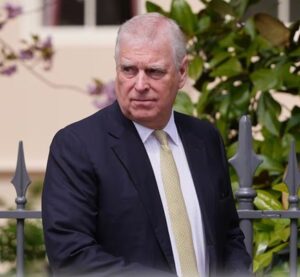
Andrew Mountbatten-Windsor arrested on his 66th birthday, February 19, 2026 / x.com

Andrew followed a conventional royal trajectory, entering military service and later assuming ceremonial military roles and public responsibilities. Those honours were later withdrawn as his association with Epstein drew intense scrutiny. Although he remains a prince by birth, the prolonged scandal brought an abrupt end to his public-facing royal role, the result of sustained controversy and legal pressure over several years.

The current inquiry follows the release of new documents tied to Epstein that reportedly suggest Andrew may have shared official government information with him during his tenure as a UK trade envoy. Authorities have not brought formal charges, and Andrew has maintained that he engaged in no improper conduct in connection with Epstein. Here’s the time line:

Timeline: Britain’s Prince Andrew and the Epstein scandal

The following timeline outlines key events involving Prince Andrew and his association with convicted sex offender Jeffrey Epstein, which led to his withdrawal from royal duties, loss of titles and his arrest on Thursday.

Feb. 19, 1960 – Andrew is born, the second son of Queen Elizabeth II and Prince Philip. His elder brother, King Charles III, is heir to the throne.

March 2001 – Andrew is photographed in London with Virginia Giuffre, then known as Virginia Roberts, and Ghislaine Maxwell. The image attracts little attention at the time but later becomes central to allegations against him.

December 2010 – Andrew is photographed walking with Epstein in New York’s Central Park shortly after Epstein’s release from prison following a sexual offence conviction, sparking public criticism in Britain.

2011 – The Daily Mail publishes an interview with Giuffre alongside the 2001 photograph, bringing allegations involving Andrew into mainstream public debate.

January 2015 – Allegations that Andrew had sex with a minor emerge in a U.S. civil lawsuit connected to Epstein. Andrew denies wrongdoing.

July 2019 – Epstein is arrested on federal sex trafficking charges.

Aug. 2019 – Epstein is found dead in his jail cell while awaiting trial, intensifying scrutiny of his high-profile associates, including Andrew.

Nov. 2019 – Andrew gives a television interview to the BBC denying allegations, questioning the authenticity of the 2001 photograph and saying he cut ties with Epstein in 2010. The interview is widely criticised.

Nov. 2019 – Days later, Andrew announces he will step back from public duties “for the foreseeable future,” citing disruption caused by his Epstein association.

Sept. 2021 – Giuffre files a civil sexual assault lawsuit against Andrew in the United States. Andrew denies the claims.

Jan. 2022 – A U.S. judge rejects Andrew’s attempt to dismiss the lawsuit. Soon after, he is stripped of honorary military titles and royal patronages.

Feb. 2022 – Andrew agrees to pay Giuffre millions of dollars to settle the civil sexual assault lawsuit, without admitting liability.

2024 – Reports say Andrew must personally fund the upkeep of his residence at Royal Lodge if he wishes to remain there.

2025 – Court documents and reported emails linked to Epstein, including one stating “we’re in this together,” renew scrutiny of Andrew’s past association.

April 2025 – Giuffre dies. Her family describes her as a “fierce warrior in the fight against sexual abuse and sex trafficking.”

2025 – Buckingham Palace says Andrew will now be known as Andrew Mountbatten-Windsor in official contexts, reflecting his diminished royal role.

Feb. 19, 2026 – Andrew is arrested on his 66th birthday on suspicion of misconduct in public office as part of an investigation linked to Epstein. He has not been charged with any offence and has consistently denied wrongdoing.