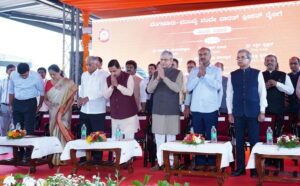
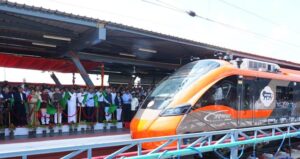
Indian Railways has introduced a new Vande Bharat Sleeper Express between Bengaluru and Mumbai to strengthen overnight rail connectivity between two of India’s major economic and commercial centres. Union Railway Minister Ashwini Vaishnaw flagged off the service on November 1, 2026, in the presence of Union Ministers Pralhad Joshi and H. D. Kumaraswamy, Minister of State for Railways V. Somanna, Minister of State Shobha Karandlaje and other dignitaries.
The new service connects Bengaluru, India’s IT and startup hub, with Mumbai, its financial capital. It is expected to benefit professionals, entrepreneurs, business travellers, students, traders and tourists by providing an additional modern overnight travel option.
The train will also improve connectivity across regional centres in Karnataka, Andhra Pradesh and Maharashtra, particularly parts of North Karnataka that previously had limited access to premium train services.
Addressing the flag-off ceremony, Vaishnaw said the service would strengthen economic and regional connectivity while expanding the network of modern overnight rail travel. It follows the introduction of the Howrah-Guwahati Vande Bharat Sleeper service in January 2026 and the flag-off of the Varanasi-New Delhi service on October 31.

Route, Timings and Weekly Schedule
The Vande Bharat Sleeper Express will connect SMVT Bengaluru with Chhatrapati Shivaji Maharaj Terminus (CSMT) in Mumbai. Along its route, the train will serve important stations including Anantapur, Guntakal, Raichur, Yadgir, Wadi, Kalaburagi, Solapur, Pune and Kalyan.
The service will operate six days a week, with different weekly exclusions for each direction.
- Bengaluru to Mumbai: Departs SMVT Bengaluru at 7:45 PM and arrives at CSMT at 11:55 AM the following day. It will not operate on Mondays.
- Mumbai to Bengaluru: Departs CSMT at 8:10 PM and arrives at SMVT Bengaluru at 12 noon the following day. It will not operate on Tuesdays.
The overnight schedule will allow passengers to travel between the two metropolitan centres while making better use of their daytime. Travellers from intermediate cities and towns will also gain access to an additional modern rail service.

More Vande Bharat Services Planned for Karnataka
During the event, Vaishnaw announced further plans to expand Vande Bharat connectivity across Karnataka. The next sleeper service for the state is expected to originate from Bengaluru, connect northern parts of Karnataka towards the Hubballi region and continue towards Pune and Mumbai.
He also announced that Vande Bharat services between Bengaluru and Mangaluru are expected to begin within the next few weeks, following the completion of electrification and successful testing along the route. The proposed service is expected to improve connectivity between Bengaluru and coastal Karnataka.
The Railway Minister also highlighted plans for faster rail connections between major cities, stating that journeys between Bengaluru and Chennai would take approximately 73 minutes, while the Bengaluru-Hyderabad journey would take around two hours and 10 minutes.
Railway Infrastructure Development and Safety in Karnataka
Union Minister Pralhad Joshi welcomed the expansion of railway services and highlighted increased investment in railway infrastructure across Karnataka. He noted that the rollout of the Kavach train protection system had contributed to a reduction in accident rates from 135 to 16, while the government continued to pursue a target of zero accidents.
Minister of State for Railways V. Somanna stated that railway infrastructure projects worth approximately ₹52,000 crore were underway in Karnataka. These projects include improvements to railway connectivity, construction of railway overbridges and underbridges, restoration of train services and modernisation of stations across Bengaluru and other important centres.
Union Minister H. D. Kumaraswamy also welcomed the new service and proposed rail connections. He noted that improved connectivity would benefit people across Karnataka, including migrant workers and families from West Bengal, Assam and Bihar living in Bengaluru.
The Bengaluru-Mumbai Vande Bharat Sleeper Express is intended to support movement between two important centres of employment, education, finance and entrepreneurship. Its route also provides improved access to commercial and regional hubs across three states.
Read More :