Raj Babbar resigns as UP Congress president after debacle in UP bypoll

Uttar Pradesh Congress president Raj Babbar has resigned for his post reportedly taking responsibility for the abysmal performance of the party in the recent UP bypoll elections to Lok Sabha seats in Gorakhpur and Phulpur.

The bypoll dealt a shock to both BJP and Congress as the unexpected alliance of Samajwadi Party and Bahujan Samaj Party played spoilsport at the last minute. For the Congress, it was more humiliating than ever.

Party president Rahul Gandhi has asked veteran leaders to give way to younger politicians in the party and reportedly the resignation of Raj Babbar in UP and Shantaram Naik in Goa comes close on the heels of such move in other states including Gujarat where the Congress chief Bharatsinh Solanki’s name is being taken out.

Solanki, however, said, "There is no truth in speculation that I have resigned today".

Bengaluru Namma Metro staff postpone strike by one month

Bengaluru’s Namma Metro has not even finished one year of its full-stream functioning but facing teething problems with the staff, most of them are recruited on temporary basis, demanding a better deal and threatening to go on strike from Thursday.

They have agreed to defer their strike by a month as BMRCL has offered talks.

Currently, the state-run Bengaluru Metro Rail Corporation Ltd (BMRCL) which runs Namma Metro has 900 contract employees.
The state government had invoked ESMA when a section of the staff went on a flash strike on July 8, 2017 disrupting the service leaving thousands of commuters stranded on a working day.

Later the Karnataka High Court has issued a stay on ESMA, which has come up for hearing now. On Tuesday, the company has told the court that it would consider the demands of the employees.

"We have agreed to defer the strike to mid-April to enable the management consider our demands, including recognition to our union and service issues," metro union leader Suryanarayana Murthy said in Bengaluru. "As the court has not vacated its stay on imposing ESMA on us, we reserve the right to go on strike next month if our demands are not met by the company," he added.

The court has directed the management to hold talks with the union leaders and avoid any disruption to the metro service in Bengaluru.

Namma Metro, formed ten years ago, is operating metro rail services on the 42km east-west and north-south corridors of the city for 18 hours daily. Nearly three lakh people travel by Namma Metro daily, mostly women and children.

CBSE Class 12 Maths Exam 2018 tomorrow: Students gear up for a tough paper

The Central Board of Secondary Examination (CBSE) will be conducting the Class 12 Mathematics exam on Wednesday, March 21, where all science students have to gear up for maximum number of marks as it is possible to score even 100 percent in the paper.

Since physics paper was tough, many students are gearing up for a tough mathematics paper too. The rumours about the leak of accountancy paper has added anxiety among many students.

However, CBSE Class 12 students are advised to remain calm and confident throughout the exam and restrain from lat-minute hurry to revise as it results in forgetting the older preparation.

“After the physics paper, one cannot take risk with mathematics paper, though chemistry was relatively better,” said Arun Nag, a student.

However, those who are restless can just take a glance at important formulae and understand their usage. If doubts come up, it should be discussed with the teachers present at the exam centre or ask friends. This will reduce tension considerably and make you confident.

Remember that long answer questions, usually from algebra, are scoring and should not be left unanswered.

Better answer the questions you know first and then tackle the rest.

Good luck!

After tariffs on imports, Trump Admn eyes call centres in India, Philippines, Mexico

With China as main target, the Trump Administration sought to extract $60 billion in new tariffs. Next, turning its attention on call centres in  India, Mexico and the Philippines, a US bill introduced in Senate this week seeks to stifle offshore centres.

The bill, introduced by Democrat Senator Sherrod Brown, wants to create a public list of companies which outsource call centre jobs and deny them federal contracts. It further wants to empower customers to get the call from offshore centres transferred to a local call centre in the US.

Essentially, the call centre employees in India or the Philippines have to reveal their location and upon request transfer the call to a local service agent. “Jobs at call centres are some of the most vulnerable to offshoring. Too many companies have packed up their call centers in Ohio and across the country, and moved to India or Mexico,” said Brown, a Senator from Ohio.

Ohio has experienced shut down of several manufacturing units owing to US trade and tax policy that favoured them to shut down operations, avail tax credit and ship production to Mexico or China, he said defending the bill introduced in the Congress.

A study by the Communications Workers of America has showed that besides India and the Philippines, several US companies have recently opened call centers even in countries like Egypt, Saudi Arabia, China and Mexico.

An estimate by the Indian National Association of Software and Services Companies (NASSCOM) shows that Indian’s revenues from the offshore Business Process Management (BPM) amount to $28 billion annually. If the bill gets through, it will make a huge dent in India’s burgeoning employment situation in call centres and BPMs.


Chandrayaan-II update: Orbiter completes thermo-vacuum test

Chandrayaan-2, India’s second mission to the Moon, is a totally indigenous mission comprising of an Orbiter, Lander and Rover. It envisages complex tasks like soft-landing, Rover separation and movement on the lunar surface, in addition to operations of Orbiter, informed Minister Jitendra Singh in a written reply to a question in the Lok Sabha on Monday.

Several new technology elements have been developed indigenously and tests are being carried out for validation. Orbiter has completed Thermo-vacuum test which is one of the major milestones, he said.

Lander Sensors and Actuators are tested on ground to validate the performance and the results are satisfactory, while rover flight model is under assembly, said the minister. Payloads are in various stages of delivery for Spacecraft integration, he informed the House.

After reaching the 100 km lunar orbit, the Lander housing the Rover will separate from the Orbiter. After a controlled descent, the Lander will soft land on the lunar surface at a specified site and deploy a Rover, said Indian Space Research Organisation (ISRO).

The mission will carry a six-wheeled Rover which will move around the landing site in semi-autonomous mode as decided by the ground commands. The instruments on the rover will observe the lunar surface and send back data, which will be useful for analysis of the lunar soil.

The Chandrayaan-2 weighing around 3290 kg and would orbit around the moon and perform the objectives of remote sensing the moon. The payloads will collect scientific information on lunar topography, mineralogy, elemental abundance, lunar exosphere and signatures of hydroxyl and water-ice.

To be carried by GSLV-F10, Chandrayaan-2 Mission is planned during first half of 2018.

Mukhtar Abbas Naqvi visits Dargah Ajmer Sharif to offer ‘Chadar’ on behalf of  PM

Union Minister for Minority Affairs Mukhtar Abbas Naqvi on Monday offered ‘Chadar’ on behalf of Prime Minister  Narendra Modi at dargah of Sufi Saint Hazrat Khwaja Moinuddin Chishti at Ajmer Sharif in Rajasthan.

In his message, Prime Minister Narendra Modi conveyed greetings and best wishes to followers of Khwaja Moinuddin Chishti in India and abroad on the occasion of 806th annual Urs.

He  said, “It is said about India that it is not told in words but it should be felt. Peace, unity and harmony is at core of various philosophies in the country, Sufism is also one of them. When we talk of Sufi Saints in India, Khwaja Moinuddin Chishti appears as a symbol of great spiritual traditions. The service of humanity made by ‘Gharib Nawaz’ will continue to be an inspiration for future generations.”

Prime Minister said, “On the occasion of the annual Urs of this great saint, I am offering “Chadar” and Khiraaj-E-Aqueedat (homage) to Dargah Ajmer Sharif and wish for a harmonious co-existence of our culture. Greetings and best wishes to the followers of Khawaja Moinuddin Chishti across the world on the annual Urs.”

On the occasion, Naqvi said that terrorism is the biggest enemy of both Islam and entire humanity. This message is at the core of principles and teachings of great Sufi Saint Khwaja Moinuddin Chishti. Principles and commitment of Khwaja Gharib Nawaz is a strong weapon to defeat those evil elements who are trying to weaken human values and disturb peace and prosperity of the world.

Naqvi said that India is an example of social and communal harmony for the entire world. “We will have to strengthen this fabric of social harmony and unity,” he said. “The life of Gharib Nawaz inspires us to strengthen the commitment to communal and social harmony. This unity can defeat the forces, who are engaged in the conspiracy to create divide and conflict in the society.”

Naqvi also inaugurated 100 toilets complex, constructed by Ministry of Minority Affairs at “Vishramsthali”, Kayad near the Dargah. Zaireen, coming in large number at Dargah, will be benefitted from the facility. Naqvi also took stock of various ongoing development works related to Ajmer Dargah with the officials.

100 monuments to be upgraded under ‘Adarsh Smarak’

Archaeological Survey of India has undertaken the task of providing basic amenities hitherto unknown to it such as providing drinking water, toilet blocks, facilities for physically challenged, pathways, cultural notice boards, vehicle parking, cloak rooms, among others to tourists visiting centrally protected temples and monuments.

For now, several archaeological sites have been identified for these basic public facilities, including all World Heritage Sites and ASI’s ticketed monuments, as also at those protected monuments often visited by a large numbers of tourists.

Further, Archaeological Survey of India has identified 100 monuments as “Adarsh Smarak” for upgradation of existing facilities like Wi-Fi, cafeteria, interpretation centre, brail signage, and modern toilets.

Minister of State for Culture Mahesh Sharma in a written reply in Lok Sabha on Monday said the Archaeological Survey of India has deployed regular watch and ward staff or Monument Attendants at centrally protected monuments and sites.

In addition, private security guards, Armed Guards and CISF personnel have also been engaged at select monuments for safety and protection.

The allocation and expenditure incurred on maintenance, conservation, preservation and environmental development of centrally protected monuments including providing tourist amenities during the last three years and current year is given below:

(Amount Rs. in Lakhs)

Year

2014-15 2015-16 2016-17 2017-18
Category Allocation Exp. Allocation Exp. Allocation Exp. Allocation Exp.

Upto 30thNov. 17

Total Amount 23573.62 23651.95 24392.80 23744.16 30375.07 30193.22 37802.42 25522.81


‘Shiddat’ not to be shelved, Madhuri Dixit to replace Sridevi, confirms daughter Janhvi

Karan Johar, who is introducing Sridevi’s daughter Janhvi Kapoor in ‘Dhadak’ is not relenting on his next iconic film ‘Shiddat’ as many people have speculated that the iconic film will be shelved following the sudden demise of the star.

Initially planned to feature Sridevi in lead role, Karan wanted it to be a never-seen-before Sridevi film and was getting ready with paraphernalia but the untimely demise of Sridevi has set the plan off the course. The actor was found dead in a bathtub in a Dubai hotel room last month.

However, Karan has found an equally talented Madhuri Dixit, the Dhak Dhak girl to replace the Hawa Hawai girl, confirmed Sridevi’s daughter Janhvi, who is busy for her first magazine cover page shoot with ‘Vogue’ from March 20.

Janhvi’s Instagram post has gone viral that within minutes, it became the top searched string on Google India and widely-shared news on Facebook and Twitter.

Janhvi said the Kapoor family is happy that Madhuri Dixit Nene is replacing her late mother Sridevi in the film and also thanked her. "Abhishek Varman’s next film was very close to mom’s heart …Dad, Khushi and I are thankful to Madhuriji for now being a part of this beautiful film," she said.

‘Shiddat’ was originally planned with Sridevi and Sanjay Dutt, Varun Dhawan and Alia Bhatt as the lead pairs, bringing in Abhishek Varman who had earlier directed films such as ‘Hasee Toh Phansi’, ‘Humpty Sharma Ki Dulhania’ and ‘Badrinath Ki Dulhania’ as director.

‘Shiddat’ is a joint project by big brands such as Fox Star Studios and Dharma productions of Karan Johar. Besides, Sajid Nadiadwala is being roped in. Top fashion designer Manish Malhotra is tipped to be the costume designer, while the music director A.R. Rehman has reportedly been sounded.

Google makes its AI-driven tool open-sourced, takes on Apple, Samsung with Portrait mode in Pixel phones

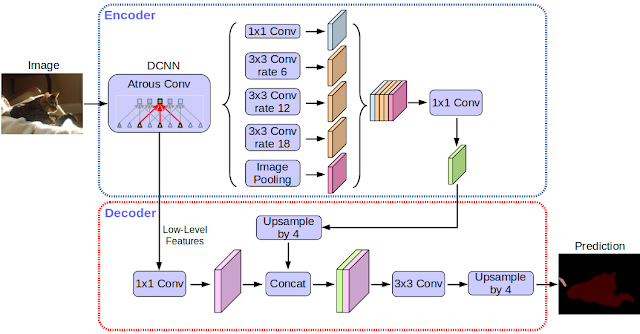
Google has made its Artificial Intelligence tool open-sourced technology and it can make portraits on its smartphone Pixel 2 possible.

Google Pixel 2 and Pixel 2 XL without a dual-rear camera can be used with a Portrait mode on the front and rear camera, driven by AI software known as “semantic image segmentation model” or “DeepLab-v3+” and implemented in TensorFlow.

According to a blog post by Liang-Chieh Chen and Yukun Zhu, Software Engineers of Google Research, “semantic image segmentation” stands for “assigning a semantic label, such as ‘road’, ‘sky’, ‘person’, ‘dog’, to every pixel in an image.”

Google team said the will power various new applications, including the the synthetic shallow depth-of-field effect in the portrait mode of the Pixel 2 and Pixel 2 XL smartphones.

Explaining the feature, Google engineers said when each pixel or subject in the image is assigned one of these labels, it automatically figures out the outline of the objects for the Portrait mode, whether the object is a flower or a dog or a person. Rest of the background remains blurred, creating a shallow depth of field.

“Assigning these semantic labels requires pinpointing the outline of objects, and thus imposes much stricter localization accuracy requirements than other visual entity recognition tasks such as image-level classification or bounding box-level detection,” said the team in its blog post.

Other smartphone players like Apple or Samsung providing the same feature based on dual sensors but Google relies on the AI-driven technology to bring the same effect in Pixel 2 and Pixel 2 XL. The DeepLab-v3+ open source release includes “models built on top of a powerful convolutional neural network (CNN) backbone architecture for the most accurate results.”

As part of this release, the blog post said, “We are additionally sharing our Tensorflow model training and evaluation code, as well as models already pre-trained on the Pascal VOC 2012 and Cityscapes benchmark semantic segmentation tasks.”

The new image segmentation has been improved vividly over the last couple of years and the Google team hopes that it would help academics and the industry in their newer applications.


Australia Coral Reef Experiment Shows Acidification from CO2 stems growth

Ocean acidification will severely impair coral reef growth before the end of the century if carbon dioxide emissions continue unchecked, said new research on Australia’s Great Barrier Reef led by Carnegie’s Ken Caldeira and the California Academy of Sciences’ Rebecca Albright.

Their work, published in Nature, represents the first ocean acidification experiment in which seawater was made artificially acidic by the addition of carbon dioxide and then allowed to flow across a natural coral reef community. The acidity of the seawater was increased to reflect end-of-century projections if carbon dioxide from greenhouse gas emissions are not abated.

Two years ago, Caldeira and Albright, then at Carnegie, published a landmark study providing evidence that ocean acidification is already slowing coral reef growth.

In that work, they made a coral reef community’s seawater chemistry more alkaline–essentially giving the reef an antacid–and demonstrated that the coral’s ability to construct its architecture was improved under these conditions. It was the first time that seawater chemistry was experimentally manipulated in a natural coral reef environment.

They once again altered seawater chemistry of reef flats surrounding One Tree Island off the coast of Australia. But this time they gave the reef heartburn, increasing acidity by adding carbon dioxide to seawater flowing over a coral reef community.

“Last time, we made the seawater less acidic, like it was 100 years ago, and this time, we added carbon dioxide to the water to make it more acidic, like it could be 100 years from now,” Caldeira explained.

When coal, oil, or gas is burned, the resulting carbon dioxide is released into the atmosphere. It is well established that these emissions are the culprit of global climate change, the warming from which has a negative impact on coral reefs. But this atmospheric carbon is also absorbed into the ocean, where it remains for millennia.

A chemical reaction between the seawater and these soaked-up carbon emissions produces carbonic acid, which is corrosive to coral reefs, shellfish, and other marine life. Reefs are especially vulnerable to this ocean acidification, because their skeletons are constructed by accreting calcium carbonate, a process called calcification. As the surrounding water becomes more acidic, calcification becomes more difficult.

“Our findings provide strong evidence that ocean acidification caused by carbon dioxide emissions will severely slow coral reef growth in the future unless we make steep and rapid reductions in greenhouse gas emissions,” said first author Albright.

Furthermore, by working in controlled areas of a natural reef community, Caldeira, Albright, and their team were able to demonstrate how acidification affects coral reefs on the ecosystem scale, not just in terms of individual organisms or species, as other studies have done.

They say this approach is crucial to understanding the full scope and complexity of ocean acidification’s impact, as well as to predicting how acidification will affect the coastal communities that depend on these ecosystems.

“Coral reefs offer economic opportunities to their surrounding communities from fishing and tourism,” Caldeira said. “But for me the reef is a beautiful and diverse outpouring of life that we are harming with our carbon dioxide emissions. For the denizens of the reef, there’s not a moment to lose in building an energy system that doesn’t dump its waste into the sky or sea.”


NASA finds towering storms in Tropical Cyclone Linda

The GPM core satellite showed that convective storms close to Linda’s center of circulation were producing very heavy rainfall. Storms in an area of strong convection just southeast of Linda’s center of circulation were dropping precipitation at a rate greater than 181 mm (7.1 inches) per hour. Tallest storms stretched to heights of above 17 km (10.5 miles). CREDIT:
NASA/JAXA, Hal Pierce

Towering thunderstorms were found southeast of Tropical Cyclone Linda’s center when the Global Precipitation Measurement mission or GPM core satellite passed overhead and analyzed the storm.

Tropical cyclone Linda formed in the Coral Sea west of Vanuatu on March 12, 2018. Linda’s winds have increased slightly while the tropical cyclone moved toward the south-southwest.Tropical cyclone Linda had winds of about 45 knots (52 mph) when the GPM core observatory satellite flew above on March 13, 2017 at 0701 UTC.

Data collected by GPM’s Microwave Imager (GMI) and Dual Frequency Precipitation Radar (DPR) showed that convective storms close to Linda’s center of circulation were producing very heavy rainfall. GPM’s radar (DPR Ku Band) probed storms in an area of strong convection just southeast of Linda’s center of circulation that were dropping precipitation at a rate greater than 181 mm (7.1 inches) per hour.

GPM’s radar revealed that the powerful convective storms just southeast of Linda ‘s center of circulation were reaching very high altitudes. A 3-D view employed GPM’s radar to show a simulated cross section through the tallest storms that were stretching to heights of above 17 km (10.5 miles).

A vertical slice shows that radar reflectivity values returned to the satellite were exceeding 57 dBZ in downpours at the center of this area of convective storms. GPM is a joint mission between NASA and the Japan Aerospace Exploration Agency, JAXA.

On March 14 at 10 a.m. EST (1500 UTC) Tropical Cyclone Linda had maximum sustained winds are near 45 knots (52 mph/74 kph). Linda is expected to weaken because of cooler waters and increasing vertical wind shear.

Linda was located near 21.3 degrees south latitude and 156.3 degrees east longitude, approximately 347 nautical miles east-northeast of Brisbane, Australia. Linda has tracked south-southwest at 11 knots (12.6 mph/20.3 kph).

Dry air is moving into the tropical cyclone and sapping the moisture needed to create the thunderstorms that make up the storm. The Joint Typhoon Warning Center predicts Linda to move toward the southwest and turn south.

World’s largest cities deplete water in rural surroundings too: Study

Urbanization has depleted the rural countryside of its people earlier and now evaporating its water, said a study. Many cities rely on renewable freshwater regularly refilled by precipitation, instead of depending on groundwater or desalinated water, it said.

The study led by Colorado State University researchers found that 19 of the 29 largest cities world over depend on water resources in the surrounding landscape to meet more than one-third of their requirements and it is higher during dry years.

CSU research scientist Pat Keys found how moisture recycling is linked to a city’s water supply and found cities which depend on recycling such as Karachi in Pakistan, and Shanghai, Wuhan and Chongqing in China. On the flip side, the cities with the least vulnerable moisture recycling include Cairo, Egypt; Paris, France; Sao Paulo, Brazil; and Chicago, United States.

"A lot of these cities have complex and significant management processes for water resources and supplies," said Keys, a researcher in the School of Global Environmental Sustainability at CSU. "Cities like Chicago have experienced water stress in the past, but they are well-buffered by water management. On the other hand, many megacities are not able to buffer themselves from fluctuations in climate and seasonal weather patterns, such as Lagos in Nigeria, or Rio de Janeiro in Brazil," he said.

Moisture recycling occurs when water evaporates from the land and rises up into the atmosphere and then it flows along prevailing wind currents through the atmosphere, falling out as precipitation elsewhere.

"What you do on the land influences that whole branch of the water cycle," said Keys. "If you plant a forest or cropland where there used to be a shrubland or desert, it probably won’t last without substantial irrigation. If you change the amount of water or change when it is evaporated and flows up into the atmosphere, that can have impacts for other places and people."

The study findings are not meant to be a cause for concern, but instead to highlight vulnerabilities that people might not have known about. "Cities and countries have limited resources," he said. "If I were in one of those highly vulnerable cities, I’d want to look at this additional dimension of vulnerability for the water supply."

In addition, very few of the cities highlighted in the study will shrink in size, and more "megacities" will be added to the list. "With climate change, and demographic and land use fluctuations, it is important to understand where vulnerabilities exist and have a full picture," he said.

The study, titled "Megacity precipitationsheds reveal tele-connected water security challenges," was published in PLOS.

[category, SCIENCE]

Stephen Hawking Dead, Last Advice to Humanity to Escape Earth Remains

Famous physicist and cosmologist Stephen Hawking, who was confined to a wheel-chair since late 1970s, died on Wednesday, March 14, when the world was celebrating the ‘Pi in the sky’ and the birth anniversary of Albert Einstein.

His last prediction was that aliens would invade the earth and it is better for the humanity to escape and colonize either Mars or the Moon before it’s too late.

Born on 8th January 1942 in Oxford to elite parents who attended the University of Oxford, Hawking moved with his family to several places and studied at different schools before a long stint at St Albans School, where he met his mathematics guru Dikran Tahta and ventured into applied physics and even built a computer from clock parts during the late 1950s.

His entry at the Oxford was pre-destined but he was disappointed with his guide Dennis William Sciama, a cosmologist, as he wished to be a student of astronomer Fred Hoyle. His lifetime shock came in 1962 when he was first diagnosed with motor neurone disease, that had gradually confined him on a wheelchair rest of his life.

But on his research front, he remained on top and involved himself in debates covering the origin of the universe, the Big Bang theory or the Black Hole concept. In 1966, he obtained his PhD in theoretical physics with specialisation in general relativity and cosmology but his later findings have set the world change its perception of the universe and the world above us in the sky.

Facebook opens Design4India Studio in Bengaluru

Facebook on Monday launched "Design4India Studio" in Bengaluru to provide support and mentorship to the design industry.

The studio was launched to provide mentorship in design, innovation and entrepreneurship for software companies and startups, and the National Association of Software and Services Companies (Nasscom) has also joined hands with Facebook in the venture.

"Our first of many ‘Open for all’ design studios is built to foster a culture of testing, learning, iterating and prototyping of products and services to increase productivity and innovation for the entrepreneurs and designers," Ravi Gururaj, Founder and CEO, QikPod and Member, Nasscom Executive Council.

The US-based company "WeWork" is providing shared workspaces and the "Design4India Studio" would provide web, mobile, Augmented Reality (AR) and Virtual Reality (VR) platforms for start-ups and designers, he said.

"It is imperative that design should not be added as an afterthought, rather should be embedded in every step of product development, right from the beginning. Design4India Studio is such a platform that will provide startups with the right mentorship," added Satyajeet Singh, Head South Asia at Facebook.

The studio would provide an interchangeable, flexible space to invite new concepts that would help startups and product design companies. "Design4India" is a Nasscom initiative that was built in partnership with Facebook, said NASSCOM.

World’s smallest PC ‘LIVA Q’ now available in India for Rs.15K

Taiwan-based electronics major Elitegroup Computer Systems (ECS) has brought its world’s smallest computer to India on Tuesday. The Windows-based mini-PC called "LIVA Q" will be available in India for Rs.15,500, with dual network options.

The pocket-sized device has the latest Intel Apollo Lake SOC processors along with 4GB RAM and 32GB eMMC storage and HDMI 2.0, running on Windows 10 operating system (OS). Its memory can be enhanced with a MicroSD card slot on the front side up to 128GB storage. It is capable of handling 4K content playback.

"Carrying on the ‘LIVA’ legacy forward, we announce ‘LIVA Q’ as the smallest palm-sized pocket PC available in the market today," Rajshekhar Bhatt, Country Manager at Elitegroup Computer Systems, said while launching the device in New Delhi on Tuesday.

Available in two variants, the other LIVA Q model without an operating system (OS) will be sold for Rs.13,500 and both the devices will be available in India through authorised ECS partners, other reseller channels, and e-commerce channels, said the company.

It measures just 70x70x31.4mm and weighs 260 grams. It also comes with a VESA mount, to keep it hiding or hanging behind the big TV or computer monitors.

[tag World's smallest PC 'LIVA Q' now available in India, Elitegroup Computer Systems, ECS mini PC, India price, Windows-based mini-PC, LIVA Q price,dual network option, pocket-sized mini PC ]

Japan scientist finds 1 out of 15 exoplanets habitable

Japanese astronomer team led by Teruyuki Hirano of Tokyo Institute of Technology has validated 15 exoplanets orbiting red dwarf systems and found one of them highly akin to Earth and habitable. It could be of particular interest as researchers describe it as a ‘super-Earth’, which could harbour liquid water, and potential alien life.

One of them, K2-155 located around 200 light years away from Earth, has three transiting super-Earths, which are slightly bigger than ours and interestingly the outermost planet, K2-155d, with a radius 1.6 times that of Earth, could be within the host star’s habitable zone, they said.

The findings, published in The Astronomical Journal, are based on data from NASA Kepler spacecraft’s second mission, K2, and other data from the ground-based telescopes, including the Subaru Telescope in Hawaii and the Nordic Optical Telescope (NOT) in Spain.

The Japanese researchers found that K2-155d could potentially have liquid water on its surface based on 3D climate simulations. Hirano said: “In our simulations, the atmosphere and the composition of the planet were assumed to be Earth-like, and there’s no guarantee that this is the case.”

A key outcome from the current studies was that planets orbiting red dwarfs may have remarkably similar characteristics to planets orbiting solar-type stars.

“It’s important to note that the number of planets around red dwarfs is much smaller than the number around solar-type stars,” says Hirano. “Red dwarf systems, especially coolest red dwarfs, are just beginning to be investigated, so they are very exciting targets for future exoplanet research.”

While the radius gap of planets around solar-type stars has been reported previously, this is the first time that researchers have shown a similar gap in planets around red dwarfs. “This is a unique finding, and many theoretical astronomers are now investigating what causes this gap,” says Hirano.

He adds that the most likely explanation for the lack of large planets in the proximity of host stars is photoevaporation, which can strip away the envelope of the planetary atmosphere.

The researchers also investigated the relationship between planet radius and metallicity of the host star. “Large planets are only discovered around metal-rich stars,” Hirano says, “and what we found was consistent with our predictions. The few planets with a radius about three times that of Earth were found orbiting the most metal-rich red dwarfs.”

The studies were conducted as part of the KESPRINT collaboration, a group formed by the merger of KEST (Kepler Exoplanet Science Team) and ESPRINT (Equipo de Seguimiento de Planetas Rocosos Intepretando sus Transitos) in 2016.

With the planned launch of NASA’s Transiting Exoplanet Survey Satellite (TESS) in April 2018, Hirano is hopeful that even more planets will be discovered. “TESS is expected to find many candidate planets around bright stars closer to Earth,” he says. “This will greatly facilitate follow-up observations, including investigation of planetary atmospheres and determining the precise orbit of the planets,” he said.

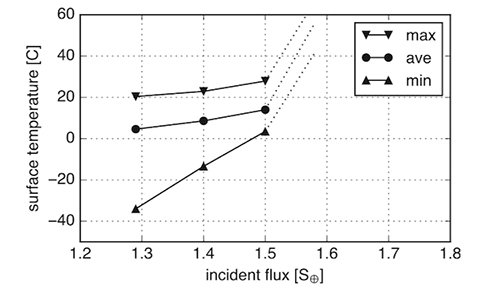
Figure 1. Results of 3D global climate simulations for K2-155d

Surface temperatures were plotted as a function of insolation flux (the amount of incoming stellar radiation) estimated at 1.67±0.38. When the insolation exceeds 1.5, a so-called runaway greenhouse effect occurs, signaling a cut-off point for life-friendly temperatures. If the insolation is under 1.5, the surface temperature is more likely to be moderate.

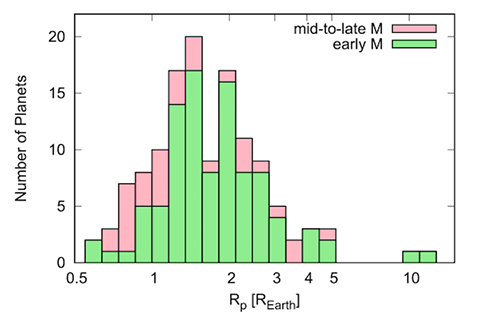
Figure 2. Distribution of planet sizes

Histogram of planet radius for the validated and well-characterized transiting planets around red dwarfs: The number counts for mid-to-late red dwarfs (those with a surface temperature of under 3,500 K) are shown above those for early red dwarfs (those with a surface temperature of around 3,500–4,000 K). The results show a “radius gap”, or a dip in the number of stars with a radius between 1.5–2.0 times that of Earth.

Childhood trauma behind schizophrenia, hallucinations among elders, reveals study

Brain Image (NIH)

Researchers have shown that childhood sexual, physical and emotional abuse are associated with severe hallucinations in schizophrenia.

The joint study by several research institutes found that hallucinations in schizophrenia were linked with childhood trauma, said Sarah Bendall, the lead author.

The study has analyzed 29 studies on childhood trauma and psychotic symptoms and found that childhood sexual abuse is often associated with delusions, seen among patients with schizophrenia.

“This means there’s something about childhood trauma that leads some people to develop hallucinations,” Bendall said. The symptoms include unrealistic attitude, unemotional attitude, hallucinations, delusions, disorganised thinking, and lack of motivation.

The study was jointly conducted by Orygen, the National Centre of Excellence for Youth Mental Health; the University of Melbourne; Port Phillip Prison and University Hospital of Gran Canaria Dr Negrin, Spain.

Bendall said many patients fail to provide this evidence during the treatment, thus missing the key link. It was found that one in every 100 people will experience a psychotic disorder in their lives, majority of them facing it during 18-25 years.

“When young people come to youth mental health services, we should be assessing for trauma and for emerging psychotic symptoms, and treating them as soon as they emerge,” Dr Bendall said. “It’s a very empowering thing to be able to give people that information.”

The study was published in the journal Schizophrenia Bulletin.

Living in high altitudes? Beware of depression, suicide risks

Hilly areas like Himachal Pradesh or Uttarakhand or high-altitude cities such as Bangalore, Dehradun or Shimla may be picturesque and increase health and happiness but researchers have found recently that people living in the high-altitude areas are prone to depression and increased rates of suicide, due to decline in oxygen levels in their blood.

Known as Chronic hypobaric hypoxia, the condition is seen when blood oxygen levels decline due to low atmospheric pressure, which in turn trigger suicidal thoughts among the people living in altitudes of more than 2,000 to 3,000 feet above the sea level.

Suicide and major depressive disorder (MDD) are caused by sociodemographic and environmental conditions, said Brent Michael Kious, researcher at the University of Utah. Hypobaric hypoxia increases depression by altering serotonin metabolism and brain bioenergetics, said the study, published in the journal Harvard Review of Psychiatry.

Apart from these factors, sociodemographic and environmental conditions lead to suicide and major depressive disorder (MDD), noted the study. As of social conditions, several factors such as increased poverty rate, lower income, and divorce among women have been high in the list of immediate triggers to depression and suicide.

Researchers analysed 12 studies in the US, including demograhic data to arrive at the findings about the relationship between suicide or depression and altitude. Those living at higher altitudes had increased suicide rates despite being healthy overall, including less substance abuse and cultural differences, said the study.

Depression can be treated with medical intervention at early states to mitigate the effects of altitude providing 5-hydroxytryptophan, which increases serotonin levels, or creatinine to influence brain bioenergetics, the study noted.

So, those living in hill stations in India located in Jammu and Kashmir, Himachal Pradesh, Uttarakhand, Sikkim, West Bengal, Arunachal Pradesh, Nagaland and Meghalaya in the Himalayas and in Maharashtra, Karnataka, Tamil Nadu and Kerala should watch their health now from these factors.

Some of the specific cities which are at a high altitude are:

Srinagar (J&K)

Jammu  (J&K)

Shimla (HP)

Dehradun (Uttarakhand)

Badrinath (Uttarakhand)

Shillong (Meghalaya)

Darjeeling (West Bengal)

Bangalore (Karnataka)

Ooty (Tamil Nadu)

Araku (AP)


March 14 is Pi Day, here’s what’s JPL planning to do in sky

March 14 is Pi Day, a celebration of the beloved number known as pi. JPL is celebrating Pi Day with the fifth annual “Pi in the Sky” illustrated math challenge, featuring pi-related space problems that you can do at home.

Pi is often abbreviated as 3.14 (which is why Pi Day is celebrated on March 14), but there are actually an infinite number of digits in pi. Using computer programs, mathematicians have calculated trillions of those digits so far.

Pi can be used to derive characteristics of a circle or a sphere, such as circumference or surface area. Scientists and engineers at NASA’s Jet Propulsion Laboratory, Pasadena, California, frequently use pi to learn about moons, planets, stars and other spherical bodies, and to track the orbits of satellites and spacecraft.

The “Pi in the Sky” challenge, created by JPL’s Education Office, features math problems that illustrate how pi can be used to learn about all kinds of curious features of the universe, including earthquakes on Mars, helium rain on Jupiter, and planets orbiting other stars.

“All of the problems in the ‘Pi in the Sky’ challenge are real problems that JPL scientists and engineers solve using pi,” said Ota Lutz, a senior education specialist at JPL who helped create the Pi Day Challenge.

In previous years, Pi in the Sky featured problems about how NASA space probes gather information about objects in our solar system, how scientists search for planets around other stars, and how astronomers predict the occurrence of solar eclipses. The new problems will be posted online on March 9, and solutions will be posted on March 15. You can find the previous years’ challenge problems online as well.

The challenge is geared toward students in grades 5 through 12, and JPL offers additional resources for teachers and educators who want to use the problems in the classroom. But Lutz said adults love trying out the problems as well, and everyone should attempt the challenge even if they aren’t familiar with space exploration.

“The Pi in the Sky problems give people a little glimpse into what goes on at JPL,” Lutz said. “And that’s empowering, because it shows people that they can understand some of the magic that goes into space exploration.”

Pi belongs to a special class of numbers known as “irrational numbers.” These numbers contain an infinite number of digits that do not repeat or show any pattern, and they cannot be represented as a ratio of two integers. (Integers include all whole numbers, as well as their negative counterparts, such as -1, -2, -3, etc.) Pi enthusiasts regularly use Pi Day as an opportunity to test their memorization skills, because the random nature of the digits makes them difficult to remember.

Members of the public are encouraged to share photos and stories from their Pi Day celebration activities through the Education website.

Diamond impurities indicate water flows deep in Earth’s mantle too

The study, “Ice-VII inclusions in Diamonds: Evidence for aqueous fluid in Earth’s deep Mantle,” was published  in the journal Science. For his study, Tschauner used diamonds found in China, the Republic of South Africa, and Botswana that surged up from inside Earth. “This shows that this is a global phenomenon,” the professor said.

Scientists theorize the diamonds used in the study, were born in the mantle under temperatures reaching more than 1,000-degrees Fahrenheit. The mantle – which makes up more than 80 percent of the Earth’s volume – is made of silicate minerals containing iron, aluminum, and calcium among others.

And now we can add water to the list.

The discovery of Ice-VII in the diamonds is the first known natural occurrence of the aqueous fluid from the deep mantle. Ice-VII had been found in prior lab testing of materials under intense pressure. Tschauner also found that while under the confines of hardened diamonds found on the surface of the planet, Ice-VII is solid. But in the mantel, it is liquid.

“These discoveries are important in understanding that water-rich regions in the Earth’s interior can play a role in the global water budget and the movement of heat-generating radioactive elements,” Tschauner said. This discovery can help scientists create new, more accurate models of what’s going on inside the Earth, specifically how and where heat is generated under the Earth’s crust.

In other words: “It’s another piece of the puzzle in understanding how our planet works,” Tschauner said.Of course, as it often goes with discoveries, this one was found by accident, explained Tschauner. “We were looking for carbon dioxide,” he said. “We’re still looking for it, actually,”