‘Step back from the brink’, Guterres urges India and Pakistan

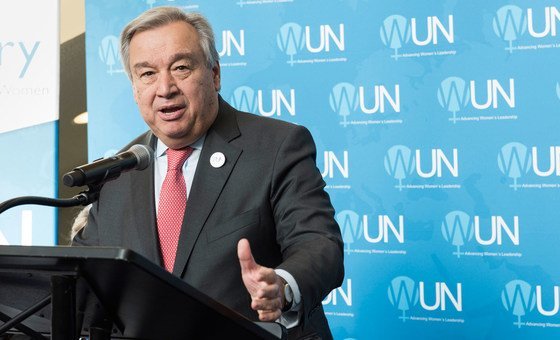
Addressing journalists outside the Security Council at UN Headquarters in New York, Mr. Guterres expressed deep concern over deteriorating relations between the two South Asian neighbours, saying they had reached “their highest in years.”

He reiterated his condemnation of the 22 April terror attack in the Pahalgam area of Jammu and Kashmir, which killed at least 26 civilians and injured many more.

Targeting civilians is unacceptable – and those responsible must be brought to justice through credible and lawful means,” Mr. Guterres said.

It is also essential – especially at this critical hour – to avoid a military confrontation that could easily spin out of control.

The Security Council is due to meet behind closed doors later on Monday to discuss the rising tensions between the two nations.

UN ready to help de-escalate

He offered his good offices to both governments to help defuse tensions and promote diplomacy, stressing that “a military solution is no solution.

“Now is the time for maximum restraint and stepping back from the brink,” he said.

Mr. Guterres also praised both countries for their long-standing contributions to UN peacekeeping operations and expressed hope that their shared history of cooperation could form the basis for renewed dialogue.

“The United Nations stands ready to support any initiative that promotes de-escalation, diplomacy, and a renewed commitment to peace,” he said.

Source link

Guterres condemns violence against civilians in Syria, urges Israel to stop attacks

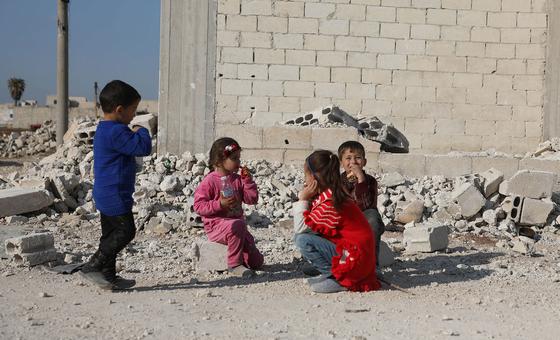
UN Spokesperson Stéphane Dujarric said on Friday that the Secretary-General “has been monitoring with alarm the reports of violence in the suburbs of Damascus and in the south of Syria, including reports of civilian casualties and assassination of local administration figures.”

More than 100 people have reportedly been killed in recent days during clashes with sectarian overtones, including in Suweyda governorate.

Call for restraint

Mr. Dujarric said the Secretary-General condemns all violence against civilians, including acts which could risk inflaming sectarian tensions.

In this context, the UN chief also condemned Israel’s violation of Syria’s sovereignty, including the latest airstrike near the presidential palace in Damascus.

“It is essential that these attacks stop and that Israel respect Syria’s sovereignty, unity, territorial integrity, and independence,” the Spokesperson added.

The Secretary-General unequivocally called on all concerned to cease all hostilities, exercise utmost restraint and avoid further escalation. 

He was encouraged by intra-Syrian efforts to de-escalate the violence and maintain security and stability. 

Mr. Guterres took note of the statement by Syria’s interim President Ahmed al-Sharaa, which prioritizes “dialogue and cooperation within the framework of national unity.” He also appealed to the interim authorities to transparently and openly investigate all violations. 

Rights experts’ warning

Experts appointed by the UN Human Rights Council also warned that the recent surge in violence “is deeply troubling” for peace efforts in Syria

The Commission of Inquiry on Syria said the fighting, combined with ongoing Israeli airstrikes, raises the risk of further fragmentation and harm to civilians.

Members noted that hate speech and incitement on social media are fuelling tensions, urging all sides to stop hostilities and commit to dialogue.

While a local agreement has reportedly been reached between Damascus authorities and community leaders, the interim government remains responsible for protecting civilians.

The Commission also called for credible investigations into alleged abuses.

“Impunity for grave violations has in the past been a consistent driver of Syria’s conflict and must not be allowed to persist,” it said. 

“Only by upholding the rule of law and ensuring justice, accountability and reparations for victims and their families can Syria begin to rebuild trust across its fractured communities.”

Independent voices

The Commission of Inquiry was initially established in August 2011 and its mandate has been consistently renewed, most recently in April.

The three Commissioners serve in their individual capacity and are independent from any government or organization, including the UN.

They are not UN staff and do not receive payment for their work.  

Source link

World News in Brief: Guterres on India-Pakistan tensions, eastern DR Congo update, weather boost for locusts in Africa

UN Secretary-General Guterres has spoken to leaders on both sides on India-Pakistan tensions.

“This morning, he spoke separately by telephone with Muhammad Shebaz Sharif, the Prime Minister of the Islamic Republic of Pakistan, and he also spoke earlier in the day with Subrahmanyam Jaishankar, the Minister for External Affairs of the Republic of India,” said UN Spokesperson Stéphane Dujarric, briefing journalists at UN Headquarters in New York.

During the calls the UN chief reiterated his strong condemnation of the 22 April terrorist attack, noting “the importance of pursuing justice and accountability for these attacks through lawful means.”

He expressed major concern over “rising tensions between India and Pakistan and he also underscored the need to avoid a confrontation that could result in tragic consequences,” added Mr. Dujarric.

The Secretary-General also offered to help mediate in support of any de-escalation efforts.

Escalating violence displaces thousands in eastern DR Congo

Ongoing violence in eastern Democratic Republic of the Congo (DRC) is uprooting families, crippling essential services, and placing civilians at growing risk, the UN humanitarian affairs office (OCHA) warned on Tuesday.

Fresh fighting in South Kivu province has forced communities to flee and left at least 10 civilians dead in Walungu territory alone, according to local authorities. “The violence is disrupting both economic life and the delivery of urgently needed humanitarian aid,” said OCHA.

Multiple rape cases

In nearby Kalehe, Minova hospital has reported multiple cases of rape and physical assault in recent days amid worsening insecurity. Meanwhile, clashes in Fizi territory last week led to health centres being looted and schools burned, threatening already fragile public services.

OCHA urged all combatants to respect international humanitarian law and ensure the protection of civilians. “Humanitarian access must be safe and unhindered,” the agency stressed.

The surge in displacement comes as eastern DRC remains gripped by fighting between the M23 rebel group and government forces, particularly in North Kivu. Since January, the violence has displaced hundreds of thousands.

In Walikale territory, civilians are trapped in a dangerous cycle of displacement and return, OCHA said, calling for strengthened protection and support for affected communities.

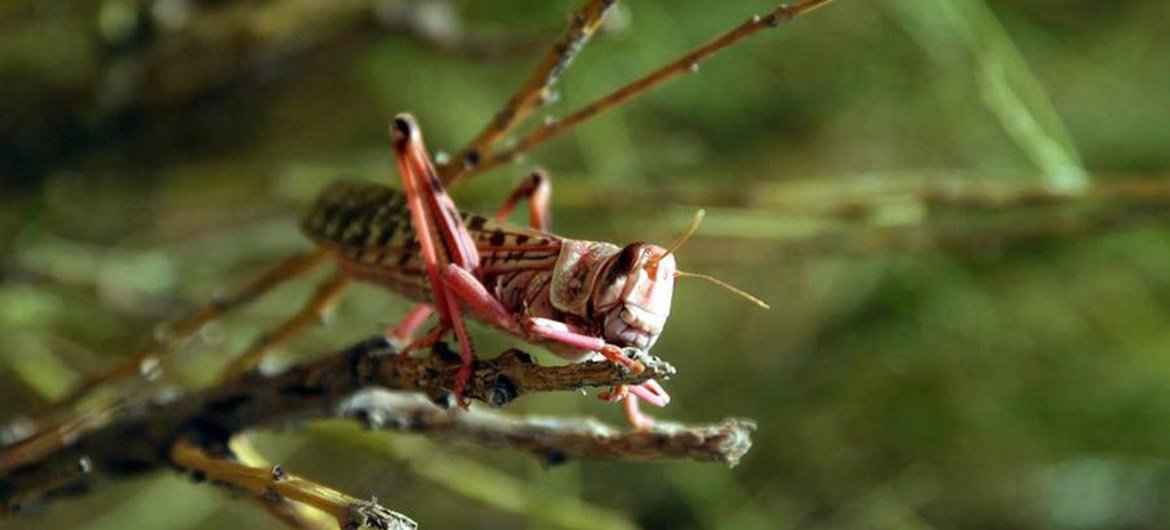
Locust swarms can devastate crops and pastures in many parts of Africa and elsewhere.

Favourable weather fuels desert locust surge in North Africa

Unusually high levels of desert locust infestations have been reported during the current breeding season, raising alarms across affected regions, the UN Food and Agriculture Organization (FAO) warned on Tuesday.

“Desert locusts remain among the most devastating migratory pests on the planet,” said UN Spokesperson Stéphane Dujarric, emphasising the threat they pose to food security and livelihoods.

A single swarm of locusts can cover anywhere from one to several hundred square kilometres and may contain up to 80 million adult locusts. In just 1 km², they can eat as much food in a day as 35,000 people.

Feeding on crops and pastureland, they pose a threat to crops grown for both people and livestock, risking starvation in communities that depend on agriculture for survival.

Clement weather for pests

According to the FAO, favourable weather conditions have created suitable breeding grounds for the flying pests. Winds and rainfall patterns have facilitated the movement of desert locusts from the Sahel to North Africa.

The FAO recommends conducting intensive ground surveys across key areas where locust breeding is likely to occur.

The area spanning from south of the Atlas Mountains in Morocco, through the Sahara in Algeria, and extending to southern Tunisia and western Libya is particularly at risk.

“Surveys and control operations are particularly urgent in locations where winter and early spring rains have created suitable breeding conditions,” said Cyril Piou, the FAO’s Locust Monitoring and Forecasting Officer.

Early detection and rapid response are critical to preventing a wider crisis, the UN food agency underscores.


Source link

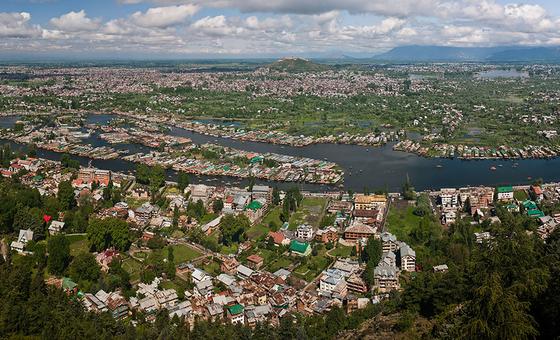
Guterres condemns deadly attack in Jammu and Kashmir

UN Spokesperson Stéphane Dujarric, responding to inquiries, emphasised the Secretary-General’s condemnation of the attack.

Media reports indicate that a gunman opened fire on a group of people near Pahalgam, in the region’s south, leaving more than two dozen dead.

Mr. Guterres extends his heartfelt condolences to the bereaved families, said Mr. Dujarric, underscoring “that attacks against civilians are unacceptable under any circumstances.”

Jammu and Kashmir has been disputed by India and Pakistan, since the end of British rule in the late 1940s.

Source link