
US strikes in Caribbean and Pacific breach international law, says UN rights chief

More than 60 people have reportedly been killed in the continuing series of attacks since early September “in circumstances that find no justification in international law,” Volker Türk said in a statement.

He urged the US to halt its “unacceptable” operations and take measures to prevent the “extrajudicial killing of people aboard these boats, whatever the criminal conduct alleged against them.”

Beyond the law

The United States has defended the operations as part of its ongoing efforts to combat drug trafficking and terrorism, asserting that they fall within the framework of international humanitarian law.

Mr. Türk rejected that argument, stressing that countering illicit drug trafficking is a law-enforcement matter, governed by careful limits on lethal force set out in international human rights law.

He emphasised that the intentional use of lethal force is lawful only as a last resort when individuals pose an imminent threat to life.

Call for investigations

“Based on the very sparse information provided publicly by the US authorities, none of the individuals on the targeted boats appeared to pose an imminent threat to the lives of others or otherwise justified the use of lethal armed force against them under international law,” Mr. Türk said.

The High Commissioner called for prompt, independent and transparent investigations into the reported attacks.

While acknowledging the serious challenges posed by drug trafficking, Mr. Türk urged the US to ensure that all counter-narcotics operations respect international law, including the treaties to which it is party.

“The United States should investigate and, if necessary, prosecute and punish individuals accused of serious crimes in accordance with the fundamental rule-of-law principles of due process and fair trial, for which the US has long stood,” he concluded.

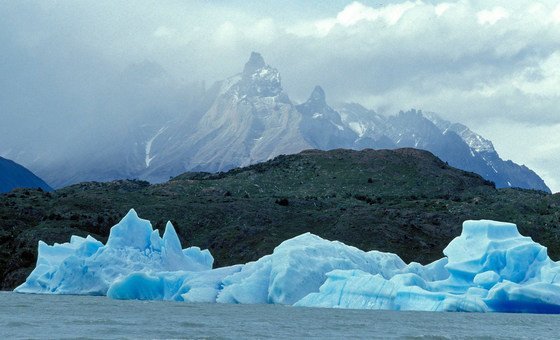
 

Climate change: World Likely to Breach 1.5°C limit in next five years

According to the Global Annual to Decadal Climate Update, the planet is predicted to experience temperatures between 1.2°C and 1.9°C above pre-industrial levels (1850–1900) over the next five years.

Breaching critical thresholds

In 2024, the WMO estimated that the average global temperature was between 1.34°C and 1.41°C higher than pre-industrial levels (1850-1900). The WMO now projects the 20-year average warming for 2015–2034 to reach around 1.44°C above pre-industrial levels.

The report finds a staggering 86 per cent chance that global average temperatures will exceed 1.5°C above pre-industrial levels in at least one of the next five years, and a one per cent chance of one of those years exceeding 2°C of warming.

There is a 70 per cent chance that the five-year average itself will exceed this 1.5 degree threshold.

The WMO stressed that the 1.5°C Paris Agreement target refers to long-term averages over 20 years, meaning its threshold has not been breached quite yet.

However, these near-term spikes are warning signs of an accelerating climate crisis.

The forecast also highlights regional precipitation impacts, including wetter-than-average conditions expected in the African Sahel, northern Europe, and South Asia. Conversely, the Amazon region could see continued drought.

Arctic Warming Accelerates

The situation is even more catastrophic in the Arctic than in the rest of the world. The average Arctic temperature over the next five winters (November to March) is expected to be 2.4°C warmer than the 1991–2020 average, more than three and a half times the increase in the global average temperature.

Sea ice is expected to keep shrinking, particularly in the Barents, Bering, and Okhotsk Seas, contributing to rising sea levels and disrupted weather patterns worldwide.

As the world enters this critical window, the UN agency urged climate action to prevent even more dangerous warming in the decades ahead and keep long-term warming below the 1.5°C limit.

Source link