After UK approval, India panel ponders data of SII, Bharat Biotech for Covid-19 vaccine, nod likely next week

Hours after Britain approved the Oxford University-AstraZeneca COVID-19 vaccine, India’s expert panel met on Wednesday to review the data before submitting its final recommendation for approval. The entire process is likely to take a week and the announcement is likely to be known next week.

The Subject Expert Committee of the Central Drug Standard Control Organization (CDSCO) apparently pondered the data presented before it on Wednesday. The vaccine Covishield by SSI (Oxford-AstraZeneca) is a non- replicating viral vector vaccine with viruses that have been modified to act as delivery systems carrying the viral antigens to the body’s immune cells. Chimpanzee adenovirus is the vector used to deliver in this vaccine.

Once the application of Serum Institute of India for the same vaccine manufactured in India for emergency use authorization is approved, rollout will begin in a week’s period making India the second country to give EUA to the vaccine. Along with SII, Hyderabad-based Bharat Biotech had also applied for Emergency Use Authorization for its Covaxin and made its presentation on Wednesday before the experts panel.

Amid fears of new strain spreading rapidly, the UK became the first country in the world to approve the vaccine called Covishield, following a recommendation from the Medicines and Healthcare products Regulatory Agency (MHRA). Withthis, the rollout of mass vaccination is expected to begin in the first week of January in both the countries.


Vaccine-fda

Soon after the UK approval, AstraZeneca said in a statement that first doses of the vaccine will be released to begin the vaccinations drive and that the company hopes to supply millions of doses in the first quarter of 2021 as part of its deal with the UK government to supply up to 100 million doses in total. In India, SII is ready with 50 million doses of the vaccine already.

Earlier this month, the CDSCO had asked SII to submit the outcome of the assessment of UK-MHRA before granting emergency use authorization, updated safety data of the Phase II/III clinical trials and immunogenicity data from the clinical trial in UK and India.

Vaccination Drive

The central government plans to vaccinate nearly 30 crore people in the first phase, covering about one crore healthcare workers, about 2 crore frontline and essential staff besides 7 crore elderly, mostly above the age of 50 years with comorbidities.

SII CEO Adar Poonawalla on Monday said 40-50 million doses of COVID-19 vaccine have already been stockpiled, the rollout will be the New Year gift to the country that had witnessed severe health and financial crisis throughout the year 2020.  Together with Bharat Biotech, the two firms can produce 65 million doses of the vaccine per month.


USGS finds Rare Earth Materials in waste of Eastern Adirondacks iron mines

Erstwhile waste rock from abandoned and closed mines in the eastern Adirondack Mountains, New York, may prove valuable source for rare earth elements, said a newly published research after USGS found it following two of its recent surveys.

Rare earth elements are critical for advanced technologies such as cell phones, supermagnets, computers, medical apparatus, renewable energies and advanced defense systems, which are mostly produced in China.

The results from airborne and ground surveys conducted by the U.S. Geological Survey and collaborators. “The possibility of accessing rare earth elements from mine waste and mill tailings is attractive partly because the minerals have already been excavated from the ground,” said USGS scientist Ryan Taylor, who led analyses of rock samples here.

USGS scientists were able to detect both mineral deposits and larger mill tailings piles from airplane surveys of old iron mines in December 2015 and analyzed samples that showed rare earth minerals from the deposits, waste and mill tailings.

Mill tailings from mining activity at the Cheever Mine, Essex County, New York / Credit: Anji Shah, USGS

In the 1800s and 1900s, the eastern Adirondack Mountains in upstate New York were heavily mined for iron, which played a key role in industrialization of the Northeast prior to and during World War II. The mining activities left behind piles of waste rock and mill tailings (the residuals of ore processing) throughout the region.

“This inspired the USGS, New York state, and local groups to work together to analyze waste rock and tailings,” said USGS Director Dr. Jim Reilly. “We look forward to future collaborations with them and potentially other states in this emerging area of study.”

What are rare earth minerals?

The rare earth elements are mostly contained in millimeter-size crystals known as fluorapatite in deposits of iron ore. When the iron was mined, the fluorapatite was usually left behind as waste since it was considered an unwanted impurity. But over a period, these waste products gained value and the fluorapatite has elevated levels of heavy rare earth elements such as gadolinium, which is used in medical imaging; terbium, which is used in cell phones; and yttrium, which is used in lasers.

USGS scientist Ryan Taylor collects samples from tailings piles at the Cheever Mine in Essex County, New York / Credit: Anji Shah, USGS

The amount of total rare earth elements varies from deposit to deposit, but each deposit is enriched in the heavy rare earth elements.  Total rare earth elements range from zero to nearly 2.2% for the waste and tailings piles and zero to nearly 4.8% for ore. It may be seemingly low, but these concentrations indicate significant potential, with the higher grades even comparable to other heavy rare earth element deposits, such as the clay deposits in South China, which are one of the primary sources for China’s rare earth elements and the primary source of the world’s heavy rare earth elements.

“There may be some challenges to processing the tailings for rare earth elements,” said USGS scientist and project chief Anji Shah. “While the fluorapatite contains recoverable rare earth elements, it also contains thorium, a weakly radioactive element which has economic uses but also requires careful handling.”

That thorium, however, makes mill tailings easier to locate by airplane surveys since natural, low-level radioactivity can be seen on the images, Shah explained. When these airplane surveys were conducted for detecting the iron ore bodies based on  subtle variations in Earth’s magnetic field from the sky, the researchers created 3D models showing the size and shape of the deposits beneath Earth’s surface.

Three-dimensional model of the iron ore deposits in eastern Adirondack Mountains, New York. Pink areas show high magnetic susceptibility, representing ore bodies. Small gray spheres represent known mines.

In addition to mine tailings in the Adirondacks, the USGS is looking into rare earth element occurrences elsewhere in the US, such as in clays in the Southeast or phosphate rocks throughout the U.S. Efforts to map rare earth-bearing formations are also ongoing at the rare earth mine in Mountain Pass, California too.

Christmas Day sees 61 earthquakes, more than six above average, USGS explains why

The continents of Asia, Australia and Americas surrounding the Pacific Ocean have experience 61 earthquakes ranging from 2.5 to 6.3 on Christmas Day, Dec. 25, 2020, indicating that the quake-prone zones are active again. The USGS has recorded more than ten on its quake map today to reiterate the tectonic disturbances beneath the surface, more prominently in the Philippines and in the southern Americas.

An earthquake measuring 6.3 on the Richter scale on Friday morning at 7:43 local time jolted the Philippines’ Batangas province located on the main island of Luzon, according to the Philippine Institute of Seismology and Volcanology (Phivolcs). Some 100-km south of Manila, the earthquake hit the region at a depth of 102 km, affecting nearby provinces of Batangas, Laguna, Cavite, Rizal.

However, the quake will not cause damage as it was tectonic in origin, though it may trigger aftershocks, said Phivolcs Director Renato Solidum. The possibility of tsunami was ruled out. So far, no reports of damage have been reported, said a spokesman for the National Disaster Risk Reduction and Management Council (NDRRMC).

Why so many earthquakes now?

As noticed, there are many earthquakes with an intensity of 40 and above to 7 or above being detected throughout the year. According to USGS, a temporary increase or decrease in seismicity is normal fluctuation of earthquake rates and rules out any increase or decrease worldwide is an indication that a large earthquake is imminent.

The ComCat earthquake catalogue has recorded an increasing number of earthquakes in recent years not because there are more earthquakes, but because there are more seismic instruments which are able to record even minor tectonic movements and of course, earthquakes.

The National Earthquake Information Center of the US usually records around 20,000 earthquakes around the globe per year, or approximately 55 per day. When it goes beyond this average number to more than 70, it may trigger intensified analysis by these seismic centres. Moreover, the instant communication via Internet has also increased the interest in natural disasters as the public are aware of earthquakes more quickly than ever before.

Record in 50 years

According to the seismic records since 1900, about 15 major earthquakes in any given year are expected with a magnitude of 7 range on Richter scale and one megaquake measuring more than a magnitude of 8.0 or greater. In the past 50 years, USGS records show that the earth has exceeded the long-term average number of major earthquakes about a dozen times.

The year with the largest total was 2010, with 24 major earthquakes of 7M and in other years, the total was below the annual long-term average of 16 major earthquakes. The year 1989 had witnessed 6 major earthquakes and 1988 only experienced 7 major earthquakes.

New UK strain of Covid-19 scares world again; Here’s all we know about it

Nearly a year into the pandemic when China reported the first cases of Covid-19 in Wuhan, the United Kingdom has reported a mutated strain of the coronavirus which is up to “70% more infectious and transmissible,” sending the world again into a panic mode despite vaccines on roll out already.

The Covid-19 pandemic has already affected 76.8 million and killed 1.7 million world over. So, how would the new strain of Coronavirus that has attracted isolation of the United Kingdom this time, affect us.

What’s this new strain?

The UK variant of the coronavirus has about 20 mutations, with higher potential to impact how human cells. Dr. Muge Cevik—an infectious disease expert at the University of St. Andrews in Scotland and a scientific advisor to the British government told The New York Times that these mutations might make the virus more contagious and no longer stable as believed previously.

Given the rise in infections concerning the new variant in London and surrounding areas, thousands scrambled to leave London as European countries quickly reacted closing their borders for travelers from the UK. Prime Minister Boris Johnson has come out with stringent lockdown since March and declared, “When the virus changes its method of attack, we must change our method of defense.”

Vaccine-fda

UK officials say the virus has become 70% more infectious and transmissible due to the laxity among people one year into the pandemic. However, these perceptions are based on models and lab simulations but Dr. Cevik attributed it to human behaviour to relax precautions that might have triggered the rapid mutation. “Overall, I think we need to have a little bit more experimental data,” Dr. Cevik said.

While the scientific community is observing the virus mutation, experts say, it could take years before the virus can evolve enough to leave the current vaccines powerless. Jesse Bloom, an evolutionary biologist at Seattle’s Fred Hutchinson Cancer Research Center, told NYT. that even in case of influenza that evolves quickly, it took nearly five to seven years to mutate enough to evade the immune system.

Covid-19 not on-off switch

“No one should worry that there is going to be a single catastrophic mutation that suddenly renders all immunity and antibodies useless… It is going to be a process that occurs over the time scale of multiple years and requires the accumulation of multiple viral mutations,” he said and added, “It’s not going to be like an on-off switch,” said Bloom.

The Pfizer-BioNTech and Moderna vaccines notably induce an immune response to the spike protein present on the coronavirus surface but  each infected person produces a large, complex collection of antibodies to this protein. “No matter how the virus twists and weaves, it’s not that easy to find a genetic solution that can really combat all these different antibody specificities, not to mention the other arms of the immune response,” says Kartik Chandran, a virologist at the Albert Einstein College of Medicine in New York.


Why COVID-19 increases risk of stroke? UCLA study throws light


A UCLA-led study explains how COVID-19 increases the risk for stroke. Scientists made the finding by running fluid spiked with a COVID-19-like protein through a 3D-printed model of the arteries of a patient who had suffered a stroke.

Although COVID-19 was first identified by its severe respiratory symptoms, the virus has caused strokes in young people who had no known risk factors. But little is known about how the virus increases the risk for stroke.

UCLA researchers used a 3D-printed silicone model of blood vessels in the brain to mimic the forces generated by blood pushing through an artery that is abnormally narrowed, a condition called intracranial atherosclerosis. They showed that as those forces act on the cells lining the artery, and increase the production of a molecule called angiotensin-converting enzyme 2, or ACE2, which the coronavirus uses to enter cells on the surface of blood vessels.

Creating new model

“The flow directly influences ACE2 expression,” said Dr. Jason Hinman, an assistant professor of neurology at the David Geffen School of Medicine at UCLA and the study’s senior author. In addition to Hinman, the study’s authors are neurologists at the Geffen School of Medicine and scientists from UC San Francisco and the Veterans Health Administration. The paper was published (PDF) in Stroke.

UCLA researchers created the model using data from CT scans of blood vessels in a human brain. After creating the new model, researchers confirmed the particles did indeed interact with the cells lining the blood vessel, mostly in the regions of the brain with higher levels of ACE2.

“This finding could explain the increased incidence of strokes seen in COVID-19 infections,” Hinman said.

Another discovery offered an insight that eventually could help identify people with COVID-19 who may have a higher risk for stroke. When the scientists analyzed which genes were turned on in the endothelial cells after the coronavirus spike proteins bound to them, they found that the genes that were activated were a specific set of immune-response genes that are found in brain blood vessel cells, but not in endothelial cells from other organs of the body.

“There’s a unique brain endothelial response to the virus that may be helpful in identifying patients who are have a higher risk for stroke,” Hinman said. The researchers intend to conduct follow-up studies using a live coronavirus in the 3D-printed blood vessel model, which would further confirm the results of the current study and clarify which COVID-19 patients may have a higher risk for stroke.

Sony removes Poland’s Cyberpunk 2077 video game from PlayStation, CD Projekt shares tumble down

Sony has removed Cyberpunk 2077 from its PlayStation Store following complaints of glitches in the video game created by Poland’s CD Projekt.

The game that claims to be an “open-world, action-adventure story set in a megalopolis obsessed with power, glamour and body modification” and it features Hollywood star Keanu Reeves. Sony’s knee-jerk move has hit the CD Projekt, Poland’s top video game maker, with its shares tumbling down from last week’s high by 12.2% on Friday.

Sony, however, said the suspension was temporary without giving any reason. The game Cyberpunk lets gamers play as mercenary outlaw “V” when people were stuck at home during the pandemic. Since the coronavirus crisis is around, the demand for the game has boosted.

Aware of bugs

CD Projekt CEO Adam Kicinski admitted the existence of bugs as there had been fewer external testers, who could not test it from home due to COVID-19. CD Projekt has promised to work on bugs and release patches in January and February. It means the game is not ready to debut in December and the decision to launch without proper tests for bugs was a big mistake, said market analysts.

“The game needed another six months of development to fix bugs and polish it,” John Vilnis, a gamer from Brisbane, Australia said.

CD Projekt, which gained prominence with its ‘The Witcher’ series to become one of Poland’s biggest listed companies, was expected to break sales records with Cyberpunk. So far, there is no move from Google’s Stadia and Microsoft about the removal of the game from their consoles or platforms.

The launch of Cyberpunk amid the pandemic, when other big players Microsoft’s ‘Halo Infinite’ have delayed their launch is significant. Microsoft is considering full refunds to those who bought the game from the Microsoft Store.


BP and diabetes greatest risk factors of death from COVID-19, confirms study; What’s next

Hospitalized COVID-19 patients have a greater risk of death if they are men or if they are obese or have complications from diabetes or hypertension, confirmed a new study conducted by University of Maryland School of Medicine (UMSOM) researchers after evaluating nearly 67,000 hospitalized COVID-19 patients in 613 hospitals across the US.

In a study published in the journal Clinical Infectious Diseases, the researchers found that men had a 30 percent higher risk of dying compared to women of the same age and health status. Hospitalized patients who were obese, had hypertension or poorly managed diabetes had a higher risk of dying compared to those who did not have these conditions. Those aged 20 to 39 with these conditions had the biggest difference in their risk of dying compared to their healthier peers.

“Predicting which hospitalized COVID-19 patients have the highest risk of dying has taken on urgent importance as cases and hospitalizations in the U.S. continue to surge to record high numbers during the month of December,” said study corresponding author Anthony D. Harris. Professor of Epidemiology and Public Health at UMSOM.

Remdesvir

For example, higher-risk patients may be given the drug remdesivir earlier in their hospitalization to help prevent severe complications or may be considered for closer monitoring or ICU admission. Healthcare providers may also want to consider these risks when determining which COVID-19 patients could benefit the most from the new monoclonal antibody therapies that, if given in the first few days of the infection, can reduce the risk of hospitalization.

Age remained the strongest predictor of mortality from COVID-19. Overall, nearly 19 percent of hospitalized COVID-19 patients died from their infection with the lowest mortality among pediatric patients, which was less than 2 percent. Mortality rates increased with each decade of life with the highest mortality, 34 percent, among those aged 80 and older.

“Older patients still have the highest risk of dying, but younger patients with obesity or hypertension have the highest risk of dying relative to other patients their age without these conditions,” said study lead author Katherine E. Goodman, a postdoctoral fellow in the Department of Epidemiology and Public Health at UMSOM.


Update WhatsApp on your phone before Dec. 31, 2020 or else can’t use it

Starting from the New Year’s Day Jan. 1, 2021, WhatsApp is updating its operating system and you cannot use it unless go for update on your smartphone now. Older smartphones which cannot receive WhatsApp updates may render you out of the social media outlet as Facebook, owner of WhatsApp, is discontinuing support for older smartphones from Jan. 1, 2021.

The smartphones running on iOS 9 and Android 4.0.3 operating systems and older versions cannot get support by WhatsApp OS updates and need to be removed, said the social media platform in a statement. It means, iPhone 4s, iPhone 5s, iPhone 5c, iPhone 6, iPhone 6s have outdated software and require to be updated immediately to run WhatsApp.

Some smartphones running on Android 4.0.3 such as HTC Desire, LG Optimus Black, Motorola Droid Razr, Samsung Galaxy S2 cannot work for WhatsApp now.

How to update WhatsApp

You can easily update WhatsApp from your phone’s application store, if you’ve received a message that isn’t supported by your version of WhatsApp. The latest version of WhatsApp contains the newest features and bug fixes, said the company.

Android
Go to the Google Play Store and search for WhatsApp. Tap Update next to WhatsApp Messenger.

iPhone
Go to the App Store and search for WhatsApp. Tap UPDATE next to WhatsApp Messenger.

KaiOS
Press JioStore or Store on the apps menu. Scroll to the side to select Social, then select WhatsApp. Press OK or SELECT > UPDATE.

How to identify the OS on your phone?

If you do not know which operating system your smartphone is working on, then go to the settings of the phone. After this, tap on General and then Information option, where you can find the software of iphone.

For Android users, they have to go to the settings of the phone, where the About Phone option will be seen. Click on it to see the software of the phone.

Planet Nine or Exoplanet? Scientists find startling resemblance in star 336 light years away

As astronomers are looking for a hypothetical “Planet Nine” in our solar system, an exoplanet 336 light years from Earth is looking more like the Planet Nine of its star system.

Planet Nine, potentially 10 times the size of Earth and orbiting far beyond Neptune in a highly eccentric orbit around the sun, was proposed in 2012 to explain perturbations in the orbits of dwarf planets beyond Neptune’s orbit, so-called detached Kuiper Belt objects. However, it has yet to be found, if ever it exists.

A similarly weird extrasolar planet was discovered far from the star HD 106906 in 2013 was much heavier than the predicted mass of Planet Nine at probably 11 times the mass of Jupiter, or 3,500 times the mass of Earth. And it was located in an unexpected location, far above the dust plane of the planetary system and tilted at an angle of about 21 degrees.

It is not known whether the planet, HD 106906 b, is in an orbit perpetually bound to the binary star — which is 15 million years old compared to the 4.5 billion-year age of our sun or on its way out of the planetary system, never to return.

In a paper published on Dec. 10, 2020, in the Astronomical Journal, astronomers answer that question. By precisely tracking the planet’s position over 14 years, they determined that it is likely bound to the star in a 15,000-year, highly eccentric orbit, making it a distant cousin of Planet Nine.

If it is in a highly eccentric orbit around the binary, “This raises the question of how did these planets get out there to such large separations,” said Meiji Nguyen, a recent UC Berkeley graduate and first author of the paper. “Were they scattered from the inner solar system? Or, did they form out there?”

According to senior author Paul Kalas, University of California, Berkeley, the resemblance to the orbit of the proposed Planet Nine shows that such distant planets can really exist and that they may form within the first tens of millions of years of a star’s life. “Something happens very early that starts kicking planets and comets outward, and then you have passing stars that stabilize their orbits,” he said.

What makes HD 106906 unique is that it is the only exoplanet that we know that is directly imaged, surrounded by a debris disk, misaligned, and widely separated, Nguyen said. “This is what makes it the sole candidate we have found thus far whose orbit is analogous to the hypothetical Planet Nine.”

Week after week of lockdown increases binge drinking too, says study

IMAGE: WINE POURED INTO GLASS, CREDIT: TAYLOR & FRANCIS:

With images of long queues soon after allowing sale of alcohol drinks atill vivid, harmful drinking among adults increases more as they spend at home in lockdown, according to a study published in a peer-reviewed journal.

The research, based on a survey of nearly 2,000 persons aged above 18 years in the US, is the first to highlight the relationship nationally between hazardous drinking and life stresses triggered by the COVID-19 pandemic and the associated ‘lockdowns’.

The findings show the odds of heavy alcohol consumption among binge drinkers – those who, within two hours, consumed five or more drinks for men and four and above for women – rose an extra 19% for every week of lockdown.

The odds of increased alcohol intake overall for binge drinkers was more than double that of people who did not drink excessively (60% vs 28%), especially those with depression or a history of the disease. Carried out by experts at the University of Texas Health Science Center School of Public Health, in Dallas, the study also highlights that:

  • During the pandemic, binge drinkers on average drank four drinks per occasion, compared to two drinks among non-binge drinkers.
  • Participants who drank at harmful levels during the pandemic would consume seven drinks maximum on one occasion. This is compared to a maximum of two per session during the pandemic for those who did not.
  • Living with children in lockdown minimally reduced the odds (by 26%) of turning to the bottle for people in general.

The researchers are now calling for new intervention and prevention strategies for people in isolation at risk of hazardous drinking. Otherwise, they say there could be long-lasting health consequences. “Increased time spent at home is a life stressor that impacts drinking and the Covid-19 pandemic may have exacerbated this stress,” says Sitara Weerakoon, a PhD candidate from the University of Texas.

“Future research should consider the potential for depressive symptoms acting as a moderator (a factor that changes the impact) in the relation between the time spent under a shelter-in-place mandate (lockdown) and binge drinking. “Additional research is (also) needed to develop best treatment for people with substance use disorders who may be more susceptible to adverse health outcomes.”

The study aim was to identify a link between COVID-19-related stress factors and changes in alcohol consumption and binge drinking since the pandemic began.

The data was from an online survey completed by 1,982 adults from mid-March to mid-April, which coincided with the first US state-wide stay-at-home order on March 19. The average age of participants was 42 and the majority were white (89%) and female (69%).

Based on survey responses, the researchers categorised participants as binge drinkers, non-binge drinkers and non-drinkers. Among the factors analysed were length of time spent in lockdown, how many adults or children they were living with, current or previous episodes of depression, and job status related to lockdown such as decreased pay.

On average, every respondent had been in lockdown for four weeks, and spent 21 hours a day at home, with the majority (72%) not leaving for work.

Overall, nearly a third (32%) of participants reported binge drinking during the pandemic with binge drinkers increasing their intake. However, non-binge drinkers consumed about the same amount of alcohol than before lockdown.

Limitations of the study include the survey data being self-reported, and the fact the question on binge-drinking did not specify a time within which the alcohol was consumed.

In addition, the majority (70%) of participants were relatively high earners, a factor already associated with hazardous alcohol use. The authors say future research is needed in a more ‘generalizable population’.

Chairman of Star and Disney India Uday Shankar Elected President of FICCI

President of The Walt Disney Company for Asia Pacific and the Chairman of Star and Disney India Uday Shankar is elected the President, FICCI for the year 2020-21 and he will be succeeding Dr Sangita Reddy, President, FICCI, and Joint Managing Director, Apollo Hospitals Group.

A FICCI statement said the election took place during FICCI’s 93rd AGM on 11,12 & 14 December 2020.  Mr Shankar is currently the President of The Walt Disney Company for Asia Pacific and the Chairman of Star and Disney India. He is the first-ever media and entertainment executive in India to lead a national industry chamber such as FICCI, which is India’s oldest industry body.

Mr Shankar presently leads Disney’s direct-to-consumer business in over 30 countries. He has been credited with the creation of pathbreaking entertainment shows and bringing world-class sports broadcasting to India. He also envisioned the digital transformation of Star by creating Hotstar, which has now expanded globally as Disney+ Hotstar.

In addition to his leadership at Disney and Star, Mr Shankar has played a key role in shaping the growth trajectory of the media and entertainment sector in India, to benefit industry stakeholders as well as consumers. He has been at the forefront of landmark initiatives in television broadcasting, such as self-regulation of content and digitization of the broadcasting sector.  He has earlier been the President of the Indian Broadcasting Foundation (IBF) and the Chairman of FICCI’s Media and Entertainment Committee.

A trained journalist, Mr Shankar also pioneered the development of the television news ecosystem in India. Prior to Star India, he was the CEO and Editor of Star News, the country’s first 24-hour news channel. He has also been the Editor and News Director at TV Today Group, where he spearheaded the launch of Aaj Tak in 2000 and Headlines Today in 2003. Mr Shankar holds an MPhil in Economic History from the Jawaharlal Nehru University, Delhi.


Indian doctor let off of molestation charges in Dubai

 A 42-year-old Indian doctor in Dubai has been cleared of the charge of molesting a woman who had approached him as partof a visit for a Botox therapy session. The Dubai Court of First Instance that heard the claim of a 31-year-old American victim.

The victim said in August this year, she visited the clinic in Bur Dubai when the doctor put his hands on her cheek, kissed her twice and hugged her. “After the defendant put the Botox on my face, I went to the consultation room based on his request to discuss plastic surgery. I was exhausted and was terrified of Botox and also because of a recent break-up with my friend. I was surprised when the defendant put both of his hands on my cheek and kissed me twice,” the victim said on record.

She claimed that the Indian doctor tried to kiss her on her lips, but she moved her head away and tried to leave the room. “He tried to calm me down and said I needed to rest, but he hugged and kissed me again,” she told the court.

The woman reportedly managed to escape from the clinic and complained to the police. The prosecution charged the defendant with sexually abusing the woman. However, the court found the doctor not guilty. The prosecution has appealed against the verdict and the case will come up again before the Dubai Court of Appeal.

Bangladesh PM Sheikh Hasina’s photos of her sewing, fishing go viral

Recently two photos of Bangladesh Prime Minister Sheikh Hasina have gone viral on the social media giving people a glimpse of the leader’s daily life but claimed routine by her. In one photo, Hasina is seen working on a sewing machine wearing a traditional Bengali attire, while in the other the leader was snapped catching fish at the Ganabhaban lake, reports bdnews24.

The Prime Minister had earlier told Parliament that she had tweaked her routine amid the coronavirus pandemic, enjoying the thrill of fishing during her morning stroll. Soon, many Awami League leaders and followers have shared the photos on Facebook.

Salman Rahman, the PM’s adviser for private industry and investment, shared the photos and wrote: “Hon’ble Prime Minister Sheikh Hasina is a complete human being. She has successfully transformed the fortune of 170 million Bangladeshis, has given refuge to over a million Rohingya Muslims, but still finds the time to enjoy cooking, fishing and sewing.”

State Minister for Foreign Affairs Md Shahriar Alam in a post while sharing the photo of the Prime Minister fishing, wrote: “I don’t have the knowledge to put a caption.”

Another State Minister for ICT Zunaid Ahmed Palak shared both photos and wrote: “Our honourable prime minister, our leader Sheikh Hasina dressed as a common Bengali woman. She sews cloth and goes fishing at the Ganabhaban pond whenever she takes a break from a busy schedule. Much love and respect for this extraordinary person who works for the country all day long after losing everything.”

Covid-19 deaths in US Cross 260,000, to reach 470,000 by March 2021

US Covid-19 deaths crossed 260,000 on Wednesday, November 25, 2020, according to the Center for Systems Science and Engineering (CSSE) at Johns Hopkins University. With the national caseload topping 12.6 million, the death toll across the US rose to 2,60,322 as of 11:25 a.m. ET (1625 GMT), according to the CSSE data.

New York state reported 34,362 fatalities, at the top of the US state-level death toll list. Texas recorded the second most deaths, standing at 21,245. The states of California, Florida and New Jersey all confirmed more than 16,000 deaths.

States with more than 9,000 fatalities also include Illinois, Massachusetts, Pennsylvania, Georgia and Michigan. The US remains the nation worst hit by the pandemic, with the world’s highest caseload and death toll, accounting for more than 18 per cent of global deaths.

The US reported 2,146 daily deaths associated with Covid-19 on Tuesday, the highest since May, the CSSE chart showed. The latest model forecast by the Institute for Health Metrics and Evaluation at
the University of Washington projected a total of 4,70,974 Covid-19 deaths in the US by March 1, 2021, based on current projection scenario.

SpaceX launches 60 more Starlink satellites, Internet to become much cheaper now

Elon Musk-run SpaceX on Wednesday, November 25, 2020, launched another successful mission carrying 60 more Starlink satellites on its Falcon 9 rocket into low-Earth orbit that will join the rest in beaming affordable Internet. The reusable Falcon 9 rocket, which made a record-breaking seventh trip this time, was SpaceX’s 16th Starlink mission and the company has to date launched nearly 1,000 small satellites for its constellation.

SpaceX, in its presentation to the Federal Communications Commission (FCC), claimed that the Starlink internet performance tests showed  download speeds of between 102Mbps to 103Mbps, upload speeds of 40.5Mbps to not quite 42Mbps, and a latency of 18 milliseconds to 19 milliseconds.

“Once these satellites reach their target position, we will be able to roll out a fairly wide public beta in the northern US and hopefully southern Canada,” SpaceX CEO Elon Musk said in a tweet. “Other countries to follow as soon as we receive regulatory approval,” he added.

It is expected that there will be gigabit speeds on offer, meaning up to 1Gbps Internet speeds, with a fairly low latency of up to 25ms.Starlink plans to offer these Internet services for around $80 per month, which is priced at par if not lower than similar speed broadband plans in most countries, including India.

The company is geared up for a public beta of the affordable satellite broadband service.

How vitamin D affects COVID-19? Penn State researcher explores further

Cantorna said the addition of two key collaborators in the college’s Department of Veterinary and Biomedical Sciences make the new work possible: virologist Troy Sutton, assistant professor of veterinary and biomedical sciences, and Girish Kirimanjiswara, associate professor whose research focuses on immunology and infectious diseases.

“Patients with acute respiratory infections have been shown to be vitamin D deficient, and vitamin D supplements have been touted as being useful in high doses for preventing seasonal influenza,” Cantorna said. “Meanwhile, the emergence of SARS-CoV-2 has generated interest in the potential of high-dose vitamin D supplements to prevent and treat severe disease associated with the COVID-19 pandemic.”

Cantorna’s research group has shown that vitamin D plays an important role in maintaining health in the gastrointestinal tract. Higher levels of vitamin D reduce susceptibility to inflammatory bowel disease and Crohn’s disease, as well as gut and lung infections in animals and people. However, too much vitamin D can be harmful.

Cantorna noted that the local and systemic inflammation caused by SARS-CoV-2 infection is not well understood, and controlling such inflammation may improve outcomes for COVID-19 patients. Although low vitamin D status has been associated with acute respiratory diseases, research has not confirmed a causal relationship.

“We don’t yet fully understand the mechanisms underlying the effects of vitamin D in the lung or how vitamin D regulates host immunity to viral infection,” she said. “These significant knowledge gaps have hindered the development of interventions and accurate messaging that include vitamin D for the treatment and prevention of respiratory disease.”

Using mouse and hamster models, Cantorna’s team will test whether supplemental vitamin D treatments will limit viral replication and/or inflammation in the lung leading to protection against severe SARS-CoV-2 infection.

“We plan to determine the effects, dose and timing of possible vitamin D interventions in infected animals,” Cantorna said. “Because SARS-CoV-2 has been shown to infect the gastrointestinal tract, the benefits of vitamin D might include regulation of gastrointestinal immunity as well as lung immunity.”

She added that all work with SARS-CoV-2 viruses will be performed at the Eva J. Pell Laboratory for Enhanced Biological Research, which is Penn State’s state-of-the-art biosafety level 3 facility.

“In some cases, the most vulnerable people are being told they should take vitamin D supplements to protect against COVID-19, without proof of efficacy or safety,” Cantorna said. “We hope our findings can contribute to the development of responsible guidance on whether high amounts of vitamin D are safe and effective in alleviating this disease.

Study shows protective role sex steroids play in COVID-19

Female reproductive steroids provide anti-inflammatory and antibody production suggesting COVID-19 symptom protection, said a new paper from a UIC researcher that suggests sex steroids may play a role in protecting against COVID-19 symptoms.

“Sex and Covid-19: A protective role for reproductive steroids,” by Graziano Pinna, research associate professor in psychiatry, analyzes existing research to look at reasons why COVID-19 symptom severity and mortality are more frequent in men than in women and in older people. His paper suggests female reproductive steroids play a protective role.

Female reproductive steroids, estrogen and progesterone and its physiologically active metabolite, allopregnanolone, provide anti-inflammatory functions, reshape competence of immune cells, stimulate antibody production and promote respiratory epithelial cell repair, and inhibit the ACE2 receptor, the door of access for the novel coronavirus (SARS-CoV-2) to infect the organism, suggesting they may protect against COVID-19 symptoms, according to Pinna’s report. The paper is published in Trends in Endocrinology and Metabolism.

Pinna became interested in the role of reproductive steroids in COVID-19 pathology in March when early case reports showed COVID-19 positive pregnant women who had no COVID-19 symptoms, had escalated symptoms — severe enough to require intensive care — immediately after giving birth. The severity of symptoms coincided with a rapid drop of estradiol, progesterone, and allopregnanolone.

“Hormones that help sustain the pregnancy – like progesterone — are 100 times more concentrated in a pregnancy’s third trimester. Estradiol, allopregnanolone, and progesterone all have important anti-inflammatory functions and are involved in resetting the immune system. This suggests that pregnant women became symptomatic, and some were even admitted to the ICU, after delivering their babies because of the rapid drop in these hormones,” said Pinna. “The correlation was really striking.”

Striking Correlation

According to recent CDC data, in the United States, 38,071 women who were pregnant contracted COVID-19, with 51 deaths — 0.13%. For non-pregnant women, the death toll is 2%. “Pregnant women are 15 times less likely to die from COVID than other women,” said Pinna.

There is a difference between the severity of symptoms, and intensive care hospitalization between men and women with COVID-19, with women being more resistant. It was thought that female hormones protected women, but it was difficult to ascertain why, said Pinna.

“This observation in pregnant women provides significant scientific background, not only as to why women are more protected than men, but also why older people are less protected than younger people because we know the older you are, the more decreased your hormones are,” said Pinna.

Pinna’s paper also discusses the importance of reproductive hormones in stimulating the production of antibodies and promoting lung cell repair after virus infection and fighting against the ‘cytokine storm’ — an immune response where the body starts to attack its own cells and tissues rather than just fighting off the virus. “Progesterone and allopregnanolone can block the incredible overreaction of the inflammatory system, repressing it and avoiding the over-expression of pro-inflammatory cytokines,” said Pinna.

Reproductive hormone protection from COVID symptoms may be warranted by oral combinations of hormonal contraceptives or by treatment with hormone replacement therapy against hypoestrogenism in postmenopausal women. Pinna said clinical trials to evaluate the efficacy of progesterone or estradiol to improve COVID-19 symptoms in men and post-menopausal women are underway.

Additionally, nutrition may also play a role when diets are enriched with phytoestrogens – plant-produced ‘estrogen’ — (in foods such as soybeans, lentils, oats). Phytoestrogens have the ability to bind directly to human estrogen receptors, or can be converted to estradiol by the microbiome. The microbiome is the collective genomes of the microbes (composed of bacteria, bacteriophage, fungi, protozoa, and viruses) that live in the gut.

“Nutrition is very important and there hasn’t been much talk about it,” Pinna said. “It is important because it is something we can take care of each day to boost the immune system and make our bodies stronger against COVID.”

This new therapy for flu may help in fight against COVID-19

A new therapy for influenza virus infections that may also prove effective against many other pathogenic virus infections, including HIV and COVID-19, has been developed by Purdue University scientists.

In an average year, more than 2 million people in the United States are hospitalized with the flu, and 30,000 to 80,000 of them die from the flu or related complications. The Purdue team’s work is detailed in Nature Communications and uses a targeted therapy approach against the virus infections.

“We target all of the antiviral drugs we develop specifically to virus-infected cells,” said Philip S. Low, the Purdue Ralph C. Corley Distinguished Professor of Chemistry. “That way, we treat the diseased cells without harming healthy cells. We use this capability to deliver immune-activating drugs selectively into flu-infected cells. There is also the potential that this therapy will prove efficacious in people infected with COVID-19.”

Exorted Viral Proteins

The flu virus, like many other pathogenic viruses, exports its proteins into its host cell surface and then buds off nascent viruses in the process of spreading to adjacent host cells. Because these exported viral proteins are not present in the membranes of healthy host cells, the Purdue team has exploited the presence of viral proteins in infected cells by designing homing molecules that target drugs specifically to virus-infected cells, thereby avoiding the collateral toxicity that occurs when antiviral drugs are taken up by uninfected cells.

“We chose to start our tests with influenza virus because the results can often be applied to other enveloped viruses,” Low said. “Our lab tests show that our process works in influenza infected mice that are inoculated with 100 times the lethal dose of virus.”

Low said the new therapy may prove effective against other pathogenic virus infections such as hepatitis B, HIV and respiratory syncytial virus (RSV).

COVID Side Effect: Using germicidal lamp damages corneas in eyes

In a paper published in the journal of Ocular Immunology and Inflammation, physicians from the Bascom Palmer Eye Institute at the University of Miami Miller School of Medicine reported that several patients using germicidal lamps in an attempt to sanitize against the coronavirus, developed painful inflammation of the cornea, a condition called photokeratitis. These consumer-available ultraviolet (UV) emitting devices were being used in an attempt to eliminate coronavirus from homes and offices.

“During the height of the pandemic, we noticed an increased number of patients coming in with irritation, pain and sensitivity to light,” said first author and Bascom Palmer resident Jesse Sengillo, M.D. “We realized this was after direct exposure to germicidal lamps that emit UV light in the C range to kill bacteria and viruses. This can be quite a painful experience for the patient, but with prompt topical lubrication and antibiotics to prevent infection, patients often do very well.”

UV photokeratitis occurs when the cornea is overexposed to ultraviolet radiation. This can happen at high elevation, where less UV rays are absorbed by the atmosphere, or near water, snow or other reflective surfaces in the environment. A few hours after exposure, patients experience burning in their eyes and sometimes intense light sensitivity.

Numerous germicidal lamps are on the market, and while they may be safe for at-home use, customers need to pay close attention to manufacturer recommendations to prevent damage to the eyes and skin.

“The patients we met were not aware of these recommendations, and many were unknowingly exposed at work” said co-author and fellow resident Anne Kunkler. “For UV-C emitting devices, it is best to leave the room while the device is on. Our patients were directly exposed to the light for various lengths of time. A few hours later, they felt discomfort and sought medical attention.”

Feeling eye discomfort?

Dr. Sengillo and colleagues encourage anyone feeling eye discomfort after exposure to one of these devices to promptly seek medical attention a medical professional from an ophthalmologist.

While germicidal lamps are being purchased to protect people during the pandemic, this study did not attempt to address whether they are effective in destroying coronaviruses. “There are many COVID-19 related publications recently. It is important that we disseminate information accurately and responsibly to avoid public confusion.”

Dr. Sengillo and colleagues note that some UV-C emitting germicidal devices are proven to be effective in killing various microbes and viruses, but to the authors knowledge, they have not been tested against COVID-19 specifically yet. “Our study was not designed to answer that question. If you choose to use these lamps, just make sure to follow manufacturer recommendations closely to avoid unnecessary injury,” said Dr. Sengillo.

India’s 61% of Daily New Cases reported from Kerala, Maharashtra, Delhi, West Bengal, Rajasthan, and Uttar Pradesh

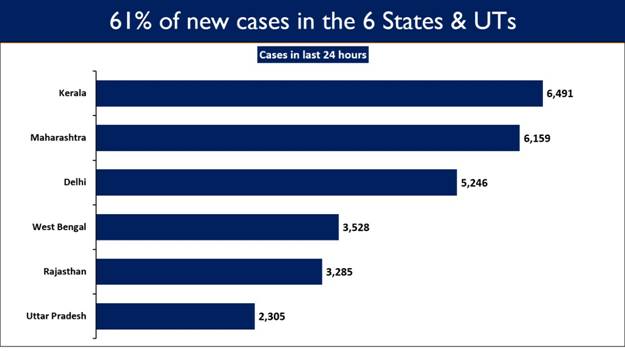
India has reported 44,489  new confirmed COVID cases have been registered in the last 24 hours in the country. Of these, 60.72% is contributed by six States/UT i.e. Kerala, Maharashtra, Delhi, West Bengal, Rajasthan and Uttar Pradesh.

Kerala leads the tally with 6,491 new COVID cases. Maharashtra has reported 6,159 new cases, while Delhi registered another 5,246 new cases in the last 24 hours.

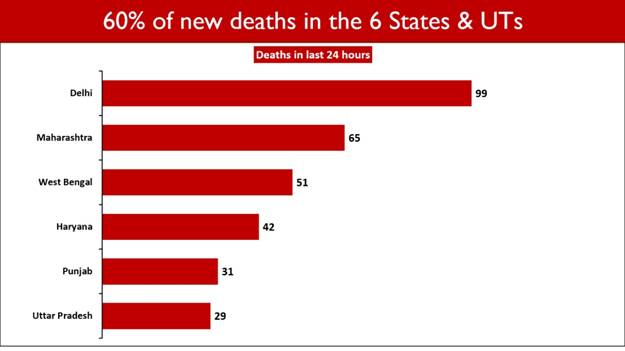
60.50% of the 524 case fatalities reported in the past 24 hours are concentrated in six States/UTs- Delhi, Maharashtra, West Bengal, Haryana, Punjab and Uttar Pradesh.

Maharashtra, Delhi, Uttar Pradesh and West Bengal are the common states among the top six states contributing maximum to new cases as well as daily deaths.

Delhi with 99 deaths reported the maximum new fatalities. Maharashtra saw a fatality count of 65 followed by West Bengal with 51 deaths.

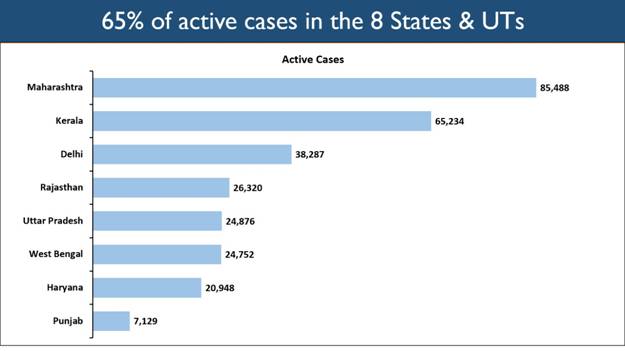
India’s present active caseload (4,52,344) is 4.88% of the total Positive Cases, and has been sustained below the 5% mark. and 65% of the active cases are in 8 States/UTs which have contributed to the maximum daily new cases and the daily highest deaths.

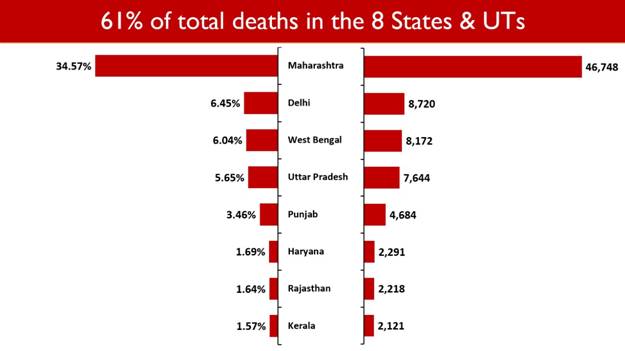
61% of the total deaths are concentrated in these 8 States/UT.

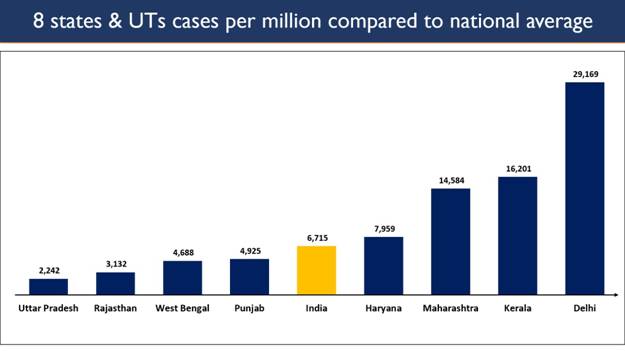
The cases per million figures of these 8 States/UTs compared to the national average (6,715) are as follows:

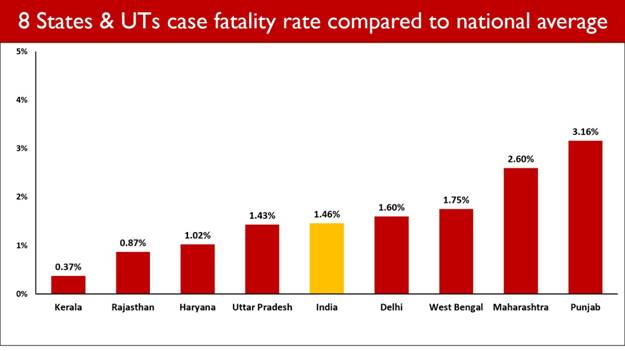
The following shows Case Fatality Rate (CFR) in these 8 States/UT as compared to the national average (1.46%).

Total recovered cases in India are nearing 87 lakhs (86,79,138). The national recovery rate stands at 93.66% today. 36,367 recoveries have been registered in the last 24 hours in the country.

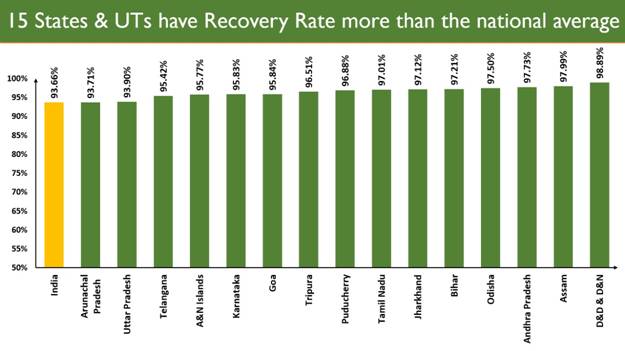
15 States/UTs have Recovery Rate more than the national average.

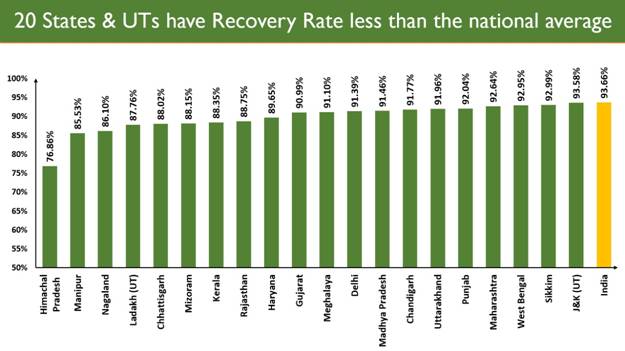
20 States/UTs have reported Recovery Rate less than the national average.