Fossil Site Shows Impact of Early Jurassic Period’s Low Oxygen Oceans

Using a combination of fossils and chemical markers, scientists have tracked low ocean-oxygen in early Jurassic marine ecosystem that could have led to survival of only a few species.

The research, led by Rowan Martindale of the University of Texas at Austin Jackson School of Geosciences, zeroes in on a recently discovered fossil site in Canada located at Ya Ha Tinda Ranch near Banff National Park in southwest Alberta. The site records fossils of organisms that lived about 183 million years ago during the Early Jurassic in a shallow sea that once covered the region.


The oxygen level of the surrounding environment during the Early Jurassic influences the type and amount of carbon preserved in rocks, making the geochemical record an important method for tracking an anoxic event.

“We have this beautiful geochemical record that gives us a backbone for the timing of the Oceanic Anoxic Event,” said Martindale. “So with that framework we can look at the benthic community, the organisms that are living on the bottom of the ocean, and ask ‘how did this community respond to the anoxic event?”

The fossils show that before the anoxic event, the Ya Ha Tinda marine community was diverse, and included fish, ichthyosaurs (extinct marine reptiles that looked like dolphins), sea lilies, lobsters, clams and oysters, ammonites, and coleoids (squid-like octopods). During the anoxic event the community collapsed, restructured, and the organisms living in it shrunk. The clams that were most abundant in the community before the anoxic event were completely wiped out and replaced by different species.

Crispin Little, a senior lecturer in paleontology at the University of Leeds who was not involved with the research, said that the similarity between the sites underscores the widespread nature of the anoxic event. “This confirms previous work suggesting that the T-OAE (anoxic event) was genuinely a global event,” Little said.

However, while other sites were recovering from the anoxic event, the environment at Ya Ha Tinda continued to face stress. Even for small, hardy bivalves, life was tough. “One of the interesting things about the recovery is that we actually see fewer individuals at a time when we’re supposed to be seeing community recovery,” Martindale said.


The paper was published in Palaeogeography, Palaeoclimatology, Palaeoeconology. The co-authors include Martin Aberhan, a curator at the Institute for Evolution and Biodiversity Science at the Natural History Museum in Berlin, Germany.


Hubble Spots Barred Spiral Galaxy Lynx

Discovered by British astronomer William Herschel over 200 years ago, NGC 2500 lies about 30 million light-years away in the northern constellation of Lynx.

The NGC 2500 is a particular kind of spiral galaxy known as a barred spiral, its wispy arms swirling out from a bright, elongated core.

Barred spirals are actually more common than was once thought. Around two-thirds of all spiral galaxies — including the Milky Way — exhibit these straight bars cutting through their centers. These cosmic structures act as glowing nurseries for newborn stars, and funnel material towards the active core of a galaxy.

NGC 2500 is still actively forming new stars, although this process appears to be occurring very unevenly. The upper half of the galaxy — where the spiral arms are slightly better defined — hosts many more star-forming regions than the lower half, as indicated by the bright, dotted islands of light.

There is another similarity between NGC 2500 and our home galaxy. Together with Andromeda, Triangulum, and many smaller natural satellites, the Milky Way is part of the Local Group of galaxies, a gathering of over 50 galaxies all loosely held together by gravity.

NGC 2500 forms a similar group with some of its nearby neighbors, including NGC 2541, NGC 2552, NGC 2537, and the bright, Andromeda-like spiral NGC 2481, known collectively as the NGC 2841 group.


Using Einstein’s Theory, Brightest Galaxy 10000 Million Light Years Away Discovered

Using Albert Einstein’s gravitational lensing theory, scientists have discovered a galaxy at about 10,000 million light years away but thousand times brighter than the nearest Milky Way.

Anastasio Diaz-Sanches from Polytechnic University of Cartagena (UPCT) in Spain used gravitational lensing phenomenon found by Einstein to magnify the apparent image of the original object.

“Thanks to the gravitational lens” explained Sánchez, “produced by a cluster of galaxies between ourselves and the source, which acts as if it was a telescope, the galaxy appears 11 times bigger and brighter than it really is.” It appears as several images on an arc centred on the densest part of the cluster, known as ‘Einstein Ring’.

To measure it they used the Gran Telescopio Canarias at the Roque de los Muchachos Observatory in Garafía, La Palma. The advantage of this type of amplification is that it does not distort the spectral properties of the light, enabling the study of very distant objects as if they were much nearer.

The galaxy is forming stars at a rate of 1,000 solar masses per year, compared to the Milky Way which is forming stars at a rate of some twice a solar mass per year. Susana Iglesias-Groth, co-author of the research said, “This type of objects harbour the most powerful star forming regions known in the universe. The next step will be to study their molecular content”.

The research findings were published in the Astrophysical Journal Letters.

The fact that the galaxy is so bright, its light is gravitationally amplifed, and has multiple images allows us to look into its internal properties, which would otherwise not be possible with such distant galaxies.

“In the future we will be able to make more detailed studies of its star formation using interferometers such ast the Northern Extended Millimeter Array (NOEMA/IRAM),in France, and the Atacama Large Millimeter Array (ALMA), in Chile,” said IAC researcher Helmut Dannerbauer, who is another contributor to the paper.

Diet rich in tomatoes cuts skin cancer in half in mice

Daily tomato consumption appeared to cut the development of skin cancer tumors by half in a mouse study at The Ohio State University.

The new study of how nutritional interventions can alter the risk for skin cancers appeared online in the journal Scientific Reports.

It found that male mice fed a diet of 10 percent tomato powder daily for 35 weeks, then exposed to ultraviolet light, experienced, on average, a 50 percent decrease in skin cancer tumors compared to mice that ate no dehydrated tomato.

The theory behind the relationship between tomatoes and cancer is that dietary carotenoids, the pigmenting compounds that give tomatoes their color, may protect skin against UV light damage, said Jessica Cooperstone, co-author of the study and a research scientist in the Department of Food Science and Technology in the College of Food, Agricultural, and Environmental Sciences at Ohio State.

There were no significant differences in tumor number for the female mice in the study. Previous research has shown that male mice develop tumors earlier after UV exposure and that their tumors are more numerous, larger and more aggressive.

“This study showed us that we do need to consider sex when exploring different preventive strategies,” said the study’s senior author, Tatiana Oberyszyn, a professor of pathology and member of Ohio State’s Comprehensive Cancer Center.

“What works in men may not always work equally well in women and vice versa.”

Previous human clinical trials suggest that eating tomato paste over time can dampen sunburns, perhaps thanks to carotenoids from the plants that are deposited in the skin of humans after eating, and may be able to protect against UV light damage, Cooperstone said.

“Lycopene, the primary carotenoid in tomatoes, has been shown to be the most effective antioxidant of these pigments,” she said.

“However, when comparing lycopene administered from a whole food (tomato) or a synthesized supplement, tomatoes appear more effective in preventing redness after UV exposure, suggesting other compounds in tomatoes may also be at play.”

In the new study, the Ohio State researchers found that only male mice fed dehydrated red tomatoes had reductions in tumor growth. Those fed diets with tangerine tomatoes, which have been shown to be higher in bioavailable lycopene in previous research, had fewer tumors than the control group, but the difference was not statistically significant.

Cooperstone is currently researching tomato compounds other than lycopene that may impart health benefits.

Non-melanoma skin cancers are the most common of all cancers, with more new cases — 5.4 million in 2012 — each year than breast, prostate, lung and colon cancers combined, according to the American Cancer Society.

Despite a low mortality rate, these cancers are costly, disfiguring, and their rates are increasing, according to the U.S. Department of Health and Human Services.

“Alternative methods for systemic protection, possibly through nutritional interventions to modulate risk for skin-related diseases, could provide a significant benefit,” Cooperstone said.

“Foods are not drugs, but they can possibly, over the lifetime of consumption, alter the development of certain diseases,” she said.


Aadhaar an effective instrument in removing Corruption and enabling Citizen Empowerment

On 11th July, 2017 CSC SPV organised a workshop on “Aadhaar Services through CSC – A Unique Initiative” to showcase the impact and progress made by the Village Level Entrepreneurs (VLEs) in delivering Aadhaar services among the poor and marginalized communities in India, through the Common Services Centres (CSCs).

Union Minister for Electronics & IT and Law Justice, Shri Ravi Shankar Prasad inaugurated the event held at India Habitat Centre, New Delhi. He appreciated the efforts of the enterprising VLEs in providing key services at the grassroots level.

The Hon’ Minister said, “I have great expectation from CSC VLEs. Our VLEs are change makers of India. CSCs have given employment to 10 lakh people in India. I am confident that in near future, one crore people will work in CSCs.”

Recounting the strength of VLEs in mobilizing citizens under Government campaigns, the Hon’ Minister said: “I am happy to note that the VLEs have trained 2 crore people in the Cashless India movement.” “Recently, Union Textile Minister Smt. Smriti Irani sought the support of VLEs in the expansion of handloom. All the departments of the government want to involve VLEs for their services,” he said.

He added, “Aadhaar is an effective instrument in removing corruption. We have saved Rs. 50,000 Crore by removing corruption.” He expressed the hope that the VLEs would rise to the occasion and help the government in making India corruption-free.

The Hon’ Minister was addressing around 600 VLEs from States of Uttar Pradesh, Haryana, Rajasthan, Madhya Pradesh, Punjab, and Himachal Pradesh. The workshop, organised at the India Habitat Centre, New Delhi, also brought together senior officials from Ministry of Electronics & IT, UIDAI, Department of Fertilizers and Department of Food & Civil Supplies.

Sh. Ajay Prakash Sawhney, Secretary, MeitY, said, “CSC movement has attained a new identity under with the support from the Government and specifically from the Hon Minister. I am happy to note that CSCs have played a significant role in Aadhaar journey.” He added that AEPS is also an empowering tool that CSC VLEs are doing efficiently in India and enabling the disbursement of entitlement and pension to various citizens living in far flung areas of the country.

Dr. Ajay Bhushan Pandey, CEO, UIDAI said, “In the country, 116 Cr people have been enrolled for Aadhaar and CSC has played a big role in it. In the last 5-6 months, Aadhaar has been linked with various government services to ensure transparency and effectiveness in system. The purpose is empowerment of citizens. We need the help of VLEs to keep the momentum on Aadhaar and create awareness among the communities about its safety and usefulness in simplifying their life.”

While welcoming the participants to the workshop, Shri Dinesh Tyagi, CEO, CSC SPV said, “Aadhaar is the basis of CSC. This is our first principle. Aadhaar is a revolution that will transform the life of a common man. Our 28,000 PECs have enrolled 22 Cr Aadhaar in the country. Our VLEs are providing Aadhaar services at the doorsteps of the citizens. Through Aadhaar, our VLEs have created rural enterprises in the country.”

Enumerating the various initiatives undertaking by VLEs in providing Aadhaar services, Dr Tyagi added, “We have done 80 lakh child enrollments in the country. In schools, Aanganwadi centres, Pulse Polio booths, we have started a new tradition of child enrolment. We have initiated innovative ways of Aadhaar generation, for example, Aadhaar mela, Aadhaar-on-wheels, etc. Our VLEs have made Aadhaar for the differently abled persons that ensured pensions for them.”

On the occasion, a special publication highlighting some of the unique initiatives undertaken by CSCs through Aadhaar was also launched by the Hon’ Minister. The Hon’ Minister also inaugurated an online appointment system for Aadhaar service whereby citizens can book an appointment and visit the Aadhaar centre on the particular day.

The event was also attended by Dr. Ajay Kumar, Additional Secretary-Meity, Sh. Sanjeev Mittal, Joint Secretary-Meity, Dr. Ajay Bhushan Pandey, CEO, UIDAI, Sh. Narendra Bhooshan, Dy. Director General, UIDAI, Sh. Ashok Kumar, Assnt. Director General, UIDAI, among others.

President of India receives first copy of book ‘President’s Lady’

The President of India, Shri Pranab Mukherjee received the first copy of the book “President’s Lady” (Pranaber Preyosi) on his wife Late Smt. Suvra Mukherjee today (July 13, 2017) from Vice President of India, Mohd. Hamid Ansari who formally released it at a function held at Rashtrapati Bhavan.

Speaking on the occasion, the President said that he was grateful to Ms. Sangeeta Ghosh, author of the book and all those who have brought out the publication. He said that Late Smt. Suvra Mukherjee was essentially a private person with a strong interest in music (particularly Tagore music) and paintings.

He said that she was not into politics but came to know a large number of political personalities. However, she confined herself to music, painting and writing. She tried to take Tagore music to a non-Bengali audience. He wished those who brought out the book the very best for their future endeavours.

Walking Like Ants Reduces Risk for Spiders: Study

Humans aren’t the only actors on the planet. To avoid being eaten, some jumping spiders pretend to be ants, according to Cornell University research published in Proceedings of the Royal Society B.

Ants are aggressive at defending themselves: They are well-armed with bites, stings and formic acid. Ant-mimicking jumping spiders – Myrmarachne formicaria – in contrast, can’t do much more than run on their eight legs when attacked. Not surprisingly, insect predators tend to prefer spiders over ants, so appearing to be an ant confers significant protection.

Protective mimicry is a remarkable example of adaptive evolution: Moths can be colored like butterflies and grasshoppers may look like tiger beetles. While most mimicry studies focus on traits like color and shape, the researchers used multiple high-speed cameras and behavioral experiments to pinpoint how the spider’s movements mimic ants.

Ant-mimicking spiders walk using all eight legs but pause frequently to raise their forelegs to mimic ant antennae. When walking, they take winding trajectories of about five to 10 body lengths, which made them look like ants following pheromone trails. While the researchers could see what the spiders were doing thanks to high-speed cameras, many potential predators have slower visual systems, so that to them the mimics appear to be moving just like an ant would.

The researchers note that the findings “highlight the importance of dynamic behaviors and observer perception in mimicry.”

Indonesia Team Goes Gaga with Bahubali Title Song, Video Viral Now

An Indonesian band has taken interest to play the famous “Bahubali: The Conclusion” title song in Telugu and the lyrics spelt out perfectly revealing how popular the film is in Southeast Asian region.


While other details are not available, the video uploaded on July 11, 2017 has already crossed 785,517 and going viral to cross one million soon.

Bahubali 2 by SS Rajamouli has stunned the viewers worldwide with its robust techniques and music by Keeravani. Prabhas has played the lead role of Bahubali and had not acted in any other film for five years at a stretch during the shooting for Bahubali.

Indian songs are not new in Southeast Asia which has substantial number of Tamil-origin people but for a Telugu song to be sung in a band accurately signifies the changing perception of music and dance of India. Tamil film Muthu similarly made headlines when it was released in Japan and the Tamil number Kolavari was a big hit in the region.

Tamil hero Rajinikanth films have made huge inroads into the Southeast Asian countries including Singalore, Malaysia and Indonesia.

India Missile in Pipeline to Target Whole of China: Report

India is gearing up its nuclear arsenal aimed at targeting entire China, while it is already capable of deterring Pakistan, said a research article published in July-August issue of ‘After Midnight’.

Written by top American nuclear experts — Hans M Kristensen and Robert S Norris — in the article titled, “Indian nuclear forces 2017“, the report said India is modernising its atomic arsenal seeking parity with China and not Pakistan, its traditional arch rival in the region of South Asia.

The writers claimed that India is now developing a missile which can carry nuclear heads to any remote area in China from its bases in South India. So far, India has developed an estimated 600 kilograms of plutonium, sufficient to produce 200 warhead though it has developed 120 to 130 nuclear warheads, they said.

India’s nuclear strategy is fast shifting to China, which they called “Decoupling” strategy aimed at both the northern neighbours. “While India has traditionally been focused on deterring Pakistan, its nuclear modernisation indicates that it is putting increased emphasis on its future strategic relationship with China. That adjustment will result in significantly new capabilities being deployed over the next decade that may influence how India views nuclear weapons’ role against Pakistan,” they said.

The report has also estimated that India has seven nuclear-capable systems in total, four land-based nuclear-capable ballistic missiles, the short-range Prithvi-2 and Agni-1, the medium-range Agni-2, and the intermediate-range Agni-3. At least two other longer-range Agni missiles are under development known as the Agni-4 and Agni-5, it said.

There is speculation to arm the Agni-5 with multiple warheads – even multiple independently targetable reentry vehicles (MIRVs) in the near future, said the report. The report attributed this development to recent changes in China and Pakistan policies. China resorted to equip some of its ICBMs with MIRVs, while Pakistan announced in January 2017 that it had test-launched a new Ababeel ICBM with MIRVs. Soon, India may come under pressure to opt for MIRV technology, argued the authors.


The Coming War With China? India Clears Cash Hurdle for Arms Purchase

In view of escalating tension across the Trijunction near Sikkim and Bhutan, India has cleared all the hurdles in purchase of emergency arms and ammunition worth thousands of crores, said reports hinting at a preparedness for a “short intense war” between the two Asian giants.

Such a short and intense war lasts for 10 to 15 days and the standoff at the Doklam plateau in Sikkim. Citing the lessons learnt from the cross border attack on Uri military base last year with 19 soldiers killed due to shortage of artillery ammunition, tanks shells, fuses and spares for weapons platforms, Indian Army is being made war-ready for a sudden and small intense war.

India Today has reported that the army will use the funds released for buying 46 kinds of ammunition, spares for 10 weapons platforms including infantry combat vehicles and mines without waiting for the regular route to buy them.

“Unlike previous process, there is no pre-determined cap on the amount that can be spent. Rather, the limit to spending has been tied to the minimum stores, ammunition that must be in the reserve of the army at a given time,” a senior Ministry of Defence officer told India Today.

The Comptroller and Auditor General of India (CAG) had highlighted severe shortfall of arms and ammunition in its 2015 report stating:”We found during the review that against the WWR of 40 (I) days, the availability of ammunition was only in 10 per cent of the total types of ammunition held (March 2013),” indicating an acute shortage directly impairing the operational readiness of the Army.

‘Star Trek’ Fiction Comes True, China Succeeds in Quantum Teleportation

Chinese scientists have achieved a breakthrough in much-awaited quantum teleportation when they successfully teleported photons to an orbiting satellite 300 miles above, paving the way for a future unhackable quantum Internet.

In Star trek, Scotty beams up crew to distant locations anytime and in the latest experiment, Chinese researchers were able to beam photons from a ground station in Ngari, Tibet to their Micius satellite, which is orbiting 300 miles above in the sky.

“Space-scale teleportation can be realised and is expected to play a key role in the future distributed quantum internet,” said the team of authors, led by Professor Chao-Yang Lu from the University of Science and Technology of China.

Explaining the process, their research paper said, “An arbitrary unknown quantum state cannot be precisely measured or perfectly replicated. However, quantum teleportation allows faithful transfer of unknown quantum states from one object to another over long distance, without physical travelling of the object itself.”

Teleportation also enhances capabilities of unhackable large-scale quantum networks and distributed quantum computation. In previous experiments, photons were lost in optical fibres or space channels after about 100-km distance.

Chinese experiment was based on satellite platform and space-based link, which can conveniently connect two remote points on the Earth with greatly reduced channel loss because most of the photons’ propagation path is in empty space, they said.

The team was able to teleport independent single-photon qubits from a ground observatory to a low Earth orbit satellite – through an up-link channel – with a distance of up to 1,400 km. To optimize the link efficiency and overcome the atmospheric turbulence in the up-link, a series of techniques are developed, including a compact ultra-bright source of multi-photon entanglement, narrow beam divergence, high-bandwidth and high-accuracy acquiring, pointing, and tracking (APT).

“We demonstrate successful quantum teleportation for six input states in mutually unbiased bases with an average fidelity of 0.80+/-0.01, well above the classical limit. This work establishes the first ground-to-satellite up-link for faithful and ultra-long-distance quantum teleportation, an essential step toward global-scale quantum internet,” they said.

Sanjay Gandhi’s ‘Secret’ Daughter Opposes ‘Indu Sarkar’ Film Release

Priya Singh Paul, who claims to have been the secret daughter of late Sanjay Gandhi, came out of the woods to deter filmmaker Madhur Bhandarkar from releasing his upcoming film ‘Indu Sarkar’ depicting late PM Indira Gandhi. However, there is no reaction from late Sanjay Gandhi’s wife Maneka Gandhi on the issue so far.

Priya Singh Paul has alleged that the film portrays the Congress leader and his mother in a bad light, and joined other Congress leaders who have been demanding the film to be screened for them before its release. However, Madhu Bhandarkar has refuted the allegations and rejected their plea for early screening.

The film ‘Indu Sarkar’ is a historical drama set in the Indian Emergency period between 1975 to 1977. Directed by Madhur Bhandarkar, the film’s trailer was released on June 16, 2017 and the film is all set for release in theaters on July 28, 2017. The trailer has already garnered 5,672,047 views on Youtube.

Priya Singh Paul’s contention preceded Congress leader Sanjay Nirupam’s demand for an exclusive screening of the film to him that the driector had turned down. Paul repeated the contention at a press conference in New Delhi on Monday saying “these so-called facts lead to a fiction. This has been cleverly done to influence a reasonable viewer to make an obvious connection.”

Paul has also asked the Central Board of Film Certification (CBFC) not to clear the film ‘Indu Sarkar’ for release on July 28.

Anushka Shetty Not to Feature in Prabhas’s ‘Saaho’ but in ‘Bagmati’

The famous Baahubali 2 duo Prabhas and Anushka Shetty are unlikely to act together again in Prabhas’s upcoming film ‘Saaho’ and reports suggested that neither the actress nor the makers of the film have confirmed about her cast in the Sujeeth directorial venture.

With an excellent roles in the most successful film of India, ‘Baahubali: The Conclusion’, the duo has been in news first for their marriage plan and for pairing again in the most-awaited Prabhas’s upcoming film ‘Saaho’. While the marriage rumours were stoutly denied immediately by the actress whose parents confirmed that they are looking for a match for her, Prabhas’s family has apparently looking for a bride in their known families in Vizag.

Now even the second rumour has been denied by the reports which said the actress is acting in another film by the same banner which is producing ‘Saaho’. However, some reports have attributed not featuring her in ‘Saaho’ to her weight, which the actress gained for the film ‘Size Zero’ and reduced it stunning everyone on the sets of ‘Baahubali: The Conclusion’.

A report in IndiaTV, quoting sources, said, “These reports about Anushka are false because she’s not yet confirmed. The makers are yet to take a call. They’ll take a decision soon. Everyone is speculating that Anushka is finalised for Saaho because the same banner is producing a film called Bhagmati, which stars Anushka in the lead.”

“It’s not like she’s overweight or anything. She’s looking good and she’s acting in one more film. She gained weight for Size Zero, but that was two years ago, and after that, she did Baahubali and she looked very much in shape,” the source said.


Minister Reveals App-Driven Highlights of New Telecom Policy in Pipeline

India’s Minister of Communications Manoj Sinha the new Telecom Policy will be application driven as compared to National Telecom Policy, 2012 that was mainly connectivity driven.

Speaking at a seminar in New Delhi, the minister said the new policy will focus on the end users and the newer opportunities for expanding the availability of Telecom services, in view of high speed data services and enhanced expectations of the users to get real time live applications.

The ministry will involv a large pool of experts from outside the department to prepare the new policy, he said. As of April 2017, the country has close to 1.2 billion telephone connections, including 1.17 billion wireless telephone connections and similarly witnessed the rapid growth of the broadband connections that now stands at 276.52 million.

The minister said there was a six-fold increase in Data traffic in India from 561 million GB in the first quarter of 2016-17 to 2,988 million GB in the third quarter of 2016-17, which is a whopping 400 per cent jump.

While service providers are rapidly deploying the 4G technology, the ministry is focusing on the need to expand the connectivity to all parts including the north-eastern and Left Wing Extremism affected areas, with an eye on future generation applications with the 5G technology roll out, he said.

The FDI equity inflow in telecom sector from April, 2016 to March, 2017 was US$5,564 million, which is more than four times the average inflow of about $1.3 billion every year since 2013-14, he noted.

The Minister said similar to road infrastructure that was seen as a pre-requisite for development in 19th and 20th century, the information superhighways are a must for growth in the 21st century.

He said that the Indian Telegraph Right of Way Rules, 2016 was notified to ease the cable laying approval process and making it integral part of the “Ease of Doing Business” for Telecom Service Providers.

Telecom Secretary Ms Aruna Sundararajan urged the officials to achieve the target of 700 to 800 million internet penetration in the next five years.

President Condemns Attack on Amarnath Yatris in Jammu and Kashmir

President Pranab Mukherjee has strongly condemned the terrorist attack on Amarnath Yatris in Anantnag district of Jammu and Kashmir last night, in a message sent to N.N. Vohra, Governor of Jammu and Kashmir.

The President has said, “I am deeply shocked and anguished to learn about the cowardly attack on Amarnath Yatris in Anantnag district of Jammu and Kashmir in which a number of innocent pilgrims lost their lives and several others were injured. Such senseless acts of terrorism targeting innocent lives is an attack on the democratic values of society and deserve to be universally condemned. They must be met with determination and collective action.”

He noted that necessary steps are being taken to provide all possible aid to the bereaved families who have lost their near and dear ones as well as medical assistance to the injured.

The terror attack on Amarnath yatra pilgrims last night, Monday July 10, 2017 was reportedly carried out by the Lashkar-e-Taiba and was masterminded by a Pakistani terrorist Ismail, said Jammu and Kashmir’s inspector general of police Muneer Khan to ANI.

Seven Amarnath pilgrims from Gujarat were killed in the attack and 14 others were injured in the attack.

Ravi Shastri Appointed India Cricket Team Coach

Following intense melodrama over Anil Kumble’s strict disciplinarian approach, India team has got what it wanted, Ravi Shastri who has been associated with India cricket team either officially or unofficially till now.

Former India allrounder and captain Ravi Shastri served as team director from August 2014 to April 2016. His appointment came close on the heels of Anil Kumble’s resignation owing to captain Virat Kohli’s reported objections. Kohli denied reports of any rift with Kumble.

Shastri will serve as head coach for a two-year period until the end of the 2019 ICC World Cup and BCCI has sought inputs from Virat Kohli before making the appointment. Saurav Ganguly and VVS Laxman were present while Sachin Tendulkar joined via video conference from the UK.

Ravi Shastri on Twitter Page of his account

Virender Sehwag was also one of the applicants. Shastri’s close association with the team when he was team director for an 18-month period paved teh way for his selection this Shastri played 80 Tests and 150 ODIs and led India in one Test.

Shastri was initially reluctant but applied for the post only when the last date was extended by the BCCI until July 9. Other applicants included former India opener Virender Sehwag, former Sri Lanka coach and current coach of IPL franchise Sunrisers Hyderabad Tom Moody, current Afghan team coach Lalchand Rajput and former Pakistan and Bangladesh coach and director of West Indies cricket Richard Pybus.

India, US, Japan Joint Exercise ‘Malabar’ Begins in Bay of Bengal

The 21st edition of Naval exercise between India, US and Japan, MALABAR 17 series of exercises, initiated in 1992 between the Indian and US Navies, joined by Japanese Maritime Self Defense Force (JMSDF) will begin in the Bay of Bengal from 10 to 17 July 2017. It takes centre-stage in view of the escalating tensions between India and China over trijunction or the Chicken neck border of Bhutan.

The primary aim of this exercise is to increase interoperability amongst the three navies and the MALABAR-17 includes wide-ranging professional interactions during the Harbour Phase at Chennai from 10 to 13 July 2017 and a diverse range of operational activities at sea during the Sea Phase from 14 to 17 July 17.

The thrust of exercises at sea this year would be on Aircraft Carrier operations, Air Defence, Anti-Submarine Warfare (ASW), Surface Warfare, Visit Board Search and Seizure (VBSS), Search and Rescue, Joint Manoeuvres and Tactical procedures. In addition, officials from the three countries will be flown onboard the ships at sea on 15 July 2017.

The Indian Navy will be represented by the aircraft carrier INS Vikramaditya with its air wing, guided missile destroyer Ranvir, indigenous stealth frigates Shivalik and Sahyadri, indigenous ASW corvette Kamorta, missile corvettes Kora and Kirpan, one Sindhughosh class submarine, fleet tanker INS Jyoti and Long Range Maritime Patrol Aircraft P8I.

The US Navy will be represented by the ships from the Nimitz Carrier Strike Group and other units from the US 7th Fleet. The US Navy forces will include the Nimitz-class aircraft carrier Nimitz with its air wing, Ticonderoga-class cruiser Princeton, Arleigh Burke-class destroyers Kidd, Howard and Shoup along with integral helicopters, a Los Angeles-class attack submarine and one Long Range Maritime Patrol Aircraft P8A.

The exercise will also witness a separate interaction between IN and USN Special Forces and Explosive Ordnance Disposal teams at the IN MARCOS training base INS Karna at Visakhapatnam. The JMSDF will be represented by JS Izumo, a helicopter carrier with SH 60K helicopters and JS Sazanami, a missile destroyer with SH 60K integral helicopter.

MALABAR-17 will be another milestone with participation of 16 ships, two submarines and more than 95 aircraft, towards strengthening mutual confidence and inter-operability as well as sharing of best practices between the Indian, Japanese and US Navies.

“The exercise is a demonstration of the joint commitment of all three nations to address common maritime challenges across the spectrum of operations and will go a long way in enhancing maritime security in the Indo-Pacific region, for the benefit of the global maritime community,” said a statement.

How Govt Defends 12% GST on Sanitary Napkins?

Amid growing anger against imposing GST of 12% on sanitary napkins, the government defended the move saying the tax incidence on this item before and after GST is the same or less.

“Sanitary napkins are classifiable under heading 9619. In pre-GST, they attracted concessional excise duty of 6% and 5% VAT and, the pre-GST estimated total tax incidence on sanitary napkins was 13.68%. Therefore, 12% GST rate had been provided for sanitary napkin,” said a statement.

Major raw materials for manufacture of sanitary napkins and applicable GST rates on them are as under:

a) 18% GST rate

o Super Absorbent Polymer

o Poly Ethylene Film

o Glue

o LLDPE– Packing Cover

b) 12% GST rate

o Thermo Bonded Non-woven

o Release Paper

o Wood Pulp

As raw materials for manufacture of sanitary napkins attract GST of 18% of 12%, even with 12% GST on sanitary napkins, there is an inversion in the GST structure. Though, within the existing GST law such accumulated ITC will be refunded, it will have associated financial costs such as interest burden and administrative cost, putting them at a dis-advantage vis-à-vis imports, which will also attract 12% IGST on their imports, with no additional financial costs on account of fund blockage and associated administrative cost of refunds, said the government.

If the GST rate on sanitary napkins were to be reduced from 12% to 5%, it will further accentuate the tax inversion and result in even higher accumulated ITC, with correspondingly higher finical costs on account of fund blockage and associated administrative cost of refunds, putting domestic manufacturers at even greater dis-advantage vis-à-vis imports, it stated.

Reducing the GST rate on sanitary napkins to Nil, will however, result in complete denial of ITC to domestic manufacturers of sanitary napkins and zero rating imports. This will make domestically manufactured sanitary napkins at a huge dis-advantage vis-à-vis imports, which will be zero rated, defended the government.

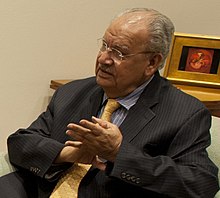
President, PM Condole Naresh Chandra’s Death

President Pranab Mukherjee and Prime Minister Narendra Modi have condoled the passing away of Naresh Chandra, former civil servant and served as ambassador to the US.

In a message to his niece Mrs. Vatsala Kumar, the President said, “I am sad to learn about the demise of Shri Naresh Chandra. As an outstanding IAS officer, Shri Chandra served the nation in various capacities including Cabinet Secretary, Government of India, Governor of Gujarat and Ambassador of India to the United States of America.”

Naresh Chandra was awarded ‘Padma Vibhushan’ in 2007, noted the President and remembered his valuable services to the nation in various capacities, which he said would always be remembered. “Please accept my heartfelt condolences and convey the same to the members of your family. May you all have the strength to bear this irreparable loss with courage and fortitude,” said the President.

Prime Minister Modi said, “Shri Naresh Chandra was an outstanding public servant, who left an indelible mark on matters of governance and policy. Pained by his demise. I remember an insightful discussion with Naresh Ji, who as USA ambassador invited me for dinner. He believed in strong India-USA friendship.”

As Indian ambassador to the US, he will always be remembered for the establishment of Gandhi Memorial – Mahatma Gandhi’s statue – in front of Indian Chancery building in Washington DC, which was accomplished against heavy odds on 16 September 2000. He described it as a great moment – for South Asians and Americans. “I also received many messages from our friends in Pakistan – and the Pakistan Ambassador congratulated me and expressed her happiness at the establishment of the statue,” he once said.

He was instrumental in managing President Bill Clinton’s visit to India that paved the way for increased exchange of visits and relations between the two countries.