India’s defence minister Nirmala Sitharam, who is on three-day visit to Russia to attend VII Moscow Conference on International Security from April 0 to 5, 2018, met Russian Minister of Industry and Trade of the Russian Federation Denis Manturov in Moscow on Tuesday.
The two leaders reviewed ongoing military technical cooperation projects between the two countries, including measures to promote India-Russia joint industrial activities under the ‘Make in India’ program with respect to defence production, especially for after-sales support.
They also discussed participation of Russian in DefExpo India -2018 to be held in Chennai from April 11 to 14, 2018. Later, the minister met Russian Defence Minister General Sergey Shoygu and discussed issues of bilateral importance, especially Military-to-Military Cooperation and other regional issues in a delegation level talks.
After the review of the roadmap of military cooperation involving exercises, training, exchange of visits, and India’s participation in International Army Games to be held in Russia later this year, Nirmala Sitharaman went to attend a concert by Sarod Maestro Ustad Amjad Ali Khan to mark the closing of the year-long celebrations of the 70th Anniversary of India-Russia diplomatic relations.
India’s Union Minister for Defence Nirmala Sitharaman being welcomed by the Russian Defence Minister, General Sergey Shoygu, on her visit to Moscow on Tuesday, April 03, 2018 (PIB)
As Indian space agency ISRO is running out of any hope to get in touch with the GSAT-6A communication satellite, the Indian army, which was among the possible beneficiaries, will have to wait for some more time now.
The communication satellite GSAT-6A was successfully launched on March 29, but it went dead during its third orbit-raising manoeuvre to place it at 36,000 km above the ground. With a life span of 10 years, the Rs.240-crore worth satellite, was meant to provide communication through the satellite phones for the army and other government agencies in inaccessible, remote and hilly border areas.
For the first time, GSAT-6A was fitted with high thrust Vikas engine for the second stage and ISRO had reported that its second orbit raising operation of GSAT-6A satellite was carried out successfully by LAM Engine firing for about 53 minutes on March 31, 2018 in the morning.
The third stage, to be propelled by the cryogenic engine, could not be undertaken as the spacecraft communication with the ground control at Hassan near Bangalore failed on Sunday, April 1, 2018.
Had it been a momentary switch-off by the satellite to go into safety mode, by now it should have returned to life or should have been revived. Currently, ISRO scientists are hoping to track its current orbit path nearer to the Earth, so they can try to send or retrieve its signals.
ISRO has repeatedly said that the GSAT-6A was similar to the GSAT-6 with technologies such as demonstration of 6m S-Band Unfurlable Antenna, handheld ground terminals and network management techniques, useful in satellite-based mobile phone applications, especially for the mobile units of border forces.
But failure of GSAT-6A should force ISRO engineers to retreat into their labs and reckon the viability of two new techniques used in the rocket’s second stage — induction of high thrust Vikas engine and electromechanical actuation system. Or the engineers should find out whether the cryogenic propellant meant for the Third Stage was the real culprit.
As of now, GSAT-6A will keep orbiting the Earth as another space debris.
Despite unrest on the campus, Jawaharlal Nehru University still remains the top university in India alongwith the Indian Institute of Science (IISc) in Bengaluru that was adjudged the overall best institution in the country.
The 2018 ranking of top institutions by the HRD Ministry ranked the Indian Institute of Technology, Madras (IIT-M) as the best engineering college and the Indian Institute of Management-Ahmedabad (IIM-A) as the best management institution.
The ministry’s annual national institutional ranking framework (NIRF) has put Delhi University’s Miranda House as the best college and the St Stephen’s College as the second.
While JNU was ranked the highest, BHU comes next among the national universities. Delhi’s AIIMS was adjudged the best medical college, IIT-Kharagpur and National Law School of India University, Bengaluru topped in their respective architecture and law categories.
The top 10 institutes are: IISc, six IITs in Madras, Bombay, Delhi, Kharagpur, Kanpur and Roorkee, JNU, BHU and Anna University.
National Institute of Pharmaceutical Education and Research, Mohali, Jamia Hamdard and Punjab University were ranked as top pharmacy colleges.
This is the thrid edition of NIRF rankings and 2,809 institutions have participated in nine categories — overall, universities, engineering, colleges, management, pharmacy, medical, architecture and law.
Overall, 301 universities, 906 engineering institutions, 487 management instites, 286 pharmacy colleges, 71 law institutions, 101 medical institutions, 59 architecture institutions and 1,087 general degree colleges have participated in the ranking.
“The parameters used for India Rankings 2018 are broadly similar to those used in previous years. However, some of the sub-parameters have been further tweaked for greater robustness and accuracy. In particular for evaluating Research Impact, parameters for quality of publications have been enhanced to include the number of highly cited papers,” said the HRD Ministry in its statement.
The performance metrics have been optimized to provide a good discrimination over a large range of possible values. All research related information, including publications, citations, highly cited papers and even patent information about institutes was collected from third party databases.
For this year’s Perception inputs, a large database of eminent academic and industry peers and employers was deployed. The data received from both institutional and third party sources were subjected to extensive scrutiny for consistency and correctness by a team of experts, said the ministry.
From next year, participation in the national institutional ranking framework (NIRF) will be made mandatory, said HRD minister Prakash Javadekar while announcing the rankings. “Those public institutions which will not take part in it will face fund cut,” the human resource development (HRD) minister added.
List of top 10 India Rankings 2018 is as follows:
Overall:
Indian Institute of Science, Bengaluru
1
Indian Institute of Technology Madras
2
Indian Institute of Technology Bombay
3
Indian Institute of Technology Delhi
4
Indian Institute of Technology Kharagpur
5
Jawaharlal Nehru University, New Delhi
6
Indian Institute of Technology Kanpur
7
Indian Institute of Technology Roorkee
8
Banaras Hindu University, Varanasi
9
Anna University, Chennai
10
Management
Indian Institute of Management Ahmedabad
1
Indian Institute of Management Bangalore
2
Indian Institute of Management Calcutta
3
Indian Institute of Management Lucknow
4
Indian Institute of Technology Bombay
5
Indian Institute of Management Kozhikode
6
Indian Institute of Technology Kharagpur
7
Indian Institute of Technology Delhi
8
Indian Institute of Technology Roorkee
9
Xavier Labour Relations Institute, Jamshedpur
10
University
Indian Institute of Science, Bengaluru
1
Jawaharlal Nehru University, New Delhi
2
Banaras Hindu University, Varanasi
3
Anna University, Chennai
4
University of Hyderabad
5
Jadavpur University, Kolkata
6
University of Delhi
7
Amrita Vishwa Vidyapeetham, Coimbatore
8
Savitribai Phule Pune University
9
Aligarh Muslim University, Aligarh
10
Colleges
Miranda House, Delhi
1
St. Stephens`s College, Delhi
2
Bishop Heber College, Tiruchirappalli
3
Hindu College, Delhi
4
Presidency College, Chennai
5
Loyola College, Chennai
6
Shri Ram College of Commerce, Delhi
7
Lady Shri Ram College for Women, New Delhi
8
Ramakrishna Mission Vidyamandira, Howrah
9
Madras Christian College, Chennai
10
Pharmacy
National Institute of Pharmaceutical Education and Research Mohali
1
Jamia Hamdard, New Delhi
2
Panjab University, Chandigarh
3
Institute of Chemical Technology, Mumbai
4
Birla Institute of Technology & Science, Pilani
5
National Institute of Pharmaceutical Education and Research Hyderabad
6
Manipal College of Pharmaceutical Sciences, Manipal
7
Bombay College of Pharmacy, Mumbai
8
SVKM`s Narsee Monjee Institute of Management Studies, Mumbai
9
JSS College of Pharmacy, Mysore
10
Medical
All India Institute of Medical Sciences, New Delhi
1
Post Graduate Institute of Medical Education and Research, Chandigarh
2
Christian Medical College, Vellore
3
Architecture
Indian Institute of Technology Kharagpur
1
Indian Institute of Technology Roorkee
2
School of Planning & Architecture New Delhi
3
Law
National Law School of India University, Bengaluru
But for Ram Charan’s omnipresence in the film, the overtly dragged Telugu film ‘Rangasthalam’, directed by Sukumar based on a real story in a village in Rayalaseema, finally entered the Rs.100-crore club bringing cheers to the mega family of Chiranjeevi and the fans.
Despite unexplained beard he was sporting, Ram Charan’s role as a deaf pump repairing man in the village has revolved around the feudal system prevalent in a village that was striving to come out of the clutches of a village president in the pre-mandal era of Andhra Pradesh.
The final twist in the film makes many realise how a village youth could be determined enough to take revenge over his brother’s killing after reviving the target man from a two-year coma. What happens next is none of our problem as anybody could kill anybody and escape the arrest in the film. Was it like this in the early 1980s in Rayalaseema?
A perfect beginning and end but Sukumar has taken too much liberty to drag the film with little or no meaningful role to other actors. No wonder, Chiranjeevi was not convinced about the pace of the film that he had apparently suggested some re-shoots.
Samantha, in her most natural, form brings relief to a monotonous chasing throughout the film. Despite all the hiccups, the film has gone well for the mega family that it has crossed Rs.100-crore mark in just 3 days. Owing to its natural village settings, the film was undoubtedly more appealing to Australia where the film grossed the second biggest opening in 2018, second only to Sanjay Leela Bhansali’s Padmaavat.
Trade analyst Taran Adarsh tweeted: “This is HUGE… This is an EYE-OPENER… Telugu film #Rangasthalam is the SECOND BIGGEST *opening weekend grosser* [2018] in AUSTRALIA… Collects A$ 289,768 [₹ 1.45 cr] in its opening weekend… Top 5 list follows… @Rentrak (sic).”
Also the Telugu film entered the Rs 100 crore club in just 3 days, the fastest Telugu film to get there after SS Rajamouli’s ‘Baahubali’. It has collected $2.45 million in USA becoming the 4th highest grosser among Telugu films.
Indian badminton player Saina Nehwal has set aside the protocol to play for the country and threatened to withdraw from the Commonwealth Games, starting in Gold Coast on Wednesday, when her father’s name was deleted from the Indian team’s official list.
However, her threat has worked and her father’s name was cleared by the Indian Olympic Association (IOA) on Tuesday in a hurry bringing a bad precedent to the opening of the games. Already the Indian team has been facing drug tests en masse owing to doping incidents earlier.
Fearing another controversy, IOA has cleared Harvir Singh’s CWG accreditation after Saina wrote to them earlier in the day that her father should be allowed.
In her tweet immediately after the ugly incident, she tweeted: “Surprised to see that when we started for CWG 2018 my father was confirmed as the team official and I paid the whole amount for that but when we came to the games village his name was cut from the team official category.. and he can’t even stay with me.”
Soon she followed with another tweet saying, “He can’t come to my matches and he can’t enter the village nor he can meet me in anyway…what kind of support is this.” She said she was not informed earlier. “If his accreditation is not cleared as an official, I am not going to play the matches,” Saina said in her email.
Saina won the London Olympics bronze medal and a regular team member in many CWG and Asian Games. Once his name has been cleared, she tweeted:”Thank u so much @ioaindia for the support and help sorting out my father’s accreditation card in such short notice ..Hopefully it will b great for the matches ahead ..and I m sorry for all the trouble.”
It remains to be seen how far Saina would be impacted with the incident in her forthcoming matches.
The question paper was leaked for Class 10 but never did it cause such a furore as is this time. The government has finally announced on Tuesday that the re-exam will not be conducted for Class 10 maths paper despite an alleged leak of the question paper.
However, for Class 12 Economics paper, the re-test will be held on April 25, 2018 as announced earlier.
"Consequent to the preliminary evaluation of the impact of reportedly leaked CBSE Class 10 maths paper and keeping in mind the paramount interest of students, the CBSE has decided not to conduct re-examination even in Delhi, NCR and Haryana. Hence, no re-exam for Class 10," Human Resource Development Ministry Secretary Anil Swarup tweeted.
The government had earlier said that it might re-conduct the maths exam sometime in July for Delhi, NCR and Haryana but pending the outcome of the preliminary report. Though the report was positive about the leak, the impact was not felt beyond the NCR and hence, the HR ministry has stepped in to drop the idea on behalf of the CBSE.
Ironic but for the first time, the HRD ministry has directly taken the issue into its hands and decided, reminding the CBSE of its curtailed powers to hold or cancel exams at national level. CBSE is the pivotal organisation to hold the country-wide JEE Mains which decides the basic standards for those seeking admission into medical and engineering colleges. Currently, it is busy with JEE Mains 2018 exam as it cannot afford another leak at the national level.
The decision has more to do with the protests by parents who had planned summer vacation abroad in Delhi and the elite-centric Delhi persuaded the ministry to dilute its stance on re-holding the test for leaked mathematics paper. Since this serves as precedent, there is no guarantee that CBSE question paper will not be leaked in the future. It happened for Class 12 in 2014 and again in 2018.
Further, there is no guarantee that even for a legibly leaked question paper, there will be a re-test as it can be waived off in the public interest. Now that the whistle-blower is also held for questioning, it remains to be seen what would be the final outcome.
The galaxy we inhabit, the Milky Way, may be getting even bigger, as researchers found some star-forming regions at the outer edge of the disc, which may indicate the models of galaxy formation with new stars may slowly increase the size of it.
One problem in establishing the shape of the Milky Way is becuase we live inside it, so astronomers should look at similar galaxies elsewhere to assess its size as an analogue. Martínez-Lombilla and her colleagues at the Instituto de Astrofísica de Canarias in Tenerife, Spain have set out to establish whether other spiral galaxies similar to the Milky Way really are getting bigger, and if so what this means for our own galaxy.
The team used the ground-based SDSS telescope for optical data, and the two space telescopes GALEX and Spitzer for near-UV and near-infrared data respectively, to look in detail at the colours and motions of the stars at the end of the disc in the other galaxies.
They measured the light in these regions, predominantly originating from young blue stars, and measured their vertical movement to work out how long it will take them to move away from their birthplaces, and how their host galaxies were growing in size.
Based on this, they calculate that galaxies like the Milky Way are growing at around 500 metres per second, fast enough to cover the distance from Liverpool to London in about 12 minutes.
Martínez-Lombilla said, "The Milky Way is pretty big already. But our work shows that at least the visible part of it is slowly increasing in size, as stars form on the galactic outskirts. It won’t be quick, but if you could travel forward in time and look at the galaxy in 3 billion years’ time it would be about 5% bigger than today."
This slow growth may be moot in the distant future. The Milky Way is predicted to collide with the neighbouring Andromeda Galaxy in about 4 billion years, and the shape of both will then change radically as they merge.
Martínez-Lombilla, a PhD candidate, will present the work of her team in a talk on Tuesday 3 April, 2018 at the European Week of Astronomy and Space Science in Liverpool.
Distant star Icarus captured by the Hubble Space Telescope in galaxy. (NASA/ESA/P. Kelly)
Detecting individual stars in the universe filled with distant stars over 9 billion light years from Earth is just impossible but a team of scientists from Japan have just discovered one such lonely star too far from earth to estimate even. It’s about 9 billion light years from Earth.
Searching for stars deep in the space requires constant observations using telescopes and astronomers usually target galaxies, which are a collection of about 10 billion stars, since individual stars are difficult to spot with their faint light.
An international team of researchers, lead by Patrick Kelly, and including University of Tokyo School of Science Assistant Professor and Kavli IPMU Associate Scientist Masamune Oguri, were able to discover the distant individual star, which they have named Icarus, because its brightness had been magnified by 2000 times by the gravity of a larger object in front of it.
They came across the bright but lonely star while observing galaxy cluster MACS J1149+2223, 5 billion light years away, using the Hubble Space Telescope. The researchers noticed a flickering light in the background and a closer analysis revealed that the light was not from a star exploding at the end of its life, but a blue star.
In fact, the galaxy cluster’s gravity had bent space-time to magnify the star’s image, a phenomenon called gravitational lensing, where an object magnifies the light of objects directly behind it.
The discovery of Icarus will help researchers studying dark matter because its interaction with matter has a pronounced effect on the pattern of magnified stars. From the pattern of magnified stars in their study, the researchers were able to exclude the possibility that dark matter is made up mostly of a huge number of black holes with masses tens of times larger than the Sun.
Using this method, manny more magnified stars will be discovered when the upcoming James Webb Telescope becomes operational, and also provide more insight into the properties of dark matter.
A smartphone application using the camera function was able to detect flawed blood flow in a wrist artery for patients undergoing coronary angiography, during a randomized trial, said some recent findings.
The results highlight the potential of smartphone applications to help physicians make decisions instantly, said researchers. "Because of the widespread availability of smartphones, they are being used increasingly as point-of-care diagnostics in clinical settings with minimal or no cost," said Dr. Benjamin Hibbert of the University of Ottawa Heart Institute, Ottawa, Ontario.
Built-in cameras with dedicated software or photodiode sensors using infrared light-emitting diodes have the potential to render smartphones into functional plethysmographs or instruments that measure changes in blood flow, he said. The researchers compared the use of a heart-rate monitoring application (the Instant Heart Rate application version 4.5.0 on an iPhone 4S) with the modified Allen test, which measures blood flow in the radial and ulnar arteries of the wrist, one of which is used to access the heart for coronary angiography.
A total of 438 participants were split into two groups; one group was assessed using the app and the other was assessed using a gold-standard traditional physical examination (known as the Allen test). The smartphone app had a diagnostic accuracy of 94% compared with 84% using the traditional method.
"The current report highlights that a smartphone application can outperform the current standard of diagnostics, said Dr. Hibbert. "However, it is important that they are evaluated in the same rigorous manner by which we assess all therapies and diagnostic tests," said lead author Dr. Pietro Di Santo.
Although this application is not certified at present for use in health care by any regulatory body, the study highlights the potential for smartphone-based diagnostics to aid in clinical decision-making at the patient’s bedside in the future, said Dr. Hibbert.
The findings have been published in the Canadian Medical Association Journal (CMAJ).
Owing to global price surge, the petrol price in cities has touched a near-five year high of Rs 73.83 to Rs.81.69 a litre, effective April 1, which has brought demands for inclusion of petrol and diesel under the ambit of GST (Goods and Services Tax). The price of the Indian basket of crude oil has crossed $70-mark per a barrel.
Pitching for bringing petroleum products under GST, Union Minister Dharmendra Pradhan recalled how a year ago the Central government had to cut excise duties on petrol amid rising global crude prices. "On prices we have nothing to hide… petrol, diesel are international commodities and whenever there is a hike or fall in global rates we pass it on to the consumers," Pradhan said. It may be noted that petrol prices change on a daily basis under dynamic pricing.
"India is a consumer sensitive country and the government has cut excise duties last year… some states also reduced VAT on fuels. States should now respond accordingly and responsibly. In this regard, I appeal to the GST Council, finally this product has to come under GST so that the consumer can benefit from price rationalisation," he said.
However, states in India have rfused to forgo their tax revenue on petrol as under GST, the centre will have a dominant position and it may result in two-level taxation on ordinary consumers. The experience with GST since June last year has not gone well with the businesses and consumers as prices on all products have witnessed double taxation in the country reminiscent of the feudal days in the 17th or 18th century. Currently, every product has two taxes — central GST and State GST, ending the hapless consumers pay both the governments for the same product.
Due to global price surge, the petrol price in six metropolis touched a near-five year high of Rs 73.83 a litre on effective April 1, while Mumbai registered a fresh record high of Rs.81.69 per litre.
In Mumbai, Kolkata, Chennai, Bangalore and Hyderabad, prices of petrol crossed Rs.80-mark for the first time in five years compared to the previous hikes registered in Delhi at Rs 74.10 per litre in September 2013, Mumbai at Rs 81.75 registered in July 2014, Kolkata at Rs 77.88 registered in May 2012 and Chennai at Rs 77.53 recorded in May 2012.
In Delhi, diesel was priced at Rs 64.69 a litre on Monday, follwed by Mumbai at Rs 68.89, Kolkata at Rs 67.38 and Chennai, diesel prices at Rs 68.24. The effect of price surge in diesel will have cascading impact on transportation of food and agriculture products using diesel as fuel. In turn, it may lead to food inflation, said experts.
The overall impact from the increase in global crude oil prices due to the ongoing trade tensions between the US and China and a reduction in American drilling activity point out an irreversible trend where the oil prices may grip the lives of ordinary people in the long run. As of Monday, global brent crude oil was priced around $69.75 per barrel.
After December 2017, food prices pushed India’s retail inflation to a 17-month high, breaching the RBI’s medium-term target for the second straight month and the annual retail food inflation rose 4.96 percent in December from 4.35 percent in the previous month.
Rising inflation due to global crude oil prices remains a major worry for the current Modi government, ahead of the elections next year.
Decades-long search for alien life has given momentum to biologists unearth the pre-requisites of life, hoping to find life form sooner or later. Mars probe has revealed that water was there on its surface once and now present in its sub-surface layers. Even Saturn’s moons Titan and Enceladus and Jupiter’s moons Europa, Ganymede and Callisto are standing up as possible havens for life under their icy crusts.
Venus, which was almost ruled out has become a candidate now and Indian-origin scientist planetary scientist Sanjay Limaye of the University of Wisconsin–Madison’s Space Science and Engineering Center and his team of researchers have begun dusting off an old idea that the atmosphere of Venus could be a possible niche for extraterrestrial microbial life.
Ever since the habitability of Venus’ clouds was first raised in 1967 by biophysicist Harold Morowitz and astronomer Carl Sagan, the idea has been expanding among the researchers. Planetary scientists David Grinspoon, Mark Bullock and their colleagues have supported the notion that Venus’ atmosphere could be a plausible niche for life.
A series of space probes to Venus launched between 1962 and 1978 by NASA and other space agencies showed that the temperature and pressure conditions in the lower and middle portions of the Venusian atmosphere, between 40 and 60 km altitude, would not preclude microbial life. But the immediate surface is known to be inhospitable, with temperatures soaring above 450 degrees Celsius.
Some models have suggested that Venus once had a habitable climate with liquid water on its surface for more than 2 billion years, much longer than what is believed to have occurred on Mars. “Venus has had plenty of time to evolve life on its own,” explains Limaye.
Since Earth’s surface has supported microorganisms or bacteria, which are found to be capable of being alive even at altitudes of 41 kilometers above the surface, the study co-author David J. Smith of NASA’s Ames Research Center, is confident that the microbial life could be found in the mid-atmosphere of Venus, if not on the surface.
Microbes can inhabit even in incredibly harsh environments such as the hot springs of Yellowstone, deep ocean hydrothermal vents, the toxic sludge of polluted areas, and in acidic lakes worldwide on the Earth, he said.
"Life can thrive in very acidic conditions, can feed on carbon dioxide, and produce sulfuric acid,” says Rakesh Mogul, a professor of biological chemistry at California State Polytechnic University, Pomona, and a co-author on the new paper. He notes that the cloudy, highly reflective and acidic atmosphere of Venus is composed mostly of carbon dioxide and water droplets containing sulfuric acid.
Limaye, who is a NASA participating scientist at the Japan Aerospace Exploration Agency’s Akatsuki mission to Venus, quoting a co-author Grzegorz Słowik of Poland’s University of Zielona Góra on light-absorbing properties of bacteria, said the famous dark patches on Venus atmosphere could be composed of concentrated sulfuric acid and other unknown light-absorbing particles.
“Venus shows some episodic dark, sulfuric rich patches, with contrasts up to 30–40 percent in the ultraviolet, and muted in longer wavelengths. These patches persist for days, changing their shape and contrasts continuously and appear to be scale dependent,” said Limaye.
Limaye said he was inspired when he visited Tso Kar, a high-altitude salt lake in northern India where he observed the powdery residue of sulfur-fixing bacteria on decaying grass at the edge of the lake being wafted into the atmosphere.
“To really know, we need to go there and sample the clouds,” echoed Mogul. “Venus could be an exciting new chapter in astrobiology exploration.”
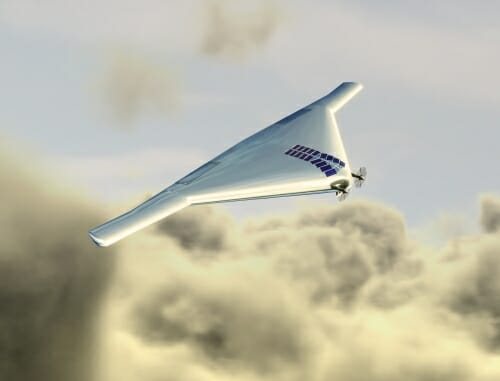
A Venus Atmospheric Maneuverable Platform, or VAMP, which is an aircraft being sent to Venus to explore its atmosphere and Russia’s Roscosmos Venera-D mission will undertake missions to Venus, sometime in the late 2020s. Venera-D is likely to include an orbiter, a lander and a NASA-contributed surface station and maneuverable aerial platform.
The findings, supported by NASA, have been published in the journal Astrobiology.
A Venus Atmospheric Maneuverable Platform, or VAMP aircraft, would fly like a plane and float like a blimp, to explore the atmosphere of Venus, which has temperature and pressure conditions that do not preclude the possibility of microbial life. [Photo: NORTHROP GRUMMAN]
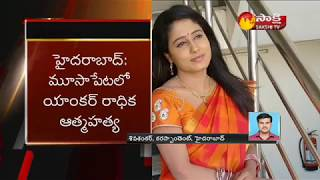
A local Telugu TV News channel anchor Radhika Reddy committed suicide on Sunday night after returning from work, stating that her brain "is her enemy," indicating the stress and depression over marital and family problems.
Radhika Reddy, 36, jumped off the 5th floor of her apartment building at Moosapet in Hyderabad. the police have recovered a suicide note and a registered a case as per the norms. The anchor, who has a mentally diabled 14-year-old son, has been staying with her parents since months when her husband divorced her.
Radhika died instantly with severe head injuries and fractures. At 10:50 she was reportedly seen crying and rushing upstairs by other residents in the apartments. When some of them followed her, she reached the fith floor and then jumped off, they said.
In her suicide note left in her bag, she had reportedly written that depression is the main cause for her suicide. She has written, "Under severe depression, I am taking my life. My brain is my enemy."
Screen grab of ‘Sakshi TV’ showing Radhika Reddy news coverage
Hyderabad has become a city of suicides with the uneven development and social pressure being exerted on the city amid a fast-paced growth, especially in the last one decade. Hardly a day passes off without a suicide news by a teen or a student or even a celebrity.
Essentially, depression has become the main cause triggering suicide and depression is directly linked to isolated lifestyle, highly unsocial society, fewer friends, peer circle pressures, competition and above all lack of psychological or elderly counselling in city life.
ISRO, the Indian space agency has lost contact with its GSAT-6A satellite, two days after its perfect launch. ISRO Chairman K. Sivan on Sunday said the agency is working overnight to restore the link and put the satellite in its intended orbit soon.
The 2,000kg satellite, costing the agency over Rs 240 crore was to be placed in its intended orbit 36,000 km above ground level after three orbit-raising manoeuvres from the Master Control Facility (MCF) at Hassan near Bangalore.
The GSAT-6A was to provide platform for satellite based mobile communication applications with a lifespan of about 10 years. It was to complement 2015 satellite the GSAT-6.
“The first two manoeuvres had worked as they were intended to but as the third manoeuvre was going to be fired, the satellite stopped responding. We are going through the data meticulously to establish a link with the satellite,” said Sivan, who took charge as the space agency’s chief in January.
After its successful launch on March 29 at 16:56 Hrs (IST), the first orbit raising operation of GSAT-6A Satellite was successfully carried out by LAM Engine firing for 2188 sec from 09:22hr IST on March 30, 2018, reported ISRO earlier.
The successful Orbit Determination results from this LAM firing changed the GSAT-6A’s apogee X perigee height to 36412 km X 5054 km, with an inclination at 11.93 degrees. Its orbital period was reported to be 12 hours and 45 minutes.
It was not unusual for a spacecraft to go into safe mode and remian incommunicado due to weather disturbances but it should have returned to normal mode once the ground control revives it, which did not happen despite two days already lost in the process. If not insured, it is likely to deal another dent in ISRO’s budget planning.
GSLV-F08 is the 12th flight of Geosynchronous Satellite Launch Vehicle (GSLV) and Sixth flight with indigenous Cryogenic Stage. The Launch of GSLV-F08 carrying GSAT-6A took place from the Second Launch Pad (SLP) in Satish Dhawan Space Centre SHAR, Sriharikota in Andhra Pradesh.
In August last year, India’s backup navigation satellite IRNSS-1H on board PSLV-C39 ended in a failure after a perfect launch but due to non-separation of its heat shield during the final leg of the launch sequence.
Battered CBSE has announced a re-test for Class 12 Economics paper on April 25 throughout the country. It has further clarified that the Class 10 Maths paper re-test will be held, if required, in July, that too in Delhi, Haryana and NCR region and not all over the country, giving relief to many Class 10 students elsewhere in the country.
The ambiguity over Class X mathematics paper is due to the fact that the leak was confined to Delhi and Punjab, and once the enquiry is completed, the board will decide whether to hold the exam or not, said Anil Swarup, Secretary, School Education, in the Union Human Resource Development Ministry.
“The leak was restricted to Delhi and Haryana. If at all a re-exam will happen, it will happen only in these states in July. A decision will be taken on this in the next 15 days,” Swarup told reporters.
Referring to the Class 12 economics paper, the re-test will be held on April 25 not not outside the country as the leak confined to India only, said the HRD official. He further clarified that there will be no delay in the publication of results in May as per the schedule.
Replying to protests and demands that the CBSE chief should be removed, he said only after the enquiry, the responsibility on people who are behind the paper leak. “Action will be taken against whoever is responsible. But you cannot pre-empt the inquiry. Without inquiry action will not be possible,” he said and added that there will be two levels of inquiry, one is the police inquiry and the other is a departmental inquiry.
It may be recalled that in 2014, Class 12 physics paper was leaked in one of the northeastern sates and the CBSE pleaded in the apex court that a re-test was not required since the leak was limited to a region and the online access was not visibly seen in other places.
When Dr. Robert Harrington, cardiologist and Chairman of the Department of Medicine at Stanford, sees patients, they frequently pass him stacks of printed medical records and spreadsheets, hand-drawn charts or their smartphone with notes and photos.
Occasionally, they’ll enter his office with grocery bags full of medications to walk him through the details of their care. “People hand you all sorts of things these days,” he says, “and more data is almost never bad, but when they show up with paper, how do you summate that?” He’s hired a skilled team to take on the Herculean task of pulling it all together. “It is a labor intensive, very tedious task.”
Starting today March 29, 2018), patients of NYU Langone Health, Stanford Medicine and nearly 40 other health systems representing hundreds of hospitals and clinics can view their medical records right from their iPhone. The updated Health Records section within the Health app helps consumers see medical information from various institutions organized into one view and receive notifications when their data is updated.
This information can help patients better understand their health history, have informed conversations with physicians and family members, and make future decisions. Health Records data is encrypted and protected with the user’s iPhone passcode.
As a self-proclaimed former inner-city kid, Boston Red Sox fan and “data guy,” Dr. Harrington says “any time you can put information in patients’ and doctors’ hands and allow there to be more informed decision making, that is the best of all.” In a world where patients have more technological access to data than ever, a platform like Health Records is, in his words, “an important maneuver for patient empowerment and the way the world needs to be.”
Years ago, a patient who had trouble breathing came into Dr. Paul Testa of NYU Langone’s emergency department and showed their Medical ID on their iPhone. The phone provided Dr. Testa with relevant information — like allergy details — to be able to support the patient’s care. “With that information, I could make inferences about who my patient was when they couldn’t tell me themselves,” he says. “Now, there’s a whole different world on our patients’ and my phone.”
As Chief Medical Information Officer at NYU Langone, Dr. Testa works to improve the digital experience for patients and colleagues that gives them more power and better care. Eight generations of his family have practiced as physicians and he is invested in improving the family trade through technology.
When it comes to patients coming into the ER, Dr. Testa says “there’s always some chaos that got you there” and he points to technology helping to facilitate more meaningful conversations. For example, he implemented a new service for ER doctors through Apple Watch’s push notifications.
Today, 35 doctors can request notifications for vital lab results so they see the results and respond quickly as well as be notified as their patients progress through the system from arrival to discharge. He believes Health Records “is an incredible first step to being able to have the patient take possession of their own information,” but more importantly, “it highlights where we’re going to end up.”
The new Health Records feature was previously available to patients who joined the Apple Beta Software Program. Today, patients from nearly 40 health institutions listed below can view their medical records simply by updating their iOS software on their iPhone.
Reminiscent of the erstwhile Cold War polemics, the US State Department will publish its new rules requiring new visitors and immigrants to the country to furnish the details of their social media history, from Facebook to Twitter, among others which may reveal their social practises, ideological inclination and mindset.
During the Cold War, leftist ideology was abhorred and in-depth scrutiny of educated visitors to the US was undertaken to vet those with pro-Soviet or pro-China ideological mindset. Now that the rivalry between the US and Russia is brewing again, the US State Department has invoked new rules of immigration clearance based on the past social media interactions, opinions and support explicitly made by the visitors or immigrants.
In addition, travelers will have to furnish their phone numbers, email addresses and travel history during the previous five years, and to reveal any immigration problems they have had, whether with the US or elsewhere. Another area will seek to probe any potential family connections to terrorism.
Above all, immigrants from countries where female genital mutilation is practised, especially in Africa, will be asked to get themselves aware of the ban on this practise in the US.
“This upgrade to visa vetting is long-overdue, and it’s appropriate to apply it to everyone seeking entry, because terrorism is a worldwide problem. The aim is to try to weed out people with radical or dangerous views,” said Jessica Vaughan, policy studies director at the Center for Immigration Studies.
Ms. Vaughan said the State Department should also screen female travelers who are intending to enter the U.S. for the purpose of having a child, which she termed “birth tourism.”
Initially, the Homeland Security Department had floated plans to track social media of immigrant applicants alone but the US State Department has decided to include even tourists and temporary period travelers under the scrutiny.
The new move is expected to affect nearly 14 million visitors and about 700,000 migrants, said the department.
Don Crocetti, a former senior fraud investigator for U.S. Citizenship and Immigration Services, said it makes sense to collect the information looking at social media information can’t be used on its own to deny approval.
“The use of social media is a wrench in their toolbox. It’s not that you use that same wrench for everything you do, but it’s a wrench, it’s a different-sized tool, and you have use that selectively,” he said.
The State Department said it already collects limited information about travel history and family relations. “Collecting this additional information from visa applicants will strengthen our process for vetting these applicants and confirming their identity,” the department said.
Buying options may appear to be the easiest of trades to take up but there are a lot of nuances in buying of call options. Here are 7 things that you must know about a call option…
A call options is a right to buy without the obligation
This is the most basic feature of a call option. The buyer of the call option gets a right to buy a stock or the index without the obligation. On the other hand, the seller of the call option has the obligation to sell the stock or the index without the right. For getting this right without the obligation the buyer of the option pays an option premium (option price) to the seller of the option. When you trade these options you are basically trading in these rights. When the price of SBI is Rs.250 then a call option with a strike price of Rs.255 may be available for Rs.3. This Rs.3 represents the value of the right for the buyer of the option.
A call option is a wasting asset
What do we understand by a wasting asset? In India stock and index options are available in 3 contracts viz. near month, mid month and far month. The contracts typically expire on the last Thursday of the month. The option value is a value for the right without the obligation. As the date of expiry approaches this value of this right keeps gradually reducing. In fact, as the option expiry date approaches, the value of the option starts falling drastically. In the above case, if the price of SBI is Rs.250 then the value of the Rs.255 SBI call option will approach 0 as the contract approaches the expiry date.
Value of a call options has two components
This is a very important aspect of options that traders need to understand. Let us understand this with the example of 3 different strike call options of the same stock for the same expiry. Let us assume that the stock price of Tata Steel is Rs.651. Let us look at the break-up in value of 3 different types of options of the same expiry…
Particulars
Rs.630 Call (ITM)
Rs.650 Call (ATM)
Rs.670 Call (OTM)
Option Price
Rs.29
Rs.10
Rs.4
Intrinsic Value
Rs.21
Rs.1
Rs.0
Time Value
Rs.8
Rs.9
Rs.4
As we can see in the above instance, the in-the-money (ITM) call has intrinsic value and time value while the OTM option has only time value.
Call options are positively impacted by market price and volatility
The relationship between the various variables and the value of an option is captured by the Black Scholes model. The market price obviously has a positive relationship with the call option. If Reliance CMP is Rs.920 and the Rs.925 call is quoting at Rs.12, then if the CMP goes up to Rs.925 the option will obviously go up. What about volatility? Volatility means the stock is likely to see violent fluctuations which could be on either side. If it is against the buyer then the maximum loss is anyways capped by the premium. If the volatility is favouring the buyer then the option will be profitable. That is why volatility is always favouring the call option value.
Call options are negatively impacted by strike price and dividends…
There are 2 factors that negatively impact the value of a call option. Let us look at the strike price first. When it comes to a call option, the low strikes will always be more valuable than the higher strikes. So as you move lower down the strikes, you see the value of the call option increasing. Then what about dividends? One can argue that option holders do not earn dividends. But stock holders do and dividend payments reduce the stock price and therefore reduce the value of the call option.
When you sell a call option, your margins are like in the case of futures
Buying a call option is quite simple from the margining perspective as you only have to pay the premium margin. But when you sell a call option, there are a variety of margin payments. Firstly, there is the initial margin to be paid when you sell a call option. If the price of the stock goes up then the short-call position goes against you. In that case, there is also mark-to-margin that is payable. When you have sold a call option your margining liability is exactly like in the case of futures.
The best use of a call option is to hedge or protect your risk when you are short on the stock or you or short on futures.
How exactly does this work?
Existing Position
SBI at Rs.220
SBI at Rs.255
SBI at Rs.290
Short on SBI Futures at Rs.253
Profit on short Futures – Rs.33 (253-220)
Loss on short Futures – Rs.-2 (253-255)
Loss on short futures – Rs.-37 (253-290)
How to hedge
Loss on the Call Option– Rs.-3 (premium)
Loss on the Call Option – Rs.-3 (premium)
Profit on Call option – Rs.+32 (290-255-3)
Buy SBI 255 Call at Rs.3
Net profit / loss
Net profit / loss
Net profit / loss
Max risk = Rs.5
+Rs.30
Rs.-5
Rs.-5
As can be seen in the above case the maximum loss on the hedge is limited to Rs.-5, irrespective of how high the price of SBI goes. That is the power of hedging with a call option.
Worries about the extra time needed to walk or bike to work is a big reason why people hop into their cars for work though walking or biking probably wouldn’t take as long as they think, said a study.
When researchers asked 253 faculty and staff and 252 students at Penn State in a study to estimate how long it would take them to bike or walk to a common location in town, they found that the majority of people estimated incorrectly. Most of the participants thought it would take longer than it actually did.
The participants were asked about how often they drove, took the bus, walked or biked to campus; how they felt about active travel; and how physically fit they were. They also answered questions about how long they thought it would take them to walk or bike from their home to campus. Actual travel times were calculated using Google Maps.
After analyzing the data, the researchers found that about 91 percent of faculty and staff incorrectly estimated how long it would take to walk to campus, and about 93 percent misestimated how long it would take to bike.
Students were a little better at estimating travel times — about 55 percent incorrectly estimated walking times and about 43 percent misestimated biking times. Almost everyone who was not accurate overestimated the travel time.
Melissa Bopp, associate professor of kinesiology, Penn State, said the results help the researchers better understand the barriers keeping people from walking or biking. Bopp said they also found several characteristics that could predict if someone was more likely to be "discordant," or likely to estimate travel times incorrectly.
Faculty and staff who thought parking was more available and accessible were more discordant, and women were more likely to be more discordant than men. In contrast, people who rode a bike or walked more often were more likely to accurately predict travel times.
How can a galaxy be there without dark matter? The galaxy NGC 1052-DF2 challenges currently-known theories of galaxy formation as it negates everything we know about nature of dark matter.
First identified with the Dragonfly Telephoto Array (DFA) and later observed by the Sloan Digital Sky Survey (SDSS), the NASA/ESA Hubble Space Telescope, the Gemini Observatory and the Keck Observatory, the galaxy without dark matter stunned scientists.
Since 1884 astronomers have invoked dark matter to explain why galaxies do not fly apart, given the speed at which they move within galaxies. From Kepler’s Second Law it is expected that the rotation velocities of stars will decrease with distance from the centre of a galaxy. This is not observed in NGC 1052-DF2, which resides about 65 million light-years away in the NGC 1052 Group, which is dominated by a massive elliptical galaxy called NGC 1052.
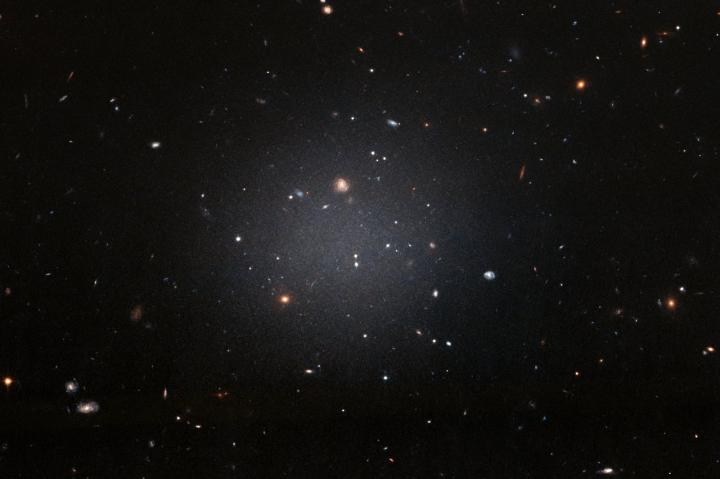
This large, fuzzy-looking galaxy is so diffuse that astronomers can clearly see distant galaxies behind it. This ghostly galaxy is not well-formed. It does not look like a typical spiral galaxy, but it does not look like an elliptical galaxy either. Based on the colours of its globular clusters, the galaxy is about 10 billion years old. However, even the globular clusters are strange: they are twice as large as typical groups of stars.
All of these oddities pale in comparison to the weirdest aspect of this galaxy: NGC 1052-DF2 is missing most, if not all, of its dark matter. The galaxy contains only a tiny fraction of dark matter that astronomers would expect for a galaxy this size. But how it formed is a complete mystery.
"I spent an hour just staring at this image," said lead researcher Pieter van Dokkum of Yale University. "This thing is astonishing: a gigantic blob so sparse that you see the galaxies behind it. It is literally a see-through galaxy."
This discovery makes all the current theories on the distribution of dark matter and its influence on galaxy formation redundant or partly false. "There is no theory that predicts these types of galaxies — how you actually go about forming one of these things is completely unknown," says co-author Allison Merritt from Yale University.
The MOND theory — Modified Newtonian Dynamics — suggests that the phenomena usually attributed to dark matter can be explained by modifying the laws of gravity. The result of this would be that a signature usually attributed to dark matter should always be detected, and is an unavoidable consequence of the presence of ordinary matter.
However, the discovery of NGC 1052-DF2 demonstrates that dark matter is somehow separable from galaxies. This is only expected if dark matter is bound to ordinary matter through nothing but gravity. Now researchers are pondering possible explanations for this missing dark matter in NGC 1052-DF2.
Did a cataclysmic event such as the birth of a multitude of massive stars sweep out all the gas and dark matter? Or did the growth of the nearby massive elliptical galaxy NGC 1052 billions of years ago play a role in NGC 1052-DF2’s dark matter deficiency? These ideas, however, still do not explain how this galaxy formed.
NGC 1052-DF2 is missing its dark matter. The galaxy contains only a tiny fraction of dark matter that astronomers would expect for a galaxy this size. But how it formed is a complete mystery.
Credit: NASA, ESA, and P. van Dokkum (Yale University)