Arun has been associated with India International Times since 2018 and he has been a key reporter in covering science and space related stories. He can be reached at arunKnn@indiainternationaltimes.com.
australian media is abuzz with the news that a secret letter written by Queen Elizabeth II is locked inside a vault or time capsule in Sydney, to be opened in 2086, 100 years after it was written.
According to 7NEWS Australia, the letter is inside a vault in a historic building in Sydney was written in November 1986, addressed to the people of Sydney. Even the Queen’s personal staff are not aware of what the letter says.
Hidden inside a glass case in a secure location, it can’t be opened until 2085. The address was to the Lord Mayor of Sydney, and the instruction clearly says:
“On a suitable day to be selected by you in the year 2085 A.D, would you please open this envelope and convey to the citizens of Sydney my message to them.” It is simply signed, “Elizabeth R.”
Speculation is rife that it could be about a time capsule to be unearthed in 2086 for the people of Australia. The Queen had special place for Australia in her heart and visited almost all the regions during her visits.
Queen Elizabeth II has special ties with Australia, which honoured the Queen as Head of the State and defeated a referendum to replace her in 1999. She had visited Australia 16 times during her 70 years of reign.
“It was clear Her Majesty held a special place in her heart for Australia,” Australian Prime Minister Anthony Albanese said..
On Friday, Sydney’s iconic Opera House was lit with a tribute to the Queen.
Oslo: Bollywood filmmaker-actor Rahul Mittra, veteran action director Sham Kaushal and writer-actor-director Saurabh Shukla were among those honoured at the 20th edition of Bollywood Festival Norway in a glittering ceremony at a packed Lorenskog kulturhus centre, few miles away from the capital city of Oslo.
Mayor of Lorenskog Ragnhild Bergheim presented the Lifetime Achievement Award to Sham Kaushal
while Saurabh Shukla and Rahul Mittra were awarded for their contribution to the Indian film
industry. An emotional Sham Kaushal thanked everyone with whom he worked in the film industry
in a career spanning four decades and urged everyone to never stop dreaming.
Saurabh Shukla shared his passion to become rich when he came to Mumbai years ago and finally
succeeded in getting paid for what he likes doing. “That for me is being rich,” said Shukla.
Norway Festival 2022
Rahul Mittra who has succeeded in making a name in the Indian film and entertainment industry in a short span of time, spoke about the power of Indian cinema as the strongest soft power and highlighted its role as a major tool of enhancing cultural diplomacy in the world.
Iranian actors Sam Nauri, Helia Emami and Sharifinia. The award function was followed by
spectacular Indian dance performances by Indian, Polish & Norwegian dance troupes and a stunning
act by The International stunt academy of Norway.
Festival Director Nasrullah Qureshi shared his journey of last twenty years to popularise Indian
cinema in this part of the world while head of festival programme Hemant Wason gave the vote of
thanks.
The festival will also have multiple film screenings of Indian and Iranian films, followed
by a concert which will pay to legendary Indian singer Lata Mangeshkar in the coming few days.
The rate that emerging wildlife diseases infect humans has steadily increased over the last three decades. Viruses, such as the global coronavirus pandemic and recent monkeypox outbreak, have heightened the urgent need for disease ecology tools to forecast when and where disease outbreaks are likely.
A University of South Florida assistant professor helped develop a methodology that will do just that – predict disease transmission from wildlife to humans, from one wildlife species to another and determine who is at risk of infection.
The methodology is a machine-learning approach that identifies the influence of variables, such as location and climate, on known pathogens. Using only small amounts of information, the system is able to identify community hot spots at risk of infection on both global and local scales.
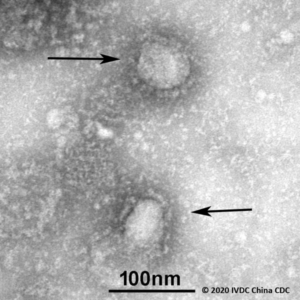
coronavirus
“Our main goal is to develop this tool for preventive measures,” said co-principal investigator Diego Santiago-Alarcon, a USF assistant professor of integrative biology. “It’s difficult to have an all-purpose methodology that can be used to predict infections across all the diverse parasite systems, but with this research, we contribute to achieving that goal.”
With help from researchers at the Universiad Veracruzana and Instituto de Ecologia, located in Mexico, Santiago-Alarcon examined three host-pathogen systems – avian malaria, birds with West Nile virus and bats with coronavirus – to test the reliability and accuracy of the models generated by the methodology.
The team found that for the three systems, the species most frequently infected was not necessarily the most susceptible to the disease. To better pinpoint hosts with higher risk of infection, it was important to identify relevant factors, such as climate and evolutionary relationships.
By integrating geographic, environmental and evolutionary development variables, the researchers identified host species that have previously not been recorded as infected by the parasite under study, providing a way to identify susceptible species and eventually mitigate pathogen risk.
“We feel confident that the methodology is successful, and it can be applied widely to many host-pathogen systems,” Santiago-Alarcon said. “We now enter into a phase of improvement and refinement.”
The results, published in the Proceedings of the National Academy of Sciences, prove the methodology is able to provide reliable global predictions for the studied host–pathogen systems, even when using a small amount of information. This new approach will help direct infectious disease surveillance and field efforts, providing a cost-effective strategy to better determine where to invest limited disease resources.
Bats/wikipedia
Predicting what kind of pathogen will produce the next medical or veterinary infection is challenging, but necessary. As the rate of human impact on natural environments increases, opportunity for novel diseases will continue to rise.
“Humanity, and indeed biodiversity in general, are experiencing more and more infectious disease challenges as a result of our incursion and destruction of the natural order worldwide through things like deforestation, global trade and climate change,” said Andrés Lira-Noriega, research fellow at the Instituto de Ecologia. “This imposes the need of having tools like the one we are publishing to help us predict where new threats in terms of new pathogens and their reservoirs may occur or arise.”
The team plans to continue their research to further test the methodology on additional host-pathogen systems and extend the study of disease transmission to predict future outbreaks. The goal is to make the tool easily accessible through an app for the scientific community by the end of 2022.
Research has established that there are traces of Neandertal DNA in the genome of modern humans. Now an exploratory study that assessed the facial structure of prehistoric skulls is offering new insights, and supports the hypothesis that much of this interbreeding took place in the Near East – the region ranging from North Africa to Iraq.
“Ancient DNA caused a revolution in how we think about human evolution,” says Steven Churchill, co-author of the study and a professor of evolutionary anthropology at Duke University. “We often think of evolution as branches on a tree, and researchers have spent a lot of time trying to trace back the path that led to us, Homo sapiens. But we’re now beginning to understand that it isn’t a tree – it’s more like a series of streams that converge and diverge at multiple points.”
“Our work here gives us a deeper understanding of where those streams came together,” says Ann Ross, corresponding author of the study and a professor of biological sciences at North Carolina State University.
Neanderthal/Photo:en.wikipedia.org
“The picture is really complicated,” Churchill says. “We know there was interbreeding. Modern Asian populations seem to have more Neandertal DNA than modern European populations, which is weird – because Neandertals lived in what is now Europe. That has suggested that Neandertals interbred with what are now modern humans as our prehistoric ancestors left Africa, but before spreading to Asia. Our goal with this study was to see what additional light we could shed on this by assessing the facial structure of prehistoric humans and Neandertals.”
“By evaluating facial morphology, we can trace how populations moved and interacted over time,” Ross explains. “And the evidence shows us that the Near East was an important crossroads, both geographically and in the context of human evolution.”
For this study, the researchers collected data on craniofacial morphology from the published literature. This ultimately resulted in a data set including 13 Neandertals, 233 prehistoric Homo sapiens, and 83 modern humans.
The researchers focused on standard craniofacial measurements, which are reproducible, and used those measurements to assess the size and shape of key facial structures. This then allowed the researchers to do an in-depth analysis to determine whether a given human population was likely to have interbred with Neandertal populations, as well as the extent of that likely interbreeding.
“Neandertals had big faces,” Churchill says. “But size alone doesn’t establish any genetic link between a human population and Neandertal populations. Our work here involved a more robust analysis of the facial structures.”
The researchers also accounted for environmental variables that are associated with changes in human facial characteristics, to determine the likelihood that connections they established between Neandertal and human populations were the result of interbreeding rather than other factors.
“We found that the facial characteristics we focused on were not strongly influenced by climate, which made it easier to identify likely genetic influences,” Ross says. “We also found that facial shape was a more useful variable for tracking the influence of Neandertal interbreeding in human populations over time. Neandertals were just bigger than humans. Over time, the size of human faces became smaller, generations after they had bred with Neandertals. But the actual shape of some facial features retained evidence of interbreeding with Neandertals.”
“This was an exploratory study,” Churchill says. “And, honestly, I wasn’t sure this approach would actually work – we have a relatively small sample size, and we didn’t have as much data on facial structures as we would have liked. But, ultimately, the results we got are really compelling.
“To build on this, we’d like to incorporate measurements from more human populations, such as the Natufians, who lived more than 11,000 years ago on the Mediterranean in what is now Israel, Jordan and Syria.”
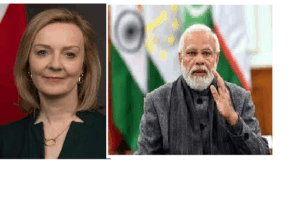
Prime Minister Narendra Modi spoke on phone today with The Rt. Hon. Elizabeth Truss, Prime Minister of the United Kingdom.
PM Modi congratulated PM Truss on assuming the office of the Prime Minister of UK. He also appreciated her contributions to the India-UK bilateral relationship in her previous roles as Trade Secretary and Foreign Secretary. Both leaders committed to further strengthen the Comprehensive Strategic Partnership between India and UK.
The two leaders discussed various issues of bilateral interest including the progress in the implementation of the Roadmap 2030, ongoing FTA negotiations, defence & security cooperation, and the people-to-people ties between both countries.
On behalf of the people of India, Prime Minister Modi conveyed deep condolences to the Royal family and the people of UK on the sad demise of Queen Elizabeth II.
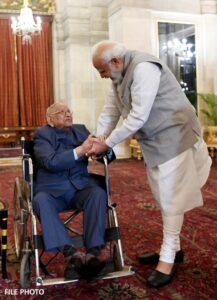
The Prime Minister, Shri Narendra Modi has paid his condolences after the demise of renowned archeologist Shri Braj Basi Lal.
The Prime Minister tweeted;
“Shri BB Lal was an outstanding personality. His contributions to culture and archaeology are unparalleled. He will be remembered as a great intellectual who deepened our connect with our rich past. Pained by his demise. My thoughts are with his family and friends. Om Shanti.”
Narendra Modi has paid his condolences over the demise of Braj Basi Lal
Amid ongoing economic crisis with skyrocketing inflation and dollar crunch, Sri Lanka will get Indian loan assistance to print text books for school children for the year 2023.
Education Minister Susil Premejanatha said that steps have been taken to import raw materials including papers and ink required for textbook printing under Indian credit line for 2023 education year starting from next March.
With no dollars to import printing material, education was one of the main victims of current economic crisis the country has been going through and in March last year, the island nation cancelled examinations for millions of students with no papers to print exam papers.
Sri Lanka provides text books and school uniforms for students free of cost at a cost of around $44 million.
India has extended 8 Lines of Credit (LOCs) to Sri Lanka amounting to US$1,850.64 million in the past 10 years, External Affairs Minister (EAM) S Jaishankar informed the Lok Sabha last month.
“Government of India has extended 08 Lines of Credit (LOCs) to Sri Lanka amounting to USD 1,850.64 million in sectors including railways, infrastructure, defence, renewable energy, petroleum and fertilizers in the past 10 years,” Jaishankar said in a written reply.
— SEC SL – Capital Market Development & Awareness (@SEC_SriLanka) September 6, 2022
In January 2022, India extended a $400 million currency swap and a Line of Credit of US$ 500 million for importing fuel from India. India has extended a credit facility of US$ 1 billion for the procurement of food, medicines and other essential items from India.
In addition, humanitarian assistance was provided to Sri Lanka by gifting essential medicines worth about INR 6 crores, 15,000 litres of kerosene oil and US$55 million LoC for procurement of Urea fertilizer.
India has provided the biggest financial support so far extending $4 billion for the year 2022 alone. The International Monetary Fund (IMF) agreed to provide $2.9 billion over four years with conditions to help salvage the country from its economic crisis.
Vice President Kamala Harris highlighted the importance of climate, human spaceflight, and STEM education during the Biden-Harris Administration’s second National Space Council meeting Friday, held at NASA’s Johnson Space Center in Houston.
“For generations, with our allies and partners around the globe, America has led our world in the exploration and use of space,” said Harris. “Our leadership has been guided by a set of fundamental principles – cooperation, security, ambition, and public trust – which is the recognition, of course, that space can and must be protected for the benefit of all people.
There is so much we still don’t know and so much we still haven’t done – space remains a place of undiscovered and unrealized opportunity. Our test and our responsibility is to work together to guide humanity forward into this new frontier and to make real the incredible potential of space for all people.”
National Space Council Meeting led by Chairwoman, Vice President Kamala Harris. Photo Date: September 9, 2022. Location: Building 9NW, SVMF. Photographer: Robert Markowitz.
For more than 50 years, NASA satellites have provided open-source and publicly available data on Earth’s land, water, temperature, weather, and climate. Improving access to key climate information is a priority for the agency. Building on his previous announcement, NASA Administrator Bill Nelson released the first concept, and shared a new video for the Earth Information Center. The center will allow the public to see how the Earth is changing and guide decision makers to mitigate, adapt, and respond to climate change.
“Just like we use mission control to monitor operations during spaceflight, we’re embarking on this effort to monitor conditions here on our home planet, and it will be available to everyone in an easy-to-access format,” Nelson said.
Planning for the Earth Information Center is underway with the initial phase providing an interactive visual display of imagery and data from NASA and other government agencies. NASA Headquarters plans to house this initial interactive display with goals to expand in person and virtual access over the next five years.
The Vice President also underscored the important research conducted on the International Space Station that will enable long duration stays on the Moon and future human missions to Mars, in addition to benefits to life here on Earth.
NASA/Photo: Nasa.gov
“NASA uses the International Space Station to conduct critical research on the risks associated with future Mars missions – space radiation, isolation, and distance from Earth, just to name a few. It’s also a testbed to develop the technologies we’ll need for long duration stays on the Moon, where we will build an Artemis Base Camp on the surface and Gateway outpost in lunar orbit,” Nelson said. “Research on the space station demonstrates that the benefits of microgravity are not just for discovery. We also develop new technologies that improve life on Earth, like treatments for cancer.”
In conjunction with the meeting, NASA announced a new Space Grant K-12 Inclusiveness and Diversity in STEM (SG KIDS) opportunity that will award more than $4 million to institutions across the U.S. to help bring the excitement of NASA and STEM to traditionally underserved and underrepresented groups of middle and high school students. The announcement is a part of a broader set of commitments made by public, private, and philanthropic partners announced by the Vice President to help in the recruitment and development of the next generation of the space workforce.
SG KIDS also addresses the White House Executive Order on Advancing Racial Equity and Support for Underserved Communities Through the Federal Government, as well as NASA Administrator Bill Nelson’s focus on providing authentic STEM opportunities to K-12 students.
While at NASA’s Johnson Space Center, Vice President Harris toured the agency’s mission control with Nelson and Johnson Center Director Vanessa Wyche. The Vice President also spoke with NASA astronauts Bob Hines, Kjell Lindgren, and Jessica Watkins, living and working aboard the International Space Station about how their research benefits life on Earth, supports long duration space flight, and protects our planet.
The Vice President also received a tour of the Space Vehicle Mockup Facility (SVMF), where space flight crews and their support personnel receive world class training on high-fidelity hardware for real-time mission support. The SVMF consists of space station, Orion, Commercial vehicle mockups, part-task trainers and rack interfaces, a Precision Air Bearing Floor, and a Partial Gravity Simulator.
A recording of the full National Space Council meeting is available online at:
Union Minister of Environment, Forest and Climate Change, Shri Bhupender Yadav inaugurated the first National Conference on Sustainable Coastal Management in India in Bhubaneswar today.
This conference is being organized by the Green Climate Fund supported project – Enhancing Climate Resilience of India’s Coastal Communities.
The objective of the conference is to bring officials from all 13 coastal states of India under one roof to focus on the three interrelated themes :
Coastal and marine biodiversity,
Climate mitigation and adaptation and
Coastal pollution.
This endeavour is aimed at creating a vibrant network of stakeholders who will continue to engage with each other on the topics but also on cross-cutting themes such as coastal governance, technologies and innovation as well as domestic and international finance.
“The Indian coastline is of immense strategic, economic and social importance to the country.
Indian coastline spans 7,500 kilometres, seventh longest in the world,
home to 20 percent of the country’s population,
Three of our four metropolitan cities lie on the coast,
supports more than 17,000 species of plants and animals.
There is a great diversity of ecosystems within our coastal regions that support more than 17,000 species of plants and animals. With the changing climate, we need to build the resilience of communities living in coastal areas.” said Shri Bhupender Yadav, Union Minister of Environment, Forest and Climate Change.
Sustainable Coastal Management in India
“This conference comes at an important time as India has submitted its revised NDCs and seeks to create multi-sectoral partnerships to meet these targets” he added.
Speaking on the occasion, Shri. Ashwini Kumar Choubey, Minister of State for Environment, Forest & Climate Change, said: “Such conferences are important to bring the conversations of resilience and sustainability to our country’s coastal areas. This was also envisioned in the Honourable Prime Minister’s LiFE movement.”
Sustainable Coastal Management in India
Sustainable coastal management is recognised as need of the hour. Data-driven policies and management frameworks, participatory conservation models, and convergence between stakeholders are the key pillars for effective coastal management.
A programme on Enhancing Climate Resilience of Coastal Communities is being implemented in partnership with UNDP in the states of Odisha, Andhra Pradesh and Tamil Nadu. Supported by the Green Climate Fund (GCF), the initiative is integrating ecosystem and community-based approaches to adaptation into coastal management and planning.
As Bangalore is struggling to withstand torrential rains, the appalling picture of inadequate infrastructure is getting zoomed in international headlines with pictures of techies, CEOs travelling by boats and tractors to reach workplaces or shifting from their inundated residences.
Meanwhile, social media is abuzz with a debate on India’s Silicon City’s infrastructure, while the locals retaliated with the Twitter campaign for “Leave Bengaluru” is trending, as some users are asking migrants to leave the city and go back to their native places..
The tech communities and the Outer Ring Road Companies Association have asked the government that if they are not ensured proper infrastructure, they would find new destinations.
It ensued twitter campaigns titled “#LeaveBengalurua, “#GetLostMigrants’ and a#Bengaluru_nammadu’ (It’s our Bengaluru) are trending.
One Virat Rocky slammed trolls as “migrant mindset” and said it’s “double standard” mindset. He said, “If you don’t love me in my crisis, then you don’t deserve me in my good times.” He has used photos of water flooding on arterial roads and pictures of the beautiful spring season in the city.
Another post stated: “Bengaluru is our city, not yours. Please go back to your native places.” “Listen migrants, you are in Bengaluru to earn your bread and butter, just complete your work and get lost, says yet another post.
On the other hand, “This is the result of paying taxes to the government. Forget about good infrastructure, they are not able to provide basic facilities as well,” stated a post while referring to the Global Technology Park on Outer Ring Road being inundated.
Meanwhile a minister too joined the debate.
“Those who say they can’t live in silicon city Bengaluru, should not come here. No one invited them to come and reside here,” stated Minister for Horticulture V. Munirathna, targetting the trolls.
Those who talk in demeaning manner about Bengaluru belong to low culture. It is not fair for them to bad mouth Bengaluru, the city which has given them food, shelter and livelihood, he said.
Bengaluru city is spoiled only because of people like this, ones whose history of the city will never talk about it. Those who come here first have to know the history. People from north India have settled in Bengaluru in large numbers. Those who tweet as per their whims and fancies must be taught a lesson legally, Minister Munirathna opined.
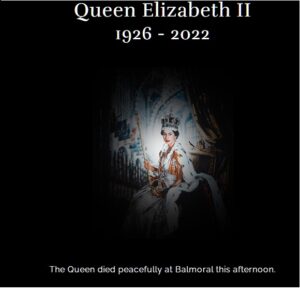
Britain’s longest-serving Queen Elizabeth II died at Balmoral aged 96, ending an era of 70 years of rule. Her family was at her bed side at the Scottish estate since earlier on Thursday.
In a statement, Buckingham Palace said: “The Queen died peacefully at Balmoral this afternoon.
The Queen came to the throne in 1952. Following her demise, the Operation London Bridge, codename to post-Queen formalities, will come into effect.
Her eldest son Charles will lead the country in mourning as the new King with the title, King Charles III, and take over as head of state for 14 Commonwealth realms from Canada to Australia.
In a statement, the new King said, “The death of my beloved mother Her Majesty the Queen, is a moment of the greatest sadness for me and all members of my family.
“We mourn profoundly the passing of a cherished Sovereign and a much-loved Mother. I know her loss will be deeply felt throughout the country, the Realms and the Commonwealth, and by countless people around the world.”
Queen Elizabeth II is dead, Charles III becomes UK’s new King
All the Queen’s children travelled to Balmoral, near Aberdeen, after the news of her deteriorating health started pouring in. Her grandson, Prince William, is already there and his brother, Prince Harry, is on his way.
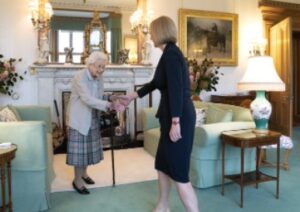
Prime Minister Liz Truss, who was appointed by the Queen on Tuesday, said the monarch “provided us with the stability and strength that we needed”.
15 PMs appointed by her
Her reign spanned 15 prime ministers starting with Winston Churchill, born in 1874, and including Ms Truss, born 101 years later in 1975, reported BBC.
At Buckingham Palace in London, the Union flag was lowered to half-mast at 18:30 BST.
Born Elizabeth Alexandra Mary Windsor, in Mayfair, London, on 21 April 1926, she married her third cousin, Philip, Prince of Greece, who was serving in the Royal Navy in 1947 and he remained her strength through 74 years of marriage, until his death in 2021, aged 99.
Queen Elizabeth II, Britain’s longest serving monarch, is under medical supervision at the Balmoral Castle in Scotland with rumours of her deteriorating health condition going viral.
According to the Buckingham Palace, “Following further evaluation this morning, the Queen’s doctors are concerned for Her Majesty’s health and have recommended she remain under medical supervision.”
The palace’s statement on Thursday further escalated concerns about the Queen’s health and people started gathering outside the palace. As many as 100 people, braving torrential rain, are seen at the gates of the Buckingham Palace amid concerns over the health of Queen Elizabeth II.
Queen Elizabeth II
“The Queen remains comfortable and at Balmoral,” a palace spokesperson said. Reports said that all the children of the Queen — Prince Charles, Princess Anne and Prince Edward are at her side in the palace while her grandson Prince William reached the Balmoral Castle.
Prince Harry, who was travelling with his wife Sussex Meghan, is planning to travel to Balmore alone. Prime Minister Prime Liz Truss is unlikely to travel to Scotland, her spokesperson told news agency Reuters on Thursday evening.
The 96-year-old monarch has been facing several health issues since October 2021 and often struggles to to walk and stand. Recently, she was seen using walking stick while meeting the newly elected PM Truss.
On hearing the condition of the Queen’s health, the traditional ceremony of the Changing of the Guard to take place outside the Buckingham Palace on Friday morning, has been called off.
In an interview with NDTV, former US President Donald Trump hinted at running again in 2024, in what may be his first revelation on the subject.
When asked, Trump said, “Everyone wants me to run,” and claimed that he is ahead in popularity polls whether in his Republican party or among the Democrats.
“I’m leading in the polls, and every poll – Republican polls and Democrat polls. I’ll make a decision in the very near future, I suspect. And I think that a lot of people are going to be very happy,” he said.
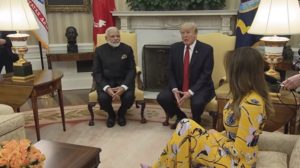
Video grab of PM Narendra Modi with former US President Donald Trump (White House)
Recalling his 2019 joint address with Indian PM Narendra Modi at “Howdy, Modi” rally in Houston, Texas, he said, “I’ve had a great relationship with India and with PM Modi. We were, we’ve been friends. I think he’s a great guy and doing a terrific job,” Trump said.
On his daughter Ivanka Trump, he praised her as the most capable person but refuted rumors that she would be his Vice Presidential candidate. ” I’ve never even heard but that’s an interesting idea. I wouldn’t (consider it).”
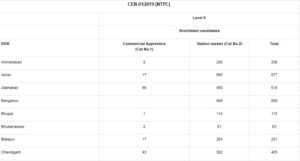
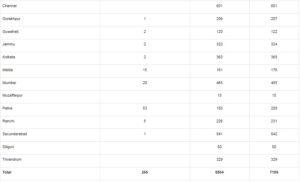
Indian Railways conducted Computer Based Aptitude Test (CBAT) of Level 6 of CEN 01/2019 Non Technical Popular Categories (NTPC) for 7124 posts for recruitment of Station Masters and Commercial Apprentices on 30th July 2022.
The results of Level 6 posts of all 21 Railway Recruitment Boards (RRB) have been declared. The break-up of selected candidates for each RRB is as follows:
Adolescents from deprived backgrounds are more likely to report an addiction to Facebook, Instagram, WhatsApp and other social media, according to research published in the peer-reviewedjournal Information, Communication and Society.
In the first study of its kind, the findings show a link between economic inequality and problematic use of social network platforms and instant messaging applications. The situation is worse in schools where wealth and social differences exist between classmates.
The authors say the results – based on more than 179,000 schoolchildren in 40 countries – suggest that new strategies are needed on social media use that reduce the impact of deprivation.
Action by policymakers could help limit young people’s dysfunctional or abnormal behaviour, add the authors. These negative patterns include being unable to reduce screen time or lying to friends and family about social media use.
facebook
“These findings indicate the potentially harmful influences of inequality at the individual, school and country level on adolescents’ problematic social media use,” says lead author Michela Lenzi from the University of Padua, Italy, an Associate Professor in psychology.
“Policymakers should develop actions to reduce inequalities to limit maladaptive patterns of social media use by adolescents.”
“As the digital divide continues to close in many countries, economic inequalities persist and remain a robust social determinant of adolescent health and well-being. Schools represent an ideal setting to foster safe and prosocial online behaviours.”
Many young people use social media every day and the benefits to well-being are well-documented, as are the risks.
Problematic social media use (PSMU) is not formally recognised as a behavioural addiction. However, it is regarded as a health issue affecting young people.
Social Media/Photo:indiainternationaltimes
This study aimed to investigate the links between socio-economic inequalities, measured at individual, school and country level, and adolescent PSMU.
In addition, the authors evaluated the role of peer and family support as moderators of these associations.
The findings were based on 179,049 children aged 11, 13 and 15 from 40 countries including most of Europe and Canada. Evidence came from the Health Behaviour in School-aged Children, an international World Health Organization collaborative study carried out every four years.
The researchers asked children to complete questionnaires in order to identify addiction-like behaviour associated with social media. The forms were filled out anonymously while supervised in the classroom by a teacher or trained interviewer.
Any child who reported six or more items was identified as having PSMU. These items included feeling bad when not using social media, trying but failing to spend less time using it, and using social media to escape from negative feelings.
An index based on material assets in the home or family activities was used to calculate scales of deprivation. Items included number of bathrooms, and how many family vacations out of the country in the past year.
The authors measured country wealth, and family/peer social support e.g. degree of help provided from relatives and friends. They also took into account the proportion of the population who used the internet in each country.
Findings showed that adolescents who were relatively more deprived than their schoolmates and attended more economically unequal schools were more likely to report PSMU.
The association with a wealth divide among pupils in the same class was stronger in youths with lower peer support. But a link between country income inequality and PSMU was only found in adolescents reporting low levels of family support.
There may be many reasons for the link between economic deprivation and PSMU. One theory suggested by the authors is that sharing images or videos resonates especially with the more deprived adolescents because they associate them with power and status.
They suggest that school-based prevention efforts might target ‘objective and perceived’ social class differences among schoolmates.
Also key, is increasing peer support which the authors found was a protective factor in the relationship between relative deprivation and PSMU.
Union Minister of Commerce and Industry, Consumer Affairs, Food and Public Distribution and Textiles, Shri Piyush Goyal will continue his tour of the US and travel to Los Angeles today to attend the first in-person Ministerial meeting of the Indo-Pacific Economic Forum (IPEF), US-India Strategic Partnership Forum (USISPF) meeting and other significant events.
Earlier in the day, Shri Goyal had a luncheon engagement with ‘Indiaspora’.
Interacting with media later in the day, ahead of the IPEF Ministerial, Shri Piyush Goyal said that discussions at IPEF would focus on opening opportunities for the member nations to work in partnership with each other to ensure that particularly during challenges and difficult times, supply chains remain open and business and people of countries don’t suffer because of chaotic conditions like covid and conflict.
Ministry of Commerce/photo:en.wikipedia.org
Terming IPEF as a new and unique initiative and a partnership between rules-based, like-minded countries which have transparent economic systems, Shri Goyal said that IPEF would work to ensure that the Indo-Pacific Region would remain secure and open for business.
Elaborating further, the Minister said that at the IPEF Ministerial, discussions would focus on facilitating open trade, keeping supply chains open. He said that as trading relations with IPEF nations expand, investments, both from and into India, would also get a leg up. All the countries meeting tomorrow have a lot to offer each other in terms of trade, investments and technology and we will work together on all fronts, he added.
Responding to a query, Shri Goyal said that US and India share a very good and strong business relationship. The US is India’s largest trading partner and many Indian companies do a lot of work for their counterparts in America. There is a lot of investment flowing from US to India, he added.
Observing that US and India are getting closer together, the Minister said that the relations between the two nations were strengthening by the day through two Quads now- one with Japan and Australia and another with Israel and UAE. 2 plus 2 ministerial dialogues between India and USA are robust and vibrant and our engagements in several areas including geopolitical and sensitive areas are expanding. The leaders of both countries, the businesses of both countries and the people of both countries are closer than ever before, he added.
Highlighting some of the milestones India has achieved in international engagement such as USD 675 billion worth of foreign trade despite challenges of conflict, inflation, threat of recession and pandemic and record FDI in the last eight years, the Minister expressed confidence that India is and would remain a preferred trading partner and investment destination to the world, thanks to the huge market, honest government and transparent economic policies, rule of law, vibrant media and judiciary. This will improve the well-being of people of India provide jobs, thrust to economic activity and thus growth, he added.
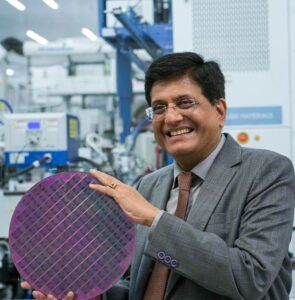
The Minister also engaged with top companies and labs of semiconductor manufacturing and research to explore greater collaboration with Indian companies. He held a meeting with Tim Archer, CEO of Lam Research.
“Building on our pool of young & skilled workforce, discussed how India in collaboration with Lam research, can provide a leading edge in semiconductor innovation”, he tweeted after the meeting.
The newly-launched iPhone 14 Pro and iPhone 14 Pro Max have certain new features worth to take note of such as the first-ever 48MP camera, the Always-On display, new SoS connectivity via satellite, and other safety capabilities.
Powered by A16 Bionic, the fastest chip ever in a smartphone, iPhone 14 Pro introduces a new class of pro camera system, with the first-ever 48MP Main camera on iPhone featuring a quad-pixel sensor, and Photonic Engine, an enhanced image pipeline that dramatically improves low-light photos.
These features help make iPhone more useful for everyday tasks, for emergency situations with SOS via satellite and Crash Detection, said the company. To be available in four colors — deep purple, silver, gold, and space black — pre-orders will begin Friday, September 9, with availability beginning Friday, September 16.
“Our customers count on their iPhone every day, and with iPhone 14 Pro and iPhone 14 Pro Max, we’re delivering more advancements than any other iPhone,” said Greg Joswiak, Apple’s senior vice president of Worldwide Marketing.
Design and Display
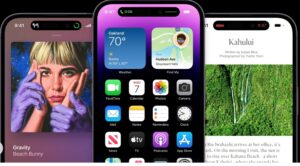
iPhone 14 Pro and iPhone 14 Pro Max feature a surgical-grade stainless steel and textured matte glass design in four colors. Available in 6.1-inch and 6.7-inch sizes,1 both models include a new Super Retina XDR display with ProMotion that features the Always-On display for the first time, enabled by a new 1Hz refresh rate and power-efficient technologies.
Apple said the feature makes the new Lock Screen even more useful, keeping the time, widgets, and Live Activities available at a glance. The advanced display also brings the same peak HDR brightness level as Pro Display XDR, and the highest outdoor peak brightness in a smartphone: up to 2000 nits, which is twice as bright as iPhone 13 Pro.
Always-On Display
Both models include a new Super Retina XDR display with ProMotion that features the Always-On display, enabled by a new 1Hz refresh rate and multiple power-efficient technologies.
Both iPhone 14 Pro and iPhone 14 Pro Max offer features with the Ceramic Shield front cover — tougher than any smartphone glass — and are protected from common spills and accidents with water and dust resistance.
Dynamic Island
The Dynamic Island enables new ways to interact with iPhone, featuring a design that blends the line between hardware and software, adapting in real time to show important alerts, notifications, and activities. With the introduction of the Dynamic Island, the TrueDepth camera has been redesigned to take up less of the display area.
Without impeding content on the screen, the Dynamic Island maintains an active state to allow users easier access to controls with a simple tap-and-hold. Ongoing background activities like Maps, Music, or a timer remain visible and interactive, and third-party apps in iOS 16 that provide information like sports scores and ride-sharing with Live Activities can take advantage of the Dynamic Island.
The Dynamic Island blurs the line between hardware and software, fluidly expanding into different shapes to clearly convey important activities like Face ID authentication.
Finally, Apple today has iPhone 14 Pro and iPhone 14 Pro Max, the most advanced Pro lineup ever featuring the Always-On display, the first-ever 48MP camera on iPhone, Crash Detection, Emergency SOS via satellite, and a new way to receive notifications and activities with the Dynamic Island.
iPhone 14 Pro and iPhone 14 Pro Max represent features like the Dynamic Island, the first-ever 48MP camera on iPhone, the Always-On display, and safety capabilities, sid Apple at the livestreamed launch event.
iphone 14 pro
“Our customers count on their iPhone every day, and with iPhone 14 Pro and iPhone 14 Pro Max, we’re delivering more advancements than any other iPhone,” said Greg Joswiak, Apple’s senior vice president of Worldwide Marketing at the launch event.
“Groundbreaking safety capabilities bring users even more security, offering help when they need it most. And with the incredibly powerful and efficient A16 Bionic chip and all-day battery life, this is the best iPhone yet,” he said.
Powered by A16 Bionic, the fastest chip ever in a smartphone, iPhone 14 Pro introduces a new class of pro camera system, with the first-ever 48MP Main camera on iPhone featuring a quad-pixel sensor, and Photonic Engine, an enhanced image pipeline that dramatically improves low-light photos.
These features help make iPhone more useful for everyday tasks, creative projects, and now even emergency situations with features such as Emergency SOS via satellite and Crash Detection, said the company.
iPhone 14 Pro and iPhone 14 Pro Max will be available in four colors — deep purple, silver, gold, and space black. Pre-orders begin Friday, September 9, with availability beginning Friday, September 16 online and at Apple stores worldwide.
The newly launched iPhone 14 Pro and iPhone 14 Pro Max will be available in deep purple, silver, gold, and space black in 128GB, 256GB, 512GB, and 1TB storage capacities.
Customers in Australia, Canada, China, France, Germany, India, Italy, Japan, Saudi Arabia, Singapore, Spain, Thailand, the UAE, the UK, the US, and 30 other countries and regions will be able to pre-order iPhone 14 Pro and iPhone 14 Pro Max beginning at 5 a.m. PDT on Friday, September 9, with availability beginning Friday, September 16.
iPhone 14 Pro and iPhone 14 Pro Max will be available in Malaysia, Turkey, and 20 other countries and regions beginning Friday, September 23.
iphone 14 pro
Emergency SOS via satellite will be available starting in the US and Canada in November, and the service will be included for free for two years with the activation of iPhone 14 Pro and iPhone 14 Pro Max.
Customers can get iPhone 14 Pro for $41.62 (US) a month for 24 months or $999 (US) before trade-in, and iPhone 14 Pro Max for $45.79 (US) a month for 24 months or $1,099 (US) before trade-in from apple.com/store, in the Apple Store app, and at Apple Store locations. iPhone 14 Pro and iPhone 14 Pro Max are also available through Apple Authorized Resellers and select carriers.
Customers can save up to $1,000 (US) on iPhone 14 Pro and iPhone 14 Pro Max with trade-in directly from apple.com/store or at an Apple Store when they activate it with select US carriers. Terms apply. For eligibility requirements and more details, see apple.com/shop/buy-iphone/carrier-offers.
Customers in the US can get ready for iPhone 14 Pro and iPhone 14 Pro Max pre-orders until 10 p.m. PDT on Thursday, September 8, by visiting apple.com/store or using the Apple Store app. They can choose to pay monthly or in full, add a trade-in credit toward their new product, or upgrade through the iPhone Upgrade Program.
iOS 16 will be available as a free software update on Monday, September 12.
Customers who purchase iPhone 14 Pro and iPhone 14 Pro Max will receive three months of Apple Arcade with a new subscription.
Leather Wallet with MagSafe and iPhone 14 Pro and iPhone 14 Pro Max Leather Cases will be available in five new colors: midnight, forest green, ink, umber, and orange.
iPhone 14 Pro and iPhone 14 Pro Max Clear Case and Silicone Cases will be available in midnight, storm blue, red, chalk pink, lilac, elderberry, succulent, and sunglow.
One of the most serious threats to wildlife biodiversity, in addition to the climate crisis, is the illegal killing and trafficking of animals and plants. Despite many laws against the black-market wildlife trade, it is considered to be one of the most lucrative illicit industries in the world.
Animals, especially endangered and threatened species, are often exploited and sold for their pelts or used as medicine, aphrodisiacs, curios, food and spiritual artifacts.
In a new study published in Global Change Biology, Arizona State University researchers estimate that more than 1.1 million sea turtles have been illegally killed and, in some cases, trafficked between 1990 and 2020. Even with existing laws prohibiting their capture and use, as many as 44,000 sea turtles were exploited each year over the past decade in 65 countries or territories and in 44 of the world’s 58 major sea turtle populations.
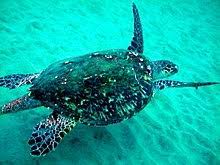
Hawksbills turtle/Photo:en.wikipedia.org
Despite the seemingly large number of poached turtles, the study shows that the reported illegal exploitation of sea turtles declined by approximately 28% over the last decade —something that surprised the researchers. They initially expected to see an overall increase in reported poaching.
“The decline over the past decade could be due to increased protective legislation and enhanced conservation efforts, coupled with an increase in awareness of the problem or changing local norms and traditions,” says Kayla Burgher, co-first author of the study and a doctoral student in ASU’s environmental life sciences program in the School of Life Sciences.
In addition to the slight decline, the researchers found that most of the reported illegal exploitation over the past decade occurred in large, stable and genetically diverse sea turtle populations.
Jesse Senko, co-first author of the study and an assistant research professor with the ASU School for the Future of Innovation in Society says this discovery may be a silver lining to the high number of turtles illegally exploited. “What this means is that most of these sea turtles came from healthy, low-risk populations, which suggests that, with a few exceptions, current levels of illegal exploitation are likely not having a major detrimental impact on most major sea turtle populations throughout the world’s oceans.”
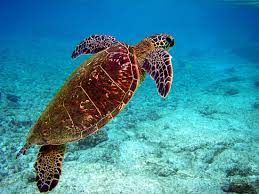
Sea turtle/Photo:en.wikipedia.org
Our assessment also did not include eggs or turtle products, such as bracelets or earrings made from sea turtle shells that could not be easily attributed to individual turtles,” says Senko.
The study revealed additional patterns and trends that may assist in determining conservation management priorities. For example, Vietnam was the most common country of origin for illegal sea turtle trafficking, while China and Japan served as destinations for nearly all trafficked sea turtle products. Similarly, Vietnam to China was the most common trade route across all three decades.
Across the 30-year study period, 95% of poached sea turtles came from two species — green and hawksbill turtles — both of which are listed under the U.S. Endangered Species Act. Also, Southeast Asia and Madagascar emerged as major hotspots for illegal sea turtle take and trade, particularly for critically endangered hawksbills, which are prized in the illicit wildlife trade for their beautiful shells.
“Our assessment is an important foundation for future research and outreach efforts regarding illegal sea turtle exploitation. We believe this study can help conservation practitioners and legislators prioritize conservation efforts and allocate their resources to best help protect sea turtle populations from harmful levels of exploitation worldwide,” says Burgher.
“Increased support for governments lacking the resources to protect sea turtles is needed, along with support for communities to sustain human well-being in the face of restrictions or bans on sea turtle exploitation. We must develop conservation strategies that benefit both people and turtles,” says Senko.