The National Zoological Park on Wednesday launched its Summer Vacation Programme (SVP) 2026 at the zoo’s Education Centre, drawing enthusiastic participation from students across the Delhi-NCR region.
Held under the Mass Mobilisation Campaign for Mission LiFE and aligned with the World Environment Day theme, “Inspired by Nature. For Climate. For Our Future.”, the initiative seeks to raise awareness among school students on biodiversity conservation, wildlife protection, climate action, cleanliness and sustainable living through a series of interactive learning activities.

National Zoological Park Launches Summer Vacation Programme 2026 PIB
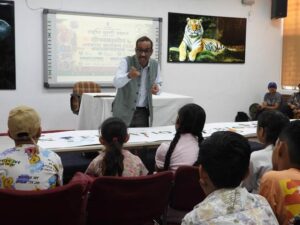
According to zoo officials, 854 students registered online for the programme through a Google form hosted on the National Zoological Park’s official website. Of them, 60 participants were selected on a first-come, first-served basis and later contacted for confirmation. On the opening day, 39 students representing 15 schools from across Delhi-NCR attended the sessions.
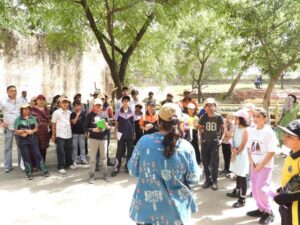
The inaugural day began with an orientation programme introducing participants to the objectives and schedule of SVP 2026. Students were later taken on a guided tour of the zoo, including visits to herbivore and carnivore enclosures. An expert lecture on biodiversity was delivered by Dr. Faiyaz A. ahead of the International Day for Biological Diversity.
The two-week programme has been divided into two phases — Slot A and Slot B — each accommodating 50 students, including 25 junior and 25 senior participants.

National Zoological Park Launches Summer Vacation Programme 2026 PIB
The schedule features a diverse range of educational and creative activities, including wildlife photography, poster-making, slogan-writing, heritage walks, essay competitions, clay modelling, art and craft sessions, exhibitions, cleanliness awareness drives and Mission LiFE campaigns. Expert talks on conservation and environmental sustainability are also planned throughout the programme.
The Summer Vacation Programme will run from May 21 to June 6, 2026, engaging students from Classes VI to XII in experiential learning focused on conservation and environmental awareness.
Zoo Director Dr. Sanjeet Kumar interacted with the participants and stressed the need to involve young minds in biodiversity conservation through innovative and technology-driven educational initiatives.
Also Read:
Humans gobble it, birds and bees sip alcohol
Scared of spiders? A world without them is true nightmare tale: Study