Arun has been associated with India International Times since 2018 and he has been a key reporter in covering science and space related stories. He can be reached at arunKnn@indiainternationaltimes.com.
The Karnataka Police’s Criminal Investigation Department (CID) has busted a gang of wildlife poachers, including a software professional, authorities said on Tuesday.
The arrested were identified as Byatappa Gowda, a resident of Arehalli in Tumakuru district; Vaishak from Kadehalli; and Charan, the software professional, from Bengaluru.
According to the CID Forest Cell wing, the accused were involved in poaching rabbits and wild boars.
Recently, Byatappa and Vaishak had shot a leopard and attempted to sell the animal’s nails, skin and jaws through accused Charan.
Arrested
CID officers, posing as religious seers, first approached the accused techie, and nabbed him. The other managed to escape initially, but they were tracked and arrested later.
The accused were arrested in Sri Ranganatha hill in Tumakuru district, where they had laid a trap for rabbits and wild boars.
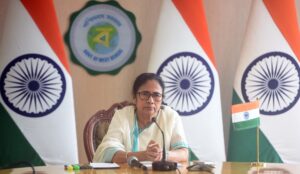
West Bengal Chief Minister Mamata Banerjee’s announcement about a proposed fresh investment by Tata Group at Raninagar in Jalpaiguri district was just a “slip of the tongue” on her part, state Chief Secretary H.K.Dwivedi has said.
On Monday afternoon, while addressing an event to hand over appointment letters to various beneficiaries under “Utkarsh Bangla,” a skill development scheme of the state government, the chief minister said that she is happy that the Tata Group will be investing Rs 600 crore at Japiguri’s Raninagar.
However, she did not divulge any further details on this count like the sector where the investment will take place or the time by when the investment will be made. On the other hand, there was neither any confirmation nor denial from Tata Group on this count.
Soon after, speculations started doing rounds prompting Chief Secretary Dwivedi to step in to set the records straight. “The chief minister did not intend to mean Tata Group. Actually, the investment at Jalpaiguri is by Hindustan Coca-Cola Beverages,” the chief secretary explained.
West Bengal Chief Minister Mamata Banerjee
At the same time, the West Bengal state secretariat of Nabanna issued a statement detailing the investment by Hindustan Coca-Cola Beverages at Raninagar in Jalpaiguri, the virtual inauguration of which was done by the chief minister herself on Monday from Kolkata.
The greenfield vertical unit built over Rs 6.9 acres of land and is meant for manufacturing juice and sparkling soft- drink items, has attracted a total investment of Rs 660 crore.
The unit will employ 100 individuals directly, while another 150 individuals will get indirect employment.
To recall, the Tata Group chairman, Ratan Tata announced the pull-out of Tata Motors’ small car, Nano factory from Singur in Hooghly district in West Bengal in October 2008 citing disruptive movement of Trinamool Congress, as the-then principal opposition party against the land acquisition for the project. Gujarat’s Sanand became the new destination of the Nano factory.
Since then, fresh investments by Tata Group in the state have just remained an illusion, even after 2011, when the 34-year-old Left Front regime collapsed in the state making way for the entry of Trinamool Congress regime with Mamata Banerjee at the helm.
An eight-month-old infant in Uttar Pradesh’s Bareilly district died after the battery of a mobile phone kept next to her on charging mode exploded, police said.
The phone, purchased nearly six months ago, already had a swollen battery plugged into a switch connected to a solar panel.
Kusum Kashyap, mother of the baby Neha, was not in the room at the time of the explosion.
Battery exploded
She rushed in after hearing a loud noise and cries for help from her other daughter Nandini.
The baby had suffered serious burn injuries and died during treatment in the hospital.
Police said no complaint had been lodged so far but it was a case of negligence by the parents.
The father of the child, Suneel Kumar Kashyap, 30, is a labourer and lives in an under-construction house without a power connection. His family uses a solar plate and a battery for lighting and charging mobile phones.
Seven persons were killed and several others injured in a fire that broke out in an e-bike showroom, which spread to a lodge on the upper floor in Secunderabad, police said.
The incident took place on Monday evening.
Hyderabad Police Commissioner C. V. Anand said that seven deaths were reported.
Those injured were shifted to the Gandhi and Yashoda hospitals.
Two fire tenders were battling to control the fire but the cause of the fire was not known. Many e-bikes were gutted in the fire.
Fire in Hyderabad e-bike showroom
According to eyewitnesses, heavy smoke engulfed Ruby lodge on the upper floor of the building after the fire broke out in the showroom on the ground floor. The Fire personnel managed to rescue nine persons.
The incident sent panic in the building. Some of the guests reportedly jumped out of windows to save themselves.
State Animal Husbandry Minister, T. Srinivas Yadav rushed to the spot and was monitoring the rescue and relief operation.
Aam Aadmi Party (AAP) supremo and Delhi Chief Minister Arvind Kejriwal, who was in Gujarat on Monday to campaign for the upcoming Assembly elections, kept his promise made to an auto rickshaw driver of having dinner at his home in Ahmedabad.
During a meeting with auto drivers earlier in the day, Vikram Dantani had requested Kejriwal to have dinner at his place. Accordingly, Kejriwal, accompanied by Gujarat AAP leaders Isudan Ghadvi, Gopal Italia and Indranil Rajyaguru, went to Dantani’s house to have dinner on Monday evening.
“In Ahmedabad, auto driver Vikrambhai Dantani lovingly took me home for dinner, introduced me to the whole family, and treated me with delicious food with great respect. Heartfelt thanks to Vikrambhai and all the auto driver brothers of Gujarat for this immense affection,” Kejriwal tweeted.
Kolkata, Sep 12 (IANS) West Bengal Chief Minister Mamata Banerjee on Monday afternoon claimed that Tata Group will invest Rs 600 crore in Jalpaiguri district shortly.
Although she made this claim at an event to hand over appointment letters to various beneficiaries under ‘Utkarsh Bangla’, a skill development scheme of the state government on Monday afternoon, she did not divulge any further details on this count like the sector where the investment will take place or the time by when the investment will be made.
Till the time this report was filed, there was neither any confirmation nor any denial from the Tata Group on this count.
“We are happy that the Tata Group will be investing Rs 600 crore at Jalpaiguri’s Raninagar. The speciality of the project will be 66 per cent of the women employed there will be women. During the last one year, 45,000 women from West Bengal have been directly absorbed at different places,” the chief minister said.
To recall, in 2006, immediately after the seventh Left Front government came to power in West Bengal with Buddhadeb Bhattacharjee as the chief minister, Tata Motors announced setting up of its small car, Nano factory at Singur in Hooghly district in West Bengal. However, Trinamool Congress under the leadership of Mamata Banerjee started a massive movement against the project alleging forceful land acquisition by the state government for the project.
Finally in October 2008, the Tata Group chairman, Ratan Tata announced pulling out of Singur. Gujarat’s Sanand became the new destination for the Nano factory.
“I think some time back I mentioned that if somebody puts a gun to my head, you will pull the trigger or you take the gun away because I will not move my head. I think Ms Banerjee has pulled the trigger,” Ratan Tata said in October 2008 while announcing the pull-out of the Nano factory from Singur.
After that in 2011, the 34-year-old Left Front regime ended in West Bengal making way for the entry of Trinamool Congress regime with Mamata Banerjee as the chief minister. Since then, fresh investments by Tata Group in West Bengal have just remained an illusion.
Soldiers with British accents have been filmed fighting in Ukrainian borders going by the footage at a time when the country is making stunning advances against Russian forces, Daily Mail reported.
The footage taken on GoPro cameras reportedly shows foreign legionaries fighting during Ukraine’s Kharkiv Oblast counter-offensive, which have made Krelim forces retreat, with intelligence experts hailing a ‘major turning point’ in the six-month war, the report said.
It has led to the recapture of several key towns in the east as Vladimir Putin’s forces fled in disarray. In a compilation of footage uploaded on social media, soldiers with British accents can be heard speaking to one another while wearing blue armbands to identify themselves as Ukrainian forces.
One clip appears to show soldiers moving POWs through a compound, while others show soldiers hurling grenades, running to take cover, and climbing through windows. Ukraine said that its forces had recaptured more than 1,158 square miles (3,000 square kilometres) this month from Russian troops.
Soldiers with British accents filmed fighting in Ukrainian colours
The counter-offensive centred on the country’s northeast is being led by Ukrainian general Valeriy Zaluzhny who said, “Since the beginning of September, more than 3,000 square kilometres have been returned to Ukrainian control… Around Kharkiv, we have begun to advance not only in the south and east, but also to the north. We are 50 kilometres (31 miles) from the border.”
The speed of Ukraine‘s advance, with photographs shared by Kyiv show them raising the Ukrainian flag in liberated towns after advancing more than 30 miles, has sparked Moscow fire the top general who was appointed just 16 days ago, Daily Mail reported.
Russian President Vladimir Putin is reported to have sacked Lieutenant General Roman Berdnikov, a top-ranking general just 16 days after appointing him following his crushing defeat in eastern Ukraine, media reports said.
The Russian President is thought to have relieved Lieutenant General Roman Berdnikov of his duties over the failure of Kremlin troops to keep hold of vast swathes of Ukrainian territory over the last few days, Daily Mail reported.
A counter-offensive by Ukrainian forces has seen troops push to within 30 miles of the border, amid reports that ‘panicked’ Russian troops have been abandoning tanks, weapons and supplies.
There have been claims from some sources that Russian soldiers have “literally ran from their positions”, even leaving behind their clothes as they ran away from the advancing Ukrainian army in the Kharkiv oblast in the north-east of the country, Daily Mail reported.
It came as Ukrainian soldiers surge into the east of the country in an effort that has seen them take more than 1,000 square miles of territory in a matter of days, in a period of time that could prove to be a turning point in the war.
The move came after a sustained Ukrainian’s disinformation campaign’ about a counter-offensive in the south, which succeeded in diverting Russian troops in that direction and leaving the north east vulnerable to attack, Daily Mail reported.
The main advance in the area began six days ago and has forced Moscow to withdraw its troops to prevent them being surrounded. Kremlin troops were reportedly running away without even attempting to fight back.
Appointed 16 days ago
According to the Main Directorate of Intelligence of the Ministry of Defense of Ukraine, Lt General Berdnikov was appointed as commander of the Western Armed Forces on August 26.
However, it seems his time in charge was short lived, with Ukrainian intelligence saying he has been sacked by Putin due to the rout in Kharkiv. This came after unconfirmed reports back in June that he had been killed during fighting in the Donbas region of Ukraine.
As Russian troops desperately scrambled to get clear from oncoming forces in recent days, one Ukrainian unit said the chain of command had been broken and Kremlin troops were running away without even attempting to fight back, Daily Mail reported. (IANS)
New Delhi, Sep 11 (IANSlife) The skin on newborns is naturally smooth and silky. But because of its fragility, their skin is particularly prone to rashes and other skin conditions, especially in this climate. Since babies and toddlers spend the majority of their time indoors, parents frequently use careless items on their children’s skin, endangering the condition of their skin as a whole.
However, in this humid and ever-changing climate, it is crucial to take care of your baby’s skin. When choosing the appropriate skin-care products for their child, one must exercise extreme caution and only use items that have received clinical approval. Body lotion is the first item that springs to mind when discussing baby skincare items as a part of your baby’s grooming routine.
Picking the “perfect” baby body lotion among the many options currently offered on the market, the “right-after bath” basics, is in fact a difficult chore. However, we’ve got you covered by outlining the top five characteristics of a baby body lotion recommended by Cetaphil Baby.
infant-small child
* Paraben free
Compared to adult skin, a baby’s fragile skin absorbs and loses moisture far more quickly. As a result, the chemicals administered to their skin are more likely to be absorbed by the skin. Baby products with parabens, chemicals, or alcohol can damage a baby’s skin. Nobody would want to expose their little munchkin to harmful chemicals and that’s where paraben-free lotions come into play.
* Long-lasting hydration
At higher temperatures, skin loses its essential nutrients and moisture. Consequently, a baby’s skin tends to develop patches, rashes and itching. A hydrating body lotion helps retain moisture and keep the skin healthy and soft.
* Balanced pH level
The natural acid layer that protects your baby’s skin from external stress is supported by maintaining a pH balance of 5.5. It may become excessively dry and sensitive if that barrier is compromised, additionally environmental irritants in the monsoon can affect your baby’s skin. We keep hearing the importance of maintaining a balanced pH level in all spheres of body, so why ignore the pH levels when it comes to your baby’s skin? Having a balanced pH level is hence, the third must-have quality for your baby’s body lotion.
* Hypoallergenic
Gone are the days when consumers were driven by surface factors like the colour and scent of skincare products. When it comes to their babies, safe and healthy products should be the priority of parents. Hypoallergenic body lotions are often colour or fragrance-free and fulfill all the functions of a lotion along with ensuring a ‘no-chemical’ exposure to the skin.
* Enriched with Natural Ingredients
A good body lotion for your baby’s skin comes equipped with the most nourishing natural ingredients as they offer the finest, purest care to your baby’s skin. These ingredients range from Shea butter, Aloe Vera to almond oil and Calendula. For instance, Cetaphil Baby Daily Lotion with organic Calendula is rich in organic Calendula and natural oils that will soothe and nourish your baby’s sensitive skin all day long.
New Delhi, Sep 12 (IANS) The Union Food Ministry has directed its official canteens and meetings to serve millets in order to promote their consumption, in view of their health benefits.
Millets may be included as one of the snacks/biscuits made of millets, such as ragi biscuits/cookies/ladoos and baked millet chips etc. as snacks to be served in the meetings, it said.
Millet/ragi dosa, millet mix vada, millet mix puri and idli/ragi ladoo etc to be used in the canteens and as far as possible, locally available millet-based products should be used, it said.
The year 2023 will be celebrated as the International Year of Millets (IYoM). The Department of Food and Public Distribution has been actively promoting procurement/ consumption of millets in the country and utilisation of procured millets for distribution in the TPDS/ICDS/MDM Schemes.
The Ministry said that millets’ consumption confers several benefits and helps in managing life style diseases. Due to their high density of nutrients including vitamins, minerals, phyto chemicals and dietary fiber, millets are also excellent grains to alleviate malnutrition and micronutrient deficiency.
Port Moresby, Sep 12 (IANS) At least four people killed and several others seriously injured after a massive 7.6-magnitude earthquake hit Papua New Guinea (PNG), authorities said on Monday.
The UN Office for the Coordination of Humanitarian Affairs’ regional branch in the Asia-Pacific said that among the fatalities were one in the Rai Coast district of the Madang province, and three in the town of Wau of the Morobe province, reports Xinhua news agency.
All were buried in landslides.
Some other people in Morobe were injured due to falling structures or debris, and there was damage reported to health centres, homes, rural roads and highways, according to the provincial disaster management agency.
The regional power grid, Internet cables, and the regional highway were damaged, but regional commercial airports have remained in operation, said the report.
Parts of the Highlands Highway, which connects the second largest city of Lae to the Highlands provinces, were damaged.
Areas along Markham and Ramu in Eastern Highlands were espeinjuredcially affected.
Local newspaper Post-Courier reported on Monday that many shops in Lae remained closed due to their stock being damaged.
PNG Prime Minister James Marape said that national and provincial disaster agencies had begun to assess the damage done to buildings and infrastructure such as roads and power supplies.
Marape said the estimated cost of the damage would not be known until at least Tuesday but assured the public that no expense would be spared to “restore our services and our people’s livelihoods”.
PNG is one of the world’s most geologically and seismically active areas and is usually hit with more than 100 earthquakes of magnitude 5 or greater each year.
Bhubaneswar, Sep 12 (IANS) The Visakhapatnam-Kirandul passenger special train (No. 08551) has been derailed mid-way between Jeypore and Chatriput stations in Odisha, a railway official said.
“After passing Jeypore station, one sleeper class and three general coaches got derailed on Monday afternoon. There were no casualties or injuries as the trollies of the train just derailed on to sleepers,” said an official of East Coast Railway (ECoR).
Accident relief trains have been ordered to proceed to site, officers are also rushed to the site for immediate restoration operations.
“Divisional Railway Manager Anup Satpathy, Additional Divisional Railway Manager (ADRM) (Infrastructure) Sudhir Kumar Gupta, ADRM (Operations) Manoj Kumar Sahoo and other officers are monitoring the relief operations. Alternate transport arrangements are made for the stranded passengers,” he informed.
New Delhi, Sep 11 (IANS) After a YouTuber claimed on social media that her aunt allegedly died after her Redmi 6A smartphone exploded near her on the bed while sleeping, Xiaomi said it was probing the unfortunate incident.
The YouTuber, who goes by the name MD Talk YT, shared screenshots of the exploded phone as well as her aunt lying in a pool of blood on the bed, claiming that an alleged battery explosion killed her relative who was living in the Delhi-NCR region.
“Yesterday in night my aunty was found dead, she was using a Redmi 6A, she was sleeping and she kept the phone near her face on the pillow side & after sometime her phone blasted. It’s a bad time for us. It’s a responsibility of a brand to support,” the tweet read.
Xiaomi replied in a tweet, saying the company is working to reach out to the impacted family and investigate the situation.
“At Xiaomi India, customer safety is of utmost importance and we take such matters extremely seriously. Our team is trying to get in touch with the affected family and determine the cause of the incident”.
The YouTuber from Haryana further posted that the victim’s son is serving in the Indian Army and the family lives a very simple life.
“Her family is so simple, her son is in the Indian Army. They don’t know so much. She only uses her phone just for calling & watching YouTube. Now if brands don’t accept their mistakes, don’t take responsibility directly, if a family has to fight for justice then what’s the use,” the YouTuber said in a tweet.
New York, Sep 12 (IANS) The risk of type 2 diabetes is more than halved by weekly injections of the new obesity drug semaglutide, which was recently approved in the US and has been provisionally approved in England, says a new study.
The researchers of the study, to be presented at the annual meeting of the European Association for the Study of Diabetes (EASD), said semaglutide reduces the future risk of diabetes by over 60 per cent in patients with obesity.
“Semaglutide appears to be the most effective medication to date for treating obesity and is beginning to close the gap with the amount of weight loss following bariatric surgery,” said researcher W. Timothy Garvey from the University of Alabama at Birmingham in the US.
diabetes
Obesity is known to increase the risk of type 2 diabetes at least six-fold and the team was interested in understanding whether semaglutide could reduce this risk. To learn more, they conducted a new analysis of the data from two trials of semaglutide.
In STEP 1, 1,961 overweight or obese participants received an injection of 2.4 mg of semaglutide or a placebo weekly, for 68 weeks.
STEP 4 involved 803 participants with overweight or obesity. All received weekly injections of 2.4 mg semaglutide for 20 weeks. They then either remained on semaglutide or were switched to placebo for the next 48 weeks.
In STEP 1 participants receiving semaglutide, 10-year risk scores for type 2 diabetes decreased by 61 per cent (from 18.2 per cent at week 0 to 7.1 per cent at week 68). This compares to a 13 per cent reduction in risk score for those given the placebo (17.8 per cent at week +0 to 15.6 per cent at week 68).
In the STEP 4 participants, the largest decreases in risk scores were seen in the first 20 weeks (from 20.6 per cent at week 0 to 11.4 per cent at week 20). In those who continued receiving semaglutide, the risk score decreased further to 7.7 per cent but in those who were switched to placebo, it rose to 15.4 per cent.
Chennai, Sep 12 (IANS) Director Soundarya Rajinikanth, who is also the younger daughter of Tamil superstar Rajinikanth, has now been blessed with a second baby — a boy.
The producer and her husband Vishagan have named the little one as Veer Rajinikanth. Taking to social media, Soundarya Rajinikanth made the announcement.
Posting a series of pictures that were shot during her pregnancy, she said: “With God’s abundant grace and our parents blessingsa Vishagan, Ved and I are thrilled to welcome Ved’s little brother Veer Rajinikanth Vanangamudi today 11/9/22.”
Soundarya Rajinikanth blessed with second boy child.
“A huge thank you to our amazing doctors Sumana Manohar, Dr.Srividya Seshadri,” she wrote. Several celebrities, friends, fans and well wishers have been congratulating the couple. Director Gitanjali Selvaraghavan, the wife of director Selvaraghavan, too was among those who congratulated Soundarya. She wrote, “Congratulations Mittu, Vishagan and Ved!!! Welcome to the world Veer!”
Mumbai, Sep 12 (IANS) A visually impaired contestant Aneri Arya shared with megastar Amitabh Bachchan that she is a big fan of his 2005 movie ‘Black’ starring Rani Mukerji on ‘Kaun Banega Crorepati 14’.
Directed by Sanjay Leela Bhansali ‘Black’ released in 2005. It also stars Shernaz Patel and Dhritiman Chatterjee in supporting roles. The film narrates the story of Michelle, a deaf-and-blind woman, and her relationship with her teacher Debraj, an elderly alcoholic who himself later develops Alzheimer’s disease.
Arya also says that she connects with the story of the film as she herself is blind and there is huge support she gets from her teacher.
She mentions: “Sir, you have played the role of a teacher in the film (Black) and with your influence, Rani Mukerji’s character was able to express herself and grow. Just like that, even I have a teacher, my PhD guide, Dr Sunil Shah.”
Kaun Banega Crorepati 14
For Aneri nothing was more exciting than taking the hotseat and telling Big B about her favourite book to movie and food.
Hailing from Surat, Gujarat, the 26-year-old ‘KBC 14’ contestant is an assistant professor of English at Shree Bhaikaka Sochitra Government Arts and Science College. During a conversation with the host she gives credit to her parents for helping her to complete her studies and also speaks about Gujarati cuisine.
Aneri says: “Mr Bachchan and I shared a lot of conversations, I told him about my favourite book, ‘The Metamorphosis’ by Franz Kafka and my favourite film of his, ‘Black’. My parents also conversed with him during the show and my mother told him about sending me out of the nest while my father told him about how proud he is of my journey.”
Aneri Arya will be taking the hotseat in the quiz-based reality show ‘Kaun Banega Crorepati 14’ on Sony Entertainment Television.
New York, Sep 12 (IANS) Spanish teenager Carlos Alcaraz displayed explosive power and demonstrated impressive touch around the net as he overcame a fighting Norwegian Casper Ruud 6-4, 2-6, 7-6(1), 6-3 to clinch his maiden Grand Slam trophy — the US Open crown — and secure the world No. 1 ranking on Monday (IST).
The 19-year-old Alcaraz won 76 per cent of net points (34/45) to outlast his opponent inside the Arthur Ashe Stadium after a nearly three hours and 20 minute slugfest. This was Alcaraz’s 51st tour-level victory of the season
Drained of energy, Alcaraz dropped to the floor following the victory and then climbed up the stands to embrace his coach and former player Juan Carlos Ferrero.
“It is something I have dreamt of since I was a kid. To be No. 1 in the world, to be champion of a Grand Slam, is something I have worked really, really hard (for),” Alcaraz was quoted as saying by ATP.
“It is tough to talk right now, I have lots of emotions. This is something I have tried to achieve. All the hard work I have done with my team and my family. I am just 19-years-old, all the tough decisions have been with my parents and my team as well. It is something that is really special for me,” he added.
Carlos Alcaraz
It has been an energy sapping US Open for Alcaraz, who endured three consecutive five-set matches to reach his first Grand Slam final. He spent 20 hours and 19 minutes on court across six games on way to the title showdown with Ruud.
“There is no time to be tired in the final rounds of a Grand Slam… You have to be ready and give everything you have inside. It is something I work really hard for,” Alcaraz said.
Alcaraz has become the youngest Grand Slam winner since Spanish stalwart Rafael Nadal, 19, lifted the French Open trophy in 2005, while he is the youngest US Open winner since American legend Pete Sampras, 19, in 1990.
Alcaraz arrived in New York as the world No. 4 but leaves the Flushing Meadows at the top-ranked player, becoming the youngest to rise to tennis’ pinnacle in the history of the ATP Rankings (since 1973).
The Spaniard has also equalled the biggest jump to No. 1, while he is the fourth Spaniard to climb to the top, joining coach Ferrero, Carlos Moya and Nadal.
Alcaraz spent a total of 23 hours and 39 minutes on court on way to the crown, passing Kevin Anderson at Wimbledon in 2018 for most time played at a single Grand Slam tournament on record (since 1999).
Ruud, who had lost to Nadal in the French Open final in June, was bidding to become the 28th player and first Norwegian to jump to No. 1
Casper Ruud
“Things have been going so well. Today was a special evening,” Ruud said. “Both Carlos (Alcaraz) and I knew what we were playing for and what was at stake. We will be No. 2 and No. 1 in the world, I think it is fitting. I am disappointed of course that I am not No. 1, but No. 2 is not bad either. I am happy with that number and I will continue to chase for my first Grand Slam title and No. 1 ranking,” added Ruud.
Varanasi, Sep 12 (IANS) The Varanasi court on Monday said that the Hindu petition for worship in Shringar Gauri was maintainable and the five Hindu women’s plea seeking right to worship in the Gyanvapi complex will be heard.
District judge A.K. Vishvesha dismissed the petition filed by the Muslim side citing the Places of Worship Act and questioning the maintainability of the petition.
Advocate Vishnu Shankar Jain, representing the Hindu side said, “The court rejected the Muslim side’s petition and said the suit is maintainable. The next hearing in the matter will be on September 22.”
“Muslim petitioners are likely to approach the Allahabad High Court in appeal,” petitioner Sohan Lal Arya said, but added that they will continue to contest the case.
A view of district court in Varanasi
Well known Sunni cleric Maulana Khalid Rashid Firangi Mahali said that their legal team would study the verdict and act accordingly.
He expressed concern over the fact that the Places of Worship Act 1991 was being set aside and such cases were being raised.
“We will fight the matter legally,” he added.
In May, the Supreme Court had assigned the case to the Varanasi district judge’s court, shifting it from a lower court where it was being heard till then.
The Supreme Court had ordered that “Keeping the complexity and sensitivity of the matter in view, the civil suit before the civil judge in Varanasi shall be heard before a senior and experienced judicial officer of the UP judicial service.”
A month before the Supreme Court’s intervention in the case, the Varanasi civil court had ordered the filming of the Gyanvapi mosque, based on the petition by the Hindu women who claimed that there are idols of Hindu Gods and Goddesses in the Gyanvapi mosque complex.
Varanasi: A view of the Gyanvapi Mosque in Varanasi on Thursday, May 19, 2022. Supreme Court ordered that if the ‘Shivling’ found in the mosque complex, the area should be protected but muslim people should not be stopped from offering Namaz. (Photo: Wasim Sarvar/IANS)
A report of the filming at the mosque was then submitted to the Varanasi court in a sealed cover, but the Hindu petitioners controversially released details just hours later.
The report claimed a ‘Shivling’ had been found in a pond within the mosque complex used for ‘wuzu’ or purification rituals before Muslim prayers.
The judge hearing the case at the time had ordered the sealing of this pond.
This filming inside the centuries-old mosque was challenged in the Supreme Court by the Gyanvapi mosque committee.
The petitioners said the filming goes against the Places of Worship Act of 1991, which maintains the religious status of any place of worship as of August 15, 1947.
“Such petitions and sealing of mosques will lead to public mischief and communal disharmony, will affect mosques across the country,” the mosque committee had argued.
The mosque committee made similar arguments before the Varanasi district judge’s court in the ‘maintainability’ case, while lawyers for the Hindu petitioners claimed the law does not bar their case and that they could establish in court that the mosque premises was actually a temple as on the day of Independence.
Indian scientists from the Dehradun Wildlife Institute on Monday successfully fitted a GPS device to a pelican bird in Kokkare Bellur in Karnataka’s Mandya district, first of its kind in the country.
The experiment was carried out to study the abodes of pelicans, food habits and international routes that these migratory birds traverse.
Sources said that the GPS device was imported from Greece. The animal lovers and scientists have described the experiment as historical.
The GPS device will help ascertain the route, including countries the pelican’s travel through besides recording their activities. The scientists have also stated that they would be able to find out the origin place of the bird through this experiment.
Pelican birds travel across India, Sri Lanka and Myanmar. The GPS device will get charged automatically through sun rays. The device is designed to send all the information regarding various travelling routes for a period of four years.
Attractive pelican birds arrive in Kokkare Bellur in October and disappear after two months. This breed of birds are found in Karnataka, Tamil Nadu, Sri Lanka, Malaysia and Myanmar. (IANS)
The attacks of Sept. 11, 2001 were a national tragedy that resulted in a staggering loss of life and a significant change in American culture. Each year, we pause and remember. Beyond honoring the Americans who died that day, NASA also assisted FEMA in New York in the days afterward, and remembered the victims by providing flags flown aboard the Space Shuttle to their families.
Expedition 3 Commander Frank Culbertson was aboard the International Space Station at the time of the attacks, and the only American on the crew. As soon as he learned of the attacks, he began documenting the event in photographs because the station was flying over the New York City area. He captured incredible images in the minutes and hours following the event. From his unique vantage point in space, he recorded his thoughts of the world changing beneath him.
The following day, he posted a public letter that captured his initial thoughts of the events as they unfolded. “The world changed today. What I say or do is very minor compared to the significance of what happened to our country today when it was attacked.”
Visible from space, a smoke plume rises from the Manhattan area after two planes crashed into the towers of the World Trade Center. This photo was taken of metropolitan New York City (and other parts of New York as well as New Jersey) the morning of September 11, 2001. Credits: NASA
Upon further reflection, Culbertson said, “It’s horrible to see smoke pouring from wounds in your own country from such a fantastic vantage point. The dichotomy of being on a spacecraft dedicated to improving life on the earth and watching life being destroyed by such willful, terrible acts is jolting to the psyche, no matter who you are.”
NASA science programs were called into action after Sept. 11, 2001, as the agency worked with FEMA to fly sensors over the affected areas on aircraft looking for aerial contaminants and used satellite resources to monitor from above.
Flags for Heroes and Families
NASA flew nearly 6,000 4 by 6 inch flags on Endeavour’s flight during STS-108 to honor the victims of the terrorist attacks in New York, Washington, D.C. and Pennsylvania. Students working at Johnson Space Center in Houston, Texas assembled the commemorative packages, including the U.S. flags flown in space, to be presented to relatives of the victims. Distribution began on June 14, 2002, National Flag Day, at a ceremony held at the American Museum of Natural History’s Rose Center for Earth and Space in New York.
“The ‘Flags for Heroes and Families’ campaign is a way for us to honor and show our support for the thousands of brave men and women who have selflessly contributed to the relief and recovery efforts,” said then-NASA Administrator Dan Goldin. “The American flags are a patriotic symbol of our strength and solidarity, and our Nation’s resolve to prevail.”
NASA/Photo: Nasa.gov
“NASA wanted to come up with an appropriate tribute to the people who lost their lives in the tragic events of September 11,” added Goldin. “America’s space program has a long history of carrying items into space to commemorate historic events, acts of courage and dramatic achievements. ‘Flags for Heroes and Families’ is a natural extension of this ongoing outreach project.”