
Trump, Xi, Putin Make History but Leave Nuclear Deal, Wars Unresolved

The presidents of the United States, China and Russia assembled in southern China for an extraordinary display of great-power diplomacy, promising to reduce the danger of nuclear war and pursue international stability. But by the time President Donald Trump departed Thursday, the most consequential questions confronting the three governments remained unanswered.

There was no agreement to reduce nuclear arsenals, no timetable for arms-control negotiations and no discernible breakthrough in either Russia’s war in Ukraine or the conflict involving the United States and Iran.

Instead, Trump, Chinese President Xi Jinping and Russian President Vladimir Putin emerged from their unprecedented three-way meeting in Shenzhen with a broadly worded peace declaration that affirmed shared principles without committing their governments to enforceable measures.

The contrast between the summit’s historic significance and its limited results became apparent almost immediately. Speaking to Reuters aboard his aircraft on the return journey to Washington, Trump acknowledged that his ambition to persuade the world’s leading nuclear powers to reduce their arsenals faced formidable obstacles.

“I love the concept of it but in terms of pure negotiation, it’s a very hard thing for me as a president to do,” Trump said.

The admission underscored the central contradiction of a summit intended to demonstrate that personal diplomacy among three powerful leaders could succeed where years of conventional negotiations had struggled.

Trump had secured the meeting he wanted. Whether he had brought the world closer to resolving its most dangerous conflicts was considerably less clear.

The gathering, held at Kylin Villa on the sidelines of the Asia-Pacific Economic Cooperation summit, placed the leaders of three countries that collectively possess the overwhelming majority of the world’s nuclear weapons at the same negotiating table.

“We are really making history,” Trump declared at the opening of the meeting. “The three of us have a great deal to discuss.”

He added: “No peace was ever forged by declining opportunities for engagement.”

For Xi, hosting the summit provided an opportunity to portray China as an indispensable participant in managing international crises. For Putin, appearing alongside the American and Chinese presidents reinforced Russia’s claim to great-power status despite its international isolation over Ukraine.

For Trump, the meeting offered a diplomatic centerpiece to an Asia tour dominated by elaborate ceremonies, high-profile encounters and trade announcements whose details remained incomplete.

Nuclear Disarmament: Ambition Meets Strategic Reality

The most consequential subject before the three leaders was nuclear arms control, an issue that has become increasingly urgent as Washington, Moscow and Beijing modernize their strategic forces.

The summit declaration reaffirmed that nuclear war must never be fought and pledged dialogue on reducing nuclear risks and preventing proliferation.

But it did not establish a negotiating framework, specify reductions or identify a deadline for reaching an agreement.

Trump’s remarks after the meeting suggested that the difficulty extended beyond diplomatic procedure to the fundamental reluctance of nuclear powers to surrender weapons they regard as essential to national security.

“President Xi agrees with me,” Trump told Reuters, referring to the broad concept of limiting nuclear weapons.

But he immediately described the practical obstacle. “We have 4,000 nuclear weapons, we’ll give up half,” Trump said, illustrating the scale of reductions that might be required. “It’s hard to do.”

He said he would continue pursuing the issue because it was important, while acknowledging that disarmament was difficult “psychologically.”

The underlying imbalance between the three countries complicates any attempt to establish a common formula.

The United States and Russia retain substantially larger nuclear arsenals than China, while Beijing has been expanding its stockpile and has resisted joining traditional bilateral arms-control arrangements.

Trump cited approximate figures of 3,800 weapons for Russia and between 400 and 500 for China in remarks ahead of the summit. Those were his own estimates, not a comprehensive accounting of deployed and stored warheads.

Even the definition of what should be reduced remains unsettled. Nuclear negotiations can distinguish between deployed strategic weapons, reserve warheads, delivery systems and weapons awaiting dismantlement.

Without agreement on those categories, verification procedures and reciprocal obligations, a general commitment to reduce nuclear risks cannot readily become an enforceable treaty.

Trump also indicated that he was open to inspections involving the three countries.

“I think it’s fine,” he said when asked about the possibility.

Yet the summit produced no announced inspection mechanism or verification arrangement.

The result was an opening for possible future negotiations rather than the beginning of a clearly defined disarmament process.

Ukraine, Iran and the Limits of Great-Power Diplomacy

The absence of Ukraine and Iran from the final declaration was particularly striking because both conflicts had figured prominently in the discussions surrounding the summit.

Trump had entered his meeting with Xi expressing confidence that the United States and China could cooperate in bringing Russia’s war in Ukraine to an end.

“We’re looking to both help with respect to the war with Russia and Ukraine,” Trump said during his bilateral meeting with Xi. “I’d like to see it ended.”

Xi did not mention Ukraine in his opening remarks, reflecting Beijing’s reluctance to take ownership of negotiations involving a war in which China has substantial strategic interests but is not a direct participant.

Putin, meanwhile, acknowledged that the three governments had shared interests in resolving regional conflicts, including Ukraine.

The divergence illustrated a fundamental weakness in the diplomatic exercise: the three leaders could discuss conflicts involving other nations without those nations being represented.

German Chancellor Friedrich Merz rejected the implication that major powers could settle Europe’s security arrangements among themselves.

“A ‘Yalta’ format will not bring peace,” Merz told reporters in Berlin, invoking the 1945 conference at which the leaders of the United States, Britain and the Soviet Union discussed the postwar order.

“The US understands that there can be no peace without us,” he said.

Trump, by contrast, told Reuters that the Shenzhen meeting was “bigger than Yalta,” a comparison that carried particular significance for European governments concerned about decisions being made over their heads.

The conflict involving Iran presented another challenge.

Trump and Xi discussed the importance of maintaining oil shipments through the Strait of Hormuz, a maritime passage whose disruption has affected global energy markets.

But the peace declaration did not set out a mechanism to end the fighting, restore unrestricted shipping or reconcile Washington’s demands with Tehran’s position.

Trump subsequently indicated that he was in no hurry to make a decision about further major strikes against Iran.

“We’ve got time,” he told Reuters, suggesting that a decision could be deferred until after the beginning of 2027.

For Asian economies heavily dependent on imported energy, the distinction between diplomatic assurances and actual shipping security is substantial. A declaration supporting reliable fuel supplies does not itself reopen a disrupted maritime route or eliminate the risk of further military escalation.

Putin’s Diplomatic Return Raises Questions in Europe

One of the clearest beneficiaries of the Shenzhen meeting appeared to be Putin, whose participation placed him alongside the leaders of the world’s two largest economies despite Western efforts to isolate Moscow over its invasion of Ukraine.

Russia remains subject to extensive sanctions, while the International Criminal Court has issued an arrest warrant for Putin over alleged war crimes involving the deportation of Ukrainian children. Moscow rejects the allegations.

The summit’s joint declaration included a commitment to uphold the immunity of state officials in international courts, a provision that drew attention because of Putin’s legal position.

Jonathan Eyal, international director at the Royal United Services Institute in London, said the declaration’s treatment of international legal norms was particularly significant.

“The big powers dictate, the small powers suffer,” he said.

The meeting also highlighted Trump’s willingness to maintain a warm public relationship with Putin despite objections from European allies.

Trump defended his description of the Russian president as a friend, arguing that personal relationships could reduce the danger of confrontation between nuclear-armed countries.

“It’s nice to have people that have 4,000 nuclear weapons as a friend as opposed to an enemy,” he told Reuters.

Supporters of direct engagement argue that communication between adversaries can reduce the danger of miscalculation. Critics contend that high-profile meetings risk granting diplomatic legitimacy without extracting meaningful concessions.

Daryl Kimball, executive director of the Arms Control Association, welcomed the reaffirmation of the principle that nuclear war must never occur but cautioned against treating declarations as substantive progress.

“We need much more than rhetoric. We need action on disarmament diplomacy,” he said.

The summit also prompted criticism in Washington, where Democrats had recently secured control of both chambers of Congress in the November midterm elections.

Senate Democratic leader Charles Schumer characterized the gathering as “a historic embarrassment,” reflecting opposition to Trump’s approach to Moscow and Beijing.

For Putin, however, the opportunity to participate in a summit with both Trump and Xi carried diplomatic value irrespective of the absence of binding agreements.

China’s Diplomatic Gains and Unfinished Trade Deals

Xi’s role as host placed China at the center of an international gathering that Beijing could present as evidence of its growing diplomatic influence.

The meeting took place in Shenzhen, a city closely associated with China’s transformation into a global manufacturing and technology power.

Xi used the occasion to emphasize cooperation among major states rather than confrontation.

“History tells us that when major powers live in harmony, the world is at peace,” he said. “When major powers clash, the world falls into turmoil.”

The formulation reflected China’s preference for a diplomatic framework in which the largest powers acknowledge their mutual interests while managing disagreements through direct engagement.

But beneath the carefully managed public appearances, Washington and Beijing remain divided over trade, technology restrictions, strategic competition and regional security.

The two governments had recently extended a trade truce, but disputes over advanced semiconductors and access to critical minerals remained unresolved.

Trump’s broader Asia tour also generated questions about the status of several commercial agreements.

He promoted an arrangement with Thailand even as formal negotiations continued, while his announcement of a major trade agreement with the Philippines was not accompanied by comprehensive public details.

Those gaps mattered because the economic significance of a trade deal depends on enforceable provisions, including tariffs, market access, investment commitments and implementation dates.

The summit therefore left a distinction between diplomatic announcements and completed agreements.

For Singapore and other Southeast Asian economies, that distinction has immediate commercial implications.

The region’s manufacturing networks are deeply integrated with both China and the United States. Changes in American technology export controls, Chinese industrial policies or regional trade arrangements can affect investment decisions, semiconductor supply chains and the movement of intermediate goods.

A stable relationship between Washington and Beijing could reduce uncertainty for regional businesses. But the Shenzhen meeting did not eliminate the structural disputes underlying their economic rivalry.

Spectacle, Political Setbacks and the Test Ahead

Trump repeatedly emphasized the elaborate welcome he received in China, including Xi’s decision to greet him at the airport, military ceremonies and large crowds assembled along his arrival route.

He presented the reception as evidence of the respect commanded by the United States and the strength of his personal relationship with Xi.

“That’s a big win for us. It’s a big win for China too,” Trump said in a Fox News interview.

After the trilateral summit, his assessment was even more enthusiastic.

“On a scale of zero to 10, I think it was a 12,” Trump told NBC. “Fantastic relationships built.”

The president’s emphasis on personal diplomacy came at a politically difficult moment.

Democratic victories in the November 3 midterm elections had deprived Republicans of control of Congress, creating new constraints on Trump’s domestic agenda and potentially increasing scrutiny of his foreign policy.

His return to Washington therefore marked a transition from the carefully choreographed diplomacy of Shenzhen to a more contentious political environment at home.

The next significant test could come at the Group of 20 summit that Trump plans to host in Florida.

Putin has indicated that he would consider attending, although his participation could provoke renewed objections from Western governments. Another meeting between Trump and Xi is also expected.

China’s Foreign Minister Wang Yi said officials from the three governments would maintain working-level coordination following the peace summit.

That commitment provides a potential channel for further discussions, but it does not resolve the central questions left open in Shenzhen: whether China will participate in formal nuclear arms-control negotiations, whether Russia will make concessions over Ukraine and whether the United States can turn its engagement with both powers into measurable security gains.

The summit demonstrated that the three leaders were prepared to meet, exchange views and acknowledge a shared responsibility to avoid nuclear catastrophe.

It did not establish that their governments were prepared to accept the political, military or economic costs of translating those principles into agreements.

For countries outside the three-power grouping, particularly smaller Asian states whose security and prosperity depend on predictable international rules, the distinction may prove more important than the summit’s historical symbolism.

The three presidents departed Shenzhen having agreed that the world should be more peaceful. The harder question, what each government would actually give up to make that happen, remained unanswered.



Midterm Elections’ Outcome: Ukraine Seizes Opportunity, Seeks More US Aid

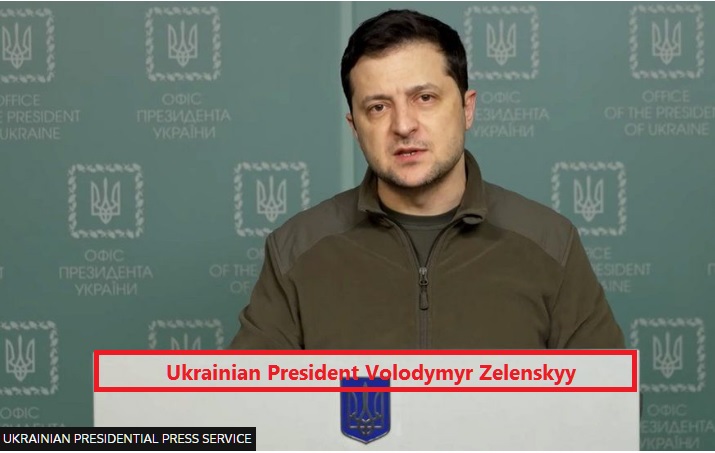
Ukrainian President Volodymyr Zelenskiy is looking to the Democrats’ sweeping victory in the US midterm elections for a possible change in Washington’s approach to the war with Russia, hoping a new congressional balance will translate into stronger military assistance and financial backing for Kyiv.

The Ukrainian leader said the election outcome could help restore a more predictable relationship between the United States and Europe, while increasing pressure on Russian President Vladimir Putin to reconsider his approach to the conflict.

The Democrats are expected to take control of both chambers of Congress in January, giving them greater influence over legislation, government spending and congressional oversight. For Ukraine, the shift offers a potential opening after months of uncertainty over US support under President Donald Trump.

Zelenskiy, speaking to Germany’s ZDF television, said Democrats had been more explicit about their commitment to helping Ukraine than Republicans.

“I am also grateful to the Republicans, but the Democrats speak very clearly about supporting Ukraine and providing assistance to Ukraine,” he said in remarks released by the broadcaster ahead of the interview.

The Ukrainian president added that Democrats had also spoken about renewing ties between Washington and European capitals.

“Therefore, there is hope that a balance of power will emerge and that we will receive more support,” he said.

Congressional shift could strengthen Kyiv’s negotiating position

The election has given Ukraine a potential source of leverage at a time when its relationship with the Trump administration has been marked by uncertainty over military assistance, sanctions against Russia and the future of US-led diplomacy.

Zelenskiy said stronger congressional support for Ukraine could send a direct signal to Moscow.

“If Congress now speaks of strong financial support or military assistance, as Europe is doing and demonstrating today, then that will be something positive that will have an impact on Putin,” ZDF quoted him as saying.

The Ukrainian president’s comments suggest Kyiv sees the incoming Congress not merely as a source of additional funding, but as a potential counterweight to the administration’s approach to the war.

However, the Democrats’ victory does not guarantee a resumption of military assistance on the scale Ukraine received under previous US administrations. Congressional control could influence spending and oversight, but Trump retains executive authority over foreign policy and can resist legislative efforts to redirect his administration’s priorities.

The change in Washington’s political balance therefore offers Ukraine an opportunity rather than a confirmed policy reversal.

Zelenskiy seeks to repair ties as Trump moves closer to Moscow

Zelenskiy has spent considerable political effort trying to stabilise relations with Trump, particularly after their contentious meeting in the Oval Office in February 2025.

During that encounter, the Ukrainian president was accused of being ungrateful for American assistance, exposing the fragility of Kyiv’s relationship with its most important military partner.

The relationship has remained difficult as Trump has pursued initiatives that Kyiv views as favourable to Russia.

In recent weeks, the US president has moved to import Russian diesel and ease sanctions on Moscow, raising concerns in Ukraine that Washington could reduce economic pressure on Putin even as the war continues.

The Ukrainian government has nevertheless maintained contact with Trump’s representatives, seeking to preserve a role for Washington in negotiations over the conflict.

The election result could complicate the president’s ability to pursue his preferred policies without congressional resistance, although it remains unclear how far Democrats will be able to influence decisions on sanctions, military assistance and negotiations.

For Kyiv, the central question is whether the new congressional majority can turn its stated support into concrete measures that strengthen Ukraine’s position on the battlefield and at the negotiating table.

Abu Dhabi talks put US policy under immediate scrutiny

The political shift in Washington comes as diplomatic efforts to end the war are expected to resume.

US presidential envoy Steve Witkoff said American officials would bring together delegations from Ukraine and Russia in Abu Dhabi on November 10 and 11.

The discussions are expected to address ending the war, post-war security arrangements and de-escalation. The talks would resume after a gap of several months in US-led trilateral diplomacy.

The timing places the incoming congressional majority’s position on Ukraine in sharper focus. Kyiv is seeking stronger security guarantees and continued military assistance, while Washington is attempting to bring the two sides into negotiations.

Zelenskiy’s comments indicate that Ukraine hopes the election outcome will strengthen its diplomatic position before those discussions begin.

But the immediate challenge remains whether the United States can maintain a consistent approach to the conflict while its domestic political landscape changes.

A stronger congressional commitment to Ukraine could increase pressure on Moscow. Yet the prospect of greater assistance remains uncertain until political support translates into funding, weapons and policy decisions.

Starlink remains a critical vulnerability for Ukraine

Zelenskiy also addressed Ukraine’s reliance on Starlink, the satellite internet system operated by Elon Musk’s SpaceX, which has played a significant role in maintaining communications during the war.

He expressed gratitude for the connectivity provided by the company, particularly during the early stages of Russia’s invasion, but criticised Musk’s position on the conflict.

“We are grateful to SpaceX for providing us with connectivity. That was very helpful at the beginning of the war,” Zelenskiy said.

“But we must be very clear about this: we certainly do not like his position on this war.”

The Ukrainian president said Starlink and its military-grade version, Starshield, had returned to operating levels seen before restrictions were introduced. The systems have been used for Ukrainian drone attack and air defence missions.

Trump denied involvement in the decision concerning the service slowdown.

The episode highlights a broader strategic concern for Kyiv: Ukraine’s military operations remain dependent on technology and services controlled by US companies, leaving critical capabilities vulnerable to decisions made outside the Ukrainian government.

The midterm outcome may offer Ukraine a more favourable political environment in Washington, but it does not eliminate those operational dependencies.


Melania Trump ‘Accomplishes’ What Trump Failed for Over 2 Years: Ukraine ‘Localized’ Ceasefire

The White House says First Lady Melania Trump has secured a localized ceasefire between Russia and Ukraine in Russian-occupied Oleshky, a city in southern Ukraine where thousands of civilians face severe shortages of food, medicine and clean water, as well as limited electricity.

The proposed truce is scheduled to take effect October 29, but neither Moscow nor Kyiv has publicly confirmed the agreement.

If implemented, the ceasefire could open a humanitarian lifeline for residents trapped amid repeated attacks and dwindling supplies. But critical questions remain unanswered: how long the truce would last, how compliance would be monitored and whether humanitarian workers could safely deliver aid and evacuate civilians.

White House says Melania Trump negotiated localised truce

According to the White House statement, Melania Trump and her representative worked “directly with Russian and Ukrainian leadership to define the terms of the localised ceasefire”.

The statement described Oleshky as a “front-line war city on the brink of disaster” and said its remaining population consisted primarily of elderly residents urgently requiring medical attention, medicine, food and clean water.

“Non-military, civilian leaders from both countries will work together to visit Oleshky residents in their homes and determine the level of assistance they require,” Melania Trump was quoted as saying.

She added that residents wishing to leave would receive coordinated assistance and transport to their preferred destinations, whether in Russia or Ukraine.

The White House did not specify the duration of the proposed ceasefire or explain the arrangements for monitoring it. The absence of public confirmation from either Moscow or Kyiv also leaves questions about how the agreement would be implemented on the ground.

The announcement comes amid continuing diplomatic uncertainty over efforts to end Russia’s war against Ukraine, which began with Moscow’s full-scale invasion in February 2022.

Oleshky civilians face shortages, shelling and a humanitarian crisis

Russian forces seized Oleshky, in Ukraine’s southern Kherson region, during the opening days of the invasion. The city, which had a pre-war population of about 24,000, is now estimated by Ukraine to have around 6,000 residents remaining in the city and surrounding areas, including approximately 200 children.

Residents have described persistent shelling, shortages of food and water, and a collapse in access to essential services. Some have reportedly resorted to eating garden weeds to survive.

Oleshky has been without gas and electricity since 2023, forcing residents to find alternative ways to cook and meet basic needs. Reports have also highlighted malnutrition among children, a lack of medical services and disrupted education.

Residents have reported that only one hospital remains partially operational, opening a few days a week to carry out critical procedures, including amputations.

Ukraine’s Foreign Minister Andrii Sybiha has described the situation as a “full blockade” by Russian forces. Kyiv says attempts to deliver supplies have not succeeded in recent months.

The Kremlin acknowledged in September that Oleshky was experiencing a “critical situation” and “problems with supplies of food and medicine”. It said Russia’s military was working to address the shortages and blamed Ukraine for the difficulties.

The city’s location compounds its isolation. Oleshky lies across the Dnipro River from Ukrainian positions, leaving civilians caught between Ukrainian forces and Russian military control.

Melania Trump said residents had limited electricity, lived amid mined roads and endured regular military attacks. She claimed that “without my intervention, the possibility to bring humanitarian aid into the city and to evacuate the elderly would be impossible”.

The practical test of the announcement will be whether the proposed truce allows humanitarian workers to reach civilians, deliver essential supplies and evacuate people who want to leave.

Melania Trump’s earlier humanitarian engagement

The first lady has maintained a relatively low public profile but has engaged in humanitarian initiatives connected to the Russia-Ukraine war, particularly the issue of children separated from their families.

In August 2025, she wrote to Russian President Vladimir Putin, saying it was “time to protect children and future generations worldwide”. Although the letter did not explicitly mention Ukraine, Ukrainian President Volodymyr Zelensky subsequently delivered a letter from his wife, Olena Zelenska, thanking Melania Trump for her efforts concerning children.

In October 2025, Melania Trump said Putin had responded directly in writing and that her representatives were working with his team on the repatriation of Ukrainian children from Russia and vice versa. Reports have said that 34 children had been returned since 2025, including five in July.

US President Donald Trump has also described his wife’s private scepticism about Putin’s commitment to peace. Recalling conversations about his discussions with the Russian leader, Trump said she would point to reports of continued attacks despite his optimism about negotiations.

The proposed Oleshky ceasefire would extend Melania Trump’s involvement into a more immediate humanitarian challenge. Its significance, however, will depend on confirmation from the parties to the conflict and whether the promised arrangements translate into safe access to aid and evacuation for civilians.

FAQs

1. What ceasefire has Melania Trump announced?

The White House says Melania Trump has secured a localised ceasefire between Russia and Ukraine in Oleshky, scheduled to begin on October 29. Russia and Ukraine have not publicly confirmed the arrangement in the supplied report.

2. Why is Oleshky facing a humanitarian crisis?

Residents face shortages of food, medicine, clean water, gas and electricity, alongside regular shelling and restricted access to medical care. The city has been without gas and electricity since 2023.

3. How many people remain in Oleshky?

Ukraine estimates that around 6,000 people remain in Oleshky and surrounding areas, including approximately 200 children. The city had a population of about 24,000 before Russia’s full-scale invasion.

4. Will civilians be allowed to evacuate?

The White House says residents who wish to leave will receive coordinated support and transport to their preferred destination in Russia or Ukraine. The announcement does not provide further operational details.

5. Has Russia confirmed the ceasefire?

The supplied report says neither Russia nor Ukraine has publicly commented on the announcement. The proposed truce’s implementation and duration therefore remain unclear.

Russia-Ukraine War: Kyiv becomes major target again, 11 killed in air strikes

On Monday, Russia pounded cities across Ukraine during rush hour, killing civilians and knocking out power and heat, in apparent revenge strikes after President Vladimir Putin declared a blast on Russia’s bridge to Crimea to be a terrorist attack.

Cruise missiles tore into busy intersections, parks and tourist sites in the center of downtown Kyiv with an intensity unseen even when Russian forces attempted to capture the capital early in the war, reported Reuters.

Belarusian President Alexander Lukashenko said he had ordered troops to deploy with Russian forces near Ukraine in response to what he said was a clear threat to Belarus from Kyiv and its backers in the West.

At least 11 people were reported killed and scores injured, with warning of even more “severe retaliation” in the event of further Ukrainian attacks. “Let there be no doubt,” Putin said in televised comments addressed to his security council, “if attempts at terrorist attacks continue, the response from Russia will be severe.”

Many of the locations hit by cruise missiles and kamikaze drones in the midst of the morning rush hour appeared to be solely civilian sites or key infrastructure, including the country’s electric grid, apparently chosen to terrorise Ukrainians.

As the scale of Monday morning’s assault emerged, Moscow faced a chorus of international condemnation with EU foreign policy chief, Josep Borrell, saying such acts have “no place” in the 21st century”.

The UN’s secretary general, António Guterres, said he was “deeply shocked” by Russia’s most widespread air strikes since the start of the Ukraine war, a spokesperson said.

In a statement, the UN spokesperson Stéphane Dujarric said:”This constitutes another unacceptable escalation of the war and, as always, civilians are paying the highest price.”

Due to the war, some 7.6 million Ukrainian refugees have scattered around Europe since Russian President Vladimir Putin sent troops over the border, but many are having difficulty finding jobs and homes.

The European Commission unveiled a new online tool to help Ukrainians find a job as the bloc looks to extend its protection for those displaced.

India offers help to mediate to end Russia-Ukraine war

India, which has maintained good relations with both Russia and Ukraine, offered help to “engage” in diplomacy to end the war in Ukraine following the UN concerns for the lives of millions of people.

Indian Prime Minister Narendra Modi has “emphasized that there is no option but the path of dialogue and diplomacy”, said India’s Permanent Representative to the UN, T.S. Tirumurti on Thursday.

“We stand ready to continue to engage on these objectives in the Security Council, as well as with the parties, in the coming days,” he said.

Modi has already spoken to both Russian President Vladimir Putin and Ukrainian President Volodymyr Zelensky, urging both the leader to direct talks.

Meanwhile, Ukrainian President Zelentsky expressed positivism on the outcome of talks being held in Belarus and Russian Foreign Minister Sergei Lavrov said the talks were “close to an agreement”.

Zelenskyy

Taking note of the outcome in bilateral talks between Ukraine and Russia, Tirumurti said, “We reiterate our call for immediate cessation of hostilities across Ukraine.”

He said, “We continue to underline the need to respect the UN Charter, international law and the sovereignty and territorial integrity of states… The humanitarian situation has worsened, particularly in the conflict zones.”

He said that humanitarian assistance should not be politicised and said that India has already sent over 90 tonnes of relief supplies to Ukraine and its neighbours since March 1. “We are in the process of identifying other such requirements and sending further supplies in the coming days,” he said.

So far, 726 people have been killed, 52 of them children, and most of the casualties resulted from the use of explosive weapons with wide impact in residential areas. However, the actual number is likely much higher.

Attacks on hospitals

“Life-saving medicine we need now is peace,” World Health Organisation (WHO) Director-General Tedros Adhanom Ghebreyesus said outlining the health catastrophe in Ukraine. He said that WHO has verified 43 attacks on health care facilities, with 12 people killed and 34 injured, including health workers.

“Attacks on health care are a violation of international humanitarian law – anytime, anywhere,” he said. He said that UN convoys with humanitarian supplies have not been able to reach several areas.

Russia’s Permanent Representative Vasily Nebenzia denied the accusations that Russia is attacking places like medical facilities or a theatre sheltering people or a mosque. “We note with regret that Ukraine has always was a pawn in the struggle against Russia and remains such a pawn still,” he said.

He said that Russia will not press for a vote on a resolution it had introduced to counter a resolution proposed by France and Mexico on facilitating humanitarian assistance in Ukraine.

Russia was calling for an emergency session of the Security Council on Friday on its complaints of what it said were bio-weapon labs in Ukraine.