

Nvidia CEO Jensen Huang is facing one of the most sensitive controversies of his career after President Donald Trump confirmed that the FBI was examining reports of a possible foreign intelligence operation targeting the head of the world’s leading artificial intelligence chipmaker.
What began as revelations about Huang’s private life has developed into a potentially serious national security controversy, with investigators and lawmakers confronting a larger question: Could a personal relationship involving one of America’s most influential technology executives have created an opening for Chinese intelligence to obtain sensitive information or gain access to restricted AI technology?

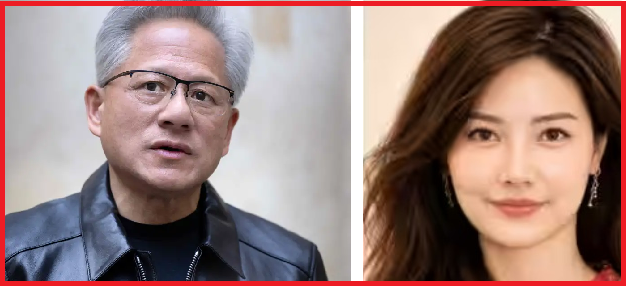
Jensen Huang and Alice Huang
Trump told reporters Monday that he had personally spoken with Huang and accepted the executive’s explanation that he was unaware of any alleged intelligence connections involving the woman at the center of the controversy.
The president did not disclose the scope of the FBI’s examination or indicate whether investigators had uncovered evidence of espionage.
The controversy has nevertheless drawn attention to Nvidia’s business relationships in Southeast Asia, where questions have emerged about access to advanced American semiconductors subject to Washington’s export restrictions.
From Personal Scandal to National Security Questions
At the center of the allegations is Alice Huang, also known as Huang Le, a businesswoman identified by The New York Times as having had a relationship with Jensen Huang.
The newspaper reported that US intelligence officials believed Alice Huang had passed information to Beijing. The allegations have not been independently established, and China’s foreign ministry has rejected the espionage claims.
Reuters said it could not independently verify the intelligence allegations or obtain comment from Alice Huang.
Jensen Huang acknowledged an extramarital affair in a message to Nvidia employees but did not publicly identify the other person. He also pledged to cooperate with the company’s investigation.
Nvidia’s board announced Sunday that independent directors, assisted by outside legal counsel, would examine the matter.
The board expressed confidence in Huang and said it had no reason to believe Nvidia’s confidential information or US national security had been compromised.
That assurance has not ended scrutiny of the company’s commercial connections.
According to the Financial Times, Alice Huang and business partner Kang Wei approached two potential investors in early 2025 seeking financing for a proposed data center in Southeast Asia.
The investors said the pair claimed they could obtain Nvidia graphics processing units, the powerful semiconductors used to train and operate advanced artificial intelligence systems.
One investor told the newspaper that Alibaba had been presented as a potential customer.
The reported pitch is significant because access to Nvidia’s most advanced processors has become a central issue in Washington’s technological confrontation with Beijing.
However, the investors’ accounts establish only that such claims were made during fundraising discussions. They do not demonstrate that Nvidia approved a transaction, that restricted chips were transferred to China or that Jensen Huang participated in the proposed arrangement.
Singapore Chip Connection Raises Fresh Questions
The controversy has acquired another dimension through Megaspeed International, a Singapore-based cloud computing company listed by Nvidia as a partner.
Reuters reported Tuesday that corporate records showed Alice Huang took control of Megaspeed International in 2023.
Shipping records examined by the news agency also showed that Megaspeed’s Indonesian subsidiary imported Nvidia H100 processors and associated equipment.
The H100 is among the high-performance AI processors that have figured prominently in US efforts to restrict China’s access to advanced computing technology.
American authorities have scrutinized whether Megaspeed helped Chinese customers obtain restricted semiconductors through overseas operations.


Alice Huang
Megaspeed has denied wrongdoing, and US authorities have not publicly announced a finding that the company violated export restrictions.
The distinction is important. The presence of Nvidia processors in a company’s overseas operations does not, by itself, establish an illegal export or diversion to China.
Nevertheless, the reported combination of personal relationships, corporate ownership and advanced-chip transactions has raised questions about the effectiveness of safeguards surrounding sensitive American technology.
Congress Seeks Answers
Three Republican and Democratic committee chairs in the US House of Representatives have requested a closed-door briefing from Jensen Huang on November 18.
The proposed briefing could place Nvidia’s internal compliance procedures, relationships with overseas partners and the executive’s knowledge of the reported activities under closer examination.
Investors have already reacted to the uncertainty.
Nvidia shares fell 4.3% Monday, closing at $178.67, as the allegations introduced another potential risk for a company whose fortunes are closely tied to the global AI investment boom.
For Nvidia, the immediate challenge extends beyond the personal conduct of its chief executive. The company must address whether its safeguards were sufficient to protect commercially sensitive information and prevent restricted technology from reaching unauthorized customers.
So far, no publicly established evidence shows that Jensen Huang knowingly assisted a foreign intelligence operation or that the reported business activities resulted in an unlawful transfer of Nvidia chips.
The FBI’s examination, Nvidia’s independent inquiry and the congressional briefing could determine whether the controversy remains a damaging personal scandal or develops into a wider investigation of America’s AI technology supply chain.