UN refugee agency calls for greater investment in Syrian returnees

The estimates are from the UN refugee agency, UNHCR, which on Friday called for increased funding to support Syrian returnees as needs intensify at a time when aid budgets globally are being slashed.

“Since the fall of the Assad regime, returning home and starting anew has become a possibility for Syrians,” said UNHCR spokesperson Céline Schmitt, speaking from Damascus to journalists in Geneva.

With investment in aid and early recovery, we can create opportunities and keep up the hope of Syrians,” she insisted. 

‘Window of opportunity’

Ms. Schmitt said that “as the school year ends, summer will be a critical moment for voluntary returns and a window of opportunity that should not be missed.”

Syrians will need support in the areas of shelter, livelihoods, protection and legal assistance, for returns to be successful and sustainable.  

“The risk is that, without adequate funding, the projected 1.5 million returns this year may not happen, and those who do return may have no other choice but to leave again,” she warned.

Invest in returns

Therefore, support for UNHCR and other humanitarian actors is crucial for stability, she said, in the face of severe funding cuts which are putting millions of lives at risk.

Currently, nearly 16.7 million people inside Syria – about 90 per cent of the population – require some form of humanitarian assistance. Over 7.4 million Syrians are still displaced within the country.

Now is the time to invest in facilitating the return of refugees who have been waiting years for this moment,” she said.

Aid cuts threaten operations

In January, UNHCR launched an operational framework to help 1.5 million refugees and two million IDPs return home this year. Although $575 million is required, only $71 million has been pledged to date.

Ms. Schmitt noted that this is happening amidst a significant reduction in donor funding between 2024 and 2025.

These cuts are impacting our workforce, which will shrink by 30 per cent inside Syria, significantly affecting our ability to provide critical support,” she said.

Additionally, lack of proper funding could force UNHCR to pause some of its life-saving activities. The agency supports 122 community centres and 44 per cent will have to close by the summer. 

The centres provide critical aid such as mental health support, legal assistance, prevention of gender-based violence and mine awareness education. 

“They also foster social cohesion, and their closure will impact returnees and their communities as well as UNHCR’s local partners,” she added.

Appeal to donors

Ms. Schmitt said that despite these difficult and unprecedented times, UNHCR is committed to staying and delivering in Syria, urging donors to “make an extra effort in spite of the global economic challenges.”

She also appealed “to wealthy countries who have not been contributing” to support effort to ensure the safe and dignified return of Syrian refugees, stressing that “it is crucial not to miss this historic opportunity.”

Online support 

UNHCR has launched a digital platform called  Syria is Home to provide timely and impartial information on the return process including legal steps, identification documents, access to housing, health care, education and more. 

Under Frequently asked questions (FAQs), Syrians can get guidance on renewing identity documents, support to repair destroyed or damaged homes and accessing legal aid and counselling support.

The platform, which is continuously updated, aims to provide credible and up-to-date information to help people make informed decisions, plan for their future and remain hopeful.  

UN teams ramp up response to deadly quake in Myanmar and Thailand

The Emergency Relief Coordinator tweeted that UN teams are being “supported by expertise across our global network”.

News reports quoting sources in the Burmese city of Mandalay, close to the epicentre of the quake, indicate that hundreds have died. In neighbouring Thailand more than 80 construction workers are missing, according to the Thai deputy prime minister, with a search and rescue operation underway.

UN chief António Guterres sent condolences to all those in the region impacted and underlined that the UN system is mobilising as fast as possible in support. 

Mr. Fletcher, who heads aid coordination office, OCHA, made an intial allocation from the Central Emergency Response Fund of $5 million to support life-saving assistance.

‘Significant damage’

The UN Resident Coordinator’s Office in Myanmar told UN News in a statement that reports indicate “significant damage” has occurred in Mandalay state, as well as Nay Pyi Taw, Bago, Magway, Sagaing, Shan “and possibly other areas”.

Our thoughts are with everyone impacted by this event…We are gathering information about the people impacted, infrastructure damage, and immediate humanitarian needs to guide a response and will share more updates as information becomes available.”

Sheela Matthew of the UN World Food Programme (WFP) said the quake had hit Myanmar “at the worst possible time. With one in four in the country already facing acute food insecurity, Myanmar just can’t afford another disaster.”

She said WFP has stocks of ready-to-eat food available in warehouses “and we are ready to respond as needed.”

Speaking from Myanmar’s largest city of Yangon, Marie Manrique, Programme Coordinator for the Myanmar country team of the International Federation of Red Cross and Red Crescent Societies (IFRC), told journalists at the UN in Geneva that the quake had also been felt in China, Thailand, and India.

She said that beyond damage to buildings and infrastructure, there was concern over potential dam bursts. Electricity and communications have been cut off in parts of the country.

She said the Myanmar Red Cross Society had launched an emergency operation to help people in need and assess the situation.

Myanmar has been in the grip of an increasingly brutal civil war since a military coup more than four years ago. Around 20 million people – a third of the population are expected to need humanitarian assistance this year. Around 15 million are projected to face acute food insecurity during 2025.

Fighting between junta forces and opposition armed groups has displaced more than 3.5 million people within the country.

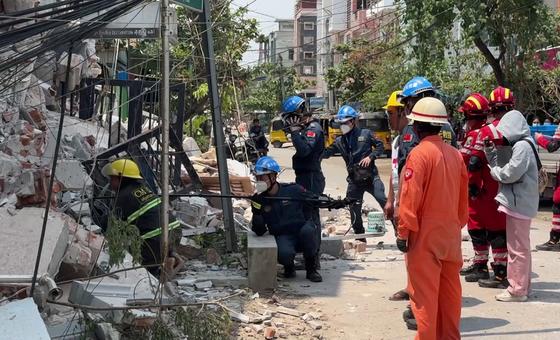
People gather in front of collapsed buildings in the Mandalay region of central Myanmar, following the 7.7 magnitude earthquake.

Aid operation underway

Speaking for the World Health Organization (WHO) in Geneva, Dr. Margaret Harris said relief efforts were underway in coordination with country offices in Myanmar and Thailand.

She said the agency had activated its logistics hub in Dubai to primarily provide trauma supplies and a health needs assessment is underway.

Babar Baloch, for the UN refugee agency, UNHCR, said that the central and northwest parts of Myanmar had the highest number of internally displaced people (IDPs) due to the conflict.

Some 1.6 million IDPs out of the total 3.5 million live in these areas and the catastrophe will only exacerbate hardships, he told journalists.

More to come on this developing story…

Gaza: UN rights office condemns Israeli buffer zone plan

Hostilities in the Gaza Strip resumed mid-March following the collapse of the ceasefire and Israel’s border closure.

As it enters its sixth week, the denial of aid into the enclave has left more than 2.1 million Gazans trapped without access to food, drinking water, and basic services.

Israel in recent weeks has ramped up its attacks on civilian infrastructure such as  residential buildings and camps, leaving many more dead or missing under the rubble.  

Between March 18 and April 9, Israeli forces have struck housing and tents for internally displaced people (IDPs) on 224 occasions during 36 separate strikes, according to the UN rights office, OHCHR

Vast new exclusion zones

Earlier on Friday, Israeli authorities issued two new displacement orders “covering vast areas in northern and southern Gaza,” UN Spokesperson Stéphane Dujarric said at the regular noon briefing in New York.

“Together, these areas span more than 24 square kilometres – roughly the size of everything south of Central Park here in Manhattan.”

Some medical facilities and storage sites containing critical supplies are located within the newly designated zones, prompting aid coordination office OCHA to warn that this could have life-threatening consequences for people in urgent need of care.

“This leaves Palestinians with less than a third of Gaza’s area to live in – and that remaining space is fragmented, it’s unsafe and it’s barely livable following 18 months of hostilities.”

‘Forcible transfer’

OHCHR spokesperson Ravina Shamdasani also highlighted the growing trend in attacks against media workers, reporting that at least 209 journalists have been killed in Gaza since the deadly Hamas-led terror attacks of October 2023, as Israel continues to deny international media entry into the Strip.

The OHCHR spokesperson acknowledged that the temporary evacuation of civilians in certain areas can be legal, under strict conditions.

But “the nature and scope of the evacuation orders raises serious concerns that Israel intends permanently to remove the civilian population from these areas in order to create a so-called buffer zone”, she said.  

Permanently displacing the civilian population within occupied territory amounts to forcible transfer, which is a grave breach of the Fourth Geneva Convention and a crime against humanity.”

War crimes

Combatants need to demonstrate compliance with the rules of war, particularly the principles of distinction – meaning defenceless civilians should not be targeted – as well as proportionality and precaution.

Intentionally directing attacks against civilians not taking a direct part in hostilities constitutes a war crime, further compounding the desperate conditions for Palestinian civilians,” Ms. Shamdasani said.

OHCHR has also repeatedly warned that collective punishment and the use of starvation of the civilian population as a method of war, constitute crimes under international law.

Ms. Shamdasani also stressed that her office was “seriously concerned that Israel appears to be inflicting on Palestinians in Gaza, conditions of life increasingly incompatible with their continued existence as a group”.

Women wait to receive food at a distribution point in Gaza City.

Supplies pile up

With stocks of drugs sharply declining, medicines and other essential supplies have been piling up at the shuttered border crossings.  

Almost 36 million tons of supplies in Dubai are on standby for entry into the enclave, according to Dr. Rik Peeperkorn, World Health Organization Representative (WHO) for the West Bank and Gaza.

Medical evacuations for patients in need of urgent treatment have slowed significantly. Likewise, the number of international emergency medical teams deployed has dropped, depriving hospitals of the help they crucially need, “because the caseload is immense”, Dr. Peeperkorn stressed.

“We urgently call for the immediate resumption of medical evacuation through all possible routes, particularly restoring the medical referral pathway to the West Bank and Jerusalem.”

Extreme weather impacts cascading ‘from the Andes to the Amazon’

The study also highlights positive developments amid the bleak news, such as the growing role of renewable energy in the region and the power of early warning systems to save lives.

“In 2024, weather and climate impacts cascaded from the Andes to the Amazon, from crowded cities to coastal communities, causing major economic and environmental disruptions,” said WMO Secretary-General Celeste Saulo.

“Drought and extreme heat fuelled devastating wildfires. Exceptional rainfall triggered unprecedented flooding, and we saw the earliest Category 5 hurricane on record,” she added.

Feeling the heat

The State of the Climate for Latin America and the Caribbean report reveals that 2024 was the warmest or second warmest year on record, depending on the dataset used.

Rising temperatures led to the disappearance of the Humboldt Glacier, the last one standing in Venezuela, which became the second country in the world after Slovenia to lose all its glaciers in the modern era.

Meanwhile, El Niño conditions in the first half of the year influenced rain patterns. For example, areas across the Amazonia and Pantanal regions in Brazil experienced widespread drought, where rainfall was 30 to 40 per cent below normal. 

Wildfires and floods

Wildfires in the Amazon and Pantanal, as well as in central Chile, Mexico and Belize, were driven by drought and extreme heatwaves, breaking records in many countries. Wildfires in Chile resulted in over 130 deaths – the country’s worst disaster since the February 2010 earthquake.

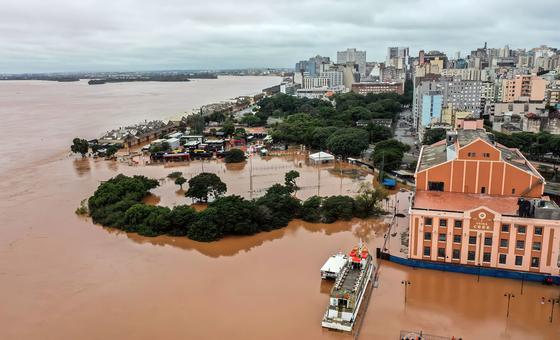
Floods triggered by heavy rainfall in the southern state of Rio Grande do Sul became Brazil’s worst climate related disaster, causing billions in economic losses to the agricultural sector. 

While timely warnings and evacuations helped mitigate the impacts of the flooding, WMO said more than 180 fatalities were reported, thus highlighting the need to improve understanding around disaster risks among both authorities and the general public.

Hope and resilience

But there is also hope,” Ms. Saulo insisted, pointing to bright spots in the report. 

“Early warnings and climate services from National Meteorological and Hydrological Services (NMHSs) are saving lives and increasing resilience throughout Latin America and the Caribbean,” she said.

Moreover, renewable energy accounts for nearly 69 per cent of the energy mix. Solar and wind energy experienced a remarkable 30 per cent increase in capacity and generation compared to 2023, WMO said.

The UN weather agency and partners are also assisting national meteorological and hydrological services to support renewable energy development and integration through artificial intelligence-based wind forecasting, and other measures.

The State of the Climate for Latin America and the Caribbean report was issued at a WMO Regional Association meeting hosted by El Salvador to inform decisions on climate change mitigation, adaptation and risk management at the regional level.

It complements the State of the Global Climate flagship report, released last week. 

Resilience in the face of thirst: Trucking water in war-ravaged Gaza

Every day, he drives his water truck through the Strip, filling up empty tanks and vessels.

Our camera accompanied Alloush on a recent arduous mission to provide a little water to the residents of Jabalia. UN News’ correspondent met Alloush in Jabalia’s desalination plant, where he spends hours waiting for water.

Like everywhere else in Gaza, the desalination plant is overcrowded. As Gaza is running out of fuel, Alloush explained that 35 to 40 liters of diesel is needed every hour for the plant just to operate.

Hours spent waiting

At the plant, Ibrahim has to be patient: “We come to the desalination plant and wait about five hours for our turn to fill up. Water prices are very high due to production costs. People here in Gaza cannot afford water unless it is distributed by organizations, institutions, or initiatives.

“The cost of one cubic metre is very high because of how expensive diesel is, which is needed to operate the generators. One cubic metre of water can cost between 90 to 100 shekels, this is about 20 Jordanian dinars.”

Gaza residents lining up near the water truck to fill their jugs.

After completing his task, Ibrahim Alloush gets into his old truck, starts its engine, and sets off on a challenging journey through the devastated neighborhoods of Jabalia.

For Alloush, the struggle does not stop at the water plant. Driving through Gaza is not easy, navigating destroyed streets and surrounded by rubble, Alloush needs to reach the people waiting for him – waiting for water.

There are always people waiting for him. It is almost impossible for trucks to reach certain areas, if it were not for Mr. Alloush, these areas would basically be lacking any supply.

No life without water

‘We are suffering from a major water crisis,” says Ayman Kamal, a Gaza Strip resident. While some can wait half a day to fill up five or ten gallons of water only, others may not even be able to get water, as they were too far behind in line.

“Without water, there is no life…We wait for potable water that comes from distant areas, and people crowd to get their share,” says another resident, Fathi al-Kahlout, as he fills his bucket.

“The blockade has caused us many problems. We hope that the world will look at us, even for one day, as it looks at other countries. Everyone in other countries lives in comfort. Why are we condemned to this fate?” asked Sameer Badr, explaining that his children spend their days going back and forth in search of water.

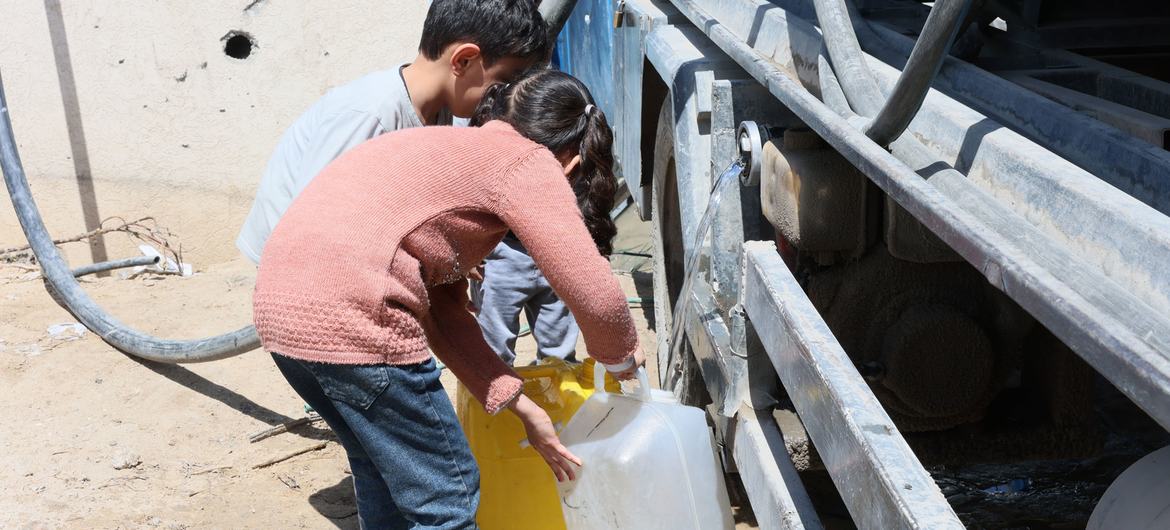
Two kids getting water from a truck.

Worsening water crisis

The continued closure of border crossings and the ban on fuel entry is paralysing desalination plants, the closure of the main water pipelines has also led to a sharp decrease in the amount of drinking water available to residents in Gaza. The water crisis is worsening, warns Children’s Fund UNICEF.

After the collapse of the ceasefire, the repair work that had been started on vital wells and water points came to a total halt, leaving many water sources either out of service or at risk of further damage.

According to UNICEF about one million people – including 400,000 children – are currently receiving a daily six-litre ration per person, a stark decrease from the previous average of 16 litres.

If fuel runs out, UNICEF warned that this amount could drop to less than four litres per day in the coming weeks, forcing families to rely on unsafe sources, significantly increasing the risk of disease outbreaks, especially among children.

Myanmar quake: More than 1,600 reported killed, as UN aid operation supports rescue efforts

The earthquakes of 7.7 and 6.4 magnitude struck Myanmar in the centre of the country northwest of Sagaing. The UN aid coordination office, OCHA, reported on Saturday that hospitals in the area are overwhelmed with extensive damage to health infrastructure.

The areas affected are Bago, Magway, Mandalay, Nay Pyi Taw, Northeastern Shan and Sagaing.

Internet communications are down in the main city of Mandalay, with land and air routes heavily disrupted.

Health partners are preparing to deploy mobile surgical and medical teams, as well as field hospitals to the affected areas, to deliver life and limb-saving medical interventions to earthquake victims.

News reports indicate that hundreds of people are trapped under rubble in multiple collapsed buildings, including at least 50 construction workers in the Thai capital Bangkok who are so far unaccounted for.

More than 90 people are reportedly trapped in the rubble of one apartment block in Mandalay.

Around 1,690 houses, 670 monasteries, 60 schools and three bridges are reported to be damaged, with concerns for the structural integrity of large-scale dams.

Myanmar has been mired in a brutal civil war since a severe military crackdown on pro-democracy demonstrators by military authorities, who overthrew the government in a military coup in February 2021.

The military has requested the international community to provide emergency assistance amid the widespread destruction and loss of life. Meanwhile, opposition forces are reporting that some airstrikes have continued following the quake, including one in the Sagaing region.

UN aid response ramps up

The World Health Organization (WHO is looking to move Emergency Medical Teams (EMT) into Myanmar amid reports of insufficient medical supplies, including trauma kits to treat injured people, blood bags for transfusion, anaesthetics, assisted devices, other essential medicines, and tents for health workers.

Marcoluigi Corsi, UN Resident and Humanitarian Coordinator for Myanmar, issued a statement on Saturday expressing his unwavering solidarity with the Burmese people “during this tragic time.”

The UN and its partners are urgently mobilizing to support emergency response efforts and stand ready to assist all affected communities wherever they are,” he said.

Myanmar had already been “reeling from an alarming humanitarian crisis, largely driven by persistent conflict and recurrent disasters. At this critical time, the people of Myanmar urgently need the steadfast support of the international community,” he added.

Pre-positioned aid

In an interview with UN News from Myanmar’s largest city, Yangon, Mr. Corsi said that around 20 million people have been impacted by the quake.

He stressed that the UN and partner agencies have a “significant presence” in the disaster-affected areas around Mandalay and the capital Naypyidaw, and crucially, the immediate aid effort can draw stockpiles already in place.

I would say that although the logistical challenges for the first few days continue, at least we will be able to deliver and assist.”

The country is grappling with multiple crises, he stressed, with 19.9 million people in need of assistance even before the earthquake. Only five per cent of the 2025 humanitarian response plan has been funded.

He reminded that the Burmese had endured major flooding around seven months ago, and a devastating cyclone in 2023, so “we see that the resilience of the people and the resilience of the communities, continue to be eroded.”

He said that “at this critical time you know the people of Myanmar needs the support of the entire international community – now more than ever.”

Children face ‘even greater hardship’

Trevor Clark, the UN Children’s Fund UNICEF’s regional chief of emergency operations, warned that the devastating quake “has left children facing even greater hardship in an already dire crisis.

“Homes and critical infrastructure are damaged, and urgent aid is needed. UNICEF is delivering lifesaving supplies but requires immediate support to scale up its response.

He said UNICEF was sending lifesaving supplies including tents, tarpaulins, hygiene kits, recreational kits and health supplies: “We are ready to bring in even more, but we need the support of our partners.”

Some $5 million has already been released by the head of OCHA from the Central Emergency Relief Fund and on Saturday UN procurement agency, UNOPS, announced that thanks to donors it was releasing $10 million to aid partners in the emergency response.

Click here to donate to the UN emergency appeal for Myanmar 

The 7.7 magnitude earthquake has caused widespread destruction of property in central Myanmar.

Israeli attack puts Gaza City hospital out of service

“Al Ahli Hospital is out of service,” WHO spokesperson Dr Margaret Harris told UN News, after the airstrike early on Sunday morning. “The pharmacy was destroyed, many of the different buildings and services were destroyed.”

Some 40 patients whose condition is too critical to be moved from the health facility are continuing to receive care, while the 50 other remaining patients – including the child who died – were evacuated to other medical centres shortly before the attack began.

Supplies now critically low

The situation remains critical and medical supplies of all kinds are now “desperately low”, WHO’s Dr Harris said, before expressing deep concern for the safety of health personnel at the stricken hospital. Until Sunday’s strike, Al Ahli was the main hospital dealing with the casualties from Israeli airstrikes. Now, most casualties are sent to Al Shifa Hospital in Gaza City.

The UN health agency says that only 21 of Gaza’s 36 hospitals now remain partially functional. Almost all of them have been damaged in the war, sparked by Hamas-led terror attacks on Israel in October 2023 in which some 1,250 people were killed and more than 250 taken hostage.

Leading condemnation for the attack and repeating calls for a ceasefire, WHO chief Tedros Adhanom Ghebreyesus insisted that hospitals have special protection under international humanitarian law: “Attacks on health care must stop. Once again we repeat: patients, health workers and hospitals must be protected. The aid blockade must be lifted.”

UN Secretary-General António Guterres was deeply alarmed by the strike on Al Ahli hospital, his spokesperson said in a statement on Monday.

He recalled that “under international humanitarian law, wounded and sick, medical personnel and medical facilities, including hospitals, must be respected and protected.” 

Aid teams highlighted how the hospital strike has already put “an immense additional strain” on the war-shattered enclave’s remaining partially operational hospitals.

“Mass casualty events are now the norm and those hospitals that are treating trauma patients are doing so amid severe shortages of critical supplies, including critical medicine,” Olga Cherevko from the UN aid coordination office, OCHA, told UN News.

It has now been seven weeks since crossings were closed to all relief supplies meant for the people of Gaza, and nearly a month since Israeli bombardment resumed in the enclave amid disagreement between Israel and Hamas over the terms of a ceasefire extension that include the release of all hostages and the withdrawal of Israeli troops.

According to OCHA, more than 390,000 people have been displaced since Israeli bombing began again on 18 March.

In recent days, top UN officials have rebuffed Israeli assertions that there was enough food to feed all Palestinians, insisting that they were “far from the reality on the ground”. The global body’s top emergency relief official, Tom Fletcher, also stated that aid teams are “deliberately blocked from saving lives in Gaza”, leading to further civilian deaths.

According to the Gazan health authorities, well over 50,000 Palestinians have been killed and 115,688 Palestinians injured during the conflict. This includes 1,449 people killed and 3,647 injured since the escalation of hostilities on 18 March.

“Supplies that we had are rapidly running out and we’re running out of food of medicine, of shelter and every other life-critical item if the situation does not change immediately,” Ms. Cherevko stressed. “The catastrophe that is in Gaza will become worse and the needs of the people will become even higher. This cannot continue. Civilians must be protected and the crossings must be reopened immediately.”

Myanmar earthquake: Search and rescue efforts continue in race against time

According to news reports citing Myanmar’s military leader, around 1,700 are confirmed dead from Friday’s 7.7 magnitude quake, with some 3,400 injured and hundreds still missing.

In the Thai capital Bangkok which was also rocked by the seismic event, 76 construction workers are reportedly still missing following the collapse of an unfinished skyscraper. The death toll there now stands at 17.

The search and rescue effort in Myanmar is focused on the major cities of Mandalay and the capital, Nay Pyi Taw. 

Some survivors continue to be pulled from the rubble and multiple international aid teams have reached the stricken areas – although the aid effort is being hindered due to damage to airports.

Shelter, medicine, water

People urgently need shelter, medical care, water and sanitation support. This disaster puts more pressure on already vulnerable people facing an alarming crisis,” the UN aid coordination office in the region, OCHA, said on X.

Burmese civilians are also stuck between forces of the military junta and numerous armed militia battling for control of the country since the February 2021 coup. More than three million have been displaced by the fighting.

The National Unity Government which represents the democratically-elected civilian administration overthrown by the coup, called on rebel fighters to observe a two week ceasefire to allow humanitarian aid to reach those in need.

But the military regime is reportedly continuing to carry out airstrikes, including in areas close to the epicentre of the earthquake.

Call for ‘immediate ceasefire’

The Human Rights Council-appointed independent expert who monitors the situation in Myanmar, Tom Andrews, said in a social media post on Sunday that the junta should follow opposition forces and declare an immediate ceasefire.

“Military conscription should be suspended; aid workers should not have to fear arrest and there should be no obstructions to aid getting to where it is most needed. Every minute counts,” he added.

The UN reproductive health agency, UNFPA, is one of the agencies on the ground urgently working with partners and local communities to assess critical needs and deliver life-saving aid – particularly for women and girls.

Women and girls face ‘increased risks’

In an update, UNFPA said early assessments highlight significant damage to health facilities, population displacement and the disruption of essential services, including sexual and reproductive healthcare.

In emergencies like this, women and girls face increased risks, from compromised access to life-saving maternal healthcare to heightened risk of gender-based violence, ” said Jaime Nadal Roig, UNFPA Representative for Myanmar.

“UNFPA is committed to supporting relief efforts, placing the well-being of women and girls – including pregnant women, mothers, and adolescents – at the heart of our humanitarian response efforts.”

UNICEF Myanmar’s Ko Sai, said in a post on X from Mandalay, that the quake was “an absolute catastrophe” for children in the region, with many youngsters and families in Mandalay still missing.

We need urgent assistance, especially for the children, who often suffer the most in this kind of situation,” he added.

Lifesaving medical supplies

The UN World Health Organization, WHO, has rushed nearly three tonnes of medical supplies from its emergency stockpile in Myanmar’s largest city, Yangon, to hospitals in Mandalay and Nay Pyi Daw.

The UN World Food Programme (WFP) Country Director in Myanmar, Michael Dunford said in a tweet that the agency carried out its first emergency food distribution in Nay Pyi Taw on Sunday which included high energy biscuits “and we’re about to scale up our assistance.”

WHO on Sunday issued a 30-day flash appeal for $8 million to deliver trauma care, prevent disease outbreaks and restore essential services that have been decimated by the quake. 

Click here to donate to the UN emergency appeal for Myanmar 

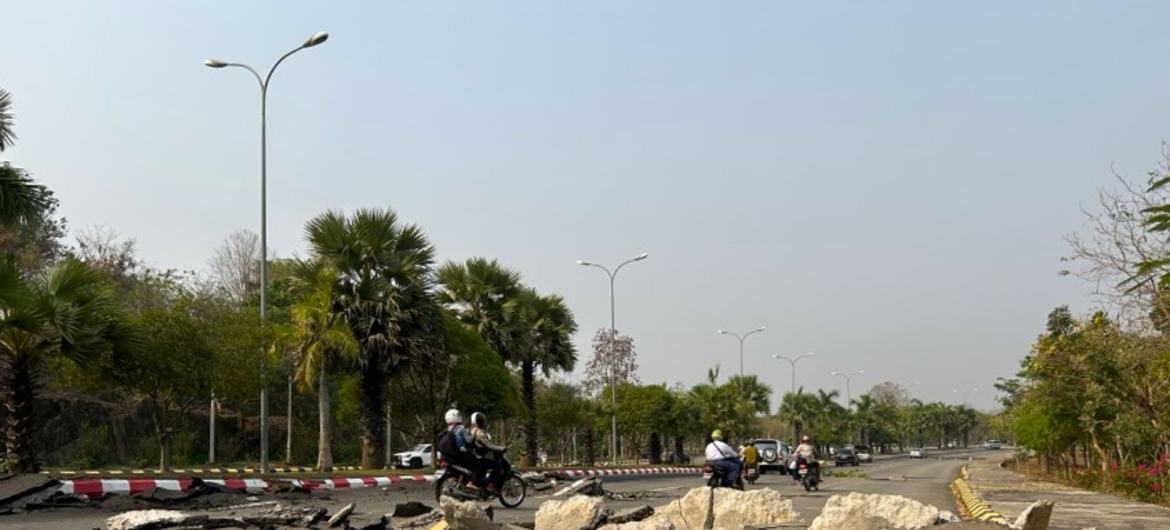
A major road in Nay Pyi Taw shows severe structural damage following the 7.7 magnitude earthquake that struck Myanmar.

Israeli strikes in Lebanon continue to kill civilians, UN rights office warns

At least 71 civilians have been killed by Israeli forces in Lebanon since the 27 November 2024 ceasefire, according to an initial review by the Office of the UN High Commissioner for Human Rights (OHCHR).  

Among the dead are 14 women and nine children. More than 92,000 people remain displaced by the violence.

Recent escalation

At a press briefing in Geneva, OHCHR spokesperson Thameen Al-Kheetan detailed recent escalations, including a strike on a residential building in Beirut’s southern suburbs on 1 April that killed two civilians. The area was near two schools and suffered extensive damage.

Two days later, Israeli airstrikes destroyed a newly opened medical centre in Naqoura, southern Lebanon, and damaged ambulances stationed nearby. Additional strikes between 4 and 8 April reportedly killed six more people in towns across southern Lebanon.

Furthermore, since the ceasefire began, at least five rockets, two mortars and a drone were launched from Lebanon towards the north of Israel, according to the Israeli army. Tens of thousands of Israelis are still reportedly displaced from the north.

Call to end violence

Mr. Al-Kheetan said Israeli strikes since the ceasefire have repeatedly hit civilian infrastructure, including residential buildings, roads, and at least one café.

The violence must stop immediately,” he said, emphasising the obligation of all parties to uphold international humanitarian law, including the principles of distinction, proportionality, and precaution.

He also called for prompt, independent investigations into all alleged violations of international humanitarian law and for accountability for those found responsible.

Civilians must be protected, and displaced people — in both Lebanon and Israel — must be allowed to return safely,” Mr. Al-Kheetan said. He also stressed the urgent need to clear unexploded ordnance from southern Lebanon to enable safe resettlement.

Respect the ceasefire

Mr. Al-Kheetan further reiterated High Commissioner Volker Türk’s call on all parties to respect the terms of the ceasefire and Security Council resolution 1701.

Adopted in August 2006, resolution 1701 called for a full cessation of hostilities between Hezbollah and Israel following their 34-day war. It also called for the withdrawal of Israeli forces from southern Lebanon, the deployment of the Lebanese army and the disarmament of all non-state armed actors in Lebanon.

Myanmar earthquake tragedy ‘compounds already dire crisis’

Humanitarian and Resident Coordinator Marcoluigi Corsi expressed the UN’s profound sorry at the immense loss of life stemming from Friday’s 7.7 and 6.4 magnitude quakes with the death toll rising to around 2,000, according to the country’s military junta.

“The latest reports indicate significant loss of life, widespread injuries, and many still unaccounted for as rescue operations continue,” Mr. Corsi said in a statement on behalf of the UN Country Team.

Urgent support operation continues

He stressed that the UN and partners continue to urgently mobilise in support of the emergency response, standing ready to assist all communities “wherever they are”.

The earthquakes struck near Mandalay and Sagaing, with impacts felt across Bago, Magway, Nay Pyi Taw, and parts of Shan State. Hospitals are overwhelmed, while communication and transport routes have been severely disrupted.

Thousands are sleeping in the open, fearful of aftershocks and unable to return to damaged homes.

UN-facilitated rescue teams from around 20 countries, including sniffer dogs, paramedics and medical supplies, supported by millions of dollars in aid, continue to arrive in Myanmar – where millions were already displaced by civil war, arising from the military coup of February 2021.

Resilience further eroded

Even before this earthquake, nearly 20 million people in Myanmar were in need of humanitarian assistance,” Mr. Corsi emphasized. “This latest tragedy compounds an already dire crisis and risks further eroding the resilience of communities already battered by conflict, displacement, and past disasters.”

The UN Humanitarian Country Team is actively conducting rapid needs assessment missions in coordination with UN agencies, humanitarian partners, local authorities and community-based organizations, paying particular attention to the needs of women, children, the elderly, and people with disabilities, who are disproportionately affected in such disasters.

“Beyond the immediate response, this crisis highlights the urgent need to strengthen efforts towards recovery and to invest in measures that help communities withstand future shocks,” Mr. Corsi said.

Significant UN presence

An initial $15 million in emergency funds has been allocated by the UN to support the lifesaving response. Medical teams, shelter materials, and critical water, sanitation and hygiene (WASH) items are arriving – alongside prepositioned and supplementary food aid.

“We have a significant presence in Mandalay and surrounding areas, and we are doing everything we can to reach people in need despite serious logistical challenges,” Mr. Corsi said. “But much more will be required in the days and weeks ahead.”

More than ever, timely support is critical to prevent further deterioration of the crisis, he added.

The World Food Programme (WFP) reported that it aims to support 100,000 of the worst hit with ready-to-eat meals, following by food and cash-for-food assistance to around 800,000 for the next month.

WFP Myanmar/Chit Min Htet

Severe damage to Naypyidaw’s road infrastructure following the ea​rthquake in Myanmar.

Ceasefire now: UN Special Envoy

The UN Special Envoy on Myanmar Julie Bishop issued a statement on Monday saying she stands in solidarity with the people of Myanmar.

The earthquake has laid bare the deeper vulnerabilities facing Myanmar’s people and underscored the need for sustained international attention to the broader crisis.”

Referencing the ongoing conflict which has seen military forces lose control of a majority of the country to opposition armed groups amid brutal fighting and airstrikes, she said that “all sides must urgently allow space for humanitarian relief and ensure that aid workers can operate in safety.”

Continuing military operations in quake-affected areas “risks further loss of life and undermines the shared imperative to respond,” she continued.

Ms. Bishop called for an immediate ceasefire by all parties, to prioritise the rescue, aid and recovery effort, including protection of civilians.

She said she was in close contact with Emergency Relief Coordinator Tom Fletcher and the UN Country Team in Myanmar who are working in partnership with neighboring countries and others, supported by the UN’s regional and global network. 

Gaza faces deepening crisis as aid stocks dwindle

More than 500,000 people are reported to have been newly displaced since 18 March, many of them uprooted multiple times due to ongoing military operations across the Gaza Strip.

Conditions on the ground are deteriorating rapidly, with critical shortages in basic supplies and growing malnutrition, especially among children.

“Tents are no longer available for distribution,” UN spokesperson Stéphanie Tremblay told journalists at a regular news briefing in New York.

She noted that families in Bani Suhaila, Khan Younis Governorate, recently received only minimal quantities of blankets and tarpaulins. Displaced populations in Khan Younis reported overcrowded shelters and a dire lack of food, water, and medicine.

Impact on children

Children are among the worst affected. In March, the number of children receiving supplementary feeding declined by more than two-thirds, according to humanitarian partners, raising concerns of acute malnutrition amid collapsing health services.

In addition, hospital operations are further strained by limited access to medical supplies.

“Humanitarians are finding it increasingly difficult to operate as no aid has entered Gaza for now. We are now in the seventh week of this and as military operations expand,” said Ms. Tremblay, adding that Israeli authorities continue to deny planned coordinated missions.

“Today, only two out of six planned humanitarian movements that were coordinated with the Israeli authorities, were facilitated. The remaining four were denied, including one mission to retrieve fuel from Rafah, which as you can imagine is urgently needed.”

Despite insecurity and access limitations, humanitarian organizations continue efforts to help vulnerable families. Community kitchens across Gaza prepare more than one million meals daily, but that remains insufficient for most of the 2.1 million people in the enclave who rely on aid for basic sustenance.

Myanmar earthquake latest: Entire communities flattened, aid teams say

Speaking to journalists from Yangon on Tuesday, Julia Rees, Deputy Representative of the UN Children’s Fund (UNICEF) in the country described seeing massive needs rising by the hour, after a 7.7 magnitude quake.

“Entire communities have been flattened,” she said, with children and families sleeping out in the open with no homes to return to.

“I met children who were in shock after witnessing their homes collapsed or the death of a family member… some have been separated from their parents and others are unaccounted for,” she explained.

Some 72 hours after the quake rocked Mandalay and Sagaing regions as well as Nay Pyi Taw and southern Shan state, the death toll has risen to around 2,000, according to the country’s military junta, with hundreds unaccounted for and thousands injured.

“The window for lifesaving response is closing,” Ms. Rees said, while across the affected areas, families face acute shortages of clean water, food and medical supplies. But conditions remain extremely challenging as aid teams are working “without electricity or sanitation, sleeping outside, like the communities we serve”.

International response

The UN Office for the Coordination of Humanitarian Affairs (OCHA) said that local search and rescue teams, supported by international rescue units from a number of countries including China, India, Russia, Thailand and Bangladesh, have been “intensifying their efforts” particularly in central Myanmar, which has continued to experience aftershocks.

Relief chief Tom Fletcher, who leads OCHA, reiterated in a post on X that apart from heavy damage to infrastructure the response “has been hampered by lack of funding.” He said the UN is in contact with Myanmar authorities on how the international community can do more, with overseas aid budgets cut in Washington and many European capitals.  

The UN’s top humanitarian official on the ground, Marcoluigi Corsi, freshly back from a visit to the country’s capital Nay Pyi Taw said that as the critical window for finding survivors under the rubble was narrowing, conditions in the affected areas continued to deteriorate.

“You have no electricity, you have no running water,” he said, while people were battling the summer heat. “Often there are aftershocks and people are scared to go inside their homes,” he added.

Hospitals overwhelmed

Dr. Fernando Thushara, the representative of the World Health Organization (WHO) in Myanmar, said that in Nay Pyi Taw, he saw hospitals “overwhelmed with patients”.

“The medical supplies were running dry. There were electricity disruptions in some hospitals… and shortages of running water,” he said, adding that in some cases power generators were not working and hospitals were short on fuel.

Dr. Thushara warned that a lack of fresh water and sanitation could fuel outbreaks of infectious diseases “unless we control them very quickly”.

He recalled that a few months back, several townships in Mandalay had been affected by cholera. About 800 cases of the water-borne disease had been reported until February across nine states and regions in Myanmar, while other infectious diseases such as dengue, hepatitis, malaria may spread further.

The dire health situation is not the only crisis confronting the people of  Myanmar. UN refugee agency (UNHCR) spokesperson Babar Baloch stressed that the country is “reeling” from four years of conflict sparked by a military coup in 2021, while the UN’s Mr. Corsi said that in the past few years it has suffered a cyclone and massive flooding.

Mr. Baloch spoke of a “double tragedy” for the people of Myanmar, highlighting the fact that even before the devastating earthquake hit, all the affected areas already hosted 1.6 million displaced people.

Mr. Corsi stressed that the disaster-affected communities’ resilience is now highly compromised. Close to 20 million people across the country were already in need of humanitarian assistance before the earthquake hit and over 15 million were going hungry. 

Over three months into the year, the UN’s $1.1 billion humanitarian appeal for Myanmar remains only five per cent funded. “This is time…for the world to step up and support the people of Myanmar,” he concluded.

Click here to donate to the UN emergency appeal for Myanmar

Gaza: Alongside conflict, an information war is still happening, warns UNRWA chief

“Palestinian journalists continue to do heroic work, paying a heavy price; 170 have been killed to date,” said UNRWA Commissioner-General Philippe Lazzarini. “The free flow of information and independent reporting are key to facts and accountability during conflicts.”

In his appeal, Mr. Lazzarini noted that in the more than 18 months since war in Gaza began, sparked by unprecedented Hamas-led terror attacks on Israel, reliable reporting has been overtaken by propaganda and “dehumanizing” messages about the war.

Spike in attacks, censorship

Ajith Sunghay, head of the UN human rights office, OHCHR, in the Occupied Palestinian Territory, also expressed deep concerns about the dangers facing journalists there – although the situation “has always been very difficult”, he maintained.

“They have been subject to oppression in many instances we’ve recorded – killings and censorship and detention,” he told UN News. “But we have also recorded a massive spike in such operations – attacks, killings, detention and censorship – since 7 October 2023.”

Mr. Sunghay noted that OHCHR data indicates that 209 journalists have been killed in Gaza since 7 October 2023, the higher number reflecting all journalists killed on duty or at home.

The situation for journalists in the West Bank is also critical, with reports of arrested reporters receiving simulated beatings and threats of sexual violence against women journalists by Israeli authorities, the OHCHR office noted.

“Journalists are civilians and are protected from attacks under international humanitarian law unless they’re directly participating in hostilities,” Mr. Sunghay said, adding that Palestinian authorities were also reportedly responsible for “oppression” of media professionals. “The intentional killings of journalists is a war crime, and this is something that we have highlighted on several occasions.”

All aid still cut

In a related development, other UN agencies issued fresh alerts about the mounting impact of Israel’s six-week-old decision to cut off all food and other supplies from entering the shattered territory. Fuel is also included in the embargo and supplies are dwindling, with “bakeries shutting, hospitals running out of medicine” and gasoline for generators to keep their machinery working, said UNRWA.

Since Israeli bombing of Gaza resumed on 18 March, about 500,000 people have been newly displaced “or uprooted once more”, said spokesperson for the UN Secretary-General Stephanie Tremblay. Her comments came as Israel’s defence minister reportedly said that troops will remain in Gaza’s so-called security zones indefinitely, along with Lebanon and Syria.

Aid deliveries also continue to be impacted by Israeli refusals, with only two out of six missions that had been coordinated with the Israeli authorities allowed to go ahead on Wednesday. “The remaining four were denied” including one mission to retrieve urgently needed fuel from Rafah, noted Ms. Tremblay, citing the UN aid coordination office, OCHA.

Some 30 per cent of the Gaza Strip is now a security buffer where Palestinian civilians cannot live, the Israeli military reportedly announced.

Positive developments

Amid ongoing Israeli bombardment, military manoeuvres and evacuation orders, UN aid teams highlighted their continuing efforts to help the people of war-torn Gaza, despite encountering immense difficulties.

  • Health centre reopens: Approximately 1,300 patients attended a newly reopened UNRWA health centre in Maan, southern Gaza, after it was severely damaged in December 2023 during an Israeli military incursion into east Khan Younis. The facility provides outpatient services, non-communicable disease care, medications, vaccinations, antenatal and postnatal health care. It also offers physiotherapy and psychosocial support.
  • A blood donation drive for local hospitals is also underway in southern Gaza at UNRWA medical points amid an urgent need for thousands of blood units for life-saving operations. “Medicines and medical consumables are rapidly running out in Gaza, including critically low levels of supplies and blood units for maternal and child health,” the UN agency said.
  • Water well flowing again: Repairs have been successful to a water well that serves around 20,000 displaced people in Jabalia camp and others sheltering in seven UNRWA shelters in the surrounding area, the UN agency said on Thursday. UNRWA now operates five water wells: three in Jabalia, one in Gaza City and one in Khan Younis. Recycled and reused parts made the project possible. According to the UN Children’s Fund (UNICEF), around one million people, including 400,000 children, have gone from having access to 16 litres of drinking water per person per day, to just six.
  • Daily waste removal continues in Gaza with around 2,500 cubic metres of water and 230 tonnes of solid waste collected every day. This represents about 40 per cent of overall needs.

In its latest update, OCHA said that at least 51,000 Palestinians have been killed since the start of the war on 7 October 2023 and 116,343 Palestinians injured. This includes 1,630 people killed and 4,302 injured since the escalation of hostilities on 18 March, it said, citing Gaza health authorities

Doctors recount never-ending incidents of patients they could have saved, if medical supplies were available
OCHA

“The lack of heavy machinery and equipment hinder rescue efforts of the wounded and missing while casualties continue to fall due to continued bombardment by Israeli forces, including on tents for displaced people,” OCHA said.

Meanwhile, the aid community’s Nutrition Cluster has warned that the rapid deterioration of children’s nutrition status in Gaza “is already visible”. 

In March alone, 3,696 children were newly admitted for acute malnutrition out of 91,769 children screened. This marks a sharp increase compared with February, when 2,027 children were admitted out of a total of 83,823 screened. 

Countries reach historic deal to cut shipping emissions

The framework – agreed during the just-concluded meeting of the UN International Maritime Organization (IMO) Marine Environment Protection Committee – aims for net-zero emissions from the sector by 2050 and will be formally adopted in October before coming into force in 2027.

They will apply to large ocean-going vessels over 5,000 gross tonnage, which collectively account for 85 per cent of carbon dioxide emissions from the marine shipping fleet.

IMO Secretary-General Arsenio Dominguez hailed the breakthrough, emphasising the collaborative spirit that led to the deal.

“The approval of draft amendments to MARPOL Annex VI mandating the IMO net-zero framework represents another significant step in our collective efforts to combat climate change, to modernize shipping and demonstrates that IMO delivers on its commitments.”

MARPOL Annex VI refers to provisions in the International Convention for the Prevention of Pollution from Ships, specifically addressing air pollution.

It already includes mandatory energy efficiency requirements for ships and has 108 Parties covering roughly 97 per cent of the world’s merchant shipping fleet by tonnage.

Intense negotiations

Negotiations – which culminated on Friday in London – were particularly challenging.

According to media reports, around a dozen countries – including the United States – were opposed to the framework. The proposal was ultimately put to a vote and passed.

A turning point for the shipping industry

The framework introduces a dual approach: a global fuel standard that will progressively lower the annual greenhouse gas fuel intensity of marine fuels, and a greenhouse gas pricing mechanism requiring high-emitting ships to pay for their excess pollution.

Under the new system, ships that exceed emissions limits will need to acquire remedial units to offset their excess pollution. Meanwhile, vessels operating with zero or near-zero emissions will be eligible for financial rewards, creating a market-driven push toward cleaner maritime transport.

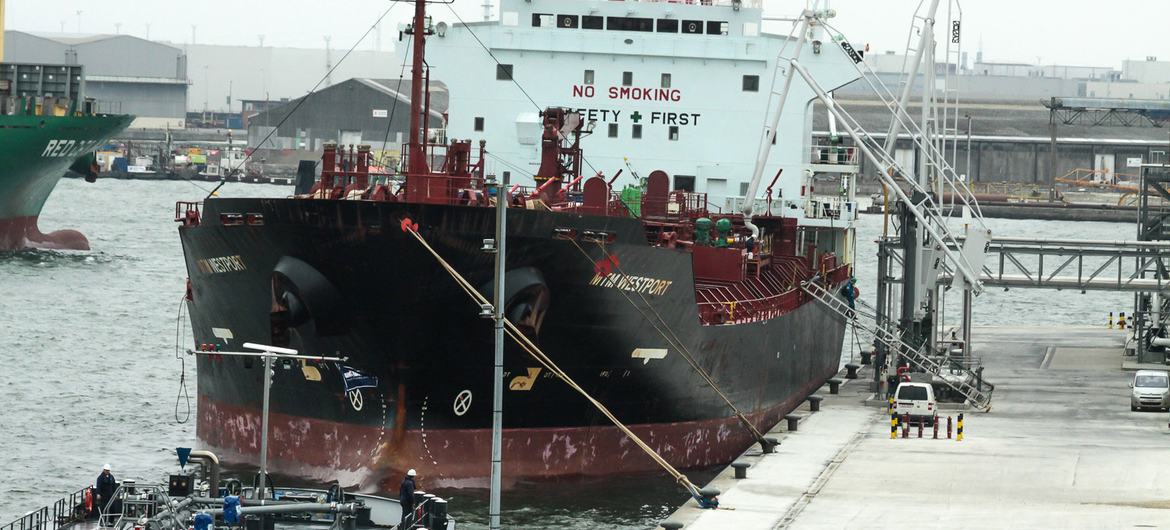
A cargo ship moored at a port in Europe.

Supporting vulnerable countries

A key element of the new framework is the IMO Net-Zero Fund, which will collect revenues from the carbon pricing mechanism.

These funds will support innovation, research, infrastructure and transition initiatives in developing countries.

It will also be used to mitigate negative impacts on vulnerable nations, such as small island developing States (SIDS) and least developed countries (LDCs), which bear the brunt of both climate change and economic pressures in the shipping sector.

Next steps: Adoption and implementation

The draft regulations will undergo formal adoption in October 2025.

If ratified during the IMO session, as expected, the measures will enter into force in 2027, giving the industry time to adapt to new requirements and invest in alternative fuels and technologies.

The International Maritime Organization

The International Maritime Organization (IMO) is the UN specialized agency responsible for the safety and security of global shipping and the prevention of marine and atmospheric pollution by ships.

Established in 1948 and headquartered in London, it develops international treaties, such as the International Convention for the Safety of Life at Sea (SOLAS) or the International Convention for the Prevention of Pollution from Ships (MARPOL).

UN chief urges ‘utmost restraint’ amid escalating violence in Yemen

At least five humanitarian workers were said to be among those injured, and significant damage was reported to port infrastructure. There are also fears of oil leaks into the Red Sea, raising environmental concerns.

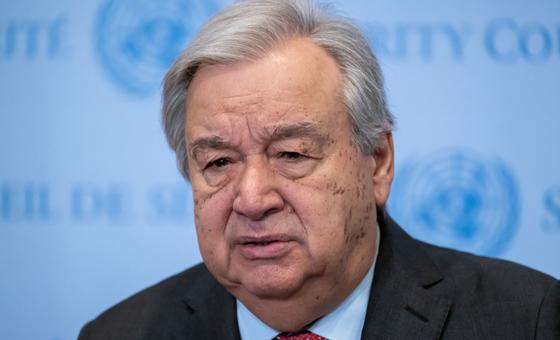
In a statement issued on Saturday by his spokesperson, António Guterres emphasised that international law, including international humanitarian law, “must be respected at all times.”

He urged all parties to respect and protect civilians and civilian infrastructure.

The Secretary General also voiced deep concern over ongoing missile and drone attacks by Houthi forces against Israel and vessels in the Red Sea, calling on the group to cease such attacks immediately.

“The Security Council resolution 2768 (2025) related to Houthi attacks against merchant and commercial vessels must be fully respected,” he stressed.

Mr. Guterres also warned of the growing risk of a broader regional escalation and urged all parties to exercise “utmost restraint.”

He also reiterated his demand for the “immediate and unconditional” release of all UN and other personnel arbitrarily detained by the Houthis.

Partnerships, increased climate investment crucial for sustainable transition, says UN deputy chief

Marking the tenth anniversary of both the UN Sustainable Development Goals (SDGs) and the landmark Paris Agreement, Ms. Mohammed highlighted the significant progress made over the past decade, while also acknowledging the substantial challenges that remain.

A decade of progress and challenges

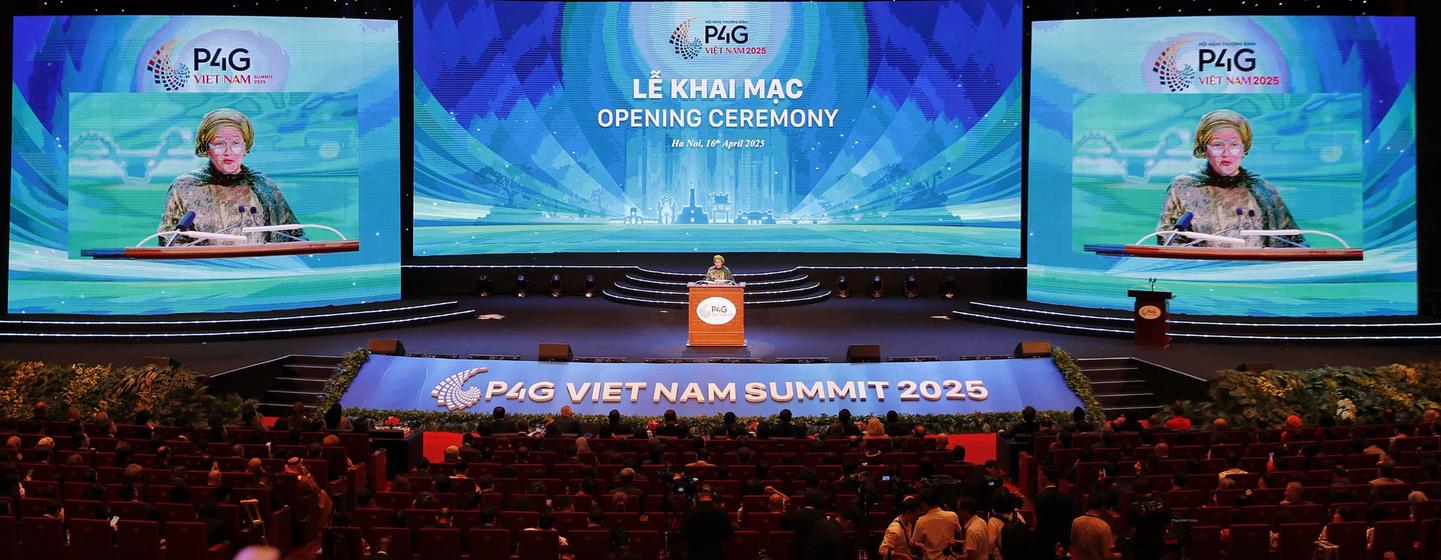
In her remarks to the Partnership for growth Summit, known by the shorthand ‘P4G’, which runs through Thursday in the Viet Nam capital, Ms. Mohammed reflected on the progress achieved since the adoption of the SDGs and the Paris Agreement.

However, she stressed the stark reality that the world is still far from where it needs to be.

“As I speak, there are 750 million people who do not have access to electricity, and two billion people have no clean cooking solutions,” she stated. She also pointed out the increasing air pollution affecting children worldwide due to fossil fuel emissions.

Hope amid adversity

Despite the daunting statistics, the UN deputy chief expressed hope, drawing inspiration from the words of Vietnamese Zen Master Thich Nhat Hanh: “Hope is important because it can make the present moment less difficult to bear. If we believe that tomorrow will be better, we can bear a hardship today.” 

She identified three sources of hope:

  • Global Commitment: The presence of representatives from governments, businesses, investors, and civil society at the summit demonstrated a collective commitment to building more sustainable, resilient, inclusive, and prosperous societies;
  • Collaboration: Initiatives like the Just Energy Transition Partnerships and P4G’s public-private partnerships, which exemplify the power of collaboration in transforming energy, water, and food systems and;
  • Economic Imperatives: The economic benefits of climate action; every dollar invested in climate adaptation can generate a return of up to 10 times.

She also pointed out the significant cost reductions in wind, solar, and battery storage technologies, making them the cheapest sources of new electricity in many markets.

An economic case for climate action

Ms. Mohammed underscored the financial impact of climate disasters, which caused $320 billion in damages worldwide last year.

She emphasized that the climate crisis is draining resources needed for development but also presented a compelling economic case for climate action.

“Renewables accounted for 92.5 per cent of all new power capacity added globally last year, and clean power surpassed 40 per cent of global electricity generation for the first time,” she noted.

Deputy Secretary-General Amina Mohammed delivers remarks at the P4G Summit in Hanoi, Viet Nam.

Viet Nam as a leading example

Highlighting Viet Nam’s leadership in clean energy, Ms. Mohammed praised the country’s bold shift from coal, which is not only combating climate change but also promoting a fairer and more equal future. She called this moment a “rare opportunity” to usher in a new economic era that ensures energy access, affordability, and security while creating zero-carbon, disaster-resilient, and sustainable societies.

Call to action

The UN deputy chief urged government leaders to accelerate the implementation of cost-effective solutions and drive change through smart policies and reforms at all levels.

She emphasized the importance of the next round of Nationally Determined Contributions (NDCs) – national climate action plans – in aligning energy and development plans with climate goals.

“Investment is key,” she stressed, citing the need for $2.4 trillion per year to flow emerging and developing economies outside China by 2030 to keep the 1.5-degree target within reach and deliver on the SDGs.

Addressing corporate, financial, and civil society leaders, Ms. Mohammed called for continued innovation, collaboration, and the creation of new models and partnerships to mobilize finance at scale. She encouraged leaders to turn obstacles into business opportunities and drive real investments in climate and sustainable development.

In closing, Ms. Mohammed reaffirmed the United Nations’ commitment to supporting global efforts towards a more prosperous future for all. “The United Nations stands ready to support your efforts every step of the way and keep the hope of a more prosperous future for all alive,” she concluded.

Pope Francis Dies Aged 88, World Leaders Mourn

  • Pope Francis, leader of the Roman Catholic Church, has passed away at 88 due to respiratory ailments. World leaders, including Indian Prime Minister Narendra Modi, have expressed their condolences.

The world is in mourning as Pope Francis, the leader of the Roman Catholic Church, has passed away at the age of 88. The Vatican announced his death, which occurred at his residence in the Vatican’s Casa Santa Marta. The Pope had been battling respiratory ailments and pneumonia, which ultimately led to his demise.

Cardinal Kevin Farrell, in an announcement on the Vatican’s TV channel, expressed the profound sadness felt by the global Catholic community. “Dear brothers and sisters, it is with profound sadness I must announce the death of our Holy Father Francis,” he said.

Pope Francis, born Jorge Mario Bergoglio, had a long history of respiratory issues. In his early 20s, he underwent surgery in his native Argentina to remove a portion of his lung affected by a severe respiratory infection. As he aged, he frequently suffered bouts of respiratory illnesses, even cancelling a planned visit to the United Arab Emirates in November 2023 due to influenza and lung inflammation.

The Pope’s final days were marked by his unwavering commitment to his duties. On Easter Sunday morning, he had a brief private meeting with the Vice President of the United States of America, J D Vance. The Vice President was travelling to Italy with his family and visited the Secretariat of State before leaving for India.

World Leaders Express Condolences

Pope Francis’ death has sent ripples across the globe, with leaders expressing their condolences. Indian Prime Minister Narendra Modi, who had previously admired the Pope’s commitment to serving people, expressed his sorrow. He fondly recalled his meetings with the Pope and praised his commitment to inclusive and all-round development.

The Pope’s death also marks the end of an era in the Vatican’s history. He was the first Pope from the Southern Hemisphere and the first Jesuit Pope. His papacy was marked by his commitment to the poor and marginalized, and his efforts to reform the Church’s approach to social issues.

Pope Francis had requested that his funeral rites be simplified and focused on expressing the faith of the Church in the Risen Body of Christ. This request reflects his lifelong commitment to humility and service. The funeral Mass, guided by the liturgical book for papal funeral rites that Pope Francis himself approved in April 2024, has yet to be announced.

Legacy of Pope Francis

The Pope’s death is a significant event in the history of the Catholic Church. The last time a Pope passed away was in 2005, when Pope John Paul II died after a long illness. His death led to a period of mourning in the Catholic Church, similar to what is expected following the death of Pope Francis.

The world leaders have expressed their condolences and shared their memories of the Pope. Vice President J D Vance, who had a brief private meeting with Pope Francis on Easter Sunday, expressed his sorrow and shared a homily the Pope gave in the early days of COVID.

Australian Prime Minister Anthony Albanese highlighted Pope Francis’ closeness to the people of Australia and his role as a devoted champion for Australian Catholics.

European Union chief Ursula von der Leyen and New Zealand Prime Minister Christopher Luxon also expressed their condolences. They highlighted Pope Francis’ humility, love for the less fortunate, and unwavering commitment to the vulnerable.

Wings of Love, Lost: Tragedy Strikes Indian-American Doctor’s Family in NY Plane Crash

Boston, MA – In the golden afternoon light that filtered through the Boston skyline, Dr. Joy Saini was often seen striding through hospital corridors with the quiet strength of someone who had faced great odds—and risen above them. A beloved urogynecologist, mentor, mother, and daughter of Punjab, she carried both a scalpel and a story—a journey from the farmlands of India to the operating rooms of America.

That journey came to a tragic end this weekend.

Dr. Saini, her husband Dr. Michael Groff, and four members of their close-knit family were killed when their private Mitsubishi MU2B aircraft crashed while attempting to land at Columbia County Airport in upstate New York. The crash, which occurred Saturday, has left a gaping void in both the Indian-American medical community and the countless lives they touched.

Groff, a respected neurosurgeon and an experienced pilot who learned to fly at 16 from his father, was at the controls.

As investigators from the National Transportation Safety Board pieced together the wreckage strewn across a wooded area near the New York-Massachusetts border, the news sent ripples through Boston’s healthcare community. “She wasn’t just a doctor—she was hope in a white coat,” said a former patient of Saini’s, tears streaming as she laid a flower bouquet at the clinic where Saini worked. “She once told me, ‘We don’t just fix bodies, we rebuild lives.’ That’s what she did for me.”

Saini and Groff met as young medical students at the University of Pittsburgh—a meeting of minds and hearts that soon blossomed into a marriage. Their shared passion for healing lives was rivaled only by their love of the skies. Flying was their weekend escape, a tradition Michael passed down from his own father. “It made him feel free,” said a colleague. “Up there, he said he could leave the worries of the ICU behind.”

But Saturday’s flight turned fatal after Groff missed his initial landing approach. Air traffic controllers noted the plane was flying too low, and while Groff sought to circle back, it was too late.

Candles lit in Boston, Punjab Gurudwara

Among the victims were the couple’s two children—Karenna, a rising star in medical school, and Jared, a bright young man whose heart was set on environmental law. Karenna’s partner, James Santoro, an investment banker reportedly planning a marriage proposal, also perished. Jared’s girlfriend, Alexia Duarte, a law student remembered for her activism and gentle nature, was with him.

The only surviving immediate family members are the couple’s youngest daughter, Anika, and Dr. Saini’s mother, Kuljit Singh, who had once proudly told her neighbors in Punjab, “My daughter fixes women’s lives in America.”

Now, across continents, that same community grieves.

In a world already fatigued by headlines, this one stung deeply. Not just because of who they were—but because of what they represented: the promise of the immigrant dream, the beauty of building something across oceans, the strength of family ties stitched together with ambition, love, and service.

Candles were lit in Boston, Pittsburgh, and even in a small gurdwara in Punjab. A garlanded photo of Dr. Saini rests beside a prayer hall where elders now whisper stories of the girl who once boarded a plane to America with stars in her eyes.

From the sky they loved so dearly, they are gone—but their story remains, a legacy in white coats, textbooks, and hearts forever changed.

Thinking of Cancelling Your Credit Card? Here’s the invisible catch you should know

When Ramesh, a 48-year-old IT professional from Pune, finally cleared the last rupee on his third credit card, he felt liberated. “Why keep it open if I don’t need it?” he thought, confidently snipping it in half.

But what Ramesh didn’t realize was that this small act of financial decluttering could quietly chip away at his CIBIL score.

It sounds logical, doesn’t it? Fewer cards mean fewer debts and less temptation. But the world of credit doesn’t always follow common sense. In fact, cancelling a credit card can send subtle tremors through your credit profile — and here’s how.

1. The Shrinking Credit Facility

Every credit card adds to your total available credit. So when you cancel one, especially a high-limit card, your overall limit shrinks. If your monthly spending habits remain unchanged, your credit utilisation ratio shoots up — and lenders interpret that as a red flag.

For example, if you previously had ₹2,00,000 in available credit and used ₹40,000 a month, you were using just 20%. Cancel a card with a ₹1,00,000 limit, and suddenly you’re using 40% — even though you’re spending the same. That uptick can ding your score.

2. A Shorter Credit Story

Lenders love long-term relationships. The longer your credit history, the more stable and reliable you appear. That’s why closing an old credit card can backfire. You’re essentially erasing a chapter from your credit story — one that may have shown years of responsible usage.

Suddenly, your average credit age drops, and your profile starts to look a bit more “green,” even if you’ve been financially disciplined for years.

3. Fewer Flavours in the Mix

Think of your credit score like a balanced diet — it needs variety. Having a mix of credit types (credit cards, personal loans, home loans, etc.) reflects your ability to manage different kinds of debt. Closing one or more credit cards reduces that credit mix, which can subtly affect your score.

But Wait — Sometimes Cancelling Is the Right Move

“Cancelling a credit card isn’t always a bad move, but it should be done strategically,” says Rohan Bhargava, Co-founder of CashKaro and EarnKaro. And he’s right. There are times when closing a card actually makes more sense than keeping it:

  • You’re paying a high annual fee for benefits you never use. If the perks don’t justify the cost, it’s better to opt out.

  • You tend to overspend when a particular card is in your wallet. If it’s a temptation trap, cutting it off might be the healthy choice.

  • You’re drowning in plastic — five, six, even seven cards. Managing them becomes a full-time job, and you’re constantly worried about due dates and fraud risks.

  • Life has changed — maybe a divorce or major financial shift. Shared cards can get messy, fast.

So How Do You Cancel Without Crashing Your Score?

Here’s your roadmap to a smooth exit:

Clear all dues first — This seems obvious, but you’d be surprised how many forget about interest or small pending payments.

✅ Shift your credit usage to another card — Keep that utilisation ratio balanced.

✅ Avoid closing multiple cards in quick succession — Space them out to soften the blow on your score.

✅ Hold onto your oldest card — Even if you don’t use it, its age works in your favour.

✅ Redeem your rewards — Don’t let hard-earned cashback and points disappear into the ether.

✅ Check your credit report post-closure — Make sure the closure is recorded accurately, and no ghost balances linger.


So, the sense of satisfaction from cancelling a card is real but so are the consequences in this credit-driven lifestyle. Approach it like a chess move, not at a spur-of-the-moment as even the right move made the wrong way can cost you points in the credit game.

SBI offers Special FD 2025 before May 31 with fixed Rs 31,000 guaranteed monthly income

For many senior citizens, the idea of investing often feels like stepping into a world of uncertainty. The ups and downs of the market, complicated financial jargon, and risky ventures are best left to the younger crowd. What you want — and deserve — is something simple, secure, and steady.

That’s where the State Bank of India’s Special Fixed Deposit (FD) Scheme 2025 shines. It’s not just another deposit scheme — it’s a financial safety net thoughtfully designed for those who’ve spent a lifetime building, saving, and now wish to enjoy the rewards in peace.

Imagine receiving a guaranteed ₹31,000 every month, like clockwork, without worrying about stock market swings or inflation eating into your savings. SBI’s Special FD does just that.

With interest rates ranging from 7.10% to 7.65%, depending on the term you choose, this scheme offers assured monthly income while keeping your principal amount completely safe.

Here’s the magic: the interest you earn isn’t locked away. It’s handed back to you each month — a steady stream of income to cover your household expenses, healthcare, travel, or even a few indulgences.

How Much Do You Need to Invest?

Here’s a simple breakdown if you’re targeting a monthly income of ₹31,000:

Tenure Interest Rate Required Investment Total Income (Interest Only)
3 Years 7.10% ₹52,00,000 ₹11,16,000
5 Years 7.40% ₹49,50,000 ₹18,60,000
10 Years 7.65% ₹47,20,000 ₹37,20,000

The longer you invest, the lesser you need to deposit to earn the same ₹31,000 per month — thanks to higher interest rates.

A Perfect Fit for Senior Citizens

This FD scheme is especially attractive for retirees who want:

  • Predictability in their finances

  • No market risks

  • Monthly payouts without dipping into the capital

  • Peace of mind

If you’re a senior citizen, you might even enjoy additional interest benefits, giving your savings just that extra bit of stretch.

Added Benefits

  • Loan against FD: Need urgent funds? You can take a loan against your deposit — no need to break it.

  • Easy Application: Apply via your nearest SBI branch or from the comfort of your home using the SBI YONO app or website.

  • Tax Management: Submit Form 15H to avoid TDS, if eligible.


How It Compares

Investment Option Risk Monthly Return Liquidity Ideal For
SBI Special FD 2025 Very Low ₹31,000 Moderate Senior Citizens
Post Office Monthly Income Scheme Low ₹25,000 Moderate Conservative Investors
Senior Citizen Savings Scheme Very Low ₹27,000 Low Retirees

Retirement should be about relaxation, not risk. SBI’s Special FD 2025 gives you the comfort of knowing exactly what you’ll earn, when you’ll earn it, and that your savings are in good hands.

It’s more than an investment — it’s a promise of peace, predictability, and prosperity. And with the last date to apply being May 31, 2025, there’s no better time to secure your future.

Let your money work quietly, while you spend your retired life in serenity.