
M23 rebels: UN sees progress in talks but warns violence persists

Qatar is facilitating discussions between the Congolese government and the M23 armed group, which controls large areas of North Kivu and South Kivu provinces.

The latest developments follow months of intense fighting that has displaced civilians and destabilised the region.

However, the UN warns that despite diplomatic momentum, the security situation on the ground remains volatile.

M23, also known as the March 23 Movement, controls large areas of North Kivu and South Kivu provinces. In January 2025, after a rapid offensive, the group seized Goma, the capital of North Kivu. 

Weeks later, it captured Bukavu, the capital of South Kivu. Since then, the rebels have set up parallel administrations in areas under their control. The UN says the group is supported by the Rwandan armed forces, an allegation Kigali has repeatedly denied.

© MONUSCO/Sylvain Liechti

Uvira, a major city in South Kivu on the shores of Lake Tanganyika, Democratic Republic of the Congo. (file)

Framework agreement

On 2 February, the Congolese authorities and M23 signed a document setting out the terms of reference for a ceasefire monitoring and verification mechanism under the Doha Framework Agreement, signed in November 2025. The Doha talks are being mediated by Qatar.

Separate discussions have also taken place between the DRC and Rwanda, with mediation by the United States. 

In December, Presidents Félix Tshisekedi of the DRC and Paul Kagame of Rwanda signed the Washington Agreements, raising hopes of an end to the fighting. However, the UN says the security situation at the start of this year remains volatile and continues to deteriorate.

Immediate ceasefire call

Against this backdrop, the UN peacekeeping mission in the DRC, known as MONUSCO, has renewed its call for an immediate cessation of hostilities. 

It recalled that a UN Security Council resolution adopted last year authorises the Mission to support the implementation of a permanent ceasefire, including through technical and logistical assistance to a regional verification mechanism.

“MONUSCO stands ready to support a credible ceasefire monitoring and verification mechanism within the limits of its mandate as defined by the Security Council and in full respect of the sovereignty of the Democratic Republic of Congo,” said Vivian van de Perre, the Deputy Special Representative of the Secretary-General and Acting Head of MONUSCO.

“The Mission will continue to engage constructively with relevant stakeholders within the established ceasefire architecture and to communicate transparently on the scope and modalities of its support,” she added.

‘Positive signal’ from Doha

Speaking to UN News, MONUSCO spokesperson Ndeye Khady Lo described the progress in Doha as “a positive signal” that helps make “the ceasefire architecture more concrete and operational”.

She said an initial team of UN peacekeepers would be deployed to the town of Uvira, in South Kivu, to support the monitoring mechanism. 

MONUSCO stressed, however, that this would not mark a permanent return to the province, which the Mission left in June 2024, but a limited and strictly defined role linked to the ceasefire process.

Source link

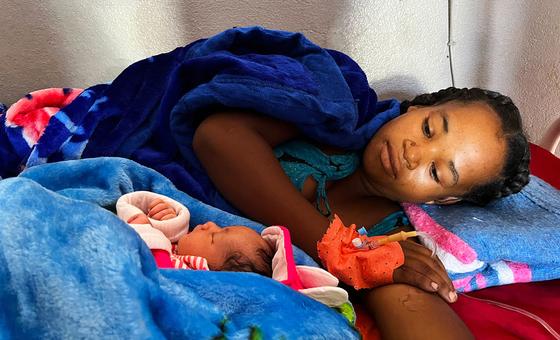
Abuse during and after childbirth persists globally, WHO warns

Over the past decade, a growing body of evidence has highlighted the widespread impact of mistreatment and the necessity of placing respectful care at the centre of all maternal and newborn health strategies.  

WHO’s Human Reproduction Programme (HRP), and partners released a new compendium on Wednesday aimed at ending mistreatment and promoting respectful maternal and newborn care, featuring the latest evidence and guidance on best practices.

From policymaking to clinical settings and community services, this compendium outlines actionable steps to uphold the rights, needs and preferences of women, newborns, parents and families.  

Broad range of mistreatment

Taking different forms, mistreatment during childbirth ranges from neglect and abuse to non-consensual medical procedures, with an earlier WHO-supported study finding that 40 per cent of women in four countries had experienced some sort of abuse or discrimination during labour or childbirth.

Some reported being slapped, shouted at, or forcibly restrained.

Across these four countries, researchers also found that more than four in 10 women had been physically or verbally abused during childbirth, with some also experiencing discrimination.  

In addition, up to 75 per cent of extremely sensitive procedures were performed without consent.  

Shut out

Too often, women are not part of decision-making and are treated with contempt or even abuse,” said WHO’s Dr. Hedieh Mehrtash.

“Respectful maternal and newborn care needs to be embedded and integrated into policy and practice,” said WHO, as the compendium provides practical resources for countries, urging health systems to proactively embed dignity, equity, and respect into every aspect of maternity and newborn care – building on WHO’s 2014 statement on preventing disrespect and abuse.

Highlighting critical areas where mistreatment is often overlooked, WHO’s compendium provides programme managers with essential background to build a foundational understanding of mistreatment and respectful care and aims to ensure respectful practices become the norm. 

Source link