
Curcumin in turmeric helps eliminate certain viruses, says Wuhan Lab study

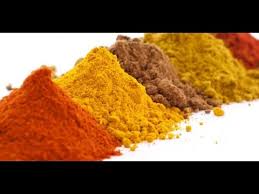
In a boost to Ayurvedic medicines which recommend turmeric during the cold, flu and other virus-related disease, scientists found that curcumin, a natural compound found in the spice turmeric, could help eliminate certain viruses.

A study published in the Journal of General Virology showed that curcumin can prevent Transmissible gastroenteritis virus (TGEV) – an alpha-group coronavirus that infects pigs – from infecting cells and at higher doses, it was also found to kill virus particles.

Infection with TGEV causes a disease called transmissible gastroenteritis in piglets, leading to diarrhoea, severe dehydration and death. TGEV is highly infectious and is invariably fatal in piglets younger than two weeks, thus posing a major threat to the global swine industry. There are currently no approved treatments for alpha-coronaviruses and although there is a vaccine for TGEV, it is not effective in preventing the spread of the virus.
To determine the potential antiviral properties of curcumin, the research team treated experimental cells with various concentrations of the compound, before attempting to infect them with TGEV. They found that higher concentrations of curcumin reduced the number of virus particles in the cell culture.

The research suggests that curcumin affects TGEV in a number of ways: by directly killing the virus before it is able to infect the cell, by integrating with the viral envelope to ‘inactivate’ the virus, and by altering the metabolism of cells to prevent viral entry.

“Curcumin has a significant inhibitory effect on TGEV adsorption step and a certain direct inactivation effect, suggesting that curcumin has great potential in the prevention of TGEV infection,” said Dr Lilan Xie, lead author of the study and researcher at the Wuhan Institute of Bioengineering.

Inhibits virus replication

Curcumin has been shown to inhibit the replication of some types of virus, including dengue virus, hepatitis B and Zika virus. The compound has also been found to have a number of significant biological effects, including antitumor, anti-inflammatory and antibacterial activities. Curcumin was chosen for this research due to having low side effects according to Dr Xie.

“There are great difficulties in the prevention and control of viral diseases, especially when there are no effective vaccines. Traditional Chinese medicine and its active ingredients, are ideal screening libraries for antiviral drugs because of their advantages, such as convenient acquisition and low side effects,” they said.

The researchers now hope to continue their research in vivo, using an animal model to assess whether the inhibiting properties of curcumin would be seen in a more complex system.

Last Date of Nomination for AYUSH Medical Seats Extended to July 31, 2017

The Ministry of AYUSH has extended the last date for application to several seats for MD/PG in Ayurveda/Unani/Siddha and Homoeopathy Courses under Central Government Nomination (CGN) as per guidelines for the academic session 2017-18 from the eligible Government Teachers/Medical Officers (Doctors)/Research Officers.

These applications were invited through the concerned State /UT Governments up to 15.06.2017 and 30.06.2017 (NER). In view of administrative reasons, the ministry said it has decided to extend the last date for receiving through the concerned State Governments/UTs up to 31st July, 2017.

There are total 626 AYUSH Colleges in the country and two National Institutes to impart education in Ayurveda namely (i) National Institute of Ayurveda, Jaipur for Under-graduate and Post-graduate education and (ii) Institute of Post-Graduate Training and Research in Ayurveda, Jamnagar for Post-graduate education.

In addition the Government has established two new Ayurveda institutes during the academic session 2016-17 namely (i) All India Institute of Ayurveda, New Delhi for Post-graduate education and (ii) North Eastern Institute of Ayurveda & Homoeopathy, Shillong for Under-graduate education in Ayurveda.

Currently, India has five Central Councils for Research in Ayurveda, Siddha, Unani, Yoga and Naturopathy and Homoeopathy for undertaking, coordinating, formulating, developing and promoting research on scientific lines, through 82 peripheral institute/Centres/Units located all over India and also through collaborative studies with various universities, hospitals and institutes.

The research activities of the councils include medicinal plant research (Medico-ethno botanical survey, pharmacognosy and tissue culture), Drug Standardization Pharmacological Research, Clinical Research, Literary Research & Documentation, and other outreach activities. Further, Ministry of AYUSH runs Extra Mural Research (EMR) scheme to conduct the research on various aspects of AYUSH systems.

The Centrally Sponsored Scheme of National AYUSH Mission (NAM) was announced on 29th September 2014 for better access to AYUSH services such as strengthening of AYUSH educational institutions, facilitate the enforcement of quality control of Ayurveda, Siddha, Unani and Homoeopathy drugs and sustainable availability of raw materials by promotion of medicinal plants in the States/UTs.


204 Patents Issued So Far in Ayurvedic Formulations; AYUSH Ministry Pushes for Global Tie Ups

Ayush ministry is collaborating with International Agencies in its quest for promotion of cooperation in the field of medicinal plants, the National Medicinal Plants Board (NMPB) signing a Memorandum of Understanding (MoU) with University of West Indies, Trinidad & Tobago in 2014.

To give further impetus to the promotion of international cooperation in the field of Medicinal plants, the NMPB has since revised its “Central Sector Scheme on Conservation, Development and Sustainable Management of Medicinal Plants, 2015”, by including a component on “Bilateral / International cooperation and collaboration with International Agencies”.

The salient features of Delhi Declaration on Traditional Medicines for South East Asian countries are follows:-

I.To promote National policies, strategies and interventions for equitable development and appropriate use of traditional medicine in the health care delivery system.
II. To develop institutionalized mechanism for exchange of information, expertise and knowledge with active cooperation with WHO on traditional medicine through workshops, symposia, visit of experts, exchange of literature etc.
III. To establish regional centers as required for capacity building and networking in the areas of traditional medicine and medicinal plants.

The Ministry of AYUSH has already set up Ayurveda Chair in University of Debrecen, Hungary and Rangsit University, Thailand.

Accordng to the Department of Industrial Policy & Promotion (DIPP), 204 Patents have since been granted on formulations/ processes/ products of herbs / plants, on inventions that satisfy the patentability criteria as laid out in the Patents Act, 1970.

As per the Patents Act 1970 (as amended), patents can be imparted only to new formulations based on products related to herbs/ plants or processes related thereto, which are not in public domain and fulfill the criteria of patentability.

Though Drugs and Cosmetics Act 1940 and Rules 1945, does not have any provision for registration of Ayurvedic formulations, to protect Traditional Medicinal Knowledge of India, the Ministry of AYUSH has created Traditional Knowledge Digital Library (TKDL) in collaboration with Council for Scientific & Industrial Research (CSIR) for digitalization of traditional medicinal knowledge.

More than 3 lakh formulations from the texts of Ayurveda, Unani and Siddha Systems have been digitalized till date under TKDL to protect Traditional Knowledge from misappropriation by providing defensive protection.

This information was given by the Minister of State (Independent Charge) for AYUSH, ShripadYesso Naik in written reply to a question in Lok Sabha.