World leaders rally for ‘full-speed’ climate action ahead of COP30

The meeting was part of a joint mobilisation strategy by the two leaders to strengthen global action under the Paris Agreement and build momentum for stronger national climate plans to be announced in 2025.

The two-hour session held behind closed doors included China, the European Union, the African Union, the Association of Southeast Asian Nations, and small island developing States.

Mr. Guterres described it as one of the most diverse meetings of national leaders focused exclusively on climate for some time, carrying a powerful unifying message.

As we heard today, the world is moving forward. Full-speed ahead. No group or government can stop the clean energy revolution”, he declared at a press briefing afterwards.

New national commitments

He said many leaders pledged to deliver ambitious new climate plans, formally known as National Determined Contributions (NDCs), as soon as possible in what he called a “strong message of hope”.

Guterres announced that President Xi Jinping confirmed during the meeting that China’s updated NDCs would cover all economic sectors and all greenhouse gases — a clarification he described as “extremely important” for climate action.

He added that these pledges provide a vital opportunity to chart a bold path for the next decade and most importantly, helps speed up a just transition away from fossil fuels to renewables.

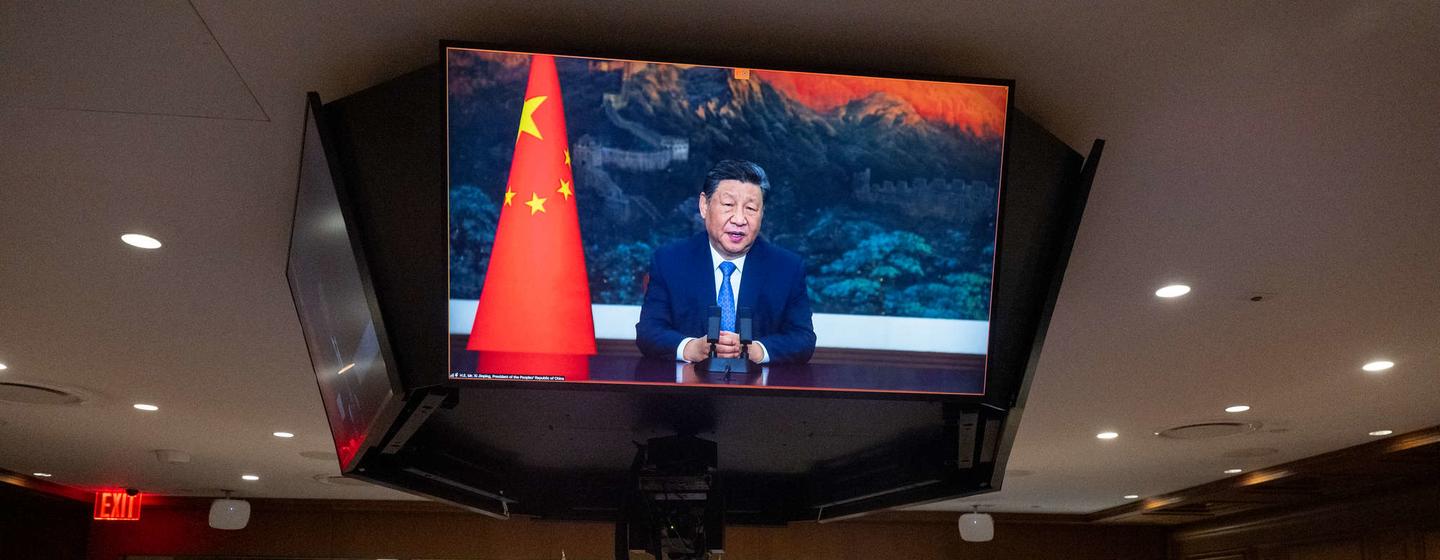
Chinese President Xi Jinping (on screen) joins a virtual meeting of world leaders on climate action.

‘Economic opportunity of the century’

Renewable energy production is “the economic opportunity of the century,” he said, describing it as the “pathway out of climate hell.”

“The clean energy sector is booming – creating jobs and boosting competitiveness and growth worldwide…Science is on our side and economics have shifted.”

He noted that prices for renewables have fallen dramatically, offering “the surest route to energy sovereignty and security, ending dependence on volatile and expensive fossil fuel imports.”

Since the 2015 Paris Agreement, global projections for warming have declined, from over 4°C this century to 2.6°C if current plans are implemented.

But that still falls short of limiting temperature rise to 1.5°C above pre-industrial levels – the goal agreed in Paris by nations and endorsed by climate scientists.

The Secretary-General urged leaders to submit national plans that align with that target, cover all greenhouse gases and sectors, and signal a full commitment to achieving net zero emissions by 2050.
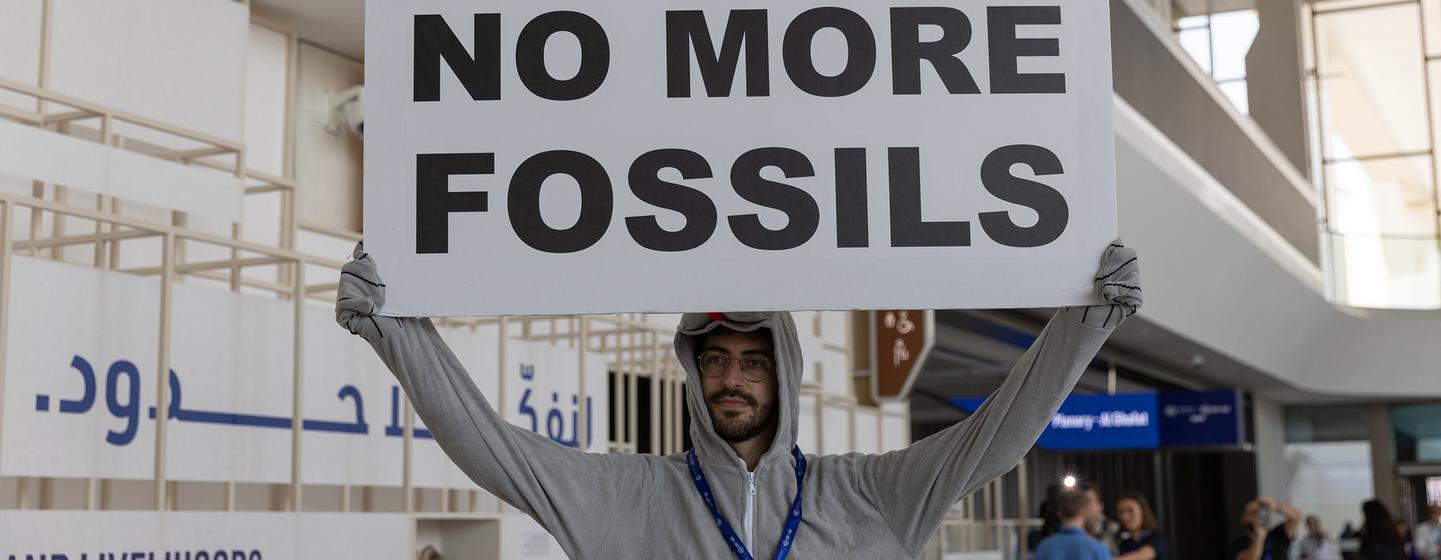
A man protests against fossil fuels at an international climate meeting in Dubai in 2023.

Strategic mobilization

According to a senior UN official who spoke on background prior to the meeting, Wednesday’s summit was “just another step” in the important effort to sustain political momentum during a pivotal year for combating climate change.

The group of invitees, the official said, was “small but representative,” including major economies, regional powers, former COP hosts, and climate-vulnerable nations.

“This is a really important year,” the official said, pointing to the 10th anniversary of the Paris Agreement and the upcoming deadline for countries to submit new climate plans.

This meeting is about reminding leaders that climate remains a key priority – that collaboration and multilateralism still matter.”

A senior Brazilian official who took part said the UN climate summit in Belém will move beyond negotiations to focus on implementation, transparency, and delivery. “We have already negotiated enough…now the world wants to see action – results, examples, solutions.”

The official also stressed that demonstrating tangible outcomes is essential for restoring trust in multilateralism.

“We want to prove that multilateralism is not only about negotiating documents,” they said, “but about making them real.”

Call for justice and finance

Mr. Guterres underscored the need to direct far more support to developing countries, which face the most severe impacts of climate change despite contributing the least to global emissions.

“Africa and other parts of the developing world are experiencing faster warming – and the Pacific islands are seeing faster sea-level rise – even while the global average itself is accelerating,” he said.

He called on countries to deliver a credible roadmap to mobilise $1.3 trillion per year for developing nations by 2035, double adaptation finance to $40 billion this year, and increase contributions to the new Loss and Damage Fund created at COP28.

No let up on climate action

The Secretary-General also announced a high-level UN event in September – just weeks ahead of COP30 – to assess progress on climate plans and finance.

The message was clear, according to Mr. Guterres. “We cannot, must not, and will not let up on climate action.”

Stopping child marriage is key to curbing deadly teen pregnancies: WHO

Each year, more than 21 million adolescent girls in low and middle-income countries become pregnant. About half of these pregnancies are unintended. Nine in 10 adolescent births occur among girls who were married before turning 18.

“Early pregnancies can have serious physical and psychological consequences for girls and young women,” said Dr Pascale Allotey, Director of Sexual and Reproductive Health and Research at WHO. “(They) often reflect fundamental inequalities that affect their ability to shape their relationships and their lives.” 

Too young to give birth

Teen pregnancy carries serious health risks. These include higher rates of infection, complications, and premature birth. It also disrupts education and limits job opportunities later in life. Many young mothers end up trapped in poverty.

To help prevent teenage pregnancy, WHO is calling on governments to offer better alternatives to child marriage. These include improving access to education, financial services and jobs.

If all girls finished secondary school, child marriage could be slashed by up to two-thirds, according to the UN Children’s Fund (UNICEF).

Stolen childhood

There has been global progress. In 2021, one in 25 girls gave birth before age 20. Twenty years earlier, the rate was one in 15. However, big gaps remain. In some countries, nearly one in 10 girls aged 15 to 19 still give birth each year.

“Early marriage denies girls their childhood and has severe consequences for their health,” said Dr Sheri Bastien, Scientist for Adolescent Sexual and Reproductive Health at WHO.

She emphasized the power of education in transforming girls’ futures. At the same time, both boys and girls need to understand the concept of consent “and challenge the major gender inequalities that continue to drive high rates of child marriage and early pregnancy in many parts of the world.”

The WHO guidelines update advice issued in 2011. They promote comprehensive sexuality education which the UN agency says is essential so that boys and girls know how to use different types of contraception and where to seek advice. 

“It has been shown to reduce early pregnancies, delay the onset of sexual activity and improve adolescents’ knowledge about their bodies and reproductive health,” WHO said.


Gaza aid crisis deepens as border closure stretches into 50th day

The UN relief coordination office, OCHA, said on Tuesday that this marks the longest period without aid or commercial supplies entering the Strip since the conflict began in October 2023.

Right now, it is probably the worst humanitarian situation ever seen throughout the war in Gaza,” OCHA spokesperson Jens Laerke told journalists at a briefing in Geneva.

Over 2.1 million Gazans are facing acute shortages of food, medicine, fuel, and clean water.

However, humanitarian supplies are stockpiled just across the border, including nearly 3,000 trucks of life-saving aid prepared by the Palestine refugee agency (UNRWA), which Israeli authorities are refusing to allow in.

Deliberate, man-made suffering

“Hunger is spreading and deepening – deliberate and man-made,” UNRWA Commissioner-General Philippe Lazzarini said in a statement.

Gaza has become a land of desperation…humanitarian aid is being used as a bargaining chip and a weapon of war.

The agency warned supplies inside Gaza are nearly all gone, with food stocks running dangerously low and only 250 food parcels left.

Flour has run out. Bakeries are shutting down, hospitals are collapsing without fuel or medicine, and essential items have soared in price.

Two million people – a majority of women and children – are undergoing collective punishment,” Mr. Lazzarini said.

“The siege must be lifted, supplies must flow in, the hostages must be released, the ceasefire must resume.”

Aid effort continues

Despite these conditions, UNRWA continues to operate on the ground, providing water, collecting solid waste, and running vital health services.

Eight heath centres and 39 medical points are still providing around 15,000 consultations daily. A blood donation drive to support local hospitals in urgent need of transfusions is also underway.

World News in Brief: Children killed in Darfur hospital attack, date set for US climate pact withdrawal, WHO leads call to fight neglected diseases

The children were among the patients being treated in the hospital’s emergency ward for injuries from previous bombings in the area, said the UN Children’s Fund, UNICEF.

“This heinous attack is a blatant violation of children’s rights. Children are being killed and injured in the very places where they should be safest from harm,” said UNICEF Executive Director Catherine Russell.

“Such attacks exacerbate the dire situation for children and families who are trapped in areas affected by conflict, insecurity, and lack of protection.”

70 per cent of hospitals out of action

In Sudan, over 70 per cent of hospitals in conflict-affected areas are currently non-operational due to damage, destruction, lack of supplies, or being used as shelters.

The delivery of medical supplies, vaccines, and routine immunisation has been hindered by ongoing security concerns and lack of access, worsening the humanitarian crisis and putting countless lives, especially those of children, at significant risk.

Under International Humanitarian Law, hospitals enjoy special protection and must not be targeted. Attacks on them undermine the essential care and relief the facilities provide to civilians, including children. All parties to the conflict have an obligation to ensure the protection of civilians, including children, and refrain from any actions that could impede access to life-saving medical services.

“Continued attacks on health facilities endanger children’s lives and restrict their access to lifesaving medical care, which can have immediate and long-term impacts on their health,” said Ms. Russell. “The violence must end now. Children in Sudan cannot wait any longer.”

US with pull out of Paris Agreement 27 January next year

The United States has officially notified the Secretary-General of its withdrawal from the Paris Climate Agreement, effective 27 January 2026, UN Spokesperson Stéphane Dujarric said on Tuesday.

The historic accord reached by 193 countries in December 2015 in a bid to keep temperature rises to below 1.5°C above pre-industrial levels, was signed by the US on 22 April 2016.

During the first Trump administration the US withdrew from the Agreement effective 4 November 2020, before his successor took the country back into the accord on 19 February 2021.

Fight continues against global warming

The UN Spokesperson said the latest withdrawal would not lead to any slowdown in the UN’s efforts to combat climate change.

“We reaffirm our commitment to the Paris Agreement and to support all effective efforts to limit the rise in global temperature to 1.5 degrees Celsius,” said Mr. Dujarric.

The international community continues to work towards the goals set by the Agreement, despite the US’s decision to withdraw.

UN health agency leads call to fight neglected disease scourge

Health news now, and an appeal from the UN World Health Organization (WHO) for concerted action to tackle neglected tropical diseases, which impact more than one billion people – often with devastating health, social and economic consequences.

Every year, around 800 to 900 million people are treated for at least one neglected tropical disease, according to the UN health agency, which warned that global warming has emerged as a threat in this field of medicine.

Long list

The list of tropical diseases is a long one and includes Buruli ulcer, Chagas disease, dengue, chikungunya and dracunculiasis. They tend to thrive among vulnerable people who live in poverty and are caused by viruses, bacteria, parasites, fungi and toxins.

Progress in tackling these diseases remains hampered by a lack of investment and conflict, the WHO said, ahead of World Neglected Tropical Disease Day on Thursday.

Today, 54 countries have successfully eliminated at least one neglected tropical disease; WHO’s goal is for 100 countries to do the same by 2030. 

Climate crisis driving surge in gender-based violence, UN report finds

That is the warning from a new report by the UN Spotlight Initiative, which finds that climate change is intensifying the social and economic stresses that are fuelling increased levels of violence against women and girls.

The report finds that extreme weather, displacement, food insecurity, and economic instability are key factors increasing the prevalence and severity of gender-based violence.

These impacts hit hardest in fragile communities, where women already face entrenched inequalities and are more vulnerable to assault.

Every 1°C rise in global temperature is associated with a 4.7 per cent increase in intimate partner violence (IPV), the study finds. In a 2°C warming scenario, 40 million more women and girls are likely to experience IPV each year by 2090. In a 3.5°C scenario, that number more than doubles.

The Spotlight Initiative — a global partnership between the European Union and the United Nations — works to eliminate all forms of violence against women and girls. Its latest findings emphasise that climate solutions must address rights, safety, and justice if they are to be effective or sustainable.

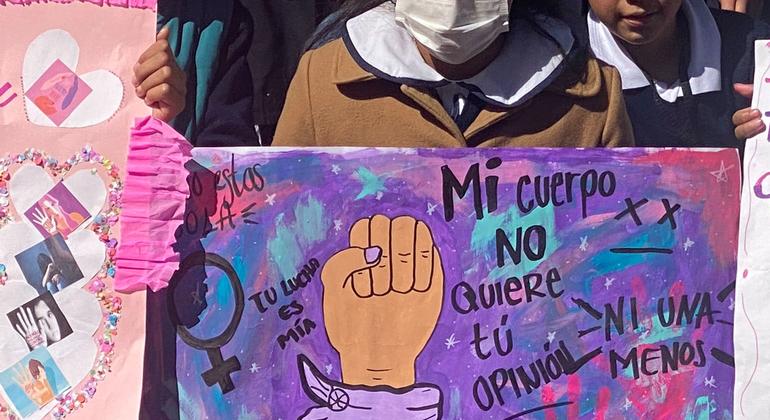
UNIC Mexico/Eloísa Farrera

A ‘shadow pandemic’

Gender-based violence is already a global epidemic, the report outlines. Over one billion women — at least one in three — have experienced physical, sexual, or psychological abuse in their lifetime. These figures are likely underestimated, as only around seven per cent of survivors file a formal report to police or medical services.

The Spotlight Initiative identifies a pattern of increased violence in the aftermath of climate disasters.

In 2023 alone, 93.1 million people were affected by weather-related disasters and earthquakes, while an estimated 423 million women experienced intimate partner violence. As climate shocks become more frequent and severe, the risk of violence is projected to rise dramatically.

For example, one study highlighted in the report found a 28 per cent increase in femicide during heatwaves.

Other consequences include higher rates of child marriage, human trafficking, and sexual exploitation, especially in the wake of displacement caused by floods, droughts, or desertification.

Marginalized communities

The burden of this crisis is not evenly distributed. Women and girls living in poverty — including smallholder farmers and those in informal urban settlements — face heightened vulnerability.

Women who are Indigenous, disabled, elderly, or part of the LGBTQ+ community also experience overlapping risks, with limited access to services, shelters, or protections.

In sub-Saharan Africa, projections show that intimate partner violence could nearly triple from 48 million women in 2015 to 140 million by 2060 if temperatures rise by 4°C. However, under a scenario that limits warming to 1.5°C, the share of women affected could decrease from 24 percent in 2015 to 14 percent in 2060.

The report also draws attention to the growing threats against women environmental human rights defenders. Many face harassment, defamation, physical assault, or worse for speaking out against destructive land use or extractive industries.

In Guatemala, women who reported illegal logging were forcibly evicted and had their homes burned. In the Philippines, those opposing mining operations have faced abduction and deadly violence.

© UNICEF/Anderson Flores

An urgent call for gender-inclusive climate policy

Despite the urgency of this issue, only 0.04 per cent of climate-related development assistance focuses primarily on gender equality. The report argues that this gap represents a critical failure to recognize how gender-based violence – or GBV – determines climate resilience and justice.

The Spotlight Initiative calls for GBV prevention to be integrated into all levels of climate policy, from local strategies to international funding mechanisms.

Examples from countries like Haiti, Vanuatu, Liberia, and Mozambique have shown how programmes can be designed to simultaneously address violence and build climate resilience.

These include re-training midwives for jobs in the expanding climate-smart agricultural sector, ensuring that disaster response includes GBV services, and supporting mobile health clinics in disaster zones.

The report stresses that effective climate action must prioritize safety, equity, and the leadership of women and girls.

Ending violence against women and girls, the report concludes, is not only a human rights imperative — it is essential to achieving a just, sustainable, and climate-resilient future.

‘Fragility and hope’ mark new era in Syria amid ongoing violence and aid struggles

On 6 March, armed groups linked to the deposed Assad regime ambushed forces of the caretaker administration led by Ahmed al-Sharaa, targeting military and internal security forces as well as several hospitals.

Mr. Pedersen described the violence as “sectarian and retaliatory,” with reports of entire families executed and widespread fear among the civilian population.

“The coordinated attack on the caretaker authority, the heavy counterattacks against this, and the mass killings of civilians all came against a background of already-fomenting insecurity,” said Mr. Pedersen.

The Special Envoy noted the “great hopes and huge fears” that have emerged since the fall of Bashar al-Assad’s regime in December 2024.

Calling for transparent, independent and public investigations into the violence, he urged for those responsible to be held accountable, “with a clear signal that the era of impunity in Syria is in the past.”

Meanwhile, humanitarian efforts by UN agencies and partners continue, amid a mixture of progress and setbacks.

UN Under-Secretary-General for Humanitarian Affairs Tom Fletcher underscored the work being done by the international community.

“We are making progress,” he stated, noting expanded routes for cross-border deliveries and increased support for vulnerable communities. One recent success saw the Atareb Water Station in Aleppo resume operations, bringing water to 40,000 people.

The Syrian Ambassador also expressed gratitude to Qatar and Jordan, alongside the UN Development Programme (UNDP), for the initiative to supply Syria with gas through Jordan and the ability to generate 400 megawatts of electricity.

Meanwhile, the European Union has committed nearly €2.5 billion for 2025 and 2026, having raised an overall of €5.8 billion towards Syria’s recovery.

But despite pledges of support, the humanitarian response remains critically underfunded, Mr. Fletcher explained.

“Last year’s appeal was only 35 per cent funded – causing us to reduce our humanitarian response by more than half,” he stated.

On a more hopeful note, Mr. Pedersen highlighted the recent agreement between caretaker authorities and the mostly Kurdish Syrian Democratic Forces (SDF), which speaks to the future integration of civil and military institutions in northeastern Syria.

“We will continue and deepen engagement in support of the process,” he said, expressing cautious optimism, warning that the road ahead would not be easy.

“The issue of foreign fighters in the senior ranks of the new armed forces, as well as individuals associated with violations, remains a key concern,” he added.

Echoing this sentiment, representative of Syrian civil society and legal adviser, Joumana Seif,  emphasised: “We don’t want to build our new country on the back of new massacres.”

Syria stands at a historic crossroads, with a rare chance to unite and transition to democracy,” she said, calling for the lifting of sanctions on the Syrian government.

In response, some ambassadors in the chamber noted that they had already relaxed unilateral sanctions on Syria, including an end to asset freezes.

Both Mr. Pedersen and Mr. Fletcher concluded their statements with calls for urgent action.

Mr. Fletcher underscored that humanitarians cannot make the “toughest choices” alone, urging the international community to provide additional resources.

The cost of hesitation is greater than the risk of decisive action,” he warned.

Finally, Mr. Pedersen highlighted the choice Syria faces: either a return to violence and instability or a path toward a peaceful, inclusive future.

Toxic air threatens children’s lives across East Asia and the Pacific, UNICEF warns

The analysis underscores the devastating impact of toxic air on young lives, with air pollution now linked to nearly one in four deaths of under fives in the region.

Exposure begins in the womb, increasing risks of premature birth and low birth weight, and continues throughout childhood, impairing lung development, reducing cognitive function, and contributing to chronic diseases such as asthma and cardiovascular conditions.

Every breath matters but for too many children every breath can bring harm,said June Kunugi, UNICEF Regional Director for East Asia and the Pacific.

“The air they breathe, at a time when their bodies and minds are still developing, too often contains unhealthy levels of pollution that can comprise their growth, harm their lungs, and impair their cognitive development.”

Every child at risk

The report reveals that all 500 million children in the region live in countries with unhealthy air.

Over 325 million children are exposed to annual fine particulate matter (PM2.5) levels exceeding World Health Organization (WHO) guidelines by five times or more, while 373 million live in areas with dangerous levels of nitrogen dioxide, a gas emitted by vehicles and industrial processes.

Nearly half of PM2.5 pollution in the worst-affected countries comes from the burning of fossil fuels, biomass, and agricultural waste – also major contributors to climate change.

As extreme weather events worsen due to climate change, air pollution is expected to become an even greater threat, UNICEF warned.

Impacts beyond health

The impacts of the air pollution crisis go beyond health.

High pollution levels force school closures, disrupt learning, and increase medical expenses, straining already overwhelmed healthcare systems.

The World Bank estimates that in 2019, the economic cost of air pollution from PM2.5 in East Asia and the Pacific amounted to $2.5 trillion, or 9.3 percent of the region’s gross domestic product (GDP).

© UNICEF/Patipat Janthong

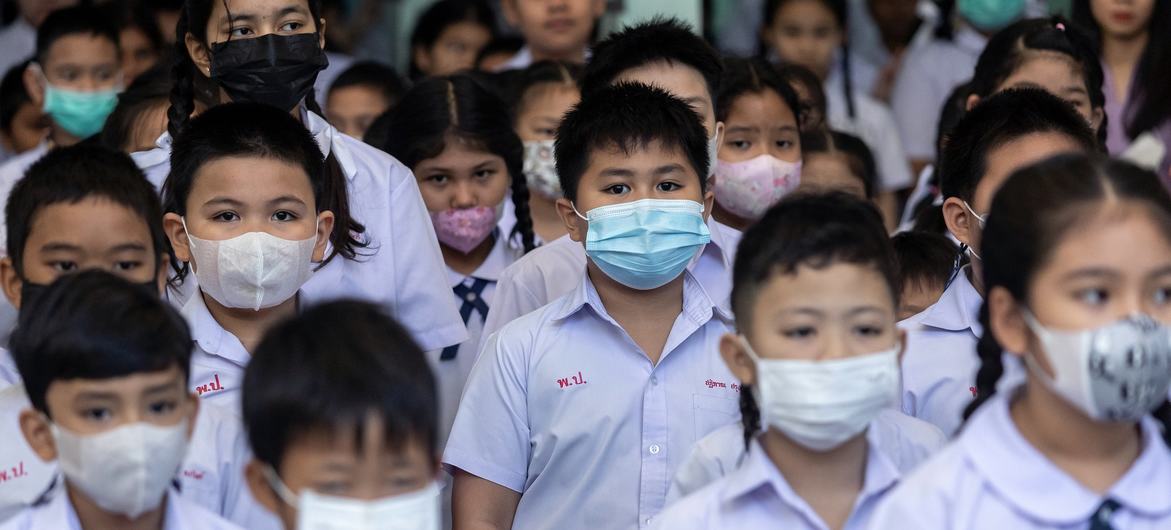
Students at a primary school in Bangkok wear masks during their morning lineup as air pollution levels soar.

Urgent call for action

In response to the “silent killer,” UNICEF called on governments, businesses, healthcare professionals, parents, and educators to take immediate steps to reduce air pollution and protect children’s health.

Governments must enforce stronger environmental policies, transition to clean energy sources, and implement air quality standards aligned with WHO guidelines, alongside, businesses should adopt cleaner technologies, reduce emissions, and ensure their practices prioritize child safety.

Parents and educators also have a crucial role in raising awareness, advocating for cleaner environments, and empowering young people to take action, UNICEF highlighted.

Solutions exist

Furthermore, UNICEF is collaborating with governments, businesses, and communities on multiple initiatives to reduce children’s exposure to air pollution.

These include pushing for stronger environmental regulations, improving air quality monitoring by installing affordable sensors and implementing programmes to reduce household air pollution, such as cleaner cooking stoves and better ventilation.

The agency is also working to strengthen healthcare systems to better diagnose and treat pollution-related illnesses and is supporting young people to become clean air advocates, raising awareness, and pushing for stronger policies.

Addressing air pollution will lead to enormous improvements in children’s health, education, and well-being, with ripple effects across entire societies and economies,” Ms. Kunugi underscored.

Solutions exist, and our collective future depends on implementing them.

New round of polio vaccinations begins in Gaza

It follows a campaign last year that reached hundreds of thousands of young children under the age of 10.  Polio virus was recently detected in wastewater samples in Gaza, indicating that circulation is ongoing, thus putting young lives at risk.

The campaign is being led by the Palestinian Ministry of Health and implemented with support from the World Health Organization (WHO), the UN Children’s Fund (UNICEF), UN Palestine refugee agency UNRWA and other partners.

UNRWA Commissioner-General Philippe Lazzarini wrote in post on the social media platform X that 1,700 team members are taking part across the agency’s health centres and mobile points.

Separately, WHO Director-General Tedros Adhanom Ghebreyesus said “teams are on the ground providing support to ensure a quality campaign.”

UNRWA health teams constitute a third of the response, comprising 555 out of the total 1,660 teams involved.

They will be issuing vaccinations in 10 of its health centres: one in Rafah, three each in Khan Younis and the Middle Area, and one in Gaza City in the north.  Around 60 UNRWA mobile medical points will also carry out vaccinations.

The campaign is set to run through 26 February.

Yemen: One in two children severely malnourished after 10 years of war

“We need to move fast,” said UNICEF representative in the country Peter Hawkins. “I was in Hudaydah over the past three days…I went through the western lowlands, where there are people on the streets, on the side of the roads, begging and looking for assistance. They have given up. We cannot give up.”

Speaking from Yemen’s capital Sana’a, Mr. Hawkins told reporters that the “manmade” disaster has decimated Yemen’s economy, healthcare system and infrastructure.

“Even during periods of reduced violence, the structural consequences of the conflict, especially for girls and boys, have remained severe,” he said, underscoring that more than half of the country’s population of close to 40 million people relies on humanitarian assistance.

Aid lifeline under threat

UNICEF supports life-saving health facilities and malnutrition treatment across the country, but its activities are only 25 per cent funded this year. The agency will not be able to sustain even minimal services without urgent action from donors, Mr. Hawkins warned.

Houthi rebels – formally known as Ansar Allah – have been battling Government forces backed by a Saudi-led coalition for more than a decade and overthrew the country’s President Abd Rabbu Mansour Hadi in March 2015.

While a resumption of large-scale ground military operations in Yemen has not occurred since the UN-mediated truce of April 2022, military activity continues. 

The Special Envoy of the Secretary-General for Yemen Hans Grundberg warned on 6 March in a briefing to the Security Council that the cessation of hostilities is increasingly at risk. 

Earlier this month the United States launched multiple strikes on Houthi-controlled areas in the country, reportedly in retaliation for the Houthis’ continued targeting of merchant and commercial vessels in the Red Sea following the breakdown of the Gaza ceasefire.

Mr. Hawkins spoke of the damage he witnessed first-hand in the port city of Hudaydah and stressed that eight children died in the most recent airstrikes across northern Yemen.

Food, medicines blocked

“Critical ports and roads, lifelines for food and medicine, are damaged and blockaded,” Mr. Hawkins said. Food prices have soared over 300 per cent in the past decade, driving hunger and malnutrition.

The UNICEF official said that one in two children under the age of five is malnourished in Yemen, “a statistic that is almost unparalleled across the world”.

“Among them are over 540,000 girls and boys who are severely and acutely malnourished, a condition that is agonizing, life-threatening and entirely preventable,” he added.

‘Thousands will die’

Mr. Hawkins highlighted the dangers facing children who cannot access treatment, as they are “away from service delivery in the most remote areas up on the mountains, and deep down in the in the valleys of northern Yemen…Malnutrition weakens immune systems, stunts growth and robs children of their potential.”

Furthermore, some 1.4 million pregnant and lactating women are malnourished in Yemen – “a vicious circle of intergenerational suffering”, Mr. Hawkins said.

In certain areas including the west of the country, severe and acute malnutrition rates of 33 per cent have been recorded.

“It’s not a humanitarian crisis. It’s not an emergency. It is a catastrophe where thousands will die,” Mr. Hawkins insisted.

It’s official: January was the warmest on record

Last month was 1.75 degrees Celsius above the pre-industrial level and 0.79°C above the 1991-2020 average, despite expectations that the La Nina weather phenomenon might bring cooler temperatures.

In 2015, the international community agreed to try to limit average global temperature rise to 1.5°C above pre-industrial levels.

Surprise data

The January data was “surprising” even to climate change experts at Copernicus, the European climate change service, which noted that it was the 18th month in the last 19 where the global-average surface air temperature was more than 1.5°C above the pre-industrial level.

“January 2025 is another surprising month, continuing the record temperatures observed throughout the last two years, despite the development of La Niña conditions in the tropical Pacific and their temporary cooling effect on global temperatures,” said Samantha Burgess, Copernicus Strategic Lead for Climate.

For many in the northern hemisphere January 2025 will be remembered by “wetter-than-average conditions” over western Europe, as well as parts of Italy, Scandinavia and the Baltic countries, Copernicus said, highlighting “heavy precipitation” and flooding in some regions.

Regional variations

On the other hand, drier than average conditions were recorded in the northern UK and Ireland, eastern Spain and north of the Black Sea.

Beyond Europe, it was wetter than average in Alaska, Canada, central and eastern Russia, eastern Australia, southeastern Africa, and southern Brazil, with regions experiencing floods and associated damage.

But drier-than-average conditions took hold in southwestern United States and northern Mexico, northern Africa, the Middle East, across Central Asia and in eastern China as well as in much of southern Africa, southern South America and Australia.

Global temperature rise is primarily attributed to humans burning fossil fuels which have led to record concentrations of greenhouse gases in the atmosphere. Other factors are also key, including deforestation. 

Breast cancer cases projected to rise by nearly 40 per cent by 2050, WHO warns

The findings, published in Nature Medicine on Monday, warn that if current trends continue, the world will see 3.2 million new breast cancer cases and 1.1 million related deaths each year by mid-century.

The burden will be disproportionately felt in low- and middle-income countries, where access to early detection, treatment and care remains limited.

“Every minute, four women are diagnosed with breast cancer worldwide and one woman dies from the disease, and these statistics are worsening,” said Dr. Joanne Kim, an IARC scientist and co-author of the report. 

“Countries can mitigate or reverse these trends by adopting primary prevention policies, such as WHO’s recommended ‘best buys’ for noncommunicable disease prevention, and by investing in early detection and treatment,” she explained.

A growing global burden 

Breast cancer remains the most common cancer among women worldwide and the second most common cancer overall.

In 2022 alone, an estimated 2.3 million new cases were diagnosed, with 670,000 deaths reported. However, the report highlights significant disparities across regions.

The highest incidence rates were recorded in Australia, New Zealand, North America and Northern Europe, while the lowest rates were found in South-Central Asia and parts of Africa.

Meanwhile, the highest mortality rates were reported in Melanesia, Polynesia and Western Africa, where limited access to healthcare contributes to poorer outcomes.

The link between breast cancer survival and economic development is stark: in high-income countries, 83 percent of diagnosed women survive, whereas in low-income countries, more than half of women diagnosed with breast cancer die from it.

Urgent need for action

The WHO launched the Global Breast Cancer Initiative in 2021, aiming to reduce breast cancer mortality rates by 2.5 per cent per year, which could prevent 2.5 million deaths by 2040.

The initiative focuses on early detection, timely diagnosis and access to quality treatment.

Dr. Isabelle Soerjomataram, Deputy Head of IARC’s Cancer Surveillance Branch, emphasised the need for high-quality cancer data to drive better policies in lower-income regions.

“Continued progress in early diagnosis and improved access to treatment are essential to address the global gap in breast cancer and ensure that the goal of reducing suffering and death from breast cancer is achieved by all countries worldwide,” she said.

The path forward 

The report underscores the importance of stronger health systems, increased funding for breast cancer screening and treatment, and the adoption of cost-effective prevention policies.

With the projected rise in cases and deaths, the international community faces an urgent challenge – one that requires coordinated action to ensure millions of lives are not lost to a disease that is increasingly preventable and treatable. 

Yemen: Ten Years of War, a Lifetime of Loss 

Ten years. That’s how long Yemenis have been putting their lives on hold – through airstrikes, through hunger, through loss. A decade of war has left Yemen’s infrastructure in ruins and its people exhausted. And yet, as the eleventh year begins, the world seems not to notice Yemen’s plight.

Today, close to 20 million people in Yemen depend on aid to survive. Nearly five million remain displaced, pushed from one place to another by violence or disaster. The international community, once moved by the staggering images of war and suffering, has switched its focus to new emergencies. But for those who work in Yemen – and for those who live this crisis every day – the story is far from over.

Ten years. That’s how long Yemenis have been putting their lives on hold – through airstrikes, through hunger, through loss. And yet, as the eleventh year begins, the world seems not to notice Yemen’s plight.

No one feels this reality more deeply than our Yemeni colleagues, who have remained at their posts through it all to help their own people. Many have worked through airstrikes, instability, and loss, all while worrying about the safety of their families. Now, with rising tensions and deepening funding cuts, they fear for their jobs too. Unlike most of us, they don’t have the option to simply start over. They can’t rely on savings or opportunities elsewhere – their passport alone often determines how far their future can stretch.

This is the daily reality in a country that, too often, is reduced to headlines about war. But Yemen is so much more than a crisis zone. It is a place of stunning landscapes, ancient cities, rich traditions, warm hospitality and the kind of food that stays in your memory long after you’ve left. But these aren’t the stories that make headlines. Instead, Yemenis are seen only through the lens of conflict and poverty. It’s time we remember the people behind the statistics.

Like Basma, a mother from Al Hodeidah who was forced to flee with her children to Al Makha in search of safety and water. She used to walk for hours every day just to fill a few jerrycans. Her youngest child once fainted from thirst while waiting in the heat. For years, clean water was a dream until a recently completed water project finally brought some relief to her village.

IOM Video | Yemen: Ten Years of Crisis and Why We Must Act Now

Or Ibrahim, a 70-year-old man displaced by heavy floods in Ma’rib. When the waters swept through the settlement, he carried his adult son, who lives with a disability, on his back to safety. They lost everything – their shelter, belongings, and sense of stability – but Ibrahim never complained. He focused only on finding help for his son. Now, they live in a temporary tent exposed to the elements, dependent on aid that may not arrive in time or at all.

Or Mohammed, a young man from Ethiopia who crossed deserts and conflict zones with nothing but the hope of reaching a better life. He never made it to the Gulf. Instead, he found himself stranded in Yemen – detained, beaten, and left without food or shelter. By the time he reached IOM’s Migrant Response Point, he was weak, traumatized, and desperate to go home. The only option left was to register for voluntary return – a journey home that many others never get to take.

Yemenis are not just victims, They are survivors, caregivers, builders, teachers, mothers, fathers, and children with hopes and ambitions like anyone else.

These are just three among millions of lives caught in the margins of this protracted crisis. One of the poorest countries in the Arab world is getting poorer – not because of its people, but because the world is slowly turning its back. This war didn’t start yesterday, but its consequences grow heavier by the day. Yemenis are not to blame for what is happening in the world, and yet, they bear the weight of it all. They don’t need our pity – they need our solidarity. Let this be the year we turn empathy into action.

As the international community gathers in conferences, makes pledges, and sets priorities, Yemen must not be left behind. Yemenis are not just victims. They are survivors, caregivers, builders, teachers, mothers, fathers, and children with hopes and ambitions like anyone else. But words alone will not keep people safe, fed, or sheltered. Don’t let these conversations remain just talk – Yemen needs action. To look away now would not just be a failure of diplomacy – it would be a failure of humanity.

Originally published on IOM Blogs on 26 March 2025.

Reusable rockets, air taxis and ‘autonomous autos’ are the future: WIPO

Latest information gleaned from patent filings featuring in WIPO’s Technology Trends report on the Future of Transportation, offers a tempting glimpse of a not-so distant and enticing future where there’s less traffic pollution, fewer snarl-ups and air travel to the other side of the world – made possible in just a few hours.

Analysis of patents shows that inventors are working hard to ensure that how we get around tomorrow is cleaner and better than today,” maintained WIPO, which said that patent filings for future transportation solutions have grown by 700 per cent over the last two decades, from 15,000 inventions in 2003 to 120,000 in 2023.

Autonomous ships and smart ports are revolutionizing transportation at sea; electric vehicles, high-speed trains and smart traffic management systems are driving change on land,” WIPO insisted.

“Vertical take-off and landing aircraft are offering new ways to travel by air, while reusable rockets and satellite technology are pushing what is possible beyond the earth’s atmosphere.”

Driving this trend is the recognition that transportation accounts for more than one-third of CO2 emissions globally, which has encouraged the development of sustainable technologies that reduce the environmental impact of transportation.

These include the adoption of electrified propulsion, the shift to renewable energy sources and the promotion of public and shared transport options.

Digitalization is also revolutionizing the transportation sector, WIPO insists, pointing to the rise of autonomous driving, “which is projected to generate from $300 billion to $400 billion in revenue by 2035”.

Patently true

According to the Geneva-based UN agency, intellectual property supports this kind of groundbreaking innovation – such as wireless charging for electric vehicles – by encouraging investment in research and development.

Competition is fierce as firms jostle for access to rare earth minerals, while AI is also taking centre stage, WIPO says.

“The report also shows flatlining growth in patenting activity for legacy products like the internal combustion engine and other fossil fuel-based systems” such as catalytic converters, the UN agency noted.

Its data indicated that more than 1.1 million inventions have reshaped transportation since 2000, introducing the prospect of sustainable alternatives to fossil fuel-based systems such as renewable energy cells, air taxis and self-piloting cargo ships.

In the driver’s seat of this travel transformation are China, Japan, the US, South Korea and Germany, which represent the world’s top inventors. Land transportation patents dominate global filings, at 3.5 times more than for air, sea and space combined. The US, meanwhile, has filed the most international patents.

The largest area of growth in patenting is related to sustainable propulsion – such as batteries for electric vehicles or hydrogen fuel cells – which represent efforts to ensure that people and goods are moved around in a “cleaner, more climate-friendly fashion”.

Experts with an eye on imaginative transport solutions for the future say that AI is also poised to play a key role. They point to the rise of autonomous driving, although infrastructure has not adapted swiftly enough for such vehicles to take over, the WIPO report notes.

Drone dilemma

The scarcity of minerals, meanwhile, will determine whether the world can massively adopt electric cars – vehicles that report co-author Christopher Harrison says may not be miracle solutions for private owners.

“Having these rare and limited raw earth minerals in an electric vehicle for personal use that’s been utilized only a few per cent of the day is not an effective use of those tools,” he told journalists.

In the air sector, drones will continue their sky-high ascension.

I would not like to look up at a sky full of drones delivering pizzas or a pair of gloves to my house and causing visual and noise pollution,” said Robert Garbett, the founder of Drone Major Group, cited in the WIPO report.

“If a delivery is to a remote location that is really hard to get to, people will be more likely to accept it as a beneficial solution,” he added, citing emergency medicine as an example.

According to WIPO, transport patent growth in China has been strong given its recent dominance of the electric vehicle market. But other countries have also contributed with strong patent filings activity including Sweden, Italy, India and Canada.

World News in Brief: Conflict in DR Congo, Europe’s ‘cradle to cane’ crisis, millions may go hungry in Chad

In an alert on Tuesday, UN aid coordinators OCHA said that six humanitarian workers have been killed since January – the latest victim was shot during clashes last week near a hospital in Masisi Territory about 80 kilometres west of Goma, in North Kivu.

The same clashes reportedly killed three other civilians and injured a child, according to OCHA, which said that more than 100,000 people have been forced to flee their homes due to further clashes last week in Lubero Territory, 250 kilometers north of Goma. 

Rape and other violations reported

Because of the insecurity several local health facilities have had to suspend activities. Humanitarian partners on the ground also report that there have been widespread human rights violations amid the fighting, including rape, OCHA said.

Meanwhile, local officials in South Kivu report schools are gradually re-opening in Kalehe Territory, located some 65 kilometres north of the provincial capital Bukavu.

Unexploded ordnance remains a problem in many areas affected by recent fighting, including two schools in the city of Minova, north of Bukavu, according to humanitarian partners.

The head of UN Peacekeeping Operations expressed concern over the humanitarian crisis and loss of life in the DRC during a press conference in South Sudan’s capital, Juba, on Monday.

Jean-Pierre Lacroix stressed that there is no military solution to the crisis and reiterated that while “it’s encouraging to see progress and involvement from stakeholders…the priority is a cessation of hostilities, implementation of decisions from the Luanda Process, and ensuring humanitarian access.” 

He added that the UN Mission faces limitations in M23-controlled areas but continues to protect civilians and reduce violence in other areas, safeguarding hundreds of thousands of civilians daily. 

Europe faces a ‘cradle to cane’ health crisis, warns WHO 

And in a medical update on Tuesday, UN health agency WHO warned that countries across Europe and Central Asia have a major problem with “stagnating” healthcare systems.

According to the World Health Organization (WHO), almost 76,000 children in the region die before their fifth birthday every year.

In addition, non-communicable diseases claim the lives one in six people before they’re 70.

Wide regional variations

WHO’s latest European Health Report showed that under-five mortality ranged from 1.5 to 40.4 deaths per 1,000 live births across 53 countries in the region.

The top causes of death include pre-term birth complications, birth asphyxia and congenital heart anomalies.

Despite much progress in tackling non-communicable diseases across Europe and Central Asia, conditions such as heart and lung disease, stroke and diabetes remain by far the biggest killers. 

At least 10 countries have achieved a 25 per cent reduction in premature mortality from these four non-communicable diseases. 

Nonetheless, one in six people still die before they reach their 70th birthday from cardiovascular disease, cancer, diabetes or chronic respiratory disease, WHO said.

Chad: Nearly four million could go hungry during lean season

Humanitarians in Chad are warning about the impact of the forthcoming lean season on food security, amid already dire conditions, UN Spokesperson Stéphane Dujarric said on Tuesday.

A regional assessment found that some 2.4 million people are not getting enough to eat, which is expected to rise to 3.7 million people, or 20 per cent of the population, during the lean season from June to August.

More than two million children under the age of five are malnourished, including more than half a million who are suffering from severe acute malnutrition who are at risk of dying in the coming months without the appropriate treatment. 

Additionally, nearly 300,000 pregnant and breast-feeding women are suffering from acute malnutrition.

Multiple shocks

Mr. Dujarric told journalists in New York that “this crisis is due to shocks, including natural catastrophes such as floods, which have destroyed croplands, in addition to the increasing price of basic commodities.”

Humanitarians warn that unless significant funding is received before the end of March, there will be no time to prevent a full-scale food security and nutrition crisis.

They are appealing for $1.45 billion to support operations in Chad this year but have so far received under $60 million, roughly four per cent. 

Gaza: No aid has reached war-torn enclave for more than three weeks

And as supplies of food, medicine and other supplies run low, aid teams are increasingly concerned about growing anxiety in bread lines outside the enclave’s remaining bakeries.

“Most attempts by humanitarian organizations to coordinate access with Israeli authorities within #Gaza result in #AccessDenied,” the UN aid coordination office, OCHA, said in an online post.

Five out of seven such attempts were denied on Monday and six out of nine were rejected on Tuesday, it explained.

Hospitals need protection

Medical teams in Gaza are also exhausted “and urgently need protection and reinforcement” from ongoing strikes across the Strip, the UN aid coordination office, OCHA, said on Wednesday.

It cited new reports of attacks against health workers, ambulances and hospitals and warned of “hundreds of casualties, a severe drop in medical stocks and a lack of equipment, blood units and personnel” since the ceasefire ended.

No one is safe. The world must have zero tolerance for atrocities,” the UN agency insisted.

Nearly 800 Palestinians have been killed in Gaza in recent days following the resumption of Israeli bombardment on 18 March, according to the health authorities. This includes a reported 38 individuals killed in the last 24 hours.  

In just the last week, eight aid workers have been killed in the enclave, bringing the total killed in Gaza to 399. That number includes at least 289 UN personnel, OCHA said, with staffers from the UN Office for Project Services (UNOPS) and the UN agency for Palestine refugees (UNRWA) killed last Wednesday in an apparent Israeli tank strike on a United Nations compound in Deir al-Balah that also seriously wounded six others. Israel denied responsibility for the attack.

Three of those injured worked in support of the UN Mine Action Service (UNMAS) which is involved in clearing unexploded ordnance in Gaza.

OCHA noted that on 20 March, the Israeli military re-deployed along the eastern and central part of the “Netzarim corridor” in Gaza. Movement between the north and south of Gaza was only allowed via the Al Rashid coast road.

Evacuation order misery

These military activities and new displacement orders issued by the Israeli military have triggered “new waves” of displacement across Gaza, with more than 142,000 people likely uprooted between 18 and 23 March, the UN aid office said.

“Israeli evacuation orders have covered 55 square kilometres across six areas of the #Gaza Strip – nearly the size of Manhattan,” OCHA said in an online post.

Around 15 per cent of the enclave has been impacted by evacuation orders – in addition to “no-go zones” that run along borders and in central Gaza.

The Israeli Government’s decision to ban the entry of humanitarian aid and any other supplies via all land crossings into Gaza is the longest such closure since October 2023, OCHA added, warning that gains made during the ceasefire to support survivors “have been reversed”.

To date, at least 50,000 Palestinians have been confirmed dead by local authorities with 113,828 wounded since the war erupted on 7 October 2023, in response to Hamas-led terror attacks on Israel that left more than 1,100 dead and more than 250 taken hostage. 


Airing climate justice in Costa Rica on World Radio Day

In a crucial year for climate action which, in accordance with the Paris Agreement, seeks to limit global warming to 1.5°C above pre-industrial levels, World Radio Day is dedicated in 2025 to highlighting the power of broadcasting to bring climate change issues to prominence.

That’s the goal of Climate Radio Route.

Radio democratises

Radio is considered the most reliable medium, according to the UN Educational, Scientific and Cultural Organization (UNESCO), which supports radio stations, like Climate Radio Route, in their journalistic coverage of this year’s theme.

Adrián Martínez, director of La Ruta del Clima – the Climate Route – a Costa Rican non-governmental organization (NGO) promoting public participation in climate and environmental decision-making that has been an observer, advocating at the UN climate summits since 2014.

“Radio in all its versions, whether digital or transmitted by antennas, is super important because it democratizes,” he told UN News . “Radio traditionally reaches places and communities where there is no Internet. It is also very generational. People interact with the radio day by day because it is ephemeral.”

Climate hits the radio waves

The Climate Route studies and exposes impacts “on the human rights of people in vulnerable communities in Latin America, especially in Central America, who have to deal with the adverse effects of climate change, for which they have very little responsibility but which is transforming their territories and ways of life”, Mr. Martínez explained.

With the aim of disseminating and raising awareness in society about these issues, in 2015 the organization created the Ruta del Clima Radio – the Climate Radio Route.

The programme was broadcast in the first years by a radio station of the University of Costa Rica and then by digital media through podcasts.

Communities can make their voices heard

“Communication that can have a massive reach has become very expensive and elitist,” Mr. Martínez said. “However, digital or traditional radio opens up that opportunity for communities, social organizations and movements to create their window and make their voices heard.”

UNESCO argues that beyond popularising environmental concepts, by disseminating information independent of economic, ideological and political powers, radio can condition listeners’ perception of climate change, and the importance given to the issue.

As such, radio can also contribute to shaping the public agenda and influencing policies in this regard.

A training workshop on damage and loss in the community of Cahuita in Costa Rica.

Connecting climate change to people

The Climate Radio Route has focused a lot on connecting the issue of climate change with people, not only at the national level in Costa Rica, but throughout the Latin American region.

The programme discusses issues most relevant in climate governance and amplifies the work and experiences and opinions of colleagues,  activists and experts from this region and others on climate issues.

“Citizens can have information and criteria beyond what is in the official media and thus can have a more comprehensive vision and promote the effective participation of our communities in climate decisions,” Mr. Martínez said.

Climate Route Radio productions are self-contained and include climate summits, community interviews and online interviews with people around the world in English or Spanish.

In line with the SDGs

The Climate Route underlines the importance of the 17 Sustainable Development Goals (SDGs), particularly those that refer to: climate action; peace, justice and solid institutions; and partnerships to achieve the goals.

Mr. Martínez points out that the NGO has worked with some UN agencies, such as the UN Children’s Fund (UNICEF) and the UN Development Programme (UNDP).

“We collaborate, for example, with the High Commissioner for Human Rights (OHCHR), on climate change issues, and we are always discussing with them and with the rapporteurs of the United Nations system or the OAS [Organization of American States] on environmental issues,” he said.

The impact of Storm Nate was catastrophic for Costa Rica, affecting 117 national roads and 113,000 hectares of agricultural production, damaging 423 bridges and causing more than $380 million in losses. (file)

Climate justice claims

Costa Rica is a country that for years has stood out for the ecological and climate awareness of its population and government, and the Climate Radio Route could have something to do with that awareness.

“We know that we have a very specialised community of listeners and have helped to interact with this technical group from various countries: politicians, activists or members of governments or national delegations,” Mr. Martínez said, adding that it has also helped to talk about issues of human rights, gender and community perspective as well as make constructive criticism.

This interaction, he adds, has made it possible to strengthen demands for climate justice.

Adrián Martínez, director of La Ruta del Clima, facilitates a workshop on climate reparations at COP 29.

A ‘very special’ radio

“We are not a very large radio station, but perhaps very special in its message,” Mr. Martínez said. “I think that has opened doors for us to make our perspective known and create a link with this community that is sometimes difficult to engage.”

In this vein, he underlined the relevance of radio.

“It allows us to access communication in an oral way, which is sometimes very necessary to be able to have understanding,” he said. “The way we communicate orally is very different from the way we do in writing and sometimes we cannot communicate in the same way.”

Radio is essential to be able to generate that dialogue of ideas, emotions and feelings that can enhance decision making for peace and for the construction of a better relationship with the environment.

“I think we must continue to explore not only the use of radio, but also other media that connect us and understand the need to work together,” he said. “That is the important thing about the media: to be able to understand others and then to be able to take common action.”

WHO marks 20 years of its lifesaving tobacco control treaty

The agency is this week celebrating the 20th anniversary of the entry into force of its Framework Convention on Tobacco Control (WHO FCTC) – one of the most widely embraced UN treaties in history.

The Convention provides a legal framework and a comprehensive package of evidence-based tobacco control measures which include large pictorial health warnings on cigarette packages, smoke free laws and increased taxes on tobacco products.


Up to 5.6 billion people are now covered by at least one tobacco control policy in line with the treaty and studies have shown a decline in global smoking rates.

‘A plague on humanity’

Tobacco is a plague on humanity – the leading cause of preventable death and disease globally,” said WHO Director-General Tedros Adhanom Ghebreyesus. 

He noted that “since the entry into force of the WHO FCTC and the MPOWER technical package that supports it, global tobacco use prevalence has dropped by one-third.”

The Convention is the first ever public health treaty negotiated under the auspices of WHO. It came into effect on 27 February 2005 and currently there are 183 Parties covering some 90 per cent of the global population.

An event will be held on Thursday in Geneva to mark the milestone anniversary.

Bans and warnings

Thanks to the Convention, 138 countries now require large pictorial health warnings on cigarettes packets. Dozens more have implemented plain packaging rules which require a standard shape and appearance without branding, design or a logo. 

Both measures serve as powerful tools to reduce tobacco consumption and warn users about the dangers of tobacco use, WHO said.

Furthermore, over a quarter of the world’s population is now covered by policies that ban smoking indoors and in workspaces, saving millions from the dangers of second-hand smoke.

Meanwhile, over 66 countries have implemented bans on tobacco advertising, promotion and sponsorship, which include prohibitions against tobacco advertising in the media and sponsorship deals.

Confronting a ‘deadly’ industry

The treaty has also been instrumental in establishing legal defences in the face of the tobacco industry, which spends tens of billions of dollars on promotion. 

The tobacco industry is a deadly industry behind the tobacco epidemic, now trying to position itself as part of the solution while actively derailing efforts at tobacco control which could save millions more lives,” said Dr. Adriana Blanco Marquizo, Head of the WHO FCTC Secretariat.

The treaty “equips Parties with a comprehensive set of measures to protect populations from the industry’s ever-evolving tactics – designed to profit at the cost of people’s lives and the health of our planet,” she added, urging countries “to remain ever watchful against its predatory tactics.”

© Unsplash/Possessed Photograph

The number of people smoking across the world in on the decrease.

The tobacco burden

Tobacco use is a major driver of noncommunicable diseases (NCDs), causing premature death and disability, WHO explained.

Tobacco-related illnesses lead to catastrophic health expenditures, particularly for the world’s poor. Smokers are also more likely to lack access to nutritious food compared to non-smokers, including in wealthier countries. 

The impacts go even further. 

Tobacco cultivation uses large areas of land that could otherwise support sustainable food production systems, while its production further depletes vital resources such as land and water that are needed to produce food. 

Additionally, trillions of discarded plastic-heavy cigarette butts pollute ecosystems every year, further harming the planet.

Undermining public health

WHO said the tobacco industry “continues to undermine public health efforts, aggressively targeting youth through marketing, lobbying against tobacco control policies, and positioning itself as part of the solution to the problem it created.” 
 
Dr. Blanco Marquizo added that although great strides have been made in tobacco control, more remains to be done as “the tobacco industry continues to kill millions of people per year and its socio-economic burdens cause strains on entire populations.” 

She urged countries to fully implement the measures under the WHO FTC, including by increasing tobacco taxes, implementing smoke free laws, enforcing comprehensive advertising and sponsorship bans, prohibiting and regulating ingredients that form tobacco products, and addressing the challenges brought by new and emerging tobacco and nicotine products. 

“Through these measures we can save the lives of millions more people globally,” she said. 

Gaza: UN humanitarians flag impact on children of return to war

UNICEF’s Rosalia Bollen, who’s on the ground there, said that hundreds of children had been killed and injured – some with severe burns, shrapnel lodged in their bodies, fractures and amputations.

“Even on 18 March with that very heavy, intense bombing, children still kept hope because they thought maybe it’s a one-off, but it’s not,” she told UN News.

“The attacks continue, the airstrikes continue, tank shelling, shooting and displacement orders continue…people keep being pushed around with very few belongings.”

‘Inhumane ordeal’

The head of the UN’s Palestine refugee relief agency (UNRWA), which is now outlawed by Israel although continuing to operate inside the shattered enclave, said everyone feared the worst is yet to come in Gaza.

“For nearly three weeks now, the Israeli authorities continue to ban the entry of any humanitarian aid or basic commercial supplies,” Philippe Lazzarini said in a social media post.

“Under our daily watch, people in Gaza are again and again going through their worst nightmare. An endless unleashing of the most inhumane ordeals.”

Also on Thursday, the UN World Food Programme (WFP) warned that hundreds of thousands of Gazans risk severe hunger and malnutrition as food stocks dwindle and borders remain closed.

WFP now has approximately 5,700 tons of food stocks left in Gaza, which is enough to support operations “for a maximum of two weeks”, the agency said.

The agency has decided with the deteriorating security situation, rapid displacement of people, and growing needs, to distribute as much food as possible, as quickly as possible in Gaza:

      Food parcels: WFP plans to distribute food parcels to half a million people; the reduced size parcel will feed a family for roughly one week.

      Bakeries: Wheat flour supplies are sufficient to support bread production for 800,000 people for five days only. Currently 19 of 25 WFP-supported bakeries remain operational, and many struggle with severe crowd control issues as fear of bread shortages spreads throughout the Strip.

      Hot meals: WFP has supplies to support 37 kitchens across Gaza cooking 500,000 hot meals per day for the next two weeks. 

      Fortified biscuits: WFP has emergency stocks of fortified biscuits – enough  for 415,000 people – which can be used as a last resort if all other food stocks are exhausted.   

WFP and partners have positioned more than 85,000 tons of food commodities outside Gaza, ready to be brought in if border crossings are opened.

© UNRWA/Mohammed Hinnawi

UNRWA continues to provide healthcare and medical services in its health centers in Gaza.

Clear and present danger

Intensified hostilities continue across the Strip, killing and injuring people and severely constraining the ability of humanitarian workers to provide life-saving support, said UN Spokesperson Stéphane Dujarric, briefing journalists in New York.

Since Israel’s ground operation commenced in Rafah on Sunday, several ambulances belonging to the Palestinian Civil Defense – as well as the Palestine Red Crescent Society – were hit trying to rescue the wounded and their crews became trapped in the area.

Contact with the teams was lost, but several casualties have been reported,” he added.

Yesterday, a UN humanitarian and Red Crescent team attempted to extract any casualties and recover the ambulances, but they were unable to reach the area.

“Health workers, including first responders, should never be targeted,” Mr. Dujarric said. “Civilians fleeing fighting must be allowed to do so safely, and they must be allowed to return voluntarily when the situation allows it.”

More people in Gaza are being forced to flee, and displacement orders now cover 18 per cent of Gaza’s territory again.

“The UN and our partners are responding to people’s deepening needs as the situation allows it, but the complete closure of the crossings for the entry of cargo, which includes humanitarian aid – coupled with the ongoing hostilities – is making all of this increasingly challenging,” the UN Spokesperson underscored.

Waiting at the border

Tens of thousands of tents and hundreds of thousands of shelter items are waiting to enter Gaza, and many families forced to flee are unable to bring any of their belongings, further intensifying the shelter crisis.

“Dwindling shelter stocks in Gaza are completely insufficient to meet the immense needs,” said Mr. Dujarric.

Meanwhile, the World Health Organization (WHO) warns that the health system in Gaza is in freefall.

Health partners report that essential supplies for mass casualty incidents need to be restocked due to the sharp increase in trauma cases and the severity of injuries.

WHO reports there are fewer than 500 units of blood available, when 8,000 are needed every month.

UN environment agency calls for urgent action on ‘triple planetary crisis’

“Last year brought both successes and disappointments in global efforts to tackle the triple planetary crisis,” said UNEP Executive Director Inger Andersen, introducing the agency’s latest Annual Report.

She also pointed to ongoing geopolitical tensions that are hindering environmental cooperation.

“Environmental multilateralism is sometimes messy and arduous. But even in complex geopolitical times, collaboration across borders and across our differences is the only option to protect the foundation of humanity’s existence – Planet Earth.”

Ambitious climate targets vital

UNEP’s Emissions Gap Report 2024 warned that countries must cut emissions by 42 per cent by 2030 to keep global warming within the 1.5°C target agreed in the landmark Paris Agreement.

Without drastic action, temperatures could rise between 2.6°C and 3.1°C this century, climate models warn, with catastrophic consequences.

UNEP is actively working with over 60 low and middle-income countries to accelerate their transition to electric vehicles, part of a larger push to cut emissions from the transport sector.

UN scientists highlight the kind of national projects making a difference, including Antigua and Barbuda procuring fleets of electric buses, and Kenya introducing legislation for major investments in electric motorcycles and public transit.

Ending plastic pollution

Plastic pollution, one of the most pressing global environmental threats, is another major focus, as international efforts continue to negotiate a legally binding ban.

In Busan last year, 29 out of 32 articles of a new global plastic treaty were agreed. However, negotiations are continuing on a final text.

UNEP is calling on countries to bridge their differences before the next round of negotiations.

Nations must work towards agreeing on a strong instrument to end plastic pollution before the seventh UN Environment Assembly (UNEA-7) in December,” Ms. Andersen said.

A call for greater action

The UNEP head called for bolder commitments, particularly as countries prepare to submit their next round of Nationally Determined Contributions (NDCs) to limit global warming later in February.

“Humanity is not out of the woods,” Ms. Andersen warned.

“Temperatures are rising, ecosystems are disappearing, and pollution remains a deadly threat. These are global problems that require global solutions. The world must pull together to build a fairer, more sustainable planet.”

New report flags severity of US funding cuts to global AIDS response

UNAIDS said that at least one status report on the impact of cuts has been received from 55 different countries up to the start of this week.

That includes 42 projects that are supported by the US President’s Emergency Plan for AIDS Relief (PEPFAR) and 13 that receive some US support.

Two days after President Trump’s executive order in late January declared a 90-day pause to all foreign assistance, the Secretary of State issued an emergency waiver to resume “life-saving” humanitarian assistance, including HIV treatment.

UNAIDS reported just over a week later that there was widespread “confusion” over how the waiver was being implemented on the ground.

The 16 reports received from UNAIDS country offices around the world during the week of 17 to 21 February show that these waivers have led to the resumption of some clinical services, such as HIV treatment and prevention of vertical transmission, in many countries that are highly dependent on US funding.

© UNICEF/Rindra Ramasomanana

A mother-to-be is tested for HIV in the Analanjirofo region of Madagascar.

Many projects ineligible

However, it’s unclear how long funding will last amid multiple reports that key US government systems and staff responsible for paying implementing partners are either offline or working at greatly reduced capacity, the UN agency said.

In addition, critical layers of national AIDS responses are ineligible for these waivers, including many HIV prevention and community-led services for key populations and adolescent girls and young women, according to the UN agency.

At the same time, data collection and analysis services have been disrupted in numerous countries, according to reports received last week, which note that the overall quantity and quality of HIV prevention, testing and treatment services has been eroded.

© UNICEF/Karin Schermbrucker

A doctor treats a toddler suffering from severe acute malnutrition and HIV at a local hospital in Katanga, DR Congo. (file)

Waiting times increase

Staff working in health facilities are facing increased workloads, and patients are experiencing increased wait times to receive lifesaving services, UNAIDS said.

Other concerns persist, from hobbled health systems to addressing gender-related priorities.

“US Government statements to UN system organizations suggest US-funded programmes focused on gender equality and transgender populations may not resume,” according to the UNAIDS situation report.

Fresh data analysis

The situation report covers more granular analysis on the global AIDS response’s heavy reliance on US foreign assistance, extracted from the datasets managed by UNAIDS.

For example, more than half of HIV medicines purchased for the Democratic Republic of Congo (DRC), Haiti, Mozambique, Tanzania and Zambia are purchased by the US.

Before the freeze, the US Government provided two thirds of international financing for HIV prevention in low and middle-income countries, according to estimates from the Global HIV Prevention Coalition.

The report also named the 20 countries that rely most heavily on funding from Washington: DRC, Haiti, Mozambique, Tanzania, Zambia, Uganda, Nigeria, Rwanda, Angola, Kenya, Ukraine, Burkina Faso, Burundi, El Salvador, Zimbabwe, Togo, Nepal, Côte d’Ivoire, Eswatini and Benin.

Services at a standstill

Civil society and community-led interventions are central to ending AIDS and to sustaining the gains into the future, according to UN agency.

People living with HIV and key populations at higher risk of infection, play a crucial role in maintaining the local services needed to stay healthy, UNAIDS said.

Yet, many critical services have ground to a halt. Here are some examples:

  • Mozambique: Community workers and test counsellors supported by PEPFAR funding are not being paid. As a result, HIV testing is unavailable in most parts of the country, enrolment of new patients is on hold and efforts to support people living with HIV to adhere to their treatment have been compromised
  • Tanzania: Young people working as peer educators, community health workers or lay counsellors funded by PEPFAR have been issued temporary job termination notices
  • Rwanda: Community-level and facility-based HIV-prevention services targeting populations at high risk of HIV infection, including adolescent girls and young women, gay men and sex workers were not covered by waivers received from the US Government
  • South Africa: US-funded facilities that support gay men, such as Engage Men’s Health, remain closed
  • Ghana: All civil society organizations funded by PEPFAR have halted services to people living with HIV and key populations

Learn more about UNAIDS here.

On the ground in Côte d’Ivoire

Here is an emblematic snapshot of how the UN funding freeze has already affected this West African nation of 27 million, where Washington has supported more than half the total response to assist more than 400,000 adults and children living with AIDS.

A mother, holding her two-year-old in southwest Côte d’Ivoire, discovered she was seropositive during her pregnancy. (file)

  • The stop-work order triggered a complete shutdown of services funded by the PEPFAR programme, which covers 516 health facilities in 70 per cent of the country’s health districts and 85 per cent of people living with HIV on treatment (about 265,000 people)
  • More than 8,600 staff were affected, including 597 clinical workers (doctors, nurses and midwives) and 3,591 community workers
  • Distribution of medicines and transport of diagnostic samples ground to halt
  • US-funded services partially resumed on 12 February following receipt of waivers, but the majority of US-funded HIV-prevention services for people at high risk of infection, remain shut
  • Other national health programmes and systems are affected by the freeze, including the malaria and tuberculosis control programmes and another serving mother and child health alongside the supply chain system for medicines and diagnostics