Arun has been associated with India International Times since 2018 and he has been a key reporter in covering science and space related stories. He can be reached at arunKnn@indiainternationaltimes.com.
In its 43rd flight, ISRO’s Polar Satellite Launch Vehicle (PSLV-C41) successfully launched the 1,425 kg IRNSS-1I Navigation Satellite on Thursday from Satish Dhawan Space Centre SHAR, Sriharikota in Andhra Pradesh.
PSLV-C41 lifted off at 0404 hrs (4:04 am) IST from the First Launch Pad. After a flight lasting about 19 minutes, the vehicle achieved a Sub-Geosynchronous Transfer Orbit with a perigee (nearest point to earth) of 281.5 km and an apogee (farthest point to earth) of 20,730 km inclined at an angle of 19.2 degree to the equator. At this point, IRNSS-1I separated from PSLV.
After separation, the solar panels of IRNSS-1I were deployed automatically. ISRO’s Master Control Facility (MCF) at Hassan, Karnataka took over the control of the satellite. In the coming days, orbit manoeuvres will be performed from MCF to position the satellite at 55 degree East longitude in the planned Geosynchronous Orbit with an inclination of 29 degree to the equator.
IRNSS-1I is the latest member of the ‘Navigation with Indian Constellation (NavIC)’ system. NavIC, also known as Indian Regional Navigation Satellite System (IRNSS), is an independent regional navigation satellite system designed to provide position information in the Indian region and 1,500 km around the Indian mainland.
A number of ground facilities responsible for IRNSS satellite ranging and monitoring, generation and transmission of navigation parameters, satellite control, network timing, among others have been established in many locations across the country as part of NavIC.
Till now, PSLV has successfully launched 52 Indian satellites and 237 customer satellites from foreign customers.
Based on Google Earth 3D imagery, Google users have spotted something unusual and conspiracy theorists believe it might have been the lost city of Atlantis that Plato had suggested claiming his grandfather has passed the legend to him.
According to Ancient Code, “Through violent earthquakes and floods, in a single day and night of misfortune [the whole race] was swallowed up by the Earth and the island of Atlantis disappeared into the depths of the sea,” said Plato.
A video posted on YouTube shows a strange strange structure at a depth of over 4,500 meters under the ocean off the coast of Africa, in a spooky geometric pattern. Atlantis was believed to have been made of up rings in a circular structure, whereas this structure is in geometric lines.
The Youtube video claims that “the lost civilisation of Atlantida” has been discovered though. Time magazine, quoting, Google engineers said the structure was merely an artefact created by boats collecting sonar mapping data and not the lost city of Atlantis.
Similar 3D formations spotted on Google Earth include a large triangle on the ground in Wittmann, Arizona. For decades, conspiracy theorists argued that this could be the triangle symbol with connotations to the Illuminati in Biblical context.
Of late, Biblical traces to strange formations on the earth have been circulating via the social media. Even numerologist david Meade has been surfacing every three months to suggest a new date based on Biblical contexts and this time he cited April 23 as the Doomsday or the day Rapture begins.
Numerologist and Christian conspiracy theorist David Meade never relents despite series of failures to his predictions in the past and now he has come up with the Doomsday as April 23, 2018, suggesting that the world will end ten days from now.
Citing the Bibile codes, he said earlier that the end of the world would come on November 23, matching the book of Revelation 12:1-2. Now he has revived his prediction suggesting April 23 to be the Doomsday, as per the code in Bible, the passage that signals the start of the Rapture and the second coming of Jesus Christ.
The passage 12:1–2 in Bible says, “And a great sign appeared in heaven: a woman clothed with the sun, with the moon under her feet, and on her head a crown of 12 stars. She was pregnant and was crying out in birth pains and the agony of giving birth.”
Taking Virgo as the woman from the passage, on April 23, the sun and moon will be in Virgo, as will Jupiter, which represents the Messiah. The celestial astrological alignment happens every 12 years. But the conspiracy theorists claim that another planetary alignment, representing “the Lion of the tribe of Judah’, will make the Rapture this time.
David Meade has been in forefront predicting a mythological planetary system Nibiru or Planet X will appear in the sky on April 23, triggering the Rapture with volcano eruptions driven by its gravitational force. In an article, titled “Will the World end on 23 April”, he said, “As usual with any astrology, one cherry-picks the stars that fit the desired conclusion. There is nothing to suggest that April 23 is a momentous date for biblical prophecy, and Christians need to be careful about being drawn into such sensationalist claims. We won’t know the day or the hour—so we should be prepared at all times!"
Ever since he said in November that a series of mishaps and natural disaster will hit the earth, the Hurricane Irma on September 11, 2017 over the Florida Keys, Florida. emergence of North Korean leader Kim Jong Un with his nukes, and every natural disaster started looming large as Nibiru effect. This time, he tried to make it sound more Biblical and rational.
"During this time frame, on April 23, 2018 the moon appears under the feet of the Constellation Virgo. The Sun appears to precisely clothe Virgo… Jupiter is birthed on April 08, 2018," he explained his prediction. "The 12 stars at that date include the nine stars of Leo, and the three planetary alignments of Mercury, Venus and Mars – which combine to make a count of 12 stars on the head of Virgo. Thus the constellations Virgo, Leo and Serpens-Ophiuchus represent a unique once-in-a-century sign exactly as depicted in the 12th chapter of Revelation. This is our time marker,” he wrote.
However, US space agency NASA has vehemently denied such rumours and debunked the existence of Planet X terming ait as a mere Internet Hoax. Astronomer Jonathon Sarfati said the phenomena is not new and has occurred four times in the last millennium. We are still alive, he reminded the readers.
Two friends from India, Pinto Paul Thommana and Francis Sebastian, staying in the United Arab Emirates (UAE), have won $1 million in Dubai’s Duty Free Millennium Millionaire draw at Dubai International Airport on Tuesday.
Thommana, 36, who hails from Kerala works as a foreman at an automotive workshop in Sharjah and his friend Sebastian, an employee of Arabian Automobiles, will be splitting the jackpot prize as they had equally shared the cost of the ticket.
"Thank you Dubai Duty Free for this amazing surprise! This will certainly go a long way for the two of us," said Thommana.
Sebastian, who had purchased the ticket five times in the past but never won used to prank his mother in Kerala that he’d won. This time, she did not believe him. "It was only after a friend called and convinced her, that she came to terms with it," he said.
The immediate plans of both the friends is not clear immediately, they want to continue working in UAE for now. "There are no plans of going back to India as of now. We will stay here," said Thommana to Gulf News.
This is the third incident since January that Indian expatriates have won the jackpot or lottery in UAE. In January, an Indian expatriate also became a multi-millionaire after winning 12 million dirhams in the biggest-ever raffle prize money in Abu Dhabi. Again in the first week of April, a Dubai-based Indian driver won a jackpot by winning 12 million dirhams in a raffle.
The driver, John Varughese, who has been working in Dubai as a driver since 2016, won the amount at the Big Ticket raffle held at the Abu Dhabi International Airport on Tuesday. Varughes said he would share prize money with four of his friends and "invest it in his childrens’ future."
Scientists from China, Germany and the UK have new evidence to reveal the "true color" of fossil insects, which are 200 million years old.
Structural colors have evolved in a myriad of animals and plants and result from the wavelength-selective scattering of incident light. These colors could be more vibrant and visually appealing than those produced via pigmentation. The colour plays an important role in intraspecific sexual signaling, aposematism and crypsis.
Recently, researchers from the Nanjing Institute of Geology and Palaeontology (NIGP) of the Chinese Academy of Sciences and their colleagues from Germany and the UK reported scale architectures from Jurassic Lepidoptera from the UK, Germany, Kazakhstan and China and Tarachoptera from mid-Cretaceous Burmese amber.
Using several ultrastructural parameters identified in Jurassic specimens, they demonstrated the use of optical modeling to describe the theoretical optical properties of the type-1 bilayer scale arrangement, thus providing the earliest evidence of structural colors in the insect fossil record.
The Jurassic lepidopterans exhibit a type 1 bilayer scale vestiture: an upper layer of large fused cover scales and a lower layer of small fused ground scales, besides herringbone ornamentation on the cover scale surface.
These colours provide the earliest evidence for structural coloration in fossil lepidopterans and support the hypothesis that fused wing scales and the type 1 bilayer covering are fundamental features of the group.
Prof. WANG Bo from NIGP, and the team lead, said the widespread occurrence of wing scales in Jurassic lepidopterans and in tarachopterans strongly suggests that wing scales were widespread in stem Amphiesmenoptera prior to their apogee in the Lepidoptera.
Future studies will focus on optical response of scale nanostructures in other fossil specimens to understand models of the evolution of structural colors in lepidopterans, said the researchers.
The research was recently published in Science Advances.
Sri Reddy, the Telugu actress who is naming the Telugu film industry celberities in her allegations of couching cast row, has named director Kona Venkat as the latest whom she claimed to have exploited her.
The name of Kona Venkat is the latest in the list of Sri Reddy, which had mentioned the name of Abhiram Daggubati, brother of Telugu actor Rana Daggubati of Bahubali fame. Prior to that, she had named director Sreeram Chandra and Sekhar Kammula.
Speaking to a Telugu TV channel Mahaa News, Sri Reddy claimed that Kona Venkat had asker to go over to a guest house to meet VV Vinayak for a role and it ended up as another case of sexual exploitation, she said. In support of her allegations, she has made available some screenshot of their conversation on social media, though authenticity of them is not verified so far.
Kona Venkat, in his response, demanded a police investigation and sought the judicial process to punish the guilty. "I demand the government to conduct through police investigation in these allegations and punish whoever are guilty," he tweeted. He described the allegations as cheap tactics to embarrass film personalities who have become "soft target."
However, he quickly added that he definitely support the demands of Sri Reddy who is seeking more Telugu artistes to be hired for roles in Telugu films. "I definitely support taking Telugu artists in our films.. In Geethanjali u find only Telugu artists," he reasoned it out.
Here’s the Saga of sri Reddy’s Leaks in the last two weeks:
Sri Reddy, a Telugu actress first appeared named famous director Sekhar Kammula in the so-called casting couch row, speaking to some TV channels. Soon, the director tweeted:"APOLOGIZE and take back every word that was posted against me or be ready to face legal action, which will include criminal/civil proceedings."
He said he never knew Sri Reddy and had been impartial in giving roles to actors in his films. "People who know me and my work would be aware of the kind of importance I give to equality of women and their empowerment. I live by my CHARACTER and die by it," he said. "I could never imagine in my wildest dreams that a woman whom I don’t know, have not seen or never spoken to in person or on the phone can suddenly make these baseless allegations. [sic]"
Next in the allegations of Sri Reddy is Telugu singer Sriram Chandra, who she accused of sending lewd messages and asking her to send images of her private parts. The actress soon shared their alleged conversation on WhatsApp.
Abhiram Daggubati, son of producer Suresh Babu and younger brother of Rana Daggubati, was named by Sri Reddy. She said Abhiram called her to a studio that belongs to the government and meant to help talented people. But Abhiram chose it as a venue for his sexual exploitation, she alleged.
Latest WhatsApp Telugu videos fame Viva Harsha was also one of the names she has alleged in her sri Reey Leaks.
Remember when you first learned about reproduction process in health class at school? Well, NASA biologists are wondering how some of those basics of how fertilization would work if sperm and egg were to unite in space. In other words, having sex aboard on ISS and examine how the sperm squirm in weightlessness — is their plan.
A cargo mission is launching to the International Space Station in April 2018 to study how weightlessness affects sperm. NASA’s Ames Research Center in California’s Silicon Valley manages the investigation, called Micro-11, aboard SpaceX’s 14th cargo resupply services mission to the International Space Station for NASA.
Little is currently known about the biology of reproduction in space, and this experiment will begin to address that gap by measuring, for the first time, how well bull and human sperm functions in space, said NASA in a statement. Studying reproductive biology in space is useful because the unique environment of microgravity can reveal processes and connections not visible in gravity on Earth, it explained the rationale behind such step.
In mammals, including humans, fertilization occurs when a sperm cell swims toward an egg and fuses with it. Before this can happen, the sperm cell must be activated to start moving. Next, to prepare it for fusing with the egg, the sperm needs to move faster, and its cell membrane must become more fluid.
Previous experiments with sea urchin and bull sperm suggest that activating movement happens more quickly in microgravity, while the steps leading up to fusion happen more slowly, or not at all. Delays or problems at this stage could prevent fertilization from happening in space.
For this experiment, two types of mammalian sperm, human and bull, will be sent to the space station as frozen samples. Bull sperm show similar changes in movement and other markers of fertility as human sperm. However, human sperm are inherently more varied in motion and appearance. So, the measurements of bull sperm will provide quality control to ensure the researchers can detect subtle differences in sperm from both species.
The astronaut crew will thaw the samples and add chemical mixtures that trigger activation of sperm movement and preparation for fusing with an egg. Researchers will use video to assess how well the space sperm move. Finally, the samples will be mixed with preservatives and returned to Earth, where they’ll be analyzed to see whether the steps necessary for fusion occurred and whether the samples from space differ from sperm samples activated on the ground.
We don’t know yet how long-duration spaceflight affects human reproductive health, and this investigation would be the first step in understanding the potential viability of reproduction in reduced-gravity conditions.
Managed by NASA’s Ames Research Center in California’s Silicon Valley, the Micro-11’s principal investigator for the fertilization in space experiment is Joseph S. Tash of the University of Kansas Medical Center in Kansas City. The experimental hardware for Micro-11 was developed by BioServe Space Technologies at the University of Colorado Boulder, and will launch aboard SpaceX’s 14th cargo resupply services mission to the International Space Station for NASA.
The Central Board of Secondary Education (CBSE) has categorically denied that the news about repetition of 7 questions in JEE Mains 2018 entrance test was a false propaganda aimed at misleading students and gaining publicity by some commercial ventures.
The news was carried out originally by the weblink cisthetaglobal.com stating that “7 to 8 questions out of the 90 questions of JEE 2018 paper were carried from a model paper of a coaching institution by the name of Narayana Academy in Hyderabad in 2016.”
CBSE has stated that these questions did not exist in 2016 and explained that the JEE question papers are prepared in original by over 100 item writers over a span of two months during the year of the exam, which means they must have been prepared in January 2018 and never before.
These item writers are subject experts, who prepare over 1,500 items in original and they are handwritten. From them, 90 questions are drawn randomly and 8-9 sets are created. Any one set is randomly picked for use in JEE of that year, explained CBSE about the modus operandi of setting the JEE Mains exam question paper.
The said 7-8 questions were prepared in original by 7 different item writers and were handwritten, which undergo changes by a moderator and then a vetter will make some changes, all in handwritten, it noted. The final handwritten version was will be sent to a confidential printer just 2-3 months before the exam, stated CBSE.
Strange but these 7 questions appeared exactly on the website of Narayana Academy’s so-called 2016 model paper and then the said institute has said that the items have been doctored to spoil its image. CBSE reiterated that all these 7-8 items/questions were originally written only about two to three months ago and they “cannot and could not have figured in any model paper by any coaching institutions two years back.”
“There is an atmosphere of falsities and rumour mongering being deliberately perpetuated against a prestigious organisation like CBSE. CBSE appeals to all not to pay heed to such falsities,” said CBSE in its statement.
Unless cyber security experts nail down how and when these questions appeared or inserted in the so-called 2016 model paper, the issue remains a publicity stunt and many students may fall for such gimmicks in the future.
A Dubai-based Indian driver, who won the jackpot amount of 12 million dirhams in the Big Ticket raffle held at the Abu Dhabi International Airport on Tuesday, could not initially believe his friend’s call but is now convinced that he really won it and he should make the best use of it on family, friends and spare some for the needy.
John Varughese, a Keralite working as a driver for a private company in dubai since 2016, became the second Indian expatriate to become a multi-millionaire after the first one took home 12 million dirhams in January this year.
"I couldn’t believe that I could get lucky. April Fool’s Day had just passed by and I thought it was some friend pulling my leg. I also had doubts if this was a fake call as you read about lot of scams happening," Verghese told Khaleej Times. "Even though it was confirmed but I still took a while before calling my family back in Kerala. This is surreal and the new feeling of being a winner is slowly sinking in."
Varughes is now clear that he should share the prize money with four of his friends who had helped him in the past. To begin with, he wants to replace his basic phone with a smartphone.
About his family, he said he has a wife and two children. He is keen to invest in their future education.
Verghese said he had faced several hardships in Dubai and he will set aside a portion of his jackpot amount for those who need money facing similar hardships like him in Dubai. "I am here after facing lot of hardships. I will set aside a portion to help the needy too as I shouldn’t forget my past days," Varughese told Khaleej Times.
UAE has two biggest raffle draws — Abu Dhabi’s Big Ticket raffle and Dubai Duty Free’s Millionaire Draw, and two Indians have won the jackpots this year. The Big Ticket, which was started in 1992, saw 312 first prize winners and almost 80 per cent winners are Indian nationals. Out 264 winners of the $1 million dirhams at Dubai Duty Free since 1999, Indians were 125, said the report.
Known for penchant for controversy and frank opinion on anybody, actor-writer-producer Twinkle Khanna has just brushed aside trolls in social media describing them as cockroaches.
Speaking at a panel discussion "Social Media Trolling on Social Platforms", organised ahead of OSM Awards, Twinkle Khanna told media that the social media trolls are like cockroaches and one should not take them seriously. "They do that to everybody and people who take trolls seriously, I’d rather say are foolish. Trolls are like cockroaches, once in a while, you spray hit on them and get them out of the way but you go on," she said.
However, she was cautious to add that she takes criticism carefully. "I do look at criticism and examine it carefully as sometimes it is valid and it always tells me about the world around me."
Gul Panag, who has also been targeted several times on social media, echoed similar views as her political allegiance and strong viewpoints have often attracted threats. Gul said, "The moment you take a position, you set yourself up for an attack; either from people, who disagree with you or people who just don’t like the fact that you have taken a position because traditionally women, especially those who belong to film industry, are not entitled to have an opinion. A woman having an opinion was discouraged outside and within the industry, but it is changing now."
OSM awards this year have seen people from film and media industries, digital platform, culinary, fashion, politics, sports, among others, nominated under various categories. The list for 2018 includes Twinkle’s husband actor Akshay Kumar, Deepika Padukone, Varun Dhawan, Kamal Haasan, Rajinikanth, Shah Rukh Khan, Alia Bhatt, Diljit Dosanjh, Karan Johar, and others. The award ceremony will be held on on April 20.
Apple has finally unveiled its iPhone 8 and iPhone 8 Plus (PRODUCT) RED Special Edition, the new generation of iPhone in a comlete red finish, sporting glass enclosure, with a matching aluminum band and a sleek black front.
The special edition (PRODUCT) RED iPhone will be available online in select countries and regions beginning Friday, April 13.
Apple also introduced a new (PRODUCT)RED iPhone X Leather Folio, which will be available beginning tomorrow. Crafted from specially tanned and finished European leather for a luxurious look and feel, the new folio joins other (PRODUCT)RED devices and accessories available for customers to purchase.
A portion of proceeds for all (PRODUCT)RED purchases go directly to Global Fund HIV/AIDS grants that provide testing, counseling, treatment and prevention programs with a specific focus on eliminating transmission of the virus from mothers to their babies.
Since partnering with (RED) in 2006, Apple said it has donated more than $160 million to the Global Fund, becoming the organization’s largest corporate donor.
Greg Joswiak, Apple’s vice president of Product Marketing said, “iPhone 8 and iPhone 8 Plus improve on everything we love about iPhone, including Retina HD displays that are more beautiful than ever, the most powerful and smartest chip ever in a smartphone with the A11 Bionic and more advanced cameras for unbelievable photos and videos.”
“The more than $160 million Apple has donated in the last 11 years today equates to more than 800 million days of lifesaving ARV medication that prevents the transmission of HIV from mothers to their babies,” he noted.
iPhone 8 and iPhone 8 Plus feature a glass and aluminum design made with the most durable glass ever in a smartphone, Retina HD display, A11 Bionic chip and are designed for the ultimate augmented reality experience. iPhone 8 Plus features dual 12-megapixel cameras and introduces Portrait mode with Portrait Lighting, bringing dramatic studio lighting effects to iPhone, allowing customers to capture portraits with a shallow depth of field effect in five different lighting styles.
Pricing and Availability
iPhone 8 and iPhone 8 Plus (PRODUCT)RED Special Edition will be available in 64GB and 256GB models starting at an Apple retail price of $699 (US) from apple.com, the Apple Store app and Apple Stores, and is also available through Apple Authorized Resellers.
Both special edition models are available to order beginning Tuesday, April 10 after 5:30 a.m. PDT, and start delivering to customers and arriving in stores in Australia, Canada, China, France, Germany, Hong Kong, Japan, New Zealand, Singapore, the UK and US on Friday, April 13. Brazil, Denmark, Ireland, Italy, Malaysia, Mexico, Netherlands, Norway, Russia, Saudi Arabia, South Korea, Spain, Sweden, Switzerland, Taiwan, Thailand, UAE and other countries and regions will follow later in April, with Chile, Colombia, India, Israel, Turkey and other countries and regions following in May.
The new (PRODUCT)RED iPhone X Leather Folio will be available from apple.com, the Apple Store app and Apple Stores for $99 (US) beginning tomorrow, and joins other (PRODUCT)RED products including Beats Solo3 Wireless On-Ear Headphones, Beats Pill+ Portable Speaker and accessories for iPhone, iPad and Apple Watch.
Through Apple’s iPhone Upgrade Program, customers in the US can get the special edition iPhone, with the protection of AppleCare+, choose their carrier and have the opportunity to upgrade to a new iPhone every year. The iPhone Upgrade Program is available at apple.com, the Apple Store app and Apple Stores in the US with monthly payments starting at $34.50 (US) for the iPhone 8 64GB model.
Every customer who buys iPhone 8 or iPhone 8 Plus (PRODUCT)RED Special Edition from Apple will be offered free Personal Setup in-store or online.
A bone, identified instantly as a human middle finger by an archaeologist in Saudi Arabia turned out to be 88,000 years old sending the scientists into ecstasy. The excavation was led by the Max Planck Institute for the Science of Human History.
The bone is the oldest fossil of Homo Sapiens species to ever be found outside of Africa and the Levant or the present Middle-East.
Prior to this discovery, it was thought that early migration into Eurasia remained restricted to the Mediterranean forests of the Levant, on the doorstep of Africa.
The middle finger bone fossil found at the Al Wusta site shows that there were both multiple dispersals out of Africa, and these spread further than previously known.
General view of the excavations at the Al Wusta site, Saudi Arabia. The ancient lake bed (in white) is surrounded by sand dunes of the Nefud Desert.(Michael Petraglia)
Found in the Nefud desert in 2016 by Iyad Zalmout, a scientist with the Saudi Geological Survey, as a part of the excavations at the Al Wusta site, the finger joint just lying in the sand, it did not match the Neanderthals and was sent to the University of Cambridge, where specialists made 3D scan to confirm it as Homo Sapiens.
The 3.2cm-long middle finger, along with other samples found at the Al Wusta site, was sent to the Australian National University in Canberra where researchers conducted uranium series dating to confirm that it was 88,000 years old.
Project Lead Michael Petraglia said, “The Arabian Peninsula has long been considered to be far from the main stage of human evolution. This discovery firmly puts Arabia on the map as a key region for understanding our origins and expansion to the rest of the world. As fieldwork carries on, we continue to make remarkable discoveries in Saudi Arabia.” The results of this study were published today in Nature Ecology & Evolution.
The ancient fossils ever found was 120,000 years old, found in China but their human origin was not dated precisely so far.
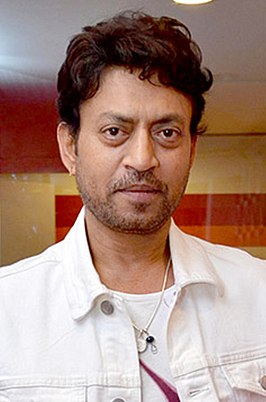
It’s more than a month since Bollywood actor Irrfan Khan, 51, who shot to fame with his role in Jurassic World, announced that he was suffering from a rare cancer and that he is going to the US for treatment.
Before leaving, he said:"I hope to be back with more stories to tell."
Diagnosed with neuroendocrine tumours, which may occur anywhere in the body, could non-cancerous or even malignant becoming fatal. The actor did not reveal at what stage of the condition his disease is. Instead, he chose to quote, Margaret Mitchell, saying, "Life is under no obligation to give us what we expect."
Film journalist Umair Sandhu has reportedly tweeted saying that his health is deteriorating. Citing family sources, Sandhu, wrote that Irrfan’s cancer was in its final stage and that the doctors were of opinion that he may not last for more than a month. But soon the tweet was retracted.
TimesNowNews has published the tweet that read, "BREAKING NEWS !! As per Family Sources of @irrfank ! His Cancer is at last Stage & Doctors are of the opinion that he may not last more than a month !!" — Umair Sandhu (@sandhumerry) April 8, 2018. However, it was reportedly removed later.
Irrfan Khan acted with ease in some memorable films of both Hollywood and Bollywood like "Paan Singh Tomar", "Talvar", "Maqbool", "7 Khoon Maaf", "Piku", "Hindi Medium" and "Blackmail" in Hindi.
In the West, he has starred in films like "The Namesake", "Life of Pi", "A Mighty Heart", "Slumdog Millionaire", "The Amazing Spider-Man" and "Inferno". His film ‘Hindi Medium’ has made more than Rs.100 in the Chinese market.
Telugu actor and former Tourism minister Chiranjeevi has denied rumours spreading on the social media that ‘Baahubali’ fame Prabhas is going to marry his niece Niharika. The veteran Telugu actor has refuted all the rumours as baseless.
Niharika Konidela, daughter of Chiranjeevi’s brother Nagendra Babu, is not new to Telugu film industry . She made her debut with the film "Oka Manasu" in 2016 and her banner Pink Elephant Pictures is known for its web series under the name "Muddapappu Avakai", which is quite popular among the Telugu audience.
Niharika had hosted dance reality show Dhee Juniors, aired on ETV Telugu before entering the film indsutry. Currently, she is busy with the shooting of "Happy Wedding", to be released later this year.
Prabhas, who deferred his marriage plans for about four years during the shooting of Bahubali 1 and 2, was rumoured to have become closer to Anushka Shetty but both of them have denied it, disappointing many fans who wanted the Bahubali 2 pair to be realtime couple as well.
Later, there were rumours that a Vizag industrialist daughter would be the bride for Bahubali hero but it proved futile soon. Prabhas, who is a nephew of a veteran Telugu actor former BJP minister at the centre, Krishnam Raju, was not new to marriage rumours ever since he revealed to media after Bahubali that his mother would select a bride for him.
Currently, Prabhas is busy with Sujeeth Reddy’s film ‘Saaho’, a futuristic action film with breathtaking action sequences, death-defying stunts and jaw-dropping visual effects.
Apart from Prabhas, other cast include mostly Bollywood names such as Shraddha Kapoor, Neil Nitin Mukesh, Jackie Shroff, Chunky Panday and Mandira Bedi. Scheduled for release in early 2019, the film will be followed by another film by Prabhas with Mohenjo Daro fame Pooja Hegde.
The Mars Reconnaissance Orbiter has captured some strange formations on the surface of the Red Planet with its Context Camera giving clues about the measurements of one impact crater with a central peak and another collapse depression with concentric troughs.
Gullies on Martian sand dunes found on Matara Crater, have been very active, with many flows seen in the last ten years. These flows typically occur when seasonal frost is present on the Red Planet. There are no fresh flows so far this year, but HiRISE will keep watching, said NASA in a statement.
The imgages shared by the US space agency reveal a trough in a close-up, along with some channels receding into the depression. Some grooved material on the floor of the trough resemble similar formations visible in middle latitude region with glacial flow. Origin of these trough, visible in other regions of Mars are still elusive.
NASA’s image CTX 033783_1509 was captured by MRO’s Context Camera that has a larger viewing angle than HiRISE, though its resolution is limited compared to the latter. The original image scale is 51.3 centimeters (20.2 inches) per pixel (with 2 x 2 binning); objects at 154 centimeters (60.6 inches) across are resolved but the current image is at a scale of 50 centimeters (19.7 inches) per pixel. North is up.
Lobo Vallis rippples
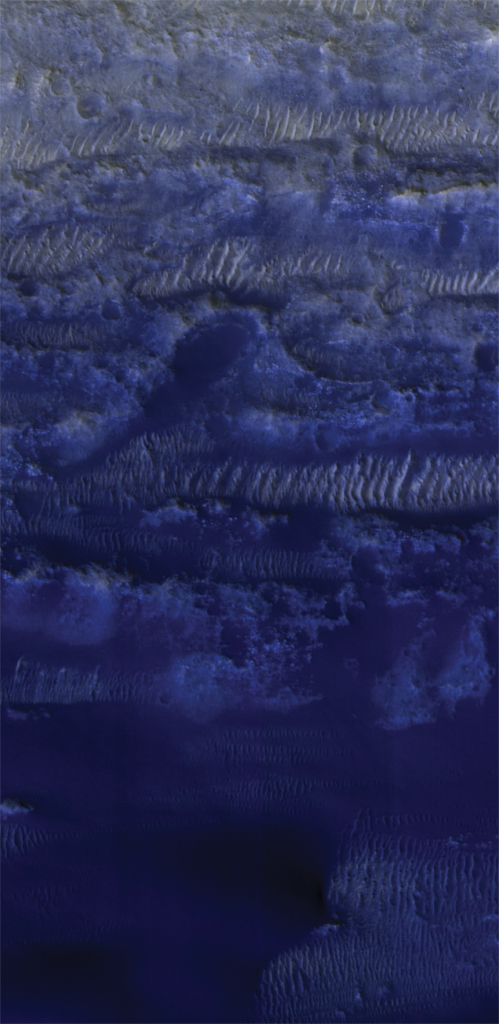
In another image, NASA’s Mars Reconnaissance Orbiter has shown bright ripples,lining the topography in this region, formed within a past climate. Dark dunes and sand streaks of basaltic sand have moved and filled lower areas, pushed by more recent winds from the top towards the bottom of this image. Lobo Vallis is named for a river on the Ivory Coast.
(NASA)
The map is projected here at a scale of 50 centimeters (19.7 inches) per pixel. [The original image scale is 57.7 centimeters (22.6 inches) per pixel (with 2 x 2 binning); objects on the order of 173 centimeters (68.1 inches) across are resolved.] North is up.
Mars Reconnaissance Orbiter (MRO) is a multipurpose spacecraft that is conducting reconnaissance and exploration of Mars from orbit since March 2006, to join five other Mars missions — Mars Global Surveyor, Mars Express, 2001 Mars Odyssey, and the two Mars Exploration Rovers (Spirit and Opportunity) — sent earlier to survey the surface of the Mars.
MRO’s telecommunications system has transferred more data back to Earth than all previous interplanetary missions combined, and it serves as a highly capable relay satellite for future missions, with a lifespan to last for two more decades.
The University of Arizona, Tucson, operates HiRISE and NASA’s Jet Propulsion Laboratory (JPL) manages the Mars Reconnaissance Orbiter Project for NASA’s Science Mission Directorate, Washington.
Astronauts Buzz Aldrin, Al Worden, Edgar Mitchell and Gordon Cooper have one thing in common, they are among the ardent defenders of UFO theory and claimed to have seen or chased many during their space travels. Now, all the four have cleared a lie-detector test, which reiterates their claim.
The lie detector test was carried out using the latest technology and experts said they were “completely convinced” with the results that they are telling the world truth about signs of alien life.
Buzz Aldrin, now 88, was the second human alogn with Neil Armstrong to set foot on the moon in their historic Apoll 11 mission in 1969. He claimed later that he saw a UFO. “There was something out there that was close enough to be observed, sort of L-shaped,” he said repeatedly.
The Institute of BioAcoustic Biology in Albany, Ohio, which has conducted the test, preferred to keep its technology top secret though. They have claimed that they used complex computer analyses of the astronauts’ voice patterns and more reliable than current lie detector tests.
Edgar Mitchell, another who took the test was the sixth astronaut to walk on the moon, who had earlier claimed that “aliens have contacted humans several times”.
Al Worden, 86, who had piloted the Apollo 15 mission revealed similar views to Good Morning Britain viewers with his claims earlier to have seen extra-terrestrials. In addition, the voice recordings of Edgar Mitchell and Gordon Cooper, both now dead, were also analysed by the Ohio-based institute.
Mitchell was part of the Apollo 14 mission and Cooper was also a space pilot who claimed to have chased UFOs during his flights.
Aldrin has been in the news recently for advocating an affordable plan to get humans to Mars.
Since Earth does a lap of the Sun once every 365.256 days and Mars too does a lap of the Sun once every 686.93 Earth days, he said we can overlay these two orbits with a third orbit, that of a spacecraft, which takes 2 and 1/7th years to complete. This spacecraft can meet up with the two planets, he said.
Instead of using fuel to change direction, the spacecraft could use gravitational slingshot manoeuvres to reduce the cost of each trip, he explained.
The heatwave generated by the “Me Too” movement in Hollywood is now sweeping the Telugu film industry when TV journalist-turned-actress Sri Reddy removed her clothes in protest against sexual harassment by brokers and middlemen.
She was arrested immediately for creating nuisance in public space but she was able to dent the image of the worsening Telugu film industry with allegations of “casting couch” or sexual harassment being as common as putting on make up before the clap of a scene.
Sri Reddy Leaks preceded Saturday street show (Sri Reddy/Facebook)
Sri Reddy has her own demands, some personal and many for the industry’s new entrants. She has been denied membership in the Movie Artistes Association (MAA) but her overture has left many Telugu film directors and producers in a shock. Her candid interview on a TV channel recently left viewers wondering how many women artistes end up washing sperms off their bodies every morning.
The actress has long been making allegations that the Telugu film industry is denying local Telugus the genuine roles and encouraging imported heroines from the north or Bollywood, while Mumbai ill-treats Telugu artistes or relegates them to minor roles. Despite sending nude photos, rarely they get any role befitting the promise made to them, she says.
Her “Sri Leaks” on Facebook has been raging over the last 10 days and the actress is openly challenging directors, brokers and middlemen for not honouring their word to get roles for local Telugu artistes but paving the red carpet for imported non-Telugu actresses.
One director Sekhar Kammula, whose name she revealed openly, has warned her of a defamation case. In his Facebook post, the director said: “APOLOGIZE and take back every word that was posted against me or be ready to face legal action, which will include criminal/ civil proceedings (sic).” He was known for his Telugu hits such as ‘Fidaa’ last year and ‘Happy Days’ earlier.
Undaunted, Sri Reddy is adamant as ever. She said she is ready to fight legally as she has every proof to back all her allegations. That’s where the ill-reputed industry is caught clueless.
Following the Saturday street nude show by Sri Reddy, the Telugu Film Chamber of Commerce rushed to a closed-door meeting in Jubilee Hills, Hyderabad where Rakul Preet, Manchu Lakshmi and director Nandini Reddy among others, discussed the impact and action to be taken against her.
But Hollywood #MeToo movement has reached Hyderabad much earlier than expected.
Nine months after the failure its last navigation satellite IRNSS-1H in August 2017, India’s space agency ISRO is all set to launch another navigation satellite to complete the indigenous GPS system, as a part of the series of IRNSS navigation satellites from its spaceport in Sriharikota in Andhra Pradesh on April 12.
IRNSS is similar to US’ Global Positioning System (GPS), Russia’s Glonass and Europe’s Galileo. China and Japan also have similar systems, ‘Beidou’ and ‘Quasi Zenith’.
The new PSLV-C41/IRNSS-1I Mission will lift off on Thursday morning, April 12, 2018 at 04:04 Hrs (IST). The last one in the series, IRNSS-1H launched last year on August 31 aboard the PSLV-C39, was unsuccessful. IRNSS-1I will replace IRNSS-1A, the first of the 7 navigation satellites in the series, which was rendered ineffective after its three rubidium atomic clocks failed.
“The Polar Satellite Launch Vehicle (PSLV) will launch IRNSS-1I satellite from the first launch pad in Sriharikota on April 12 at 4.04 a.m.,” the Indian Space Research Organisation (ISRO) said in a statement.
India’s PSLC in its 43rd flight (PSLV-C41) in XL configuration will launch IRNSS-1I Satellite from First Launch Pad (FLP) of SDSC SHAR, Sriharikota. The ‘XL’ configuration of PSLV is used for the 20th time and the IRNSS-1I is the 8th satellite to join the NavIC navigation satellite constellation.
IRNSS-1I is the eighth navigation satellite to join the IRNSS space segment consisting of previous satellites — IRNSS-1A, 1B, 1C, 1D, 1E, 1F and 1G — launched by PSLV-C22, PSLV-C24, PSLV-C26, PSLV-C27, PSLV-C31, PSLV-C32 and PSLV-C33 in July 2013, April 2014, October 2014, March 2015, January 2016, March 2016 and April 2016 respectively.
Barring IRNSS-iH which was a failure, like all other IRNSS satellites, IRNSS-1I also has a lift-off mass of 1425 kg and its configuration is similar to IRNSS-1A, 1B, 1C, 1D, 1E, 1F and 1G.
IRNSS-1I will carry two types of payloads – navigation payload and ranging payload. The navigation payload of IRNSS-1I transmits signals for the determination of position, velocity and time. It will operate in L5-band and S-band, besides rubidium atomic clocks.
The ranging payload of IRNSS-1I consists of a C-band transponder, which facilitates accurate determination of the range of the satellite and it carries Corner Cube Retro Reflectors for LASER Ranging.
IRNSS navigation satellites
The Indian Regional Navigation Satellite System (IRNSS) is an indegenous GPS system to meet the user requirements of the positioning, navigation and timing services over India and its neighbourhood, to provide fairly good accuracy to the user. The IRNSS will provide Standard Positioning Service (SPS) and Restricted Service (RS).
The navigation satellite series consist of seven satellites, three in GEO stationary orbit (GEO) and four in Geo Synchronous Orbit (GSO) with inclination of 29° to the equatorial plane. This constellation of seven satellites was named “NavIC” (Navigation with Indian Constellation) and dedicated to the nation on the occasion of successful launch of IRNSS-1G, the seventh and last satellite of NavIC.
All the satellites will be visible at all times in the Indian region. All the seven Satellites of NavIC are functioning from their designated orbital positions, said ISRO. IRNSS-1H launched in August 2017 was the only unsuccessful mission in the series.
The Ground segment comprises of TTC & Uplinking Stations, Spacecraft Control Centre, IRNSS Timing Centre, CDMA Ranging Stations, Navigation Control Centre and Data Communication Links.
Applications or uses of NavIC:
Applications of IRNSS navigation (NavIC) satellites include several uses for fishermen going to sea, weather forecast, warning on crossing international waters inadvertantly. Merchant ships will benefit while navigating to their destination in the ocean routes, in disastrous situations using its current location.
In road transport, NavIC, with its position service, helps the travellers to go from one location to the other and enables transport operators to track their vehicles and goods.
For Indian Railways, NavIC helps in alerting the road users at Unmanned Level Crossings to avoid accidents by closely monitoring the approaching trains. Geo-tagging and Geo-fencing techniques of NavIC help in developing virtual maps.
By Linking position information from NavIC with Geo-Informatics Systems where several layers of information are linked on maps and satellite imagery, a host of location based services are offered to the general public. Using such features, one could easily locate a restaurant, shop, college, bus-stop, office, hospital, fuel pump, picnic spot, etc.
Survey of land utilization, port operations, precision agriculture, road and rail alignments, etc. are possible with NavIC. When integrated with mobile phones, can bring a major transformation in the delivery of customized applications to the consumer segment.
Delhi Police have zeroed in on three culprits — a teacher of a private school, a clerk and a support staff — from Himachal Pradesh for leaking the CBSE Class 12 Economics paper. All the three have been arrested by a Special Investigation Team of Delhi on Saturday.
The Economics paper was leaked in handwritten format two days prior to the exam held on March 26, forcing the CBSE to cancel the exam and re-hold it on April 25, causing much uproar in the country by students and parents.
Special Commissioner of Delhi Police R.P. Upadhyaya told media that the SIT has interrogated more than 70 people, including ‘WhatsApp’ admins, school teachers, ground staff, students and others in the case and finally reached its origin from a private school in Himachal Pradesh.
“It traced the transmission of the leak, ncluding its point of origin and who all were the beneficiaries and finally, on the basis of crucial clues and leads, the arrests were made from Himachal Pradesh,” said Upadhyaya.
The investigators had collected all the deleted chats and contexts shared by the group members and the Whatsapp admins with the help of the ‘Whatsapp’ Headquarters in California in US. All the deleted conversation was revived to help crack the case, he said.
The CBSE academic unit at Rouse Avenue was alerted about the leak on March 26 when it received a blank envelope containing some sheets of handwritten answers of Economics paper, just few hours before the exam commenced. For paucity of time to authenticate the leak, the exam was allowed to continue but once it was found that the paper was leaked, the Board has cancelled it and ordered a re-test.
In 2014 too, the physics paper of Class 12 was leaked and was published by a news website in the North East but CBSE found its reach not wide enough to order a re-test.
After a delay of two days, Bollywood actor Salman Khan was granted the bail in a 1998 blackbuck poaching case by the Jodhpur sessions court on Saturday. The actor will return to finish his films on priority while pending appeal to a higher court.
Jodhpur District and Sessions Court Judge Ravindra Kumar Joshi, who heard the bail plea on Friday postponed it to Saturday and was transferred the same day so new judge heard it today. The actor’s lawyer Mahesh Bora’s arguments listing 54 reasons for the bail in a 51-page bail application, raising a benefit of doubt as only Salman had been convicted out of six accused.
Apart from Salman Khan, other Bollywood stars Saif Ali Khan, Tabu, Sonali Bendre and Neelam were part of the hunting team on October 1-2 night in 1998 outside a reserve forest near Kankani village in Jodhpur. They were all shooting for “Hum Saath Saath Hain” film.
Salman was found guilty and convicted Salman under Section 9/51 of the Wildlife Protection Act as local Bishnoi community pressed for severe punishment to the actor for killing the blackbuck whcy they worship.
Salman had spent two days in the Jodhpur Central Jail as “Qaidi No. 106”.
In a country of 1.2 billion people, only 35 convicts have been jailed for wildlife crimes under the Wildlife Protection Act, 1972, usually most of them for poaching tigers and smuggling body parts, seahorse, snakes and other animals in India.
Blackbuck, known as Krishna mrig or Krishna saar and has been revered by local Bishnoi community and has been depicted in Maha Bhagavatam as pulling the chariot of Lord Krishna.