
Japan, India scientists develop new approach to lessen severity of malaria

A new approach focusing on a critical stage in the life cycle of one of the most common malaria parasites was developed by scientists at Kyoto University’s Institute for Integrated Cell-Material Sciences (iCeMS) in Japan, in collaboration with India and Swiss scientists.

“The Plasmodium vivax malaria parasite can stay dormant in a person’s liver cells up to years following infection, leading to clinical relapses once the parasite is reactivated,” says Kouichi Hasegawa, an iCeMS stem cell biologist and one of the study’s corresponding authors of the paper published in the Malaria Journal.

P. vivax is responsible for around 7.5 million malaria cases, half of which are in India. Currently, there is only one licensed drug to treat the liver stage of the parasite’s life cycle, but with many side effects and cannot be used in pregnant women and infants. The liver stage is also difficult to study in the lab.

Study liver infection

Hasegawa and his colleagues in Japan, India and Switzerland developed a successful system for breeding mature malaria parasites, culturing human liver cells, and infecting the cells with P. vivax. While it doesn’t solve the high infection rate problem, still it provides new insight into the parasite’s liver stage.

“Our study provides a proof-of-concept for detecting P. vivax infection in liver cells and provides the first characterization of this infectious stage that we know of in an endemic region in India, home to the highest burden of vivax malaria worldwide,” says Hasegawa.

The researchers bred Anopheles stephensi mosquitos in India. Female mosquitos were fed with blood specifically from Indian patients with P. vivax infection and two weeks later, mature sporozoites, the infective stage of the malaria parasite, were extracted from the mosquitos’ salivary glands and added to liver cells cultured in a petri dish.

The scientists tested different types of cultured liver cells to try to find cells that would be infected by lots of parasites like in the human body. Researchers have already tried using cells taken liver biopsies and of various liver cancer cell lines. So far, none have led to large infections.

Resistance in liver cells

Hasegawa and his colleagues tried using three types of stem cells that were turned into liver cells in the lab. Notably, they took blood cells from malaria-infected patients, coaxed them into pluripotent stem cells, and then guided those to become liver cells. The researchers wondered if these cells would be genetically more susceptible to malaria infection. However, the cells were only mildly infected when exposed to the parasite sporozoites.

A low infection rate means the liver cells cannot be used for testing many different anti-malaria compounds at once. But the researchers found the cells could test if a specific anti-malaria compound would work for a specific patient’s infection. This could improve individualized treatment for patients.

The scientists were also able to study one of the many aspects of parasite liver infection. They observed the malaria protein UIS4 interacting with the human protein LC3, which protected the parasite from destruction. This demonstrates their approach can be used to further investigate this important stage in the P. vivax life cycle.

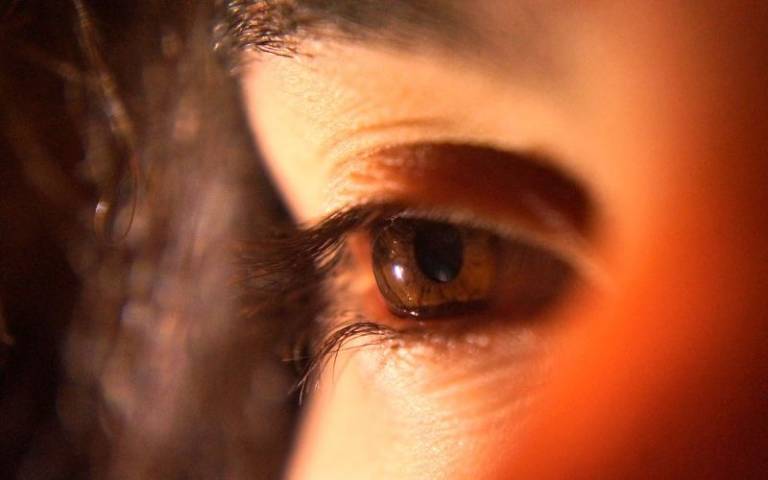
Staring at red light 3 minutes daily may lessen the risk of sight loss, says study

Staring at a deep red light for three minutes a day can significantly improve declining eyesight, finds a new study, which may bring immense potential to bring about new affordable home-based eye care technique or therapy, helping millions of people globally with naturally declining vision as they age.

The first of its kind in humans study by scientists at the UCL Institute of Ophthalmology was published in the Journals of Gerontology. Once over 40, the retinal sensitivity and colour vision gradually decline and with an ageing population, this is an increasingly important issue. The new method can reverse this decline, by rebooting the retina’s ageing cells with short bursts of longwave light.

In humans around 40 years-old, cells in the eye’s retina begin to age caused, in part, when the cell’s mitochondria, whose role is to produce energy (known as ATP) and boost cell function, also start to decline. In the UK there are currently around 12 million people aged over 65 and in 50 years this is estimated to increase to around 20 million.

Retina Decline Reversible

Mitochondrial density is greatest in the retina’s photoreceptor cells, which require high energy and thus, the retina ages faster than other organs, with a 70% ATP reduction over life, causing a significant decline in photoreceptor function. Researchers built on their previous findings in mice, bumblebees and fruit flies, when their eyes were exposed to 670 nanometre (long wavelength) deep red light.

Red light vision therapy (UCL)

“Mitochondria have specific light absorbance characteristics influencing their performance: longer wavelengths spanning 650 to 1000nm are absorbed and improve mitochondrial performance to increase energy production,” said Professor Glen Jeffery, lead author and scientist at UCL Insitutute of Ophthalmology. The retina’s photoreceptor population is formed of cones, which mediate colour vision and rods, which provide peripheral vision and adapt vision in low or dim light.

For the study, 24 people (12 male, 12 female), aged between 28 and 72, who had no ocular disease, were recruited. All participants’ eyes were tested for the sensitivity of their rods and cones at the start of the study. Rod sensitivity was measured in dark adapted eyes (with pupils dilated) by asking participants to detect dim light signals in the dark, and cone function was tested by subjects identifying coloured letters that had very low contrast and appeared increasingly blurred, a process called colour contrast.

All participants were then given a small LED torch to take home and were asked to look into* its deep red 670nm light beam for three minutes a day for two weeks. They were then re-tested for their rod and cone sensitivity

Study Results

Researchers found the 670nm light had no impact in younger individuals, but in those around 40 years and over, cone colour contrast sensitivity (the ability to detect colours) improved by up to 20% in some people aged around 40 and over. Improvements were more significant in the blue part of the colour spectrum that is more vulnerable in ageing. Rod sensitivity also improved significantly in them though less than colour contrast.

Professor Jeffery said: “Our study shows that it is possible to significantly improve vision that has declined in aged individuals using simple brief exposures to light wavelengths that recharge the energy system that has declined in the retina cells, rather like re-charging a battery. The technology is simple and very safe, using a deep red light of a specific wavelength, that is absorbed by mitochondria in the retina that supply energy for cellular function.

The team is planning to make devices costing about £12 to make, so the technology is highly accessible to the public.

Wind blows, ground moves on Mars, says study after INSIGHT lander findings

A new study by researchers at Kyushu University’s International Institute for Carbon-Neutral Energy Research, Fukuoka in  Japan after comparing findings of Mars Insight lander after comparing with our own planet Earth, found Mars might seem like a “dead” planet, but even there, the wind blows and the ground moves.

Similar to earthquakes, the ambient seismic noise rippling mainly due to ocean activity to peek underground at the structure of the Earth’s interior. Can we do the same on Mars without ocean? The Japanese researchers’ study, published in Geophysical Research Letters, is based on data collected by NASA’s InSight (Interior Exploration using Seismic Investigations, Geodesy and Heat Transport) Martian lander, which landed on Mars on November 26, 2018.

This is ambient noise on the Mars CREDIT: Takeshi Tsuji, I2CNER, Kyushu University


The InSight lander placed a seismometer on the surface of Mars and its readings collected between February and June 2019 revealed the existence of several hundred marsquakes, most of them much weaker than the quakes typically felt on Earth, although some reached a maximum magnitude of 4.

The data from these “microtremors” helped to determine the directions of propagation and directional intensity. Study co-author Tatsunori Ikeda said, “Our polarization analysis revealed that seismic waves of different frequencies and types showed different patterns of variation over the course of the Martian day. The temporal variations in low-frequency P-waves were related to distant changes in wind and solar irradiation, and the low-frequency Rayleigh waves were related to the wind direction in the region near the lander.”

This artist’s concept depicts NASA’s InSight lander after it has deployed its instruments on the Martian surface (NASA)

Higher-frequency ambient noises were, of course, made by vibration of the lander itself and hence, these microtremors of different types and frequencies likely have different sources, and some are probably influenced by geological structures, noted the scientists.

Mars Interior

These differences between the dominant sources of Martian microtremors may help in efforts to identify geological structures in Mars’s interior, as we inferred the lithological boundary beneath the seismometer from high frequency ambient noise.

A single seismometer is not yet enough to reconstruct images of the planet’s interior as usually done on Earth from data networks of multiple seismometers. But this analysis of the InSight lander’s seismic data is a key step toward achieving that goal on Mars, said scientists of the study.

The study’s senior author Takeshi Tsuji said:”These results demonstrate the feasibility of ambient noise methods on Mars. Future seismic network projects will enable us to model and monitor the planet’s interior geological structure, and may even contribute to resource exploration on Mars, such as for buried ice.”