Indian Embassy in US Holds Open House for Community

The Indian Embassy in Washington DC held its 3rd “Consular Open House” on Feb. 01, 2017 to address the grievances of Indians in the US and assured them quick resolution on problems ranging from visas, passports to OCI cards issued to people of Indian origin.

The Open House is a new initiative taken up by the mission in Washington DC. It is held every month on the first Wednesday from 10.00 AM to 01.00 PM and on the third Wednesday from 2.00 PM to 5.00 PM.

The Feb.1, 2017 witnessed the third Open House and it received a large number of applicants who turned up with their problems and grievances. They were all attended to by senior officers in Consular and Community Affairs Wings, said the mission in a statement.

Besides general applicants, community leaders from Sikh organizations and Gurudwaras based in Washington DC, Virginia and Maryland also had a meeting with the senior Consular Officers on issues related to local Sikh community.

Mr. Arun K. Sinha, Minister (Consular) addressed their grievances and listed the new initiatives taken by the Government of India to address their problems relating to the Indian diaspora, especially the Sikh community. He has also addressed issues raised by the community leaders.

The ‘Consular Open House’ is increasingly becoming popular and is receiving appreciation from the Indian community.

India Surrendered 2 Mozambique Coal Mining Licences: Minister

Coal India Limited (CIL) has surrendered two licenses held by its subsidiary Coal India Africana Limited in Mozambique and with this has no foreign coal assets. However, CIL is looking for coking coal assets abroad since viable domestic coking coal reserves in the country are facing constraints, both commercial and technical, said Mr. Piyush Goyal, Minister of State for Coal & Mines.

The acquisitions by CIL have become necessary in view of the recent spurt in global coal prices especially for coking coal, said the minister, in a written reply to a question in the Rajya Sabha on Monday.

CIL was allotted two exploratory blocks measuring 224 sq km at Tete province in Mozambique in August 2009 and it had floated a new subsidiary called Coal India Africana Limited in Mozambique but soon discovered that out of the 224 sq km of the total license area, 170 sq km had no ‘coaly’ horizon till a depth of 500 meter and this block was immediately surrendered and later the other one, 54 sq km of area, too was surrendered as it was not feasible to do mining.

CIL in its annual report said, “Based on the results of various exploration activities in the licenses area 3450L and 3451L, the geological report has been prepared… A mineability study has been undertaken based on the findings of the geological report. The study revealed that it is technically not feasible to do mining in the license area of CIAL. Accordingly, the CIL board accorded its approval for surrender of the blocks to the Mozambique government.”

Global mining company Rio Tinto had already conducted an extensive exploration in Mozambique.

Indian American Student Finds Simpler Solution to World Water Problem

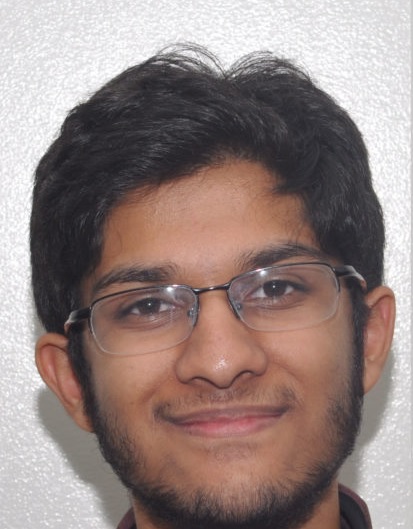
Chaitnya Karamchedu has discovered a cheaper way to desalination, revolutionizing the approach to address water crisis. (Photo courtesy: jesuitcrusader.org)

Indian American student Chaitanya Karamchedu’s project has potential to revolutionize the method to purify salt water into safe drinkable fresh water and no wonder, many firms are vying for its commercial use.

Chaitanya from Portland, Oregon in the US, is a senior student at Jesuit High Schoo, has hit upon the idea more scientifically. “Sea water is not fully saturated with salt,” he explained. While the research hitherto focused on 10% of water that’s bonded to the salt in the sea, Chaitanya addressed the problem experimenting on 90% of the water that is free from salt bond.

Using a highly absorbent polymer, Chaitanya was able to discover a cheaper method effective way to remove salt from ocean water and turn it into fresh water.

Using superabsorbent hydrophilic polymers, with no external energy, under room temperature and pressure Chaitanya was able to produce drinkable water which stands WHO standards for potable water.

Based on saponified starch-grafted-polyacrylamide’s hydrophilic properties, he was able to create a hydrogel to separate freshwater from seawater, then separated hydrogel from the brine, dewatered the gel resulting in aqueous sulfuric acid and then recovered fresh water from the aqueous solution.

The use of hydrophilic polymers to desalinate water required no thermal or electrical energy and the extracted water was comparable to fresh water with an average conductivity of 306.32 µS/cm, comparable to the conductivity of 200 µS/cm for the reference distilled water used. It involved no cost for pre-treatment and post-treatment and it is amenable for small scale use.

Chaitanya Karamchedu has already won a $10,000 award from the US Agency for International Global Development at Intel’s International Science Fair and MIT’s TechCon Conference provided him research. He was also named one of 300 Regeneron Science Talent Search Semifinalists.

India, Israel to Upgrade BARAK 8 Missile System

To upgrade the Long Range Surface-to-Air Missile (LR-SAM) and Medium Range Surface-to-Air Missile (MR-SAM), India’s Defence Research and Development Organisation (DRDO) and Isreal Aerospace Industry (IAI) will collaborate to upgrade Barak-8 missile system, said Minister of State for Defence Dr. Subhash Bhamre in a written reply to Mr. Ram Charan Bohra in Lok Sabha on Friday.

LR-SAM is the Ship Launch Version and Project MR-SAM is the Land Launch Version of Barak-08 Missile system. MR-SAM detects incoming enemy aircraft while they are well over 100 km away and destroys them at range upto 70 km.

Basrak Missile 8 (Photo: Creative Commons)

LR-SAM has got long range engagement capability to penetrate in deep water or land to intercept all types of aerial targets like Subsonic and Supersonic Missiles, Fighter Aircraft, Maritime Patrolling Aircraft (MPA), Helicopter and Sea Skimming Missiles.

The Israeli Navy has already commenced equipping its Sa’ar 5 corvettes with the system, the first re-fitted vessel being the INS Lahav and the Sa’ar 4.5 flotilla will be next for the upgrade.

The first 32 missiles will be fitted on the Indian Navy stealth guided-missile destroyer INS Kolkata. Each Barak system costs about $24 million and India has signed a contract with Israel worth a $1.1 billion to supply the upgraded tactical Barak 8 air defence system in 2009.

India Seeks to Revise Tax Treaties with Foreign Nations: Minister

Indian government is planning to revise the tax treaties with partner countries to enable the Central Bureau of Investigation (CBI) and Enforcement Directorate (ED) to use the data for prosecution of those who have stashed black money abroad, said a statement.

Treaty partner countries have been requested to modify the tax treaties to explicitly include provisions that will enable information exchanged for tax purposes, including criminal proceedings in non-tax matters.

About 40 treaties for avoidance of double taxation have been revised accordingly and India has also signed the Multilateral Convention on Mutual Administrative Assistance in Tax Matters, which also similarly facilitates exchange of information.

India is gearing up drive on compiling information by non-tax agencies, subject to agreement by the Competent Authorities of the Requested Contracting State.

However, not all treaty partner countries have agreed to the proposal. Since a bilateral treaty cannot be modified unless both treaty partners agree, it is not possible to provide any time frame for this purpose, said Mr. Santosh Kumar Gangwar, Minister of State in the Ministry of Finance in written reply to a question in Lok Sabha.

India Holds Basmati Rice Promotion Event in Iran as Ban May be Lifted

A 20-member Indian trade delegation led by Chairman of Agricultural and Processed Food Products Export Development Authority (APEDA) visited Iran from January 28 to 30, 2017 to promote export of Basmati rice that was banned since five months.

In view negative publicity in Iran media about Indian rice, the promotional event was held at Hotel Espinas Palace in Iranian capital Teheran. About 250 people participated in it which witnessed preparation of Iranian dishes prepared by Iranian Chefs with use of Indian rice that was served for lunch.

Participants included about 30 media personnel, importers, inspection agencies and government officials from Food and Drug Organisation (FDO), said a statement. A film of about 3.5 minutes duration was also screened depicting different aspects of Basmati cultivation, processing, issue of health certificate and assurance of Indian rice being GMO free at the event.

The delegation also met several heads of government departments including Food and Drug Organisation, Governmental Trading Corporation and Trade Promotion Organisation, besides meeting members of Iran Chamber of Commerce and Rice Importers Association to dispel the negative publicity which appeared in some parts of Iran media causing doubts about the health and safety of rice from India.

The delegation said the Government of Iran may soon issue the notification about resumption of issuance of permits for import of Indian rice. To supplement domestic production of about 2 million MT, Iran imports about 1 million MT of rice every year out of which about 7 lakh MT is exported from India.

Reports said Iran has already lifted its ban on imports of basmati rice from India owing to increase in rice prices. A formal notification is awaited.

In 2015-16, basmati rice imports from India halved to $571 million from $1.1 billion in 2014-15. In 2016-17, basmati rice exports amounted to $356 million before ban was imposed after adverse reports in media casting doubts about the safety of Indian basmati rice.

Basmati rice is exported by India, Pakistan and Uruguay.

Missing Obama? Majority Americans Prefer to Have Him Back as US President

Within two weeks after Barack Obama stepped down after completing his two terms as US President, the unpopular Muslim visa ban of new US President Donald Trump has shaken Americans to wish for Obama’s return. However, the Twenty Second Amendment to the US Constitution doesn’t allow it.

In an opinion poll conducted by the Public Policy Polling after surveying 725 registered voters on January 30 and 31, majority or 52% of the voters said they would rather have Obama as President and 43% said they prefer Trump.

The 52% voters said they would prefer to see the real estate businessman who became President be impeached and, whereas 35% said so just a week ago. Only 43% are glad that Trump is the US President. The findings of the survey wer not only shocking but appalling, said Dean Debnam, President of Public Policy Polling.

“Donald Trump’s making history once again with a sizeable share of voters already wanting to impeach him, and a majority of voters wishing they could have Barack Obama back,” he noted. The Muslim visa ban is the root-cause of apprehension, he said.

“Overall voters are pretty evenly split on Trump’s executive order on immigration from last week, with 47 per cent supporting it to 49 per cent who are opposed. But when you get beyond the overall package, the pieces of the executive order become more clearly unpopular. 52 per cent of voters think that the order was intended to be a Muslim ban, to only 41 per cent who don’t think that was the intent. And the idea of a Muslim ban is extremely unpopular with the American people — only 26 per cent are in favour of it, to 65 per cent who are against it,” said the survey in its findings.

Even if Trump is impeached, which is highly unlikely, Vice President will succeed him as per the Constitution. And there is no return of Barack Obama since the 22nd Amendment prohibits any person from contesting for the third time ever since 1951.

In American history, only Franklin D. Roosevelt served as President during the World War period for an unprecedented four terms, forcing the Twenty Second Amendment to the US Constitution.

India Ropes in Italian Firm to Avoid Rail Accidents, Maintain Railway Safety

Indian Ministry of Railways and Italian state-owned Ferrovie Dello Stato Italiane Group, managing the Italian railway sector, have signed on Thursday an MoU for cooperation in rail safety and train operations.

The MoU covers areas of safety audit of Indian Railways and measures for enhancing safety in train operation, Assessment and certification of advanced technology based safety products and systems to Safety Integrity Level (SIL4), Training and competency development with focus of safety, modern trends in maintenance and diagnostics.

The MoU comes in the backdrop of emphasis given by India on safety in railway operations, which have seen several derailments of late and sabotage bids, killing scores of passengers. The move was taken up by the Railway Board to collaborate with the international experts to identify the best practices in this field.

Ferrovie Dello Stato Italiane Group (FS Group) is a fully owned company of the Italian Government working in the Railway Sector under Ministry of Treasure, Itlay. The Group was widely recognized globally for its most advanced expertise in fields of design and realization of High Speed and Conventional Lines, Safety Systems, Certification, Training and Operation and Maintenance.

The FS group employs 69,000 staff and operates more than 7,000 trains per day, carrying over 600 million/year of passengers and 50 million tons of freight on a railway network of more than 16,700 km.

FS Italiane Group is also operating in five continents, in more than 60 countries, with branches in Abu Dhabi, Riad, Muscat, Doha, Istanbul, Alger, and Bucharest. It has controlled several companies in countries such as France, Germany and Serbia.

The MoU was signed on behalf of the Ministry of Railways by Mr. Vinod Kumar, Executive Director/Safety(coordination), Railway Board and by Mr. Renato Mazzoncini, CEO of FS Group, Italy.

India Signs Agreement on $201 Mln Loan From World Bank for Quality Tech Education

India has signed an Agreement for IDA credit of US$201.50 million for the “Third Technical Education Quality Improvement Programme” (TEQIP III) on February 1, 2017 in New Delhi.

The loan agreement envisages an active funding participation in Indian Engineering Education Institutes and improve the efficiency of the Engineering Education System in Uttarakhand, Himachal Pradesh, Bihar, Uttar Pradesh, Madhya Pradesh, Chhattisgarh, Rajasthan, 8 North Eastern States and Andaman & Nicobar Islands.

The Project seeks to improve quality and equity in engineering institutes in these states and to undertake system-level initiatives to strengthen sector governance and performance.

The World Bank loan, to be implemented till March 2022, will be disbursed based on achievement of specific outcomes and goals by these institutions, said a World Bank statement.

Mr. Raj Kumar, Joint Secretary, Department of Economic Affairs signed the agreement on behalf of the Government of India and Mr. Junaid Kamal Ahmad, Country Director for World Bank, on behalf of the World Bank.

“The focus on strengthening engineering education and research under TEQIP III will help prospective labor market entrants acquire the skills needed to produce a world-class technical workforce,” said Junaid Ahmad, World Bank Country Director in India.

TEQIP III will intensify its efforts in the focus states with the support from the IITs, IIMs and other high-performing institutes across the country. “As with previous phases of TEQIP, the country’s top institutes will mentor TEQIP colleges and help them develop their curriculum, faculty and students”, said R. Subrahmanyam, Additional Secretary, Department of Technical Education, Ministry of Human Resources Development, the implementing agency for the project.

Festival of India to be Held in Senegal

A Festival of India is being organized in Senegal from 26 January to 28 February, 2017 to showcase diverse Indian culture, including classical and folk dance, music and an exhibition on Mahatma Gandhi.

The following events will be held in the Senegal capital City of Dakar:

· Kathak Dance by Richa Jain and Group from 27-29 January, 2017.
· Bharatnatyam Dance by Priya Venkataraman and Group from 1-3 February, 2017.
· Music (Bollywood) by Melody Magic – Deepak Mehta & group from 6-8 February, 2017
· Rajasthani Folk Music and Dance by Anita Ordia and Group from 11-13 February, 2017
· Music (Vocal) by Dhananjay Kaul and Group from 16-18 February, 2017
· Exhibition on Mahatma Gandhi from 30 January – 28 February, 2017.

Indian culture, especially the dance and music are popular among the people of Senegal, which is home to about 40 India-friendship associations whose members are the local people who conduct cultural programmes involving Classical and even Bollywood music on important occasions, with active support from the Indian Mission.

Diplomatic ties between India and Senegal were established in 1962 and both countries enjoy friendly bilateral relations sharing common values such as democracy  and secularism. They are both members of the Non-Aligned Movement and G-15.

India has been a key partner of Senegal in the field of urban transport, agriculture, rural electrification, human resource development and information technology with more than 300 Indians working in several companies set up here.


India Provides NRs.24.9 Lakh to Nepal for Highway Projects

Indian embassy in Nepal has handed over a cheque for NRs.24,97,10,698.17 towards 25 percent of the cost of the four contracted road stretches in Nepal, as part of the aid to support infrastructure development in the Himalayan neighbour.

The roads — Birendrabazaar-Mahinathpur, Janakpur-Yadukuwa road, Manmat-Kalaiya-Matiarwa (0-15 km road) and Manmat-Kalaiya-Matiarwa (15-26.660 km road) — are being built under Postal Highway Project in Nepal with Indian grant assistance of NRs.8,000 million.

On Monday, January 30, 2017, Ambassador of India Mr. Ranjit Rae handed over a Cheque for an amount to Nepal Minister for Physical Infrastructure and Transport Mr. Ramesh Lekhak at Singha Durbar in Kathmandu.

Recently, the two completed roads — Dhangadhi-Bhajaniya-Satti road and Lamki-Tikapur-Khakraula road — constructed with India’s grant assistance worth NRs 1,020 million were inaugurated on 19 January 2017 at Dhangadhi jointly by the Indian Ambassador and Nepal Minister for Physical Infrastructure and Transport.

Since 1950, India has been supporting infrastructure development of Nepal and has provided financial assistance for construction of various Highways, Roads, Bridges, Airports, among others as part of the India-Nepal Economic Cooperation Programme.

Earlier, Indian Ambassador Ranjit Rae inaugurated on Friday, January 27, 2017, a campus building for Chautara Multiple Campus, Chautara in Sindhupalchok district that has been constructed with financial assistance of NRs. 27 million provided by the Government of India under its Small Development Projects Scheme as part of India–Nepal Economic Cooperation Programme.

India’s US Mission in Washington DC Holds Joint Workshop on Defence Preparedness

In view of deepening Indo-US defence scientific cooperation, a Joint Workshop on “Medical and Chem Bio-defence” is being organised by the Institute of Nuclear Medicine and Allied Sciences (INMAS), Delhi (of DRDO), is being held from 31st January to 2nd February 2017 at the Indian Chancery in Washington DC.

The workshop has focused on medical, chemical and biological defense strategies to seek future cooperation in areas of combat casualty care, neurocognitive assessment, military operational environment, detection and diagnostics for chemical and biological defence, medical countermeasures, radiation countermeasures as well as individual and collective protection/ decontamination.

A delegation of 27 members from the US Department of Defense, headed by Dr Patrick Mason (SES), Office of the Assistant Secretary of Defense for Research and Engineering is participating.

The Indian delegation, constituting about 25 members from the DRDO Life Sciences Cluster laboratories, is headed by Dr A K Singh, Director INMAS, and is being inaugurated by Dr Shashi Bala Singh, Director General (Life Sciences), DRDO.

“This workshop will prove a significant milestone in furthering the bilateral relationship of USA with India, and will give impetus to future scientific collaboration in the field of medical, chemical and biological defence,” said the Chancery in a statement.

With the rising threat perception at global level, both countries will find avenues of extending the desired protection to their armed forces and civilian populations.

India Invited as Guest Nation at St. Petersburg Economic Forum 2017

India has been invited as a Guest Country in the St. Petersburg International Forum, Official Spokesperson said, confirmin the news on Wednesday in a briefing to the reporters.

“This is to confirm that India has been invited as a Guest Country at the St. Petersburg International Economic Forum (SPIEF) which will be held in the city of St. Petersburg, Russia from June 1 to 3, 2017,” said MEA spokesperson Mr. Vikas Swarup.

The invite comes following the current visit of Ajit Doval, India’s National Security Advisor (NSA), who visited Moscow to discuss security and anti-terrorism issues with Russian Deputy Foreign Minister Igor Morgulov. Recent media reports have said that Iran, Russia and India trilateral security arrangement is on the cards.

Indian Prime Minister Narendra Modi will attend the Forum as a Guest of Honour and other details of the visit are being worked out, and “we will announce them as and when they are finalized,” he said.

Russian Presidential Press Secretary Dmitry Peskov said on Monday that Russia attaches great importance to Modi’s visit.

The St. Petersburg International Economic Forum (SPIEF) is an annual event held in St. Petersburg devoted to discuss global economic and business issues. It is also called the “Russian Davos,” and the first conference was held in 1997.

Post-Hafiz Saeed House Arrest, India Seeks Credible Crack Down by Pakistan

In an official response to the preventive detention of Hafiz Saeed and others by Pakistan on Tuesday, India’s spokesperson for the Ministry of External Affairs, Mr Vikas Swarup said credible steps by Pakistan required to show its commitment to end terrorism.

Pakistan’s Ministry of Interior placed on Tuesday the Jamaat-ud-Dawa and the Falah–e-Insaniyet Foundation under the watchlist. Also the Falah-e-Insaniyet Foundation has been included in the second schedule of their anti-terror legislation under United Nations Security Council Resolution No. 1267.

“We have also noted that Hafiz Saeed and four others have been placed under preventive detention,” said Mr. Swarup.

The United Nations Security Council 1267 provisions maintain that the countries should list and prosecute known terrorist entities and individuals effectively. India said it has consistently called for bringing known terrorists under the ambit of the 1267 sanctions.

“Exercises such as yesterday’s orders against Hafiz Saeed and others have been carried out by Pakistan in the past also. Only a credible crack down on the mastermind of the Mumbai terrorist attack and terrorist organizations involved in cross border terrorism would be proof of Pakistan’s sincerity,” said Mr. Swarup in a cautious response to the development.

Hafiz Muhammad Saeed is a co-founder of Lashkar-e-Taiba, which operates from Pakistan soil and has had sanctions placed against it by the United Nations as a terrorist organisation. India has long been demanding his arrest and prosecution.

Foreign Investment Promotion Board to be Demolished Next Year

Presenting the General Budget 2017-18 in the Lok Sabha on Wednesday, Feb. 1, 2017, Indian Finance Minister Arun Jaitley said that the Foreign Investment Promotion Board (FIPB) will be abolished in a phased manner by the end of fiscal year 2018-19.

Since the Government has already introduced substantive reforms in FDI policy with more than 90% of the total FDI inflows through the automatic route, Jaitley said that the FIPB has already completed the implementation of e-filing process for FDI. Hence, the FIPB has reached a stage where it can be phased out, he said.

On markets, the Finance Minister proposed that high net worth NBFCs can also now participate in IPOs just like the banks and insurance companies. He said a proposal to allow NBFCs regulated by RBI with a certain net worth, to be categorised as Qualified Institutional Buyers (QIBs) by SEBI so as to make them eligible for IPO route. The minister was actually hinting at prospective MBFC-MFIs or microfinance institutions which have a good record, work under RBI guidelines and seek to enter the IPO route to raise funds.

On banking reforms, he said a common application form for registration, opening of bank and demat accounts, and issue of PAN will be introduced for Foreign Portfolio Investors (FPIs) and said SEBI, RBI and CBDT will put in place the required plan and procedures, to enhance operational flexibility and ease of access to Indian capital markets. As for the commodities and securities derivative markets, he said they will be further integrated with the participants, brokers, and operational frameworks.

In an effort to improve the ease of doing business, the Indian Finance Minister said the process of registration of financial market intermediaries like mutual funds, brokers, portfolio managers, etc. will be made fully online by SEBI and steps will be taken for linking of individual demat accounts with Aadhar.

To check bank NPAs and enhance capital flows into the securitisation industry, Jaitley said that the listing and trading of Security Receipts issued by a securitisation company or a reconstruction company under the SARFAESI Act will be permitted in SEBI registered stock exchanges.

To ensure the Cyber security for safeguarding the integrity and stability of the financial sector, a Computer Emergency Response Team for our Financial Sector (CERT-Fin) will be established in coordination with all Financial Sector Regulators and other stakeholders, he added.

Addressing the issue of dubious or ponzi deposit schemes, Jaitley said that a Bill will soon be tabled in Parliament to protect the poor and gullible investors from dubious deposit schemes, operated by unscrupulous entities.

He said a draft bill has been placed in the public domain and will be introduced in parliament shortly seeking to amend the Act in consultation with various stakeholders, as part of our ‘Clean India’ agenda, he added.


Indian Budget 2017 Aims at New Thrust on ‘Ease of Doing Business’

The Indian government has announced in its Budget 2017-18 severral measures to make India a favourable destination for foreign investments by providing an environment of “Ease of Doing Business”.

The Finance Minister Mr Jaitley raised the threshold limit for audit of business entities that opt for presumptive income scheme from Rs. 1 crore to Rs. 2 crore. Similarly, the threshold for the maintenance of books for individuals and HUF is proposed to be increased from turnover of Rs. 10 lakhs to Rs. 25 lakhs or income from Rs. 1.2 lakhs to Rs. 2.5 lakhs.

The Finance Minister said that the Foreign Portfolio Investor (FPI) Category I & II will be exempt from indirect transfer provision under the IT Act. Besides, indirect transfer provision shall not apply in case of redemption of shares or interests outside India as a result of or arising out of redemption or sale of investment in India which is chargeable to tax in India, thus removing apprehensions over taxation on funds located abroad but investing in India-based companies.

Bringing relief to individual insurance agents, the Budget 2017 sought to exempt them from the TDS provision of 5% being deducted from commission payable after filing a self-declaration that their income is below taxable limit. Professionals with receipt upto Rs. 50 lakhs p.a. can pay advance tax towards presumptive taxation in one installment instead of four, under this budget proposal.

In order to allow the people to claim the refund expeditiously, the Finance Minister said that the time period for revising a tax return is being reduced to 12 months from completion of financial year, at par with the time period for filing of return.

Also the time for completion of scrutiny assessments is being compressed further from 21 months to 18 months for Assessment Year 2018-19 and further to 12 months for Assessment Year 2019-20 and thereafter, he added.

The Finance Minister proposed to restrict the scope of domestic transfer pricing only if one of the entities involved in related party transaction enjoys specified profit-linked deduction. He said this will reduce the compliance burden for domestic companies since the number of entities being covered under domestic pricing had gone up substantially resulting in longer scrutiny.