Gaza: UN humanitarians flag impact on children of return to war

UNICEF’s Rosalia Bollen, who’s on the ground there, said that hundreds of children had been killed and injured – some with severe burns, shrapnel lodged in their bodies, fractures and amputations.

“Even on 18 March with that very heavy, intense bombing, children still kept hope because they thought maybe it’s a one-off, but it’s not,” she told UN News.

“The attacks continue, the airstrikes continue, tank shelling, shooting and displacement orders continue…people keep being pushed around with very few belongings.”

‘Inhumane ordeal’

The head of the UN’s Palestine refugee relief agency (UNRWA), which is now outlawed by Israel although continuing to operate inside the shattered enclave, said everyone feared the worst is yet to come in Gaza.

“For nearly three weeks now, the Israeli authorities continue to ban the entry of any humanitarian aid or basic commercial supplies,” Philippe Lazzarini said in a social media post.

“Under our daily watch, people in Gaza are again and again going through their worst nightmare. An endless unleashing of the most inhumane ordeals.”

Also on Thursday, the UN World Food Programme (WFP) warned that hundreds of thousands of Gazans risk severe hunger and malnutrition as food stocks dwindle and borders remain closed.

WFP now has approximately 5,700 tons of food stocks left in Gaza, which is enough to support operations “for a maximum of two weeks”, the agency said.

The agency has decided with the deteriorating security situation, rapid displacement of people, and growing needs, to distribute as much food as possible, as quickly as possible in Gaza:

      Food parcels: WFP plans to distribute food parcels to half a million people; the reduced size parcel will feed a family for roughly one week.

      Bakeries: Wheat flour supplies are sufficient to support bread production for 800,000 people for five days only. Currently 19 of 25 WFP-supported bakeries remain operational, and many struggle with severe crowd control issues as fear of bread shortages spreads throughout the Strip.

      Hot meals: WFP has supplies to support 37 kitchens across Gaza cooking 500,000 hot meals per day for the next two weeks. 

      Fortified biscuits: WFP has emergency stocks of fortified biscuits – enough  for 415,000 people – which can be used as a last resort if all other food stocks are exhausted.   

WFP and partners have positioned more than 85,000 tons of food commodities outside Gaza, ready to be brought in if border crossings are opened.

© UNRWA/Mohammed Hinnawi

UNRWA continues to provide healthcare and medical services in its health centers in Gaza.

Clear and present danger

Intensified hostilities continue across the Strip, killing and injuring people and severely constraining the ability of humanitarian workers to provide life-saving support, said UN Spokesperson Stéphane Dujarric, briefing journalists in New York.

Since Israel’s ground operation commenced in Rafah on Sunday, several ambulances belonging to the Palestinian Civil Defense – as well as the Palestine Red Crescent Society – were hit trying to rescue the wounded and their crews became trapped in the area.

Contact with the teams was lost, but several casualties have been reported,” he added.

Yesterday, a UN humanitarian and Red Crescent team attempted to extract any casualties and recover the ambulances, but they were unable to reach the area.

“Health workers, including first responders, should never be targeted,” Mr. Dujarric said. “Civilians fleeing fighting must be allowed to do so safely, and they must be allowed to return voluntarily when the situation allows it.”

More people in Gaza are being forced to flee, and displacement orders now cover 18 per cent of Gaza’s territory again.

“The UN and our partners are responding to people’s deepening needs as the situation allows it, but the complete closure of the crossings for the entry of cargo, which includes humanitarian aid – coupled with the ongoing hostilities – is making all of this increasingly challenging,” the UN Spokesperson underscored.

Waiting at the border

Tens of thousands of tents and hundreds of thousands of shelter items are waiting to enter Gaza, and many families forced to flee are unable to bring any of their belongings, further intensifying the shelter crisis.

“Dwindling shelter stocks in Gaza are completely insufficient to meet the immense needs,” said Mr. Dujarric.

Meanwhile, the World Health Organization (WHO) warns that the health system in Gaza is in freefall.

Health partners report that essential supplies for mass casualty incidents need to be restocked due to the sharp increase in trauma cases and the severity of injuries.

WHO reports there are fewer than 500 units of blood available, when 8,000 are needed every month.

UN environment agency calls for urgent action on ‘triple planetary crisis’

“Last year brought both successes and disappointments in global efforts to tackle the triple planetary crisis,” said UNEP Executive Director Inger Andersen, introducing the agency’s latest Annual Report.

She also pointed to ongoing geopolitical tensions that are hindering environmental cooperation.

“Environmental multilateralism is sometimes messy and arduous. But even in complex geopolitical times, collaboration across borders and across our differences is the only option to protect the foundation of humanity’s existence – Planet Earth.”

Ambitious climate targets vital

UNEP’s Emissions Gap Report 2024 warned that countries must cut emissions by 42 per cent by 2030 to keep global warming within the 1.5°C target agreed in the landmark Paris Agreement.

Without drastic action, temperatures could rise between 2.6°C and 3.1°C this century, climate models warn, with catastrophic consequences.

UNEP is actively working with over 60 low and middle-income countries to accelerate their transition to electric vehicles, part of a larger push to cut emissions from the transport sector.

UN scientists highlight the kind of national projects making a difference, including Antigua and Barbuda procuring fleets of electric buses, and Kenya introducing legislation for major investments in electric motorcycles and public transit.

Ending plastic pollution

Plastic pollution, one of the most pressing global environmental threats, is another major focus, as international efforts continue to negotiate a legally binding ban.

In Busan last year, 29 out of 32 articles of a new global plastic treaty were agreed. However, negotiations are continuing on a final text.

UNEP is calling on countries to bridge their differences before the next round of negotiations.

Nations must work towards agreeing on a strong instrument to end plastic pollution before the seventh UN Environment Assembly (UNEA-7) in December,” Ms. Andersen said.

A call for greater action

The UNEP head called for bolder commitments, particularly as countries prepare to submit their next round of Nationally Determined Contributions (NDCs) to limit global warming later in February.

“Humanity is not out of the woods,” Ms. Andersen warned.

“Temperatures are rising, ecosystems are disappearing, and pollution remains a deadly threat. These are global problems that require global solutions. The world must pull together to build a fairer, more sustainable planet.”

Gaza: Acts of war bear hallmarks of atrocity crimes, warn UN humanitarians

According to local health authorities in Gaza, 830 people were killed between 18-23 March, including 174 women and 322 children. A further 1,787 were injured.

“The acts of war that we see bear the hallmarks of atrocity crimes,” said Jens Laerke, spokesperson for the UN aid coordination office, OCHA. “Hundreds of children and other civilians have been killed in health and Israeli airstrikes. Intensely populated areas hospitals are once again battlegrounds; patients killed in their beds, ambulances shot at, and first responders killed.”

It has been 10 days since Gazans woke up to renewed Israel bombing, abruptly ending the two-month ceasefire.

“It has been 10 days of witnessing – because the UN remains on the ground in Gaza – a callous disregard for human life and dignity,” Mr. Laerke maintained.

No to evacuations

Maryse Guimond, UN Women Representative for the Occupied Palestinian Territory, relayed testimonies of Palestinians in Gaza who say they will not heed new evacuation orders issued by the Israeli military, on the grounds that “there are no safe places anyway”.

Speaking from Amman, she added: “It is a situation of pure survival and survival of their families because, as they say, there is simply nowhere to go…”

“As a woman recently said to us from Deir al Balah, ‘My mother says death is the same whether in Gaza City, or in Deir al Balah; we just want to return to Gaza.’”

Echoing those concerns, Dr. Margaret Harris, spokesperson for the UN World Health Organization (WHO) said that the situation “is as bad as it ever was”. A new ceasefire is needed immediately for the sake of all Gazans, she insisted.

“We knew it was bad before the ceasefire, when we were constantly begging to be allowed to do our job just to help the ordinary people. No, they can’t keep going.”

Healthcare in the enclave is also suffering from the aid blockade, with supplies dwindling dangerously low since the cut-off began on 2 March.

“The key supplies now for safe labour and delivery…will be running out soon,” said Dr Rik Peeperkorn, WHO representative in the OPT.

A dozen ambulances have also been put out of action through lack of fuel, the veteran humanitarian medic said, speaking from Jerusalem.

Collective punishment warning

Sparked by Hamas-led terror attacks in Israel, the war in Gaza has devastated the enclave and prompted widespread international condemnation over its impact on civilians, who should be spared from violence in times of war.

Nothing can justify the collective punishment of the Palestinian people,” OCHA’s Mr. Laerke insisted.

“International law is clear, it prohibits indiscriminate attacks, obstruction of life saving aid, destruction of infrastructure indispensable for civilian survival and hostage-taking.

“The International Court of Justice’s provisional measures on the application of the Genocide Convention remain in place; yet the alerts that we issue in report after report reveal an utter lack of respect for the most basic principles of humanity.”

Guterres urges Caribbean leaders to keep pushing for peace, climate action

Mr. Guterres was speaking during the opening of the Caribbean Community (CARICOM) Heads of Government Meeting in the capital Bridgetown, where he called for unity to achieve progress in peace and security, climate and sustainable development.

“A unified Caribbean is an unstoppable force,” he said. “I urge you to keep using that power to push the world to deliver on its promises.”

‘Trouble in paradise’

The Secretary-General noted that the region’s “exquisite beauty is famed the world over, but there is trouble in paradise.”

He told leaders that “wave after wave of crisis is pounding your people and your islands – with no time to catch your breath before the next disaster strikes.”

Caribbean countries are experiencing uncertainty fuelled by geopolitical tensions, along with the socio-economic impact of the COVID-19 pandemic, soaring debt and interest rates, and a surge in the cost of living. 

Global solutions exist

These are all happening “amidst a deadly swell of climate disasters – ripping development gains to shreds, and blowing holes through your national budgets,” and as countries “remain locked-out of many international institutions – one of the many legacies of colonialism today.”

The UN chief insisted that “the cure for these ills is global,” and the world needs to deliver on hard-won global commitments to address the immense challenges the international community is facing.

He listed three key areas “where, together, we must drive progress.” 

Peace in Haiti

Mr. Guterres called for unity for peace and security, “particularly to address the appalling situation in Haiti – where gangs are inflicting intolerable suffering on a desperate and frightened people.”

He said CARICOM and its Eminent Persons Group have provided invaluable support in this regard. 

“We must keep working for a political process – owned and led by the Haitians – that restores democratic institutions through elections,” he said.

Security and stability

A Security Council-backed Multinational Security Support Mission is currently on the ground to assist the Haitian National Police.

The Secretary-General said he will soon report to the Council on the situation in the country, including proposals on the role the UN can play to both support stability and security, and address the root causes of the crisis.

He intends to present a proposal similar to the one for Somalia, in which the UN assumes responsibility for the structural and logistical expenditures necessary to put the force in place. Salaries are paid through a trust fund that already exists.

“If the Security Council will accept this proposal, we will have the conditions to finally have an effective force to defeat the gangs in Haiti and create the conditions for democracy to thrive,” he said, drawing applause.

Hurricane Beryl last July caused devastation on Union Island in Saint Vincent and the Grenadines.

Climate crisis opportunity

His second point – unity on the climate crisis – underlined “a deplorable injustice” as Caribbean countries “have done next to nothing” to create it. Moreover, they have “fought tooth and nail for the global commitment to limit global temperature rise to 1.5 degrees.”

Mr. Guterres said countries must deliver new national climate plans ahead of the COP30 UN climate conference later this year.  The plans must align with the 1.5 goal, with the G20 group of industrial nations leading the way.

“This is a chance for the world to get a grip on emissions,” he said. “And it’s a chance for the Caribbean to seize the benefits of clean power, to tap your vast renewables potential, and to turn your back on costly fossil fuel imports.”

As finance is required, he underscored the need for confidence that the $1.3 trillion agreed at the previous COP will be mobilized. Developed countries also must honour their promises on adaptation finance and make meaningful contributions to the new Loss and Damage Fund.

“When the Fund was created, the pledges made were equivalent to the new contract for just one baseball player in New York City,” he remarked.

Finance for sustainable development

Meanwhile, the Sustainable Development Goals (SDGs) “are starved of adequate finance, as debt servicing soaks-up funds, and international financial institutions remain underpowered.”

The Secretary-General said Caribbean countries have been at the forefront of the fight for change, pioneering bold and creative solutions.  He said the Pact for the Future, together with the Bridgetown Initiative, marks significant progress.

Mr. Guterres thanked Caribbean leaders for supporting the Pact, which UN Member States adopted last year. 

Key deliverables include support for an SDG Stimulus of $500 billion annually and commitment to reform international financial institutions to allow greater participation by developing countries. 

Gaza: UN relief chief demands ‘answers and justice’ following killings of first responders

The clearly identified humanitarian workers from the Palestine Red Crescent Society, Palestinian Civil Defence and the UN Palestine refugee agency, UNRWA, had been despatched to collect injured people on 23 March in the Rafah area of southern Gaza, when they came under fire from Israeli forces who were advancing in the area, said the UN aid coordination office’s (OCHA) top official in the Palestinian Occupied Territory in a detailed post on X.

Jonathan Whittall said that on the day of the attack, five ambulances, a fire truck – and a clearly marked UN vehicle which arrived following the initial assault – were all hit by Israeli fire, after which contact was lost with teams.

No access for days

“One survivor said Israeli forces had killed both of the crew in his ambulance. For days, OCHA coordinated to reach the site but our access was only granted five days later,” Mr. Whittall said.

When UN staff then travelled to the area they encountered hundreds of civilians fleeing under Israeli fire.

“We witnessed a woman shot in the back of the head. When a young man tried to retrieve her, he too was shot. We were able to recover her body using our UN vehicle,” he added.

‘Devastating scene’

He said aid workers we were finally able to reach the site on Sunday, discovering “a devastating scene: ambulances, the UN vehicle, and fire truck had been crushed and partially buried. After hours of digging, we recovered one body – a civil defence worker beneath his fire truck.”

The Palestine Red Crescent Society – part of the International Federation of Red Cross and Red Crescent Societies – expressed outrage on Sunday over the deaths, adding that a ninth staff member is still missing.

“These dedicated ambulance workers were responding to wounded people…They wore emblems that should have protected them; their ambulances were clearly marked. They should have returned to their families: they did not,” said IFRC Secretary General Jagan Chapagain.

Humanitarian law ‘could not be clearer’

“Even in the most complex conflict zones, there are rules,” he added. “These rules of International Humanitarian Law could not clearer – civilians must be protected; humanitarians must be protected. Health services must be protected.”

The incident represents the most deadly attack on Red Crescent Red Cross workers since 2017.

UNRWA chief Philippe Lazzarini said in a post on X Monday that another staffer from his agency had died in addition to the colleague’s body retrieved on Sunday, bringing the total killed to 280 killed since the violence erupted on 7 October 2023.

“Targeting or endangering emergency responders, journalists or humanitarian workers is a flagrant and severe disregard of international law,” he added, noting these killings had become “routine” in Gaza.

Israeli forces said the emergency responders had been fired on after their vehicles “advanced suspiciously”, according to news reports, adding that a Hamas operative had been killed along with “eight other terrorists”.

The attack occurred following the collapse of the fragile two-month ceasefire between Israeli forces and Hamas militants on 18 March. On Monday, Israel issued a new mass evacuation order for the whole of the Rafah region.

‘This should never have happened’

OCHA’s Jonathan Whittall reiterated on Sunday that first responders should never be a target.

“Today, on the first day of Eid, we returned and recovered the buried bodies…They were killed in their uniforms. Driving their clearly marked vehicles. Wearing their gloves. On their way to save lives. This should never have happened.”

The UN Humanitarian Affairs chief, Tom Fletcher, on Monday send condolences to the families of all who had been killed.

They were killed by Israeli forces while trying to save lives. We demand answers and justice,” he said.

Farmers must be at the heart of biodiversity action

Over 150 countries will be meeting from 25 to 27 February to advance biodiversity finance, accountability and the integration of agrifood systems into global conservation strategies.

Despite groundbreaking agreements on genetic data and recognising the stewardship role of Indigenous Peoples at the first round of the COP16 conference in Colombia late last year, this new Conference of the Parties – or COP16.2 – aims to close some crucial gaps which are instrumental for implementing the Kunming-Montreal Global Biodiversity Framework (GBF) to halt and reverse biodiversity loss by 2030.

With nature declining at an alarming rate, the challenge now is turning commitments into action.

Farmers on board

FAO chief Qu Dongyu called for urgent action to transform agrifood systems, stressing that biodiversity must be embedded in food and farming policies. A key focus is the Agri-NBSAPs Support Initiative, launched at COP16 in Cali, Colombia.

The initiative is designed to help governments integrate agrifood systems into their National Biodiversity Strategies and Action Plans, to eliminate any conflicts between agricultural policy and biodiversity goals.

Colombia’s COP16 President, Environment Minister María Susana Muhamad, and Agriculture Minister Martha Carvajalino, underscored the importance of full implementation.

Mr. Dongyu highlighted the deep connections between biodiversity and food security, noting that over half of the Kunming-Montreal Framework’s 23 targets are directly linked to agriculture.

He explained that “biodiversity is also in the soil and in the water” and that it is critical “to look at biodiversity from a holistic, three-dimensional perspective”.

‘On the brink’: Guterres

Despite commitments made at COP15, funding remains a sticking point.

Secretary-General António Guterreswarned in a statement that biodiversity is “on the brink” and urged governments to translate pledges into investment. “Success requires accountability. And action demands finance,” he said.

With only a fraction of the required $200 billion per year mobilised, developing nations are pushing wealthier countries to meet their financial obligations.

Discussions in Rome are expected to focus on accountability frameworks to track spending and ensure resources reach the communities most affected by biodiversity loss.

What’s next?

In the coming days, negotiators will work to finalise agreements on biodiversity finance, implementation strategies and monitoring frameworks.

Mr. Dongyu closed his statement by calling for an integrated approach across government sectors.

“We need an integrated approach across government sectors, across Ministries, to ensure the Four Betters: better production, better nutrition, better environment and a better life – leaving no one behind,” he said.

With time running out to meet the 2030 targets, COP16.2 is a key test of global commitment – whether countries will step up or risk falling short on protecting the planet’s ecosystems.

Lebanon: UN expresses deep concern over latest Israeli airstrikes, in call for restraint

Tuesday morning’s strike reportedly targeted a Hezbollah official who Israel accused of aiding Hamas in planning an imminent terror attack against civilians.

It was the second Israeli strike in the southern suburb in five days.

The UN reiterates the calls on all parties to exercise maximum restraint and refrain from further escalatory activities, which endanger civilians and jeopardize the progress already made to restore stability on both sides of the Blue Line,” UN Spokesperson Stéphane Dujarric told journalists at a regular press briefing at the UN Headquarters in New York.

He emphasised the importance of fully implementing Security Council resolution 1701, which was adopted in August 2006 to end the 34-day war between Israel and Hezbollah.

The resolution called for a cessation of hostilities, the withdrawal of Israeli forces from southern Lebanon, and the creation of a demilitarized zone.

It remains crucial that the parties undertake tangible steps towards the full implementation of Security Council resolution 1701 and uphold their commitments made under the cessation of hostilities agreement,” Mr. Dujarric said.

He added that the Office of the Special Coordinator for Lebanon and the UN Interim Force in the country (UNIFIL) remain in contact with all stakeholders to dial down tensions.

Shots fired at peacekeepers

He also reported that over the weekend, the Israeli army fired warning shots from a machine gun at UN peacekeepers across the Blue Line – which separates Israeli and Lebanese armed forces – near Rmeish in the south.

The incident was “a clear violation of resolution 1701,” Mr. Dujarric said.

In a separate incident, the peacekeepers reported that an IDF patrol aimed a laser at them.

“Any attempt to interfere with peacekeepers’ mandated duties and any act that compromises their safety is unacceptable,” Mr. Dujarric stressed, adding that the security of peacekeepers must be respected.

He said UN peacekeepers remain in position in southern Lebanon and continue to monitor and report on the situation on the ground.

Somalia faces escalating crisis amid drought, conflict and price hikes

New food security assessments indicate that 4.4 million people – nearly a quarter of the population – could face “crisis” levels of food insecurity (IPC Phase 3 or higher) between April and June 2025, marking a sharp increase from 3.4 million people currently experiencing acute hunger.

Worsening drought, erratic rainfall and ongoing conflict are eroding livelihoods, pushing families deeper into crisis,” said Etienne Peterschmitt, head of the UN Food and Agriculture Organization (FAO) in Somalia.

The hunger crisis is expected to be most severe among internally displaced persons (IDPs), pastoralists with limited livestock and farming households that have exhausted their food supplies.

Consecutive climate shocks

Somalia has suffered consecutive climate shocks, with below-average rainfall in late 2024 severely reducing crop yields, depleting water sources and leading to livestock losses. The effects of erratic rainfall and riverine flooding in key agricultural areas – such as Hiraan, Middle Shabelle and Middle Juba –further devastated crops.

As a result, food prices remain high, worsening food insecurity for millions of Somalis already struggling with poverty and conflict-driven displacement.

According to the latest report by the global food security tracker, IPC, 1.7 million children under five are expected to suffer from acute malnutrition in 2025, including 466,000 with severe acute malnutrition – an increase of 9 per cent compared to last year.

Nearly two-thirds of these cases are concentrated in southern Somalia, where food insecurity is most extreme.

Children most at risk

“Past climate events demonstrate that children are the most affected, facing severe malnourishment and diseases that increase their risk of death and long-term developmental issues,” said Nisar Syed, Officer-in-Charge for the UN Children’s Fund (UNICEF) in Somalia.

He underscored the need to urgently implement better prevention measures, emphasising a multi-sector approach.

This must combine immediate humanitarian response with long-term investments in resilience and health systems, he added.

Multiple pressures

Somalia’s food crisis is driven by multiple, overlapping factors: the 2024 Deyr rainy season (October–December) brought below-average rainfall, impacting both agropastoral communities and urban dwellers reliant on local food markets.

The upcoming Gu season (April–June) is also forecast to be drier than normal, raising fears of further crop failures.

At the same time, conflict and insecurity continue to displace families and disrupt livelihoods. Fighting in central and southern Somalia has hindered access to markets and aid, making it harder for affected communities to access food and basic services.

Recurrent climate shocks, protracted conflict, disease outbreaks and widespread poverty, among other factors, have aggravated the humanitarian crisis in Somalia,” said Crispen Rukasha, Head of the UN Office for the Coordination of Humanitarian Affairs (OCHA) in Somalia.

“Aid agencies are doing their best to save lives, but they urgently need adequate funding to meet the most critical needs at this juncture in Somalia,” he stressed.

Droughts are a constant threat in Somalia, in the horn of Africa.

Action stations

The agencies warned that without swift intervention, the situation could deteriorate to catastrophic levels.

Though they are working to scale up food assistance, nutrition and livelihood support, programmes could be forced to scale down or stop altogether amid “critically low” funding.

The 2025 Somalia Humanitarian Needs and Response Plan, which requires $1.42 billion, is currently only 12.4 per cent funded.

“Famine was narrowly avoided in 2022 due to large-scale humanitarian support, which is needed again to provide immediate assistance while implementing longer-term solutions,” said El-Khidir Daloum, UN World Food Programme (WFP) Country Director in Somalia.

“However, funding shortfalls are forcing us to prioritize and reduce assistance at the worst possible time,” he added, urging greater international support.

Gaza aid worker killings: One humanitarian still missing in mass grave

This is a huge blow to us…These people were shot,” said Jens Laerke, spokesperson for the UN aid coordination office, OCHA.

UN human rights chief Volker Türk issued a statement on Monday condemning the Israeli military’s attack, calling for an independent, prompt and thorough investigation into the apparently systematic killings. 

Normally we are not at a loss for words, and we are spokespeople, but sometimes we have difficulty finding them. This is one of those cases,” he told journalists in Geneva, referring to video footage taken near Tal-As-Sultan by an OCHA rescue party showing a crushed UN vehicle, ambulances and a fire truck that had been flattened and buried in the sand by the Israeli military.

Rafah mission

The clearly identified humanitarian workers from the Palestine Red Crescent Society, Palestinian Civil Defence and the UN Palestine refugee agency, UNRWA, had been despatched to collect injured people on 23 March in the Rafah area.

They came under fire from Israeli forces who were advancing in the area, OCHA’s top official in the Palestinian Occupied Territory said, in a detailed post on X.

Jonathan Whittall explained that on the day of the attack, five ambulances, a fire truck – and a UN vehicle which arrived following the initial assault – were all hit by Israeli fire, after which contact was lost with teams.

One survivor said Israeli forces had killed both of the crew in his ambulance, Mr. Whittall said. “For days, OCHA coordinated to reach the site but our access was only granted five days later…After hours of digging, we recovered one body – a civil defence worker beneath his fire truck.”

Bodies buried in the sand

The week-long rescue operation ended on Sunday 30 March with the recovery of the bodies of 15 humanitarian colleagues: eight from the Palestine Red Crescent Society (PRCS), six from the Palestinian Civil Defence (PCD) and the UNRWA worker.

The body of one more PRCS worker is still missing at the site, according to the International Federation of Red Cross and Red Crescent Societies (IFRC), which on Monday repeated its calls for information from the Israeli military.

Available information indicated that the first team had been killed by Israeli forces on 23 March; the other emergency and aid crews were struck one after another over several hours as they searched for their missing colleagues, OCHA said.

High Commissioner for Human Rights Türk said in his statement that the discovery of the bodies buried next to their “clearly destroyed” vehicles was “deeply disturbing”.

This raises significant questions with regard to the conduct of the Israeli army during and in the aftermath of the incident,” he added.

The fate and whereabouts of the missing PRCS worker must be clarified, he stressed.

On Monday, UN relief chief Tom Fletcher demanded “answers and justice” from the Israeli military.

408 aid workers killed

According to UNRWA, 408 aid workers including more than 280 UNRWA staff have been killed in Gaza since the war began on 7 October 2023.

Additional video footage released by OCHA taken from within a UN vehicle near the site of last Sunday’s incident also showed two people walking and then running to escape sniper fire.

According to OCHA, a woman was shot in the back of the head and a young man trying to retrieve her was also shot. The OCHA team managed to recover her body in the UN vehicle.

Despite a demand for “answers and justice” from Israel by the UN’s emergency relief chief Tom Fletcher, no information has yet been provided, his office said.

“We keep engaging with the Israeli authorities daily on this and on other burning matters including, importantly, the critical need to reopen crossings for supplies,” said Mr. Laerke. “Because while this is a huge blow to us on all levels, the crisis itself, just moves on and gets worse every day.”

Atrocity crimes warning

The development comes days after the UN agency warned that acts of war in Gaza “bear the hallmarks of atrocity crimes”, with hundreds of children and other civilians killed in Israeli airstrikes in intensely populated areas and hospital patients “killed in their beds, ambulances shot at and first responders killed”.

James Elder, spokesperson for the UN Children’s Fund, UNICEF, condemned “unprecedented breaches” of international humanitarian law (IHL) in Gaza linked to the resumption of Israeli bombardment and ground operations inside the shattered enclave.

Every day since the ceasefire between Hamas and Israel broke down on 18 March with heavy Israeli strikes, “100 children have been killed and maimed every single day since that moment”, Mr. Elder insisted.

Will-power alone will not help anyone survive “when we see breach after breach of IHL, breach after breach of restricting aid,” the UNICEF spokesperson continued, four weeks since the Israeli authorities shut Gaza’s borders to all commercial and humanitarian aid.

Echoing those concerns, IFRC’s Mr. Della Longa reported that hospitals “are literally overwhelmed” and running out of medicine and medical equipment.

The IFRC spokesperson also warned that a lack of fuel or damage have put “more than half” of ambulance teams of the Palestine Red Crescent out of action.

Global biodiversity agreement mobilises $200 billion boost for nature

Delegates met in Rome this week for the resumption of the UN Biodiversity Conference to hammer out an agreement at COP16.2 after attempts to reach a deal on financing at COP16 in Cali, Colombia, fell short last November.

It is hoped that the hard-won decisions made by parties to the UN Convention on Biological Diversity will shore up biodiversity and fragile ecosystems which are bearing the brunt of increased conflict, deforestation, mining, toxic waste dumping and other environmental impacts worldwide.

“We very much welcome this announcement,” the UN Secretary-General’s Spokesperson Stéphane Dujarric said on Friday. “We need to mobilise at least $200 billion dollars a year by 2030 to close the global biodiversity finance gap.”

However, discussions on who pays to protect the Earth’s biodiversity have long been a point of contention, while more than a million plant and animal species are now threatened with extinction.

Hammering out an agreement

These days of work in Rome have demonstrated the commitment of the parties to advance the implementation of the [Kunming-Montreal] Global Biodiversity Framework,” said COP16 president Susana Muhamad, referring to the landmark 2022 agreement and underscoring “the collective effort to reach consensus of key issues that were left pending in Cali”.

Why is biodiversity important? Read our explainer here.

Delegates worked through Friday morning following days of intense negotiation and reached decisions on outstanding issues including biodiversity finance, planning, monitoring, reporting and review.

Negotiators also agreed on a set of indicators to measure global and national progress towards implementing the Global Biodiversity Framework.

The framework was finalised a little over two years ago – a historic UN-driven agreement to guide global action on nature through to 2030, which was hashed out at meetings in Kunming, China, and Montreal, Canada, in 2022.

Keeping promises made in Canada and China

The Global Biodiversity Framework aims to address biodiversity loss, restore ecosystems and protect the rights of Indigenous Peoples, who suffer disproportionately from biodiversity loss and environmental degradation.

The global framework also contains concrete measures to halt and reverse nature loss, including protection measures covering 30 per cent of the planet and 30 per cent of degraded ecosystems by 2030.

Currently only 17 per cent of land and around eight per cent of marine areas are protected.

Only by working together can we make peace with nature a reality,” said Ms. Muhamad.

‘Multilateralism works’

Astrid Schomaker, Executive Secretary of the UN Convention on Biological Diversity, said the positive outcome in Rome shows that “multilateralism works” and is “the vehicle to build the partnerships needed to protect biodiversity and move us towards peace with nature”.

After intense negotiations, parties to the convention agreed on a way forward in terms of resource mobilisation with a view to close the global biodiversity finance gap and achieve the target of at least $200 billion a year by 2030.

This includes working to improve existing financial tools, especially to provide resources for developing countries, under the temporary leadership of UN agencies and partners.

“We now have a clear mandate” for implementation, Ms. Schomaker said. “As we do this and implement the other supporting elements for resource mobilisation, the world will have given itself the means to close the biodiversity finance gap.”

Call for pioneering investors

On the margins of COP16.2, the Cali Fund, which was created in Colombia in late 2024, was officially launched, ushering in a new era for biodiversity financing.

“Today’s launch is the culmination of multilateralism that delivers,” said Elizabeth Mrema, Deputy Executive Director of the UN Environment Programme (UNEP).

The ball is now in the court of businesses around the world. Those who pay into the fund will go down in history as pioneers and will reap the benefits as the public increasingly recognises the importance of giving back to nature.”

Here’s how the Cali Fund will benefit biodiversity:

  • Companies making commercial use of data from genetic resources in nature in a range of lucrative industries will be expected to contribute a portion of their revenue to the fund
  • Contributions to the Cali Fund will be used to implement the UN Biodiversity Convention, including by supporting the implementation of the Kunming-Montreal Global Biodiversity Framework
  • At least 50 per cent of the Cali Fund resources will be allocated to Indigenous Peoples and local communities, recognising their role as custodians of biodiversity

UN condemns killing of 1,000 people in Gaza since ceasefire collapse

He condemned the reported killing of more than a thousand people, including women and children, since the collapse of the ceasefire between Israel and Hamas on 18 March.

In his daily press briefing, UN Spokesperson Stéphane Dujarric said that large-scale Israeli shelling and ground operations have resulted in widespread destruction and the displacement of more than 100,000 Palestinians from Rafah in the past two days alone, most of whom have been displaced multiple times.

Deadly attack on medical personnel

“The Secretary-General is shocked by the attack of the Israeli army on a medical and emergency convoy on 23 March resulting in the killing of 15 medical personnel and humanitarian workers in Gaza,” he said.

Mr. Dujarric stressed that all parties to the conflict must protect medical, humanitarian and emergency workers at all times, and respect and protect civilians, as required by international humanitarian law. He underscored the need to end the denial of life-saving assistance.

Since October 2023, at least 408 aid workers have been killed in Gaza, including 280 UN humanitarian personnel.

Resume the ceasefire

Mr. Dujarric said the Secretary-General honours all humanitarian workers killed in this conflict and demands a full, thorough and independent investigation into these incidents.

The UN chief reiterated his strong condemnation of the 7 October 2023 attacks on Israel by Hamas and other Palestinian armed groups, stressing that there was no justification for the terror attacks or the collective punishment of the Palestinian people.

Mr. Guterres renewed his urgent call for the immediate resumption of the ceasefire, the immediate and unconditional release of all hostages, and unhindered humanitarian access throughout Gaza.

UN rejects any attempt at demographic or territorial change

Mr. Dujarric was asked about the plans Israel has announced to take control of more land in Gaza.

“The Secretary-General also reminds that Security Council resolution 2735 (2024) rejects any attempt at demographic or territorial change in the Gaza Strip, including any actions that reduce the territory of Gaza,” he said.

In this regard, the UN chief is increasingly concerned about inflammatory rhetoric which calls on the Israeli military to “capture extensive territory that will be added to the State of Israel’s security areas.”

‘Even ruins have become a target’

Philippe Lazzarini, Commissioner-General of the Palestine refugee agency (UNRWA), reported on Wednesday that Israeli forces shelled one of its buildings in Jabalia in the northern Gaza Strip on Wednesday.

He said in a social media post that the building was previously a health centre and had been badly damaged earlier in the war.  In Gaza, “even ruins have become a target,” he remarked.

Initial reports indicate that the facility was sheltering more than 700 people when it was bombed, and that “among those killed are reportedly nine children, including a two-week-old baby,” Mr. Lazzarini said, noting that displaced families had stayed in the shelter after it was hit because “they have nowhere else to go.”

Investigate all attacks

Since the war began, more than 300 UN buildings have been destroyed or damaged, although the coordinates of these locations have been shared regularly with the parties to the conflict. He said more than 700 people had been killed while seeking UN protection.

Mr. Lazzarini added that too many UNRWA premises have also reportedly been used for military and combat purposes by Palestinian armed groups, including Hamas, or by Israeli forces.

“The total disregard of UN staff, premises or operations is a profound defiance of international law,” he said.

I call once again for independent investigations to find out the circumstances of each of these attacks and the serious violations. In Gaza, all lines have been crossed over and over again.”

Gaza ‘a death trap’

Jonathan Whittall, acting director of the UN Office for the Coordination of Humanitarian Affairs (OCHA) in the Occupied Palestinian Territory, described the situation in the Gaza Strip on Wednesday as a “war without limits.”

He described what is happening there as “an endless loop of blood, pain, death,” saying “Gaza has become a death trap.”

Mr. Whittall was briefing reporters at UN Headquarters in New York via video link from Deir Al-Balah in central Gaza.

The top official noted that he was not sure what he could say to describe the situation on the ground, but decided against mincing his words especially after having coordinated a mission on Sunday that uncovered the mass grave of a number of humanitarian workers who were killed in Rafah.

The dead paramedics were “still wearing their uniforms, still wearing gloves” and killed while trying to save lives, he said. He added that their ambulances “were hit one by one” as they entered an area where Israeli forces were advancing.

He noted that the grave where they were buried had an emergency light from one of the ambulances. 

Mr. Whittall said he began by highlighting this case as it was emblematic of where the Strip stands today: “What is happening here defies decency, it defies humanity, it defies the law,” he said. “It really is a war without limits.”

He said that forced displacement orders resumed after the collapse of the ceasefire, and 64 per cent of the Gaza Strip is now under active forced displacement orders by Israel or within the so-called “buffer zone.”

One month since Israeli aid blockade began

“Nowhere and no one is safe,” according to Mr. Whittall, who said his colleagues tell him they “just want to die with their families” and that their worst fear is to survive alone.

We cannot accept that Palestinian civilians are dehumanized to the point of being somehow unworthy of survival, he said, noting that a month has passed since aid supplies were blocked from entering Gaza.

Responding to reporters’ questions, he said there was nowhere else in the world, to his knowledge, where an entire population of 2.1 million people is under siege, denied all forms of humanitarian aid, and the commercial sector is destroyed and then expected to survive entirely dependent on aid in a besieged and bombarded area.

He added that the humanitarian crisis in Gaza was spiraling out of control, with all bakeries supported by the UN World Food Programme (WFP) closed, markets reduced to rubble, ambulance teams being killed, and people living on an aid system which is under attack.

Mr. Whittall emphasized the lack of humanitarian solutions to the problems facing Gaza. He stated that the crisis requires political action that begins with accountability, stressing that aid cannot compensate for political failures.

End the cruelty

“I think it’s important for us to acknowledge that what is happening in Gaza is not going to stay in Gaza,” he warned. “We cannot let the rules-based order be replaced by one set of rules for some people, and another set of rules for others.”

The UN official expressed hope that Member States would use their political and economic influence to enforce international law, that a ceasefire would be reached to stop the slaughter and free the hostages, that “Palestinians would be finally seen as human, and that this cruelty will end.” 

Oceans of opportunity squeezed dry by unsustainable use

In the run-up to the UN Ocean Conference 2025 in June, the UN trade and development agency, UNCTAD, emphasised that oceans are essential to all life, by sustaining biodiversity, regulating the climate and generating oxygen.

Oceans also have massive untapped economic potential that is capable of delivering food security, creating jobs and driving global trade.

“The amount of exports of ocean goods and services reached $2.2 trillion in 2023, so it’s growing very fast,” said David Vivas, UNCTAD Chief for Trade, Environment and the Sustainable Development Branch, on the sidelines of the 5th UN Ocean Forum in Geneva.

According to the UN agency, the world’s ocean economies have grown 250 per cent since 1995, far outpacing the global economy, which grew by 190 per cent over the same period.

Rising tide of potential

Behind this growth is growing South-South trade, where fresh fish exports have increased by 43 per cent; processed fish exports have risen by a staggering 89 per cent from 2021 to 2023.

Today, 600 million people are sustained by and therefore dependent on the fishing industry alone, most of them in developing countries.

According to UNCTAD, two thirds of species living in the ocean have yet to be identified, offering the potential for the discovery of new antibiotics, low-carbon foods and other bio-based materials such as plastic substitutes, which provide a $10.8 billion market opportunity alone.

In 2025, the marine biotechnology market is set to grow by more than 50 per cent this year, compared to 2023.

© Unsplash/Benjamin L. Jones

Seagrass, which evolved over 70 million years ago from terrestrial grass, is one of the most diverse and valuable marine ecosystems on the planet.

Looming dangers

However, despite this potential, the ocean economy faces imminent threats from poor governance, underinvestment and climate shocks.

These include our already warming oceans, rising sea levels and extreme weather hazards which endanger marine ecosystems, fish populations, coastal infrastructure and shipping routes, particularly for coastal communities.

And while most national climate plans do not take into account the ocean economy, UNCTAD’s Mr. Vivas underscored its importance in achieving the goals of the Paris Climate Agreement as an estimated 11 per cent of all emissions worldwide are caused by ocean-based activities.

Drop in the ocean

Beyond climate-related impacts, woeful underfunding for ocean preservation and harmful practices further threaten the industry.

“While oceans represent 70 per cent of the biosphere, less than one per cent of the global development assistance is invested into its conservation and sustainable use,” Mr. Vivas told journalists in Geneva.

Achieving the universally agreed Sustainable Development Goal 14 of protecting life below water requires $175 billion annually, yet only $4 billion has been contributed from national funds, philanthropists and private investment, making it the most underfunded sustainability goal (SDG).

The sum “is nothing less than peanuts; basically, politicians are not putting their money where their mouth is,” Mr. Vivas said. “This huge part of the planet is totally invisible in terms of sustainable-use conservation for future generations.”

This stands in stark contrast to $22 billion invested in harmful subsidies in the global fishing industry, which contributes to overfishing.

Further obstacles limiting the potential of the marine economy involve extraordinarily high tariffs among developing countries. While high-income countries apply 3.2 per cent tariffs on fish products, developing countries on average apply 14 per cent tariffs among themselves, curbing trade heavily.

The Fazenda de Camarão shrimp farm in Calhau, Cabo Verde, aligns with goals of promoting sustainable agriculture and fisheries.

Buoyed by innovation

Among the UN agencies calling for action, UNCTAD recommends:

  • integrating ocean-based sectors into national climate and biodiversity plans
  • reducing trade barriers
  • expanding data collection on ocean-related emissions, trade and investment
  • ending harmful subsidies
  • finalising legally binding treaties on plastic pollution

To drive urgently needed progress, the UN agency’s Ocean Forum will launch initiatives that include a renewed Ocean Trade Database to help analyse the fast-evolving sector, a proposal for a UN task force on seaweed development and a project on evidence-based ocean climate action.

The latter, involving UNCTAD and the UN Department of Economic and Social Affairs (DESA), uses artificial intelligence (AI) and data innovations to support Caribbean small island developing States in particular.

The UN Ocean Conference 2025 takes place in the French Riviera city of Nice from 9 to 13 June.

UN rights chief warns of increasing risk of atrocity crimes in Gaza

Ambassadors met for an emergency session to discuss the escalation in the Occupied Palestinian Territory.

Rights chief Volker Türk said he was pained to brief the Council once again on the “catastrophic suffering of people in Gaza,” noting that “the temporary relief of the ceasefire, which gave Palestinians a moment to breathe, has been shattered.” 

He reported that since 1 March, Israeli military operations have killed more than 1,200 Palestinians, including at least 320 children, according to the Gaza health authorities.

Call for investigation

Mr. Türk said he was appalled by the killing of the medical and humanitarian personnel. 

“There must be an independent, prompt and thorough investigation into the killings, and those responsible for any violation of international law must be held to account,” he said.

He highlighted that there is nowhere safe to go in Gaza amid ongoing bombardment. Furthermore, half of the territory is now under mandatory evacuation orders or has been declared a no-go zone.

At the same time, Hamas and other Palestinian armed groups continue to launch indiscriminate rockets from Gaza into Israel, in breach of international humanitarian law. 

“I am also deeply concerned about the fate and well-being of Israeli hostages still held in Gaza,” he said.

Humanitarian aid blockade

Meanwhile, a month has passed since Israel imposed a complete blockade on vital humanitarian aid and supplies entering Gaza, including food, water, electricity, fuel and medicines. 

“The blockade and siege imposed on Gaza amount to collective punishment and may also amount to the use of starvation as a method of war,” he said.

The UN rights chief was alarmed by the inflammatory rhetoric by senior Israeli officials around seizing, annexing and dividing territory, and about transferring Palestinians outside Gaza.

“This raises grave concerns about the commission of international crimes and runs counter to the fundamental principle of international law against the acquisition of territory by force,” he said.

West Bank violence

Mr. Türk also addressed the “extremely alarming” situation in the West Bank, including East Jerusalem, where Israeli operations have killed hundreds, destroyed entire refugee camps and displaced over 40,000 Palestinians.

“Illegal settlement expansion continues unabated as some Israeli ministers advocate for Israeli sovereignty in the occupied territory,” he added.

The High Commissioner urged the immediate restoration of the ceasefire and unimpeded humanitarian access throughout Gaza.

He stressed that “nothing can justify the horrific attacks committed against Israeli communities on 7 October 2023. And nothing can justify the collective punishment of the Palestinian people.”

High risk of atrocity crimes 

More than 50,400 Palestinians in Gaza have been killed, and more than 114,000 others injured, since the beginning of the war, according to the Palestinian Ministry of Health. 

Mr. Türk warned that there is a high and increasing risk that atrocity crimes are being committed in the Occupied Palestinian Territory. 

He recalled that under the Geneva Conventions, States are obligated to act when a serious violation of international humanitarian law is committed.   

Furthermore, States party to the Convention on the Prevention and Punishment of the Crime of Genocide have a responsibility to act when the risk becomes apparent. 

“I urge all those with influence to ensure the protection of civilians as a matter of absolute priority,” he said. 

No military solution 

The High Commissioner stressed the need to ensure full accountability for all violations, and to release all hostages immediately and unconditionally, as well as all those arbitrarily detained. 

“Israel must refrain from any acts amounting to forcible transfer of Gaza’s population,” he stated. 

Mr. Türk said the last 18 months of violence have made abundantly clear that there is no military path out of the crisis. 

The only way forward is a political settlement, based on two states living side by side in equal dignity and rights, in line with UN resolutions and international law, he concluded. 

Climate change: La Niña fades, as global heat keeps rising

La Niña, a natural climate phenomenon, results in cooler Pacific Ocean temperatures and influences weather conditions worldwide. The latest forecasts from WMO indicate sea surface temperatures in the equatorial Pacific are expected to return to normal.  

The agency says that there is a 60 per cent chance conditions will shift back to what scientists call an ENSO-neutral temperature range during March-May 2025, increasing to 70 per cent for April-June 2025.  

ENSO (El Niño-Southern Oscillation)-neutral simply means the ocean is neither unusually warm (El Niño) nor unusually cool (La Niña). Likewise, the probability of El Niño developing is very low during this period, the agency said.  

According to WMO Secretary-General Celeste Saulo, El Niño and La Niña associated forecasts are critical for early warnings and taking preemptive action.  

“These forecasts translate into millions of dollars’ worth in economic savings for key sectors like agriculture, energy and transport, and have saved thousands of lives over the years by enabling disaster risk preparedness”.

La Niña, with its large-scale cooling of ocean surface temperatures in the central and eastern Pacific, changes wind, pressure, and rainfall. Typically, it brings climate impacts opposite to El Niño, especially in tropical regions.  

For instance, during El Niño, Australia often experiences drought, whereas La Niña can bring increased rainfall and flooding. In contrast, parts of South America may experience drought during La Niña but wetter conditions during El Niño.

Bringing the heat

Notably, these natural climate events are currently occurring alongside human-caused climate change, which is warming the planet and causing more extreme weather. According to WMO, January 2025 was the warmest January on record, despite the cooler La Niña conditions.

The agency looks at ENSO but also issues regular Global Seasonal Climate Updates (GSCU) that provide a more comprehensive climate outlook based on other key patterns such as those in the Atlantic and Arctic. These updates also track sea temperatures, global and regional temperature and rainfall changes.

With most maritime regions set to be warmer than normal, except in the eastern Pacific, WMO forecasts above-average temperatures across nearly all land areas worldwide during the upcoming season.

Gaza: Paramedic still missing after aid worker killings, Palestinian Red Crescent Society calls for answers

Last Sunday, a joint PRCS and UN humanitarian coordination office (OCHA) mission uncovered a shallow grave in Rafah. The bodies of eight PRCS paramedics, six civil defence workers, and one UN staff member were found.

They had been killed by the Israeli military while attempting to reach victims of shelling on 23 March.

They were humanitarians. They wore emblems. They should have been protected,” the International Federation of Red Cross (IFRC)’s Permanent Observer, Dylan Winder, told journalists during a briefing at UN Headquarters on Friday.

Dr. Younes al-Khatib, PRCS President, confirmed that one of the team members – now identified as Assad – is still unaccounted for.

He explained that the incident was the “single most deadly attack” against Red Cross Red Crescent workers anywhere in the world since 2017.

Investigation in progress

PRCS officials said it remains unclear whether their colleague, Assad, had been killed at the scene or taken into detention.

A video recorded from one of the PRCS ambulances appears to show Israeli tanks firing on clearly marked emergency vehicles, refuting claims that the ambulances were unidentifiable or operating without sirens.

It’s a trap,” one responder can be heard shouting in the footage, according to PRCS Vice President Marwan Jilani.

The final words of one PRCS paramedic, captured in an audio recording found on his phone, were also shared during the briefing.

Forgive me, mom. I just wanted to help people. I wanted to save lives,” he said, moments before he was killed. His phone was discovered with his body.

Dr. al-Khatib noted that a forensic report is being prepared and will be released in due course.

PRCS officials reiterated calls for an international, independent investigation, challenging the “narrative” put forward by the Israeli Government and demanding justice for the victims and their families.

Humanitarian operations under siege

The grim discovery comes as Gaza’s humanitarian crisis deepens, with all crossings still closed.

Speaking to reporters on Thursday, UN Spokesperson Stéphane Dujarric warned that thousands more families have been forced to flee westward in the Gaza Strip, following new displacement orders issued by Israeli forces in parts of Gaza City.

“These displacement orders have left civilians exposed to hostilities and deprive them of access to essential services for their basic survival,” he said, citing information from OCHA.

According to the World Food Programme (WFP), food parcel distributions are expected to end soon. Hot meal distributions continue but supplies are running low.

Meanwhile, sanitation conditions are worsening. OCHA reports infestations of fleas and mites in three makeshift displacement sites in Al-Mawasi, causing rashes and other health issues.

Treatment is impossible without the chemicals and medical supplies that remain blocked at closed border crossings.

UN humanitarian partners also report a spike in criminal looting and insecurity – a food distribution centre from the Palestine refugee agency (UNRWA) and surrounding buildings were looted on Wednesday.

West Bank operations

In the West Bank, OCHA reports that tens of thousands of people remain displaced due to ongoing Israeli operations, particularly in Jenin and Tulkarm.

Mr. Dujarric noted that humanitarian partners are providing urgent assistance and psychosocial support to affected communities, but conditions continue to deteriorate.

‘Gaza cannot be left alone’

More than 220 PRCS staff have been killed over the last 50 years, noted Dr. al-Khatib, stressing: “We are looking for action.

The PRCS leadership made five formal appeals to the international community, including an immediate ceasefire, unrestricted humanitarian access and an end to impunity for attacks on aid workers.

Gaza cannot be left alone,” Dr. al-Khatib concluded. “This is a cry to our international community.

Conflict, hunger, poverty impede children’s early development: Türk

During a discussion on early childhood development, the High Commissioner for Human Rights underscored that 80 per cent of the human brain is formed in the first three years of life, as he appealed for a reset in youth-centred policy.

Investments in early childhood are one of the smartest ways to achieve sustainable economic development; studies indicate that the economic return can be up to 13 times the amount invested,” he insisted.

Citing South Africa’s Child Support Grant and the Bolsa Familia programme in Brazil, the High Commissioner pointed out that they “help to ensure that children born into the toughest circumstances can still have the most essential needs covered”.

Today’s threats to children are also virtual, and youngsters everywhere lack the tools to stay safe online, Mr. Türk continued, before warning that children’s access to food, basic sanitation and drinking water remains unequal across the world; two in five lack access even to basic sanitation.

Children suffering extreme heat to rise eight-fold

Climate change is also likely to make children and future generations more vulnerable, Mr. Türk told the Council, noting that in the next 30 years, eight times as many children could be exposed to extreme heat waves and twice as many to extreme wildfires.  

Emphasising the wider benefit to society of early childhood development, Dr. Najat Maalla M’jid, Special Representative of the UN Secretary-General on violence against children, said that that “even the very youngest and those in the most vulnerable situations have rights, including rights to development, protection and participation”, as outlined in the UN Convention on the Rights of the Child.

UN Human Rights Council/Marie Bambi

Volker Türk, UN High Commissioner for Human Rights. (file)

Brain drain

More than one million new neural connections form every second in the first few years of life, the practicing paediatrician explained, as she warned of the long-term impacts on very young children’s health, learning and behaviour when caregivers are unable to provide nurturing and safe care.

Many children with disabilities or from minorities have no access to supportive early child development services, along with others in poor or emergency settings, Dr. M’jid noted.

“Given the unprecedented humanitarian crisis – due to conflict and forced displacement – we must ensure that [early child development] programmes are embedded in the humanitarian response,” she insisted.

One chance at parenting  

Also taking part in the debate at the Human Rights Council was 13-year-old child rights advocate, Vlad.  

“Raising a child is not a maths test that you can retake it if you haven’t done it right the first time,” said the young Moldovan, noting that parents, family and the community form the pillars of a child’s first year of life.  

“But what happens when a child is born with a disability or into a family that doesn’t have enough resource to rise them? Do we step aside because this is not our problem or – on the contrary – do we help the child and the family to develop and overcome those difficulties?” he asked.

Vlad, who volunteers at a free centre for children with disabilities and developmental difficulties run by NGO Lumos Foundation, stressed “how important it is to intervene early in child development, because the earlier we react, the more chances we give to the child to develop harmoniously … a child’s difficulties, however great they may be, can be overcome or, at least, minimized.

‘I miss my home, my family and friends’

Ten-year-old Joyce, who was forced to flee Syria’s civil war, told the Council precisely what children needed in her home country, so that other youngsters just like her could stay there in safety: “Education, safety and child friendly spaces – not shootings, missiles, bombs or kidnappings,” she said.

Speaking via videolink, Joyce addressed world leaders directly, asking them to understand that for children to live happily and safely, “you need to stop the wars”.

She added: “We need to go to school, to play, to have food and water and most importantly, not to live in fear.

Admitting that one can’t really argue with Joyce’s statements, Mr. Philip Jaffé, Member of the Committee on the Rights of the Child said, that it wasn’t needed to be verbose, “when what is being said, is essential.”

The Convention on the Rights of the Child calls on all countries “to ensure to the maximum extent possible the survival and development of the child”.

Speaking on behalf of the Committee on the Rights of the Child which assesses the progress that countries make in adhering to the Convention, Philip Jaffé insisted that for children to thrive in their early years, governments should implement comprehensive and rights-based, coordinated strategies and across departments and at central and local levels.

In addition, “there must be special consideration and social support given to the early childhood needs of children with disabilities and their families,” Mr. Jaffé said.

UN rights office calls for end to Israel’s ‘illegal presence’ in the Occupied Palestinian Territory

The Palestinian co-director of the documentary, Basel Adra, delivered remarks to the UN Committee on the Exercise of the Inalienable Rights of the Palestinian People. Ambassador Riyad Mansour of the Observer State of Palestine and Israeli Human Rights lawyer Netta Amar Schiff – who joined via videolink – also took part.

No Other Land, directed by Palestinian and Israeli filmmakers, sheds light on the lived reality of Palestinians under occupation in Masafer Yatta, a collection of 19 hamlets, in the occupied West Bank.

‘The same reality’

“I wanted the world to know that we exist in this land…But even after winning the Oscar we went back to the same reality,” said Mr. Adra at the beginning of his remarks.

James Turpin, Chief of Prevention and Sustaining Peace Section, UN Human Rights, speaks during the meeting of the Committee on Exercise of Inalienable Rights of Palestinian People.

Addressing the overall human rights situation, James Turpin, who heads the Prevention and Sustaining Peace Section at OHCHR, said that for 15 years his office “has monitored, recorded and warned about the human rights situation in the Occupied Palestinian Territory and the widespread violations resulting from Israel’s 57-year military occupation.”

“The documentary film, No Other Land, brings to life, in a compelling and accessible way, what the UN has documented in countless reports,” added Mr. Turpin.

As of 2022, approximately 20 per cent of the West Bank had been designated as “firing zones” by Israeli authorities – or military areas closed to civilians – affecting over 5,000 Palestinians from 38 communities.

Settlement expansion continues

“There are now over 737,000 Israeli settlers in the West Bank” and “steps are regularly taken to accelerate construction of additional housing units in new or existing Israeli settlements in East Jerusalem”, Mr. Turpin said.

Israel’s policies and practices in the OPT “undermines the territorial integrity essential to the Palestinian people’s right to self-determination and violates the prohibition against acquiring territory by force,” he added.

In October 2023, in Masafer Yatta, Basel Adra’s cousin was shot in the chest by an Israeli settler. The scene unfolded in front of an Israeli soldier, Mr. Adra told the committee.

“Israel systematically fails to prevent or punish settler attacks, with a reported policy of police non-enforcement in relation to settler violence, leaving Palestinians bereft of any hope of obtaining justice and accountability,” said Mr. Turpin.

Livelihoods lost

The OHCHR official added that settler violence “combined with arbitrary movement restrictions devastates Palestinian livelihoods,” highlighting also the use of unnecessary and disproportionate force against Palestinians, movement restrictions, and mass displacement.

“Israel’s illegal presence in the OPT must end, as confirmed by the International Court of Justice (ICJ)” said Mr. Turpin, referring to the July 2024 Advisory opinion from the ICJ.

“Almost every day there are settler attacks against Masafer Yatta,” added Basel Adra, co-director of No Other Land

Climate change: Paris Agreement goals still within reach, says UN chief

The latest State of the Global Climate report confirms 2024 as the hottest year since records began 175 years ago, with a global mean temperature of 1.55°C above pre-industrial levels – surpassing the critical warming threshold of 1.5°C for the first time.  

While a single year above 1.5°C doesn’t break the Paris Agreement‘s long-term goals (a long-term average below 1.5°C), it is a stark warning of the urgent need for emissions reduction.

Multiple climate indicators also set new records. Atmospheric carbon dioxide concentrations are at their highest in 800,000 years, and the oceans continue to warm at unprecedented rates.  

Glaciers and sea ice are rapidly melting, contributing to a rise in global sea levels that threatens coastal ecosystems and infrastructure worldwide.

Furthermore, tropical cyclones, floods, droughts, and other hazards last year led to the highest number of new displacements recorded in 16 years, contributing to worsening food crises, and fuelling massive economic losses.  

Leveraging renewables and early warning systems

Despite these alarming trends, UN Secretary-General António Guterres said that the Paris Agreement goals are still achievable and called on world leaders to step up their efforts in response to the mounting crisis.

Our planet is issuing more distress signals – but this report shows that limiting long-term global temperature rise to 1.5 degrees Celsius is still possible. Leaders must step up to make it happen –seizing the benefits of cheap, clean renewables for their people and economies – with new national climate plans due this year’’, he urged.

WMO Secretary-General Celeste Saulo called the report findings a “wake-up call” to the increasing level of deadly risk facing human life, economies and the planet.

“WMO and the global community are intensifying efforts to strengthen early warning systems and climate services to help decision-makers and society at large be more resilient to extreme weather and climate. We are making progress but need to go further and need to go faster”, she said.  

Irreversible changes

The report explains that the record-breaking global temperatures in 2023 and 2024 were primarily driven by increasing greenhouse gas emissions, amplified by the transition from La Niña to El Niño.  

Other factors that might have contributed include solar cycle variation, volcanic activity and changes in ocean circulation.

Scientists also underscore the urgency of taking action, outlining some already irreversible changes – including the rate of sea level rise – that has doubled since satellite measurements began.

Projections show that ocean warming, which reached its highest level on record, will continue over the rest of the 21st century and beyond, even if the world were to significantly reduce emissions. Similarly, ocean acidification will continue to increase for the rest of this century, at rates dependent on future emissions.

Other key findings

  • Globally, each of the past ten years were individually the ten warmest years on record.
  • Each of the past eight years has set a new record for ocean heat content.
  • The 18 lowest Arctic sea-ice extents on record were all in the past 18 years.
  • The three lowest Antarctic ice extents were in the past three years.
  • The largest three-year loss of glacier mass on record occurred in the past three years.
  • In 2024, ocean heat content reached its highest level in the 65-year observational record.
  • Tropical cyclones were responsible for many of the highest-impact events of 2024. These included Typhoon Yagi in Viet Nam, the Philippines and southern China.  

More than one million children in Gaza deprived of aid for over a month: UNICEF

No aid has been allowed into Gaza since 2 March, representing the longest period of aid blockage since the start of the war, resulting in shortages of food, safe water, shelter, and medical supplies.

UNICEF said that without these essentials, malnutrition, diseases and other preventable conditions will likely surge, leading to an increase in preventable child deaths.

The agency has thousands of pallets of aid waiting to enter the enclave, said Edouard Beigbeder, Regional Director for the Middle East and North Africa.

“Most of this aid is lifesaving – yet instead of saving lives, it is sitting in storage,” he said.

“It must be allowed in immediately. This is not a choice or charity; it is an obligation under international law.”

Young lives at risk

UNICEF warned that children receiving malnutrition treatment are at serious risk as 21 treatment centres, representing 15 per cent of total outpatient facilities, have closed due to displacement orders or bombardments.

Furthermore, only enough ready-to-use infant formula (RUIF) is currently available for 400 children for a month. Estimates indicate that nearly 10,000 infants under six months old require supplementary feeding, which could force families to use alternatives mixed with unsafe water.

Meanwhile, UNICEF has also had to scale back mental health and psychosocial support, mine education, and child protection case management due to the ongoing hostilities and displacement.

Water access plummets

During the ceasefire, UNICEF began repairing critical wells and waterpoints, but the collapse of the truce means that many remain unrepaired or at risk of further damage.

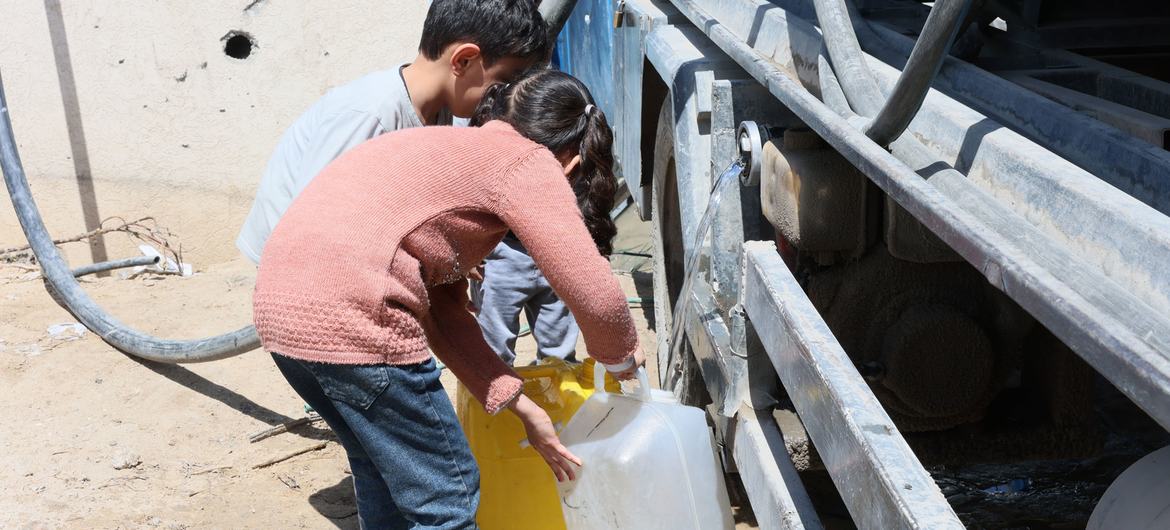
The agency further noted that drinking water access for one million people, including 400,000 children, has dropped from 16 litres per person per day to just six.

If fuel runs out, it could plunge to below four litres, forcing families to use unsafe water and increasing the risk of disease outbreaks, especially among children.

Ensure basic needs

“For the sake of more than one million children in the Gaza Strip, we urge the Israeli authorities to ensure, at a minimum, people’s basic needs are met, in line with its obligations under international humanitarian law,” said Mr. Beigbeder.

“This includes their legal responsibility to ensure that families are supplied with the food, medical and other essential supplies they need to survive.”

Meanwhile, UNICEF and partners are maintaining a critical presence in Gaza.

The agency continues to call on the parties to cease hostilities and reinstate the ceasefire, stressing that humanitarian aid and commercial goods mut be allowed to enter and move freely across the Gaza Strip.

End of eternal ice: Many glaciers will not survive this century, climate scientists say

Together with ice sheets in Greenland and Antarctica, glaciers lock up about 70 per cent of the world’s freshwater reserves. They are striking indicators of climate change as they typically remain about the same size in a stable climate.

But, with rising temperatures and global warming triggered by human-induced climate change, they are melting at unprecedented speed, said Sulagna Mishra, a scientific officer at the World Meteorological Organization (WMO).

Hundreds of millions of livelihoods at risk

Last year, glaciers in Scandinavia, the Norwegian archipelago of Svalbard and North Asia experienced the largest annual loss of overall mass on record. Glaciologists determine the state of a glacier by measuring how much snow falls on it and how much melt occurs every year, according to UN partner the World Glacier Monitoring Service (WGMS) at the University of Zurich.

In the 500-mile-long Hindu Kush mountain range, located in the western Himalayas and stretching from Afghanistan to Pakistan, the livelihoods of more than 120 million farmers are under threat from glacial loss, Ms. Mishra explained.

The mountain range has been dubbed the “third pole” because of the extraordinary water resources it holds, she noted.

‘Irreversible’ retreat

Despite these vast freshwater reserves, it may already be too late to save them for future generations.

Large masses of perennial ice are disappearing quickly, with five out of the past six years seeing the most rapid glacier retreat on record, according to WMO.

The period from 2022 to 2024 also experienced the largest-ever three-year loss.

“We are seeing an unprecedented change in the glaciers,” which in many cases may be irreversible, said Ms. Mishra.

Ice melt the size of Germany

WGMS estimates that glaciers, which do not include the Greenland and Antarctica ice sheets, have lost more than 9,000 billion tonnes of mass since 1975.

“This is equivalent to a huge ice block of the size of Germany with a thickness of 25 metres,” said WGMS director Michael Zemp. The world has lost 273 billion tonnes of ice on average every year since 2000, he added, highlighting the findings of a new international study into glacier mass change.

“To put that into context, 273 billion tonnes of ice lost every year corresponds about to the water intake of the entire [world] population for 30 years,” Mr. Zemp said. In central Europe, almost 40 per cent of the remaining ice has melted. If this continues at the current rate, “glaciers will not survive this century in the Alps.”

Echoing those concerns, WMO’s Ms. Mishra added that if emissions of warming greenhouse gases are not slowed “and the temperatures are rising at the rate they are at the moment, by the end of 2100, we are going to lose 80 per cent of the small glaciers” across Europe, East Africa, Indonesia and elsewhere.

A trigger for large-scale floods

Glacial melt has immediate, large-scale repercussions for the economy, ecosystems and communities.

The latest data indicates that 25 to 30 per cent of sea level rise comes from glacier melt, according to the World Glacier Monitoring Service.

Melting snowcaps are causing sea levels to rise about one millimetre higher every year, a figure that might seem insignificant, yet every millimetre will flood another 200,000 to 300,000 persons every year.

“Small number, huge impact,” glaciologist Mr. Zemp said.

Glacier cumulative mass balance change since 1970.

Everyone is affected

Floods can affect people’s livelihoods and compel them to emigrate from one place to another, WMO’s Ms. Mishra continued.

“When you ask me how many people are actually impacted, it’s really everyone,” she stressed.

From a multilateral perspective, “it is really high time that we create awareness, and we change our policies and…we mobilise resources to make sure that we have good, policy frameworks in place, we have good research in place that can help us to mitigate and also adapt to these new changes,” Ms. Mishra insisted.

A day to consider world’s glaciers

Providing added momentum to this campaign, the World Day for Glaciers on 21 March aims to raise awareness about the critical role that these massive frozen rivers of snow and ice play in the climate system. It coincides with World Water Day.

To mark the occasion, which is one of the highlights of the 2025 International Year of Glaciers’ Preservation, global leaders, policymakers, scientists and civil society representatives are due to gather at UN Headquarters in New York to highlight the importance of glaciers and to boost worldwide monitoring of the cryospheric processes of freezing and melting that affect them.

WGMS’s Mr. Zemp, who also teaches glaciology at the University of Zurich, is already preparing for a world without glaciers.

“If I think of my children, I am living in a world with maybe no glaciers. That’s actually quite alarming,” he told UN News.  

“I really recommend going with your children there and having a look at it because you can see the dramatic changes that are going on, and you will also realise that we are putting a big burden on our next generation.”

Scientists collecting data on South Cascade Glacier in the US state of Washington.

Glacier of the Year

This year’s Glacier of the Year 2025 is South Cascade Glacier in the US state of Washington.

The body of ice, which has been continuously monitored since 1952, provides one of the longest uninterrupted records of glaciological mass balance in the western hemisphere.

“South Cascade Glacier exemplifies both the beauty of glaciers and the long-term commitment of dedicated scientists and volunteers who have collected direct field data to quantify glacier mass change for more than six decades,” said Caitlyn Florentine, from the U.S. Geological Survey.