About Arun Kumar N

Arun has been associated with India International Times since 2018 and he has been a key reporter in covering science and space related stories. He can be reached at arunKnn@indiainternationaltimes.com.

Millions displaced, health system in ruins as Sudan war fuels famine

With fighting showing no sign of abating and humanitarian access extremely limited, the crisis in Sudan has become one of the world’s largest emergencies, the UN Office of the High Commissioner for Refugees (UNHCR) warned on Monday.

“This is a very, very sad milestone,” Mamadou Dian Balde, UNHCR Regional Director for East Africa said, marking two years since the outbreak of war.

We are seeing massive violations, massive displacements and a devastating impact on millions of people.

A humanitarian catastrophe

The war, which erupted in April 2023 between the Sudanese Armed Forces (SAF) and the paramilitary Rapid Support Forces (RSF), has triggered a full-blown humanitarian catastrophe.

More than half the population – around 25 million people – require humanitarian assistance and protection, but funding shortfalls and insecurity have left vast swaths of the country beyond reach.

The UNHCR-led $1.8 billion Regional Refugee Response Plan for 2025 – which aimed to support 4.8 million refugees and host community members – remains only 10 per cent funded, Mr. Balde said, jeopardizing essential services such as food, shelter, education and healthcare.

“Communities that have very little are sharing what they have with the refugees. It is an extraordinary show of solidarity,” he added, urging the international community to step up support for the most vulnerable across the region.

Thousands of lives at risk

Hunger has reached catastrophic levels in Sudan, with famine confirmed in 10 areas and 17 more at risk, according to the UN World Food Programme (WFP).

In some areas, emergency food assistance is the only barrier preventing starvation. However, vital operations are constrained by insecurity and lack of funds.

Without immediate assistance, especially in famine or famine-risk areas, thousands of lives are at risk,” said Makena Walker, WFP Acting Country Director in Sudan.

“We can scale up – but we need all parties to guarantee safe, unhindered access for humanitarian convoys,” she added.

© UNICEF/Ahmed Mohamdeen Elfatih

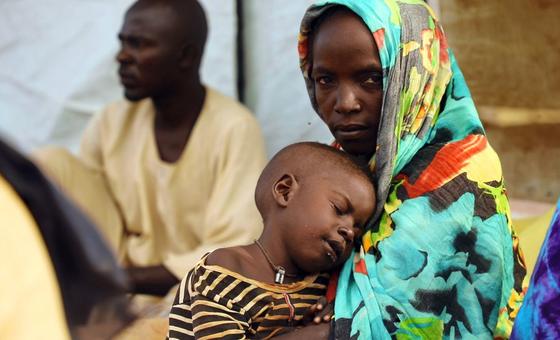
A mother sits alongside her eight-year-old daughter at a hospital in Sudan.

Children hit hardest

Children remain among the hardest hit.

According to the UN Children’s Fund (UNICEF), child casualties this year have surged by 83 per cent compared to early 2024. Children are also at severe risk of sexual and gender-based violence or being forced into armed groups, on top of already losing out on education.

In addition, an estimated 146,000 children are projected to suffer from severe acute malnutrition this year, leaving them up to 11 times more likely to die than a well-nourished child.

A public health emergency

The crisis has also spiralled into a public health emergency, with over 20.3 million people now in urgent need of medical care. Cholera, measles, malaria and dengue are spreading rapidly across two-thirds of Sudan’s states, with cholera alone claiming over 1,500 lives.

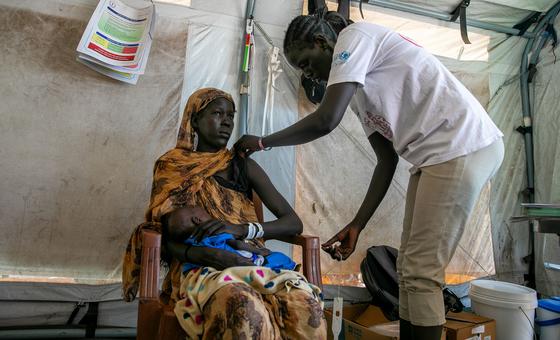
This situation is unravelling against a health infrastructure on the brink of collapse: 38 per cent of hospitals in the worst affected regions are non-functional and the remaining only partially operational, according to the UN World Health Organization (WHO).

Attacks on healthcare have surged, with 156 attacks verified over the past two years, resulting in hundreds of deaths and injuries.

“In addition to being a famine crisis, the humanitarian situation in Sudan is also a protection and health crisis,” said Shible Sahbani, WHO Representative in the country.

The UN health agency is determined to continue working to improve health access for Sudan’s people. However, recent funding cuts have forced WHO to scale back operations, potentially affecting health services.

If funding does not flow, 4.7 million people targeted for health interventions this year will be affected. Services at 335 health facilities will also have to be reduced, including trauma and emergency care.

© UNICEF/Mohammed Abdulmajid

A woman carries water to her shelter in a camp for internally displaced persons in eastern Sudan.

Working against the odds

Despite the challenges, UN humanitarians and partners continue their efforts to reach the most vulnerable communities with lifesaving assistance.

Since the war began, WFP has provided over 13 million people with food and nutrition support. For its part WHO, has supported over one million people with health services, treated 75,000 severely malnourished children and helped vaccinate 11.5 million children against polio and measles.

But aid workers warn the situation is deteriorating fast, particularly in the states of Darfur and parts of Khartoum and Al-Jazirah (also spelled Gezira), where active fighting and sieges are cutting civilians off from assistance.

Mr. Balde reiterated the urgent need for the international community to help silence the guns, “we call for peace, protection and sustained support – [only then] normalcy can return, and refugees can return home.

Gaza faces deepening crisis as aid stocks dwindle

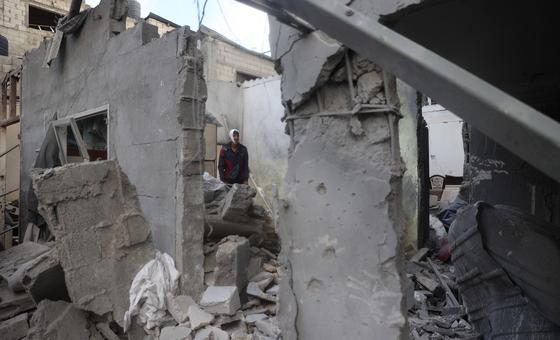
More than 500,000 people are reported to have been newly displaced since 18 March, many of them uprooted multiple times due to ongoing military operations across the Gaza Strip.

Conditions on the ground are deteriorating rapidly, with critical shortages in basic supplies and growing malnutrition, especially among children.

“Tents are no longer available for distribution,” UN spokesperson Stéphanie Tremblay told journalists at a regular news briefing in New York.

She noted that families in Bani Suhaila, Khan Younis Governorate, recently received only minimal quantities of blankets and tarpaulins. Displaced populations in Khan Younis reported overcrowded shelters and a dire lack of food, water, and medicine.

Impact on children

Children are among the worst affected. In March, the number of children receiving supplementary feeding declined by more than two-thirds, according to humanitarian partners, raising concerns of acute malnutrition amid collapsing health services.

In addition, hospital operations are further strained by limited access to medical supplies.

“Humanitarians are finding it increasingly difficult to operate as no aid has entered Gaza for now. We are now in the seventh week of this and as military operations expand,” said Ms. Tremblay, adding that Israeli authorities continue to deny planned coordinated missions.

“Today, only two out of six planned humanitarian movements that were coordinated with the Israeli authorities, were facilitated. The remaining four were denied, including one mission to retrieve fuel from Rafah, which as you can imagine is urgently needed.”

Despite insecurity and access limitations, humanitarian organizations continue efforts to help vulnerable families. Community kitchens across Gaza prepare more than one million meals daily, but that remains insufficient for most of the 2.1 million people in the enclave who rely on aid for basic sustenance.

Myanmar earthquake latest: Entire communities flattened, aid teams say

Speaking to journalists from Yangon on Tuesday, Julia Rees, Deputy Representative of the UN Children’s Fund (UNICEF) in the country described seeing massive needs rising by the hour, after a 7.7 magnitude quake.

“Entire communities have been flattened,” she said, with children and families sleeping out in the open with no homes to return to.

“I met children who were in shock after witnessing their homes collapsed or the death of a family member… some have been separated from their parents and others are unaccounted for,” she explained.

Some 72 hours after the quake rocked Mandalay and Sagaing regions as well as Nay Pyi Taw and southern Shan state, the death toll has risen to around 2,000, according to the country’s military junta, with hundreds unaccounted for and thousands injured.

“The window for lifesaving response is closing,” Ms. Rees said, while across the affected areas, families face acute shortages of clean water, food and medical supplies. But conditions remain extremely challenging as aid teams are working “without electricity or sanitation, sleeping outside, like the communities we serve”.

International response

The UN Office for the Coordination of Humanitarian Affairs (OCHA) said that local search and rescue teams, supported by international rescue units from a number of countries including China, India, Russia, Thailand and Bangladesh, have been “intensifying their efforts” particularly in central Myanmar, which has continued to experience aftershocks.

Relief chief Tom Fletcher, who leads OCHA, reiterated in a post on X that apart from heavy damage to infrastructure the response “has been hampered by lack of funding.” He said the UN is in contact with Myanmar authorities on how the international community can do more, with overseas aid budgets cut in Washington and many European capitals.  

The UN’s top humanitarian official on the ground, Marcoluigi Corsi, freshly back from a visit to the country’s capital Nay Pyi Taw said that as the critical window for finding survivors under the rubble was narrowing, conditions in the affected areas continued to deteriorate.

“You have no electricity, you have no running water,” he said, while people were battling the summer heat. “Often there are aftershocks and people are scared to go inside their homes,” he added.

Hospitals overwhelmed

Dr. Fernando Thushara, the representative of the World Health Organization (WHO) in Myanmar, said that in Nay Pyi Taw, he saw hospitals “overwhelmed with patients”.

“The medical supplies were running dry. There were electricity disruptions in some hospitals… and shortages of running water,” he said, adding that in some cases power generators were not working and hospitals were short on fuel.

Dr. Thushara warned that a lack of fresh water and sanitation could fuel outbreaks of infectious diseases “unless we control them very quickly”.

He recalled that a few months back, several townships in Mandalay had been affected by cholera. About 800 cases of the water-borne disease had been reported until February across nine states and regions in Myanmar, while other infectious diseases such as dengue, hepatitis, malaria may spread further.

The dire health situation is not the only crisis confronting the people of  Myanmar. UN refugee agency (UNHCR) spokesperson Babar Baloch stressed that the country is “reeling” from four years of conflict sparked by a military coup in 2021, while the UN’s Mr. Corsi said that in the past few years it has suffered a cyclone and massive flooding.

Mr. Baloch spoke of a “double tragedy” for the people of Myanmar, highlighting the fact that even before the devastating earthquake hit, all the affected areas already hosted 1.6 million displaced people.

Mr. Corsi stressed that the disaster-affected communities’ resilience is now highly compromised. Close to 20 million people across the country were already in need of humanitarian assistance before the earthquake hit and over 15 million were going hungry. 

Over three months into the year, the UN’s $1.1 billion humanitarian appeal for Myanmar remains only five per cent funded. “This is time…for the world to step up and support the people of Myanmar,” he concluded.

Click here to donate to the UN emergency appeal for Myanmar

Thousands of Gaza patients waiting for urgent medical evacuation

On Monday, World Health Organisation (WHO) Representative Rik Peeperkorn told UN News about the desperate conditions he had seen at Al-Ahli before the attack, and the severe restriction on movement that is preventing thousands being evacuated for medical treatment outside of Gaza.

“I was in Gaza several weeks ago and I came out in early March, just before the aid blockade started and the attacks started up again.

When I was there, during the ceasefire, we were organising polio vaccinations and medevacs (medical evacuations), and we stocked up on essential medicine and medical supplies. This was also the only time there were proper food stocks in Gaza.

There was almost a ray of hope among all the misery. Places I’d been before, like Rafah in the south, or Jabalia in the north, were utterly devastated wastelands, but people, including our own staff, were going back to their homes, trying to repair destroyed houses or building makeshift camps. You saw commercial activities restarting, and a choice of food.

But then, of course, with the blockade, food, water and essential medicines very quickly began running out. Even though we stocked up during the ceasefire, we are now critically low on supplies and it is challenging to keep hospitals even partly open.

We have completely run out of therapeutic milk, antibiotics, to treat severe infections, trauma painkillers, insulin, ambulance spare parts, oxygen tanks etc.

Medical evacuation of patients from Gaza (file)

A couple of days before the attack on Al Ahli, a medical specialist there told us that the hospital was already overflowing because it’s one of the key hospitals in the north for trauma patients [those who have suffered severe and life-threatening injuries], and that they were forced to perform surgery under questionable sterile conditions.

They were lacking enough surgical gowns, drapes or gloves. They even had to wear the same gloves from one operation to the next. Because of the lack of equipment, surgeries could take hours, increasing the risk of permanent disability or amputations.

The staff asked us for the supplies that we have in our two warehouses in the south of Gaza, but we were not allowed.

This aid blockade needs to be lifted, and we have to get back to an arrangement whereby we can have humanitarian corridors throughout Gaza, without being denied or delayed entry. Even when a war is going on, humanitarian supplies should be allowed in and aid workers should be able to do their work.

Today I spoke to my team leads in Gaza, who have been to Al-Shifa hospital. Al-Shifa, now the major surgical and trauma centre for the north, is completely overwhelmed and under-supported. We are looking at the possibility of getting some patients from Al-Shifa to the south but everything is complex.

Far too few patients have been able to leave Gaza for the urgent care they so desperately need. We estimate that up to 12,000 patients need medical evacuation but, since the blockade we have only been able to evacuate 121 people, including 73 children.

“We call for the immediate resumption of medical evacuation through all possible routes. That should happen now.”

Gaza: Alongside conflict, an information war is still happening, warns UNRWA chief

“Palestinian journalists continue to do heroic work, paying a heavy price; 170 have been killed to date,” said UNRWA Commissioner-General Philippe Lazzarini. “The free flow of information and independent reporting are key to facts and accountability during conflicts.”

In his appeal, Mr. Lazzarini noted that in the more than 18 months since war in Gaza began, sparked by unprecedented Hamas-led terror attacks on Israel, reliable reporting has been overtaken by propaganda and “dehumanizing” messages about the war.

Spike in attacks, censorship

Ajith Sunghay, head of the UN human rights office, OHCHR, in the Occupied Palestinian Territory, also expressed deep concerns about the dangers facing journalists there – although the situation “has always been very difficult”, he maintained.

“They have been subject to oppression in many instances we’ve recorded – killings and censorship and detention,” he told UN News. “But we have also recorded a massive spike in such operations – attacks, killings, detention and censorship – since 7 October 2023.”

Mr. Sunghay noted that OHCHR data indicates that 209 journalists have been killed in Gaza since 7 October 2023, the higher number reflecting all journalists killed on duty or at home.

The situation for journalists in the West Bank is also critical, with reports of arrested reporters receiving simulated beatings and threats of sexual violence against women journalists by Israeli authorities, the OHCHR office noted.

“Journalists are civilians and are protected from attacks under international humanitarian law unless they’re directly participating in hostilities,” Mr. Sunghay said, adding that Palestinian authorities were also reportedly responsible for “oppression” of media professionals. “The intentional killings of journalists is a war crime, and this is something that we have highlighted on several occasions.”

All aid still cut

In a related development, other UN agencies issued fresh alerts about the mounting impact of Israel’s six-week-old decision to cut off all food and other supplies from entering the shattered territory. Fuel is also included in the embargo and supplies are dwindling, with “bakeries shutting, hospitals running out of medicine” and gasoline for generators to keep their machinery working, said UNRWA.

Since Israeli bombing of Gaza resumed on 18 March, about 500,000 people have been newly displaced “or uprooted once more”, said spokesperson for the UN Secretary-General Stephanie Tremblay. Her comments came as Israel’s defence minister reportedly said that troops will remain in Gaza’s so-called security zones indefinitely, along with Lebanon and Syria.

Aid deliveries also continue to be impacted by Israeli refusals, with only two out of six missions that had been coordinated with the Israeli authorities allowed to go ahead on Wednesday. “The remaining four were denied” including one mission to retrieve urgently needed fuel from Rafah, noted Ms. Tremblay, citing the UN aid coordination office, OCHA.

Some 30 per cent of the Gaza Strip is now a security buffer where Palestinian civilians cannot live, the Israeli military reportedly announced.

Positive developments

Amid ongoing Israeli bombardment, military manoeuvres and evacuation orders, UN aid teams highlighted their continuing efforts to help the people of war-torn Gaza, despite encountering immense difficulties.

  • Health centre reopens: Approximately 1,300 patients attended a newly reopened UNRWA health centre in Maan, southern Gaza, after it was severely damaged in December 2023 during an Israeli military incursion into east Khan Younis. The facility provides outpatient services, non-communicable disease care, medications, vaccinations, antenatal and postnatal health care. It also offers physiotherapy and psychosocial support.
  • A blood donation drive for local hospitals is also underway in southern Gaza at UNRWA medical points amid an urgent need for thousands of blood units for life-saving operations. “Medicines and medical consumables are rapidly running out in Gaza, including critically low levels of supplies and blood units for maternal and child health,” the UN agency said.
  • Water well flowing again: Repairs have been successful to a water well that serves around 20,000 displaced people in Jabalia camp and others sheltering in seven UNRWA shelters in the surrounding area, the UN agency said on Thursday. UNRWA now operates five water wells: three in Jabalia, one in Gaza City and one in Khan Younis. Recycled and reused parts made the project possible. According to the UN Children’s Fund (UNICEF), around one million people, including 400,000 children, have gone from having access to 16 litres of drinking water per person per day, to just six.
  • Daily waste removal continues in Gaza with around 2,500 cubic metres of water and 230 tonnes of solid waste collected every day. This represents about 40 per cent of overall needs.

In its latest update, OCHA said that at least 51,000 Palestinians have been killed since the start of the war on 7 October 2023 and 116,343 Palestinians injured. This includes 1,630 people killed and 4,302 injured since the escalation of hostilities on 18 March, it said, citing Gaza health authorities

Doctors recount never-ending incidents of patients they could have saved, if medical supplies were available
OCHA

“The lack of heavy machinery and equipment hinder rescue efforts of the wounded and missing while casualties continue to fall due to continued bombardment by Israeli forces, including on tents for displaced people,” OCHA said.

Meanwhile, the aid community’s Nutrition Cluster has warned that the rapid deterioration of children’s nutrition status in Gaza “is already visible”. 

In March alone, 3,696 children were newly admitted for acute malnutrition out of 91,769 children screened. This marks a sharp increase compared with February, when 2,027 children were admitted out of a total of 83,823 screened. 

Countries reach historic deal to cut shipping emissions

The framework – agreed during the just-concluded meeting of the UN International Maritime Organization (IMO) Marine Environment Protection Committee – aims for net-zero emissions from the sector by 2050 and will be formally adopted in October before coming into force in 2027.

They will apply to large ocean-going vessels over 5,000 gross tonnage, which collectively account for 85 per cent of carbon dioxide emissions from the marine shipping fleet.

IMO Secretary-General Arsenio Dominguez hailed the breakthrough, emphasising the collaborative spirit that led to the deal.

“The approval of draft amendments to MARPOL Annex VI mandating the IMO net-zero framework represents another significant step in our collective efforts to combat climate change, to modernize shipping and demonstrates that IMO delivers on its commitments.”

MARPOL Annex VI refers to provisions in the International Convention for the Prevention of Pollution from Ships, specifically addressing air pollution.

It already includes mandatory energy efficiency requirements for ships and has 108 Parties covering roughly 97 per cent of the world’s merchant shipping fleet by tonnage.

Intense negotiations

Negotiations – which culminated on Friday in London – were particularly challenging.

According to media reports, around a dozen countries – including the United States – were opposed to the framework. The proposal was ultimately put to a vote and passed.

A turning point for the shipping industry

The framework introduces a dual approach: a global fuel standard that will progressively lower the annual greenhouse gas fuel intensity of marine fuels, and a greenhouse gas pricing mechanism requiring high-emitting ships to pay for their excess pollution.

Under the new system, ships that exceed emissions limits will need to acquire remedial units to offset their excess pollution. Meanwhile, vessels operating with zero or near-zero emissions will be eligible for financial rewards, creating a market-driven push toward cleaner maritime transport.

A cargo ship moored at a port in Europe.

Supporting vulnerable countries

A key element of the new framework is the IMO Net-Zero Fund, which will collect revenues from the carbon pricing mechanism.

These funds will support innovation, research, infrastructure and transition initiatives in developing countries.

It will also be used to mitigate negative impacts on vulnerable nations, such as small island developing States (SIDS) and least developed countries (LDCs), which bear the brunt of both climate change and economic pressures in the shipping sector.

Next steps: Adoption and implementation

The draft regulations will undergo formal adoption in October 2025.

If ratified during the IMO session, as expected, the measures will enter into force in 2027, giving the industry time to adapt to new requirements and invest in alternative fuels and technologies.

The International Maritime Organization

The International Maritime Organization (IMO) is the UN specialized agency responsible for the safety and security of global shipping and the prevention of marine and atmospheric pollution by ships.

Established in 1948 and headquartered in London, it develops international treaties, such as the International Convention for the Safety of Life at Sea (SOLAS) or the International Convention for the Prevention of Pollution from Ships (MARPOL).

Israeli strike on hospital ‘further cripples’ Gaza’s fragile health system

Several staff members, including two nurses, were injured in the strike on the Kuwaiti Field Hospital in Khan Younis according to Gaza’s Ministry of Health and health agencies, UN Spokesperson Stéphane Dujarric told journalists at the regular news briefing in New York.

The incident follows a separate strike on Sunday on Al-Ahli Arab Hospital in Gaza City, which had been a key facility treating victims of Israeli airstrikes in the north.

“The latest strikes on hospitals further cripples Gaza’s health care system,” Mr. Dujarric said.

“There are currently very few beds available in hospitals and patients are being accommodated in tents.”

He added that according to the UN World Health Organization (WHO), only 21 of Gaza’s 36 hospitals remain “just partially functional” and almost all have sustained some damage in the conflict.

He further reported that, according to health partners, there is an urgent need for thousands of blood units for life-saving operations.

Furthermore, there are serious concerns that food warehouses have reached “very low levels” as no aid has entered Gaza in weeks.

Meanwhile, amid the devastation a rare moment of relief came as humanitarians in Gaza successfully installed a backup generator at Kamal Adwan Hospital to power a water system producing 20 cubic metres of clean water per hour.

Mr. Dujarric reiterated the UN’s call on all parties to ensure that civilians are respected and always protected, and that they have the basic necessities to survive.

“All hostages must be released immediately and unconditionally, and a ceasefire must be restored and renewed without delay,” he added.

UN chief urges ‘utmost restraint’ amid escalating violence in Yemen

At least five humanitarian workers were said to be among those injured, and significant damage was reported to port infrastructure. There are also fears of oil leaks into the Red Sea, raising environmental concerns.

In a statement issued on Saturday by his spokesperson, António Guterres emphasised that international law, including international humanitarian law, “must be respected at all times.”

He urged all parties to respect and protect civilians and civilian infrastructure.

The Secretary General also voiced deep concern over ongoing missile and drone attacks by Houthi forces against Israel and vessels in the Red Sea, calling on the group to cease such attacks immediately.

“The Security Council resolution 2768 (2025) related to Houthi attacks against merchant and commercial vessels must be fully respected,” he stressed.

Mr. Guterres also warned of the growing risk of a broader regional escalation and urged all parties to exercise “utmost restraint.”

He also reiterated his demand for the “immediate and unconditional” release of all UN and other personnel arbitrarily detained by the Houthis.

Partnerships, increased climate investment crucial for sustainable transition, says UN deputy chief

Marking the tenth anniversary of both the UN Sustainable Development Goals (SDGs) and the landmark Paris Agreement, Ms. Mohammed highlighted the significant progress made over the past decade, while also acknowledging the substantial challenges that remain.

A decade of progress and challenges

In her remarks to the Partnership for growth Summit, known by the shorthand ‘P4G’, which runs through Thursday in the Viet Nam capital, Ms. Mohammed reflected on the progress achieved since the adoption of the SDGs and the Paris Agreement.

However, she stressed the stark reality that the world is still far from where it needs to be.

“As I speak, there are 750 million people who do not have access to electricity, and two billion people have no clean cooking solutions,” she stated. She also pointed out the increasing air pollution affecting children worldwide due to fossil fuel emissions.

Hope amid adversity

Despite the daunting statistics, the UN deputy chief expressed hope, drawing inspiration from the words of Vietnamese Zen Master Thich Nhat Hanh: “Hope is important because it can make the present moment less difficult to bear. If we believe that tomorrow will be better, we can bear a hardship today.” 

She identified three sources of hope:

  • Global Commitment: The presence of representatives from governments, businesses, investors, and civil society at the summit demonstrated a collective commitment to building more sustainable, resilient, inclusive, and prosperous societies;
  • Collaboration: Initiatives like the Just Energy Transition Partnerships and P4G’s public-private partnerships, which exemplify the power of collaboration in transforming energy, water, and food systems and;
  • Economic Imperatives: The economic benefits of climate action; every dollar invested in climate adaptation can generate a return of up to 10 times.

She also pointed out the significant cost reductions in wind, solar, and battery storage technologies, making them the cheapest sources of new electricity in many markets.

An economic case for climate action

Ms. Mohammed underscored the financial impact of climate disasters, which caused $320 billion in damages worldwide last year.

She emphasized that the climate crisis is draining resources needed for development but also presented a compelling economic case for climate action.

“Renewables accounted for 92.5 per cent of all new power capacity added globally last year, and clean power surpassed 40 per cent of global electricity generation for the first time,” she noted.

Deputy Secretary-General Amina Mohammed delivers remarks at the P4G Summit in Hanoi, Viet Nam.

Viet Nam as a leading example

Highlighting Viet Nam’s leadership in clean energy, Ms. Mohammed praised the country’s bold shift from coal, which is not only combating climate change but also promoting a fairer and more equal future. She called this moment a “rare opportunity” to usher in a new economic era that ensures energy access, affordability, and security while creating zero-carbon, disaster-resilient, and sustainable societies.

Call to action

The UN deputy chief urged government leaders to accelerate the implementation of cost-effective solutions and drive change through smart policies and reforms at all levels.

She emphasized the importance of the next round of Nationally Determined Contributions (NDCs) – national climate action plans – in aligning energy and development plans with climate goals.

“Investment is key,” she stressed, citing the need for $2.4 trillion per year to flow emerging and developing economies outside China by 2030 to keep the 1.5-degree target within reach and deliver on the SDGs.

Addressing corporate, financial, and civil society leaders, Ms. Mohammed called for continued innovation, collaboration, and the creation of new models and partnerships to mobilize finance at scale. She encouraged leaders to turn obstacles into business opportunities and drive real investments in climate and sustainable development.

In closing, Ms. Mohammed reaffirmed the United Nations’ commitment to supporting global efforts towards a more prosperous future for all. “The United Nations stands ready to support your efforts every step of the way and keep the hope of a more prosperous future for all alive,” she concluded.

Countries finalize historic pandemic agreement after three years of negotiations

Developed after over three years of negotiations under the auspices of the World Health Organization (WHO), the draft outlines a framework for strengthening international collaboration, equity and resilience in the face of future global health threats.

The nations of the world made history in Geneva today,” said WHO Director-General Tedros Adhanom Ghebreyesus.

“In reaching consensus on the Pandemic Agreement, not only did they put in place a generational accord to make the world safer. They have also demonstrated that multilateralism is alive and well and that in our divided world – nations can still work together to find common ground and a shared response to shared threats.

‘One health’ approach

Negotiations began in December 2021 at the height of the COVID-19 pandemic, when WHO member States agreed on the urgent need for a legally binding international instrument and established the Intergovernmental Negotiating Body (INB).

The process involved 13 formal rounds of negotiations, many of which were extended into the early hours, culminating in Wednesday’s consensus after a final overnight session.

Key elements of the proposed agreement include a commitment to a “One Health” approach to pandemic prevention, stronger national health systems, setting up a coordinating financial mechanism, and creating a globally coordinated supply chain and logistics network for health emergencies.

The draft also proposes a new pathogen access and benefit-sharing system, increased support for technology and knowledge transfer as well as capacity-building, and outlines a skilled, trained and multidisciplinary national and global health emergency workforce.

National sovereignty upheld

The text further affirms national sovereignty in public health decisions. It states explicitly that nothing in the agreement gives WHO the authority to mandate health measures such as lockdowns, vaccination campaigns, or border closures.

The draft will now be submitted for consideration to the 78th World Health Assembly – UN’s highest forum for global health – set to begin on 19 May. If adopted, it will be subject to ratification by individual nations.

According to media reports, the United States did not participate in the final round of negotiations, following its January announcement to withdraw from the global health body, and would not be bound by the pact.

Five Facts: Proposed pandemic agreement.

A breakthrough for health equity

Speaking at the conclusion of the meeting, WHO Director-General Tedros praised the negotiating teams and the INB leadership for their perseverance and shared purpose.

This achievement is not just a diplomatic success,” he said. “It reflects your resilience, unity and unwavering commitment to the health and wellbeing of people everywhere.”

INB Co-Chair Precious Matsoso of South Africa called the outcome a breakthrough for health equity.

“The negotiations, at times, have been difficult and protracted. But this monumental effort has been sustained by the shared understanding that viruses do not respect borders – that no one is safe from pandemics until everyone is safe,” she said.

Fellow Co-Chair Anne-Claire Amprou of France added that the agreement lays the foundation for a stronger, more equitable global health security architecture.

“This is a historic agreement for health security, equity and international solidarity,” she said.

Learning from COVID-19, looking to the future

The agreement emerges in the aftermath of the COVID-19 pandemic, which exposed critical vulnerabilities in global health systems and stark inequalities in access to diagnostics, treatments, and vaccines. The virus claimed nearly seven million lives worldwide, severely disrupted economies, and overwhelmed healthcare services across the globe.

At the same time, the pandemic triggered the largest vaccination campaign in history, with over 13.3 billion doses administered globally by April 2023.

Looking ahead, Tedros emphasised the agreement’s long-term significance.

“The importance of this agreement goes beyond our current challenges,” he said.

It is vital for future generations – for our children and grandchildren. By building a strong framework for pandemic preparedness and response, we ensure they inherit a safer and healthier world.

A view of the closing session of Intergovernmental Negotiating Body (INB).

Myanmar: 'The pain of earthquake-affected women and girls has shocked me'


On March 28, a magnitude 7.7 earthquake in Myanmar brought a terrible destruction with them. Many states and regions of the country including Mandale, Sagaiing, Magway, Bago have lost mass and property, and huge human needs are steeped. The United Nations Agency (UNFPA) for sexual and reproductive health, along with its partners organizations in this difficult time, is engaged in providing life -saving help to the needy population, especially women and girls.

NASA’s Curiosity rover unearths largest organic molecules ever detected on Mars

In a stunning new development, NASA scientists have confirmed that the Curiosity rover has discovered the largest organic molecules ever found on the Martian surface. The groundbreaking analysis of an existing rock sample, “Cumberland,” within Curiosity’s onboard lab revealed the presence of decane, undecane, and dodecane – compounds with 10, 11, and 12 carbon atoms respectively.

These molecules are believed to be fragments of preserved fatty acids, key building blocks of life as we know it on Earth. While non-biological origins are possible, the size of these newly detected molecules significantly boosts the potential for the preservation of complex biosignatures on the red planet.

This discovery builds upon years of tantalizing findings by Curiosity, including the detection of smaller organic molecules, organic salts, and the measurement of total organic carbon comparable to Earth’s most extreme environments. The new data suggests that larger, more complex organic compounds could have survived for billions of years despite harsh Martian conditions.

The network of cracks in this Martian rock slab called “Old Soaker” may have formed from the drying of a mud layer more than 3 billion years ago. The view spans about 3 feet (90 centimeters) left-to-right and combines three images taken by the MAHLI camera on the arm of NASA’s Curiosity Mars rover.
Credits: NASA/JPL-Caltech/MSSS

Lead author Caroline Freissinet emphasized the significance, stating, “Our study proves that, even today, by analyzing Mars samples, we could detect chemical signatures of past life—if it ever existed on Mars.”

Scientists are particularly intrigued by the carbon chain length of the presumed fatty acids (11-13 carbons), as non-biological processes typically yield shorter chains. This raises the exciting possibility of longer-chain fatty acids, often associated with biological activity, being present.

While the exact origin of these molecules remains under investigation, this major breakthrough reinforces the critical need for Mars Sample Return missions to conduct in-depth analysis with advanced Earth-based instruments.

“We are ready to take the next big step and bring Mars samples home to our labs to settle the debate about life on Mars,” declared Dr. Daniel Glavin.

This latest discovery marks a significant leap in our understanding of Martian organic chemistry and further fuels the compelling narrative that Mars may have once harbored the conditions necessary for life. The search for evidence of past life on the red planet has just intensified.

Ola Electric Shares Drop 3% to Rs.87.44 Amid Pricing Investigation and Regulatory Scrutiny

Shares of Ola Electric fell nearly 3% on Monday, marking the third straight session of decline, as the company faces scrutiny over its pricing practices. The Automotive Research Association of India (ARAI), under the Ministry of Heavy Industries, has asked the electric vehicle (EV) manufacturer to clarify recent price cuts on its S1 X 2 kWh electric scooter during a promotional sale.

Ola Electric’s stock closed at Rs 87.44 per share, continuing its decline from an all-time high of Rs 157.40. If the company fails to provide a satisfactory explanation to the ARAI, it could face legal action and may lose access to subsidies offered under the government’s PM Electric DRIVE Revolution in Innovative Vehicle Enhancement (PM E-DRIVE) scheme.

Reports suggest that if pricing violations are discovered, Ola Electric could face penalties in line with E-DRIVE guidelines. The probe adds to the growing list of regulatory challenges facing Bhavish Aggarwal’s EV firm.

Growing Consumer Complaints

In addition to the ARAI inquiry, Ola Electric has been hit with a notice from the Central Consumer Protection Authority (CCPA). The notice follows over 10,000 complaints filed with the National Consumer Helpline (NCH) over the past year, mostly related to poor after-sales service.

Ola Electric has been given 15 days to respond to the CCPA’s show-cause notice. The complaints range from unresolved technical issues to delays in refunds and subpar customer support.

The government has also directed Ola Electric to implement better consumer protections for its ride-hailing services, including offering customers the option to choose their preferred refund method and ensuring that proper invoices are provided for all auto rides booked through its platform. Since the beginning of 2024, over 2,000 complaints have been registered against Ola’s ride-hailing service, many citing discrepancies between the fare shown at booking and the amount charged.

The ongoing investigations and consumer complaints highlight the challenges Ola Electric faces in maintaining customer trust and complying with regulatory standards. As Ola continues to expand its EV portfolio, addressing these issues will be crucial for restoring investor confidence and ensuring long-term growth.

India’s Ship Recycling Industry To See 10% Growth by 2028: Report

India’s ship recycling industry is poised for substantial expansion, with an expected compound annual growth rate (CAGR) of 10% by 2028, positioning it as a key player in the global market. According to a report by CareEdge Ratings, India accounted for 33% of the global gross tonnage (GT) dismantled in 2023, placing it second only to Bangladesh, which handled 46% of global ship dismantling.

The industry is projected to grow to 3.8-4.2 million GT by 2025, up from an estimated 2.3-2.6 million GT in 2024. A major contributor to this growth is India’s robust infrastructure, particularly the Alang-Gujarat facility, one of the world’s largest ship recycling hubs with over 140 recycling yards.

India’s position in the global maritime sector is critical. Alongside Bangladesh, Pakistan, and Turkey, the country dominates more than 90% of global ship recycling activity. While contributions from other nations have been inconsistent, India has remained a steady leader in this field.

Market Insights and Future Potential

According to Sajni Shah, Assistant Director at CareEdge Ratings, several factors suggest a significant increase in ships entering the recycling market from 2025 onwards. These include the cooling-off of the Baltic Dry Index (BDI), stabilizing scrap prices, and a rise in obsolete ships. Additionally, countries with advanced infrastructure and green recycling capabilities are expected to capture a larger share of the global market in the future.

Despite the promising outlook, the industry faces challenges, particularly with fluctuating scrap prices. Prices for heavy melting scrap in Bhavnagar surged from Rs 28,800 per tonne in August 2020 to Rs 54,400 in April 2022, driven by supply chain disruptions and increased steel demand post-pandemic. By December 2023, prices had settled at Rs 39,900 per tonne, stabilizing between Rs 36,000 and Rs 44,000 per tonne throughout 2023.

The industry also grapples with safety and regulatory issues. For instance, in Bangladesh, ship recycling is often hazardous, with workers and nearby communities exposed to toxic materials that threaten their health and livelihood. This highlights the urgent need for stricter regulations and improved safety standards across the sector.

India’s ship recycling industry is set for impressive growth in the coming years, bolstered by strong infrastructure and increasing global demand. However, the industry’s long-term success will depend on implementing stringent regulations and ensuring the safety of workers and the environment. A balanced approach that prioritizes both economic development and sustainability will be key to unlocking the full potential of India’s ship recycling sector.

2024 Nobel Peace Prize Goes to Japan’s Anti-Nuclear Movement ‘Nihon Hidankyo’

As global nuclear powers continue modernizing their arsenals and tensions rise over potential use of these devastating weapons, the 2024 Nobel Peace Prize was awarded to Nihon Hidankyo, a Japanese grassroots organization of atomic bomb survivors. The group, comprised of survivors from Hiroshima and Nagasaki, has long advocated for the complete elimination of nuclear weapons.

The Norwegian Nobel Committee, which selects the Peace Prize laureates, praised Nihon Hidankyo for its relentless efforts to promote a world free from nuclear weapons. The committee stated that the organization has effectively demonstrated, through witness testimonies, that nuclear weapons must never be used again.

Nihon Hidankyo’s origins date back to the aftermath of the atomic bombings of Hiroshima and Nagasaki in August 1945, which killed an estimated 120,000 people instantly and claimed many more lives due to radiation in the following years. In 1956, survivors of the bombings, known as Hibakusha, alongside victims of nuclear tests in the Pacific, formed the Japan Confederation of A- and H-Bomb Sufferers Organisations. This group later became Nihon Hidankyo, the largest and most influential organization representing atomic bomb survivors.

The Nobel Committee emphasized that over the decades, Nihon Hidankyo has played a pivotal role in raising awareness about the catastrophic humanitarian consequences of nuclear weapons. Through personal accounts and active participation in international forums, the Hibakusha have helped establish a global “nuclear taboo,” a moral opposition to the use of nuclear weapons.

In recognizing Nihon Hidankyo’s work, the committee paid tribute to the survivors who, despite their physical and emotional suffering, have chosen to use their experiences to foster peace and disarmament. The organization has sent delegations to the United Nations, participated in peace conferences, and issued countless public appeals to keep nuclear disarmament on the global agenda.

While no nuclear weapon has been used in warfare for nearly 80 years—a fact the committee called “encouraging”—it warned that today the nuclear taboo is under threat. With nuclear powers upgrading their arsenals and new countries seeking to acquire these weapons, the risk of nuclear conflict has reemerged in international discourse.

The committee noted the urgency of this issue as the 80th anniversary of the Hiroshima and Nagasaki bombings approaches next year, underscoring the growing dangers posed by modern nuclear weapons, which are far more destructive than those used in 1945.

“The Hibakusha help us comprehend the unimaginable suffering caused by nuclear weapons,” the committee said, adding that Nihon Hidankyo’s work ensures that future generations will continue to carry forward the message of peace and nuclear disarmament.

In honoring Nihon Hidankyo, the Nobel Peace Prize recognizes not only the survivors of Hiroshima and Nagasaki but also their ongoing legacy of advocacy in the global fight for a nuclear-free world.

Festive Boom in E-commerce Sales Cross Rs 54,500 Crore in One Week

Indian e-commerce platforms recorded sales exceeding Rs 54,500 crore in the first week of the festive season, making up approximately 55% of the total sales projected for the upcoming month.

According to data from Datum Intelligence, a consumer technology market research firm, this marks a 26% increase in sales compared to the same period in 2023. The primary drivers of these sales were mobiles, electronics, and consumer durables, with home and general merchandise categories also contributing significantly. These categories accounted for 75% of the overall sales, while smartphones and TVs led purchases in tier 2 and tier 3 cities, making up over 70% of sales in these regions.

The festive shopping period, which began on September 26, will continue until November 3, concluding after Diwali. Overall sales during this period are expected to reach Rs 1 lakh crore.

Fashion, groceries, beauty, and personal care products have seen a notable surge in demand, with sales rising by 2-4 times compared to regular periods. Similarly, orders for toys, books, and kitchen essentials increased 2-5 times in the first week.

Shoppers are increasingly turning towards quick-commerce platforms, especially for lower-priced categories like groceries, beauty, and personal care. Key trends this festive season include the influence of Artificial Intelligence (AI), the rise of micro-influencers, and the growing popularity of quick-commerce in shaping consumer choices.

In a separate report, it is projected that more than 35 million smartphones will be sold during the festive period, marking a 3% year-on-year (YoY) growth in volume and a 9% YoY increase in value. The ultra-premium smartphone segment (priced above Rs 45,000) saw a 12% YoY growth during the initial week of sales, driven by strong performances from Apple and Samsung. The festive season typically accounts for 20-25% of the annual smartphone sales in India.

Noel Tata Named New Chairman of Tata Trusts Following Ratan Tata’s Demise

Noel Naval Tata, the newly-appointed Chairman of Tata Trusts, on Friday said he looks forward to carrying on the legacy of Ratan Naval Tata and the founders of the Tata Group.

Earlier, the Tata Trusts board met at a joint meeting held in Mumbai and took the unanimous decision to appoint Noel Tata, the half-brother of Ratan Tata, as the new Chairperson after the latter’s demise.

“I am deeply honoured and humbled by the responsibility that has been cast on me by my fellow Trustees. I look forward to carrying on the legacy of Mr. Ratan N. Tata and the Founders of the Tata Group,” said Noel Tata. “Founded more than a century ago, the Tata Trusts are a unique vehicle for undertaking social good. On this solemn occasion, we rededicate ourselves to carrying on our developmental and philanthropic initiatives and continuing to play our part in nation-building,” he added.

The Trustees condoled the demise of Ratan Tata, and recalled his yeoman services not only to the Tata Group but also to nation-building. In separate meetings held immediately, thereafter, it was unanimously decided to appoint Noel Tata as the Chairman of the various Trusts that constitute the Tata Trusts and also designate him as Chairman, Tata Trusts.

Noel Tata’s appointment comes into effect immediately. Noel Tata is known for his relatively low-profile leadership, a stark contrast to Ratan Tata’s more public-facing role. He has been instrumental in driving the conglomerate’s growth since he joined the Tata Group in the early 2000s.

Earlier this year, Noel Tata’s three children — Leah, Maya and Neville — were appointed as trustees in multiple trusts associated with the Sir Ratan Tata Trust and Sir Dorabji Tata Trust. Leah is currently Vice President at The Indian Hotels while Maya is associated with Tata Capital. Neville is involved in Trent and the leadership team at Star Bazaar.

Since 1892, Tata Trusts, the oldest philanthropic institution in the country, has been at the forefront of creating lasting impact among communities. Rooted in the visionary philanthropy of our Founder, Jamsetji Tata, the Trusts remain resolute in catalysing transformative change and leading advancements that uplift communities across the nation.

Tata Trusts, which oversees the operations of 14 charitable trusts, holds a 65.3% stake in Tata Sons and plays a vital role in guiding the direction of the conglomerate. The largest shareholders in Tata Sons are the Sir Dorabji Tata Trust and the Sir Ratan Tata Trust, together controlling more than 50% of Tata Sons’ ownership. The executive committee, previously chaired by Ratan Tata, includes key members like Venu Srinivasan, Vijay Singh (both Vice Chairmen of Tata Trusts), and trustee Mehli Mistry.

In the 2022-2023 fiscal year, Tata Trusts made significant contributions to various charitable initiatives, disbursing Rs 581.52 crore in grants. The Sir Ratan Tata Trust contributed Rs 456.42 crore, while the Sir Dorabji Tata Trust disbursed Rs 125.10 crore.


Indian Stock Market Boom Fuels Demat Account Surge to Reach 175 Million in September

The Indian financial market has been witnessing a significant surge in the number of demat accounts, according to a recent report by Motilal Oswal Financial Services.  The total number of these accounts reached 175 million in September, up from 171 million in August. This increase is a testament to the robust performance of the Indian stock market, which continues to outperform its global counterparts, attracting more investors and driving up the number of active clients on the National Stock Exchange (NSE).

The NSE, a pivotal player in the Indian financial market, saw its active client base increase by 2.4% on a month-on-month basis, reaching 47.9 million in September. This growth is not an isolated incident but part of a larger trend. The report highlighted that new account additions jumped by 4.4 million in September, with an average monthly addition of 4 million in the current fiscal year to date.

The Indian stock market’s performance has not only attracted new investors but also reshaped the landscape of brokerage firms. The report indicated that the top five discount brokers now account for 64.5% of total NSE active clients, a significant increase from 61.9% in the same month last year.

Brokerage Firms and Depositories: A Changing Landscape

This shift towards discount brokers underscores the changing preferences of investors who are increasingly seeking cost-effective trading options. Among the depositories, Central Depository Services Limited (CDSL) continued to gain market share in terms of the total number of demat accounts. However, on a year-on-year basis, National Securities Depository Limited (NSDL) lost 410bp/90bp market share in total/incremental demat accounts.

The report also shed light on the performance of various online brokerages. Zerodha, a leading online brokerage, reported a 1.1% on-month increase in its client count, reaching 8 million. However, it experienced a slight dip in market share, falling 20bp to 16.6%. On the other hand, Groww, another popular online brokerage, reported a 3.1% increase in its client count, reaching 12.3 million, and a 15bp rise in market share to 25.6%.

Angel One, another key player in the market, also saw a 3.1% increase in its client count, reaching 7.4 million, and a 10bp rise in market share to 15.4%. Upstox reported a 1.5% month-on-month increase in its client count to 2.8 million, but experienced a 5bp fall in market share to 5.9%.

Market Performance and Future Outlook

ICICI Securities, on the other hand, reported a client count of 1.9 million, with a 10bp dip in its market share to 4.2%. The report also provided insights into the overall average daily turnover (ADTO), which grew 7.1% on-month to Rs 538.6 lakh crore. The futures and options ADTO rose by 7.2%, while the cash ADTO declined by 3.8%.

This surge in demat accounts and active clients on the NSE is reminiscent of the boom in retail investing witnessed globally during the COVID-19 pandemic. As lockdowns were imposed worldwide, many individuals turned to stock trading, leading to a surge in demat accounts.

Indian stocks open lower today following weak signals from US markets

The Indian stock market started the day on a subdued note, reacting to weak signals from the U.S. markets. Major banking stocks were hit hard, pulling down indices, though select sectors like technology showed resilience and gained traction in the face of a broader decline.

By mid-morning, the Sensex was down 142 points, or 0.17%, at 81,469, while the Nifty slipped by 36 points, or 0.12%, to 24,960. Banking stocks weighed heavily on the market, with the Nifty Bank index falling 204 points, or 0.40%, to 51,326. Despite this, some stocks like HCL Tech, Wipro, Tata Steel, Tech Mahindra, and Sun Pharma recorded gains, highlighting some sectoral strength.

A more detailed look at the market revealed a mixed sectoral performance. Tech stocks led the pack with positive movement, as IT giants like Infosys and TCS showed gains, while sectors like banking, auto, and FMCG faced losses. Notable decliners included ICICI Bank, HDFC Bank, Bajaj Finance, and Kotak Mahindra Bank.

However, not all was bleak—midcap and smallcap stocks provided a silver lining. The Nifty Midcap 100 index edged up 79 points, or 0.13%, to 58,995, while the Nifty Smallcap index increased by 39 points, or 0.18%, to 18,939. This points to a relative resilience among smaller firms, which have managed to maintain their momentum even in a challenging environment for larger companies.

Global and Sectoral Influences

The broader market sentiment reflected mixed global cues. While most Asian markets, including Tokyo, Seoul, and Hong Kong, were trading positively, the weak performance of U.S. markets on Thursday set the tone for a cautious opening in India. Experts suggest that the U.S. market’s dip, rather than Asian market gains, played a more significant role in driving the early declines in Indian equities.

Sectorally, IT, pharma, and metals fared well, while sectors like auto, financial services, FMCG, and energy underperformed. This uneven performance across sectors indicates that the market’s losses were not uniformly distributed.

But market experts predict heightened volatility due to external factors. Foreign institutional investors (FIIs) continue to sell, driven by more attractive valuations in other markets, particularly China. On Friday alone, FIIs offloaded Rs 4,926 crore in Indian equities though domestic institutional investors (DIIs) have stepped in to counterbalance the selling pressure, purchasing Rs 3,878 crore worth of equities.

Insurance Revenue Last Year Doubles to Rs 100 Crore: Report

Insurance sector has doubled its revenues in fiscal 2023-24 reaching Rs 100.28 crore, compared to Rs 48.74 crore in FY22-23, reports said.

Founded in 2016 by Ankit Agrawal and Ish Babbar, Gurugram-based insurtech platform Insurance Dekho that compares and offers  data on various types of insurance purchases, including motor, health, life, travel, and pet insurance, said in its report. It competes with established players like Acko and Policy Bazaar in India’s growing insurtech sector.

Insurance Dekho has raised a total of Rs 1,742.28 crore over two funding rounds, with its latest Series B round in October 2023 led by MUFG and BNP Paribas Cardif, valuing the company at over Rs 1,000 crore. In April 2023, the platform made strategic acquisitions of IRSS and Verak to expand its footprint.

The company’s financial performance in FY23 showed not only a surge in revenue but also a narrowing of losses. Its net loss reduced to Rs 51.59 crore from Rs 70 crore in FY22. Despite this improvement, Insurance Dekho’s expenses also climbed, reaching Rs 151.88 crore, driven largely by employee benefits, which accounted for over 50% of the total, followed by costs in advertising, finance, and legal services.

The platform’s key financial metrics remained in negative territory, with an EBITDA margin of -44.98% and a Return on Capital Employed (ROCE) of -15.28%, indicating continued challenges in profitability. However, the reduction in losses suggests a path toward greater financial stability as the company scales its operations.

The majority of Insurance Dekho’s shares are held by Amit Jain, who controls over 50%, alongside prominent investors such as West Street and TVS Shriram Growth AIF.

As the insurtech market in India continues to expand, Insurance Dekho’s robust revenue growth and strategic acquisitions position it for further success despite the current hurdles in profitability.