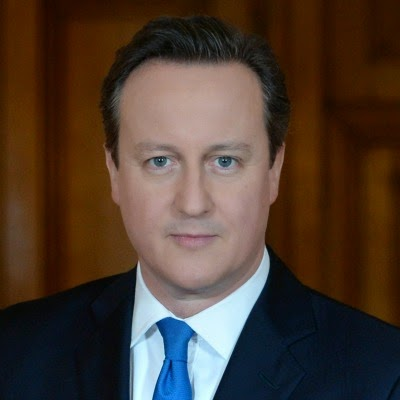
BREXIT Fall Out: PM Cameron to Quit in October

Now that the UK has done what was expected in the last one decade, exiting from the European Union, Britain’s Prime Minister David Cameron has decided to quit from the office in October as the referendum went against his wish to continue in the Union.

In India, the government’s reaction is on expected lines that the economy has enough "firepower" to deal with the situation, and that the Reserve Bank of India (RBI) has been "working" on possible eventualities and the Economic Affairs Secretary Shaktikanta Das was upbeat on fundamentals. But let us face it — grim future ahead and perhaps another prolonged period of uncertainty and recession.

The BSE Sensex lost 1,050 points and investors have lost Rs.4 lakh crore in one day. The rupee touched the 68-mark, down by nealry one rupee in one day, indicating its weakness in a globally turbulent economy. "You know the pound sterling have been depreciating so all currencies have been depreciating," defended Das. With $360 billion in foreign exchange reserves with RBI, he said India’s position "is very sound and solid."

While the knee-jerk reaction is likely to cool in a coule of weeks, for Britain the changes will not be overwhelming as it had always played an outsider role within the European Union. Unlike other members, it had kept its currency, the pound sterling in tact and never joined the Schengen zone of passport-free travel in Europe. Its contribution to EU budget is also relatively less than others.

The pound sterling may see downward movement for sometime and so is India’s rupee but for the reality of entirely breaking away from the European Union may take about two years, if the current David cameroon’s government gives its consent and goes ahead with the referendum’s outcome to exit from EU. So, these two years will be sufficient for India to move closer to the UK both in terms of trade treaty and negotiate more opportunites.

While the immigration was a major cause of worry for Indians in Britain, they can breathe easy now with the exit plan putting a cap on 100,000 immigrants per annum taking concrete shape as no more EU immigrants can enter Britain so easily now. With the immigrants stopped from elsewhere, India may leverage the opportunity for a more favourable immigration policy with the UK.

Finally, the oil prices will fall following Brexit and it will squarely put in more reserves in RBI kitty. "So when oil prices decline, Indian economy benefits," said another Indian Finance Ministry official.

UK PM David Cameron to Resign in October.

Researchers Reveal Mechanism that Impairs Blood Flow with Aging

The Physiological Society’s Journal of Physiology recently published a study led by Erika Boerman, identifying an age-related cause of arterial dysfunction.


With the world’s elderly population expected to double by 2050, understanding cardiovascular disease, the No. 1 cause of death worldwide, is often highlighted and now University of Missouri researchers have identified an age-related cause of arterial dysfunction, a finding that could lead to future treatments.

“Aging affects everyone and causes changes throughout our bodies,” said Erika Boerman, a post-doctoral fellow in the Department of Medical Pharmacology and Physiology at the MU School of Medicine and lead author of the study. “We found that older arteries had a significantly lower number of sensory nerves in the tissues surrounding them and they were less sensitive to an important neurotransmitter responsible for dilation.”

Boerman’s study focused on mesenteric arteries ― a type of artery that supplies blood to the small intestines ― of mice that were 4 months and 24 months old. These ages correspond to humans in their early 20s and mid-60s, respectively. Without stimulation, the diameter of the blood vessels of both younger and older mice was approximately the same. However, when stimulated to induce dilation, differences between the age groups became apparent.

“The younger arteries dilated as expected,” Boerman said. “However, when we performed the same stimulation to the arteries of older mice, the vessels did not dilate. When we examined the presence of sensory nerves, we noted a 30 percent decrease in the amount surrounding the older arteries compared to the younger arteries.”

Additionally, the researchers found that even when purposefully exposing older mesenteric arteries to defined amounts of the neurotransmitter calcitonin gene-related peptide, or CGRP, the arteries’ ability to dilate was greatly reduced.

“Poor neurotransmitter function and a reduced presence of sensory nerves surrounding older vessels lead to age-related dysfunction of mesenteric arteries,” Boerman said. “The importance of this discovery is that if we can identify why this happens to mesenteric arteries, it may be possible to prevent the same thing from happening to other blood vessels throughout the body.”

More research is needed to understand why aging affects sensory nerve distribution and neurotransmitter performance. However, identifying this new mechanism of vascular dysfunction opens the door for future studies that could eventually lead to the treatment of health issues such as stroke and cardiovascular disease.

The study was published in The Physiological Society’s Journal of Physiology.

Why OROP Issue Was a Pre-poll Harakiri by BJP?

Modi promised to implement OROP in his 2nd Independence Day speech but war veterans are not ready to quit hunger strike. (PIB)

The One Rank One Pension (OROP) scheme that was hanging on the Finance Ministry for over five years, both the Congress-led UPA government and the BJP-led NDA government under Narendra Modi should own the responsibility for perpetuating it despite full knowledge that it was beyond mere political calculations involving a huge dent on the exchequer.

While the Congress relented just before the election year to benefit from the votes of these 30 lakh beneficiaries, BJP weaned them away promising its immediate implementation. Once in power, the staggering amount of Rs.8500 crore has forced Finance Minister Arun Jaitley to postpone the OROP beyond the second budget, forcing the ex-servicemen to hit the streets and now end up at the Jantar Mantar in hinger strikes.

For those new to the subject, implentation of OROP entails uniform pension benefits for the defence persons who retired in the same rank with the same service term, irrespective of their date of retirement. Current policy entails only those who retired after 1996 to draw more pension than those who retired before, though rank is the same.

With OROP, 22 lakh ex-servicemen and about 6 lakh war widows will get Rs.10,000 more on average. This has become imminent because the current policy entails those who retired after 1996 to draw more pension than those who retired before, though rank is the same.

“Modi has assured us that it will be implemented, but it has been one year,” said retired Colonel Anil Kaul, who is the media adviser to Indian Ex-Servicemen Movement (IESM) that is sprearheading the protest in New Delhi at Jantar Mantar. “The Prime Minister’s voice still echoes in our minds when he roared at the ex-servicemen rally on September 15, 2013, in Rewari and demanded a white paper on OROP from the UPA Government,” said ISEM earlier.

Now that the relay hunger strike entered 65 days, many war veterans who were in the forefront to die for the country are openly preparing themselves to die for the OROP implementation. Strange but no country would have upset its ex-servicemen given a chance.

In case of the Modi’s government too the question is bigger than mere rhetorics. Pumping in Rs.8,500 crore even if it is in incremental way, would mean a huge burden diverting funds from the developmental plans. Secondly, OROP would also undercut the cost of military expenditure on armaments but shows bigger than any other nation in the short run.

Finally, the government has no choice but to implement it. The question is from where will the finance minister draw the funds?