
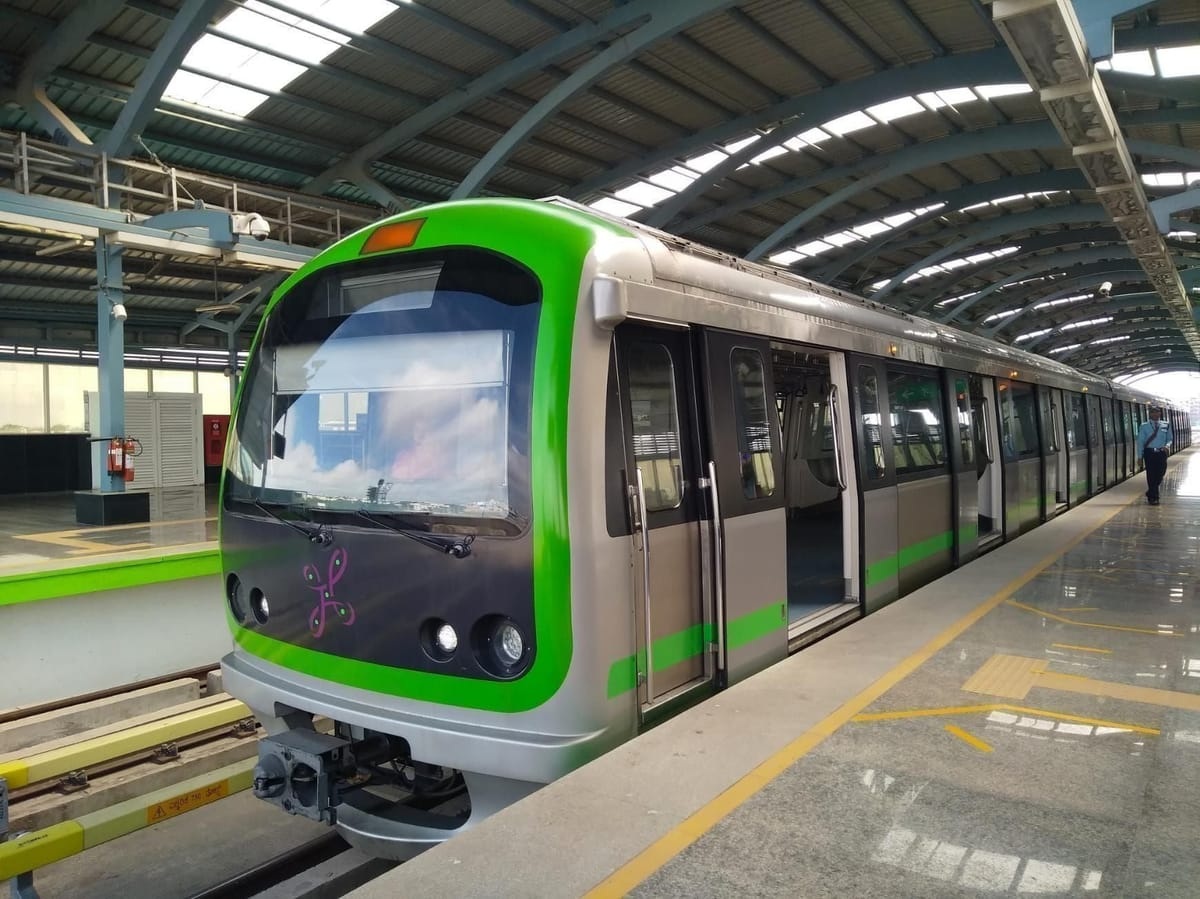
Bengaluru’s expanding Namma Metro network offers commuters a faster and more predictable alternative to the city’s congested roads, but its relatively high cost and limited reach also add to the financial burden on residents.
Compared with Chennai, Delhi, Mumbai and Kolkata, Bengaluru has a smaller rail-based commuter network and lacks the extensive suburban railway systems that allow workers in those cities to live much farther from employment centres while keeping commuting costs relatively low.
For a commuter travelling about 15 km one way by Namma Metro, including an estimated cost for first- and last-mile connectivity, the monthly expense is around ₹3,520 for 22 working days. For someone earning ₹20,000 a month, that amounts to nearly 18% of monthly income. At a salary of ₹50,000, the same commute would account for about 7%.
Bengaluru has a smaller rail catchment
The difference becomes more pronounced when the distance between homes and employment centres is considered.
Mumbai, Kolkata and Chennai have long-established suburban rail networks that extend well beyond their core urban areas. Workers can live 50 km or more from central business districts and still commute by rail. Delhi’s extensive Metro network also connects the city with major parts of the National Capital Region.
Bengaluru’s rail network, by comparison, currently provides a much smaller practical commuter catchment. The metro connects areas such as Whitefield, Kengeri and Madavara with the city, but the rail-accessible distance from the core remains considerably shorter.
This has implications for housing. In cities with extensive suburban rail, workers can move farther from expensive central areas and still reach employment hubs at relatively low transport costs. Bengaluru’s smaller rail network gives commuters fewer such options.
Metro offers reliability, but at a premium
A comparison of monthly rail-based commuting costs for a 15-km one-way journey puts Bengaluru at roughly ₹3,520, compared with about ₹2,772 in Delhi, ₹2,200 in Chennai, ₹1,980 in Mumbai and ₹1,760 in Kolkata. The figures include assumptions about working days and last-mile connectivity and are therefore indicative rather than universal household expenses.
The underlying difference is partly historical. Mumbai and Kolkata inherited extensive suburban railway networks built decades before their modern metro systems. Chennai also has a long-established suburban rail network. These systems carry large numbers of passengers over long distances at comparatively low fares.
Bengaluru’s mass-transit infrastructure developed later and has relied heavily on Namma Metro. While the metro can provide more predictable journey times in a city known for severe road congestion, commuters bear a larger share of the cost through metro fares and connecting transport.
Road-based alternatives can be substantially more expensive. A 15-km daily commute by autorickshaw can cost more than ₹14,000 a month, according to the analysis, while app-based cabs and other road options also carry higher costs. A private car may cost around ₹6,000 a month when fuel, maintenance, depreciation, parking and other expenses are taken into account.
The comparison highlights a central trade-off for Bengaluru commuters: Namma Metro may not offer the lowest commuting cost among major Indian cities, but it provides greater predictability in a city where road congestion can make travel times highly uncertain.