
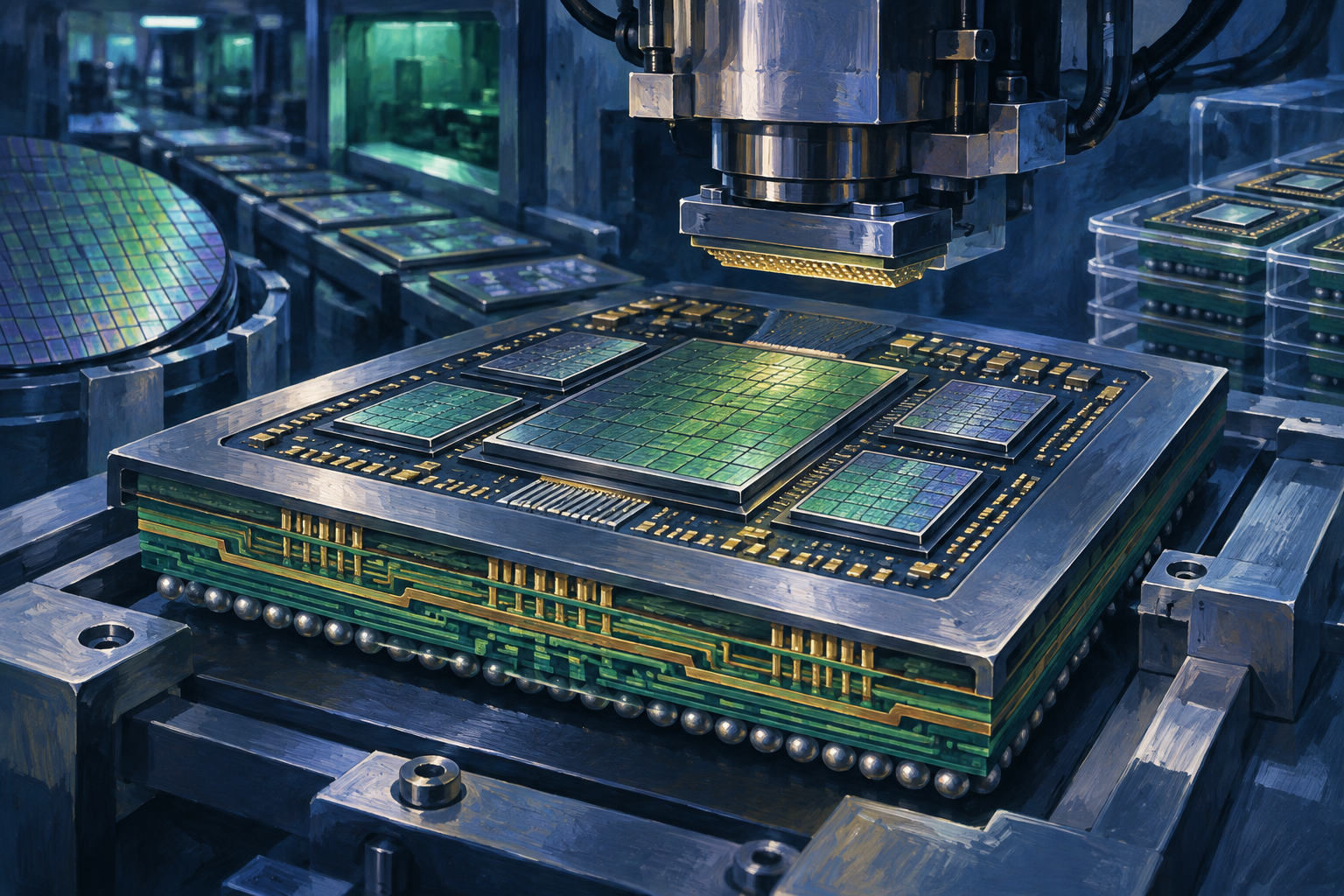
Jensen Huang returned as Nvidia’s chief executive on Monday, triggering a 31.5% jump in the company’s shares. A supply agreement Nvidia disclosed six days earlier points to a longer timetable for expanding AI chip production. Taiwan’s Kinsus expects to begin production under the agreement in the second half of 2027 and aims to deliver the additional capacity by the third quarter of 2028.
The market rally added more than $952 billion to Nvidia’s valuation on Monday, Reuters reported, before the stock fell more than 5% in early Tuesday trading. The swings followed a board decision that restored Huang as chief executive, president and director after his resignation on 12 November. Nvidia said the vote was unanimous and the board received input from senior U.S. government officials. The company did not detail that input.
The components behind Nvidia’s expansion
Kinsus plans to expand the advanced substrate capacity it dedicates to Nvidia to more than 3.5 times its current level at its Taoyuan campus. A substrate sits beneath the chip package and carries electrical signals between the chips and the system board. Nvidia also amended its existing agreement with Samsung Electro-Mechanics, whose substrate work for the company includes facilities in Sejong and Busan, South Korea.
Advanced packaging is a separate stage: it connects chips and memory into an assembly that can go into a computing system. Nvidia said its Vera Rubin NVL72 and Vera CPUs began volume shipments in the third quarter using TSMC’s manufacturing and advanced packaging technologies. The company also announced additional packaging capacity with Taiwan’s Siliconware Precision Industries, known as SPIL.
In Arizona and South Korea, Amkor is expanding advanced packaging capacity under multiyear agreements announced in July and October. Nvidia put their combined value at nearly $3 billion and said the agreements include prepayments to help Amkor expand. “Our supply chain is a strategic advantage,” Nvidia operations executive Debora Shoquist said in the company’s announcement. The prepayments show how Nvidia is financing capacity at suppliers before it becomes available for production.

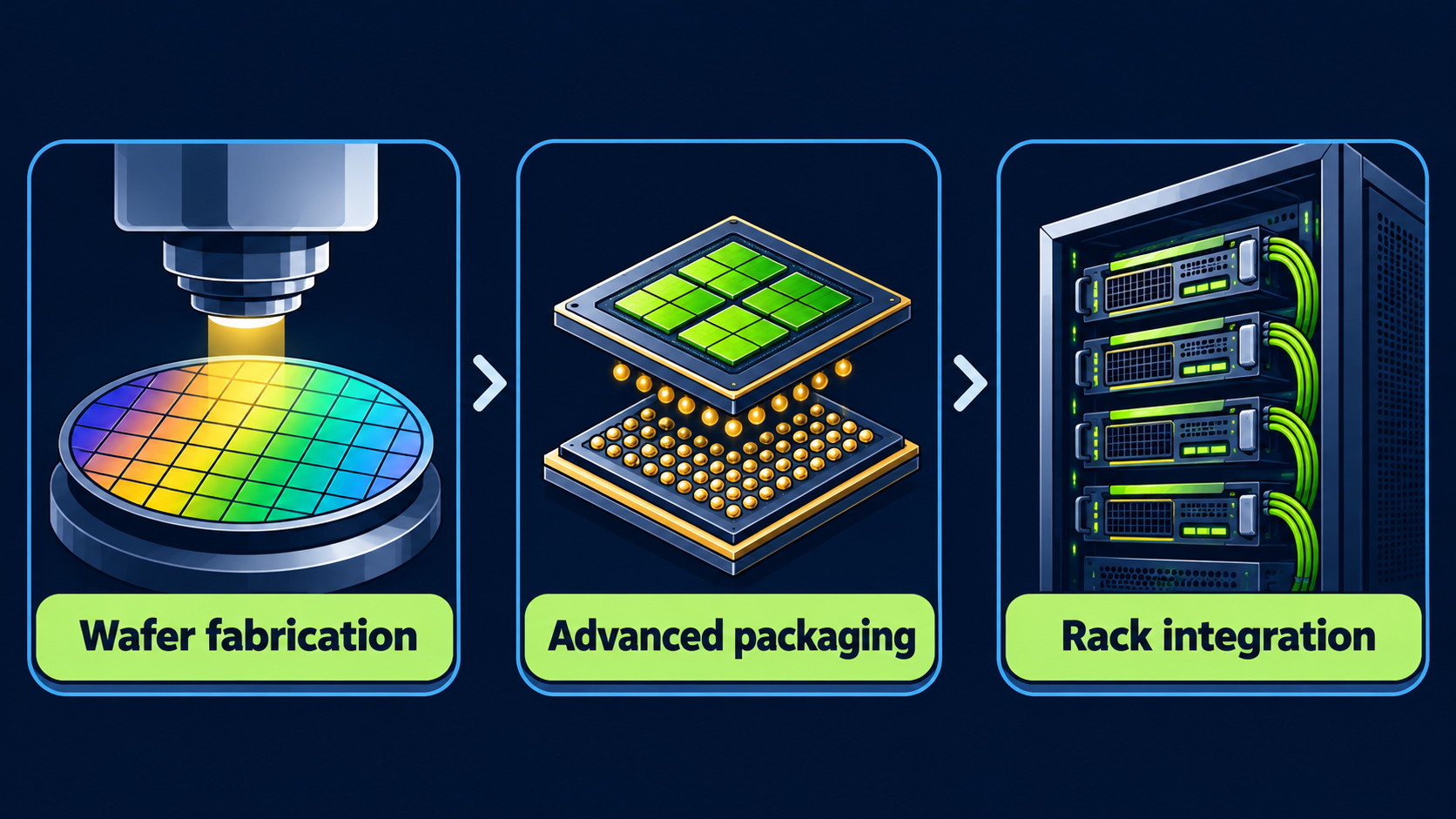
These commitments cover distinct parts of production. Wafer fabrication creates the chips. Substrates and packaging connect them to other components. System manufacturers then assemble the hardware, cooling and networking into racks that cloud providers can deploy. Expanding one stage can leave the pace of shipments constrained by capacity elsewhere. Nvidia also said Foxconn would deepen its work on next-generation GPU and networking platforms.
What the next quarter can tell investors
Nvidia booked $115.8 billion in revenue in the quarter ended 25 October, up 103% from a year earlier. Its data-centre business generated $107.6 billion, or roughly 93% of the total. Nvidia said Vera Rubin racks were running at partners including Google Cloud, Microsoft Azure and Oracle Cloud Infrastructure. Those deployments establish that shipments have started while the newly announced supplier capacity is still being built out.
Nvidia expects fourth-quarter revenue of $130 billion, plus or minus 3%. The quarter has an extra week, and the forecast assumes no data-centre compute revenue from China. In its earnings call, the company said sales of licensed Hopper data-centre products to China had been $2.4 billion in the third quarter. The forecast therefore gives investors a way to track near-term growth without assuming another quarter of those sales.
Monday’s rally captured the market’s immediate reaction to Huang’s reinstatement. Nvidia’s next earnings report will show how shipments and margins are moving as Rubin production increases. Later milestones will show whether suppliers can bring new capacity online on schedule. Arizona adds another packaging location, while the agreements in Taiwan and South Korea show how much of the expansion still depends on East Asian suppliers. That distinction matters when assessing how semiconductor trade policy affects countries at different stages of production.