
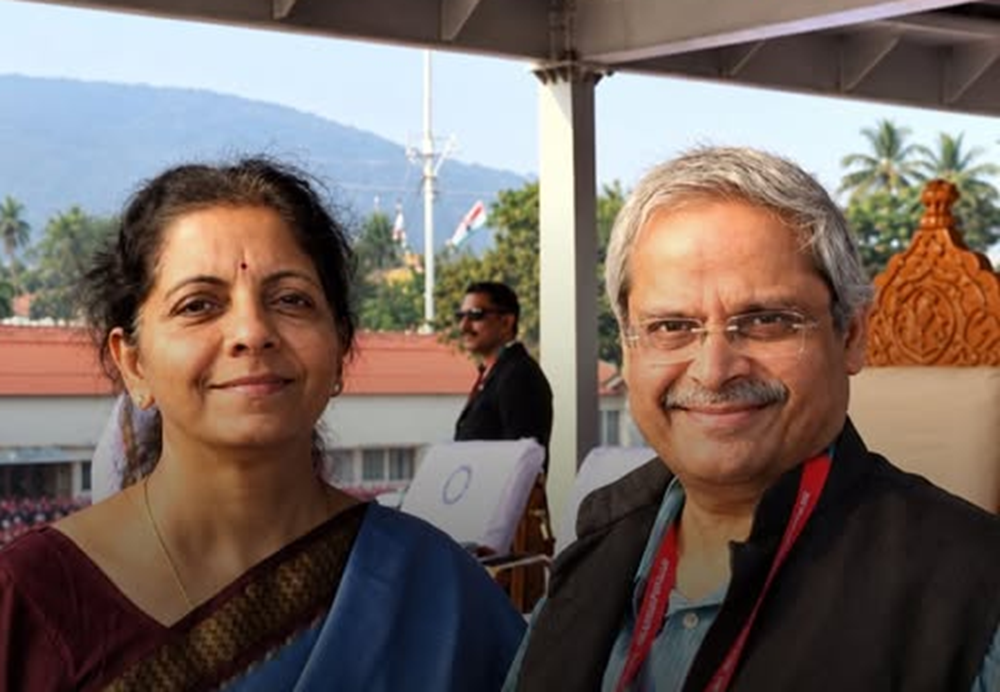
Parakala Prabhakar, an economist and political commentator known for his criticism of the Narendra Modi government, has emerged as a prominent voice in the campaign against the Election Commission of India’s Special Intensive Revision (SIR) of electoral rolls.
Prabhakar, whose father once served as a minister in the state cabinet of Andhra Pradesh, is also the husband of Union Finance Minister Nirmala Sitharaman, whose political views differ from his own views, as he himself admitted to a Telugu video channel.

Prabhakar announced his participation in the October 23, 2026, nationwide protest organised by the People Against SIR alliance. The campaign is demanding that the Election Commission withdraw the voter-roll revision exercise and that Chief Election Commissioner Gyanesh Kumar resign. The organisers have alleged that the process risks excluding eligible voters, particularly from vulnerable communities.
His involvement has brought renewed attention to a career spanning economics, political communication, public administration and writing.
From Economics to Political Commentary
Prabhakar studied at Jawaharlal Nehru University (JNU) in New Delhi before pursuing doctoral research at the London School of Economics. His academic work included the political economy of security, according to his professional profile. He has worked as a political economist and communications strategist and is associated with RightFOLIO, a knowledge and communications enterprise based in Hyderabad.
His career has also included direct involvement in politics. He was associated with the Bharatiya Janata Party before joining actor Chiranjeevi’s Praja Rajyam Party, where he served as a spokesperson. He left the party in 2009 following differences over its functioning.
In July 2014, the then Andhra Pradesh government led by Chief Minister N. Chandrababu Naidu appointed Prabhakar as its communications adviser, with the rank of a Cabinet minister. He resigned in June 2018 after criticism from opposition leaders over his position in the government while his wife was associated with the BJP. Prabhakar said he did not want his continuation in office to raise questions about the state government’s political position.
Why Prabhakar Criticises the Modi Government
Prabhakar has become known for his criticism of the Centre’s economic policies, unemployment and what he describes as the weakening of democratic institutions.
His book, The Crooked Timber of New India: Essays on a Republic in Crisis, published in 2023, examines India’s political and economic direction under the Modi government. It brings together essays questioning policy decisions and developments affecting democratic institutions and public discourse.
In recent months, Prabhakar has focused much of his criticism on the Election Commission’s Special Intensive Revision of electoral rolls. He has argued that the exercise raises serious concerns about voting rights and the potential exclusion of eligible citizens.
The Election Commission’s revision process and the allegations made by its critics should be distinguished: claims about wrongful deletions and the exercise’s political implications require assessment against official electoral data, the Commission’s explanations and relevant judicial proceedings.
Marriage to Nirmala Sitharaman
Prabhakar married Nirmala Sitharaman in 1986 after the two met while studying at JNU. Sitharaman, then associated with the Free Thinkers group, subsequently rose through the BJP’s ranks and became Union Finance Minister, while Prabhakar, associated with the Congress’s student wing, NSUI in JNU, developed an independent career in political analysis and public commentary.
Their differing political positions have frequently drawn public attention. Prabhakar’s criticism of the government led by the party with which his wife is associated has made him an unusual figure in India’s political discourse.
His participation in the anti-SIR campaign places him within a broader debate over electoral transparency, voter eligibility and the Election Commission’s role. The central question is whether the revision process can ensure accurate electoral rolls while protecting the voting rights of every eligible citizen.